Artwork
L’Éducation de Marie Stuart à la cour de François II by Gillot Saint-Evre
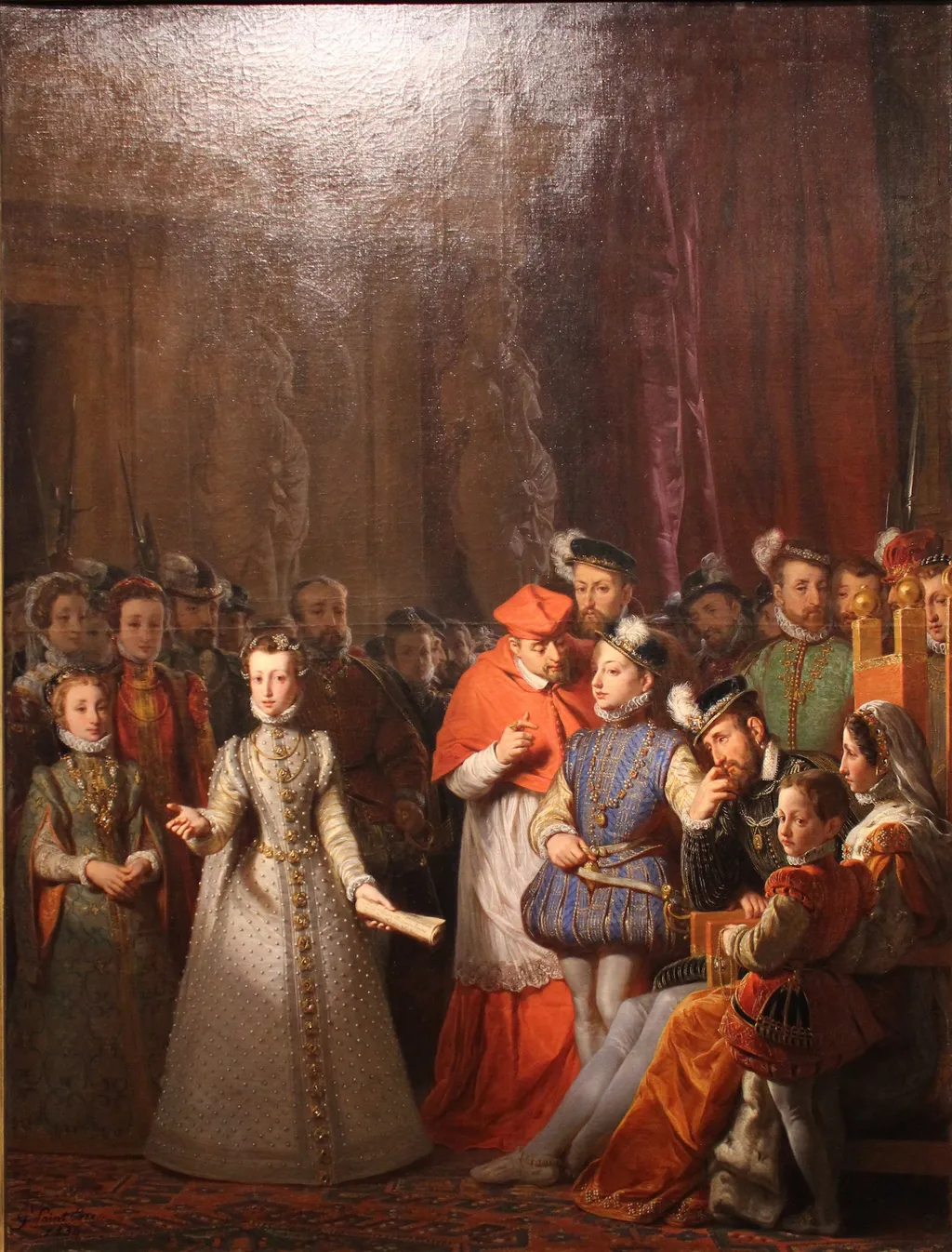
L’Éducation de Marie Stuart à la cour de François II by Gillot Saint-Evre is an oil painting by the French Romanticist artist Gillot Saint-Evre. It dates from 1836 and is held in the collection of the Palace of Versailles.
About this work
Technique & Style
The handling is consistent with mid-1830s French academic practice, deploying smooth, blended modeling to render figures and architecture with crisp definition.
Executed in 1836, the painting is an oil on canvas measuring 176 cm in height by 134 cm in width.
The handling is consistent with mid-1830s French academic practice, deploying smooth, blended modeling to render figures and architecture with crisp definition. Stylistic qualities include a restrained palette dominated by muted earth tones punctuated by accents of crimson and gold, aligning with the period’s historical genre conventions. Compositionally, the scene is organized around a central group of figures under Renaissance-style arches, emphasizing narrative clarity and symmetrical arrangement typical of Salon-oriented history painting of the July Monarchy.
History & Provenance
Created by Gillot Saint-Evre in 1836, the oil-on-canvas painting was initially titled *Marie Stuart au Louvre. 1556*. The work was first presented to the public at the Salon de Paris in 1839. Following its exhibition, the painting entered the national collections of France, holding inventory numbers MV 7079, INV 7818, and LP 2531. It is currently housed at the Palace of Versailles, specifically within the Grand Trianon. In 2014, the artwork was loaned to the Musée des Beaux-Arts de Lyon for the exhibition *L'invention du Passé. Histoires de cœur et d'épée 1802-1850*. The painting is held at the Palace of Versailles, Grand Trianon, under the inventory number MV 7079; INV 7818; LP 2531. It was first exhibited at the Salon of Paris in 1839. In 2014, the work was loaned to the Musée des beaux-arts de Lyon for the exhibition *L’invention du passé. Histoires de cœur et d’épée en Europe, 1802-1850*.
Context
Gillot Saint-Evre’s L’Éducation de Marie Stuart à la cour de François II was first shown at the Paris Salon of 1839, placing it within the Romantic-era vogue for historical tableaux that dramatized national identity through costume and courtly settings. The work’s reception at the Salon situates it among history paintings that traded on contemporary curiosity for the Stuart dynasty and sixteenth-century French court culture, a thematic cluster prominent in the July Monarchy’s cultural politics. Its later inclusion in the 2014 exhibition L’invention du passé. Histoires de cœur et d’épée en Europe, 1802-1850 underscored the painting’s continued relevance to scholarly debates on Romantic historiography and the staging of political memory in nineteenth-century French art. The artist, Louis-François Bertin called Gillot Saint-Evre (1791-1858), trained under Antoine-Jean Gros and emerged alongside the generation that favored grand machines and anecdotal narrative. His choice of Mary, Queen of Scots, as subject reflects the period’s fascination with female sovereignty and tragic destiny, themes that aligned with Romantic taste for high-stakes drama. By situating the young queen within the Valois milieu, Saint-Evre situated a Scottish subject within French dynastic iconography, reinforcing the cultural prestige of the French court in the popular imagination.
Own this work as a print
Artist & collection
Artist
Gillot Saint-Evre (1791, Boult-sur-Suippe – 1858, Paris) was a French painter and engraver. He created scenes on historical and literary subjects, as well as genre scenes and portraits.

 Wedding of Maria de Medici and Henry IV of France
 Marriage of Napoleon I and Marie Louise, 2 April 1810
 Der Doge Francesco Foscari schickt seinen Sohn Giacomo in die Verbannung ("I due Foscari")
 La poetisa
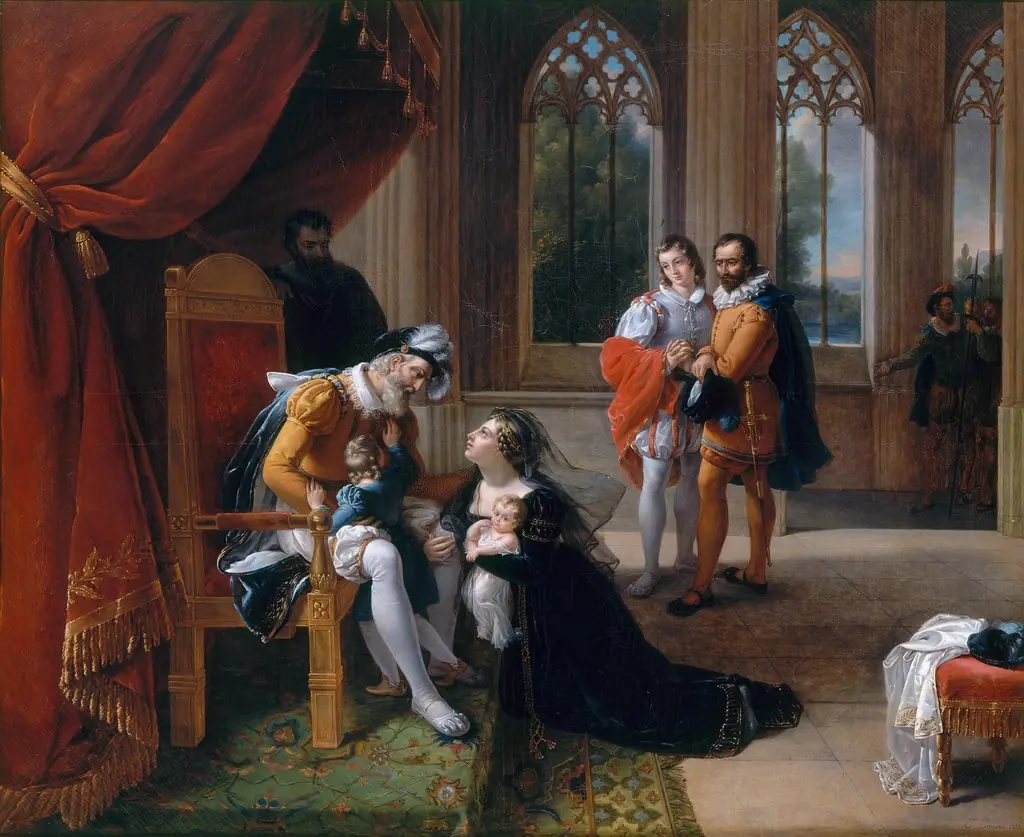 Inès de Castro and Her Children Throwing Themselves at the Feet of King Alphonso IV of Portugal
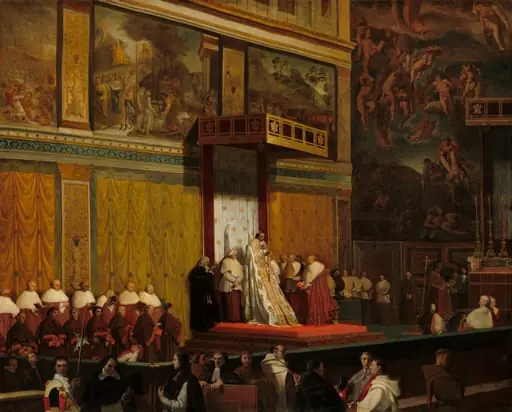 Pope Pius VII in the Sistine Chapel
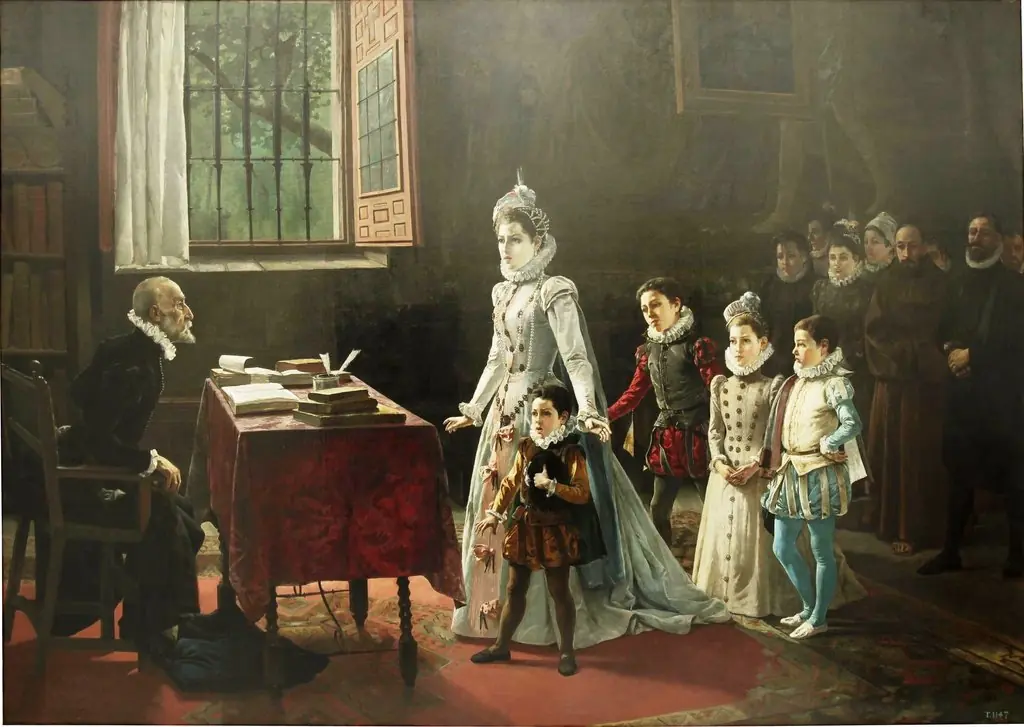 Los hijos de Antonio Pérez ante Rodrigo Vázquez
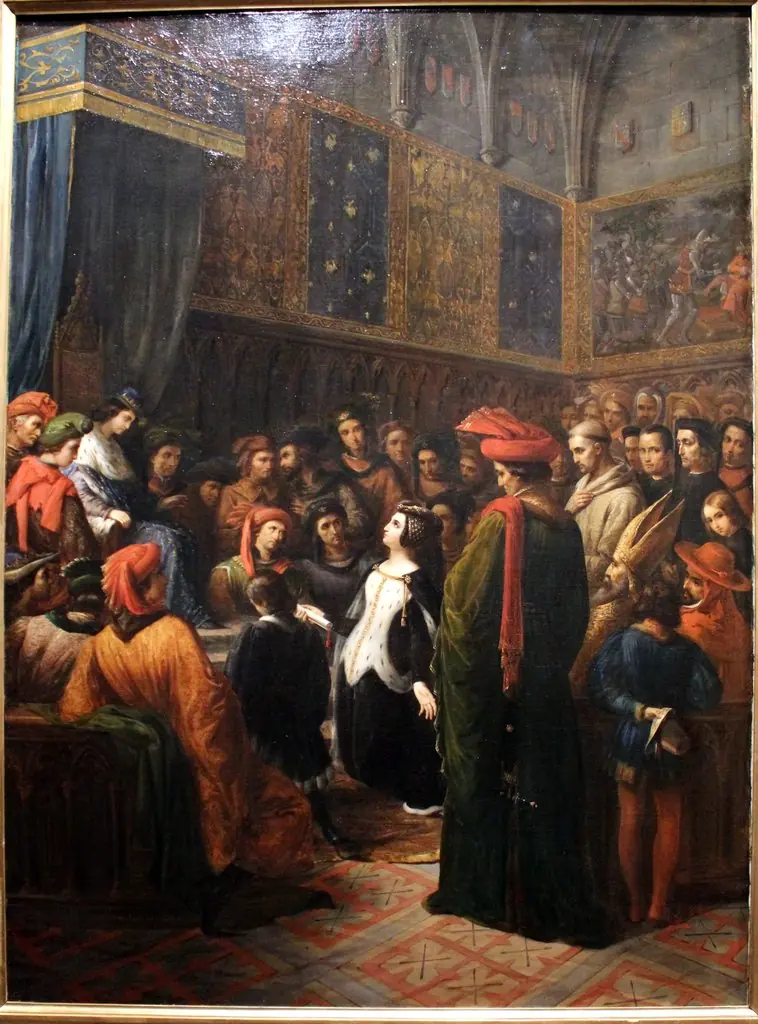 Valentine de Milan implore la justice du roi Charles VI pour l'assassinat du duc d'Orléans by Alexandre Colin
 The Marriage of Ferdinando and Christine of Lorraine
 Meeting of Francis I and Pope Clement VII in Marseilles on 13 October 1533
 Reposición de Colón
- Marie Stuart, reine d'Écosse, recevant sa sentence de mort que vient de ratifier le Parlement by Jean-Baptiste Vermay