Artwork
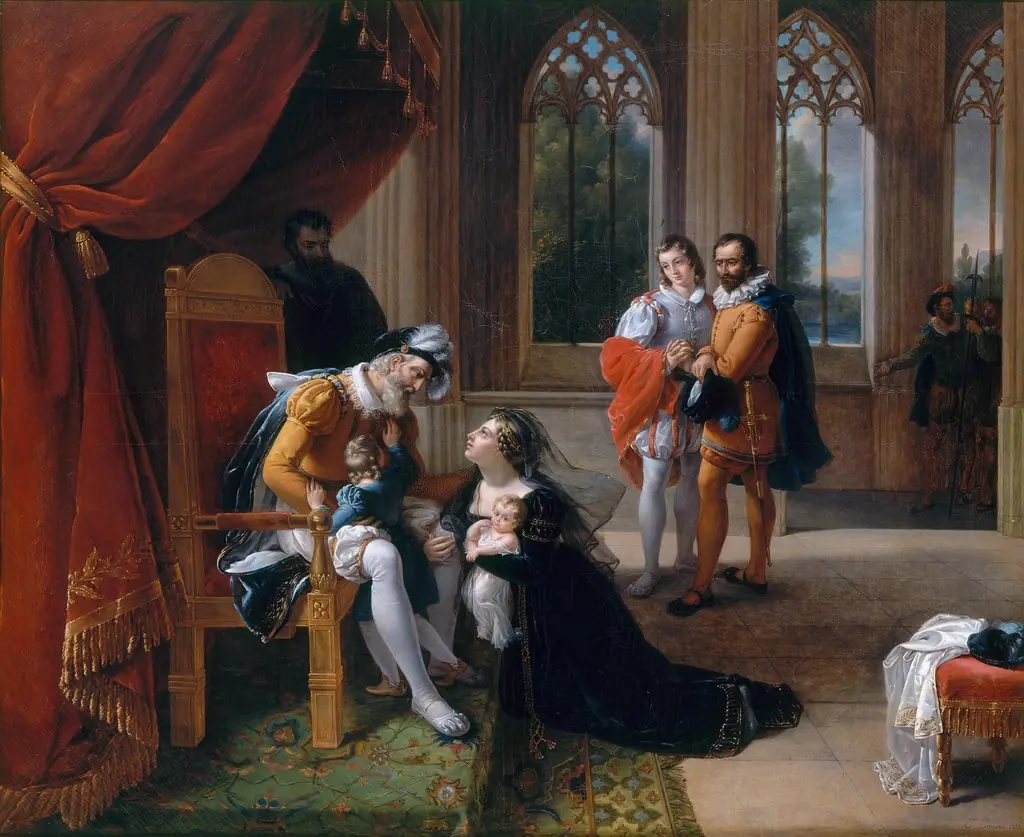
Valentine de Milan implore la justice du roi Charles VI pour l'assassinat du duc d'Orléans by Alexandre Colin
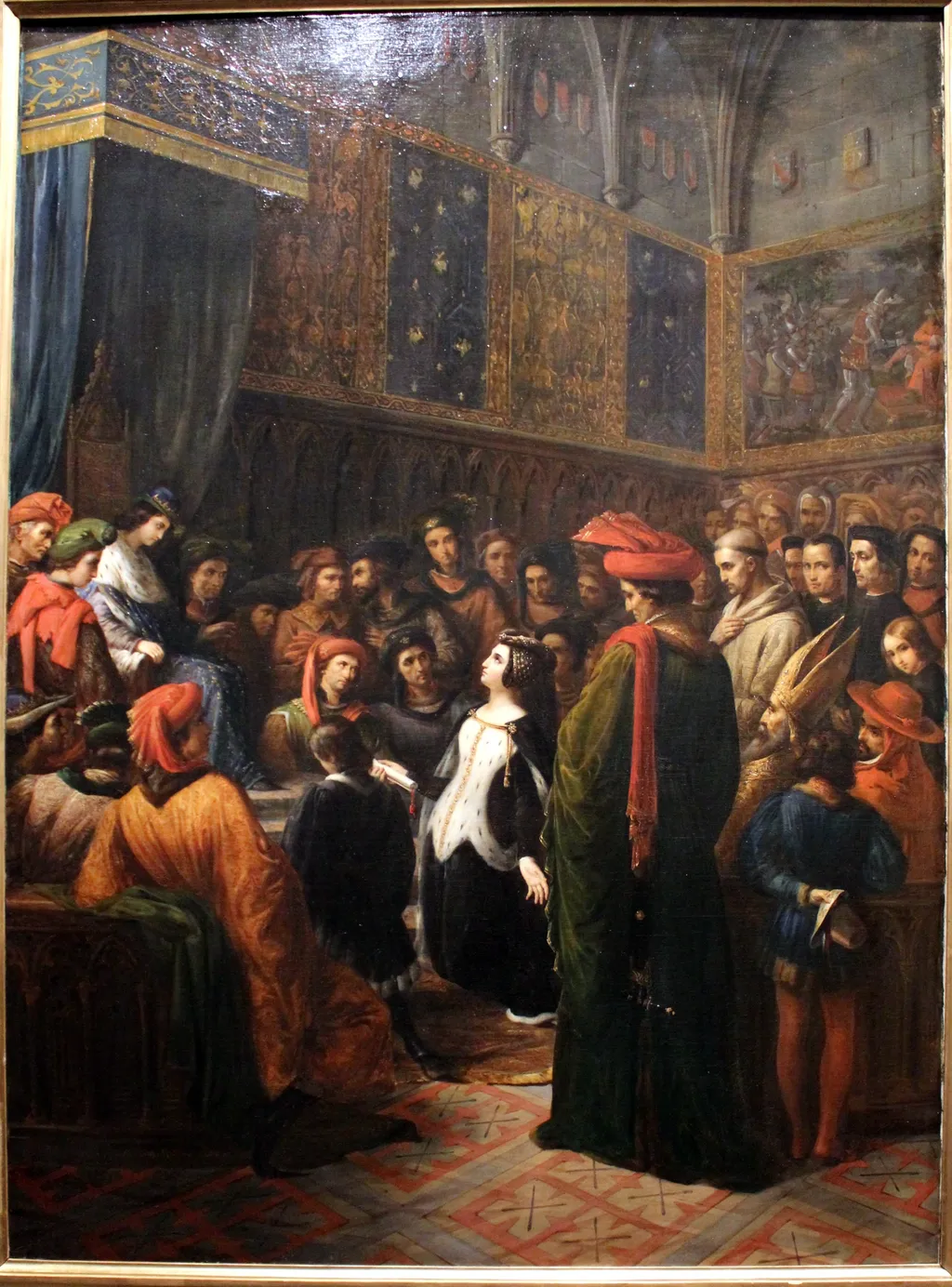
Valentine de Milan implore la justice du roi Charles VI pour l'assassinat du duc d'Orléans by Alexandre Colin is an oil painting by Alexandre-Marie Colin. It dates from 1836 and is held in the collection of the Palace of Versailles.
About this work
Overview
The work was exhibited at the Salon of 1837 and remains a significant example of French Romantic history painting from the July Monarchy period.
Valentine de Milan implore la justice du roi Charles VI pour l'assassinat du duc d'Orléans is a history painting created by the French artist Alexandre-Marie Colin in 1836. Executed in oil on canvas, the work measures 177 by 132 centimeters. It is held in the collection of the Museum of the History of France at the Palace of Versailles. The painting illustrates a dramatic episode from November 1407, when Valentina Visconti, the Duchess of Orléans, petitioned King Charles VI for justice following the assassination of her husband, Louis I, Duke of Orléans. The work was exhibited at the Salon of 1837 and remains a significant example of French Romantic history painting from the July Monarchy period.
Subject & Meaning
The painting depicts the widowed Valentine de Milan as she formally demands justice from the French king for the murder of her husband. At the center of a crowded royal hall, she stands in a black dress with white fur trim and a white collar, her head tilted upward and her right hand extended to hold a document. She is surrounded by an array of male figures, including a bishop, who wear turbans, caps, and robes in deep greens, oranges, and reds. To the left, figures sit on a raised platform beneath a dark blue canopy with gold trim and patterned borders, representing the throne and the seat of royal authority. Several onlookers hold papers or observe the central confrontation, highlighting the political tension of the appeal.
Technique & Style
Colin employed oil paint on canvas to achieve a smooth, highly finished surface, demonstrating careful attention to the textures of textiles and the nuances of facial expressions. The composition is defined by a dramatic lighting scheme that illuminates the central female figure while leaving many of the surrounding faces in shadow, heightening the theatrical intensity of the scene. The palette is dominated by deep blues, crimson reds, burnt oranges, and dark greens. The interior architecture features Gothic ribbed vaulting in the upper right, while the background includes ornate wall hangings with heraldic motifs, a painted frieze of battle scenes, and a floor with a geometric pattern in red and beige. These stylistic choices anchor the work firmly in the Romantic tradition of history painting.
History & Provenance
Created in 1836, the painting was shown publicly at the Salon of 1837. It entered the French national collections and is currently housed at the Museum of the History of France in the Palace of Versailles. The work carries the inventory numbers MV 7235, INV 3300, and LP 2578. In 2014, it was lent to the musée des beaux-arts de Lyon for the exhibition L'invention du Passé. Histoires de cœur et d'épée 1802-1850, which explored historical narratives in European art of the period.
Context
Alexandre-Marie Colin, born in Paris in 1798 and dying there in 1873, operated within the French academic and Romantic currents of the nineteenth century. His painting of Valentine de Milan aligns with the July Monarchy's broader cultural interest in medieval and Renaissance history, particularly narratives of dynastic conflict and moral righteousness. By choosing the 1407 assassination of the Duke of Orléans, a pivotal event leading to the Armagnac-Burgundian civil war, Colin engaged with a subject that resonated with contemporary French fascinations regarding justice, monarchy, and political fragmentation. The classification of the work as a history painting underscores its elevated status within the academic hierarchy of genres at the time.
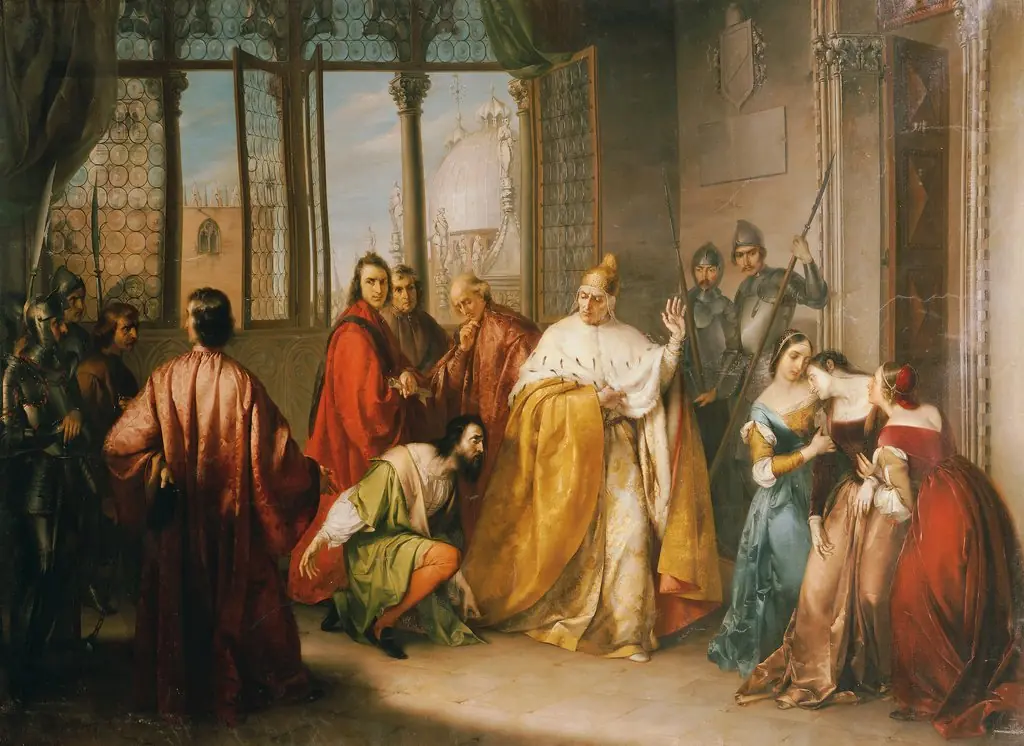
Own this work as a print
Artist & collection
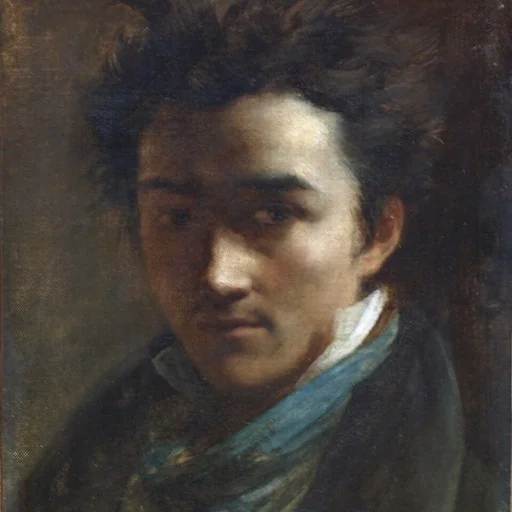

- Der Doge Francesco Foscari schickt seinen Sohn Giacomo in die Verbannung ("I due Foscari")
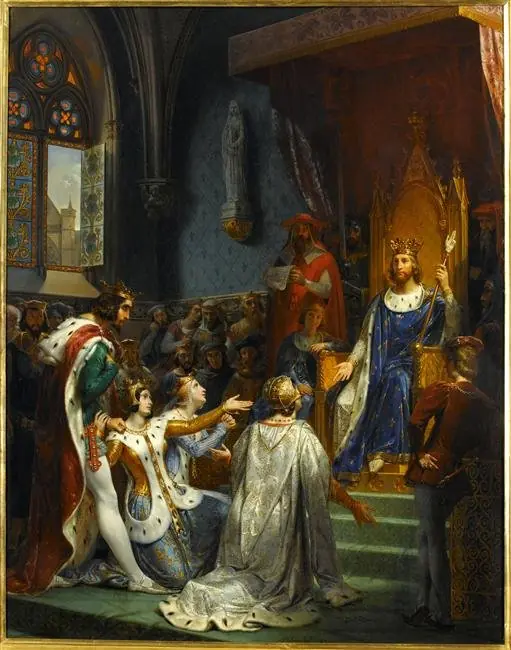 John II receives the submission of Charles II of Navarre
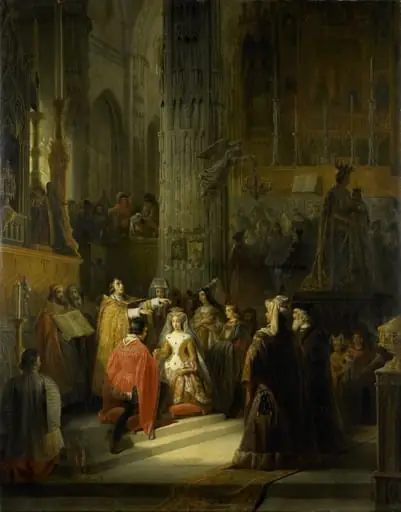 The Wedding of Jacoba of Bavaria, Countess of Holland, and Jan IV, Duke of Brabant, 10 March 1418
 Mary of Burgundy Granting the Great Privilege
 Investiture of Saint Jane Frances de Chantal
 Vittore Pisani receives Holy Communion before taking command of an expedition against the Genoese
 Doña Isabel la Católica en la cartuja de Miraflores
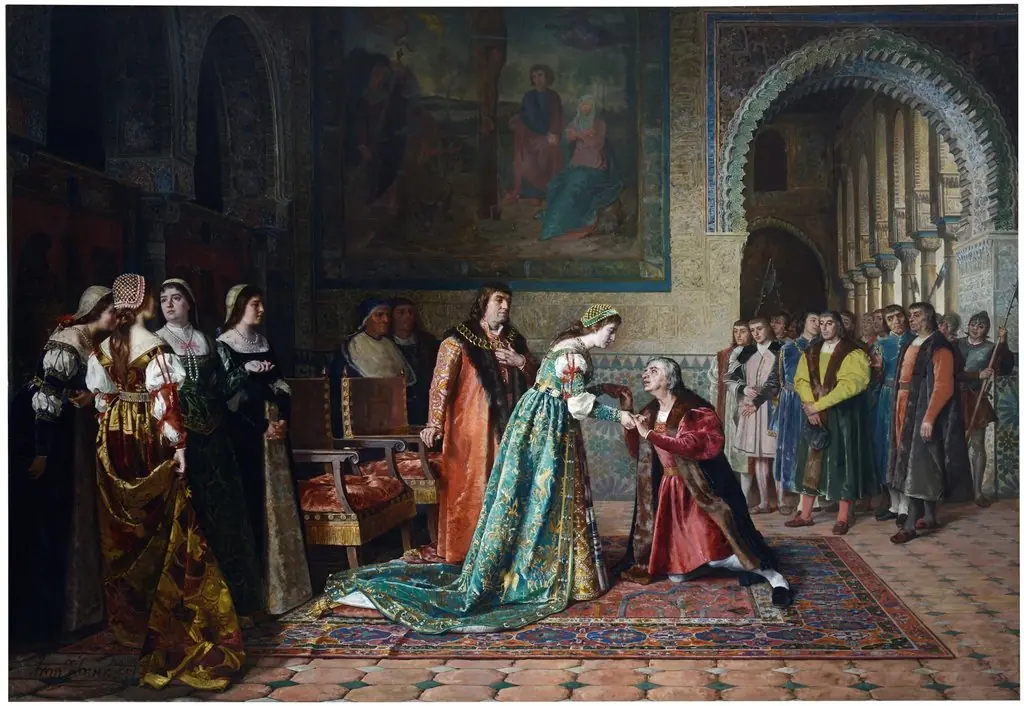 Reposición de Colón
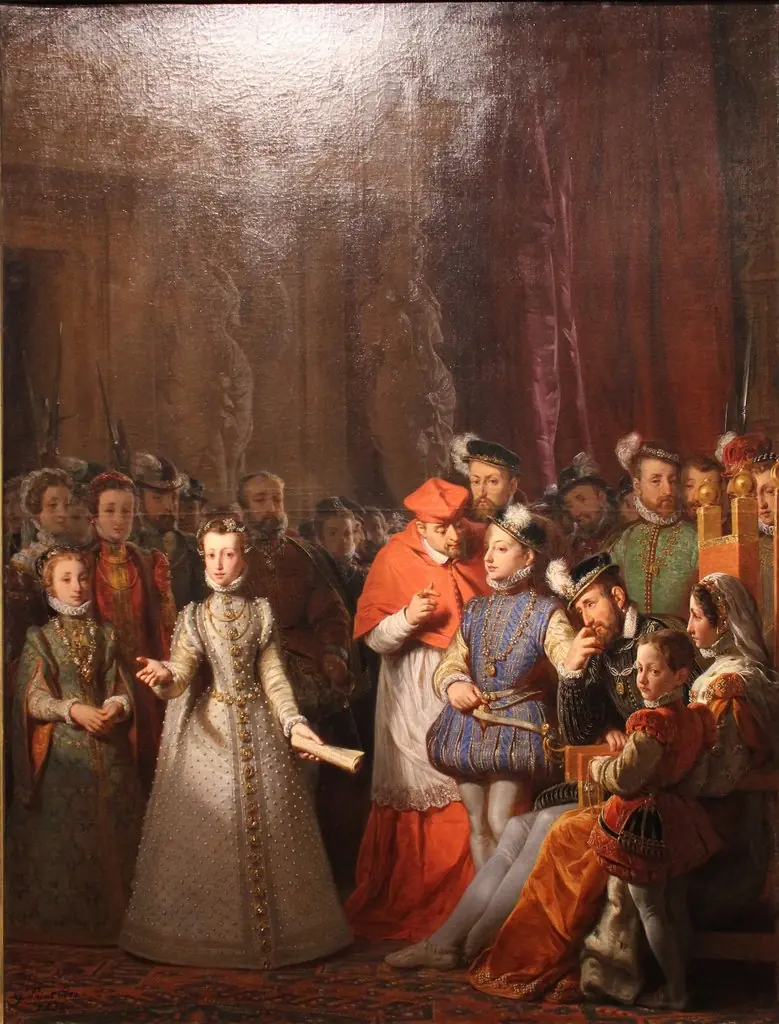 L’Éducation de Marie Stuart à la cour de François II by Gillot Saint-Evre
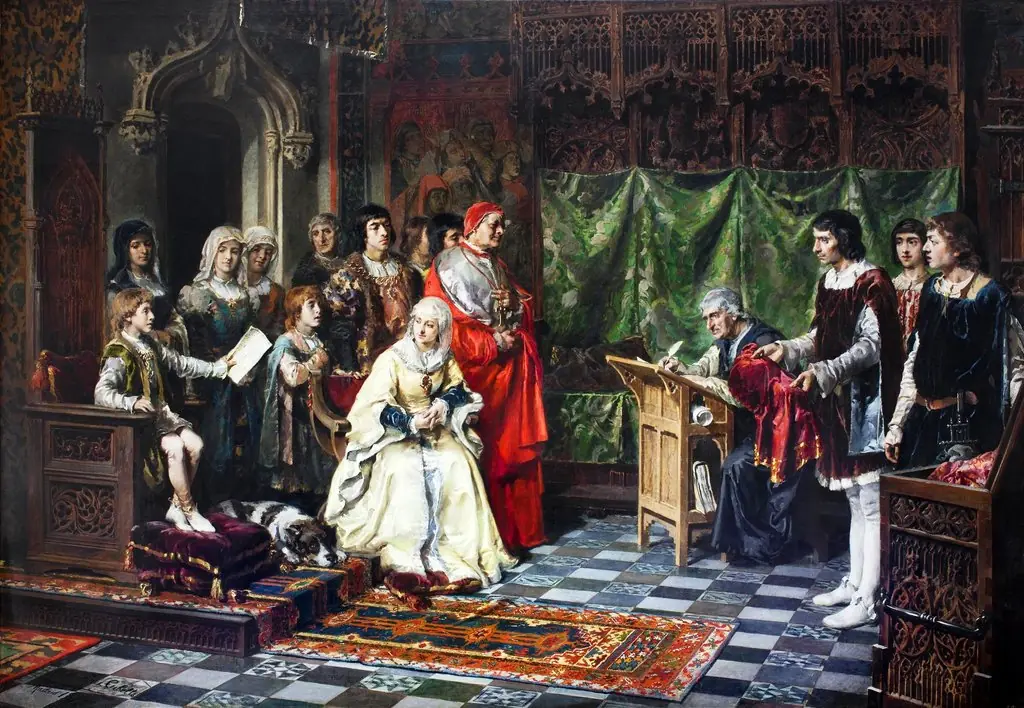 Educación del príncipe don Juan
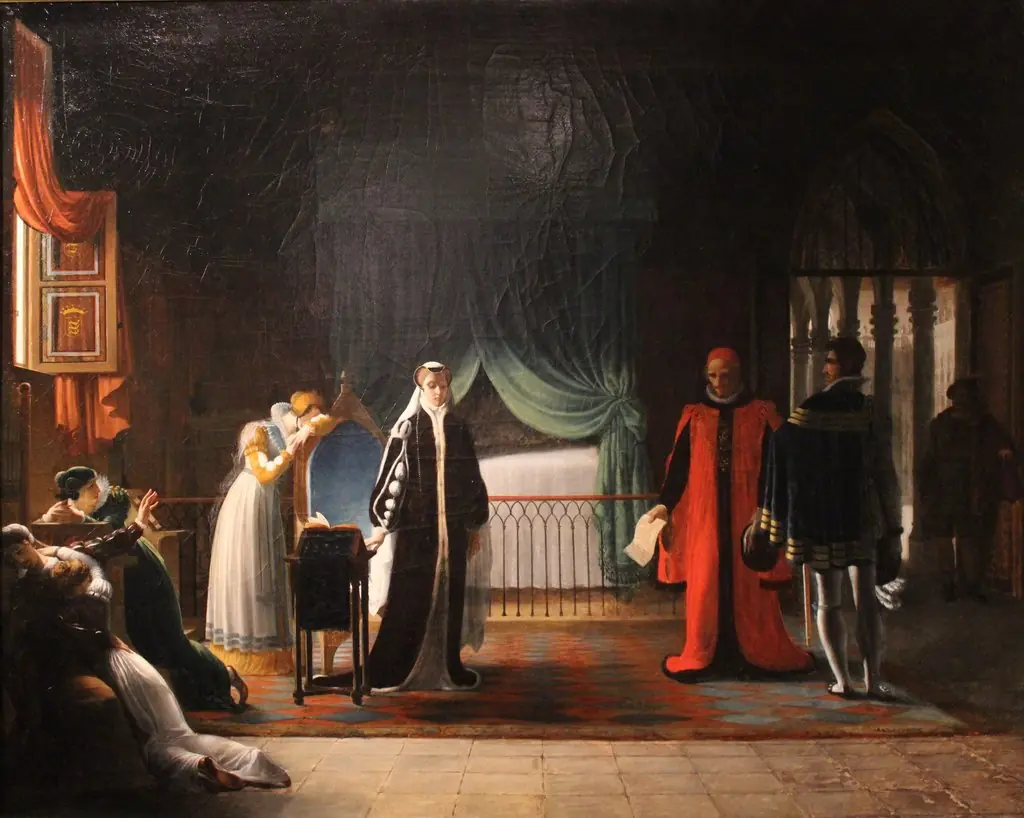 Marie Stuart, reine d'Écosse, recevant sa sentence de mort que vient de ratifier le Parlement by Jean-Baptiste Vermay
 Inès de Castro and Her Children Throwing Themselves at the Feet of King Alphonso IV of Portugal