Artwork
Portrait of a young Woman
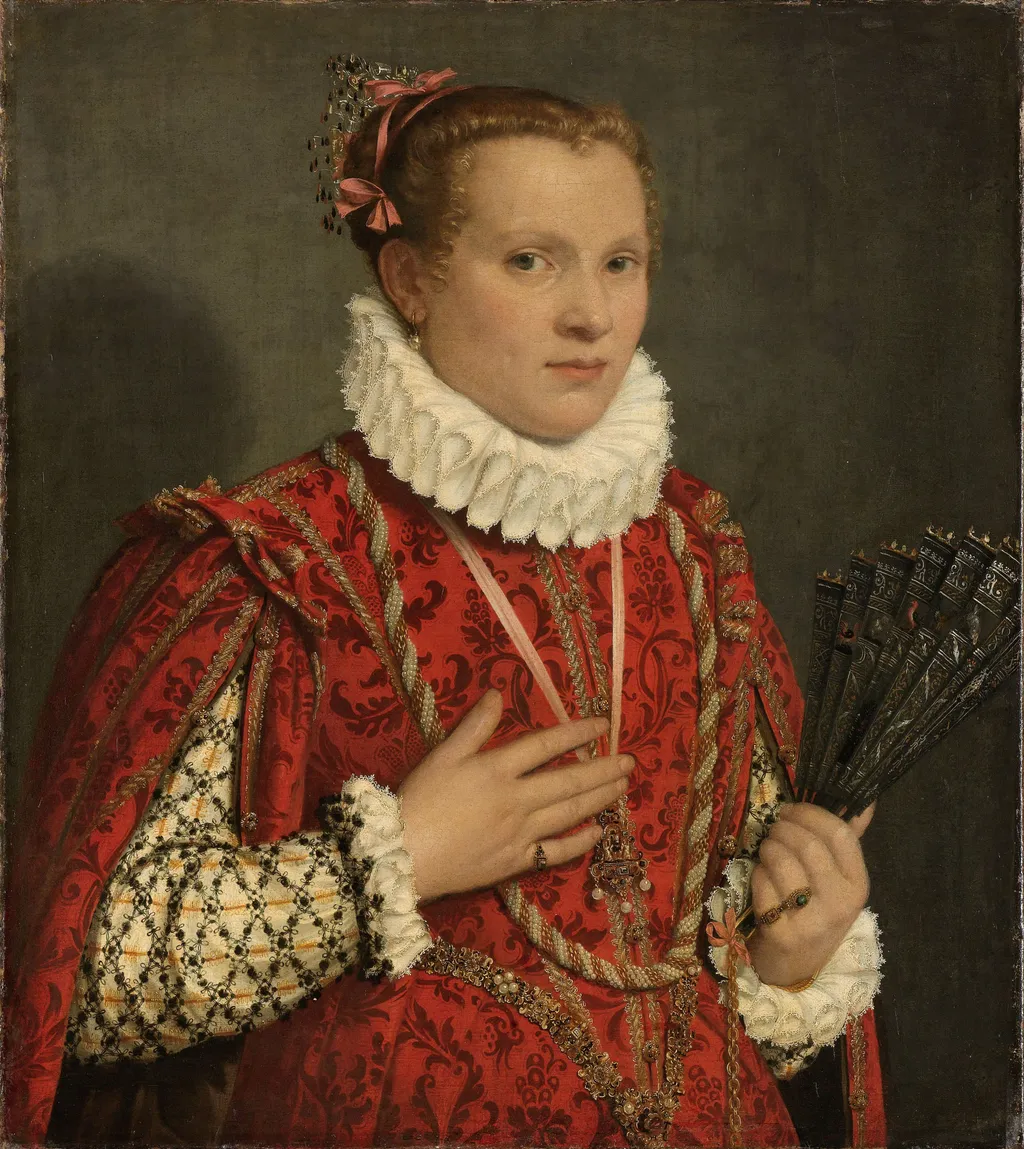
Portrait of a young Woman is an oil painting by the Mannerist artist Giovanni Battista Moroni. It dates from 1570 and is held in the collection of the Rijksmuseum.
About this work
Subject & Meaning
The sitter is shown half-length, richly dressed in a brocaded red overdress with gold-threaded sleeves and a white starched collar, a pink-sash belt, a gold-linked necklace, and a gold chain securing a fan with a pink ribbon. The opulent attire, including gold embroidery and a lavish pearl necklace, transgresses Bergamo’s 1540 sumptuary laws that restricted ornamentation and fan handles to bone, suggesting the portrait was painted for a private patron rather than a civic context.
The fan itself, rendered with care, functions as a fashionable attribute of elite status, while the luminous, pale skin and assured handling of light on the face and hands indicate Moroni’s mature technique, aligning the work with his later years around 1570–1572.
Technique & Style
Her ensemble includes a large belt with a medal on pink satin, an interwoven gold necklace, and a fan attached by a pink ribbon to a heavy gold chain.
Executed in oil on canvas, this portrait measures 73.5 cm in height and 65 cm in width. The work depicts a half-length figure of a woman adorned in luxurious attire, featuring a red brocade overdress with gold embroidery and sleeves worked in gold thread. Her ensemble includes a large belt with a medal on pink satin, an interwoven gold necklace, and a fan attached by a pink ribbon to a heavy gold chain.
The artist renders the subject's skin with a pale, perfected luminosity on both the face and hands, achieved through quick and assured brushstrokes. These technical handling qualities contrast with the opulence of the costume, while the background utilizes a sfumato gray tone similar to works dated slightly later in the artist's career.
History & Provenance
The painting, dated to 1570, was first recorded in the Neapolitan art market before being acquired in 1804 by Johann Henrich Wilhelm Tischbein for the Oldenburg gallery, where it was initially attributed to Paris Bordone. It remained the earliest acquisition of the artist's works in that collection despite the misattribution. Wilhelm von Bode correctly identified the work as a Moroni in 1888, though it continued to be cataloged under Bordone for some time.
A later hypothesis by Gertrude Lendorff in 1939, suggesting the artist was Moroni's pupil Giovanni Paolo Lommo, was quickly dismissed. During a relining in 1951, an inscription reading "DGH, 841" was discovered, tracing the provenance back to the first known owner, Don Gaspar de Haro y Guazman, who had originally attributed the piece to Lorenzo Lotto. The Rijksmuseum purchased the work in 1925 following its exhibition there in 1923.
Context
The attribution of the Portrait of a young Woman has been a subject of significant scholarly debate. Initially acquired by Johann Henrich Wilhelm Tischbein in 1804 for the Oldenburg collection, the work was long cataloged as a piece by Paris Bordone. It was not until 1888 that Wilhelm von Bode correctly attributed the painting to Giovanni Battista Moroni, though some later scholars, including Gertrude Lendorff in 1939, briefly proposed the artist's pupil, Giovanni Paolo Lolmo, before this theory was discarded.
The painting's place in art history is further complicated by its visual contradictions; while the subject's opulent attire and gold embroidery suggest an earlier period contrary to the 1540 sumptuary laws of Bergamo, the refined handling of light and the gray sfumato background align the work with Moroni's mature style around 1570. This synthesis of rich detail and technical maturity places the portrait among the artist's most complex late works.
Legacy
The work's later influence, reputation, and legacy are reflected in its contested attribution history and institutional visibility. Early ownership records show the painting changing hands among German collectors and institutions, including Johann Heinrich Wilhelm Tischbein who acquired it in 1804 for the Oldeburg collection, though it remained misattributed to Paris Bordon for decades until Wilhelm von Bode correctly identified Moroni as the author in 1888. The painting entered the Rijksmuseum in 1925 after a 1923 exhibition, subsequently traveling to London in 1930 and Amsterdam in 1934 as part of an Italian art display.
Its legacy was further shaped by scholarly debates, including Gertrude Lendorff’s 1939 suggestion that it was painted by Giovanni Paolo Lolmo, a pupil of Moroni, a theory later rejected. A 1951 restoration revealed an inscription linking the work to don Gaspar de Haro y Guazmain and to the title 'Portrait of a Lady with a Fan in Hand, Ornamented with a Pearl,' reinforcing its connection to Giovanni Battista Moroni’s oeuvre. The painting was featured in a 2005 exhibition at the Museo Adriano Bernareggi in Bergamo, highlighting renewed scholarly and public interest in Moroni’s legacy.
Overview
Giovanni Battista Moroni’s oil painting titled Portrait of a Young Woman dates from around 1570. The work presents a single sitter, rendered in a realistic manner typical of the late‑Renaissance portrait tradition. It is part of the collection of the Rijksmuseum in Amsterdam, where it is displayed among other 16th‑century European paintings.
Own this work as a print
Artist & collection
Artist
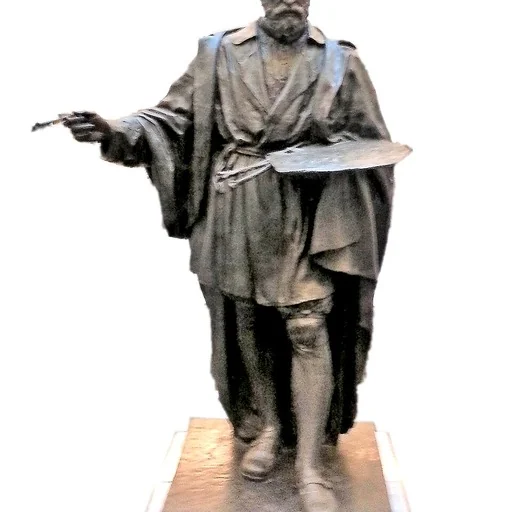
Giovanni Battista Moroni, also known as Giambattista Moroni was an Italian painter of the Mannerist school.

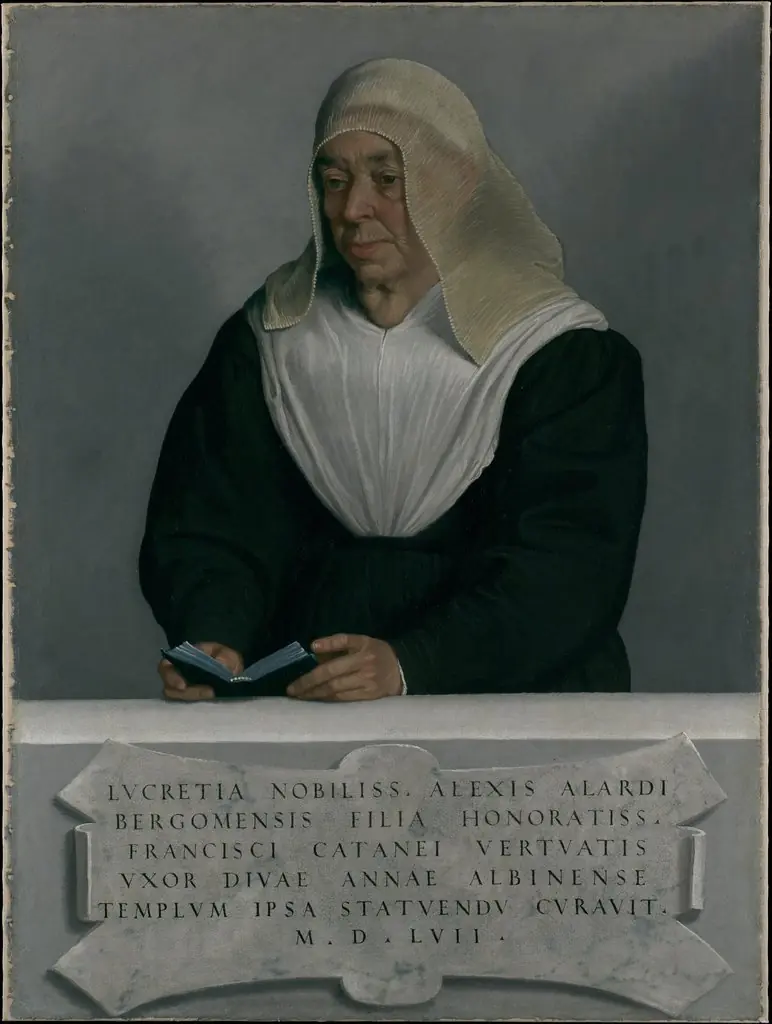
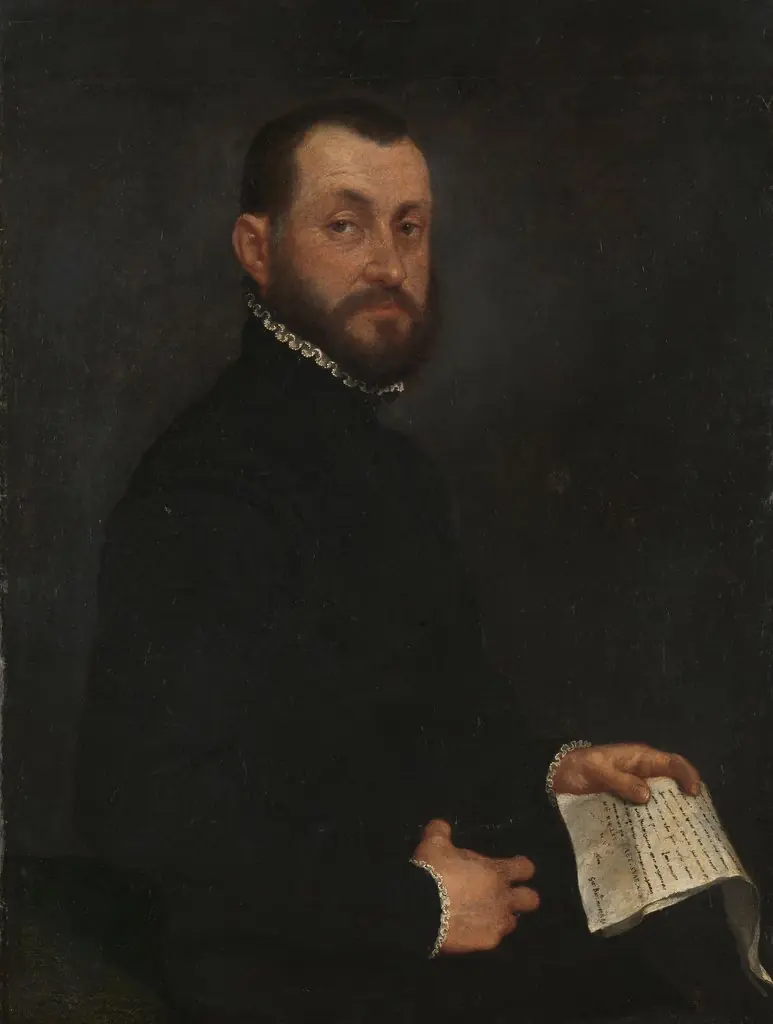
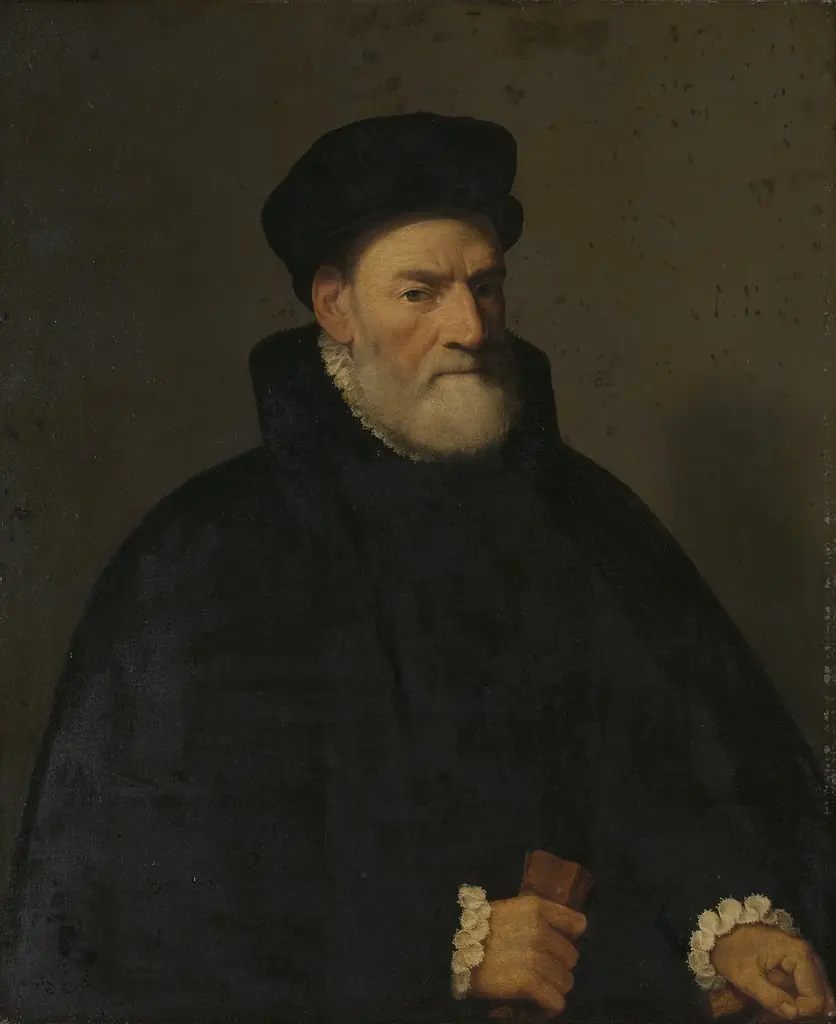
- Portrait of a Young Woman
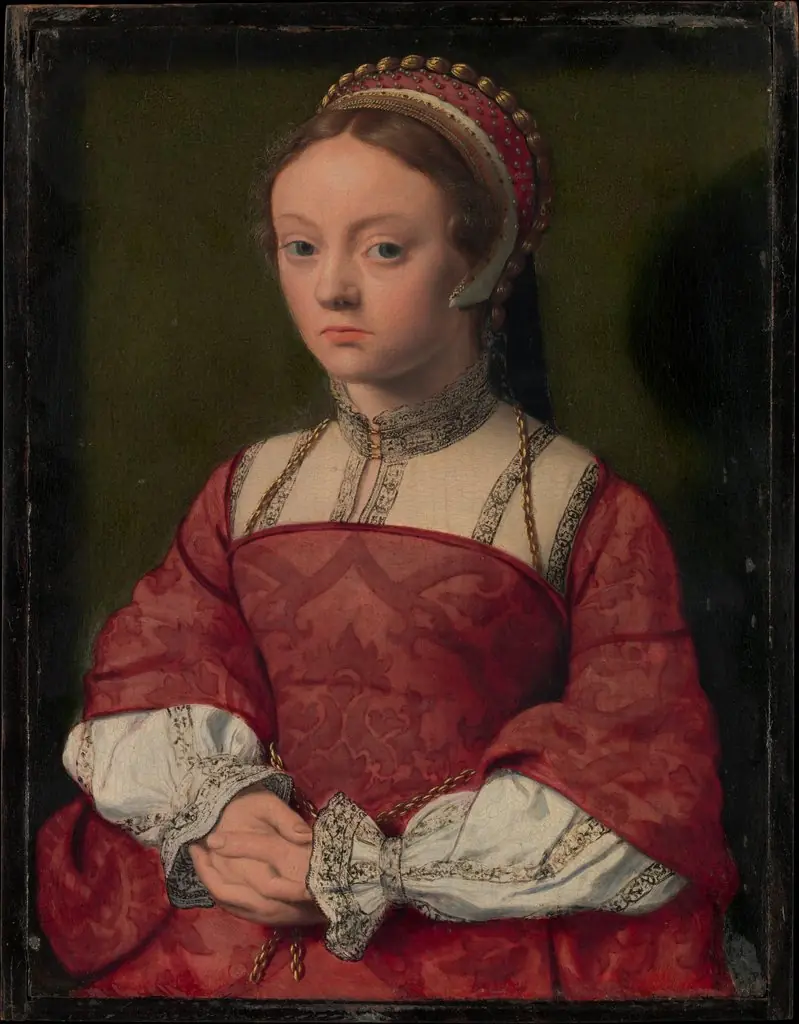 Portrait of a Young Woman
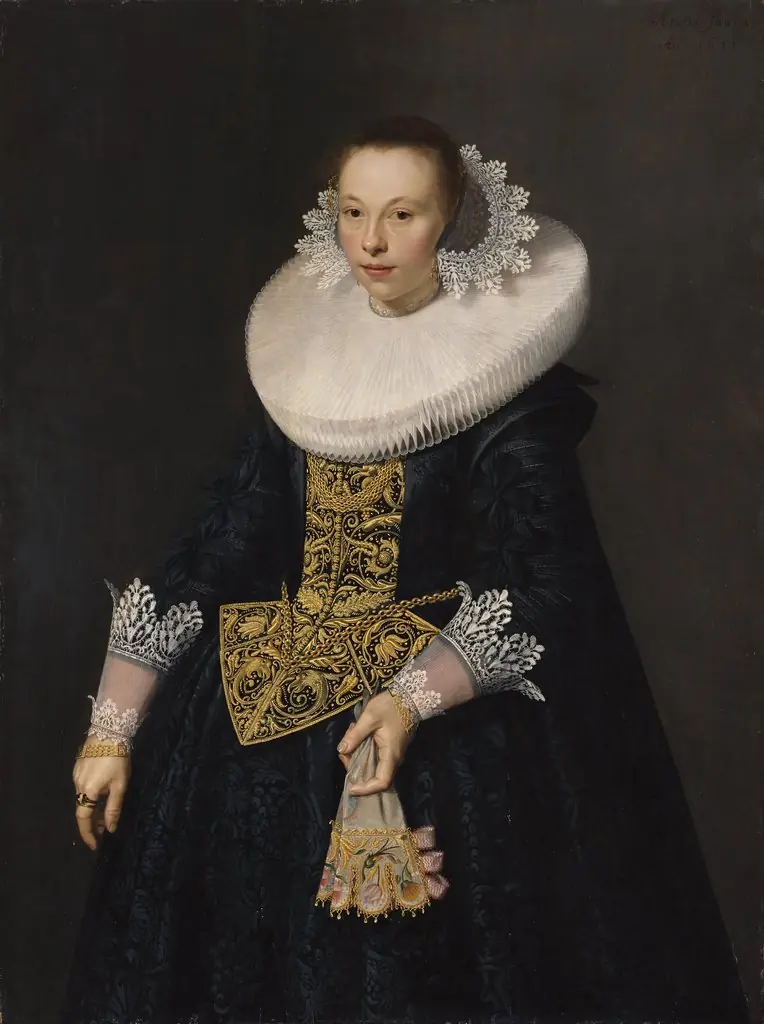 Portrait of a Young Woman
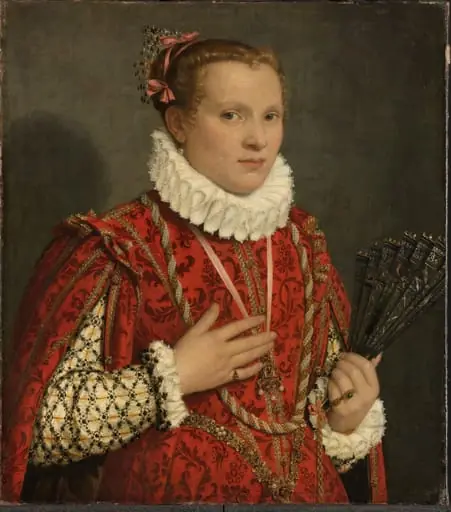 Portrait of a young woman holding a fan
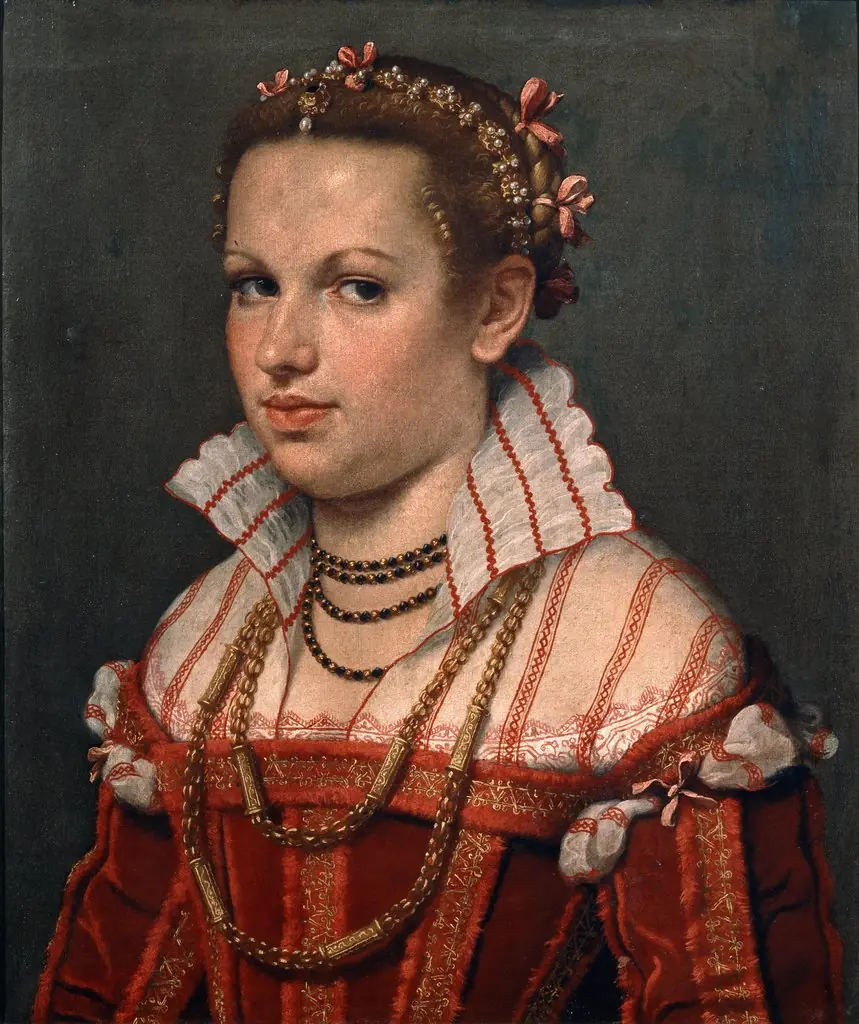 Isotta Brembati
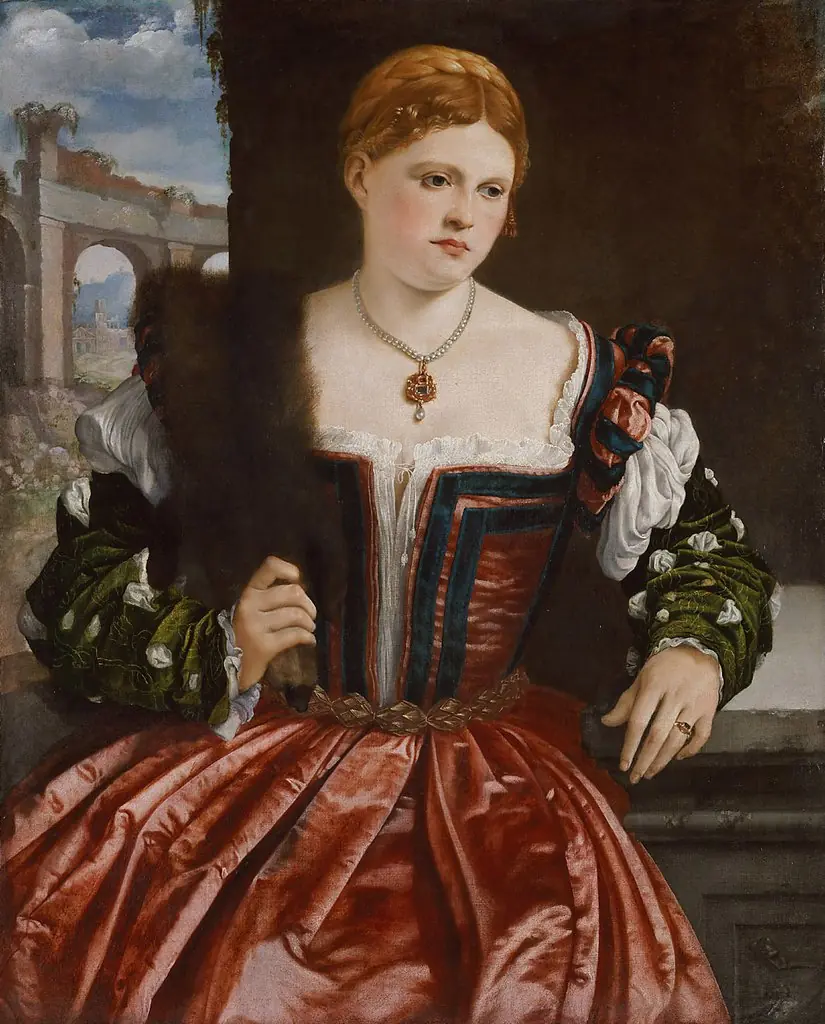 Portrait of a Young Lady
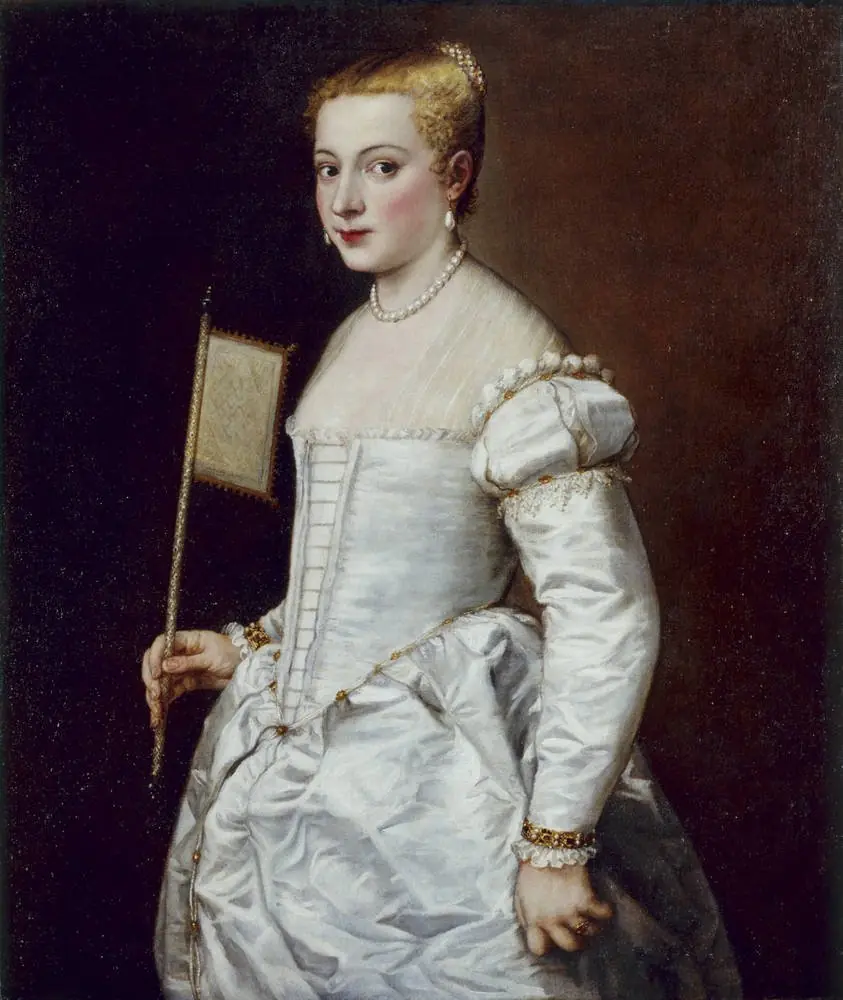 Portrait of a Lady in White
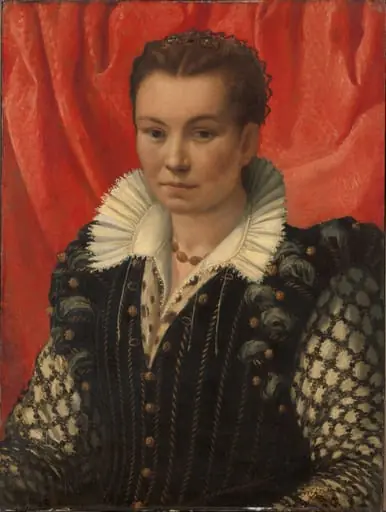 Portrait of a Woman
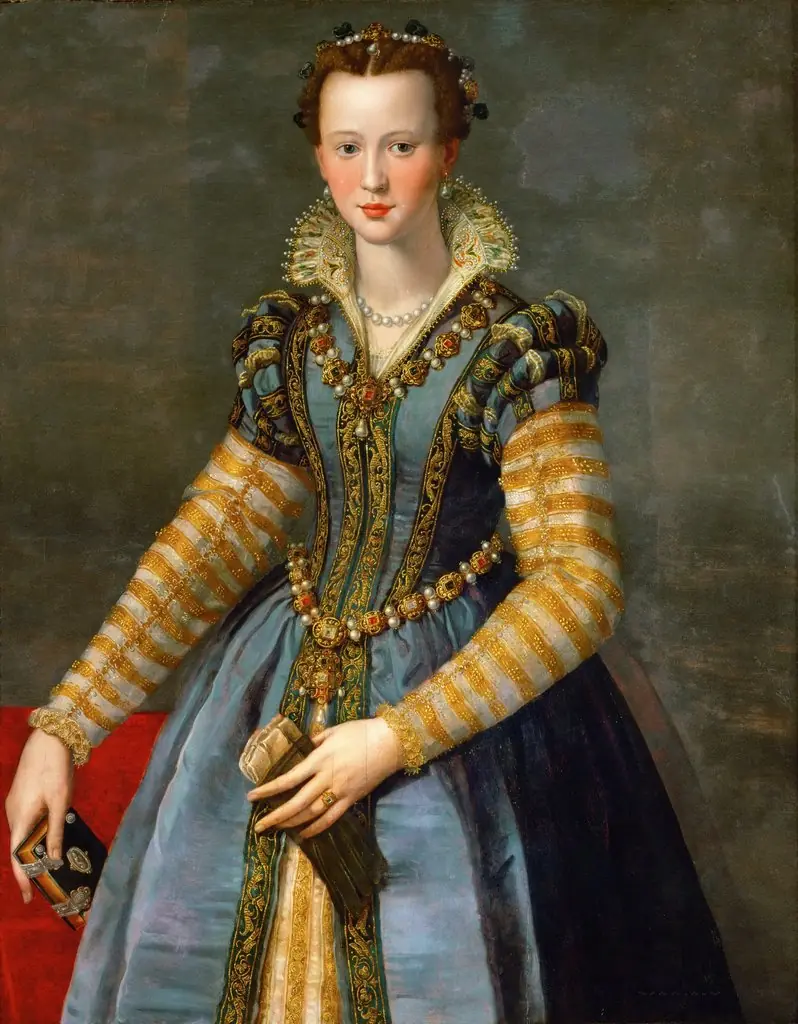 Portrait of a lady, traditionally identified as Maria de' Medici
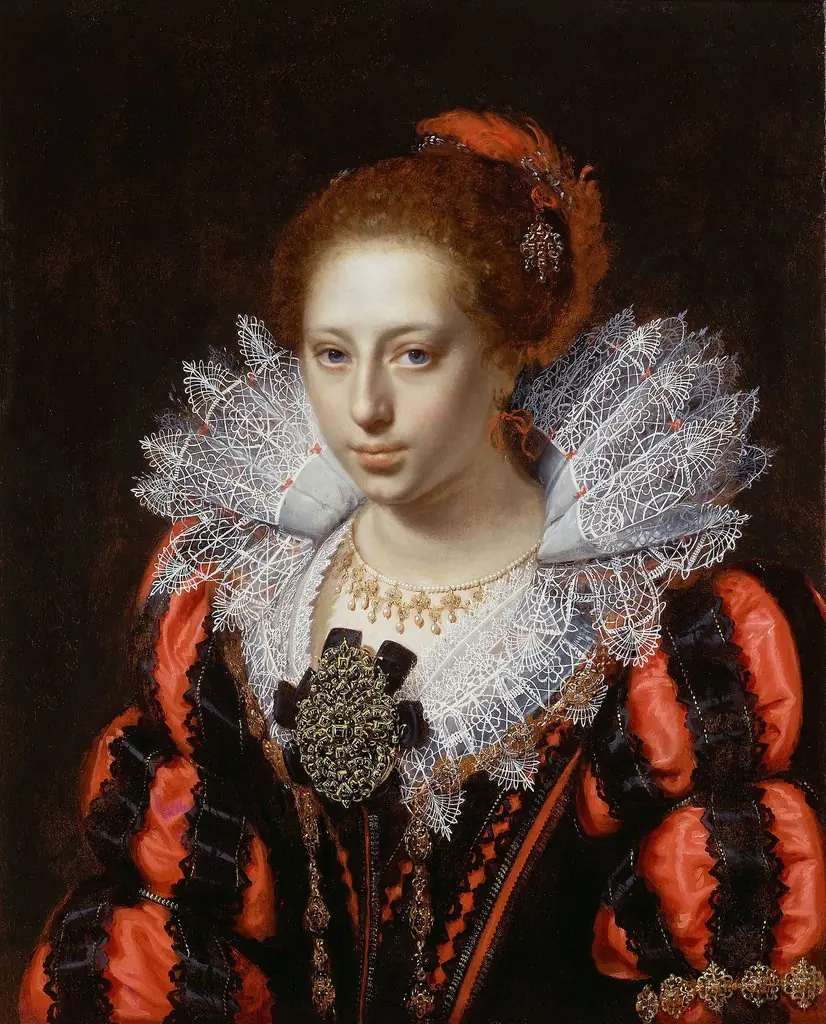 Portrait of a Young Lady
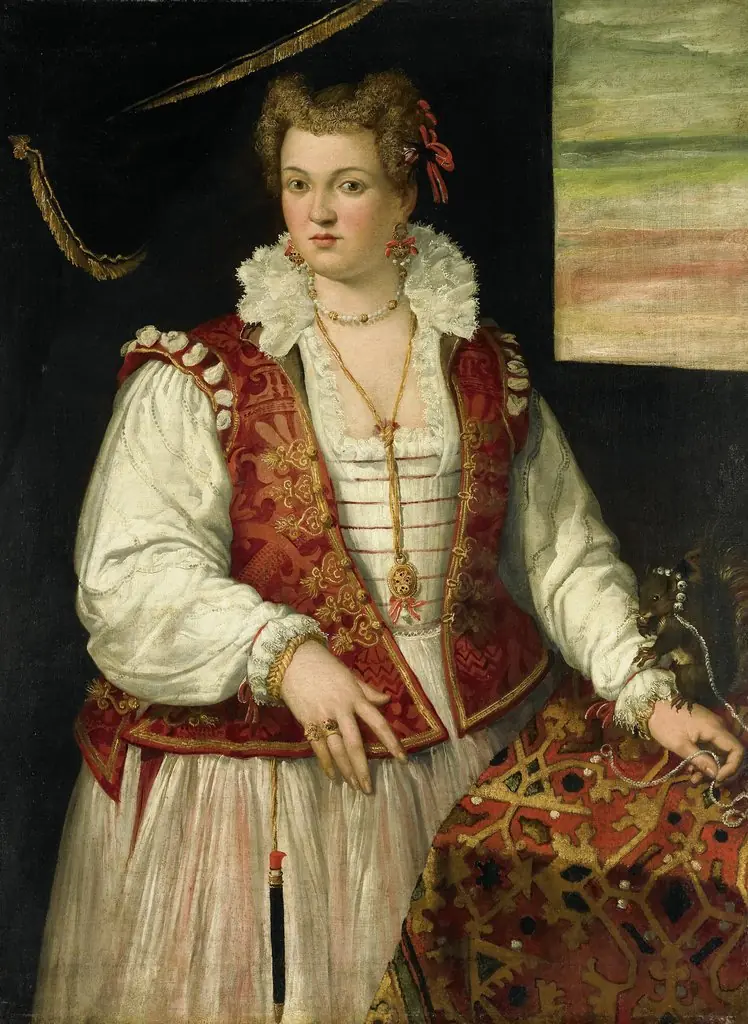 Portrait of a Woman with a Squirrel
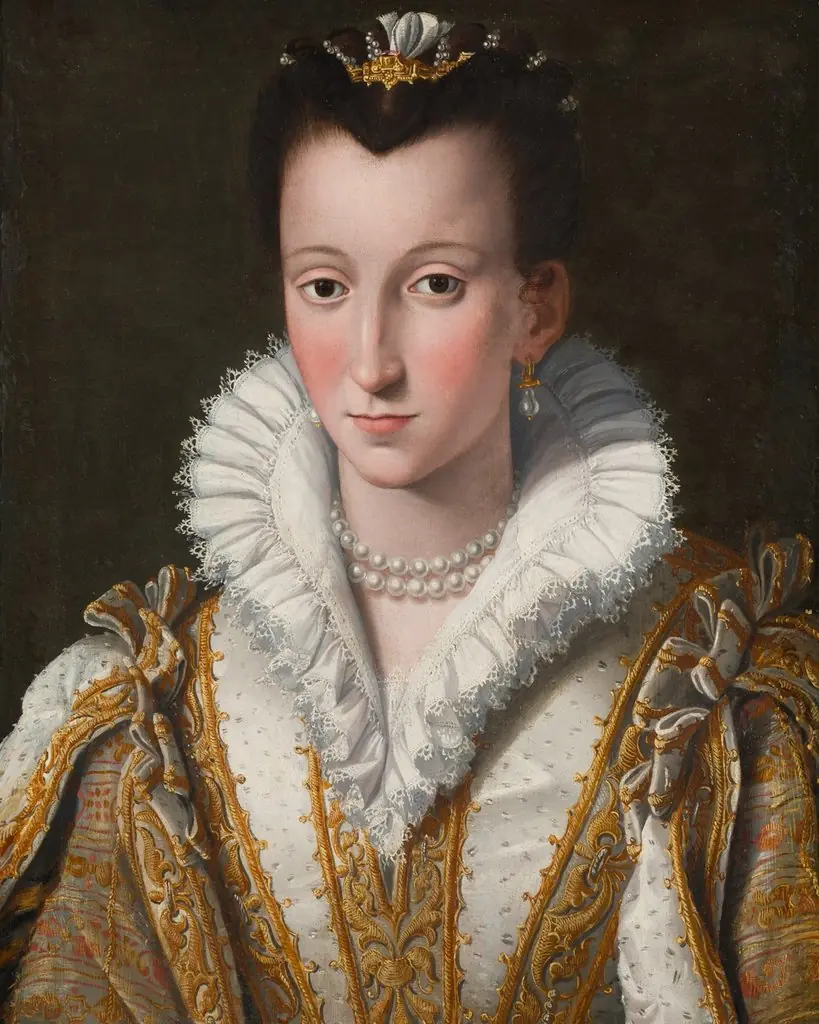 Portrait of Eleonora di Garzia di Toledo, called Dianora (?)