Artwork
Portrait of an Old Man, probably Vercellino Olivazzi, Senator from Bergamo
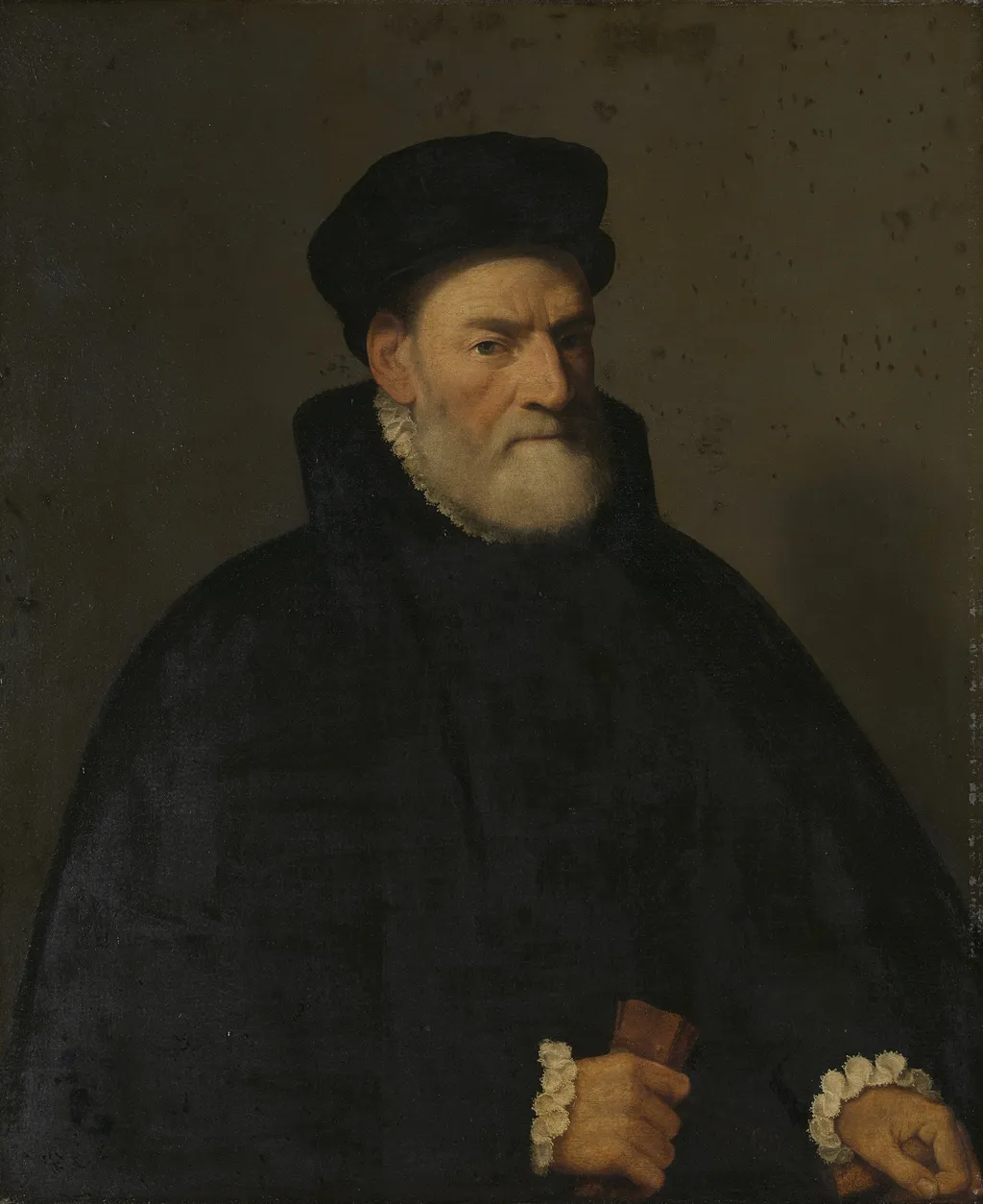
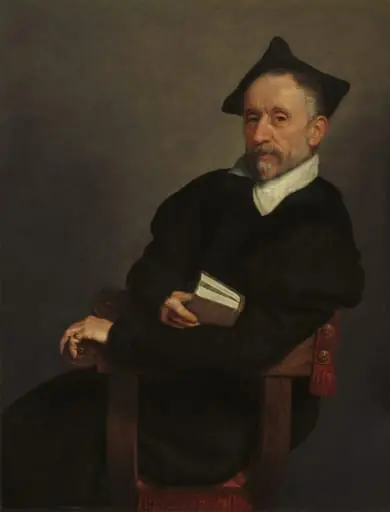
Portrait of an Old Man, probably Vercellino Olivazzi, Senator from Bergamo is an oil painting by the Mannerist artist Giovanni Battista Moroni. It dates from 1564 and is held in the collection of the Mauritshuis.
About this work
Subject & Meaning
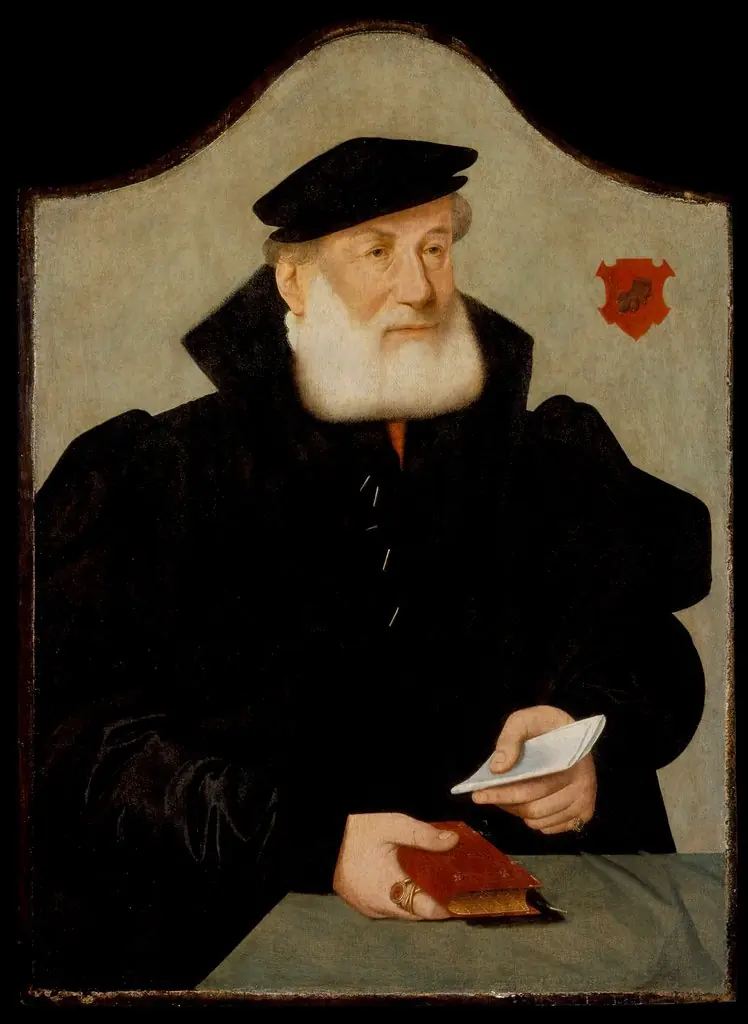
A black hat casts a shadow over his forehead, contrasting with the illuminated upper face and emphasizing his distinct features.
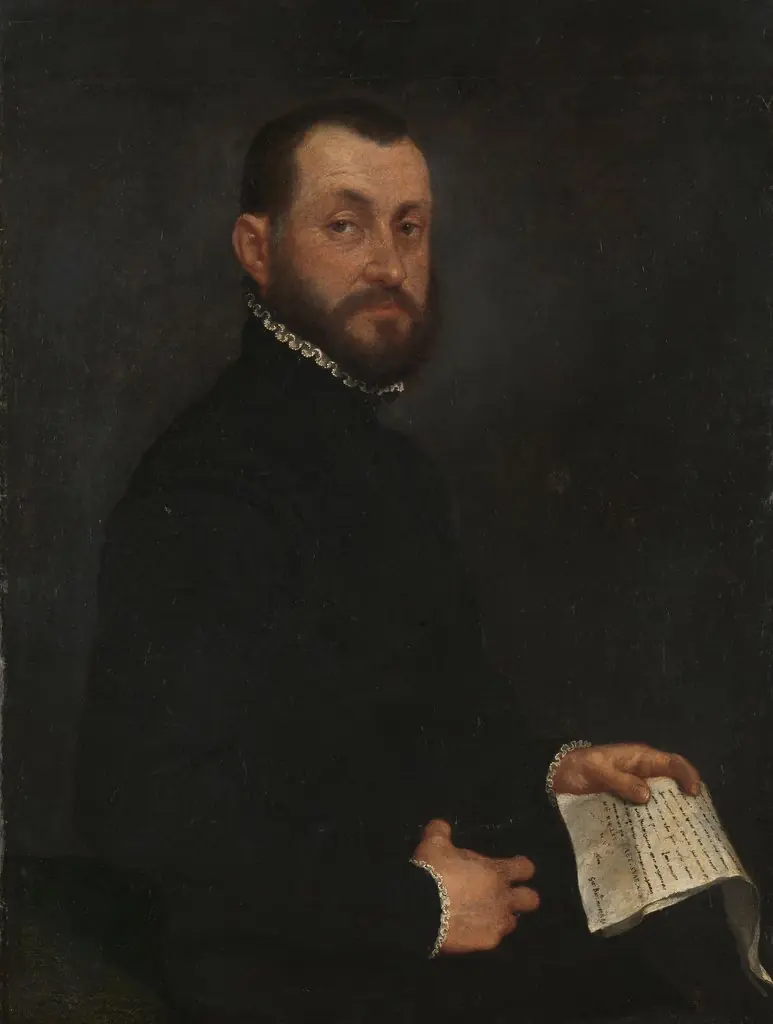
The painting shows an elderly man in half bust, dressed in black with a white collar and beard that catches the light. He sits on an invisible chair, his right hand resting on its arm while his left hand holds what appears to be a document case. A black hat casts a shadow over his forehead, contrasting with the illuminated upper face and emphasizing his distinct features.
This composition conveys the dignity and self‑awareness of a 16th‑century Bergamasque senator, presenting him as both a recognizable individual and a figure destined to endure in historical memory.
Technique & Style
Executed in oil on canvas, this half-length portrait employs a restrained palette dominated by the subject's black attire and a grey background. This dark setting serves to concentrate illumination on the figure's face, particularly highlighting the white mustache and beard which contrast sharply against the white ruff. Moroni utilizes characteristic chiaroscuro to model the features, casting a shadow from the black hat across the forehead while allowing light to strike the upper face, creating a sense of three-dimensional presence.
The composition depicts the sitter seated, with his right hand resting on an unseen chair arm and his left holding what appears to be a document case. The intense expression and specific handling of light on the facial features are cited as definitive stylistic markers of the artist's mature period, distinguishing the work through its psychological depth and realistic rendering of texture.
History & Provenance
The painting was produced by Giovanni Battista Moroni in 1564, during a period when the artist had withdrawn from Bergamo to his native Albino following disturbances involving noble families close to him. Although the sitter is generally identified as Vercellino Olivazzi, a sixteenth-century senator from Bergamo, no documentary evidence confirms that the Olivazzi family actually commissioned the work.
By 1900 the canvas belonged to Countess Giulia Olivazzi (1849–1922), daughter of Filippo and Enrica Ragazzi, who had married Luigi Lupi of Bergamo in 1876. After leaving the Lupi family, the painting was publicly exhibited for the first time in 1909. In 1911 it was shown at the Sedelmeyer Gallery in Paris, where it was purchased by the collector Friedrich Ludwig von Gans.
It was subsequently presented at the Bachstitz Gallery in The Hague and acquired the following year by the Mauritshuis in The Hague, which in 1948 transferred it on loan to the Rijksmuseum in Amsterdam, where it remains on deposit. The attribution to Moroni was first proposed by Adolfo Venturi, though Gertrud Lendorff later considered it a workshop production, a claim unsupported by evidence that Moroni ever maintained a studio.
The work is held by the Rijksmuseum and the Mauritshuis, where it is listed under inventory numbers that correspond to its accession in those institutions. It entered private hands through the Olivazzi family, was exhibited in Paris at the Sedelmeyer Gallery in 1911, and subsequently acquired by the Mauritshuis in 1912. The painting was placed in deposit at the Rijksmuseum in 1948 and has remained there since.
Exhibition history includes a showing at the Sedelmeyer Gallery in 1911 and a presentation at the Galleria Bachstitz in The Hague in the same year before its purchase by the Mauritshuis.
Context
The attribution of the portrait to Moroni has evolved through scholarly debate. Early attributions by Adolfo Venturi established Moroni as the creator, though later scholars like Gertrud Lendorff questioned whether the work came from his workshop, a notion now largely dismissed as Moroni operated independently without a formal studio. The painting reflects the cultural prominence of the Olivazzi family, whose members held political influence in Bergamo during the 16th century, aligning with the subject's identification as Senator Vercellino Olivazzi.
Stylistically, the work exemplifies Moroni's mature technique, characterized by precise chiaroscuro and psychological depth, particularly evident in the rendering of light on the sitter's face and clothing. Its provenance includes ownership by the Lupi family, exhibition in Paris in 1909, acquisition by Friedrich Ludwig von Gans, and eventual purchase by the Mauritshuis in 1912, followed by long-term deposition at the Rijksmuseum. The painting's composition, with the sitter seated and holding documents, underscores themes of civic authority and intellectual presence, reinforcing its significance in Northern Renaissance portraiture.
Legacy
The portrait of Vercellino Olivazzi, attributed to Giovanni Battista Moroni and dated to 1564, has been recognized as an important early example of a realistic, psychologically nuanced portrait that influenced later artists' approaches to representation of civic identity and individual dignity. Its inclusion in the Rijksmuseum collection and subsequent exhibitions at institutions such as the Mauritshuis and the 1909 Paris gallery of Sedelmeyer contributed to a sustained scholarly interest that shaped the historiography of Lombard painting in the sixteenth century. The work's attribution history, beginning with Adolfo Venturi's early studies and later reevaluations by scholars like Lendorff and Mina Gregori, has reinforced its reputation as a seminal piece within Moroni's oeuvre and as a model for portraiture in Northern Italy.
Overview
This oil painting, created by Giovanni Battista Moroni in 1564, is a portrait of an elderly man. It is housed at the Rijksmuseum.
Own this work as a print
Artist & collection
Artist
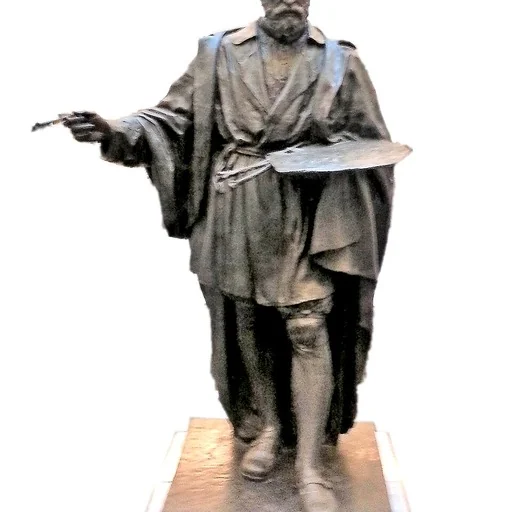
Giovanni Battista Moroni, also known as Giambattista Moroni was an Italian painter of the Mannerist school.

 Portrait of a Man in a Cape
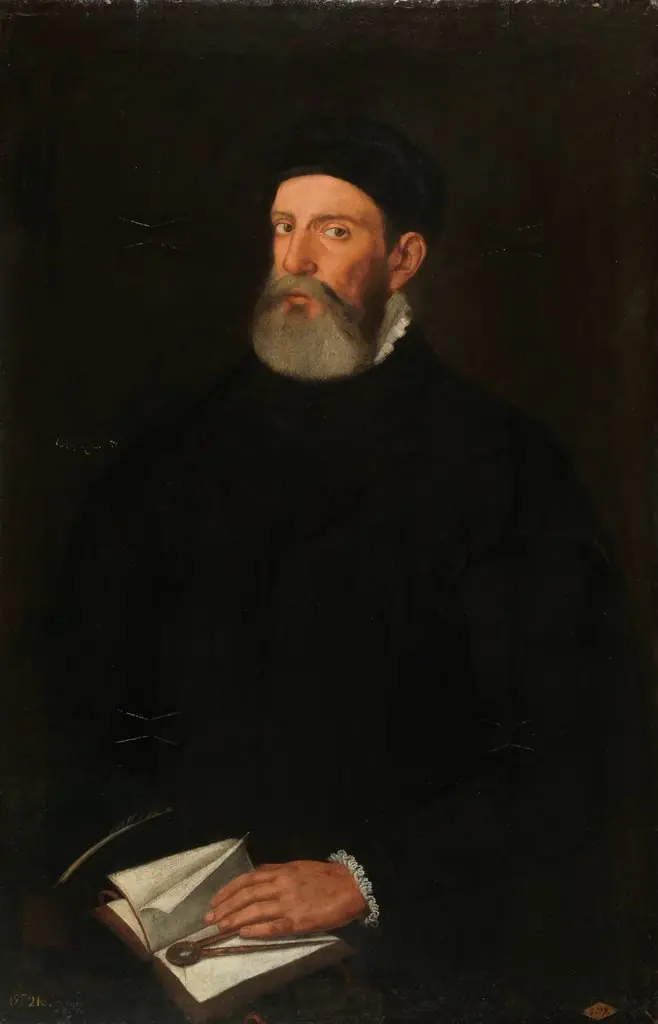 Portrait of an Architect
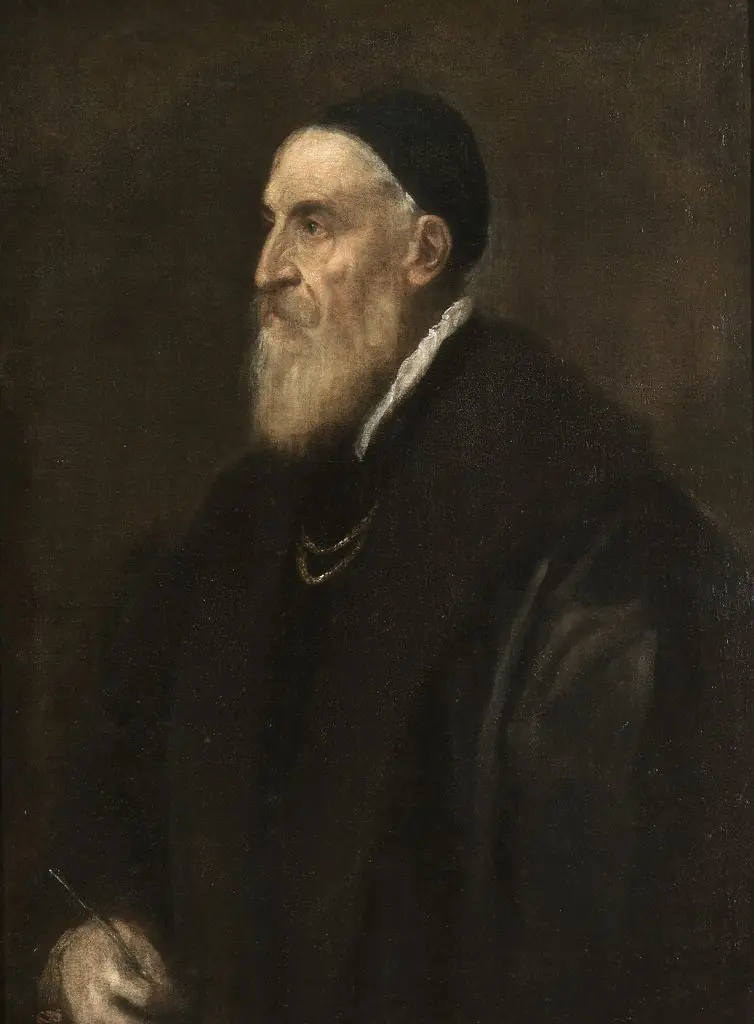 Self-Portrait
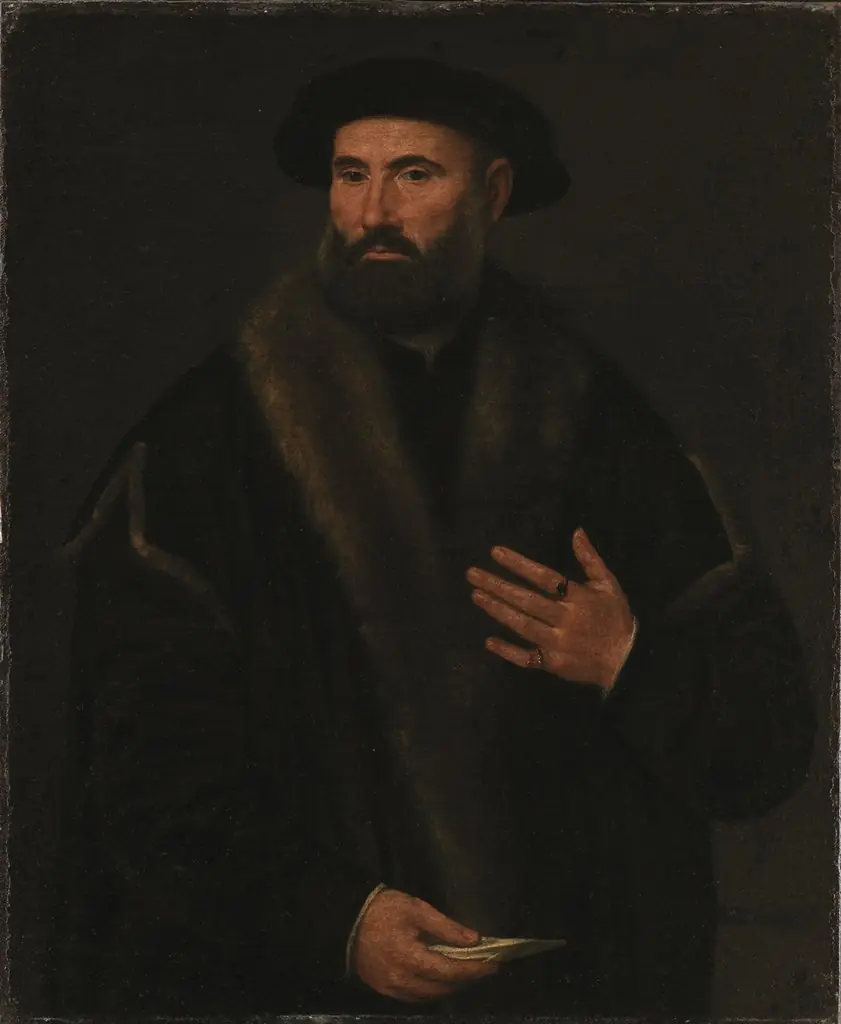 Portrait of a Man
 Portrait of a Man
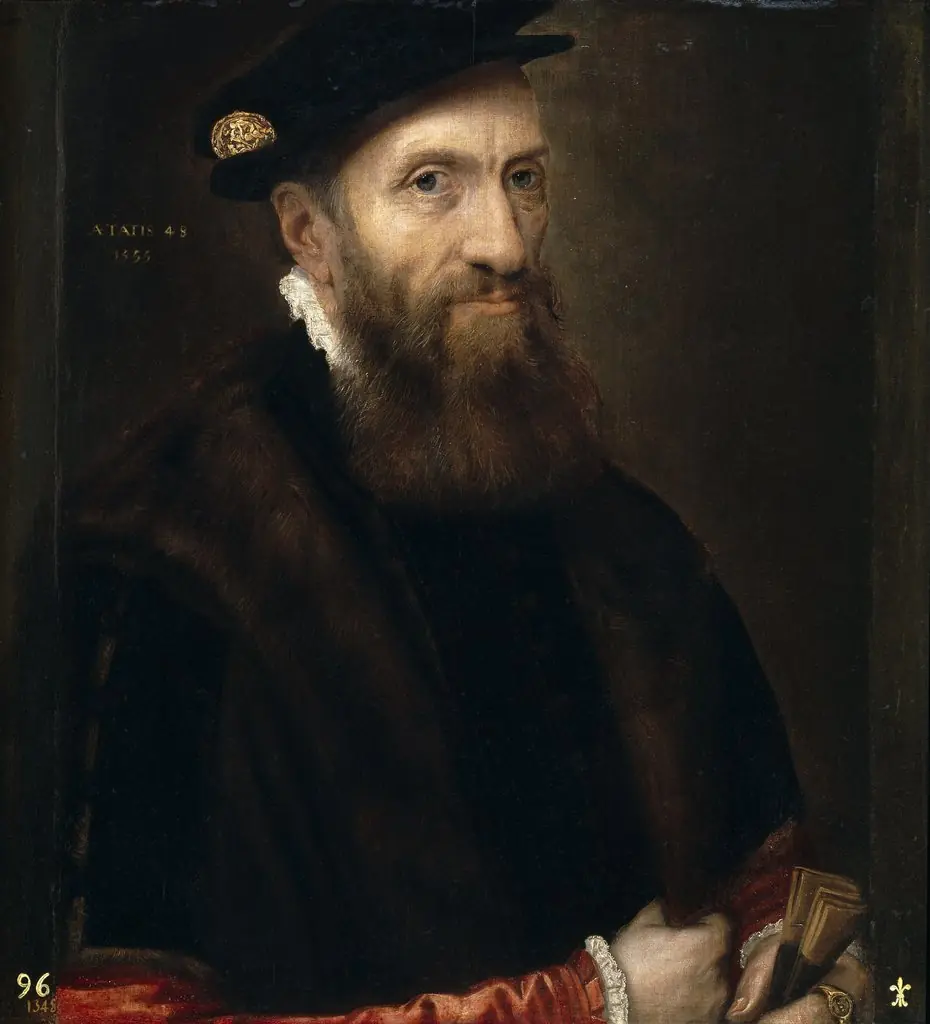 Portrait of a Man aged 48
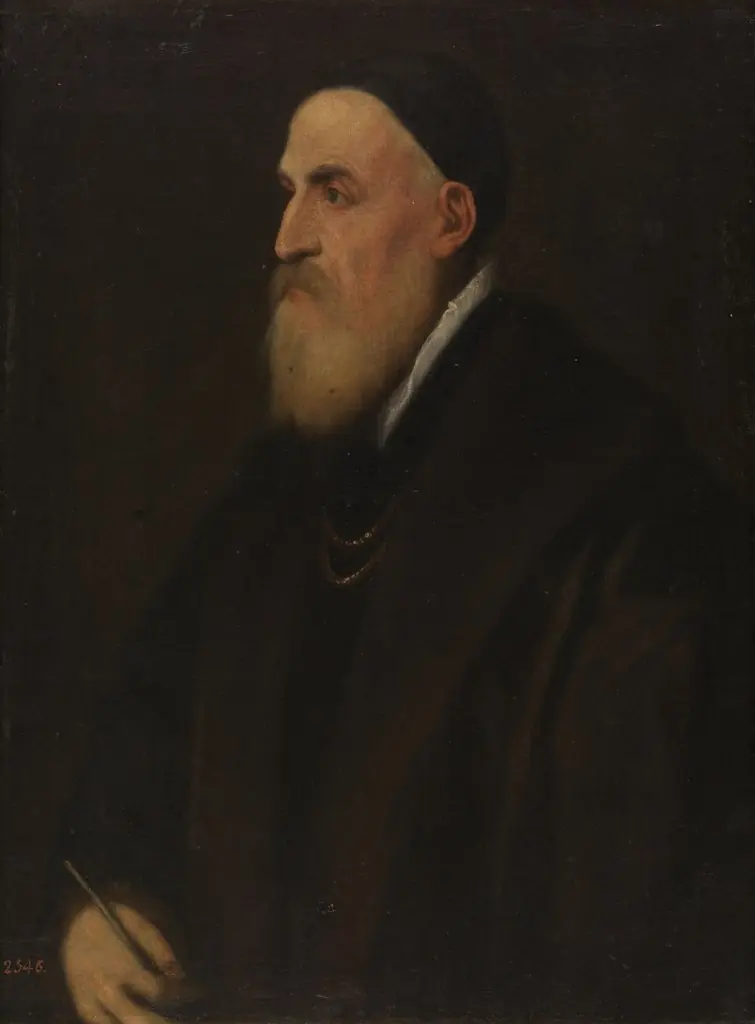 Self-portrait of Titian
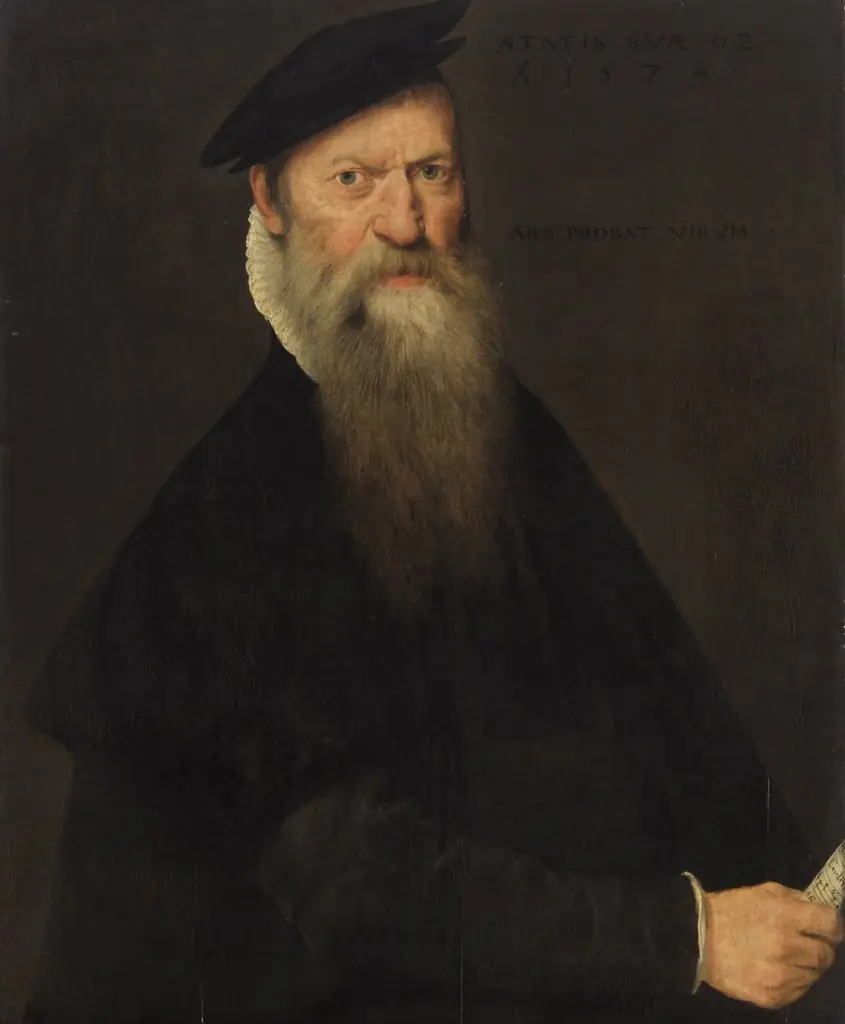 Bildnis eines Musikers
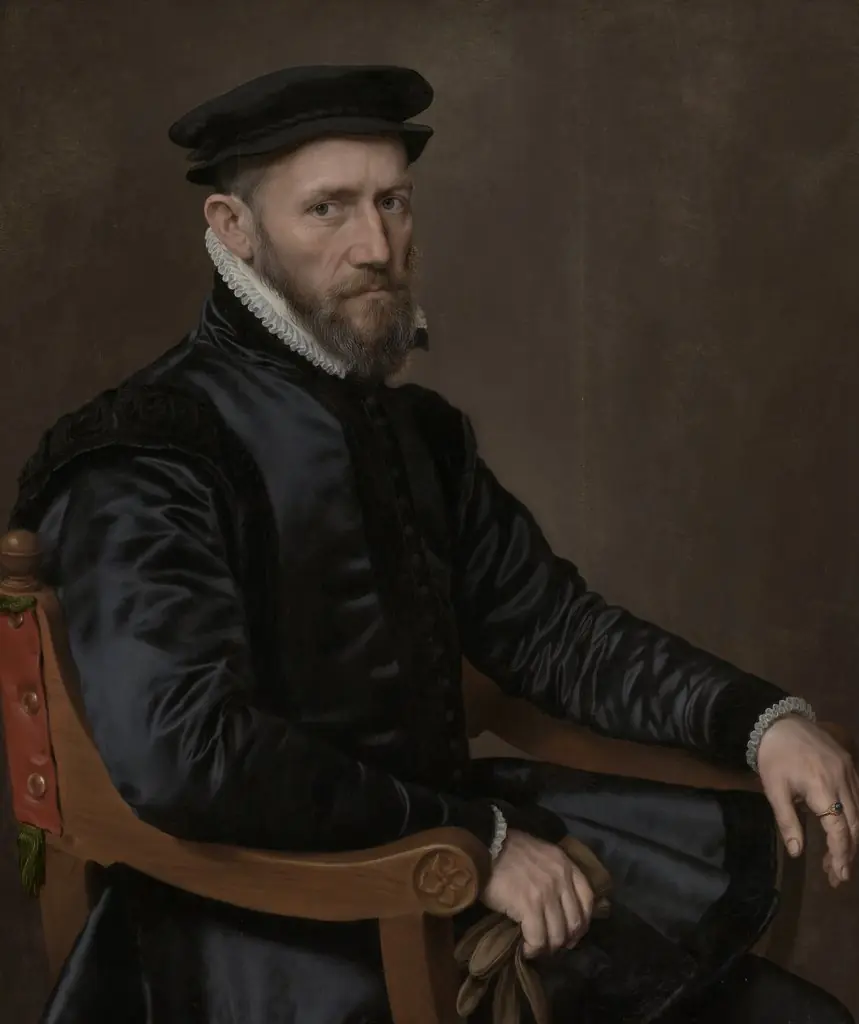 Portrait of Sir Thomas Gresham, pendant to portrait of Anne Fernely
 Portrait of Wilhelm Kannengiesser
 Portrait of a Man
- Portrait of an elderly Man