Artwork
Gian Federico Madruzzo
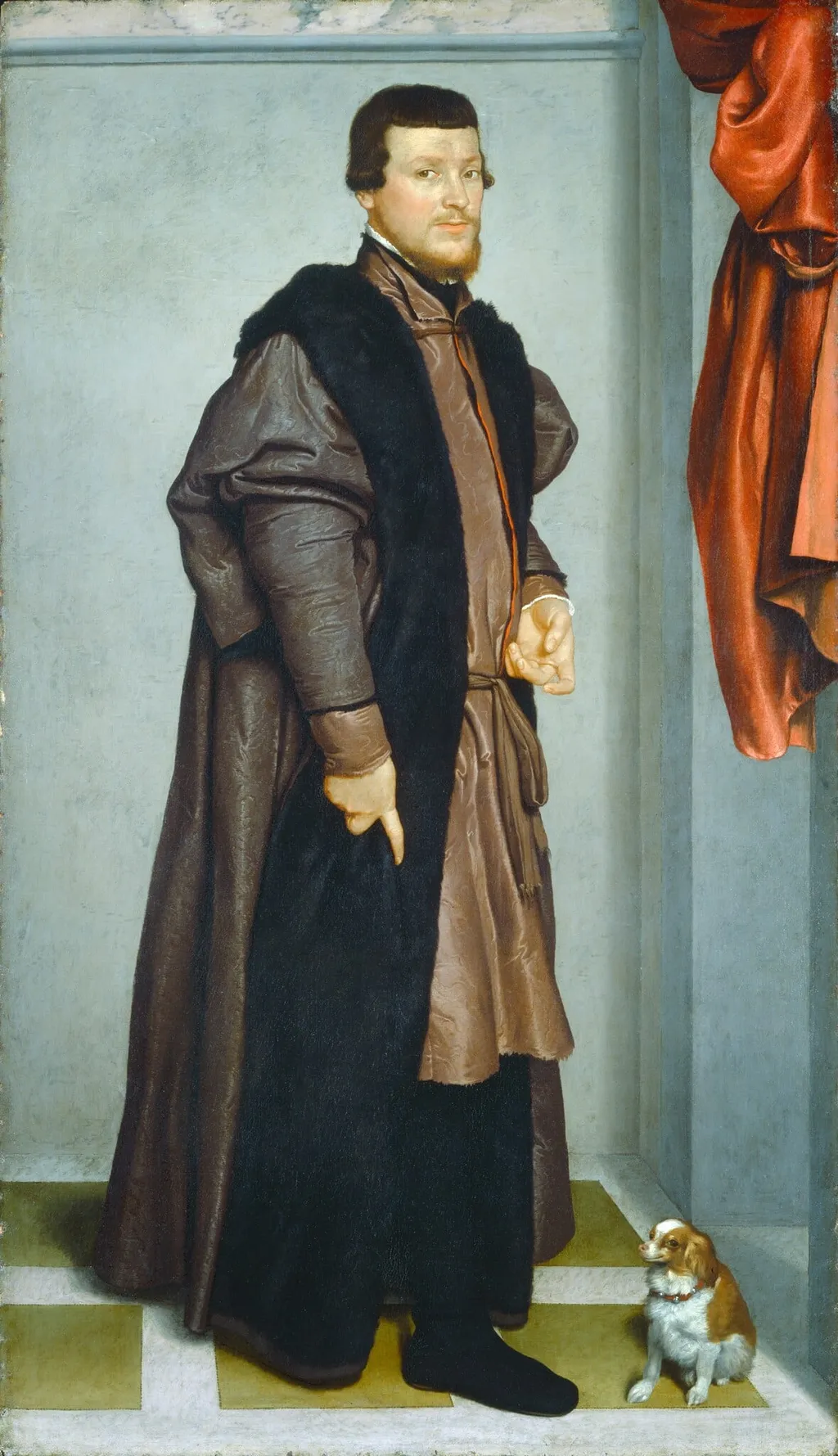
Gian Federico Madruzzo is an oil painting by the Mannerist artist Giovanni Battista Moroni. It dates from 1560 and is held in the collection of the National Gallery of Art.
About this work
Technique & Style
The composition balances a dark, receding interior with a lightly illuminated face, reflecting the sitter's aristocratic poise.
The work is an oil painting on canvas, measuring 201.9 × 116.8 cm, created in 1560 by Giovanni Battista Moroni. It depicts the statesman Gian Federico Madruzzo in a full-length standing pose, rendered with fine brushwork that emphasizes crisp delineation of facial features and rich, muted tonal modeling typical of Moroni's portraiture. The composition balances a dark, receding interior with a lightly illuminated face, reflecting the sitter's aristocratic poise.
History & Provenance
Giovanni Battista Moroni painted the portrait of Gian Federico Madruzzo in 1560, executing it in oil on canvas. The work was commissioned by the Madruzzo family, the Prince Bishops of Trent, and remained at the Castello del Buon Consiglio in Trent until 1658. Thereafter it descended through Trentino noble families, passing by inheritance to the Baroni di Roccabruna, then in 1735 to the Baroni Gaudenti della Torre, and by 1833 to the Baroni Salvadori at Casa Salvadori in Trent.
In 1907 the painting was sold through Trotti et Cie. and M. Knoedler & Co. in Paris to the New York collector James Stillman. It passed to his son Charles Chauncey Stillman and was offered at the Stillman sale at the American Art Association in New York on 3 February 1927 (lot 28). M. Knoedler & Co. purchased it there and sold it to William R. Timken, after whose death it passed to his widow Lillian Guyer Timken, who bequeathed it in 1960 to the National Gallery of Art, Washington, D.C., where it has been held since.
Context
The portrait of Gian Federico Madruzzo exemplifies Giovanni Battista Moroni's mature portraiture, with scholars such as Venturi in his 1933 catalogue emphasizing its psychological insight and its role in representing Trentese aristocratic identity. Its provenance, commissioned by the Madruzzo family, passing through several noble lineages, and finally acquired by the National Gallery of Art in Washington, D.C., highlights its enduring cultural significance. The work is cited in art-historical literature as a recognized example of 16th-century Northern Italian portraiture.
Legacy
The portrait of Gian Federico Madruzzo by Giovanni Battista Moroni became part of the National Gallery of Art's collection in 1960 through the bequest of Lillian Guyer Timken. Its documented chain of ownership, from the Madruzzo princely court to several Trentine noble families and ultimately to prominent American dealers before acquisition, reflects sustained appreciation of the work. Scholarship on Moroni frequently cites the painting, including Lionello Venturi's 1933 catalogue, helping to shape the artist's modern reputation and to illustrate the cultural stature of Counter-Reformation aristocracy.
Overview
Gian Federico Madruzzo is a 1560 oil-on-canvas portrait by Giovanni Battista Moroni, depicting the young nobleman seated in a three-quarter view against a dark, neutral background. The subject is dressed in elaborate black velvet garments trimmed with fur, a style indicative of high-ranking Trentine aristocracy in the mid-16th century. Moroni renders the textures of the fabric and the sitter's pale complexion with precise, restrained brushwork, characteristic of his mature style.
The composition focuses intensely on the sitter's face, capturing a calm, introspective expression that conveys both dignity and a sense of youthful reserve. Painted during the height of Moroni's career in Bergamo and Trent, this work exemplifies the artist's ability to merge Venetian coloristic richness with a Northern European attention to detail and psychological depth. Unlike the idealized portraits of his contemporaries, Moroni presents his subject with unflinching realism, avoiding allegorical embellishment to emphasize the individual's presence and social standing.
The painting stands as a significant example of Italian Renaissance portraiture, showcasing the transition from courtly idealization to a more direct, humanistic representation of the sitter.
Subject & Meaning
The painting centers on Gian Federico Madruzzo, portrayed seated and adorned in elaborate garments that signify his wealth and social prominence. Moroni meticulously rendered the subject's facial expression and the intricate details of his clothing, providing clues about his character and the aristocratic fashion of the era. The composition emphasizes Madruzzo's presence, reflecting the importance of individual representation in Renaissance portraiture.
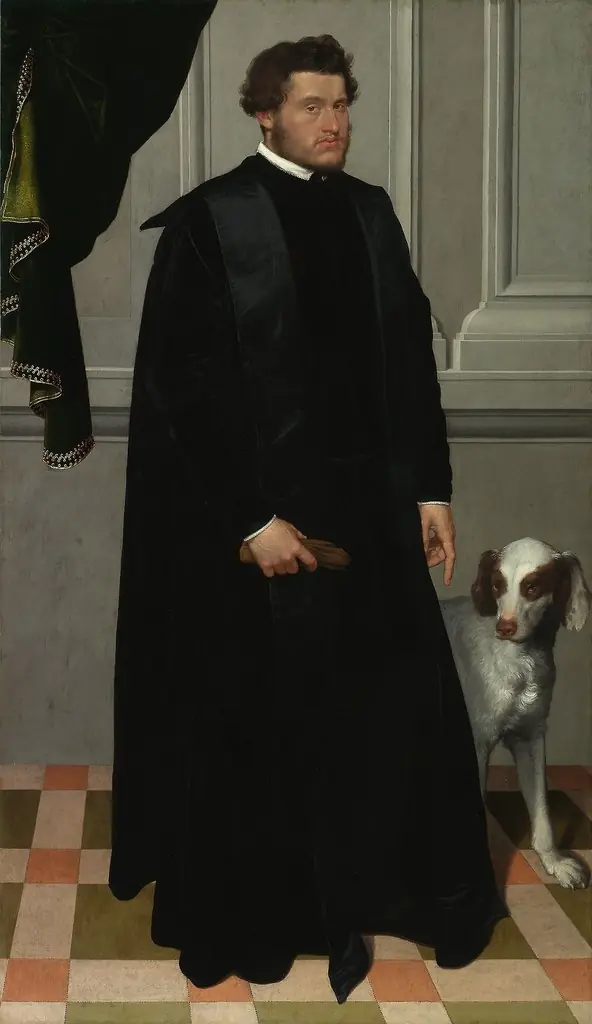
Artist & collection
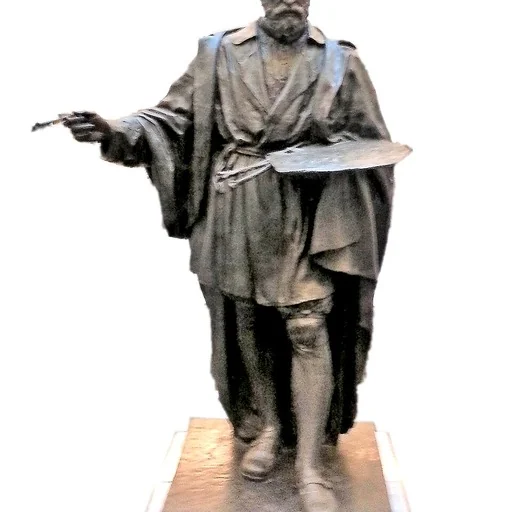
Artist
Giovanni Battista Moroni, also known as Giambattista Moroni was an Italian painter of the Mannerist school.

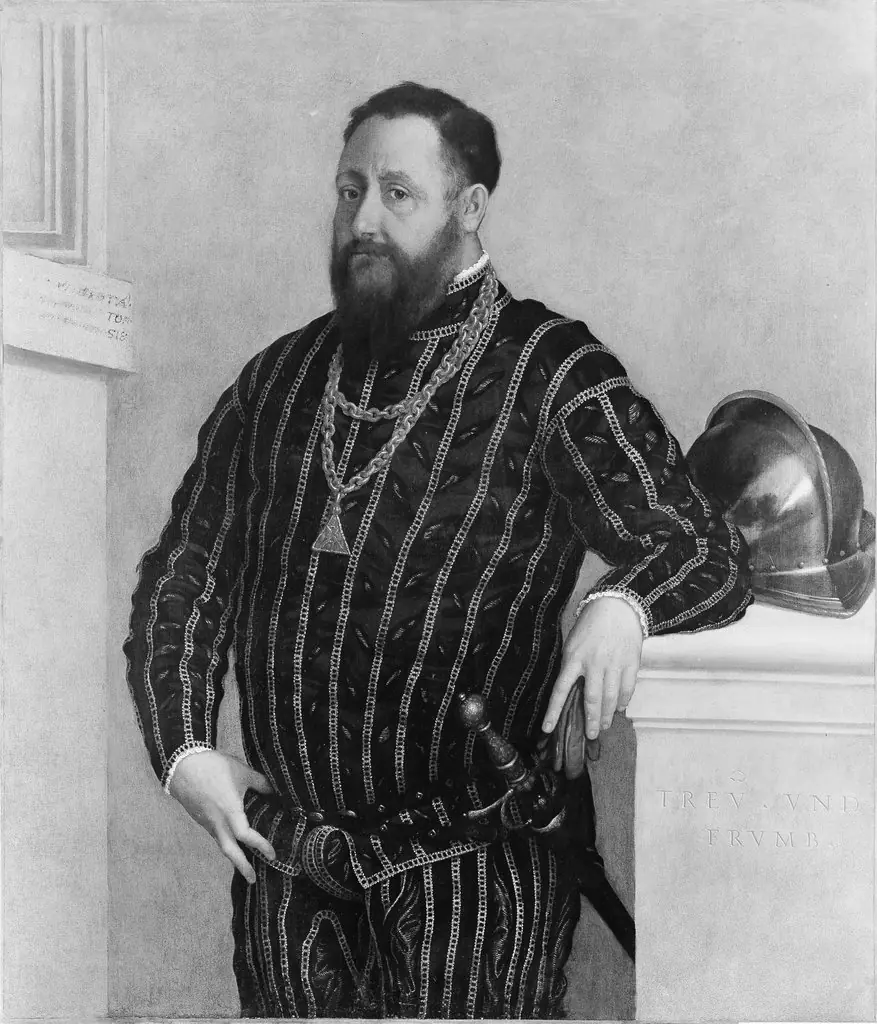
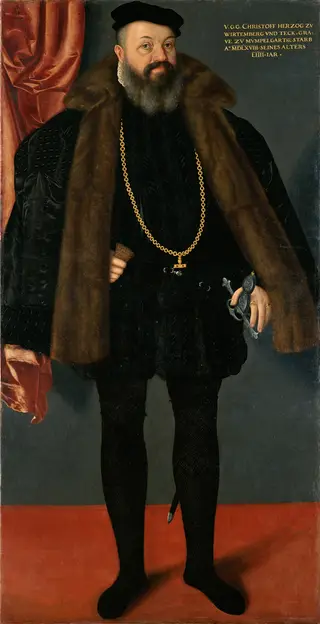 Portrait of Duke Christoph von Württemberg (1515-1568) in Spanish costume
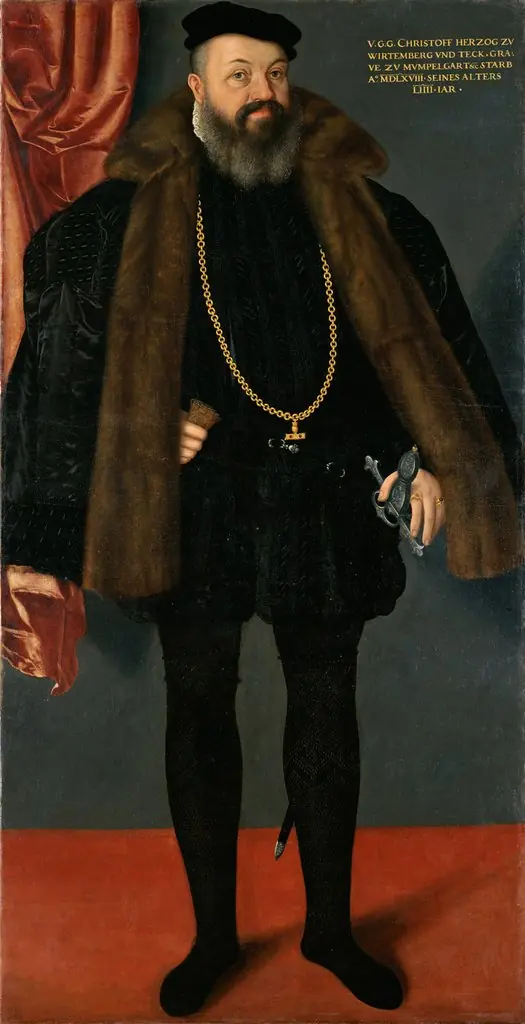 Herzog Christoph von Württemberg (1515-1568) in spanischer Tracht
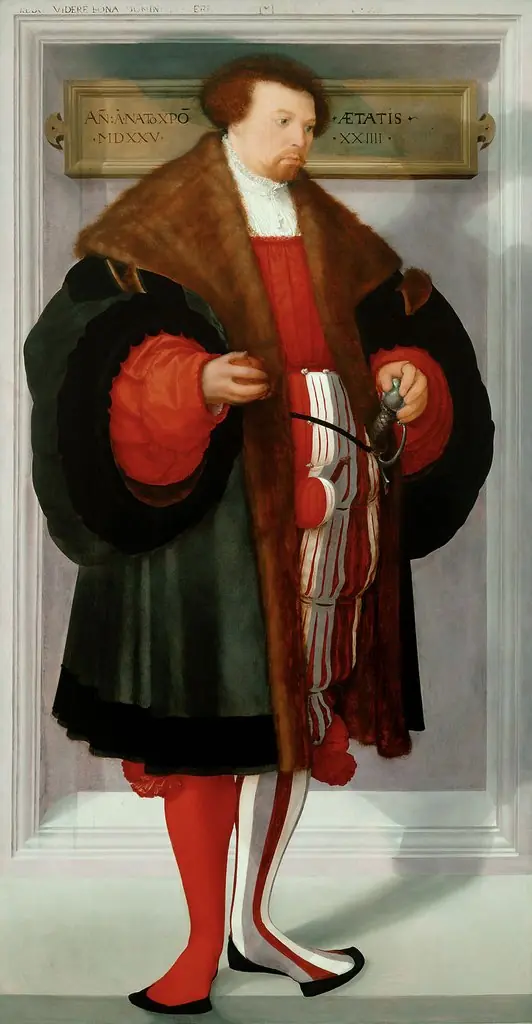 Portrait of a Man.
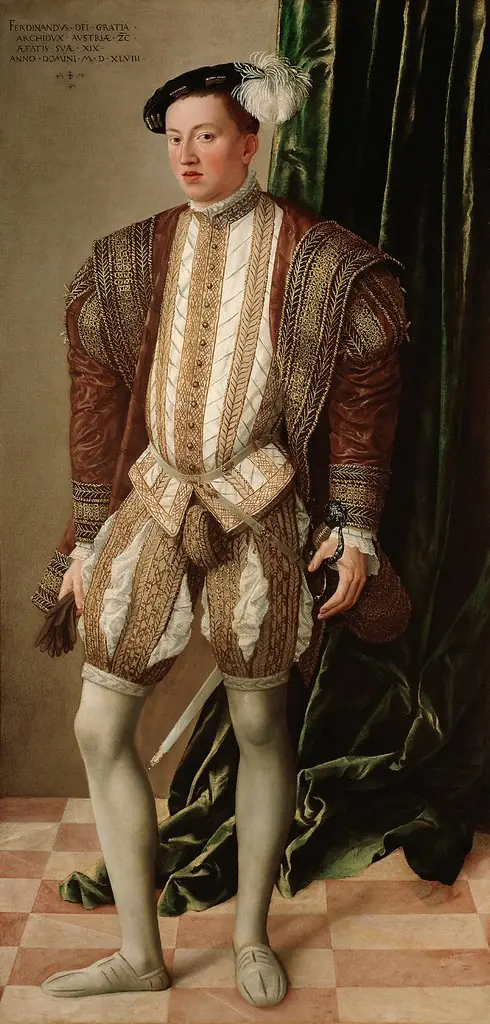 Erzherzog Ferdinand von Tirol (1529-1595)
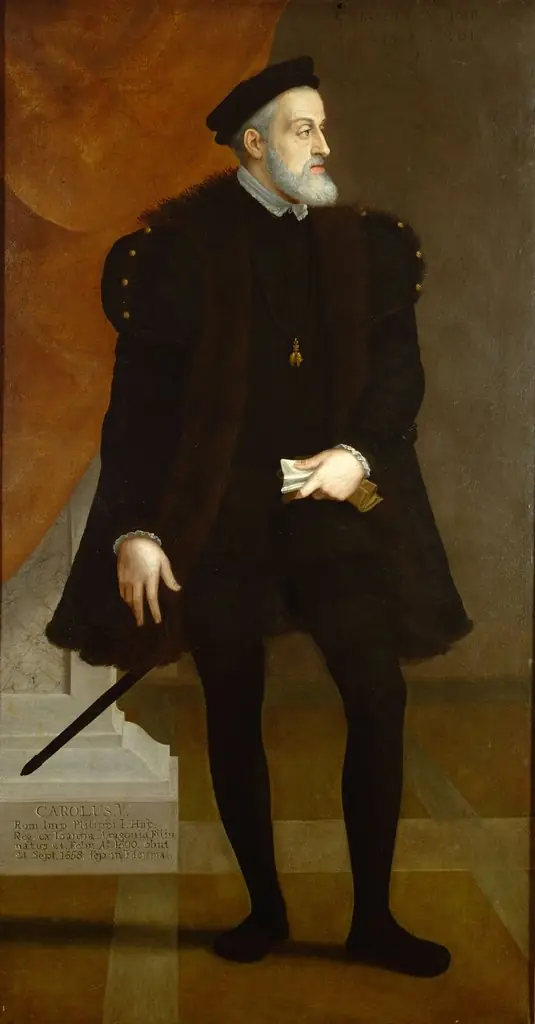 Kaiser Karl V. (1500-1558) als Fünfzigjähriger in ganzer Figur
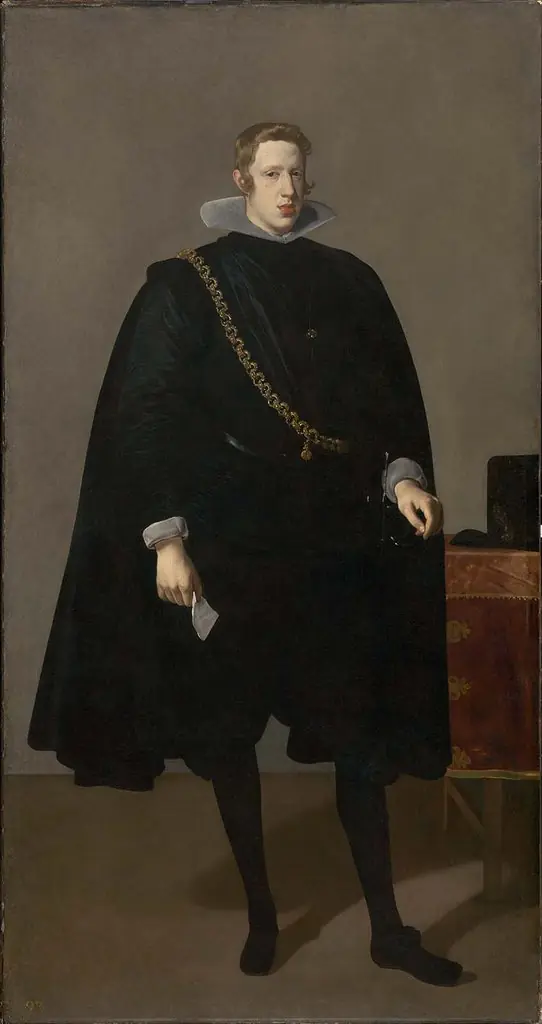 Philip IV, King of Spain
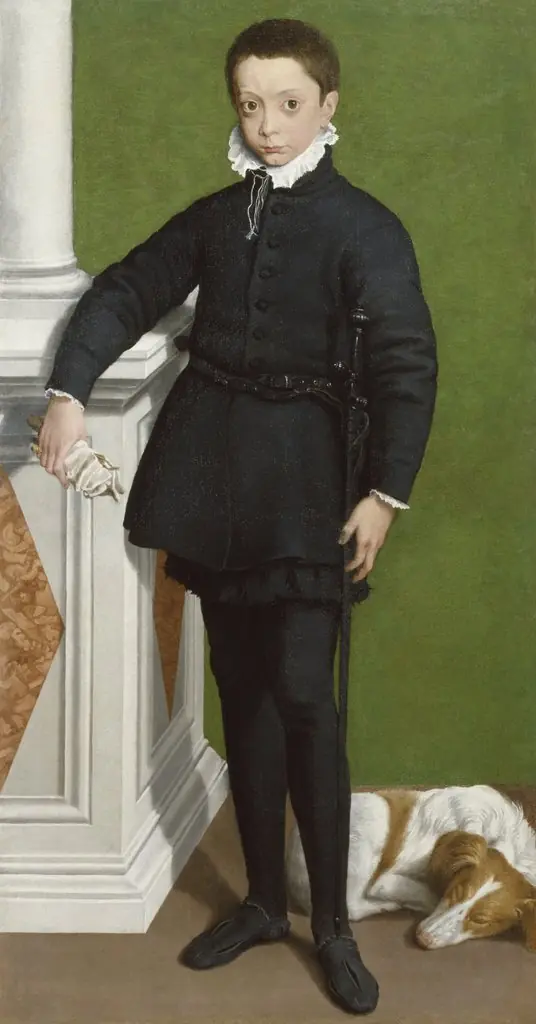 Portrait of Marquess Massimiliano Stampa
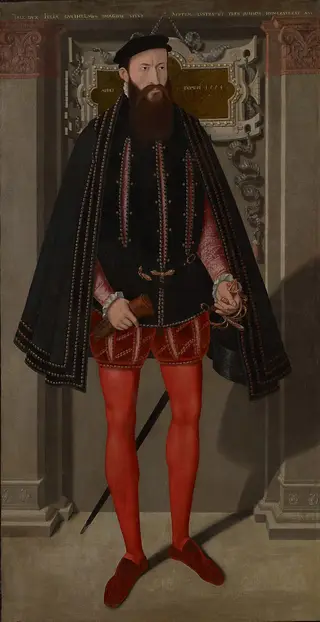 Herzog Wilhelm V. (1516-1592) von Jülich-Cleve-Berg, in ganzer Figur
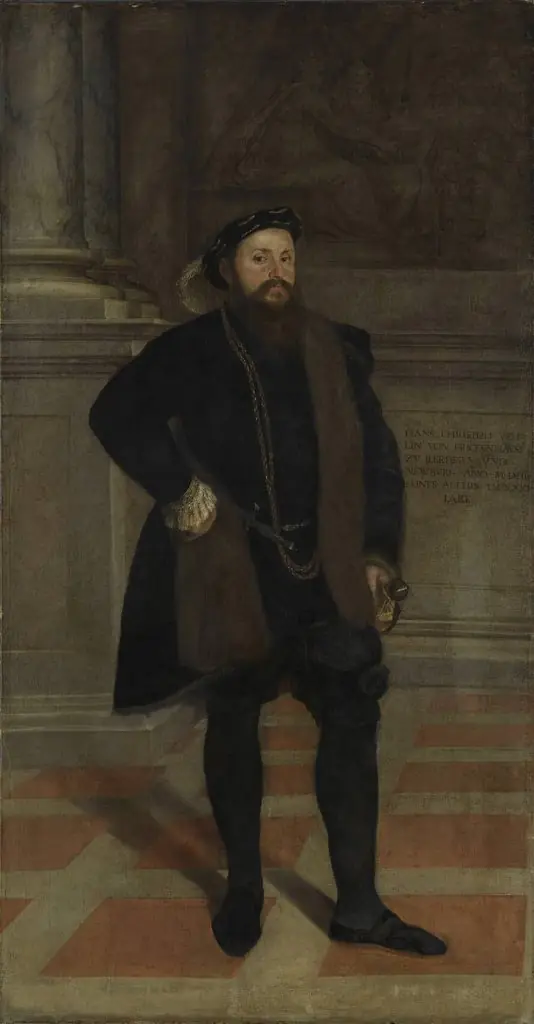 Hans Christoph I. Vöhlin von Frickenhausen (1522-1576)