Artwork
Abbess Lucrezia Agliardi Vertova (1490?–1558)
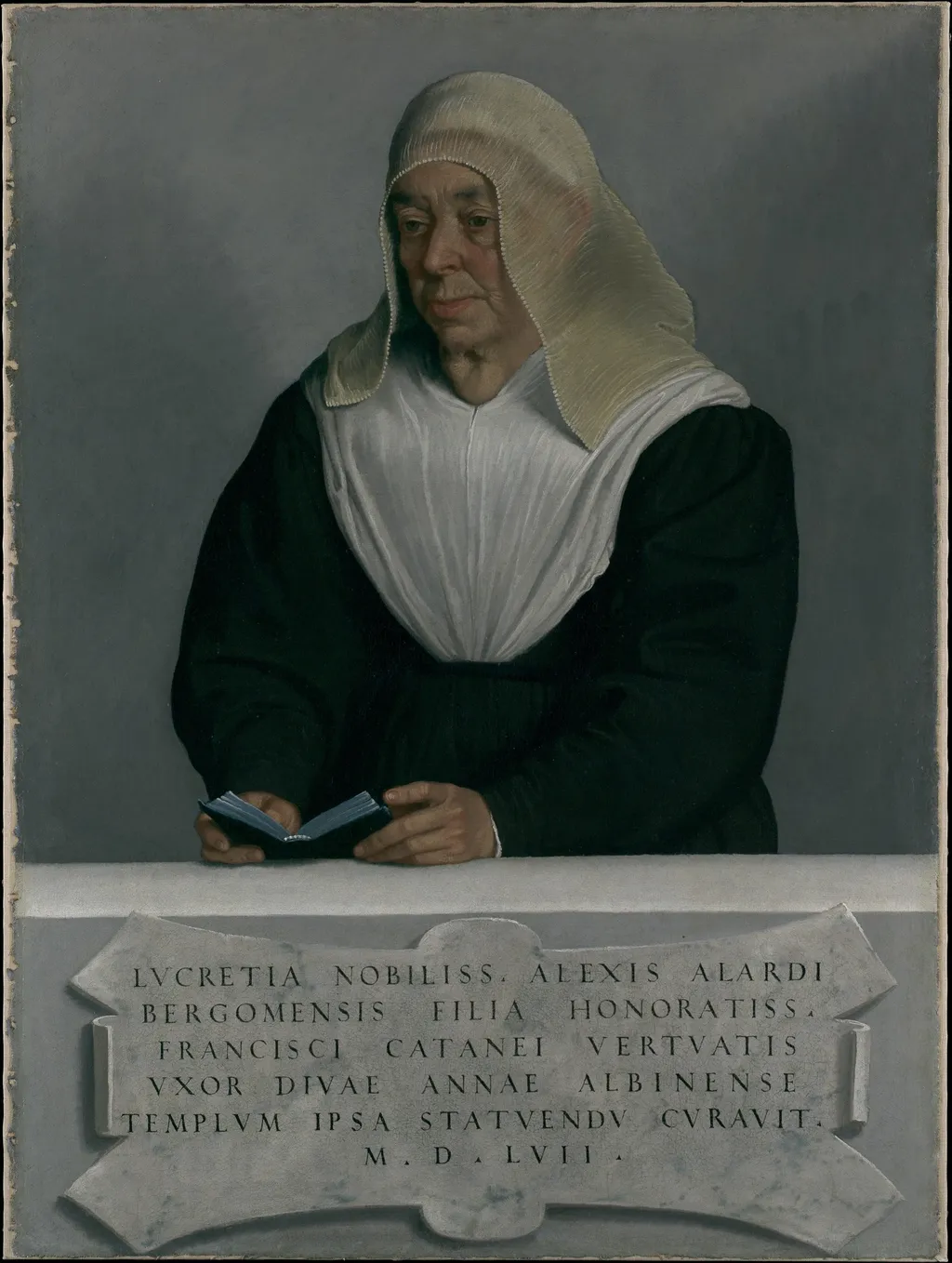
Abbess Lucrezia Agliardi Vertova (1490?–1558) is an oil painting by the Mannerist artist Giovanni Battista Moroni. It dates from 1557 and is held in the collection of the Metropolitan Museum of Art.
About this work
Subject & Meaning
She holds an open prayer book while her gaze is averted, conveying inner reflection rather than engagement with the viewer.
The portrait depicts Abbess Lucrezia Agliardi Vertova in 1557, near the end of her life, wearing the black monastic habit of the Carmelite order over a white scapular, with a veil framing her face and a visible goiter at her throat. She holds an open prayer book while her gaze is averted, conveying inner reflection rather than engagement with the viewer. The inscription at the lower edge names her, identifies her status as abbess, and records the year of execution, underscoring the memorial function of the image.
The subdued palette and unflinching naturalism emphasize her humanity and lifelong dedication to faith, aligning with Moroni’s mature portrait style of quiet intensity.
Technique & Style
The portrait is executed in oil paint on a canvas support, measuring 91 cm in height and 69 cm in width. Moroni employs a restrained palette dominated by the black of the nun's habit, contrasted with the white scapular covering her chest and shoulders. The artist renders the subject with unflinching realism, notably depicting a visible goiter on her neck and the specific textures of her hair, which is gathered under a cap with a veil framing her face.
The background is rendered in shades of gray, while the face exhibits a subtle tonal transition from yellow to red, emphasizing the sitter's humanity. Her hands hold an open book, likely a prayer book, while her gaze is directed away from the viewer in a reflective manner. An inscription at the bottom of the canvas records the abbess's name, social status, and the year of execution.
History & Provenance
Giovanni Battista Moroni executed this portrait in 1557, the year preceding the death of the sitter, Abbess Lucrezia Agliardi Vertova. The work was likely commissioned by the Abbess herself, given the artist's residence adjacent to her monastery of Sant'Anna in Albino. Originally housed in the monastery church, the painting was sold in 1799 to Don Giovanni Battista Noli for 300 lire.
It subsequently passed by inheritance to Elena Noli Baglioni and her son Ercole Baglioni by 1860. Ercole sold the canvas to the Bergamo collector Dionigi Zanchi, who resold it in 1893 through Francesco Monetti to the American collector Theodore M. Davis for 5,000 francs. Davis later donated the work to his collection's museum, from which it entered the holdings of the Metropolitan Museum of Art.
The painting is held in the collection of the Metropolitan Museum of Art in New York. Its provenance is documented through several notarial acts, beginning with its presence in the church of Sant'Anna in Albino between 1740 and 1750. Sold in 1799 to Giovanni Battista Noli, the work passed by inheritance to Elena Noli Baglioni and subsequently to her son Ercole Baglioni in 1860.
Ercole sold the portrait to Dionigi Zanchi of Bergamo, who resold it in 1893 via Francesco Monetti to the American collector Theodore M. Davis for 5,000 francs. Davis later donated the piece to the museum associated with his collection. While the original resides in New York, a copy is preserved by the Agliardi family in Bergamo.
Context
The portrait of Abbess Lucrezia Agliardi Vertova is situated within the early career of Giovanni Battista Moroni, painted in 1557, the year before the sitter's death, while the artist was based again at Albino, where the monastery of Sant'Anna founded by Lucrezia Agliardi stood adjacent to his own family home. Italian-language scholarship frames the work as one of Moroni's finest early portraits, emphasizing the unflinching realism with which he rendered the elderly abbess in her black Carmelite habit, with a prayer book in her hands and a distant, reflective gaze. The painting is described as a deeply humane likeness whose emotional intensity derives from its fidelity to observed reality, from the grey background to the flesh tones shifting between yellow and red.
The work's documented provenance, traced through the church of Sant'Anna in Albino, the Baglioni heirs, and the dealer Francesco Monetti, led to its acquisition in 1893 by the American collector Theodore M. Davis, who donated it to the Metropolitan Museum of Art in New York, where it remains today alongside a copy retained by the Agliardi family in Bergamo.
Overview
This painting, created by Giovanni Battista Moroni in 1557, portrays Abbess Lucrezia Agliardi Vertova. Executed in oil paint, the work captures the likeness of a significant religious figure from the 16th century. It currently resides in the collection of The Metropolitan Museum of Art, offering a glimpse into the portraiture practices of the Italian Renaissance.
Own this work as a print
Artist & collection

Artist
Giovanni Battista Moroni, also known as Giambattista Moroni was an Italian painter of the Mannerist school.




 Bildnis einer alten Frau
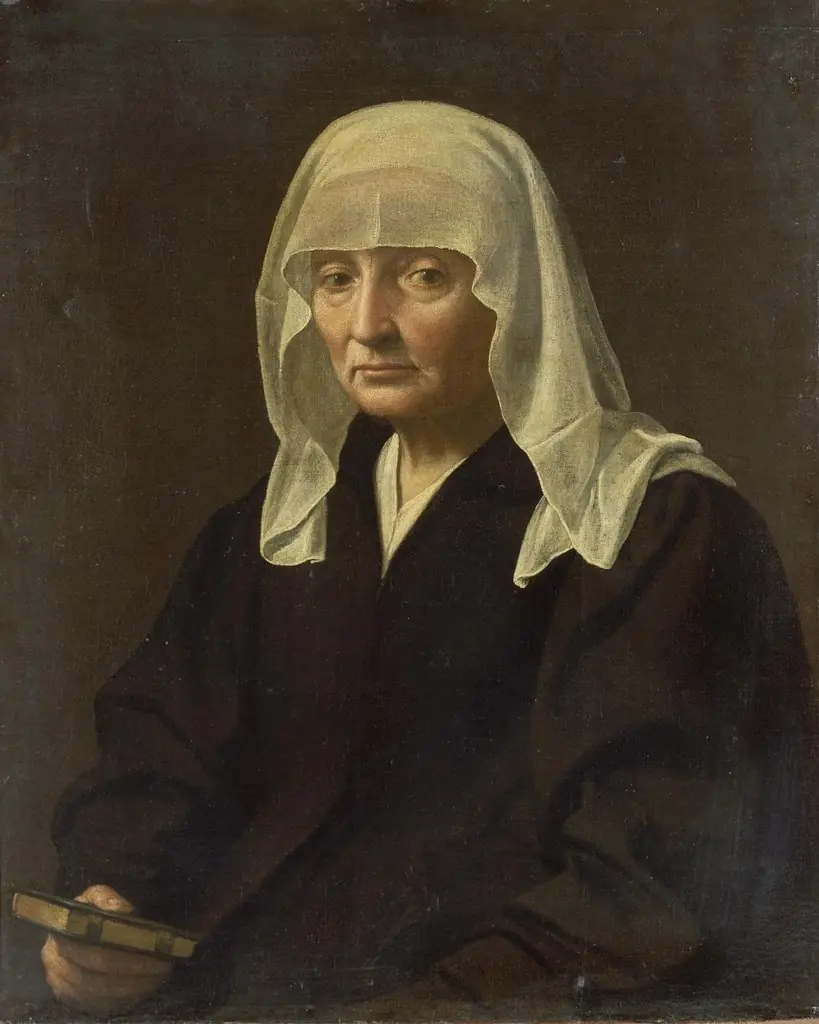 Portrait of an Old Woman
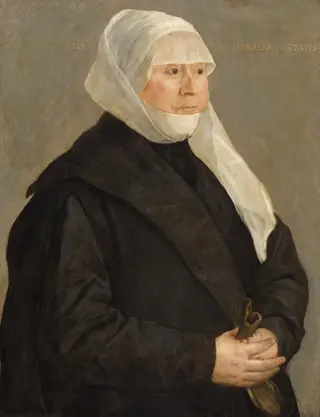 Regina von Stetten (1499-1562), Gemahlin des Peter Honold
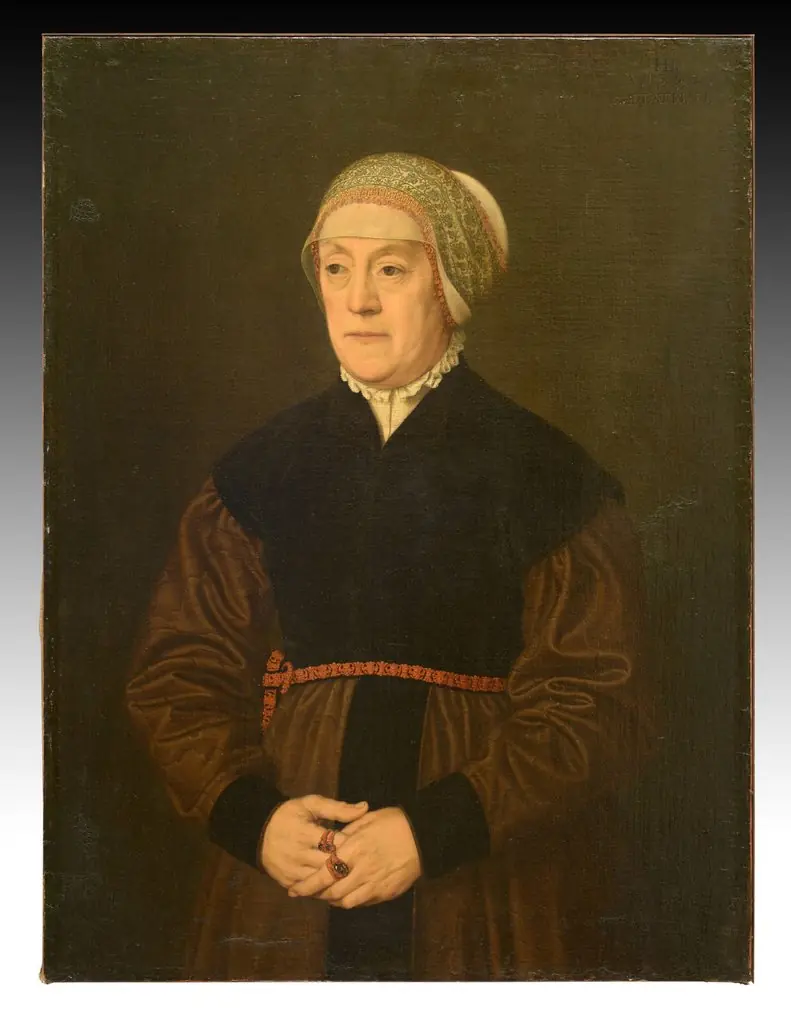 Portrait of an Elderly Woman
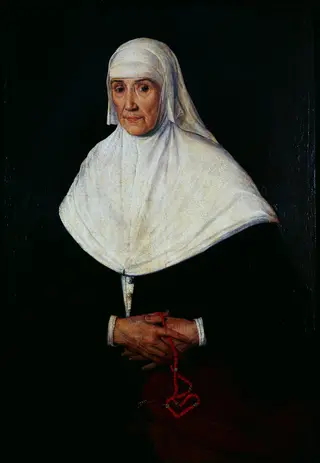 Senhora com Rosário
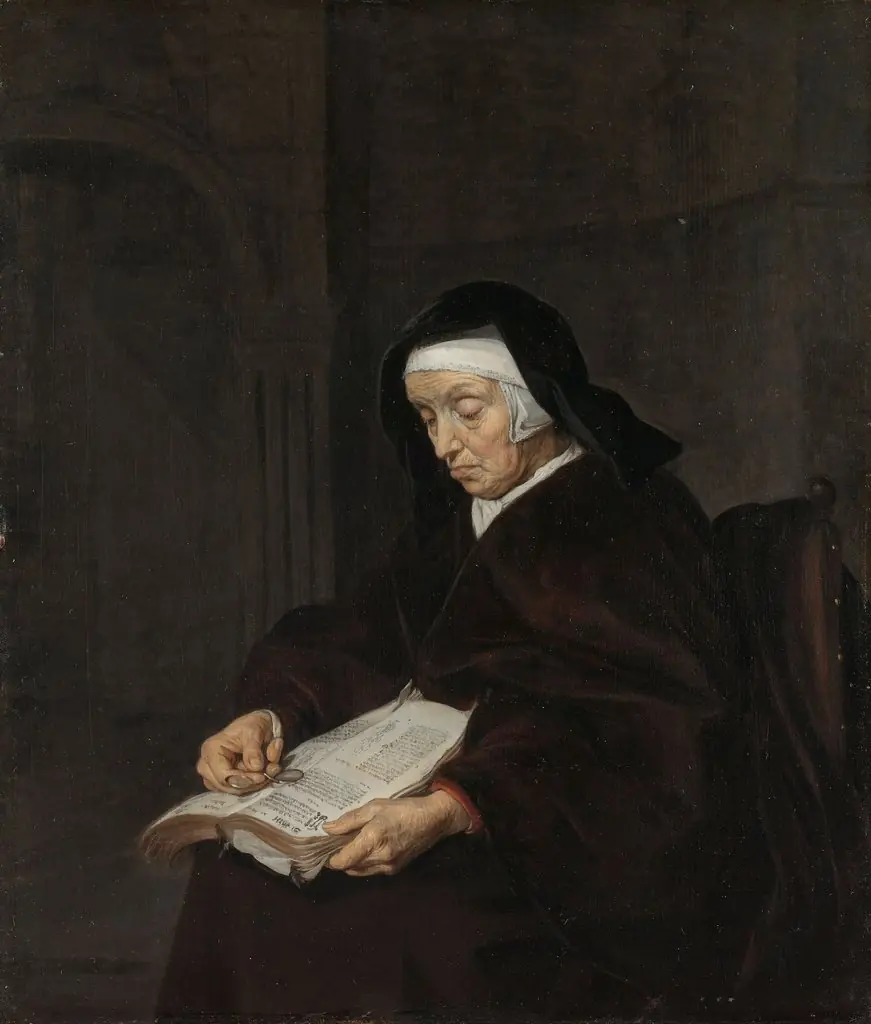 Old Woman Meditating
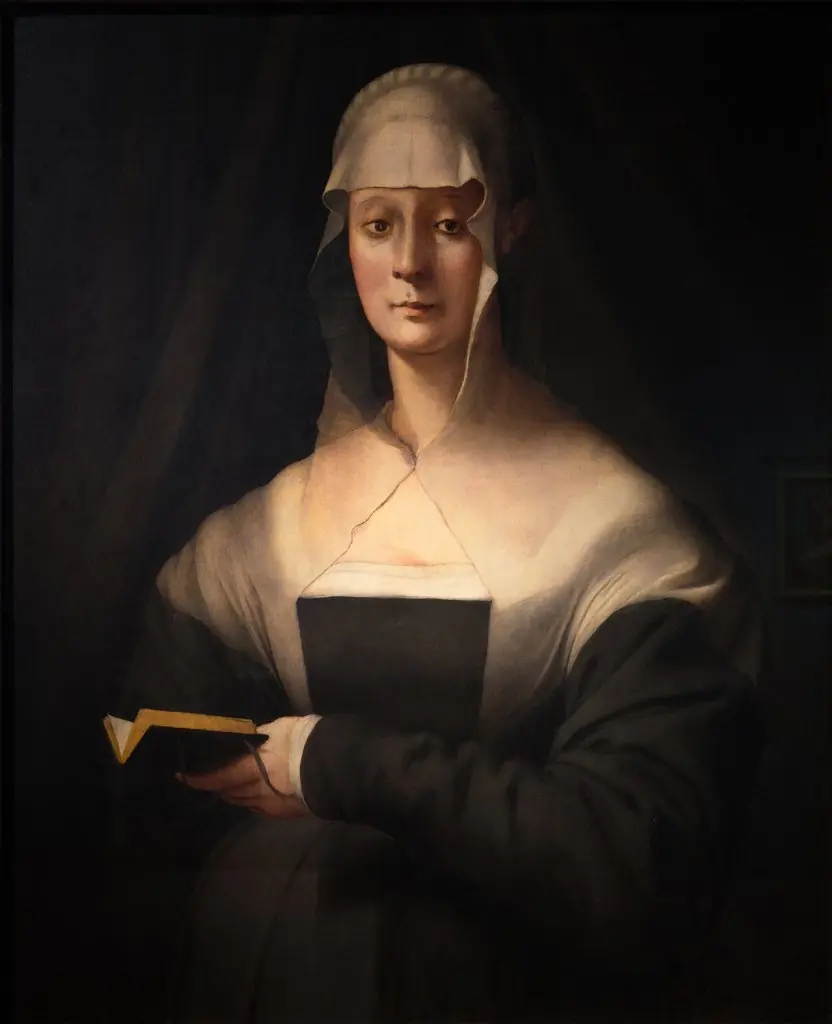 Portrait of Maria Salviati
 Portrait of Katharine Elliot (died 1688), Dresser of Duchess Anne of York and First Woman of the Bedchamber of Queen Mary of Modena, the first and second Wives of James II of England, respectively
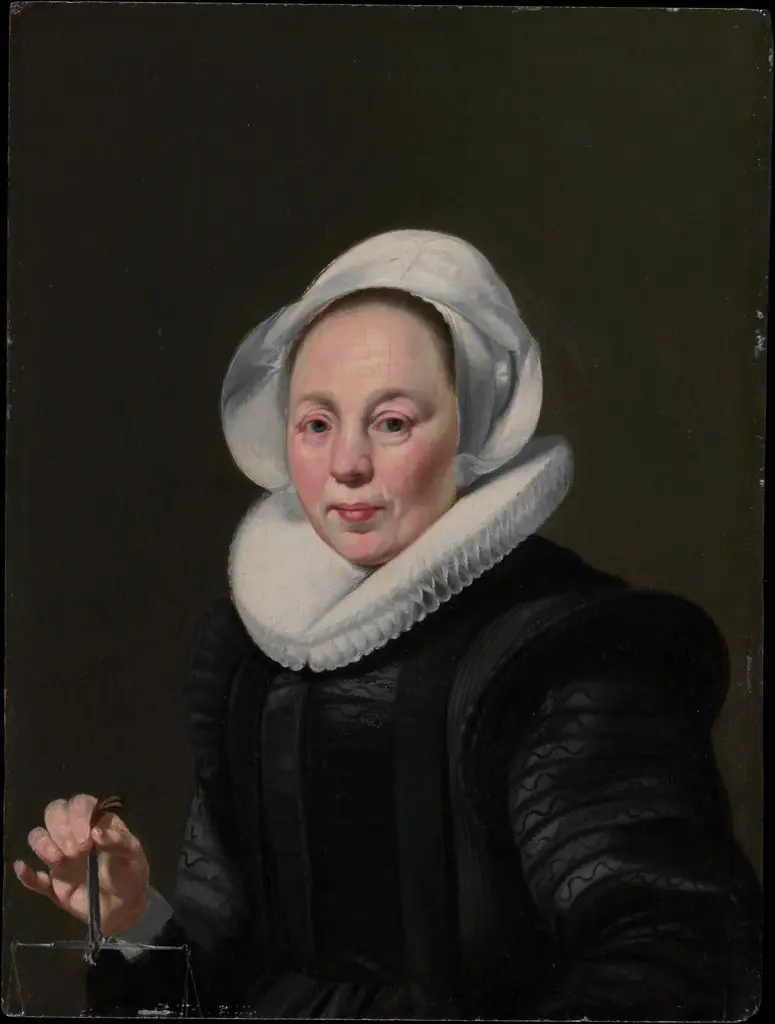 Portrait of a Woman with a Balance
 Kunigunde of Austria, wife of Duke Albrecht IV of Bavaria
 Portrait of Ortensia de Bardi di Montauto, formerly identified as Giulia de' Medici
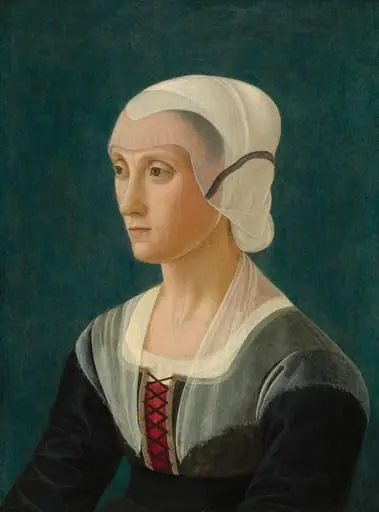
- Lucrezia Tornabuoni