Artwork
Madonna with Child Jesus
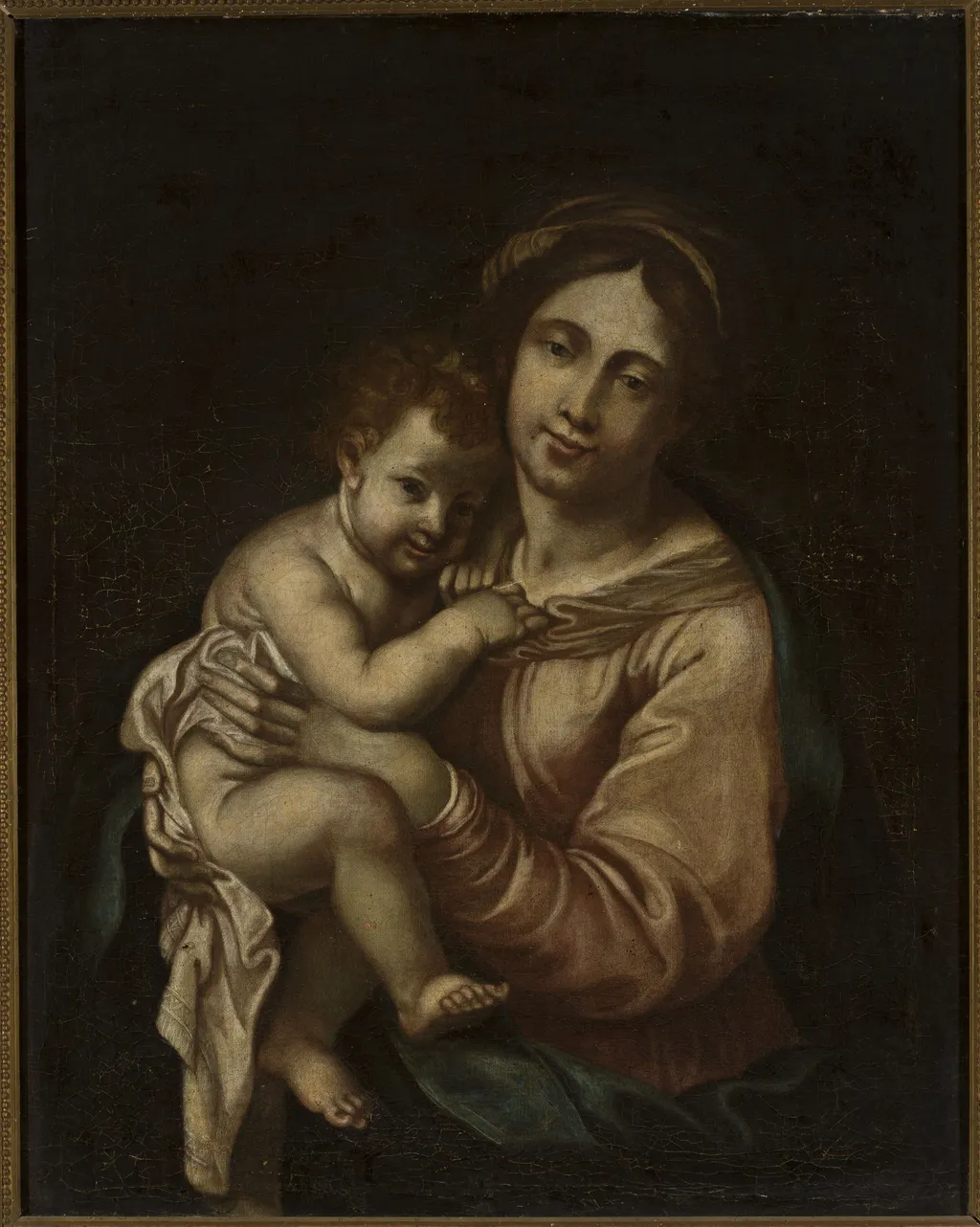
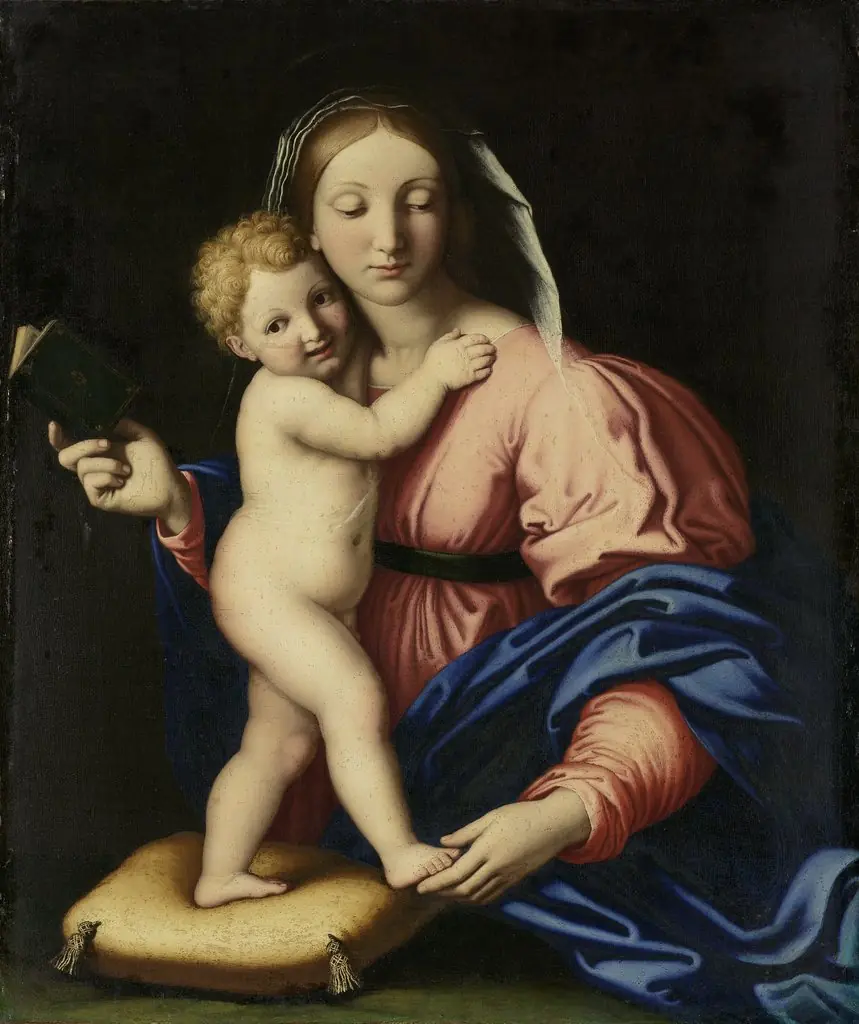
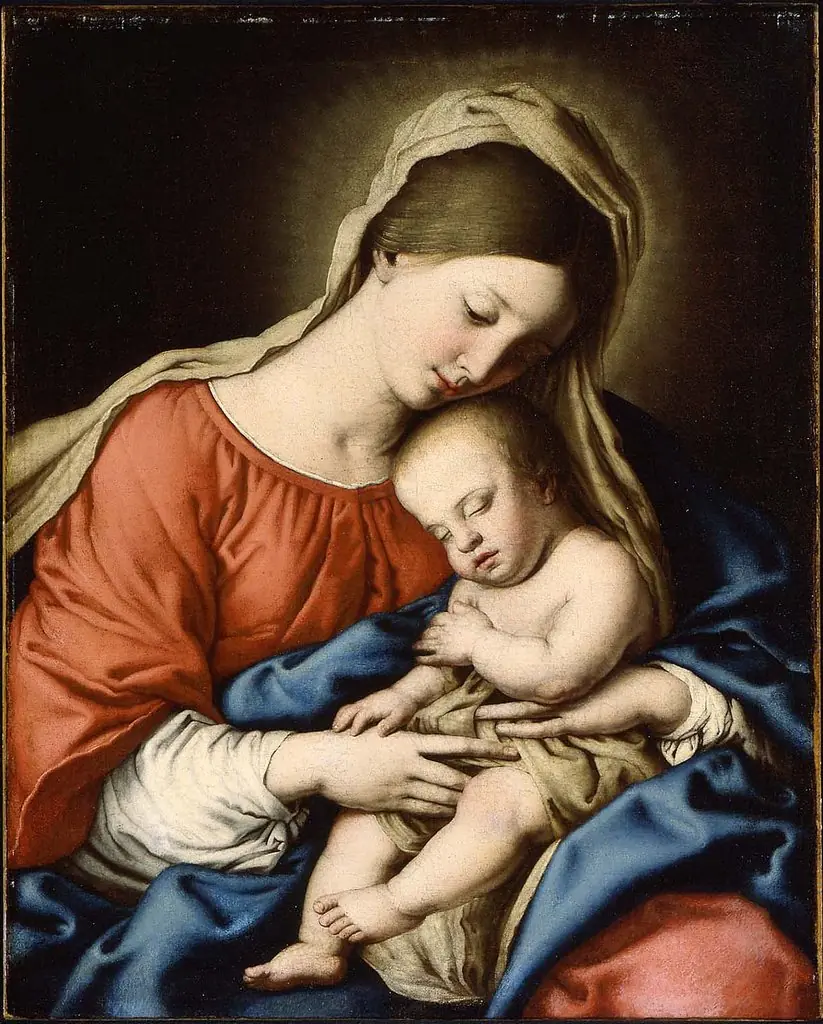
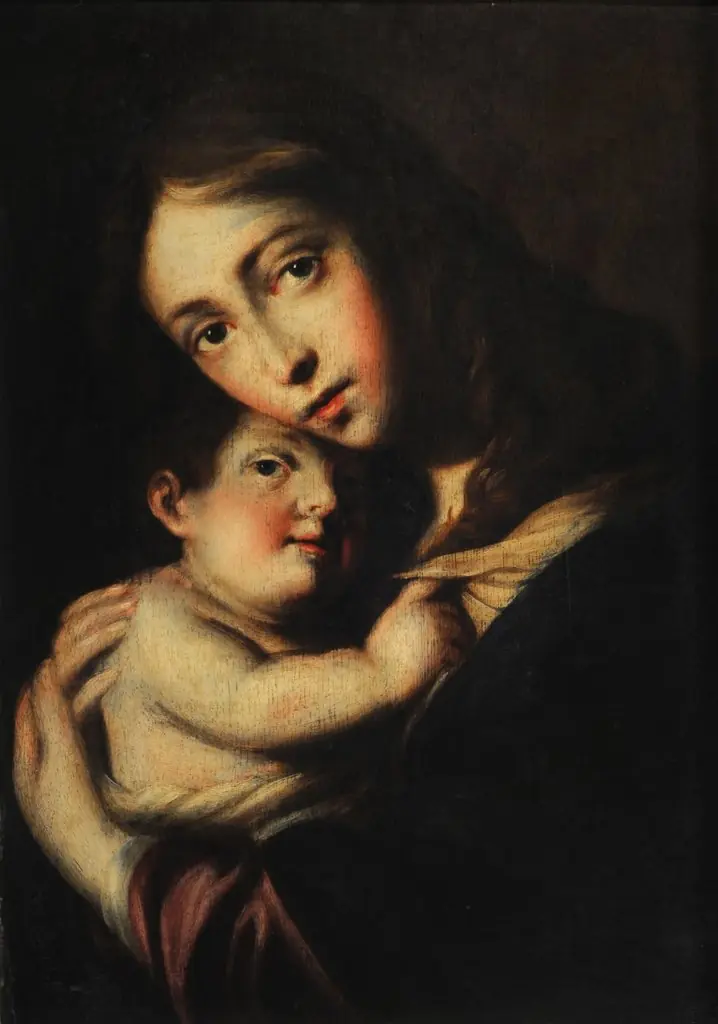
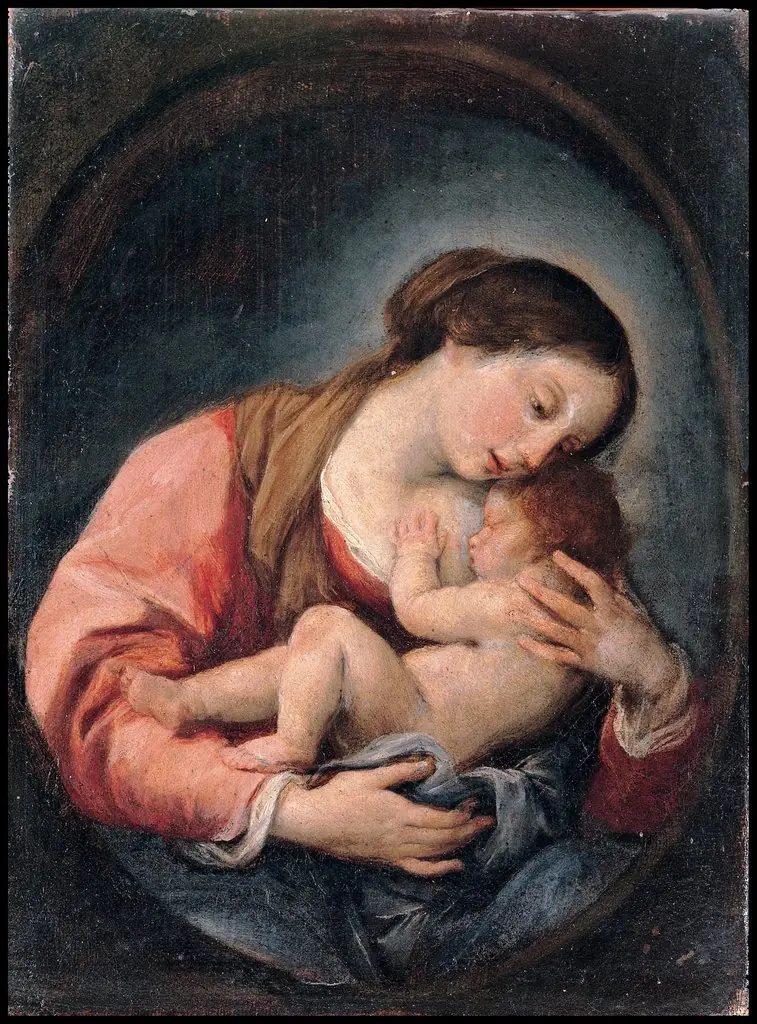
Madonna with Child Jesus is an oil painting by Giovanni Battista Salvi da Sassoferrato. It dates from 1657 and is held in the collection of the National Museum in Warsaw.
About this work
Overview
Measuring 84 by 67 centimeters, the work belongs to the religious genre and is held in the collection of the National Museum in Warsaw.
Madonna with Child Jesus is an oil on canvas painting by the Italian Baroque artist Giovanni Battista Salvi da Sassoferrato, created around the middle of the 17th century. Measuring 84 by 67 centimeters, the work belongs to the religious genre and is held in the collection of the National Museum in Warsaw. The painting depicts the Virgin Mary holding the Christ Child against a dark, undefined background, and it exemplifies the artist's specialization in luminous, pious Marian imagery inspired by Renaissance models, particularly Raphael.
Subject & Meaning
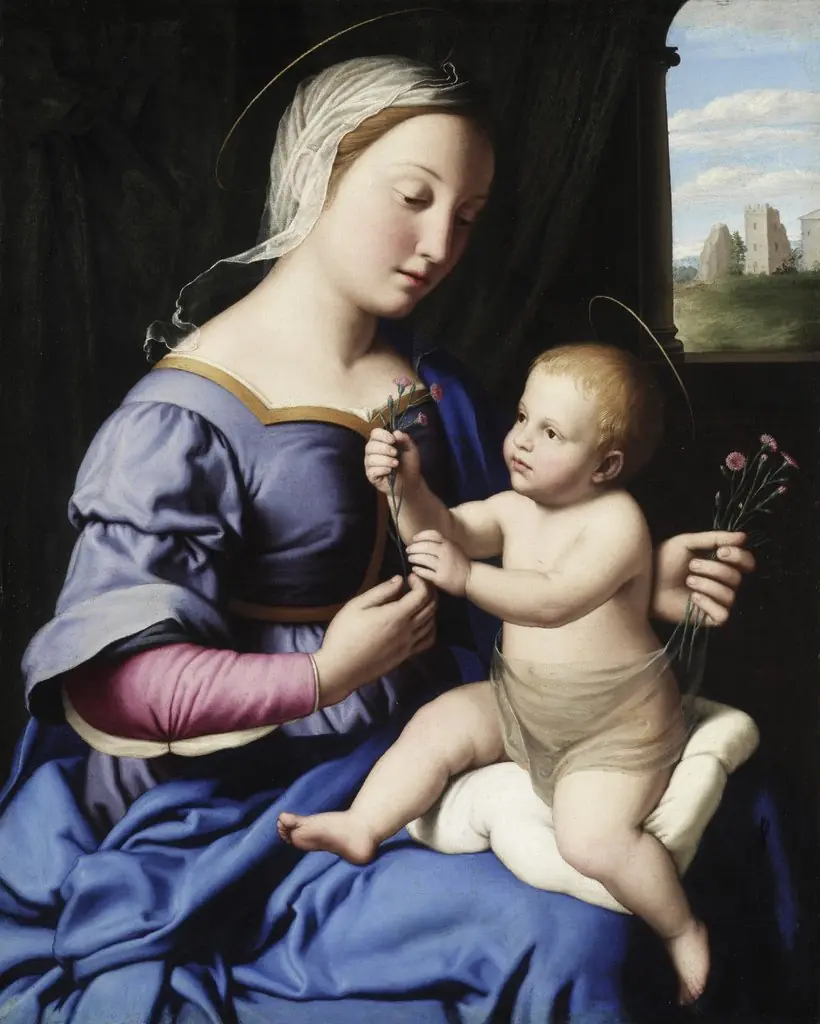
The artwork portrays the Virgin Mary cradling the infant Jesus, emphasizing the tender, human bond between mother and child. The Christ Child, characterized by curly reddish hair and rosy cheeks, clutches the fabric at the Virgin's chest while resting near her shoulder. Mary wears a pale head covering, a rose-colored dress, and a blue mantle, and a thin golden halo surrounds her head. Sassoferrato's interpretation adapts the pose from Raphael's Madonna della Torre, also known as the Mackintosh Madonna. While Raphael's original features a landscape, Sassoferrato renders the background neutral, focusing entirely on the intimate, devotional connection between the figures and their celestial status.
Technique & Style
Executed in oil on canvas, the painting demonstrates Sassoferrato's command of classical Baroque painting techniques through its clean, crisp lines and painstaking craftsmanship. The palette relies on deep browns and blacks in the background, warm pinks and creams in the flesh tones, and muted blues in the drapery. Light falls from the upper left, illuminating the faces and fabric folds. Brushwork appears smooth and blended, with subtle modeling in the faces and more defined strokes in the drapery. The surface exhibits extensive craquelure throughout. Condition reports from comparable versions by the artist note issues such as aged, uneven varnish, minor retouching to the faces and headdress, and degradation in the dark shadows of the mantle, sometimes requiring canvas relining.
History & Provenance
The painting was created circa the mid-17th century. While the specific provenance of the Warsaw canvas remains unstated in the provided sources, the broader history of this composition is well documented through related versions. A notable variant of the same Raphael-inspired composition, featuring differences such as a book and a cushion, was purchased by Prince Camillo Borghese from Ignazio Grossi of Florence in 1818, entering the Borghese collection and later the Italian state in 1902. Another closely related version, formerly in the collection of Count Alessandro Contini Bonacossi in Florence, passed by descent and was offered at Sotheby's in 2018. Scholar François Macé de Lépinay has connected the composition to a preparatory drawing formerly in the Staatliche Graphische Sammlung in Munich, which was stolen in 1965.
Context
Giovanni Battista Salvi da Sassoferrato was a Roman Baroque painter who, from around 1650 onward, specialized in devotional images inspired by the Marian cult of the Counter-Reformation. His work is defined by a deep allegiance to Renaissance models, particularly Raphael, whose compositions he replicated and adapted numerous times with personal variations. Sassoferrato also looked beyond Italy, drawing inspiration from Northern European artists like Joos van Cleve and Albrecht Dürer. His quiet elegance, rigorously solid formal layouts, and brilliant, almost enamelled colors made his Marian subjects highly popular with an ever-increasing clientele, securing his reputation as a leading purist painter of the Seicento.
Legacy
Sassoferrato's Madonna compositions achieved immense popularity during his lifetime and beyond, with the artist replicating his most successful designs many times in various formats, including horizontal and oval shapes, reversed orientations, and versions depicting the Madonna in Glory attended by angels. The enduring demand for these works is reflected in their longstanding presence in major European collections, such as the Galleria Borghese and Burghley House, and their continued activity on the art market. Modern scholarship, including the forthcoming catalogue raisonné by Professor François Macé de Lépinay, continues to reassess and affirm the attribution and significance of his autograph versions, cementing his legacy as a vital bridge between Renaissance classicism and Baroque devotional art.
Own this work as a print
Artist & collection
Artist
Giovanni Battista Salvi da Sassoferrato
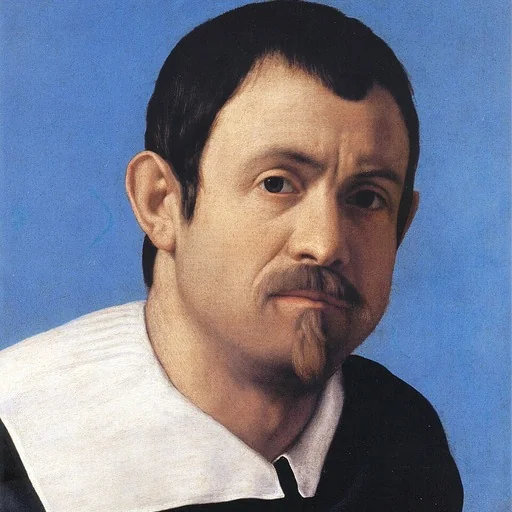
Giovanni Battista Salvi da Sassoferrato (25 August 1609 – 8 August 1685), also known as Giovanni Battista Salvi, was an Italian Baroque painter, known for his archaizing commitment to Raphael's style.