Artwork
Virgin and Child with a Rosary
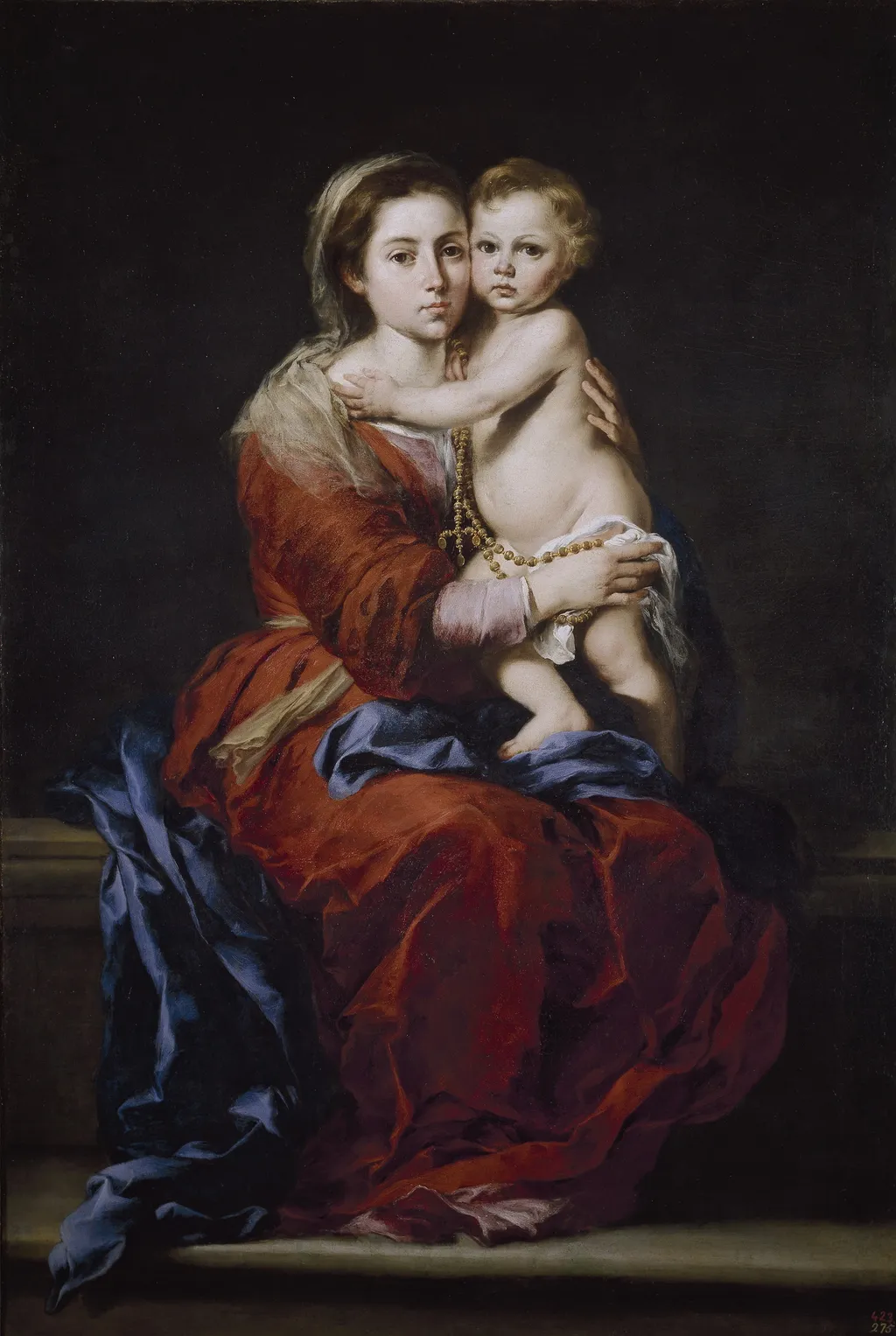
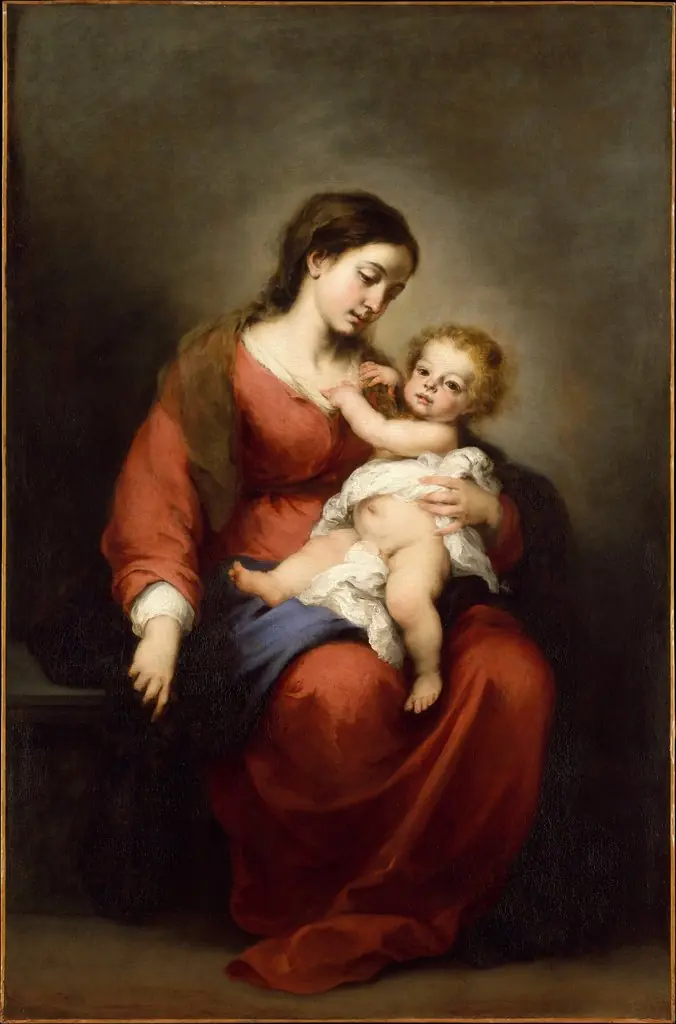
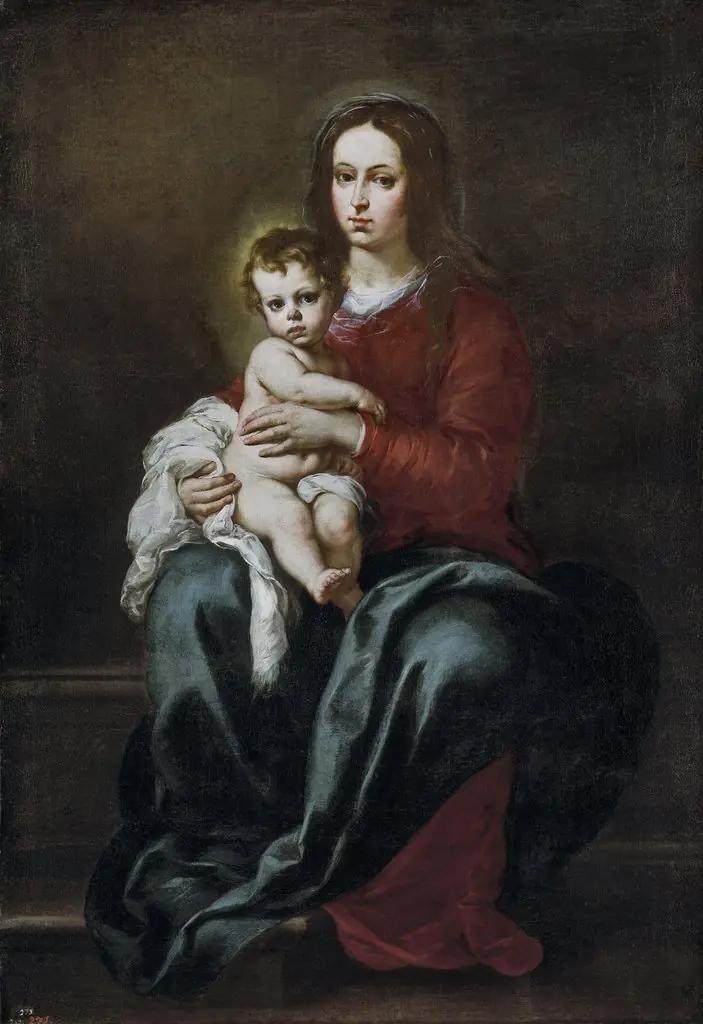
Virgin and Child with a Rosary is an oil painting by the Baroque artist Bartolomé Esteban Murillo. It dates from 1650 and is held in the collection of the Museo del Prado.
About this work
The work once hung in Spain’s El Escorial Monastery and later in the Palacio Real.
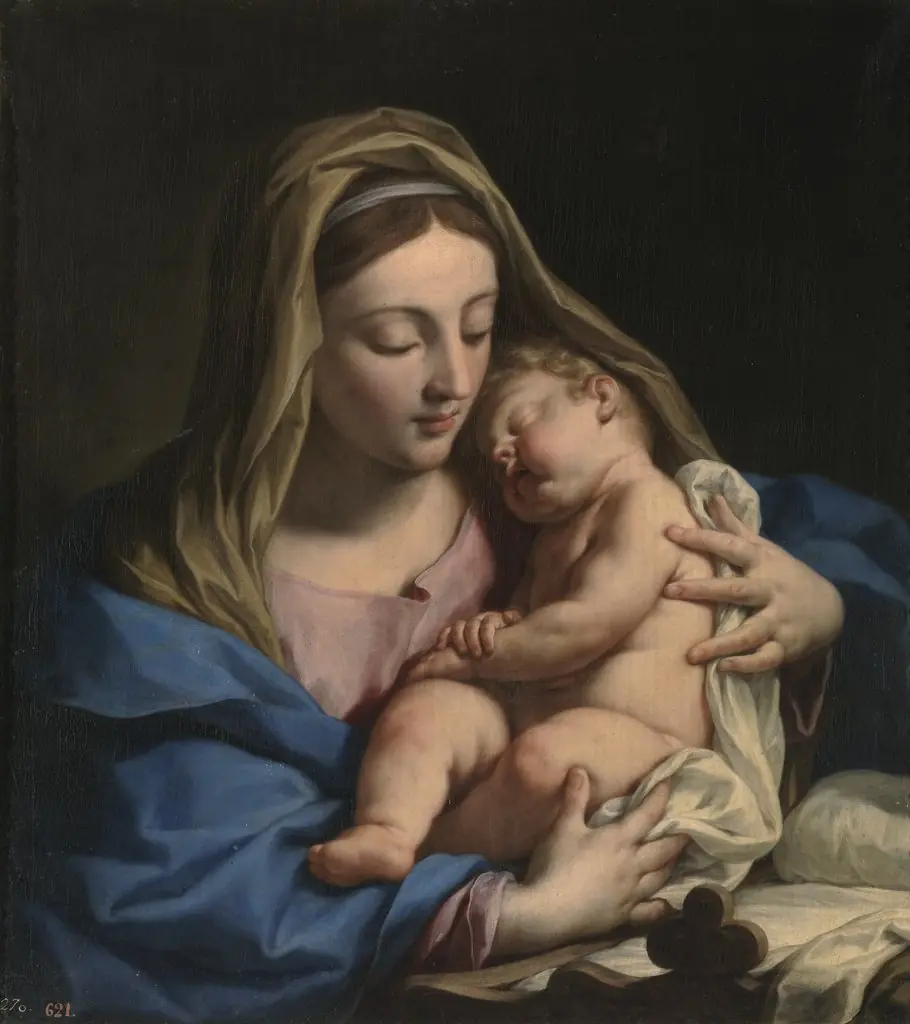
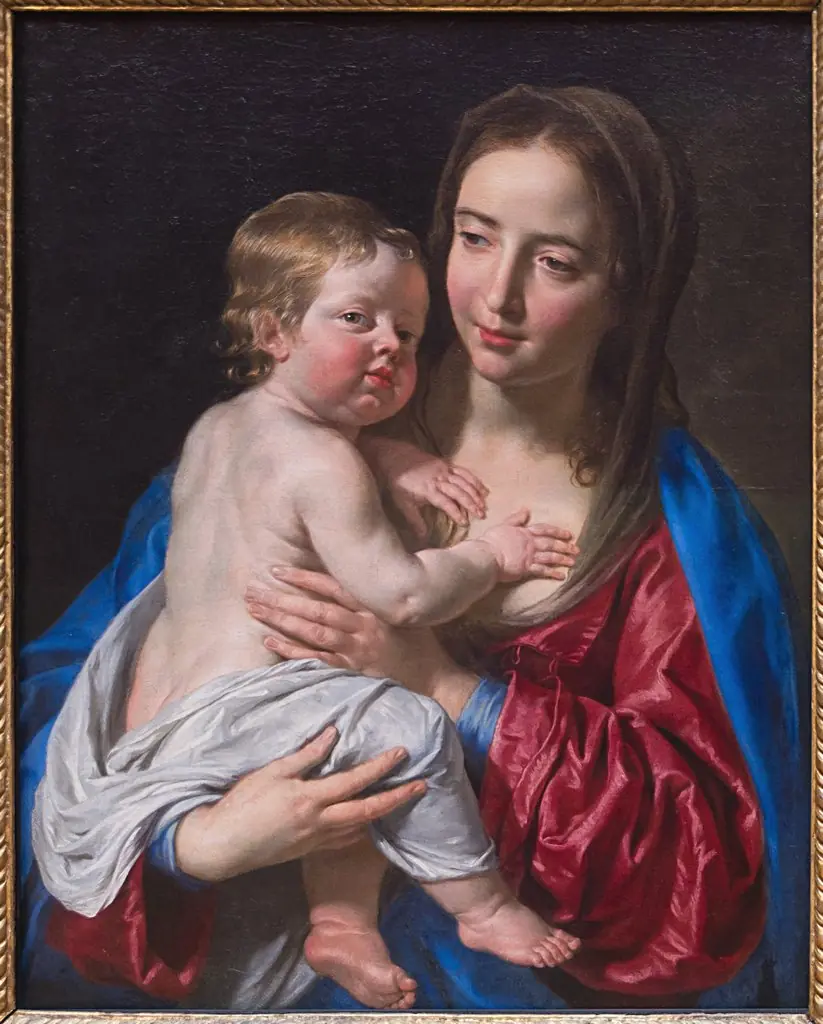
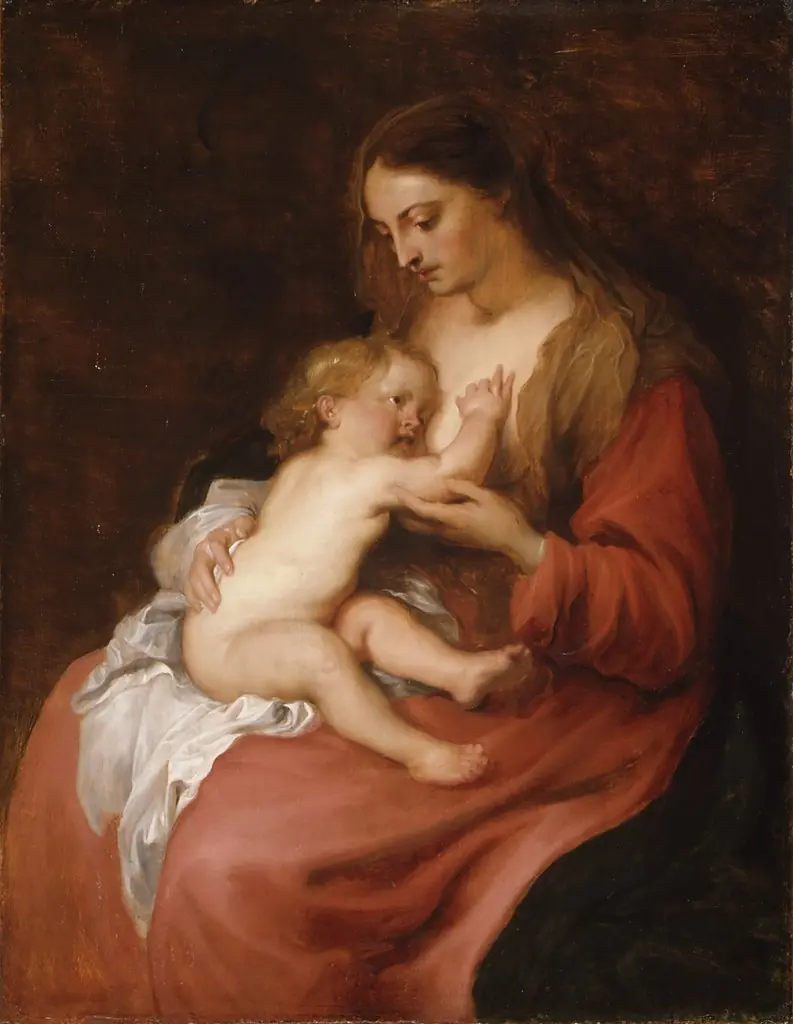
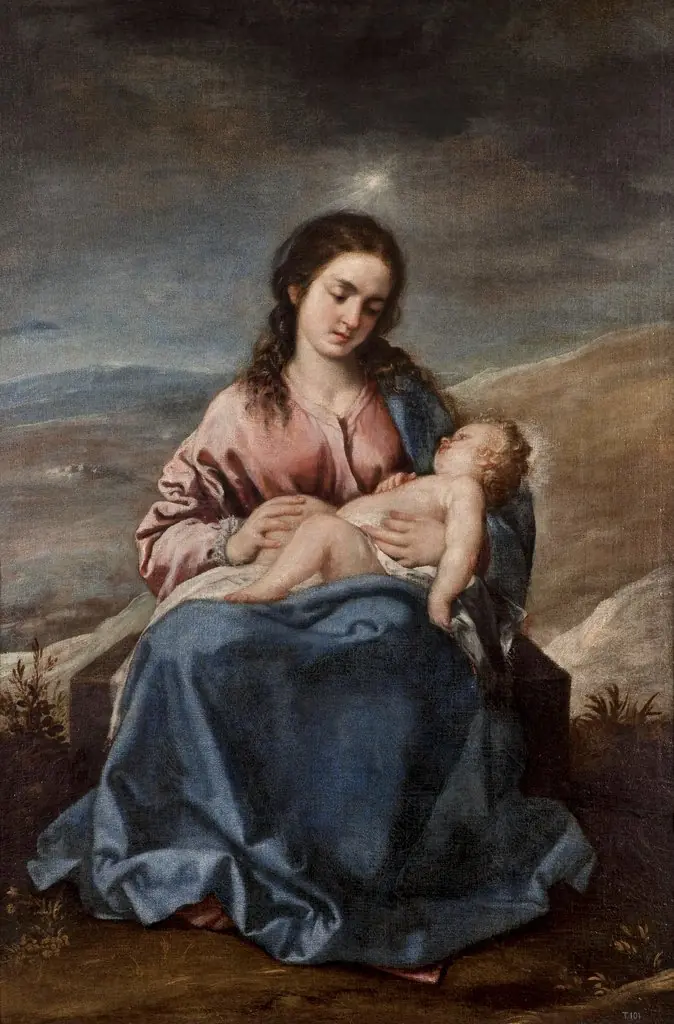
Murillo painted the Virgin and Child with a Rosary in oil paint. It shows Mary holding the Christ Child while they both hold a rosary. The scene is calm, with soft light on their faces.
The work once hung in Spain’s El Escorial Monastery and later in the Palacio Real. Murillo made several similar paintings of this subject around 1650. It now lives in Madrid’s main museum.
Look up Bartolomé Esteban Murillo to see more of his work.
Subject & Meaning
The painting depicts the Virgin Mary and the Christ Child as the central figures of the Our Lady of the Rosary devotion. Mary sits on a stone bench while the standing Child rests one foot on her knee, their cheeks touching in a gesture of intimate tenderness. Both figures hold a rosary, the specific symbol linking the work to the Dominican tradition and the Catholic Counter-Reformation emphasis on this prayer.
Unlike other contemporary depictions where the figures gaze downward or at each other, Mary and Jesus look directly at the viewer, creating a solemn connection intended to engage the devout spectator. This composition reflects the post-Tridentine push for accessible religious imagery that fostered personal mysticism and meditation. The work celebrates the Virgin's role in spiritual victory, a theme historically associated with the Feast of Our Lady of the Rosary established after the Battle of Lepanto.
Technique & Style
Executed in oil on canvas, this work dates to approximately 1650–1655 and exemplifies Murillo's mature style. The artist employs a loose brushwork technique characterized by luminous touches that create a vapor-like atmosphere and warm color palette, reflecting influences from Flemish and Genoese painting. The composition is solid and pyramidal, featuring the Virgin seated on a stone bench with the standing Christ Child, their cheeks touching in a gesture of tenderness.
Unlike contemporaries who depicted downward gazes, Murillo directs both figures' eyes forward to engage the viewer. The Virgin wears red and blue robes with abundant folds rendered through fluid strokes, while the Child is partially draped in white cloth. These elements are set against a neutral, dark background that accentuates the volumetric presence of the figures.
History & Provenance
Virgin and Child with a Rosary is an oil on canvas painting by Bartolomé Esteban Murillo dated circa 1650–1655. The work was originally housed in the Monastery of El Escorial before passing to the Royal Palace of Madrid, where it was recorded as part of the collection of Ferdinand VII of Spain. It subsequently entered the Museo del Prado in Madrid, where it remains on display as inventory number P00975.
The painting is held in the permanent collection of the Museo del Prado in Madrid, where it is displayed in Room XVI. It is inventoried under the catalogue number P00975. Prior to its present location, the work was housed at the Monastery of El Escorial and subsequently at the Royal Palace of Madrid.
According to Wikidata, it was owned by Ferdinand VII of Spain, consistent with its movement into royal palace holdings before entering the Prado's collection.
No specific temporary loan exhibitions are documented in the available sources; the painting's documented exhibition history is limited to its current installation in Room XVI of the Museo del Prado and its earlier placements at El Escorial and the Palacio Real de Madrid.
Context
Painted c. 1650–1655 during the most luminous period of the Sevillian school, Virgin and Child with a Rosary belongs to a tradition shaped by Bartolomé Esteban Murillo's older contemporaries Francisco de Zurbarán and Alonso Cano, who also worked in the city. Murillo's mature style absorbed influences from Italian and Flemish masters, notably Raphael and Van Dyck, producing loose brushwork with near-impressionistic highlights and a "vaporous," warm-toned atmosphere. Vicente Carducho wrote in his 1633 Diálogos de la Pintura that Murillo rendered religious subjects "with propriety and convenience," and the artist devoted himself to the Catholic Counter-Reformation, supplying churches, monasteries, and private devotees with tender, un-dramatic imagery that communicated directly to the faithful.
The work reflects the post-Tridentine surge in Marian devotion, particularly the rosary cult codified by Pius V in 1571 and renamed by Gregory XIII, which prompted widespread demand for Madonna of the Rosary images across Catholic Europe. Murillo had earlier treated the theme for the Dominicans of Seville's suppressed Convent of Santo Tomás (1638–1640), and several related versions exist, including those at Castres, the Palazzo Pitti, and a Texas panel formerly from Seville's Convento del Carmen.
Overview
Bartolomé Esteban Murillo's painting, Virgin and Child with a Rosary, executed in oil on canvas around 1650-1655, depicts the Virgin Mary tenderly embracing the infant Jesus. Both figures hold a rosary, inviting the viewer into a moment of quiet devotion. This work is a notable example of Murillo's approach to religious subjects, characterized by its emotional depth and accessible portrayal. It is currently housed in the Museo del Prado in Madrid.
Own this work as a print
Artist & collection
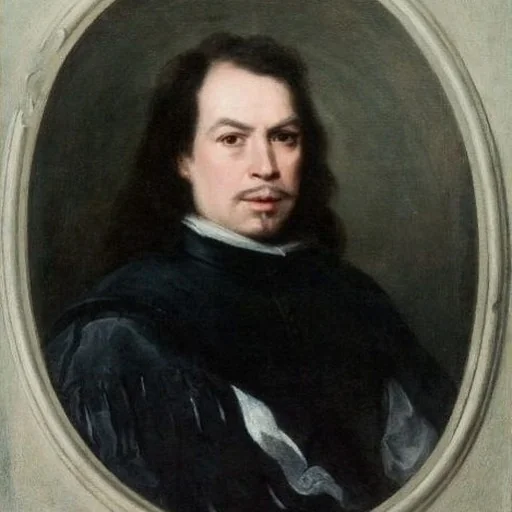
Artist
Bartolomé Esteban Murillo ( mure-IL-oh, m(y)uu-REE-oh, Spanish:; late December 1617, baptised 1 January 1618 – 3 April 1682) was a Spanish Baroque painter.