Artwork
The Annunciation and Expulsion from Paradise
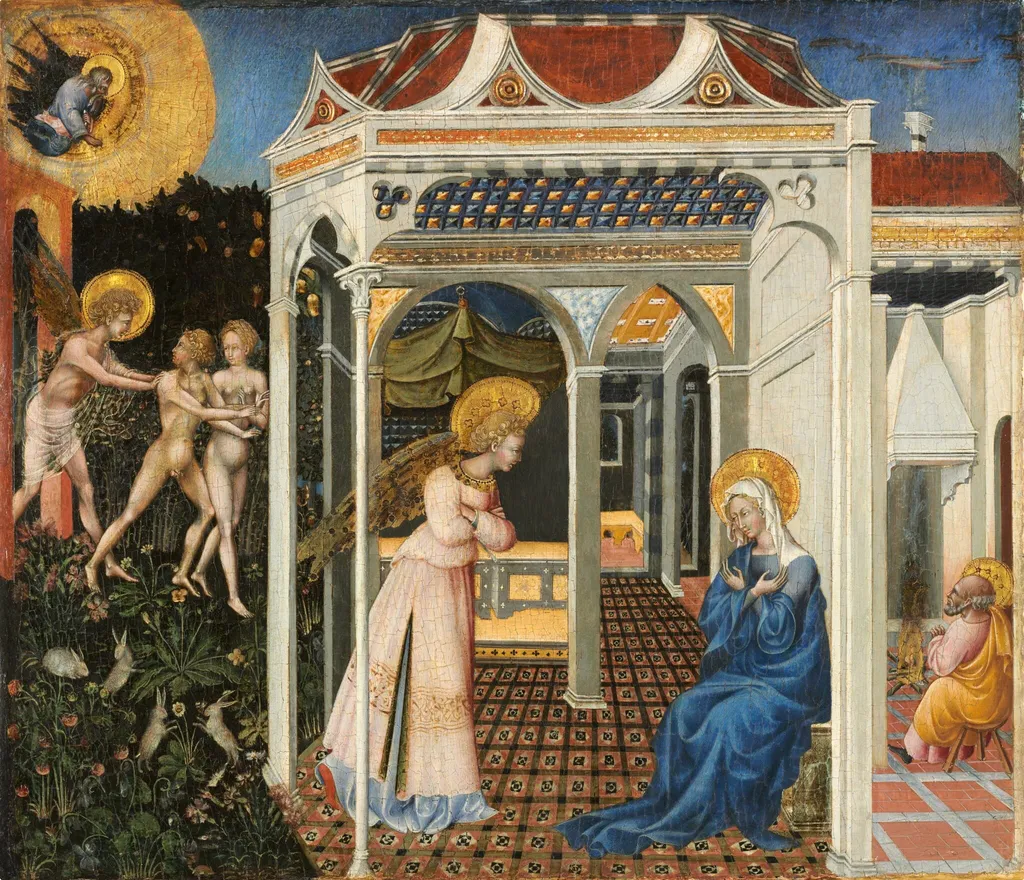
The Annunciation and Expulsion from Paradise is a tempera painting by the Early Renaissance artist Giovanni di Paolo. It dates from 1435 and is held in the collection of the National Gallery of Art.
About this work
History & Provenance
The work's early provenance traces to Sir William John Farrer in London by 1866, after which it was purchased before 1868 by Sir John Charles Robinson.
The Annunciation and Expulsion from Paradise was painted by Giovanni di Paolo in 1435 in tempera on panel.
The work's early provenance traces to Sir William John Farrer in London by 1866, after which it was purchased before 1868 by Sir John Charles Robinson. It appeared in Robinson's sale at Christie's, London, on 19 April 1902, where Charles Fairfax Murray acquired it on behalf of Robert Henry and Evelyn Holford Benson. The Bensons later sold the painting in 1927 to Duveen Brothers, which in turn sold it to the Samuel H. Kress Foundation in May 1936; it was subsequently gifted to the National Gallery of Art, Washington, D.C., in 1939.
The painting is held by the National Gallery of Art as part of the Samuel H. Kress Collection, accession number 1939.1.223.
Legacy
The painting's significance has been recognized since the mid-19th century, when it was cited by Crowe and Cavalcaselle as an example of early Italian art and later discussed in Rusk Shapley's catalogue of the Kress Collection. Its movement through private hands, including ownership by Robinson, Benson, and Duveen, reflects growing appreciation of such works among collectors. Since its acquisition by the National Gallery of Art in 1939, the piece has remained on public view, contributing to scholarly awareness of Giovanni di Paolo's oeuvre and to the broader reassessment of 15th-century Italian painting.
Overview
Giovanni di Paolo's painting, titled The Annunciation and Expulsion from Paradise, was created around 1435 using tempera on panel. This single artwork uniquely combines two pivotal biblical narratives, presenting them side-by-side. The composition invites contemplation on the themes of humanity's fall from grace and the subsequent divine promise of salvation, linking these foundational Christian events within a unified visual space.
Subject & Meaning
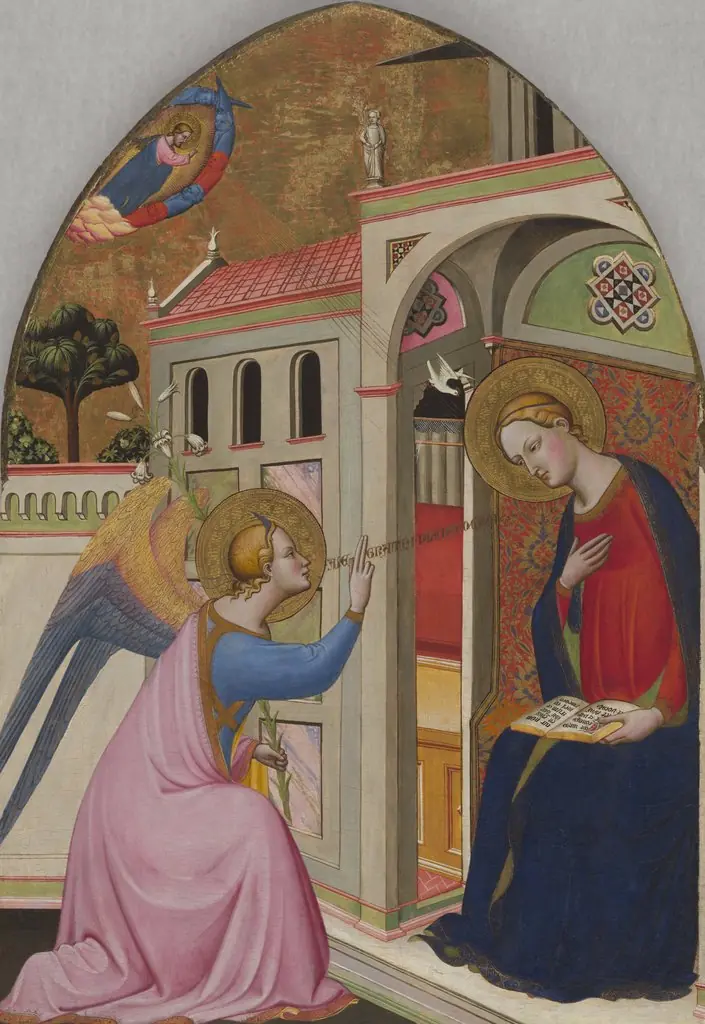
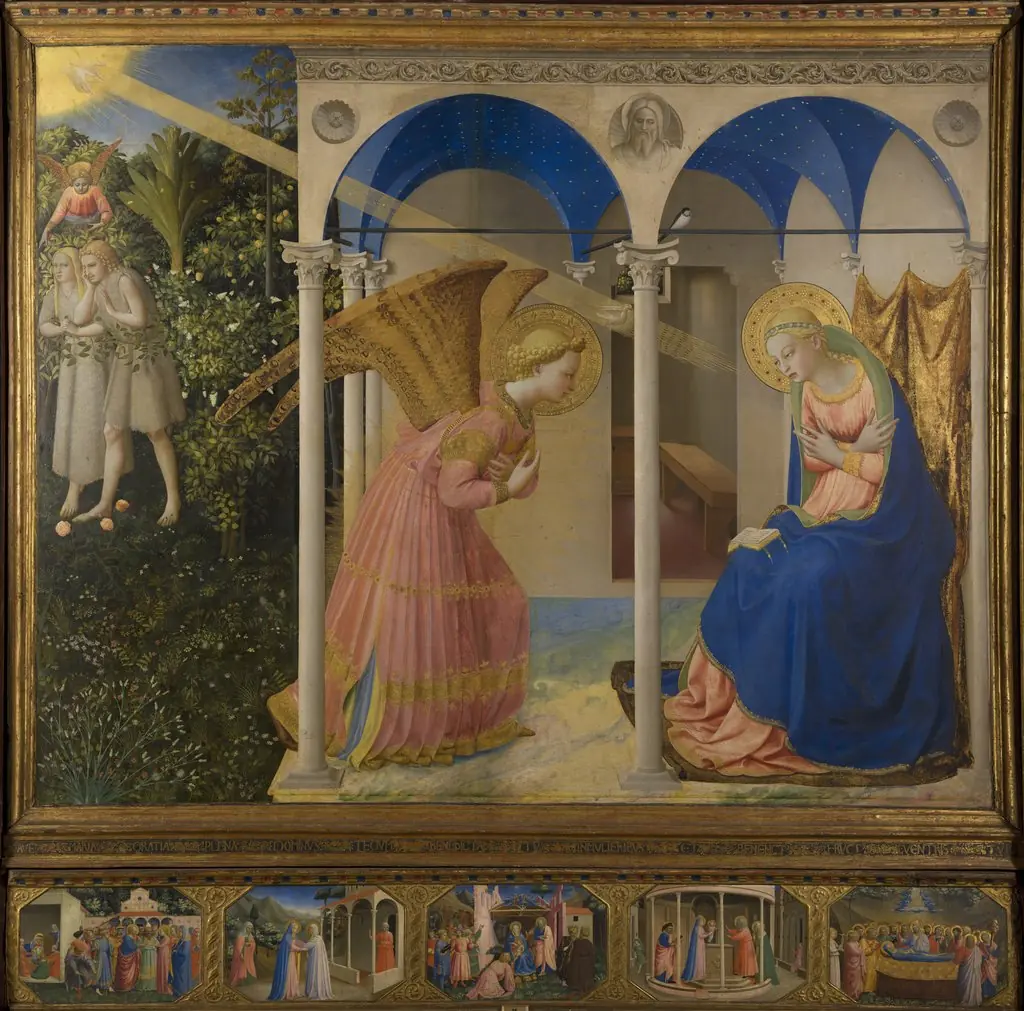
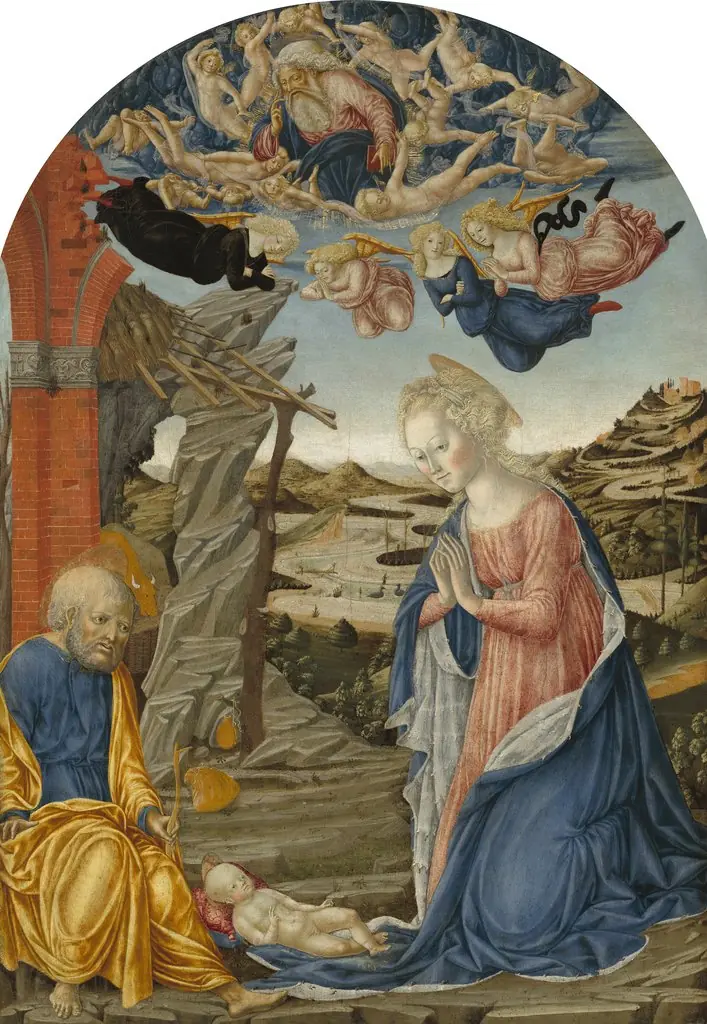
The painting is visually divided to depict two distinct episodes. On the left, Adam and Eve, identified by their halos, are shown being guided out of a verdant Garden of Eden, a scene representing the expulsion from paradise. In contrast, the right side illustrates the Annunciation, where the Virgin Mary, dressed in blue, kneels before the angel Gabriel within a structured architectural setting, symbolizing the divine announcement of Christ's coming and the hope for redemption.
Technique & Style
Executed in tempera on panel, this work showcases Giovanni di Paolo's characteristic precision. The artist's skill is evident in the intricate rendering of details, from the varied flora and fauna of the Garden of Eden to the elaborate patterns on the figures' attire and the architectural elements. The careful application of color and the thoughtful compositional arrangement contribute to a sense of depth and narrative coherence across the painting's dual scenes.
Own this work as a print
Artist & collection

Artist
Giovanni di Paolo di Grazia was an Italian painter, working primarily in Siena, becoming a prolific painter and illustrator of manuscripts, including Dante's texts.

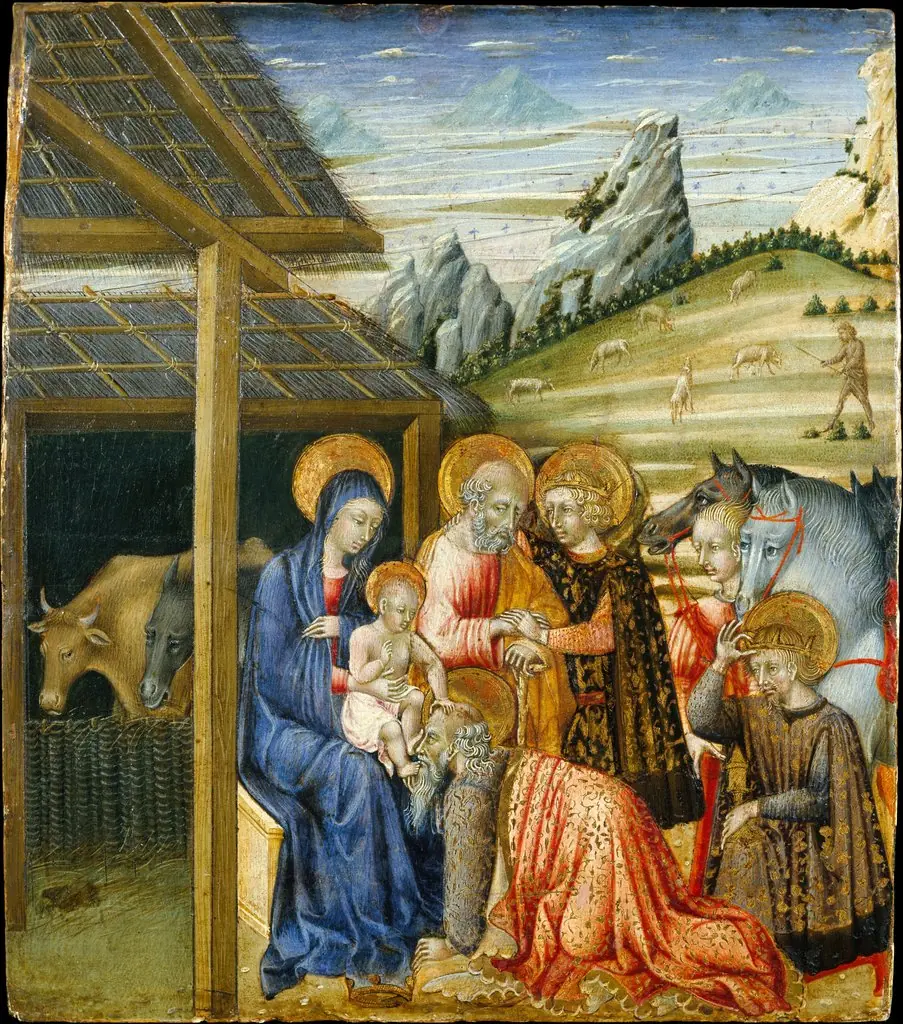 The Adoration of the Magi
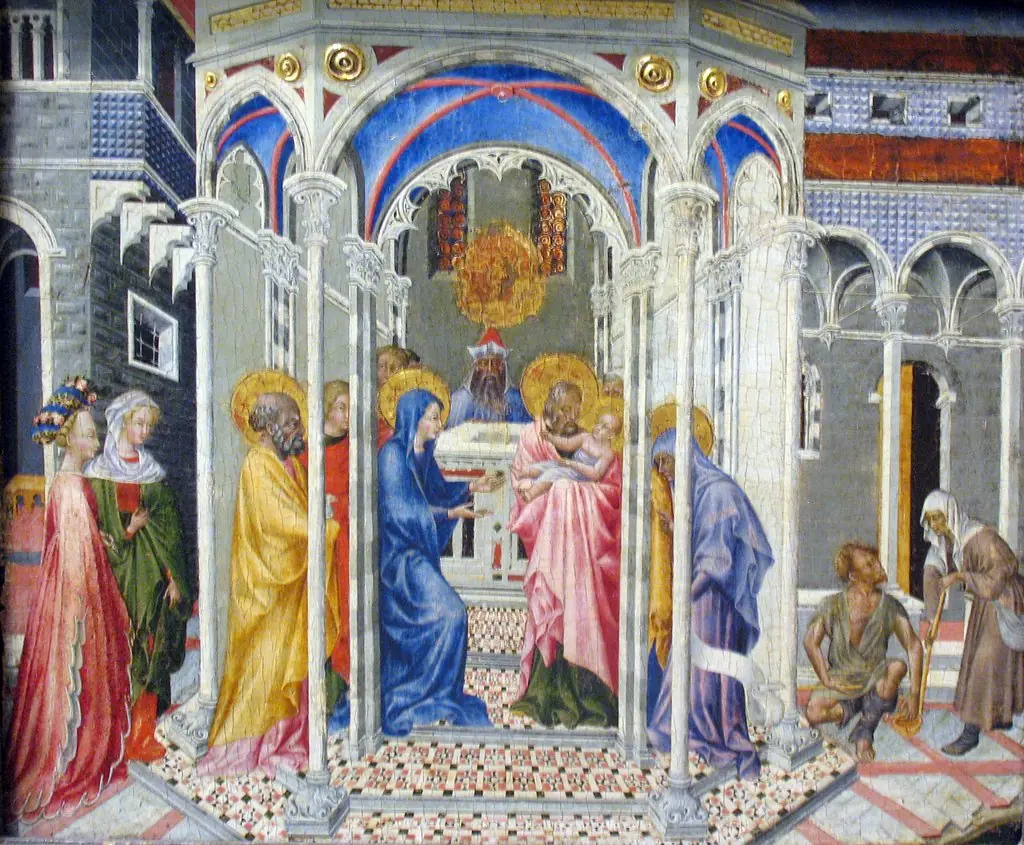 The Presentation of Christ in the Temple
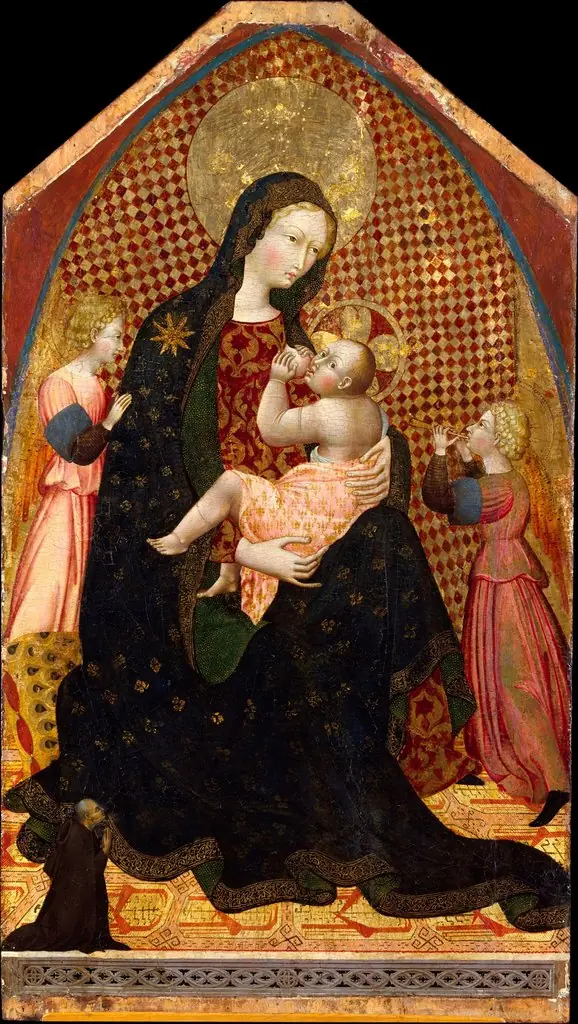 Madonna and Child with Two Angels and a Donor
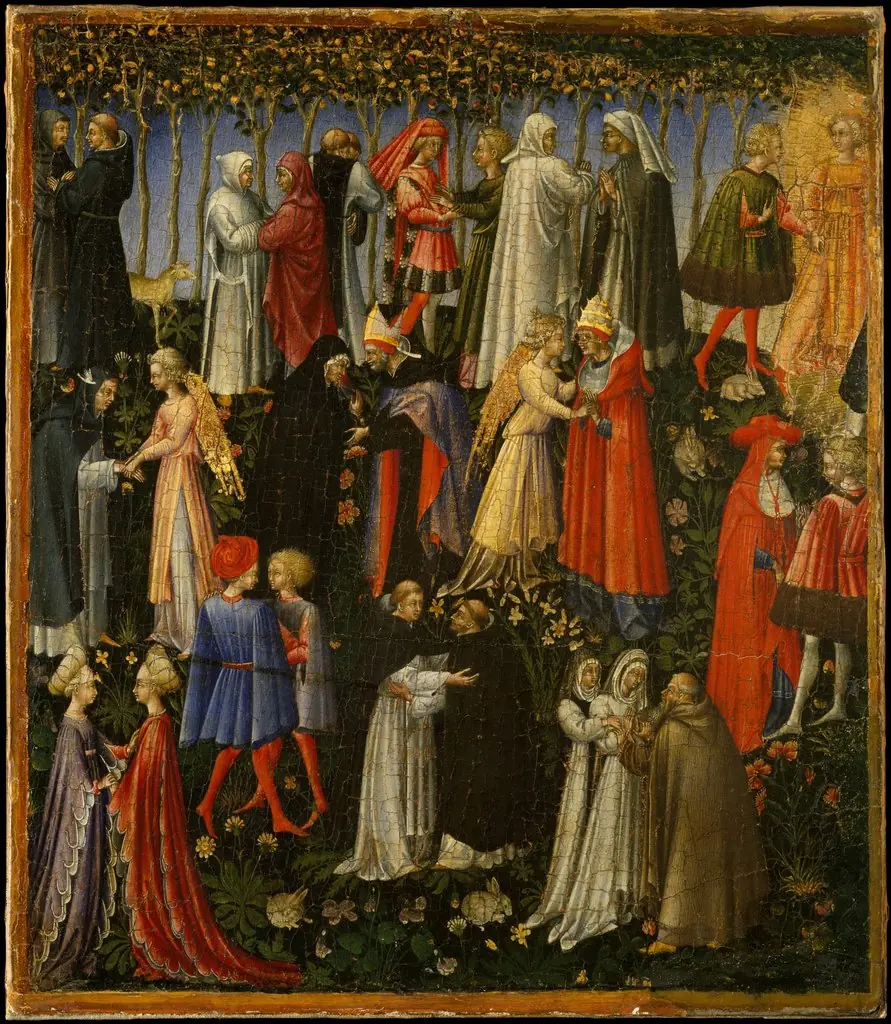 Paradise
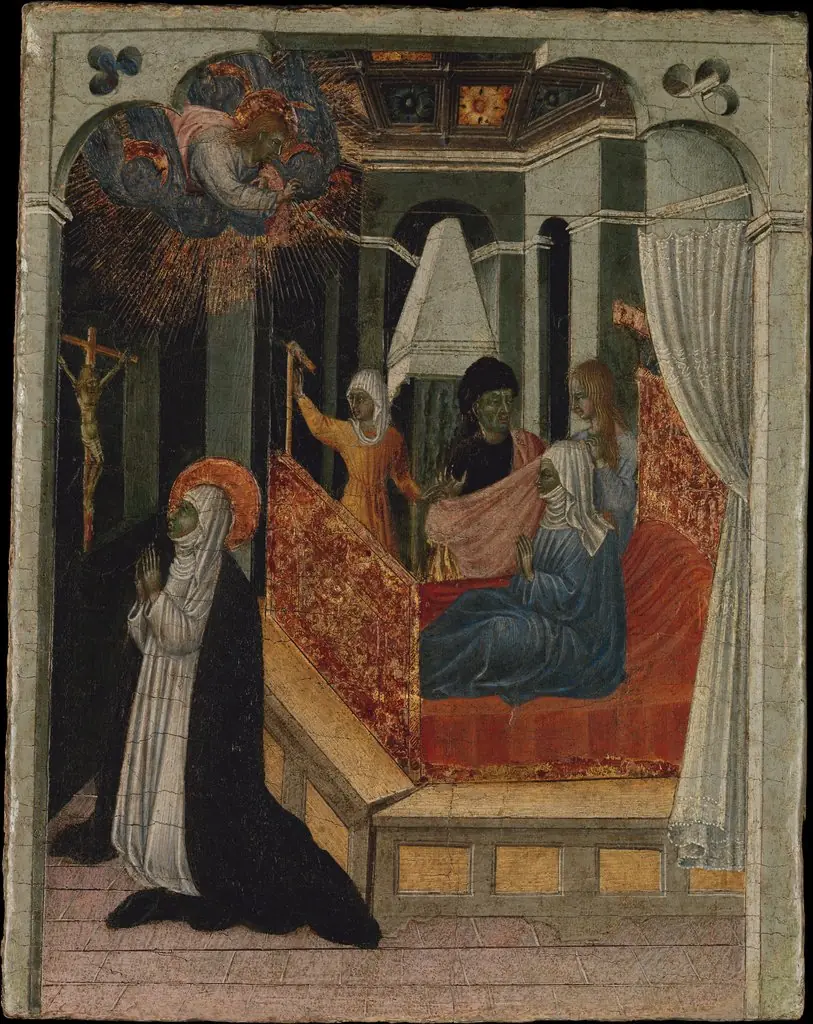 Saint Catherine of Siena Beseeching Christ to Resuscitate Her Mother
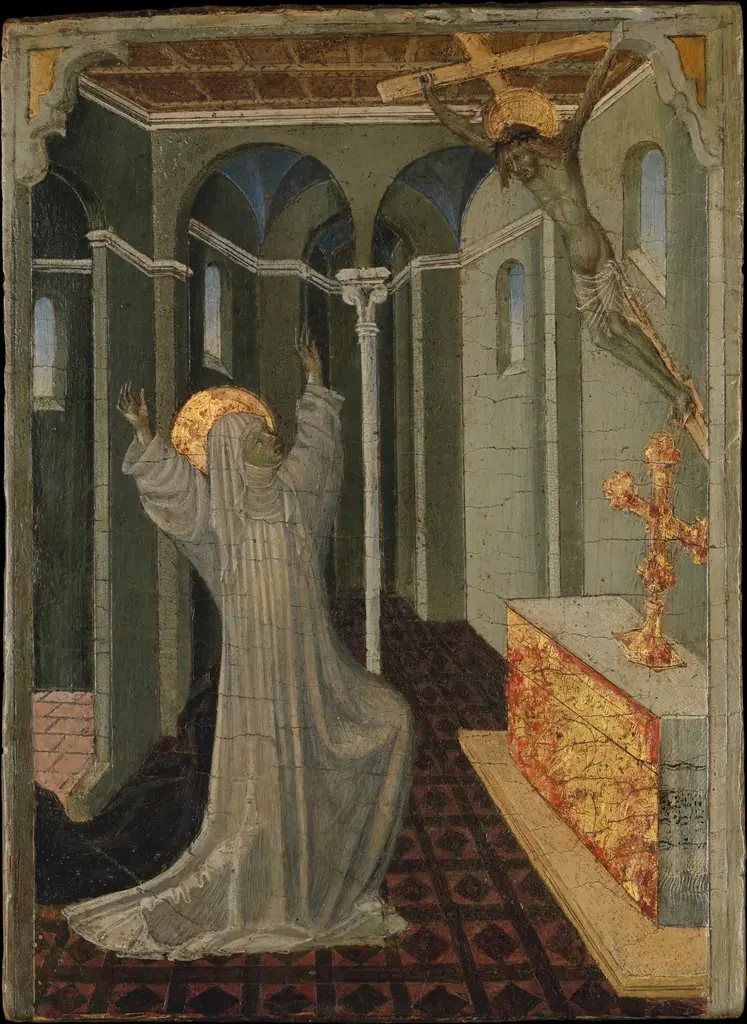 Saint Catherine of Siena Receiving the Stigmata
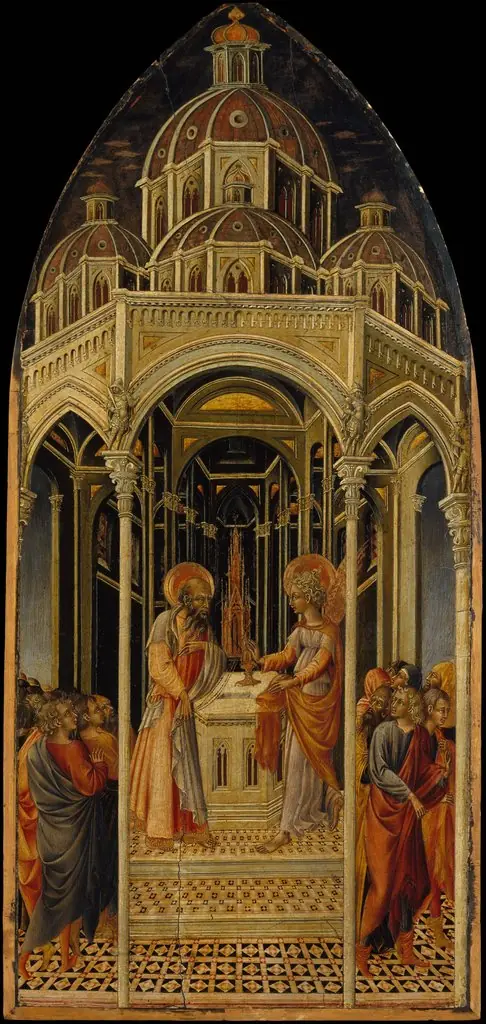 The Annunciation to Zacharias; (verso) The Angel of the Annunciation
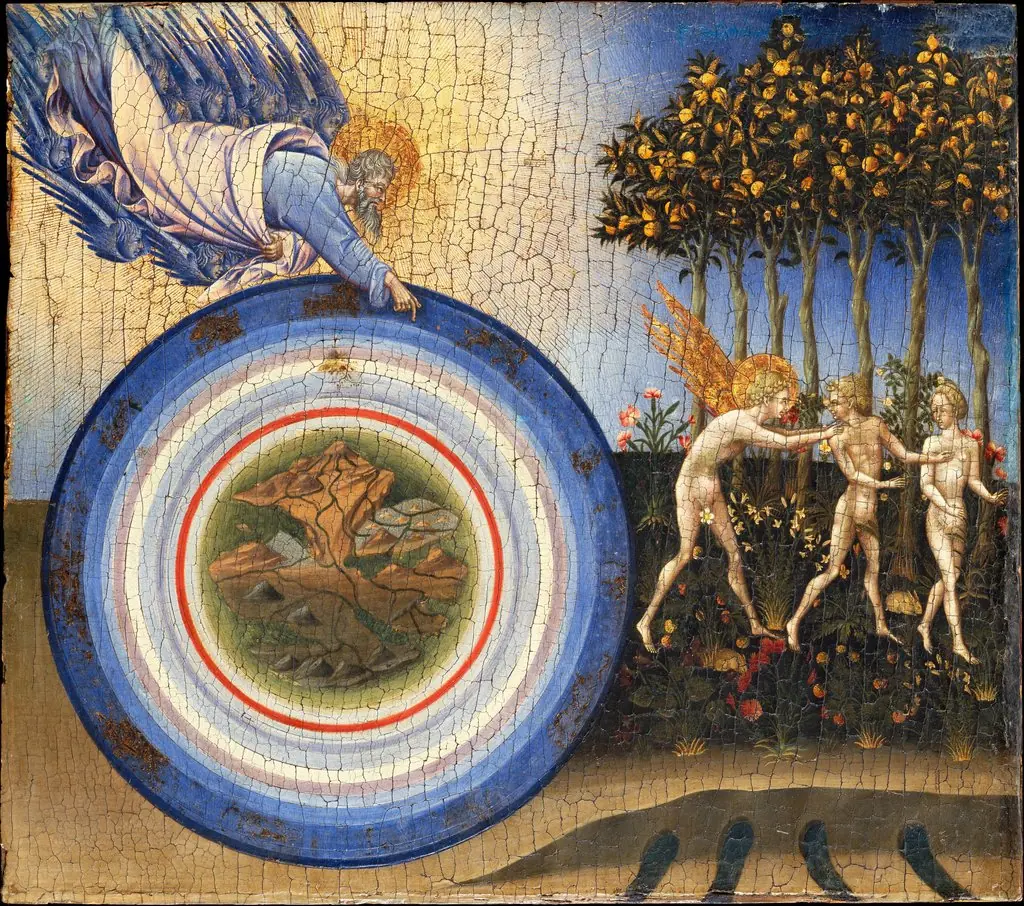 The Creation of the World and the Expulsion from Paradise