Artwork
Allegory of Virtue and Vice
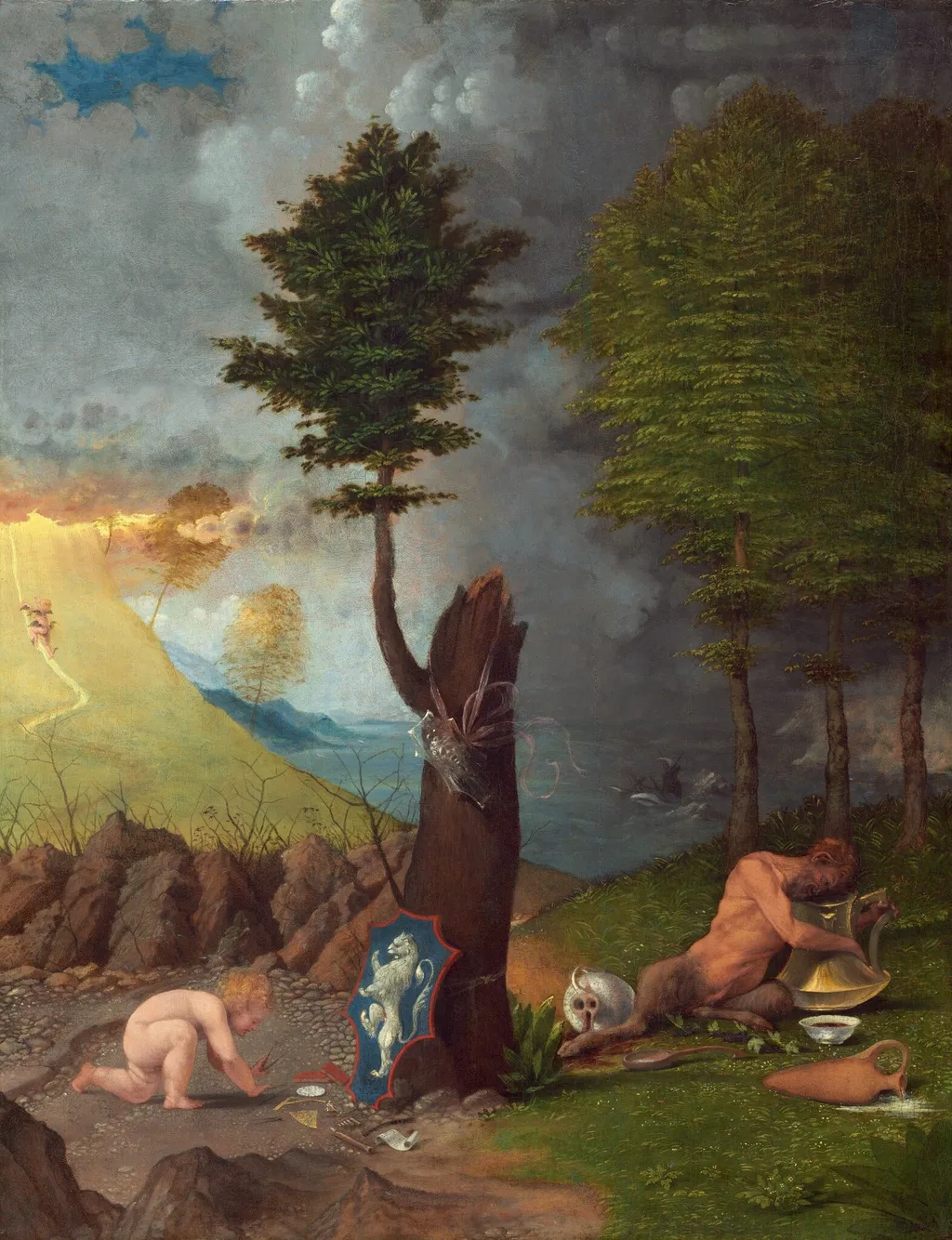
Allegory of Virtue and Vice is an oil painting by the Early Renaissance artist Lorenzo Lotto. It dates from 1505 and is held in the collection of the National Gallery of Art.
- Inscription
- Inscribed:formerly inscribed on reverse: BERNARD. RVBEVS / BERCETI COM. PONT / TARVIS. NAT. / ANN. XXXVI. MENS. X.D.V. / LAVRENT.LOTVS P. CAL. / IVL. M.D.V. (Bernardo Rossi of Berceta, Papal Count [Bishop] of Treviso, age 36 years, 10 months, 5 days, Painted by Lorenzo Lotto, July 1, 1505)
About this work
Subject & Meaning
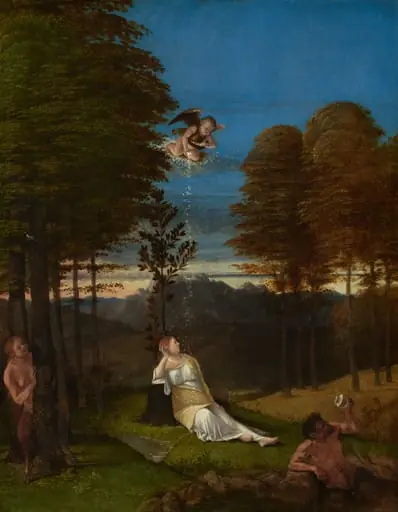
The Allegory of Virtue and Vice by Lorenzo Lotto (1505) presents a moral dichotomy through iconographic symbols divided by a central tree.
The Allegory of Virtue and Vice by Lorenzo Lotto (1505) presents a moral dichotomy through iconographic symbols divided by a central tree. The left side, associated with Virtue, features a putto engaged with books and instruments of the Liberal Arts, geometry, music, and writing, set in a sunlit landscape. A winged angel ascends a rocky path toward a celestial summit, embodying perseverance amid obstacles.
The right side, representing Vice, depicts a drunken silenus amid overturned amphorae and grape clusters, with a dark forest and a sinking ship in the background, symbolizing moral perdition and failure. The bishop’s coat of arms, placed on the tree’s trunk, underscores the work’s function as a protective cover for Bernardo de’ Rossi’s portrait, reinforcing the moral injunction inscribed on its reverse. The composition reflects Renaissance traditions of moralized landscapes, contrasting divine illumination with spiritual obscurity.
Technique & Style
The work is an oil painting on a wooden panel measuring 56.5 × 42.2 cm, executed in 1505. Lotto’s handling combines smooth, atmospheric transitions in the left-hand landscape with abrupt shifts in the right-hand scene, where jagged rock formations and storm-laden skies heighten the moral contrast. The composition is divided by a central tree whose green and withered branches respectively signify Virtue and Vice; the bishop’s coat of arms is set at the trunk’s base, anchoring the allegory.
On the virtuous side, a winged putto plays with books and drafting tools, while above, another putto ascends a perilous path toward celestial light; on the opposing side, a drunken silenus sprawls among overturned vessels and fallen grapes, with a sinking boat and shadowed forest signaling moral ruin. The delicate aerial perspective and luminous haze in the left landscape echo contemporaneous Venetian tonalism, whereas the stormy right side employs sharper modeling and cooler hues to underscore its condemnation.
History & Provenance
Executed in 1505 by Lorenzo Lotto, this oil-on-panel painting originally functioned as a protective sliding cover for the Portrait of Bernardo de' Rossi, Bishop of Treviso. The work bears the bishop's coat of arms and likely traveled with him to Parma in 1524 following his flight from Treviso, subsequently entering the Farnese collection. By 1803, the panel was sold separately to an antiquarian, later appearing in the possession of Giacomo Gritti in Bergamo around 1880.
It was auctioned at Sotheby's in London on May 9, 1934, where Martin Asscher purchased it. Count Alessandro Contini Bonacossi briefly reacquired the piece before selling it to the Samuel H. Kress Foundation in 1935. The foundation donated the work to the National Gallery of Art in Washington, D.C., in 1939.
The Allegory of Virtue and Vice, painted by Lorenzo Lotto in 1505, is housed in the National Gallery of Art in Washington, D.C., where it is part of the Samuel H. Kress Collection (accession as a Kress donation). Its provenance traces a route from Bishop Bernardo de’ Rossi’s household in Treviso, through Parma’s Farnese collection, a 1803 antiquarian sale, ownership by Giacomo Gritti and Martin Asscher, a 1934 Sotheby’s auction in London, and finally acquisition by the Kress Foundation in 1935; the work was donated to the National Gallery of Art in 1939. Since entering the museum, it has been exhibited in the Kress Collection galleries and in several NGA presentations of Italian Renaissance art.
Context
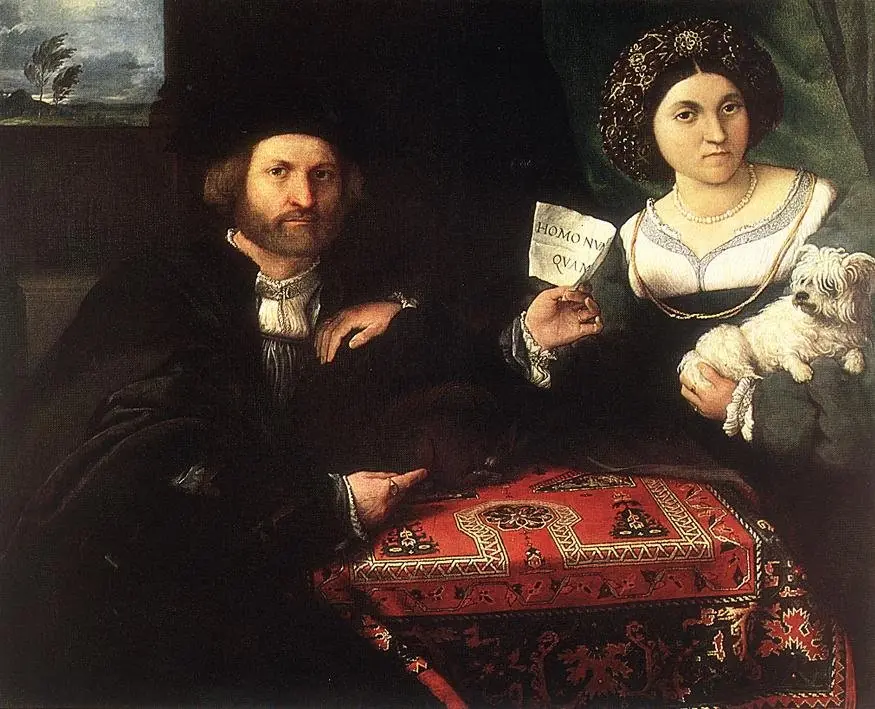
Lorenzo Lotto's Allegory of Virtue and Vice (1505) is situated within his early career under the patronage of Bishop Bernardo de' Rossi of Treviso, for whom it functioned as the protective sliding cover of a portrait. The work belongs to a tradition of allegorical pairings in Renaissance portraiture, comparable to Lotto's later Portrait of a Lady with its sliding cover of the Allegory of Chastity, in which the painted lid visually amplifies the sitter's moral and aspirational qualities. Scholars have traced the compositional device of a bifurcated tree separating two moralized landscapes to Albrecht Dürer's engraving Hercules at the Crossroads, though Lotto adapted the iconography with notable freedom, foreshadowing his lifelong interest in emblems and hidden meanings embedded within portraits.
The atmospheric handling of the contrasting landscapes, one luminous and serene, the other tempestuous and dark, has invited comparisons with Giorgione's Tempesta, which some scholars date to the same year. The panel entered the Samuel H. Kress Collection in 1935 and was donated to the National Gallery of Art in 1939, where it remains a touchstone for studies of Lotto's allegorical practice.
Overview
Created in 1505 by the Italian High Renaissance painter Lorenzo Lotto, Allegory of Virtue and Vice is an oil on panel painting. This work is presently held in the collection of the National Gallery of Art in Washington, DC, United States. It exemplifies Lotto's early period, showcasing his engagement with complex allegorical themes through a traditional medium.
Own this work as a print
Artist & collection
Artist
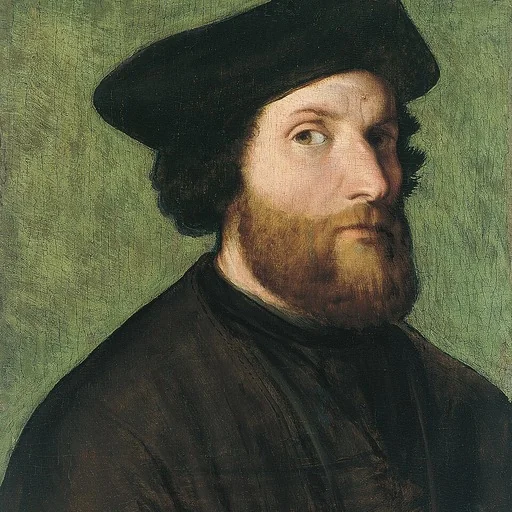
Lorenzo Lotto (c. 1480 – 1556/57) was an Italian Renaissance painter, draughtsman, and illustrator, traditionally placed in the Venetian school, though much of his career was spent in other north Italian cities. He…

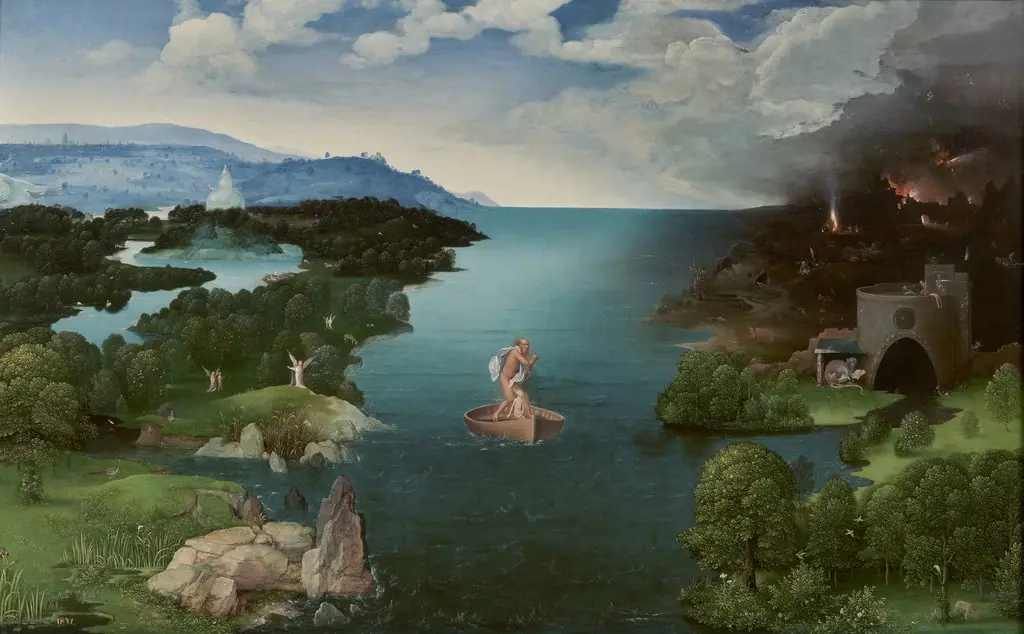 Landscape with Charon Crossing the Styx
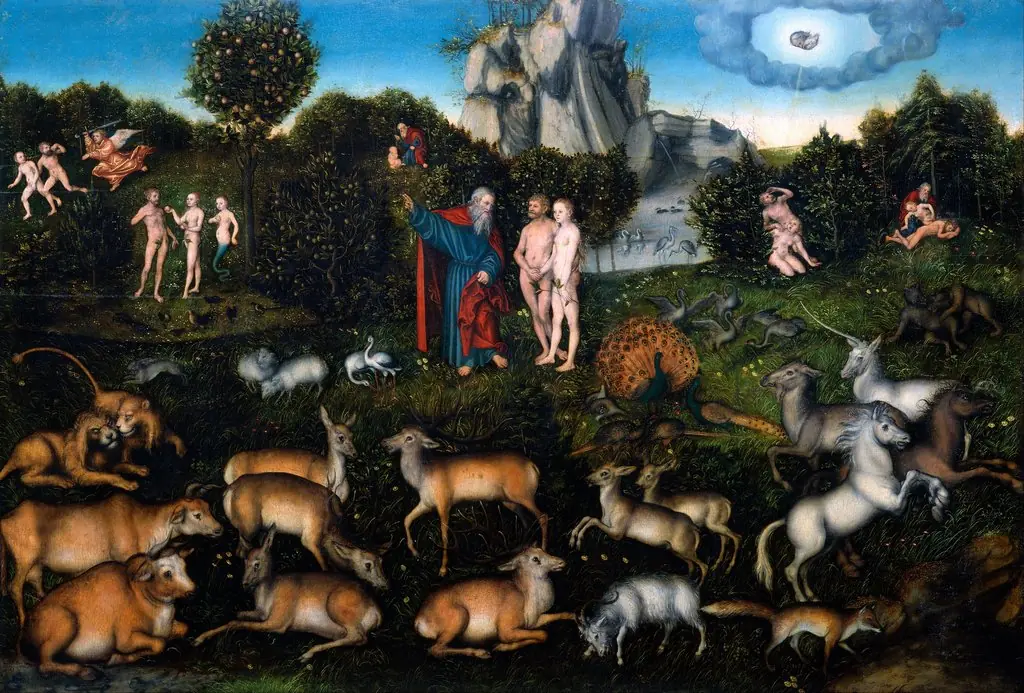 The Garden of Eden
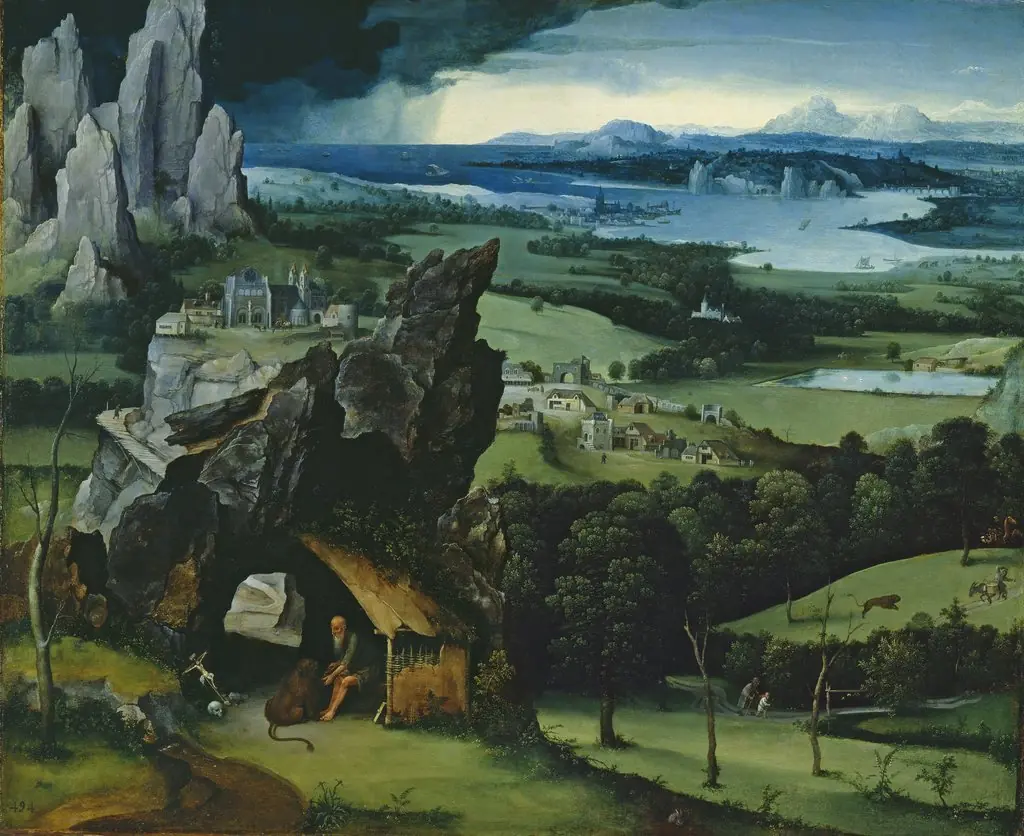 Landscape with St Jerome
 The Garden of Paradise
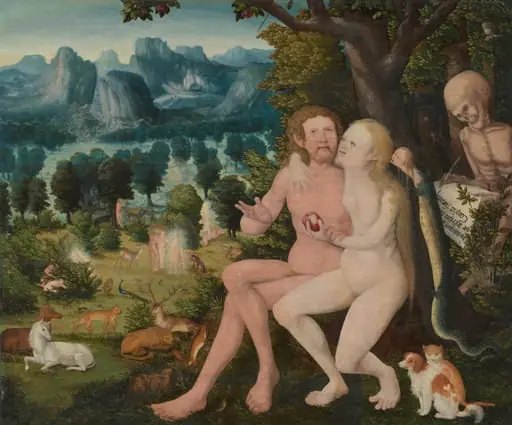 The Fall of Man with Scenes of the Creation
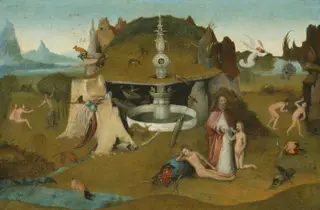 The Garden of Eden
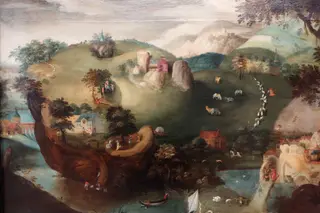 Antropomorf landschap - vrouwenportret
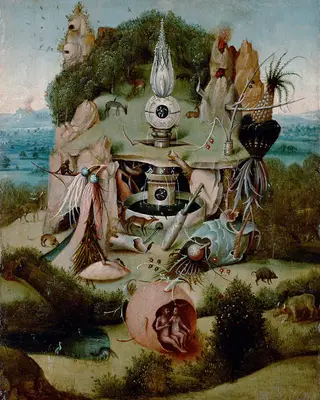 Garden of Eden
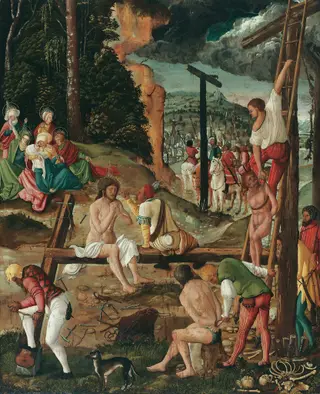 Before Christ's Crucifixion (Christ in Misery)
 The Fall of Man with Scenes of the Creation
- Allegory of Virtue