Artwork
The Descent from the Cross
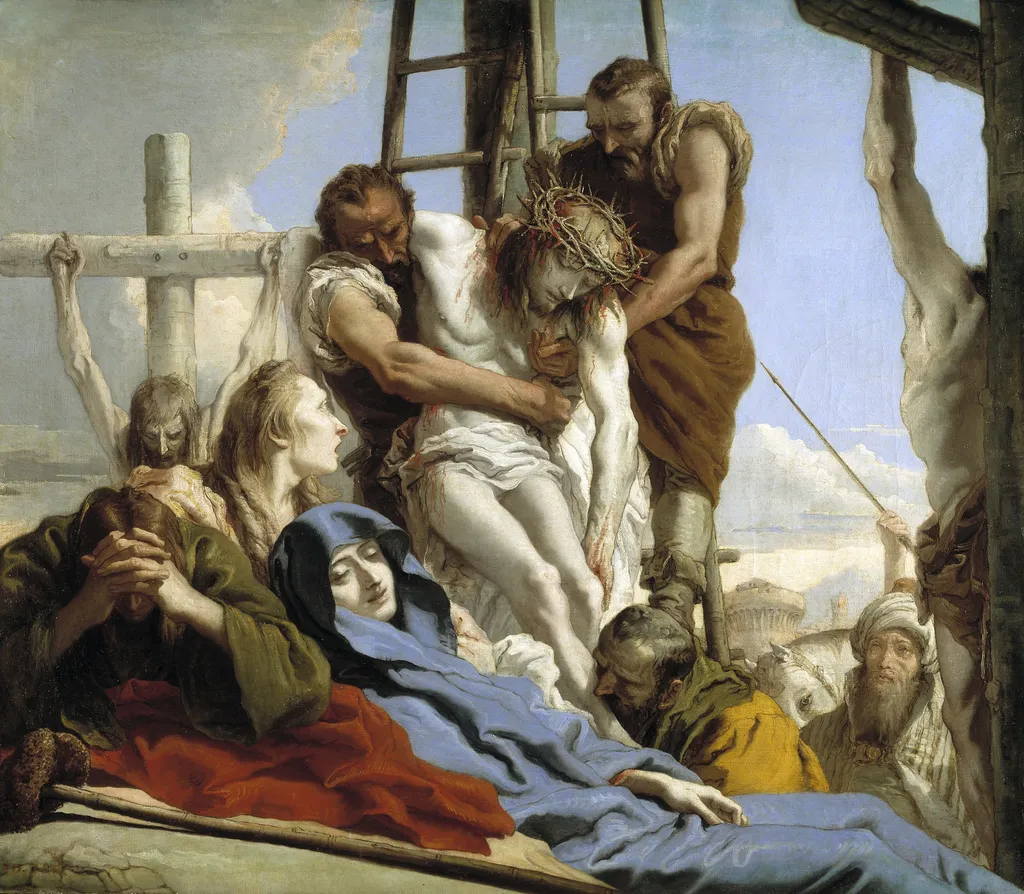
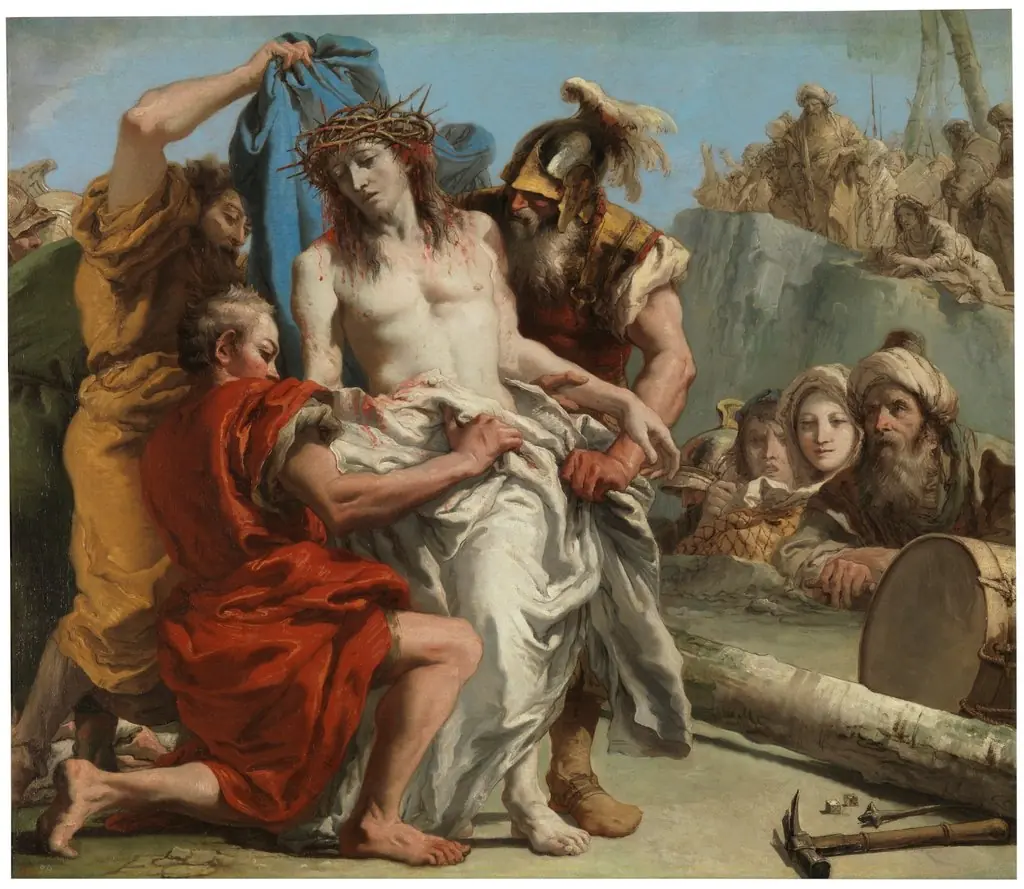
The Descent from the Cross is an oil painting by the Rococo painting artist Giovanni Domenico Tiepolo. It dates from 1772 and is held in the collection of the Museo del Prado.
About this work
Subject & Meaning
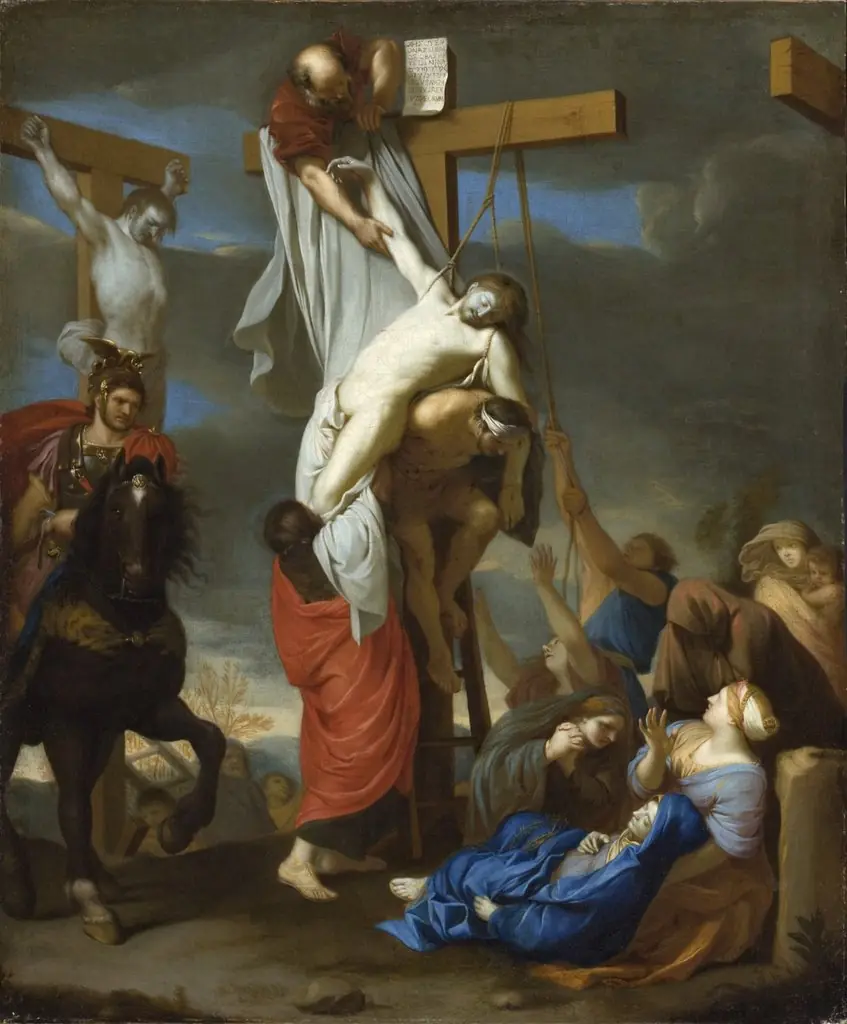
The painting depicts the Descent from the Cross, the moment in the Gospel narrative when the body of Jesus Christ is taken down from the cross after the Crucifixion. Giovanni Domenico Tiepolo rendered the scene as a religious composition, with the central event of Christ's removal from the cross framed by the instruments of the Passion. Among the attributes identified in the work are the spear associated with the Passion and the ladder used to lower Christ's body, both serving as traditional iconographic markers that situate the image within the long-established visual vocabulary of the Deposition theme.
By concentrating on these implements alongside the figure of Christ, Tiepolo anchors the painting in its devotional meaning: the lamentation and reverence surrounding Christ's sacrifice. The combination of subject and symbolic objects reinforces the work's function as a meditation on the Passion, presenting the Descent not merely as a narrative episode but as a moment of solemn contemplation central to Christian iconography.
Technique & Style
Executed in oil on canvas in 1772, the work measures 124 cm in height and 142 cm in width.
Executed in oil on canvas in 1772, the work measures 124 cm in height and 142 cm in width. The handling is characterized by fluid, luminous brushwork typical of late eighteenth-century Venetian narrative painting, with delicate transitions between light and shadow that model the figures and drapery. Compositionally, the scene is arranged in a shallow, stage-like space that directs attention to the central lowering of Christ’s body, framed by the diagonal of the ladder and the vertical thrust of the lance.
Stylistically, the palette favors silvery tones and cool highlights, aligning with Tiepolo’s mature palette and his synthesis of Venetian tradition with contemporary academic refinement.
History & Provenance
The Descent from the Cross is an oil painting on canvas created by Giovanni Domenico Tiepolo in 1772. This religious work, measuring 124 cm in height and 142 cm in width, depicts the biblical scene of the descent from the cross featuring Jesus Christ, a ladder, and a spear. The painting is currently held in the collection of the Museo del Prado.
While the specific circumstances of its initial commission are not detailed in the provided records, the work was completed in 1772 and has remained part of the Prado's holdings since its acquisition.
The work is held in the Museo del Prado, Madrid, where it carries the inventory number P007529.
It was first exhibited at the Museo del Prado in 1829 as part of the royal collection display. The painting has remained in the museum’s holdings since that date, forming part of its permanent collection of Italian eighteenth-century religious paintings.
Overview
Giovanni Domenico Tiepolo’s The Descent from the Cross (1772) is an oil‑on‑canvas work belonging to the late Rococo period. The composition captures the biblical moment when Christ’s lifeless body is lowered from the crucifix, surrounded by mourners and the implements of the Passion, such as a ladder and a Roman spear. The painting is part of the Museo del Prado’s permanent collection in Madrid.
Own this work as a print
Artist & collection
Artist
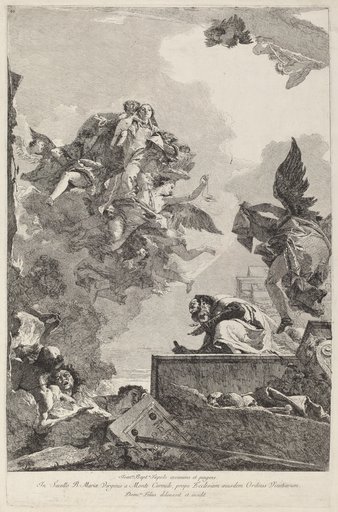
Giovanni Domenico Tiepolo (August 30, 1727 – March 3, 1804) was an Italian painter and printmaker in etching. He was the son of artist Giovanni Battista Tiepolo and elder brother of Lorenzo Baldissera Tiepolo.