Artist
Giovanni Domenico Tiepolo
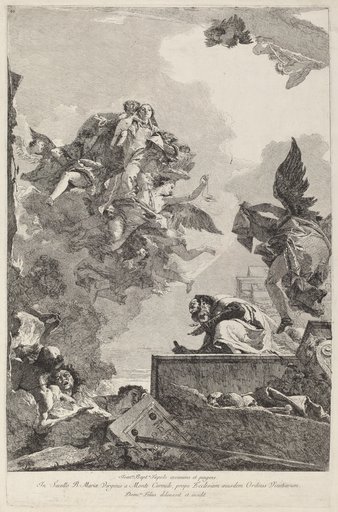
Republic of Venice
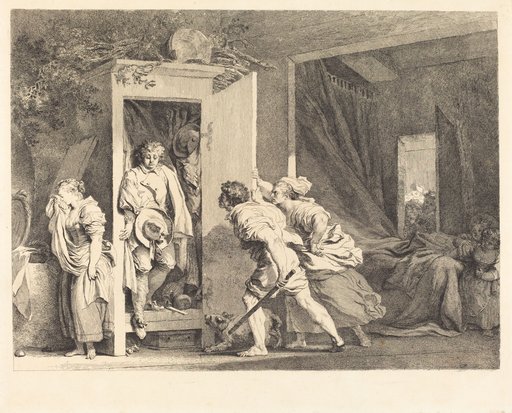
Giovanni Domenico Tiepolo is a Republic of Venice Baroque artist. 143 works are cataloged here, principally at National Gallery of Art.
Giovanni Domenico Tiepolo (August 30, 1727 – March 3, 1804) was an Italian painter and printmaker in etching. He was the son of artist Giovanni Battista Tiepolo and elder brother of Lorenzo Baldissera Tiepolo.
Overview
Giovanni Domenico Tiepolo (1727-1804), also known as Giandomenico Tiepolo, was an Italian painter and printmaker in etching, active during the Rococo period. Born in Venice on August 30, 1727, and dying there on March 3, 1804, he was the eldest surviving son of the celebrated Venetian decorative painter Giovanni Battista Tiepolo and the elder brother of Lorenzo Baldissera Tiepolo. Though long overshadowed by his father, Domenico established himself as a significant artist in his own right, distinguished by a more down-to-earth and less allegorical approach. He is most admired today for his genre paintings depicting contemporary Venetian life, his extensive series of drawings and prints, and his innovative fresco cycles, particularly the Pulcinella decorations at his family villa in Zianigo, which represent a striking departure from the grand mythological and religious subjects favored by his father toward secular, satirical, and observational themes.
Biography & dates
Domenico Tiepolo entered his father's workshop at age thirteen and quickly became Giovanni Battista's chief assistant. By age twenty, he was receiving independent commissions. His first major commission came around 1747-1749, when he painted fourteen canvases of the Stations of the Cross for the Oratory of the Crucifix in San Polo, Venice, subsequently reproduced as etchings. In 1748, he painted The Healing of the Possessed Man for San Francesco di Paola. Between late 1750 and spring 1753, he accompanied his father to Würzburg, Bavaria, where they decorated the residence of Prince-Bishop Karl Philipp von Greiffenklau; Domenico was entrusted with the overdoors and impressed the patron sufficiently to receive independent commissions. Upon returning to Venice, he worked briefly with Pietro Longhi and his uncle Francesco Guardi. In 1753-1754, he painted The Minuet, and between 1754 and 1755, he executed frescoes for the presbytery of Santi Faustino e Giovita in Brescia based on his father's designs. In 1757, he decorated the guest wing (Foresteria) of Villa Valmarana ai Nani in Vicenza, where he developed a more realistic, genre-oriented style distinct from his father's classical manner. He began frescoes at the family villa in Zianigo in 1759, though these were interrupted by other commissions. In 1761, he collaborated with his father on frescoes at Villa Pisani in Stra. The following year, 1762, he accompanied his father to Madrid at the invitation of Charles III of Spain, where they worked on the Glory of Spain at the Royal Palace and where Domenico began the Stations of the Cross for San Felipe Neri. After his father's death in 1770, Domenico returned to Venice alone, leaving his brother Lorenzo in Spain. In 1772, he was named master of the Accademia di Pittura di Venezia, having been among its founders in 1756, and became its president in 1783. He married Margherita Moscheni in 1776, with whom he had two daughters. In 1783, he painted a now-lost fresco for the Ducal Palace in Genoa. He returned to Zianigo in 1791 to complete the villa frescoes begun decades earlier, finishing them in 1797. In his final years, he produced the Divertimento per li ragazzi, a series of 104 drawings featuring Pulcinella. He died in Venice in 1804.
Style & movement
Domenico Tiepolo's artistic development traces a trajectory from filial emulation to independent expression. Initially, his style was nearly indistinguishable from his father's, characterized by festive, bustling compositions with light-flooded architectural settings and soft to intense coloration. However, his work gradually acquired a different quality: more realistic, secular, and observational. After his father's death in 1770, this evolution accelerated. His genre scenes of Venetian life are marked by movement, color, and deliberate composition, with a particular gift for capturing the human aspect of narratives from unusual perspectives. At Villa Valmarana ai Nani, he pioneered a modern, Enlightenment-influenced approach, depicting peasant labor, chinoiserie, and bucolic scenes with humor and anecdotal detail. His mastery of chiaroscuro, evident in eight large frescoes at the Oratorio della Purità in Udine in 1759, remained a lifelong strength. Toward the end of the century, drawing gained new pictorial independence in his practice, with increasingly finished pen-and-wash works created seemingly for his own pleasure. His Pulcinella series represents the culmination of his genre interests: satirical, ironic, and gently mocking of Venetian social pretensions, these works transfer contemporary life into the world of the commedia dell'arte. This secular, anti-heroic thematic and his focus on everyday reality stand in marked contrast to the grand epic apotheoses painted by his father.
Major works
Domenico Tiepolo's major works span fresco cycles, easel paintings, drawings, and prints. The Stations of the Cross (1747-1749) for San Polo, Venice, his debut as an independent painter, comprises fourteen canvases, later etched. The Würzburg Residence frescoes (1750-1753) included his independent overdoors. At Villa Valmarana ai Nani, Vicenza (1757), his guest wing frescoes depicted rural life, carnival scenes, and chinoiserie. The Villa Pisani frescoes (1761-1762) at Stra included the Apotheosis of the Pisani Family. In Madrid, he executed the Glory of Spain at the Royal Palace and began the Stations of the Cross for San Felipe Neri (1768-1770), now in the Prado. The Zianigo villa frescoes (1759-1797), detached in 1906 and now at Ca' Rezzonico, Venice, include Il mondo novo, La Passeggiata, Minuetto in villa, and Pulcinella e i saltimbanchi. His easel paintings include The Charlatan or Tooth Puller (1754-1755) at the Louvre, Paris; Christ and the Woman Taken in Adultery (1751) and Rebecca at the Well (1751), both at the Louvre; and Scene of Carnival or The Minuet (1754-1755), also at the Louvre. His print series include the Via Crucis etchings (1748-1749), the Idee Pittoresche sulla Fuga in Egitto (1753), and the Divertimento per li ragazzi (104 drawings of Pulcinella). The Art Institute of Chicago holds a complete set of the Flight into Egypt etchings and four sheets from the Pulcinella series. His record auction price was $4,912,460 in 2013 for The Celebrated Deeds of the Porto Family of Vicenza at Sotheby's London.
Influences & students
Domenico Tiepolo's primary and most enduring influence was his father, Giovanni Battista Tiepolo, in whose workshop he trained from age thirteen and with whom he collaborated for nearly three decades. The paternal style initially provided his model, though he gradually modified it toward greater realism and secular content. His proximity to Pietro Longhi's workshop after returning from Würzburg exposed him to genre painting focused on Venetian social life. His uncle Francesco Guardi and another uncle, Gianantonio Guardi, connected him to the veduta tradition, though his own interests lay elsewhere. The Prince-Bishop of Würzburg, Karl Philipp von Greiffenklau, was an important early patron who granted him autonomy and commissions. Domenico's brother Lorenzo Tiepolo (1736-1776) worked alongside him as assistant to their father and remained in Spain after Domenico's 1770 departure; Lorenzo specialized chiefly in genre scenes in pastel. There is no substantial record of Domenico himself training pupils or maintaining a significant workshop of his own; his later career appears to have been largely solitary, devoted to personal projects and series created for his own satisfaction rather than for a studio tradition.
Legacy
During his lifetime, Domenico Tiepolo was respected but consistently overshadowed by his father's reputation. His appointment as master (1772) and later president (1783) of the Venetian Academy indicates professional standing, yet his posthumous reputation remained secondary for centuries. The rediscovery of his work, particularly the Zianigo frescoes and the Pulcinella drawings, has substantially elevated his status among art historians. The Zianigo frescoes, nearly exported to France in the early twentieth century, were saved by the Minister of Public Education, acquired for Venice, and installed at Ca' Rezzonico in 1936 in a near-replica of their original arrangement; they have undergone recent restoration. His works are now held in major international collections including the Prado, the Louvre, the National Gallery in London, the Metropolitan Museum of Art, the Art Institute of Chicago, the Cleveland Museum of Art, the Philadelphia Museum of Art, the Victoria and Albert Museum, and numerous others across Europe, North America, and Australia. The market for his work has strengthened considerably, with the 2013 record sale of The Celebrated Deeds of the Porto Family of Vicenza at Sotheby's London demonstrating collector interest. Scholarly attention has focused on his pastiche and capriccio, his etching technique, and the social satire embedded in his genre works. Peter Parshall's 2011 study in Print Quarterly and the 1997 Metropolitan Museum of Art exhibition Venetian Prints and Books in the Age of Tiepolo represent significant contributions to his critical rehabilitation. Today, he is recognized not merely as a pale reflection of his father but as an artist who transformed Rococo decorative traditions into something more intimate, observational, and modern.
Works by Giovanni Domenico Tiepolo
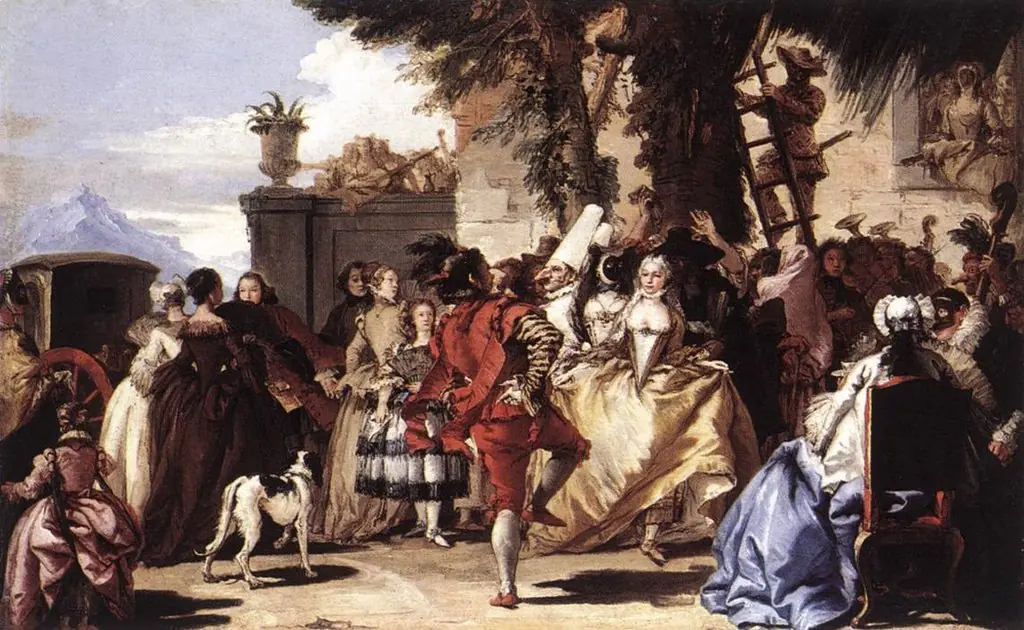 A Dance in the Country
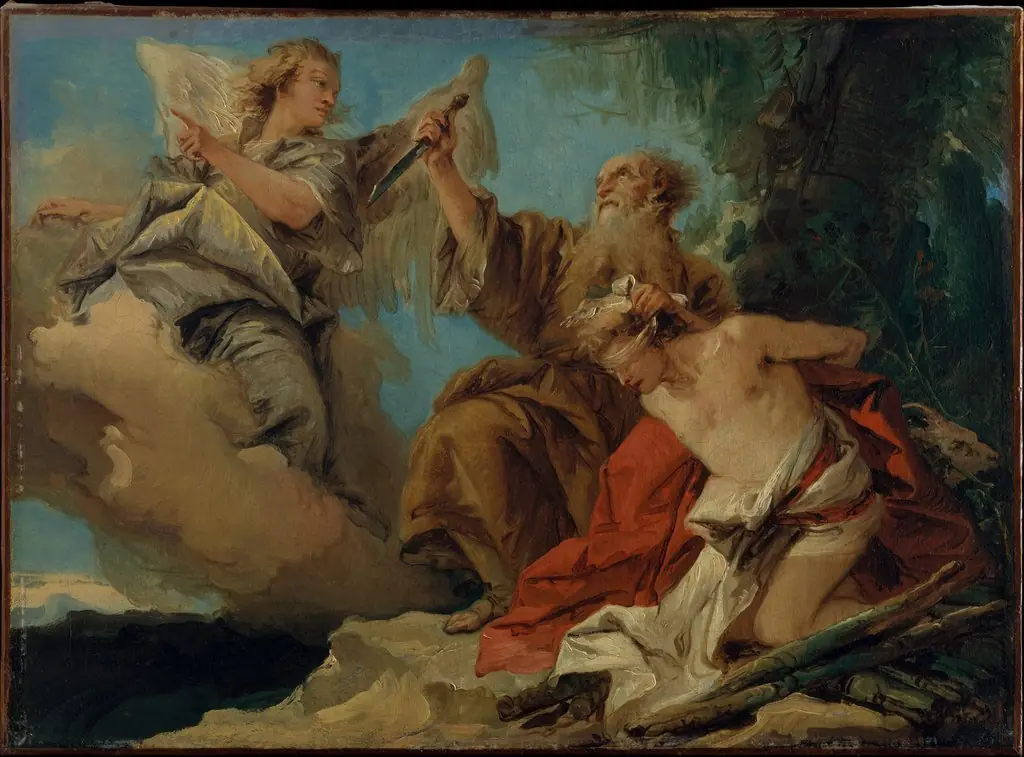 The Sacrifice of Isaac
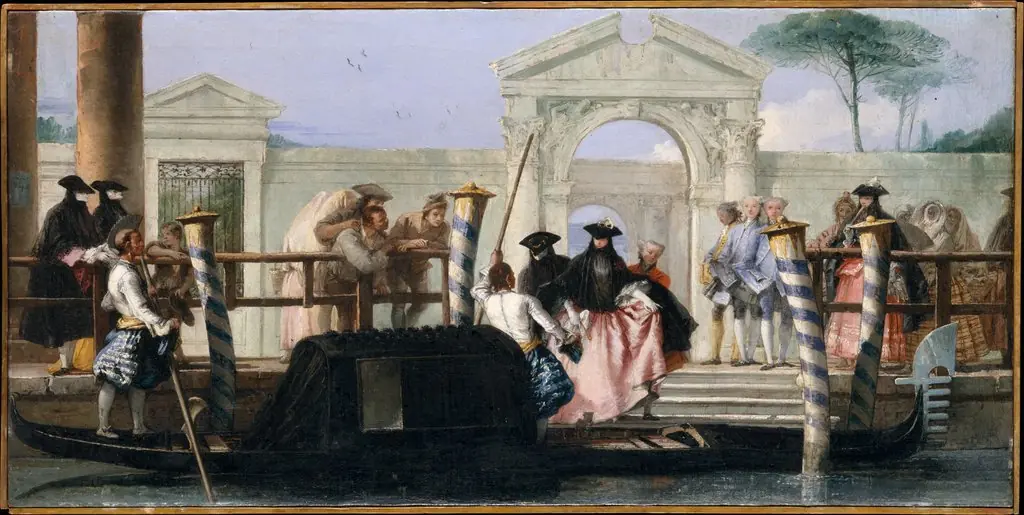 The Departure of the Gondola
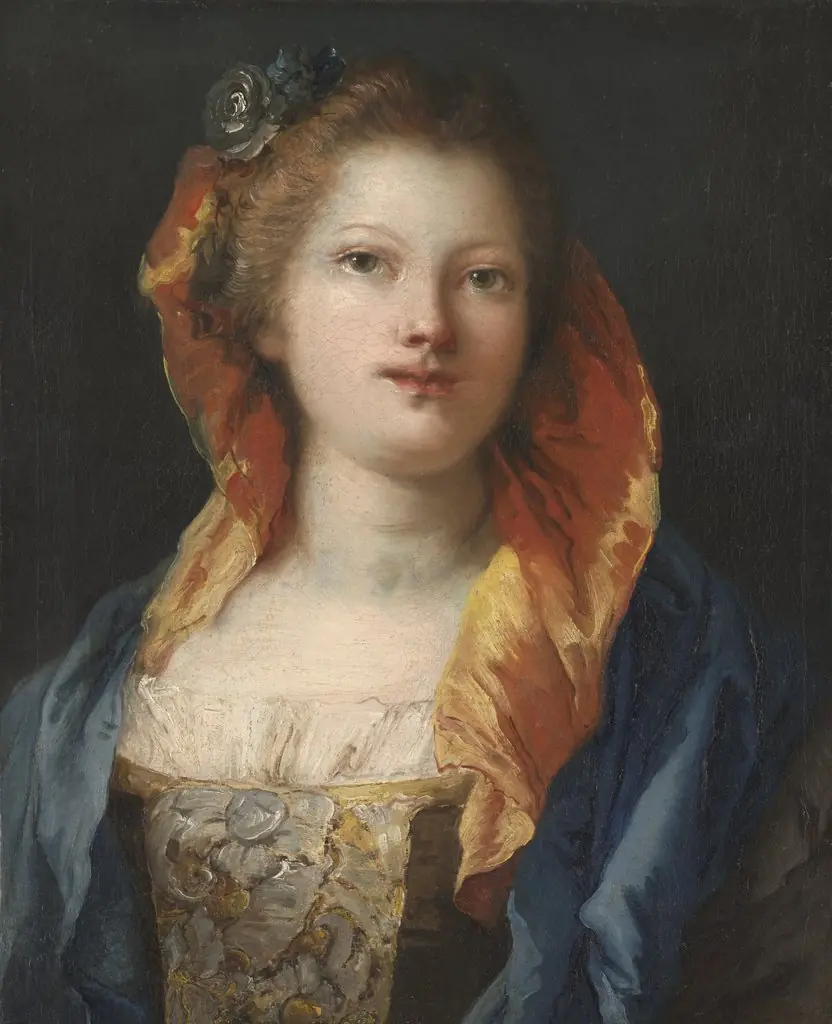 Portrait of a Woman
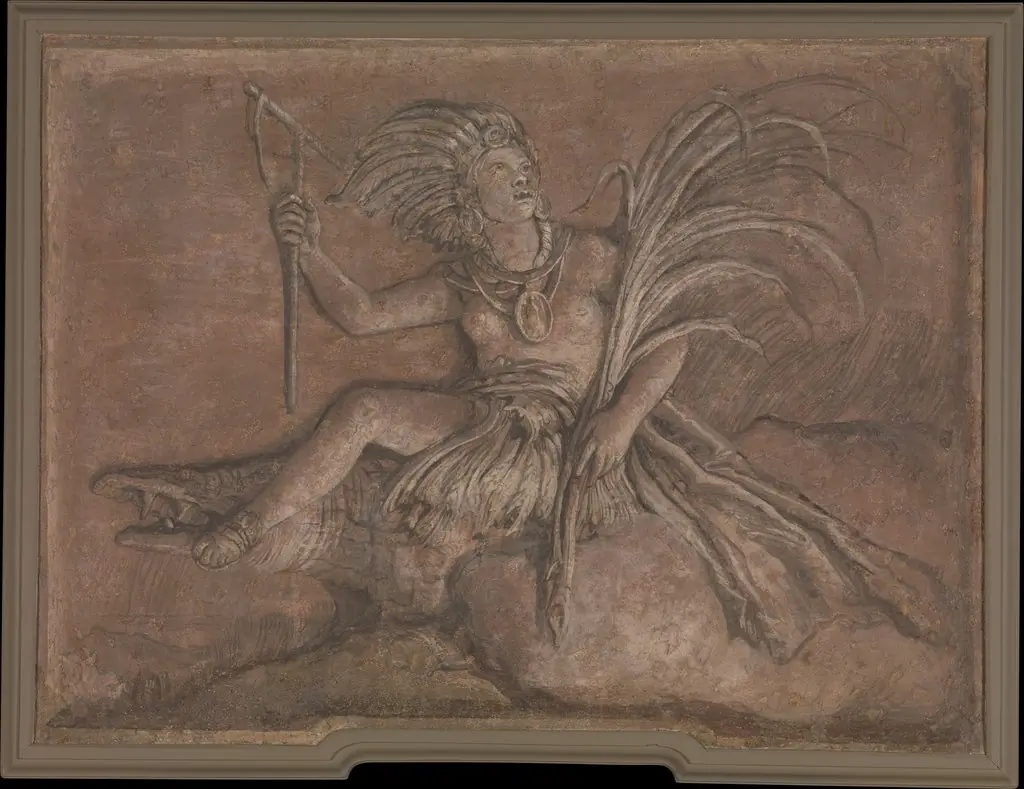 America
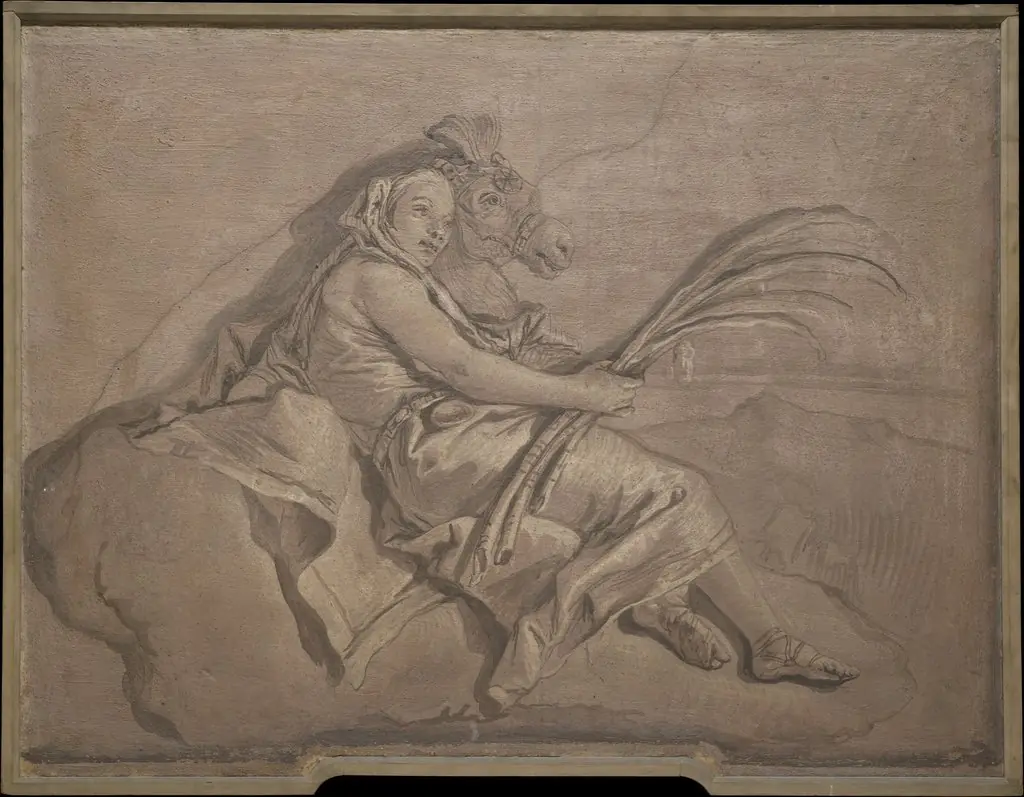 Asia
Asia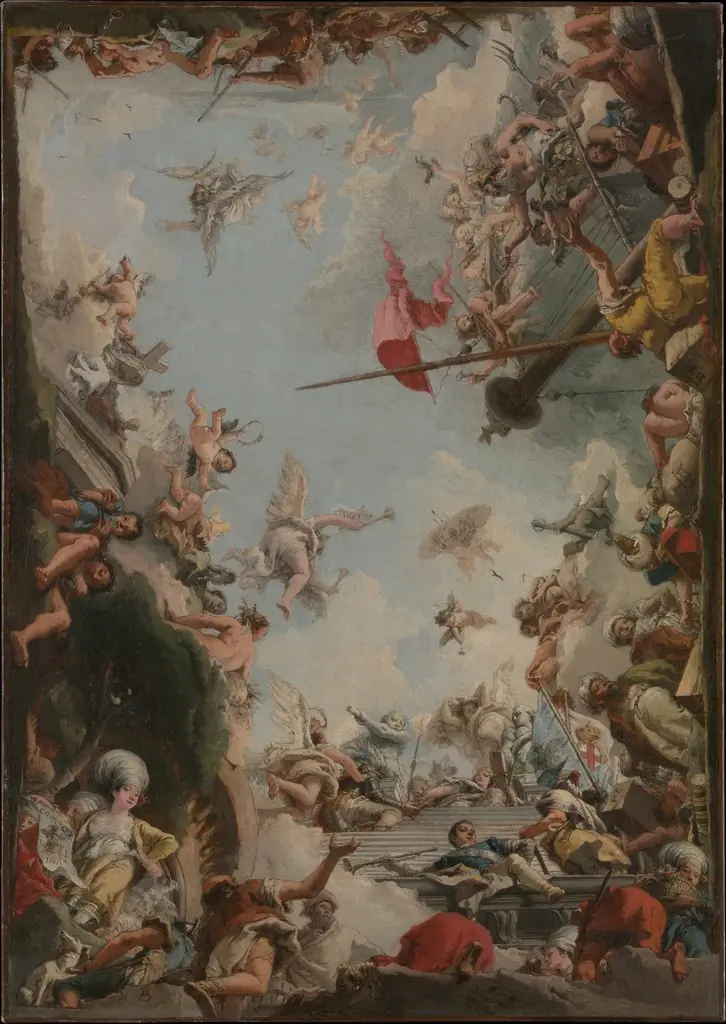 The Glorification of the Giustiniani Family
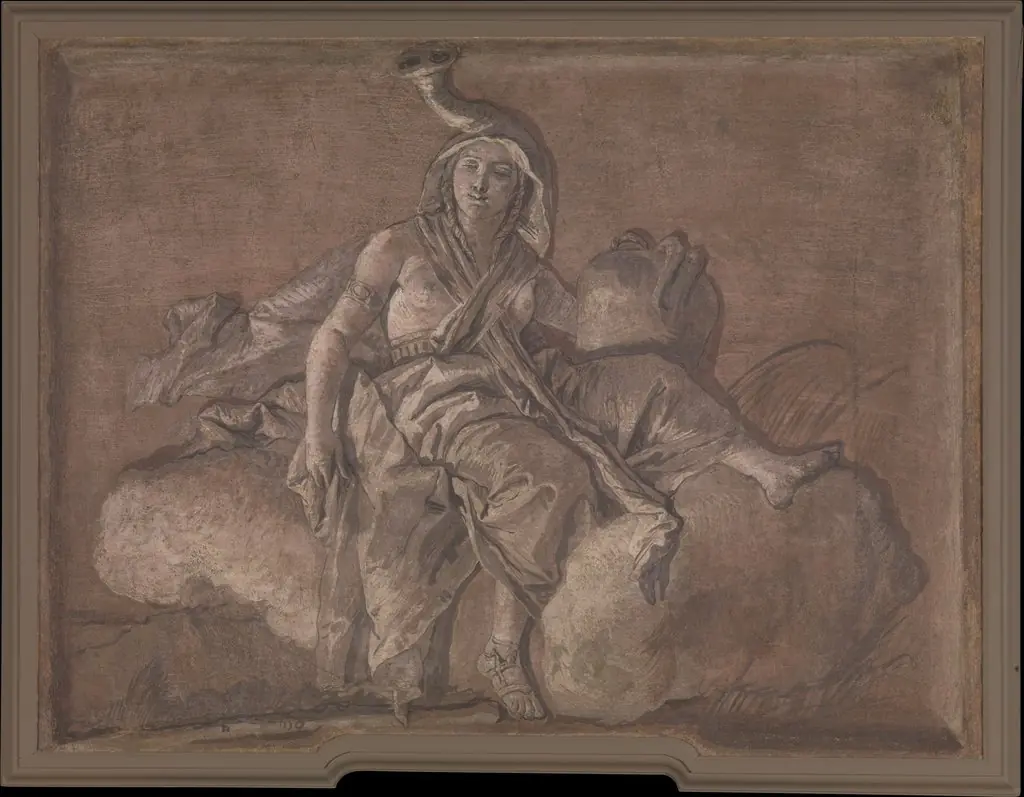 Africa
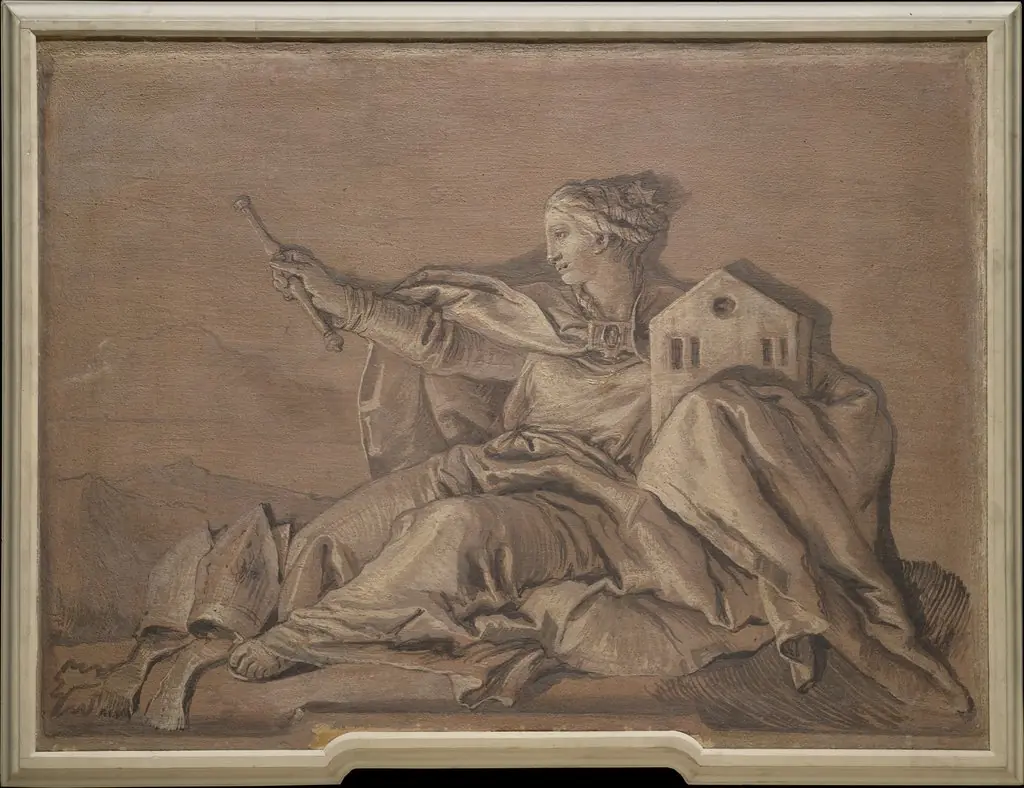 Europe
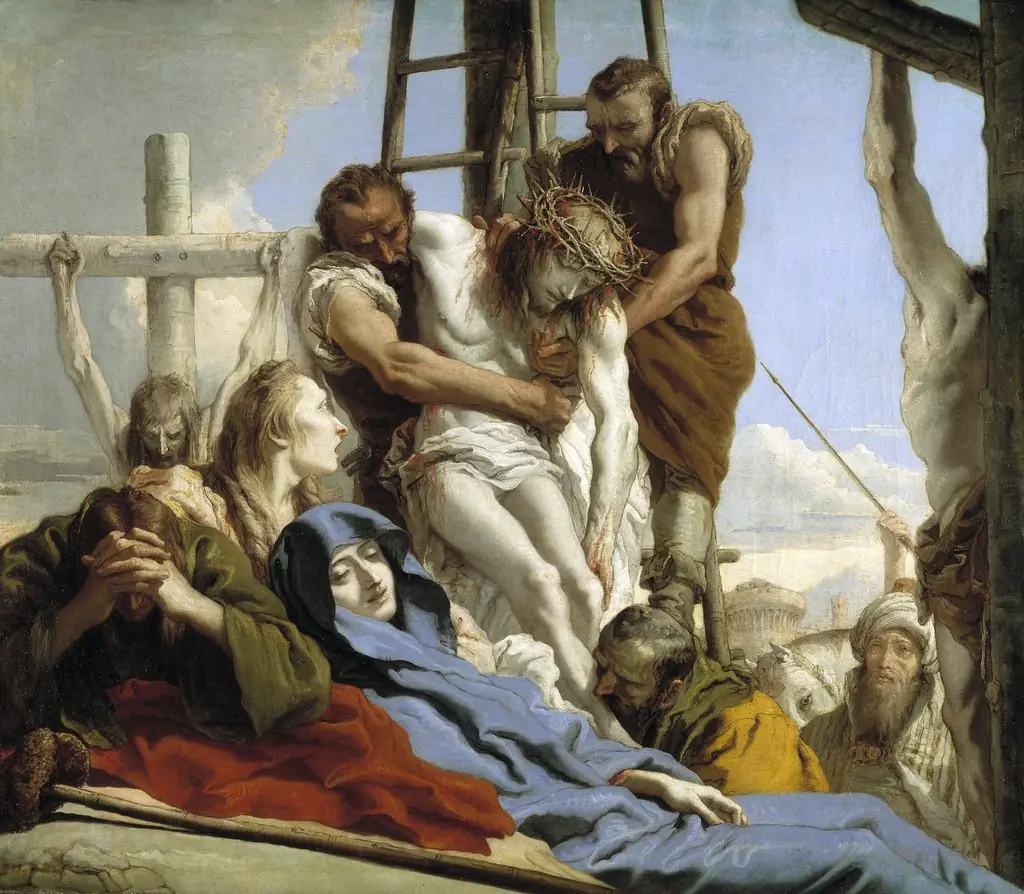 The Descent from the Cross
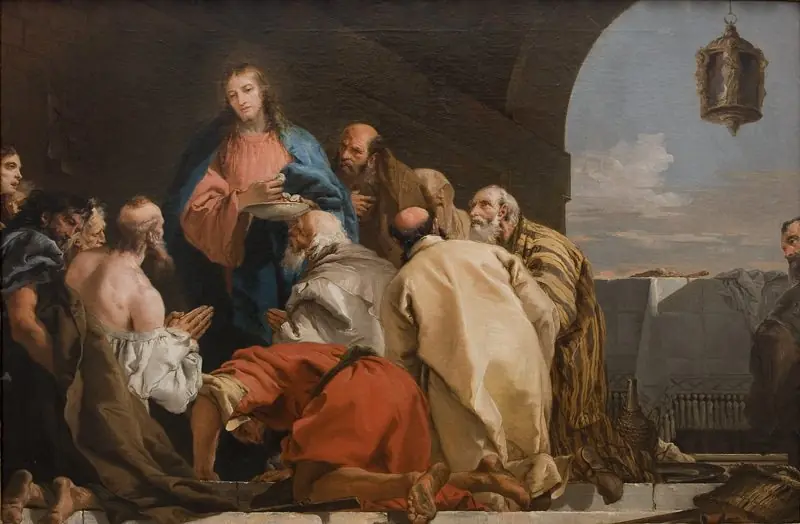 The Institution of The Eucharist
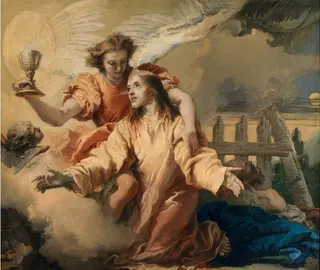 The Agony in the Garden
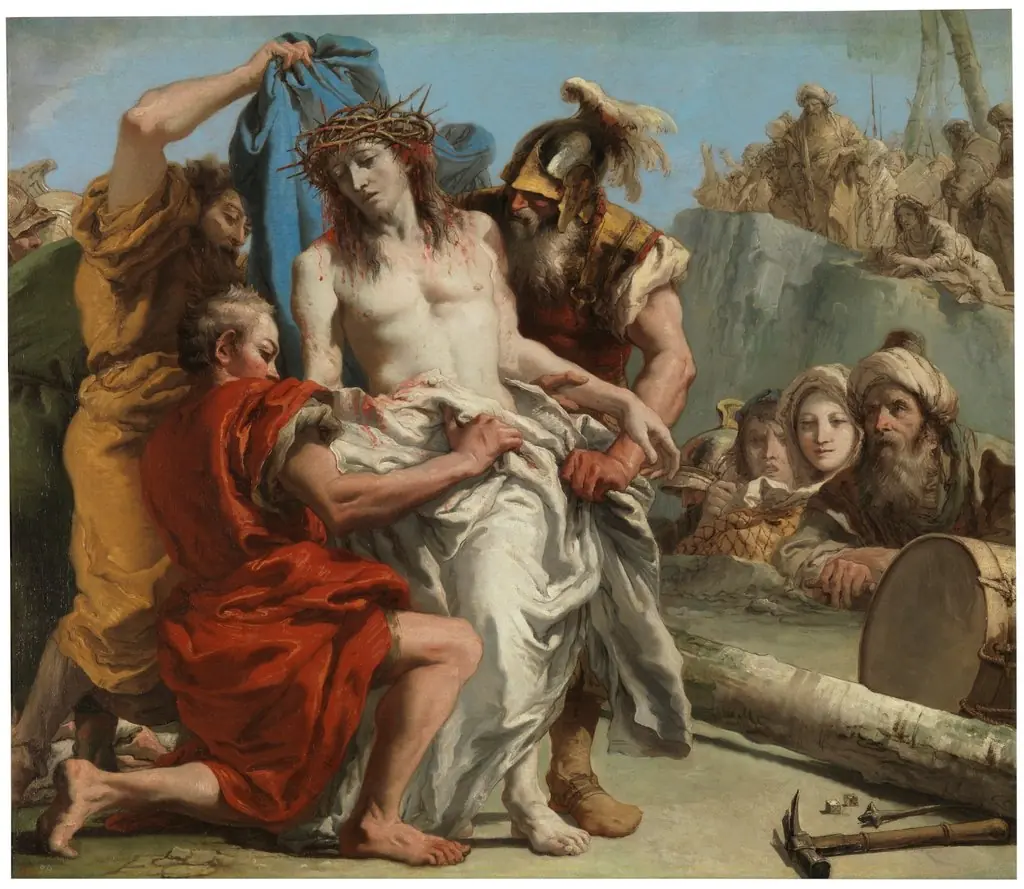 El Expolio de Cristo
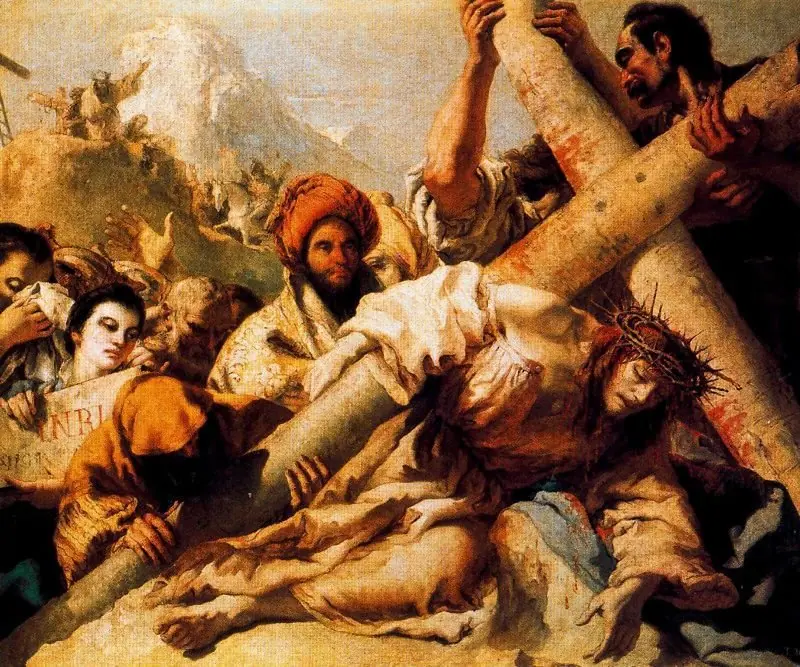 Christ falls on the Way to Calvary
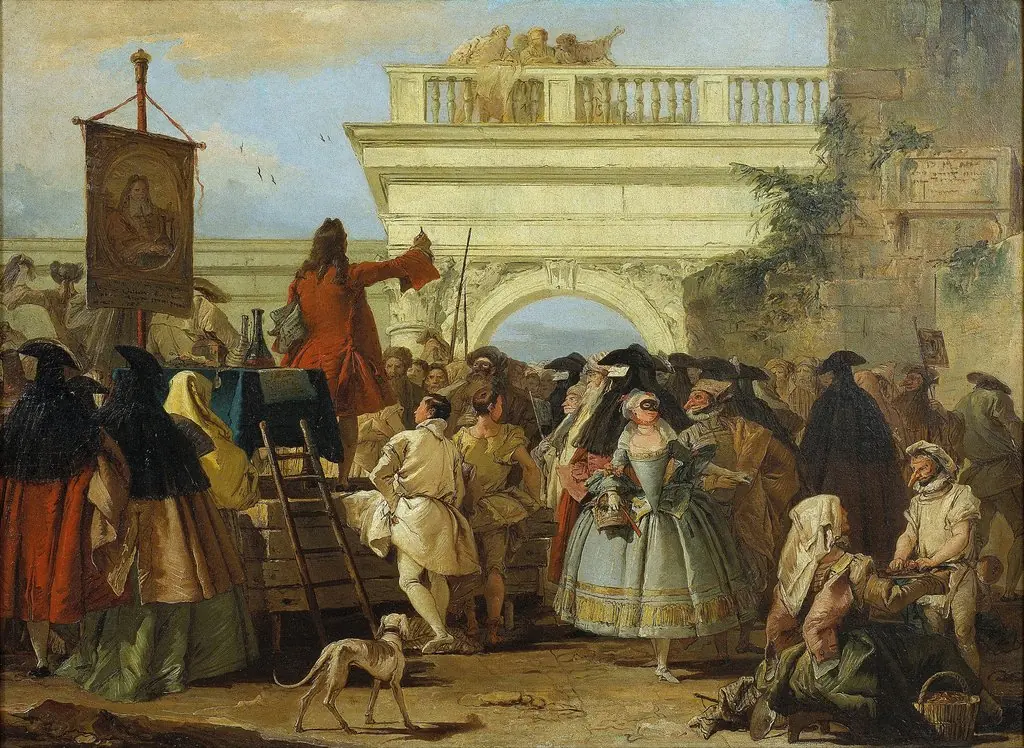 El xarlatà
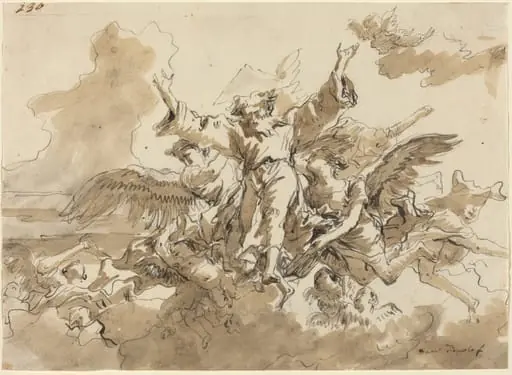 Creation of the Universe
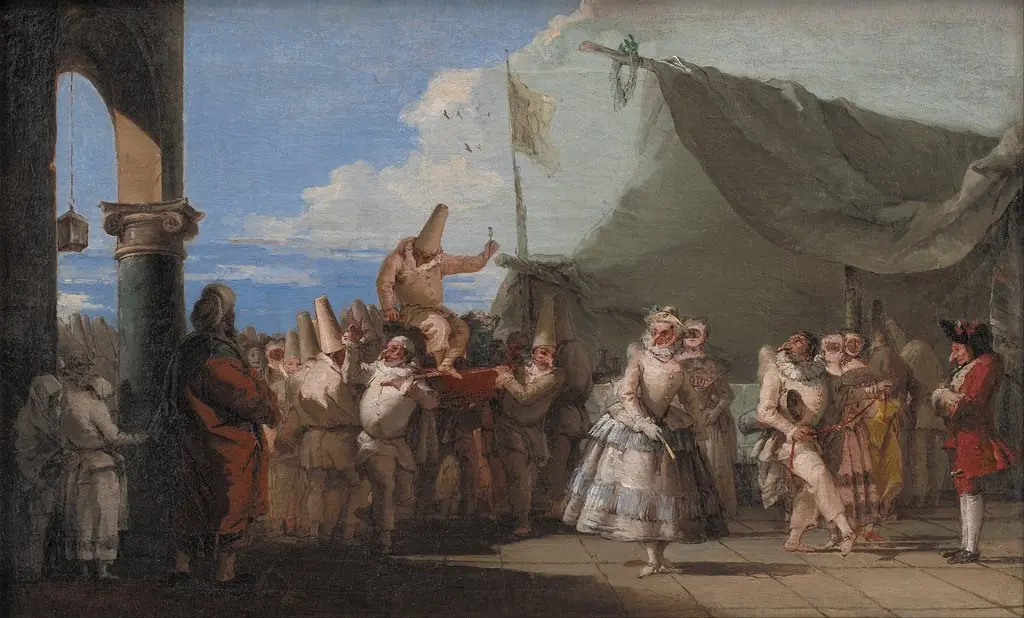 The Triumph of Pulcinella
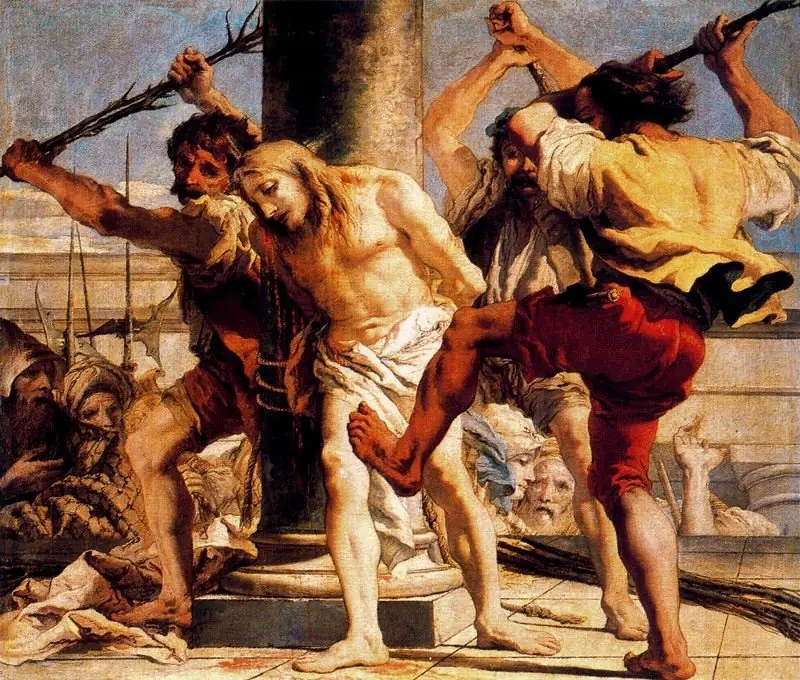 Cristo a la Columna
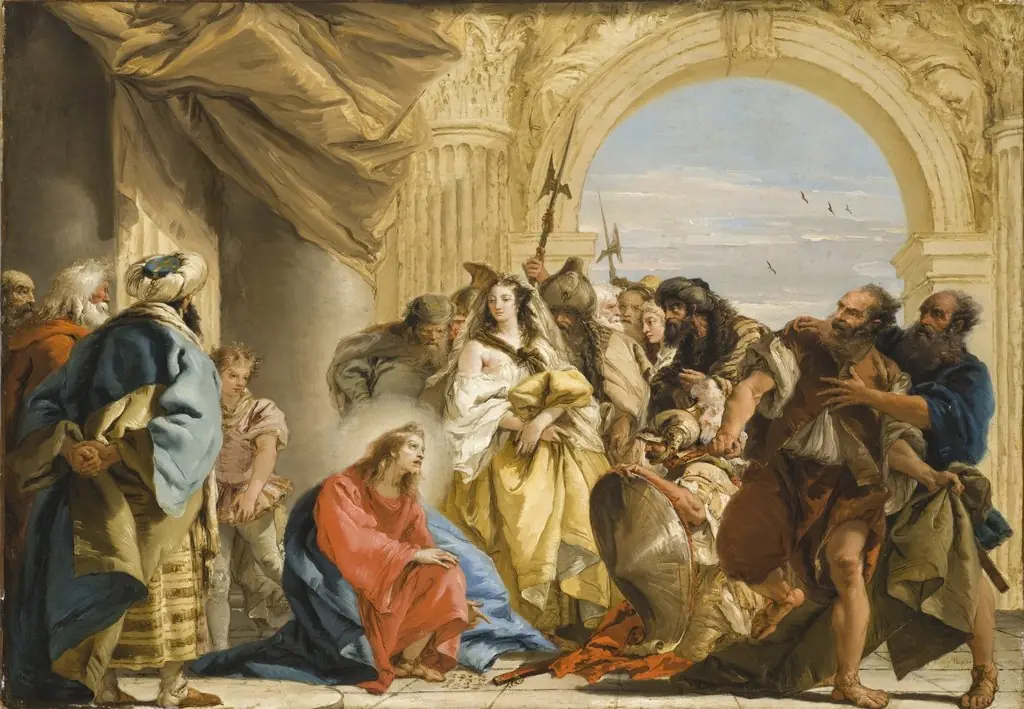 Christ and the Woman Taken in Adultery
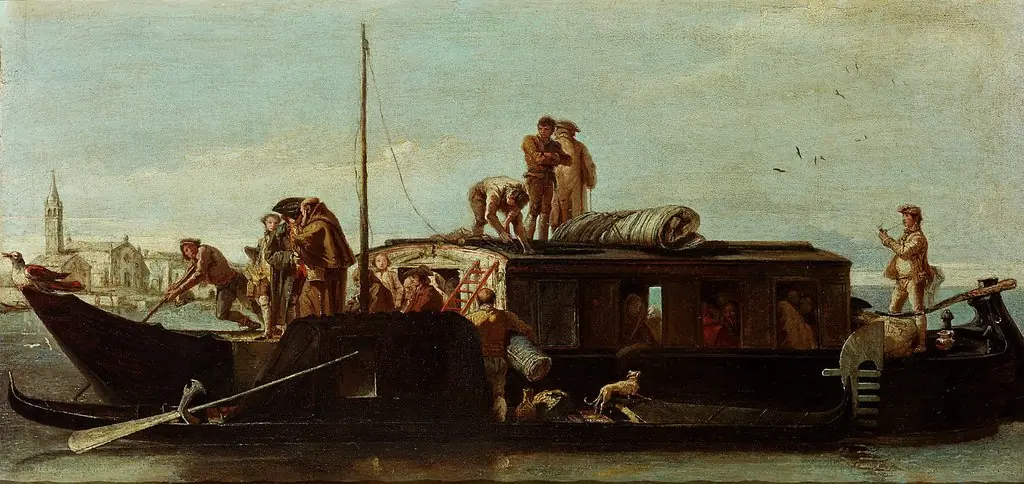 Venetian Post Boat
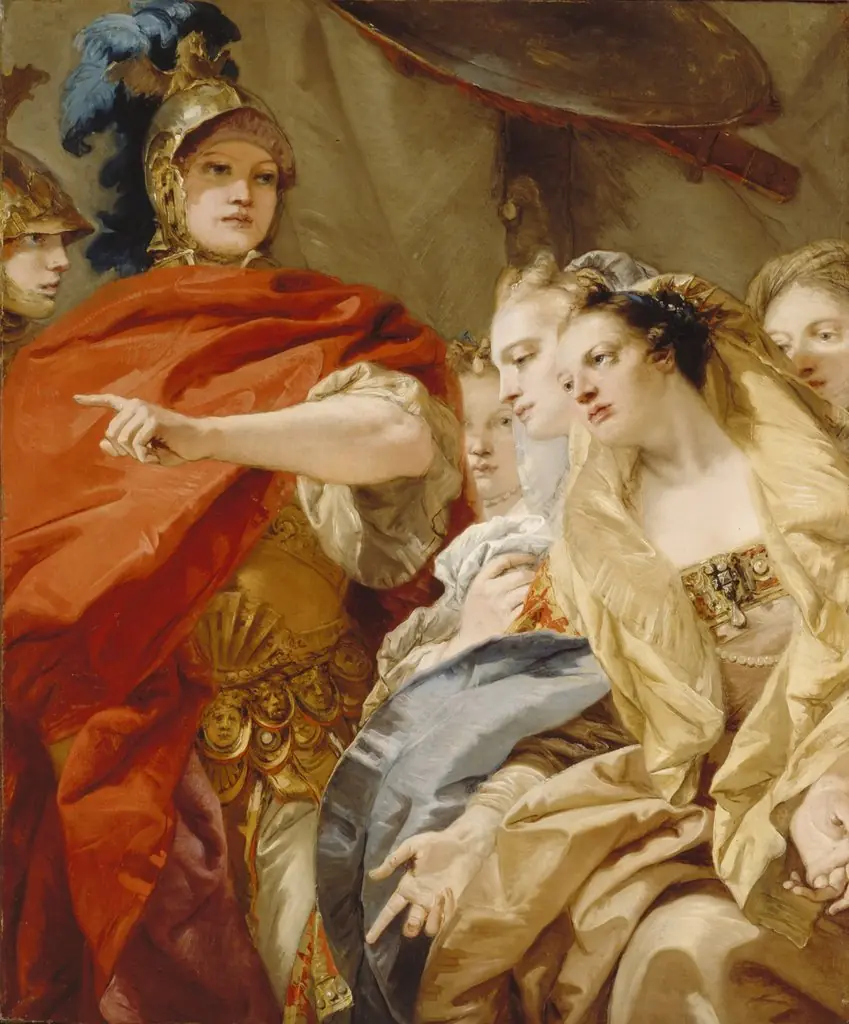 The Women of Darius Invoking the Clemency of Alexander
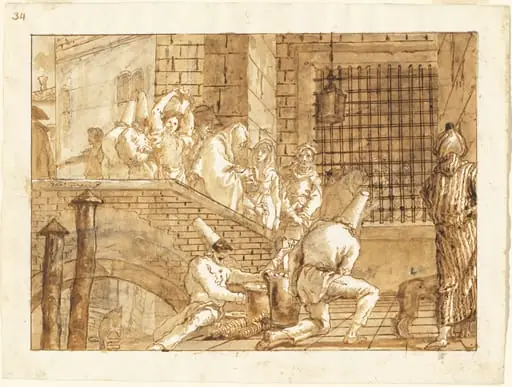 The Prison Visit
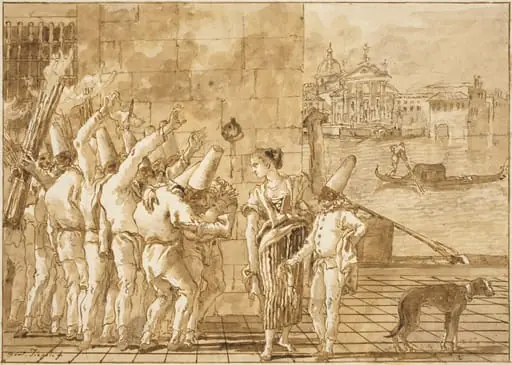 Punchinello's Farewell to Venice
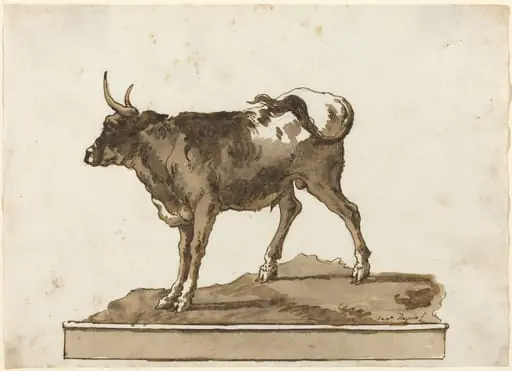 A Bull on a Ledge
143 works in the catalog · 24 shown
Collections represented


Artists in a similar vein