Artwork
Joseph Carrington Cabell
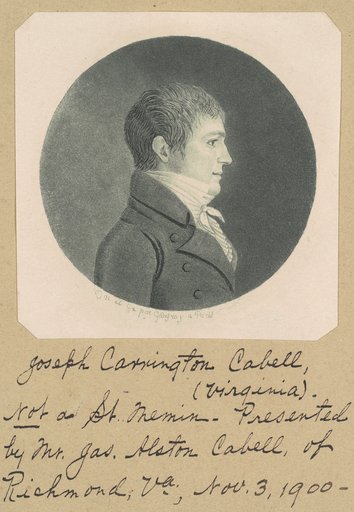
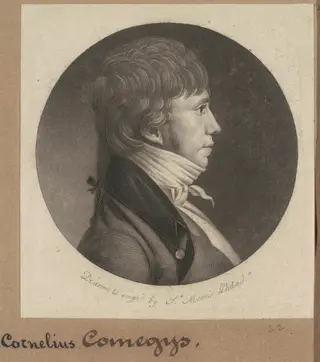
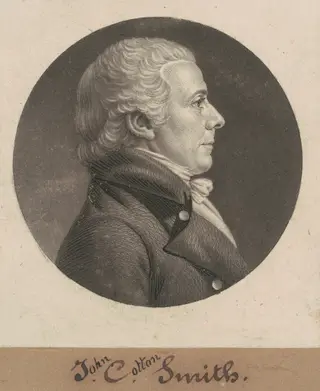
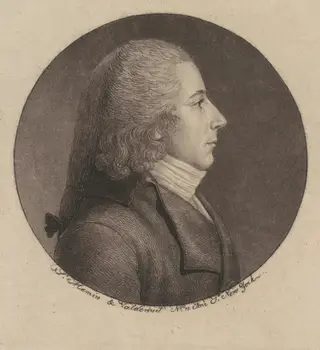
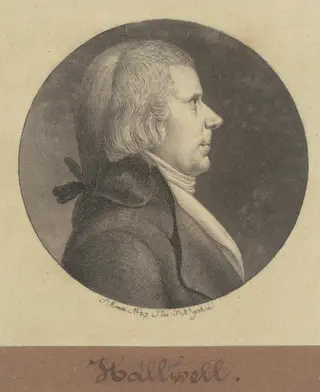
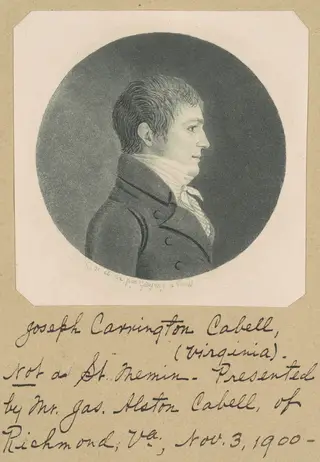
Joseph Carrington Cabell is an ink print by the Romanticist artist Jean Godefroy. It dates from 1804 and is held in the collection of the National Gallery of Art.
- Inscription
- Inscribed:lower center in plate: Dre et gr par Godefroy a Paris; lower center mount in black ink by unknown hand: Joseph Carrington Cabell, / (Virginia). / Not a St. Memin- Presented / by Mr. Jas. Alston Cabell, of / Richmond, Va., Nov. 3, 1900-
About this work
Overview
This print, created around 1804, is a portrait of Joseph Carrington Cabell rendered in mezzotint and engraving on wove paper.
This print, created around 1804, is a portrait of Joseph Carrington Cabell rendered in mezzotint and engraving on wove paper. The image is mounted on a brown wove paper support, a common practice for preserving delicate prints. The work was produced by Jean Godefroy, a printmaker known for his portraiture in the early 19th century. The medium allows for subtle tonal gradations, enhancing the realism of the subject.
Subject & Meaning
Joseph Carrington Cabell, a Virginia politician and public figure, is depicted in a composed, formal posture typical of elite portraiture of the era. His attire, likely a dark coat with lace trim and a cravat, signals social standing and adherence to contemporary gentlemanly norms. The absence of overt symbolism suggests a focus on personal dignity rather than political achievement, reflecting a quiet confidence in his identity.
Technique & Style
Godefroy employed mezzotint to achieve rich, velvety blacks and delicate transitions in tone, complemented by fine engraving lines that define facial features and fabric textures. The technique’s capacity for nuanced shading lends depth to Cabell’s expression and the folds of his clothing. The composition is restrained, emphasizing the sitter’s presence without distraction, characteristic of early American portraiture in print form.
History & Provenance
The print was likely produced shortly after Cabell’s rise in Virginia’s political circles, possibly for private circulation or as a gift among peers. Its mounting on brown paper indicates careful preservation, suggesting it was valued by collectors or family. No public exhibition history is documented, but its survival implies it was kept within domestic or institutional collections in the American South.
Context
Created during the early years of the American republic, this portrait reflects the cultural emphasis on civic virtue and personal restraint among the educated elite. Mezzotint was favored for portraiture in this period due to its ability to mimic the softness of painted likenesses. Cabell’s depiction aligns with similar prints of jurists and legislators, reinforcing a visual language of authority grounded in decorum rather than grandeur.
Legacy
As a rare surviving example of Godefroy’s American portraiture, the print contributes to the study of early 19th-century print culture in the United States. It offers insight into how political figures were visually represented outside of oil painting, using accessible media to circulate images of leadership. The work remains a quiet but significant artifact of regional identity and printmaking practice in the post-Revolutionary era.
Artist & collection