Artwork
清 龔賢 自題山水十六開 冊|Landscapes with Poems
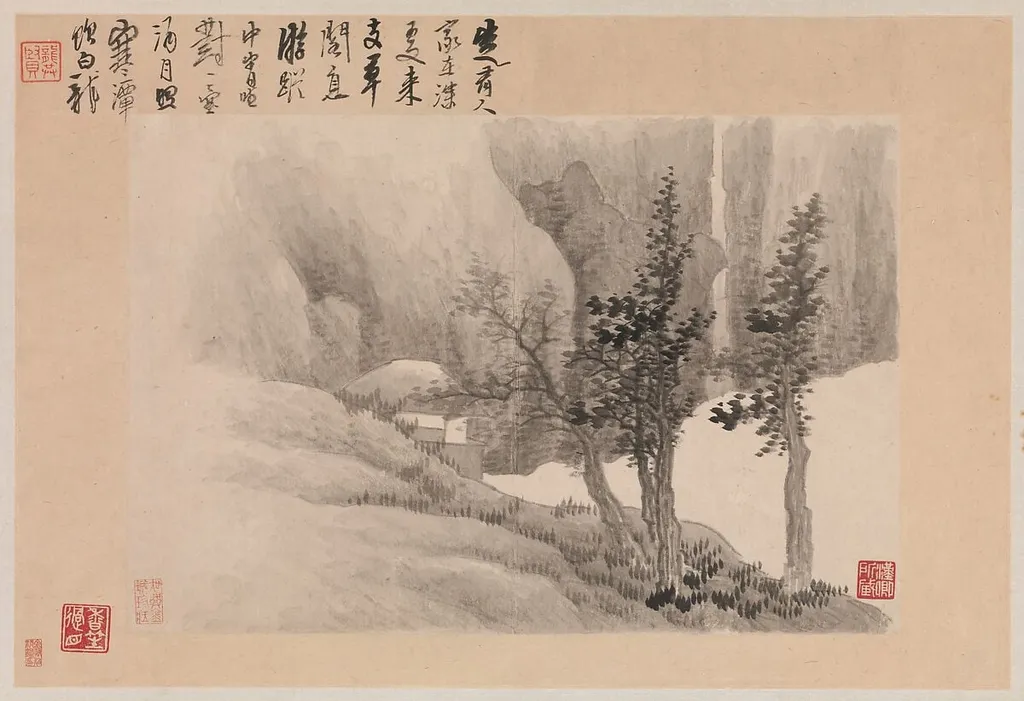
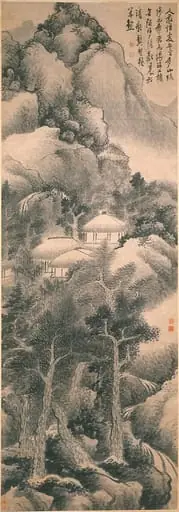
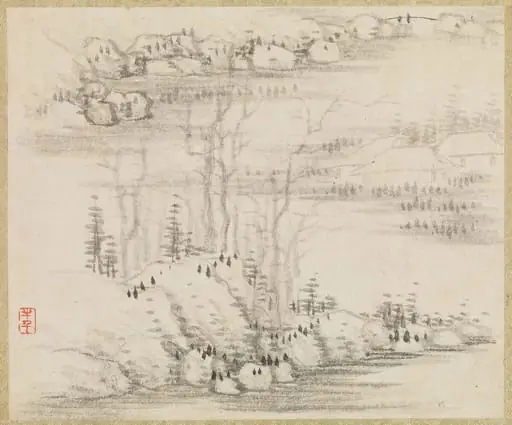
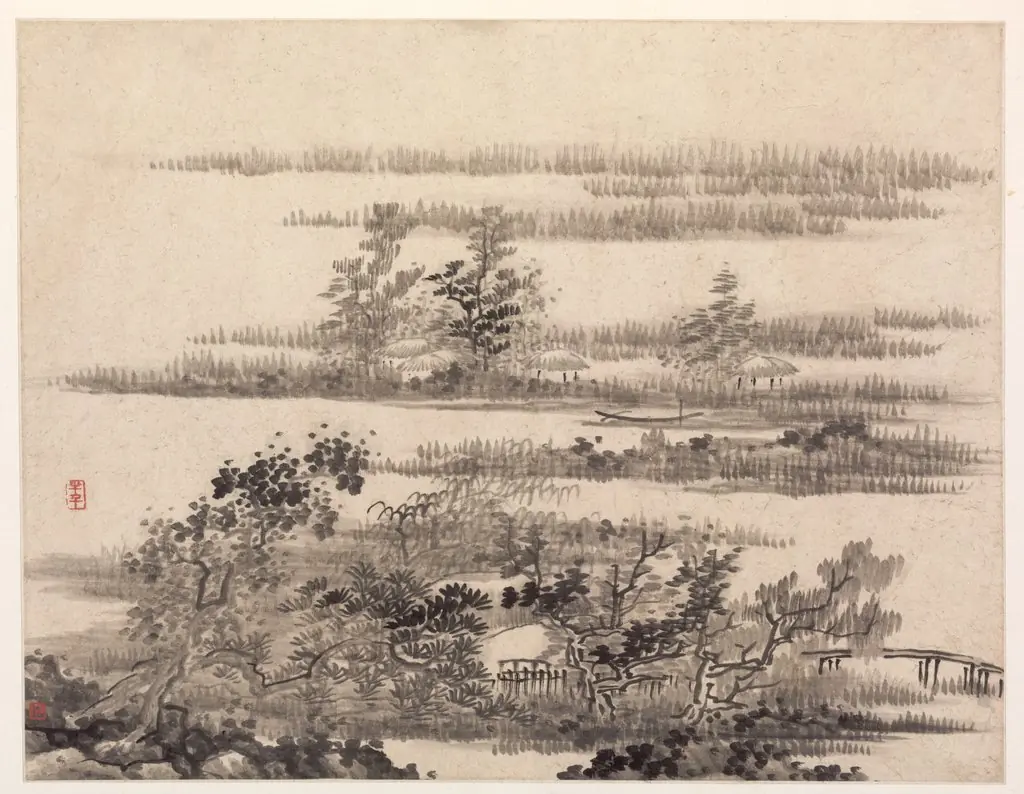
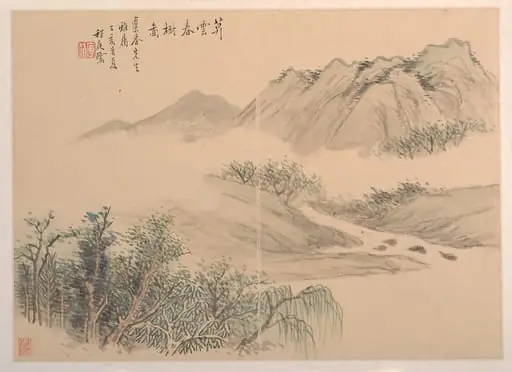
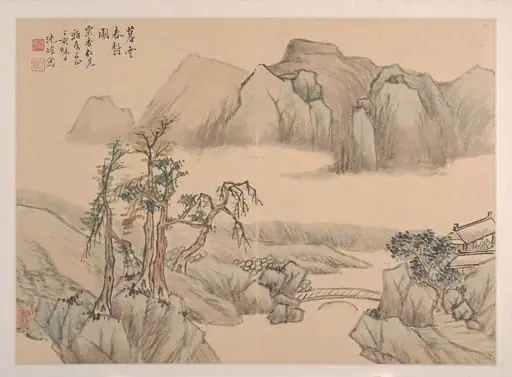
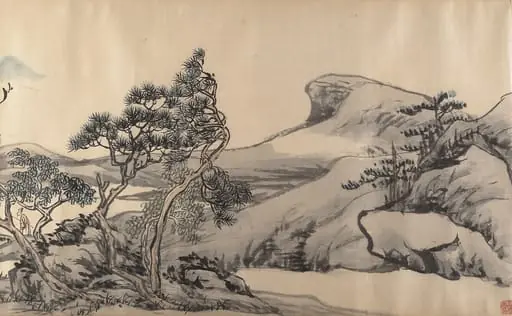
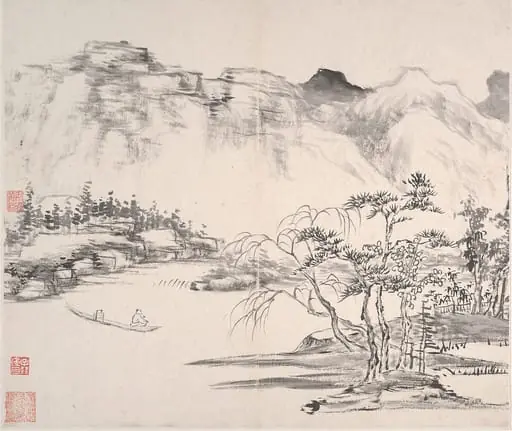
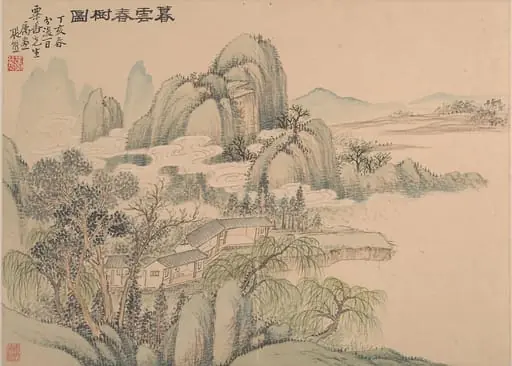
清 龔賢 自題山水十六開 冊|Landscapes with Poems is an unspecified painting by the Baroque artist Gong Xian. It dates from 1688 and is held in the collection of the Metropolitan Museum of Art.
About this work
Subject & Meaning
The work depicts poetic themes, as the album is explicitly characterized by its depiction of poetry alongside traditional landscape imagery.
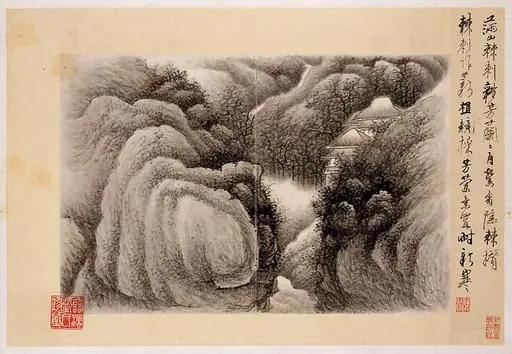
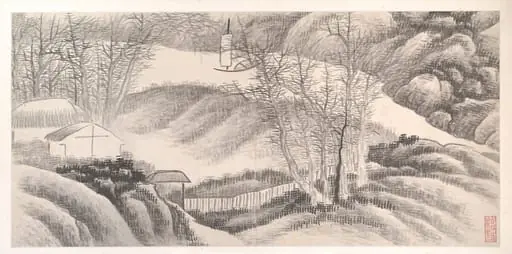
Created in 1688, this album by Gong Xian belongs to the landscape genre and integrates visual art with literary expression. The work depicts poetic themes, as the album is explicitly characterized by its depiction of poetry alongside traditional landscape imagery. While the specific iconographic details of individual scenes are not enumerated in the provided records, the inclusion of self-inscribed poems indicates that the meaning of the work relies on the interplay between the painted scenery and the accompanying verses.
The album represents a synthesis of visual and textual elements, where the landscape serves as a backdrop or counterpart to the poetic content, a common practice in Chinese literati painting. The surviving leaves from the original sixteen-leaf set preserve this dual focus on nature and verse.
History & Provenance
The album 'Landscapes with Poems' by Gong Xian, dated to 1688, is held in the collection of the Metropolitan Museum of Art in New York. The work is cataloged under specific accession numbers corresponding to its leaves: three leaves are identified as 1980.516.2a–c, while a separate set of sixteen leaves carries the accession number 1981.4.1a–o. Classified as landscape paintings depicting poetry, the album represents a significant holding within the museum's Asian art department.
The provided records confirm the work's location and inventory details but do not list specific past exhibitions or a full provenance chain beyond its accession into the museum's collection.
Overview
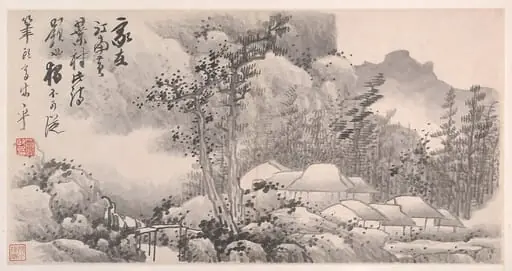
Gong Xian, a prominent figure among the Eight Masters of Jinling, created Landscapes with Poems in 1688. This work is part of an eighteen-leaf album, featuring ink paintings on silk. Each miniature landscape is accompanied by a poem, reflecting the traditional integration of visual art and literature in Chinese culture. The album exemplifies the artist's distinctive approach to landscape painting during the early Qing dynasty.
Technique & Style
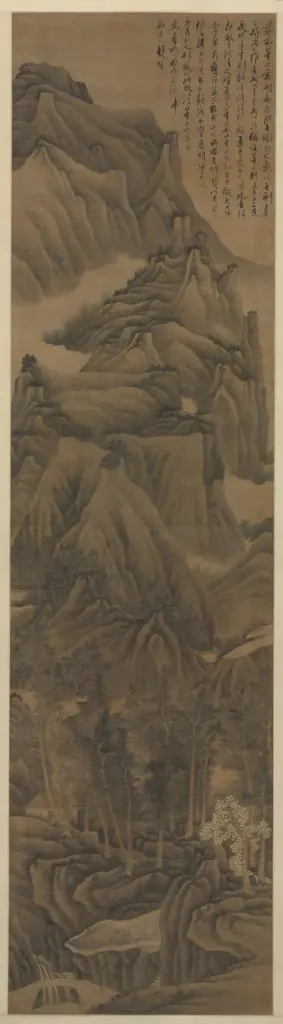
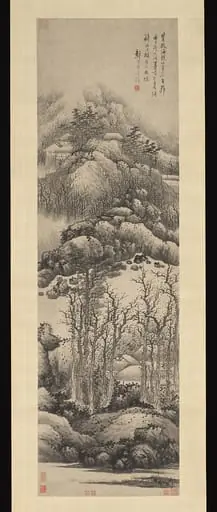
Gong Xian's distinctive style is evident in these paintings, which rely almost exclusively on ink and water. He masterfully manipulates ink tones, ranging from deep, saturated blacks to delicate, pale grays, to create nuanced effects of light, shadow, and atmospheric depth. This monochromatic palette, applied to silk, imbues the landscapes with a stark beauty and a contemplative stillness, characteristic of his mature work.
Context
Born in Kunshan, Jiangsu, Gong Xian was a leading figure of the Nanjing school and one of the 'Eight Masters of Jinling' during the tumultuous transition from the Ming to the Qing dynasty. His artistic output, including this album, often reflects a personal response to a life marked by hardship. The integration of poetry within his landscapes aligns with the broader tradition of literati painting, where scholarly pursuits and artistic expression were deeply intertwined.
Artist & collection

Artist
Gong Xian (simplified Chinese: 龚贤; traditional Chinese: 龔賢; pinyin: Gōng Xián; Wade–Giles: Kung Hsien; 1618–1689; the specific year of birth is disputed as early as 1617 or as late as 1620; born in Kunshan, Jiangsu) was…