Artwork
清 龔賢 冬景山水圖 軸|Wintry mountains
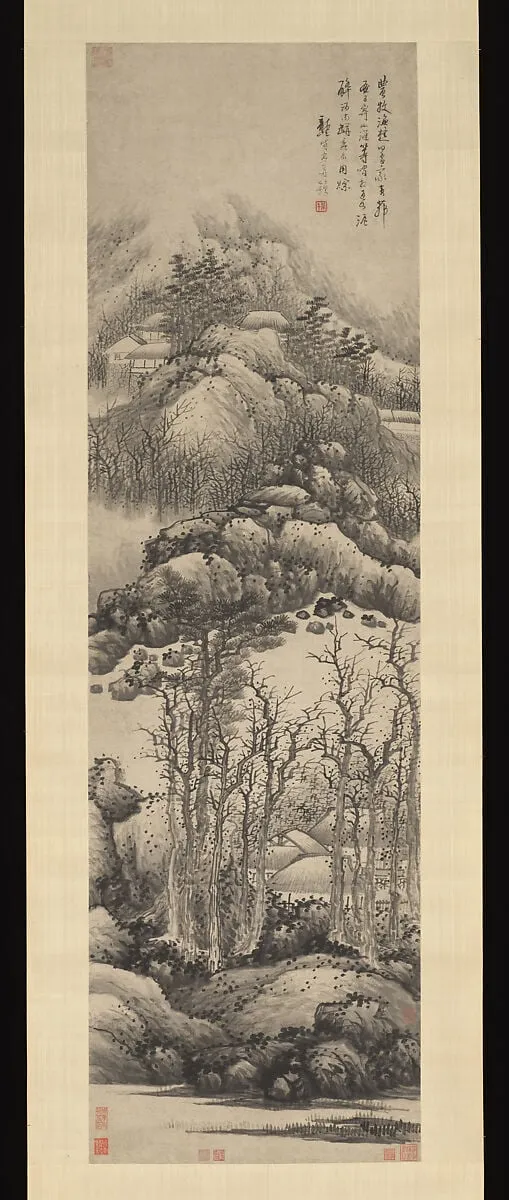
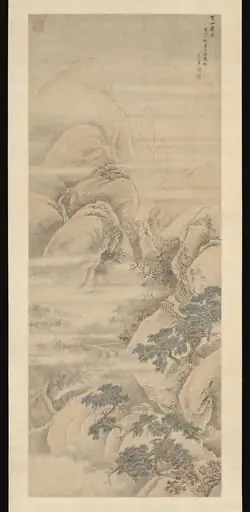
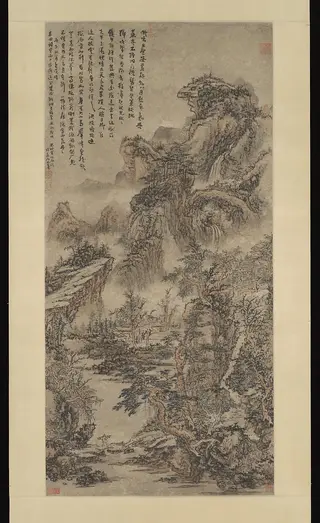
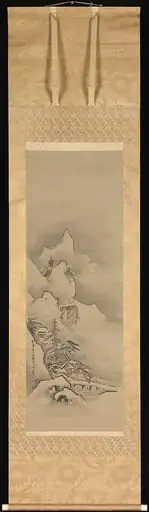
清 龔賢 冬景山水圖 軸|Wintry mountains is an ink painting by the Baroque artist Gong Xian. It dates from 1684 and is held in the collection of the Metropolitan Museum of Art.
About this work
Subject & Meaning
Gong Xian's hanging scroll depicts a wintry mountain landscape rendered in ink on paper.
Gong Xian's hanging scroll depicts a wintry mountain landscape rendered in ink on paper. The subject is a winter mountain scene, a classical theme in Chinese landscape painting that traditionally evokes solitude, austerity, and the contemplative stillness associated with the cold season. By focusing on snow-laden or barren peaks, the artist aligns with a long lineage of monochrome ink landscapes in which winter settings symbolize purity, endurance, and the meditative quietude of nature.
The work belongs to the landscape genre and represents the natural world reduced to its starkest seasonal form, inviting reflection on the harmony between human feeling and the rhythms of the landscape.
Technique & Style
Created in 1684, the Wintry Mountains is a hanging scroll executed in ink on paper. As a landscape painting by Gong Xian, the work utilizes the traditional Chinese medium of ink applied to a paper support, mounted for vertical display. The composition depicts mountainous terrain within a winter setting, adhering to the genre conventions of the period.
The handling of the ink on paper allows for the rendering of the seasonal atmosphere and topographical forms characteristic of the artist's style. The artwork remains preserved as a hanging scroll, maintaining its original format and material integrity as part of the Metropolitan Museum of Art's collection.
History & Provenance
The hanging scroll titled Wintry Mountains was created by the artist Gong Xian in 1684. Executed in ink on paper, this landscape work depicts winter scenes featuring mountains and was produced in China. The painting is currently held within the collection of the Metropolitan Museum of Art.
Historical records indicate the work's inception date as January 1, 1684. The piece is classified as a landscape painting and remains a significant example of Gong Xian's artistic output from the Qing dynasty period.
The hanging scroll is held by the Metropolitan Museum of Art, which is identified in the Wikidata record as both the collection and the location of the work. Classified within the museum's paintings holdings, the scroll is catalogued as a Gong Xian landscape executed in 1684. The available sources do not specify an individual inventory or accession number, nor do they document any exhibition history for the work.
Legacy
The hanging scroll by Gong Xian, dated 1684 and titled 冬景山水圖 (Wintry mountains), is part of the Metropolitan Museum of Art's collection, underscoring its recognized significance within the corpus of Qing dynasty landscape painting. Its depiction of winter mountains exemplifies the genre’s formal qualities and has been cited in scholarship as an exemplar of the period’s ink techniques. The work’s inclusion in a major public institution reflects its enduring reputation as a representative piece of Gong Xian’s oeuvre, contributing to ongoing studies of early Chinese landscape traditions.
Overview
Gong Xian's Wintry Mountains, created around 1684, is an ink-on-paper hanging scroll. This work exemplifies the artist's distinctive approach to landscape painting during the late Ming and early Qing dynasties. It presents a serene depiction of a mountainous winter environment, characterized by its atmospheric quality and the artist's subtle use of monochrome ink. The piece reflects the contemplative spirit often associated with the Nanjing school of painting.
Context
Gong Xian was a prominent figure among the Eight Masters of Jinling and a leading exponent of the Nanjing school during the late 17th century. Born in Kunshan, Jiangsu, his landscape paintings were influential in shaping the trajectory of Qing dynasty art. His individual style, marked by its atmospheric depth and nuanced ink techniques, contributed significantly to the broader Qing painting movement, distinguishing him within his generation of artists.
Artist & collection

Artist
Gong Xian (simplified Chinese: 龚贤; traditional Chinese: 龔賢; pinyin: Gōng Xián; Wade–Giles: Kung Hsien; 1618–1689; the specific year of birth is disputed as early as 1617 or as late as 1620; born in Kunshan, Jiangsu) was…

 Landscape in the Style of Dong Yuan and Juran
 清 龔賢 墨筆山水詩畫 冊|清 龔賢 自題 山水十六開 冊|Landscapes with poems
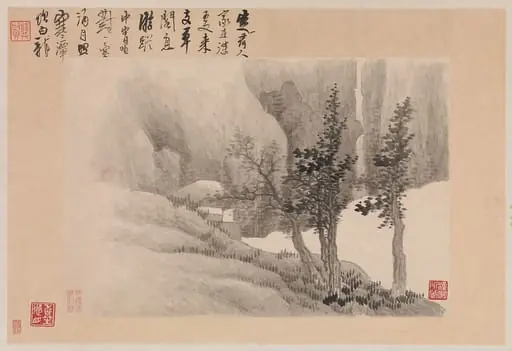 清 龔賢 自題山水十六開 冊|Landscapes with Poems
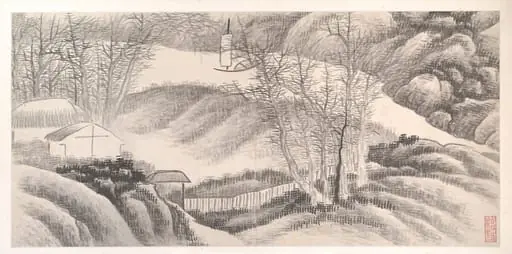 清 龔賢 十二月令山水圖 冊|Landscapes of the Twelve Months
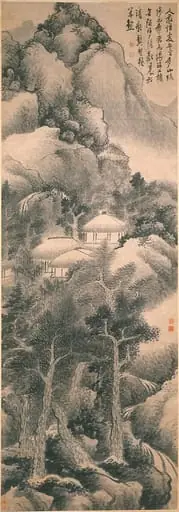 清 倣龔賢 雲山隱居圖 軸|Dwelling among mountains and clouds
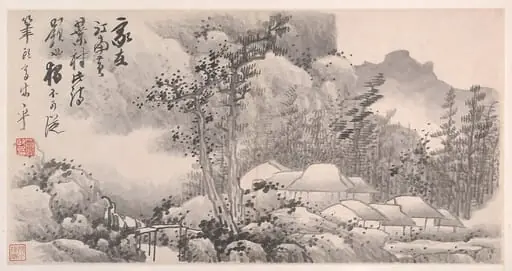 清 龔賢 山水圖 冊|Landscapes
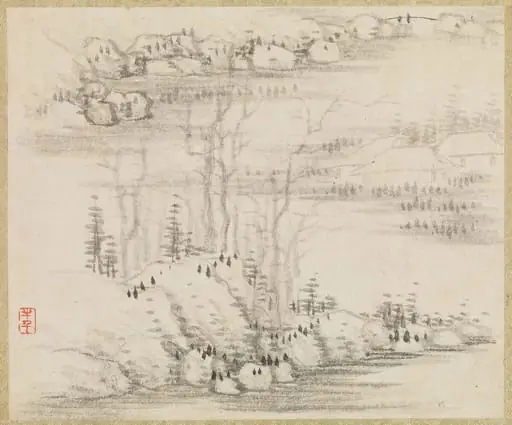 清 龔賢 山水圖 冊|Landscapes and trees
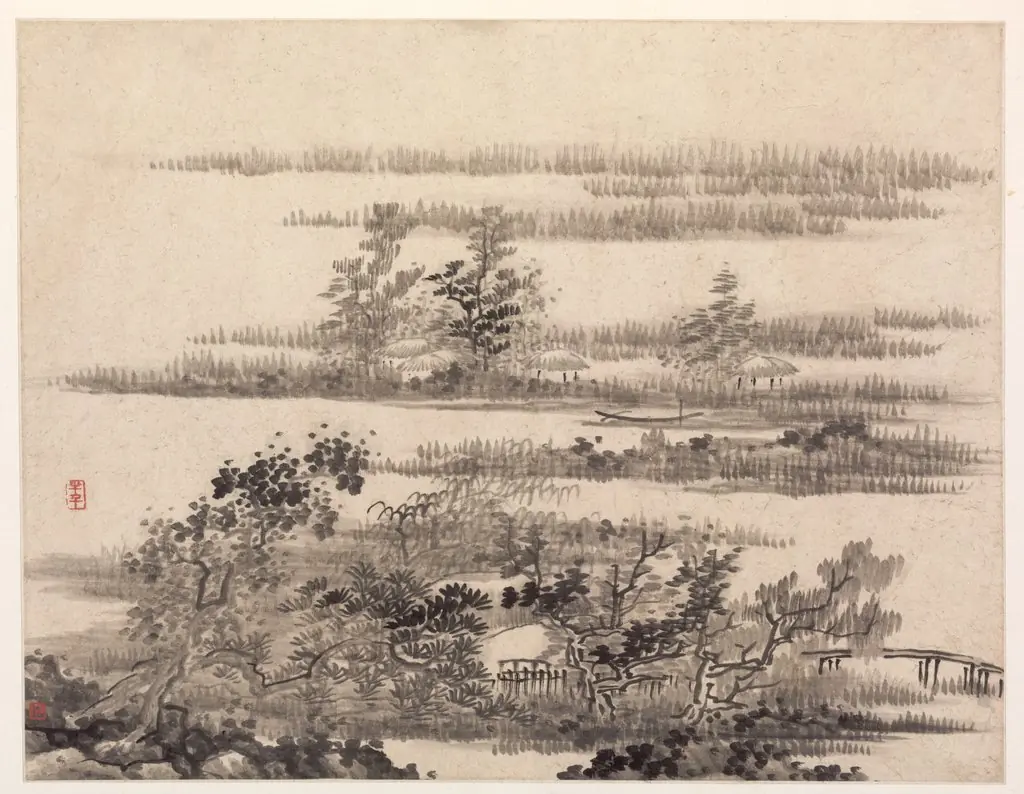 Summer in the Water Country