Artwork
Triptych of Antonius Tsgrooten
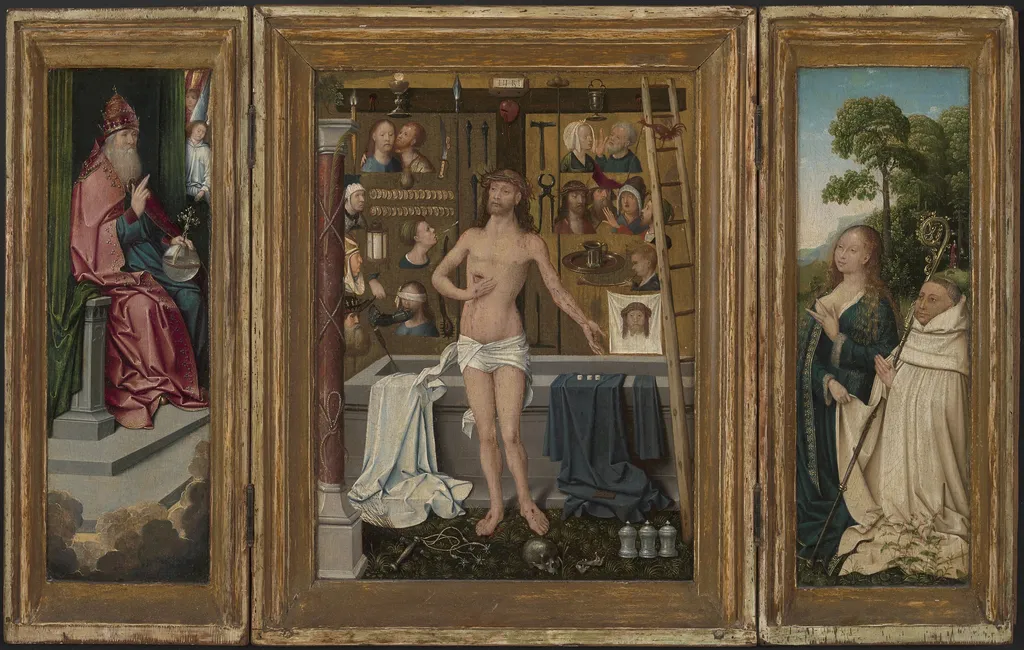
Triptych of Antonius Tsgrooten is an oil painting by the Northern Renaissance artist Goswin van der Weyden. It dates from 1507 and is held in the collection of the Royal Museum of Fine Arts Antwerp.
About this work
Subject & Meaning
In the center, the resurrected Christ points to the wound in his side and toward the donor, with a stone sarcophagus and skull signifying victory over death.
The triptych illustrates the 'Ladder of Salvation' combined with the Passion of Christ, symbolizing the Virgin Mary's intercession as Mother of Mercy. On the right panel, Mary kneels beside the donor, Abbot Antonius Tsgrooten, holding his mantle while exposing her breast to Christ on the central panel. This gesture recalls her nursing of the infant Jesus, serving as a plea for Christ to grant the abbot's prayers based on his suffering.
In the center, the resurrected Christ points to the wound in his side and toward the donor, with a stone sarcophagus and skull signifying victory over death. The background depicts the path to Calvary. The left panel features God the Father enthroned in clouds, raising his hand in blessing and grace in response to the plea. Saint Anthony the Great appears in the background of the right wing, referencing the abbot's patron saint.
Technique & Style
The Triptych of Antonius Tsgrooten is an oil painting executed on three wooden panels in 1507. The work belongs to the Early Netherlandish painting movement and falls within the religious art genre. The central panel depicts Christ pointing toward the donor with his left hand and indicating the wound in his side with his right hand, while a stone sarcophagus and skull symbolize resurrection; the background includes the Passion from Gethsemane to the Crucifixion.
The right panel portrays the abbot Antonius Tsgrooten kneeling before the Virgin Mary, who holds his mantle in her right hand and reveals her bare breast to Christ as a reminder of maternal intercession; Saint Anthony of Egypt is shown in the background, and the left panel presents God the Father blessing from a cloud throne surrounded by angels. Exterior shutters feature donor-related motifs including the abbey's coat of arms, the initials ANTO, an abbot's staff, and the motto Veritas vincit. The dimensions of the central panel are 33.7 cm by 25.2 cm, and the side panels, including frames, measure approximately 41.8 cm by 16.5 cm.
The composition reflects an archaic style compared to other works by Goswin van der Weyden, such as the earlier Sint-Dympnatriptych, and likely draws on a 15th-century woodcut model for the Trap des Heils theme. The iconography combines the Ladder of Salvation with Christ's suffering, emphasizing Marian intercession and the donor's petition. The work was commissioned by Antonius Tsgrooten, abbot of Tongerlo Abbey, and documented in abbey records as paid for on April 7, 1507 with 15 Rhenish guilders.
History & Provenance
The Triptych of Antonius Tsgrooten was commissioned by Antonius Tsgrooten, abbot of the Norbertine Abbey of Tongerlo, and painted in 1507 by Goswin van der Weyden. Payment records from the abbey’s accounts confirm 15 Rhenish guilders were disbursed to the artist on 7 April 1507, establishing the work’s creation date and commission context.
Its early provenance traces to the Abbey of Tongerlo, where Tsgrooten served as abbot from 1504 to 1530. At an unspecified date, the triptych entered the collection of the House of Arenberg. In 1966 the Belgian state acquired it from the Arenberg family and placed it in the Royal Museum of Fine Arts Antwerp, where it was restored in 1967 and remains in the museum’s holdings.
The work is held in the collection of the Royal Museum of Fine Arts Antwerp. Its accession number is not specified in the sources. It entered the collection of the d'Arenberg family at an unknown date and was acquired by the Belgian state in 1966, subsequently being placed in the museum's collection where it was restored in 1967.
Context
The Triptych of Antonius Tsgrooten (1507) by Goswin van der Weyden occupies a distinctive place in Early Netherlandish painting through its rare Trap des Heils theme, which synthesizes the Via salutis and the Passion of Christ into a single devotional program. Scholars note the work’s archaic character relative to van der Weyden’s other Tongerlo commissions, suggesting reliance on a fifteenth-century print model for its iconography.
The triptych’s reception pivots on its personalized devotional function: the kneeling abbot, Antonius Tsgrooten, is presented through the intercession of Mary and Christ, whose wounds and maternal imagery underscore the efficacy of prayer. The inclusion of Saint Anthony the Great, Tsgrooten’s patron saint, further ties the composition to the abbey’s spiritual identity. This fusion of salvation imagery with a donor portrait situates the work within late medieval Netherlandish traditions while anticipating Counter-Reformation emphases on intercessory piety.
Its later history reflects broader shifts in collecting: after passing from the abbey to the d’Arenberg family, the triptych entered the Royal Museum of Fine Arts Antwerp in 1966 following state acquisition, undergoing restoration in 1967.
Overview
Created in 1507 by Flemish painter Goswin van der Weyden, the Triptych of Antonius Tsgrooten is an oil‑on‑panel work composed of three hinged panels. It is part of the collection of the Royal Museum of Fine Arts in Antwerp and exemplifies the Northern Renaissance’s attention to detail and subdued palette.
Own this work as a print
Artist & collection
Artist
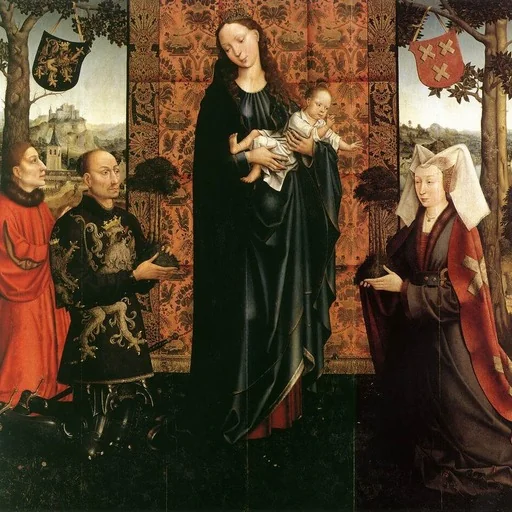
Goswin van der Weyden or Goossen van der Weyden (1455–1543) was a Flemish Renaissance painter active in Antwerp.

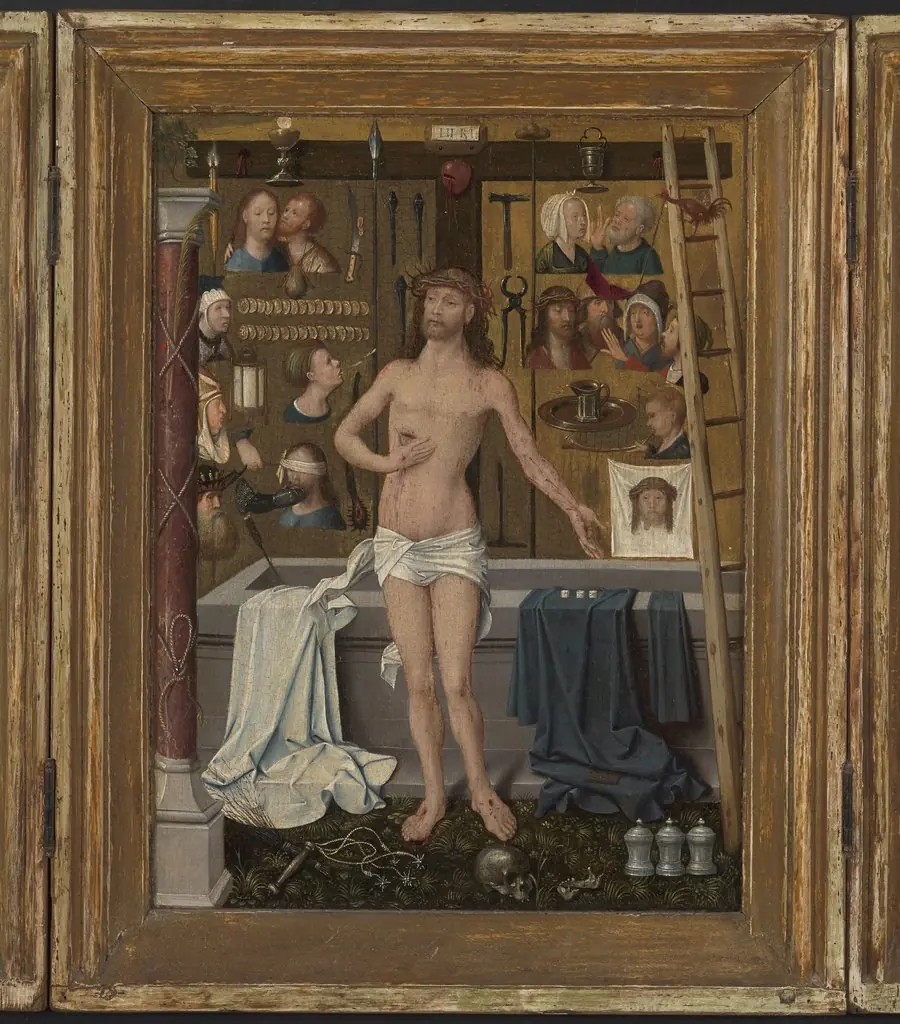 Christ with the Instruments of Passion
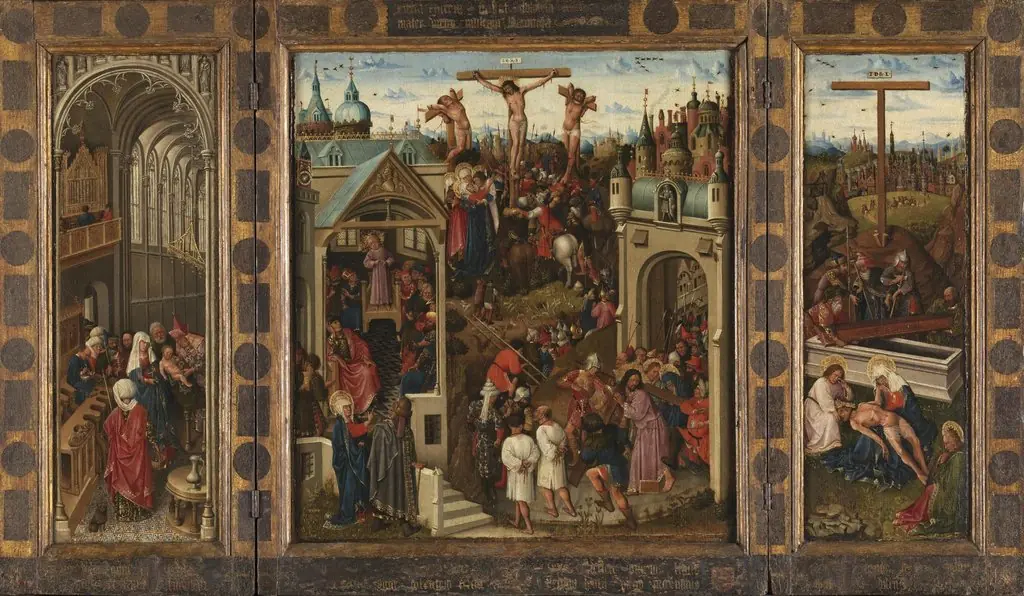
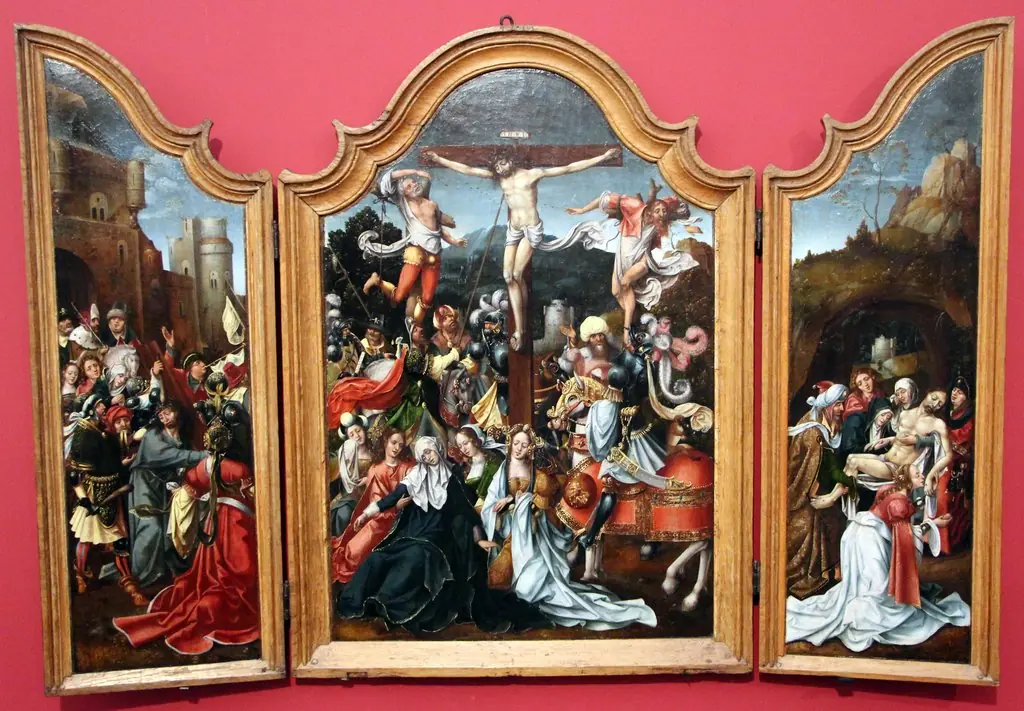
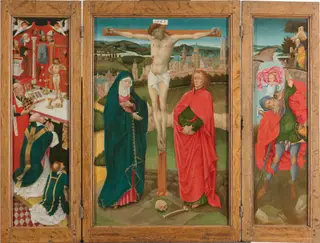 Drieluik met de kruisiging
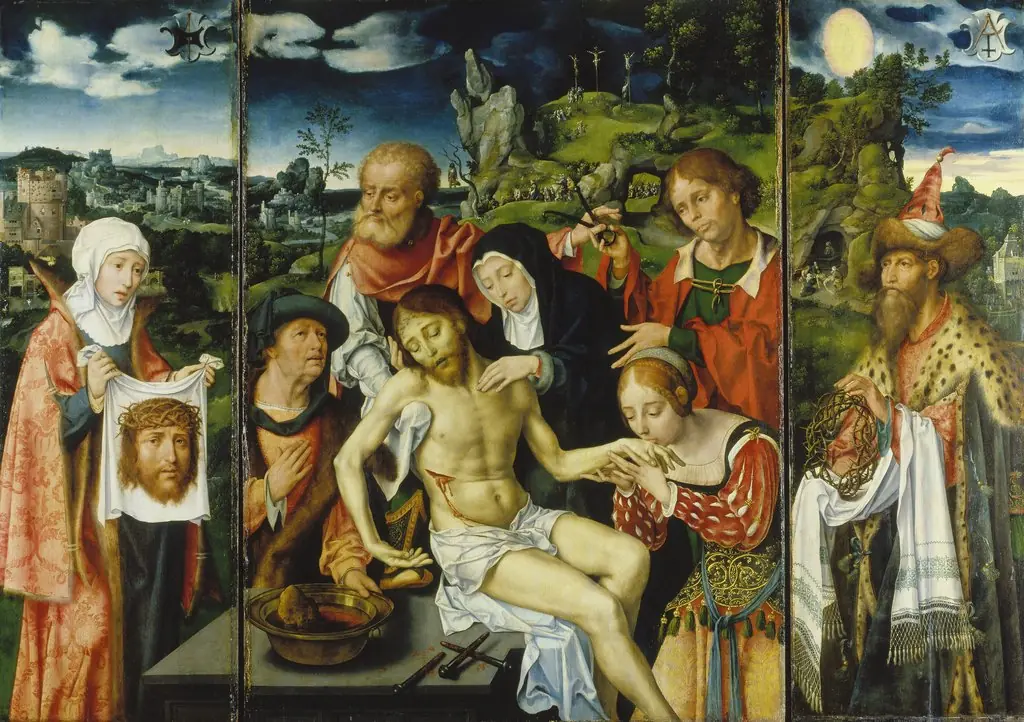
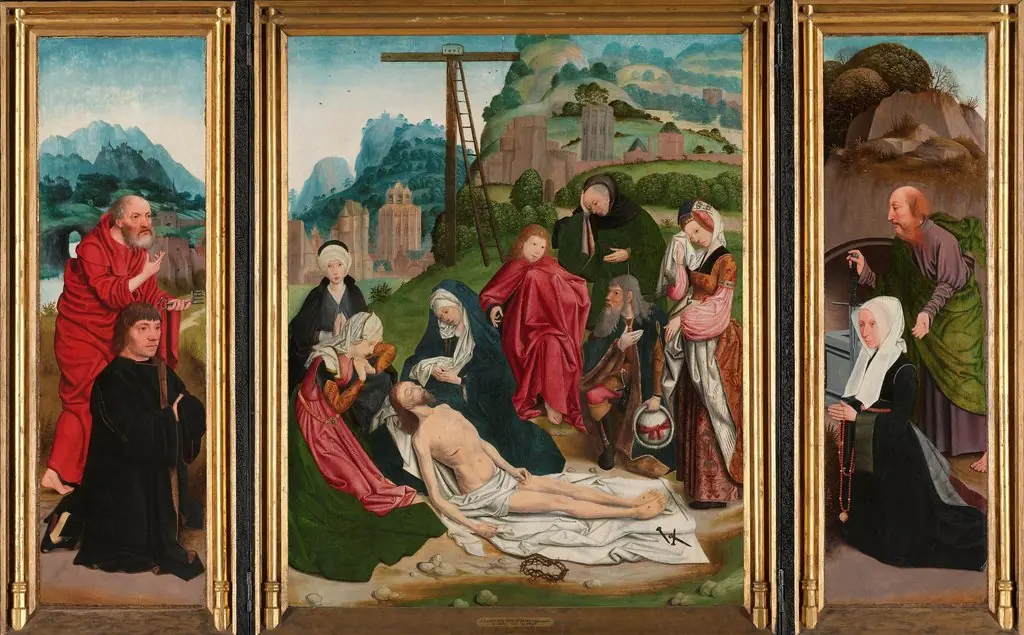 Triptych with the Lamentation (centre panel), the donor with St Peter (inner left wing), the donor’s wife with St Paul (inner right wing) and the donors’ coats of arms (outer wings)
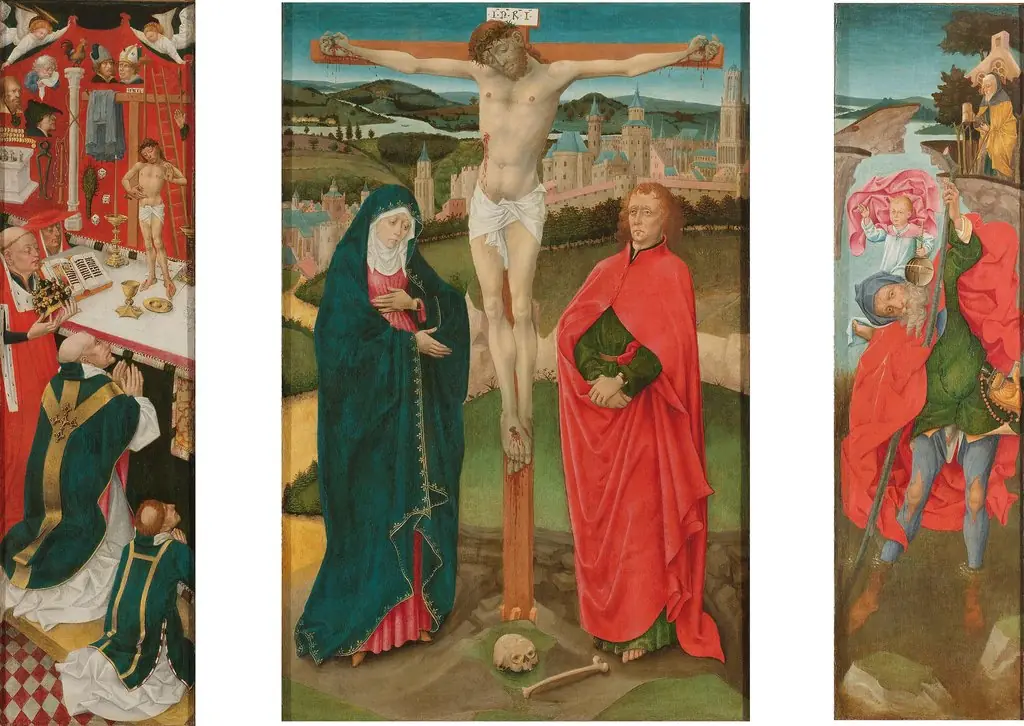
 Triptych of the Crucifixion with Saints Anthony, Christopher, James and George
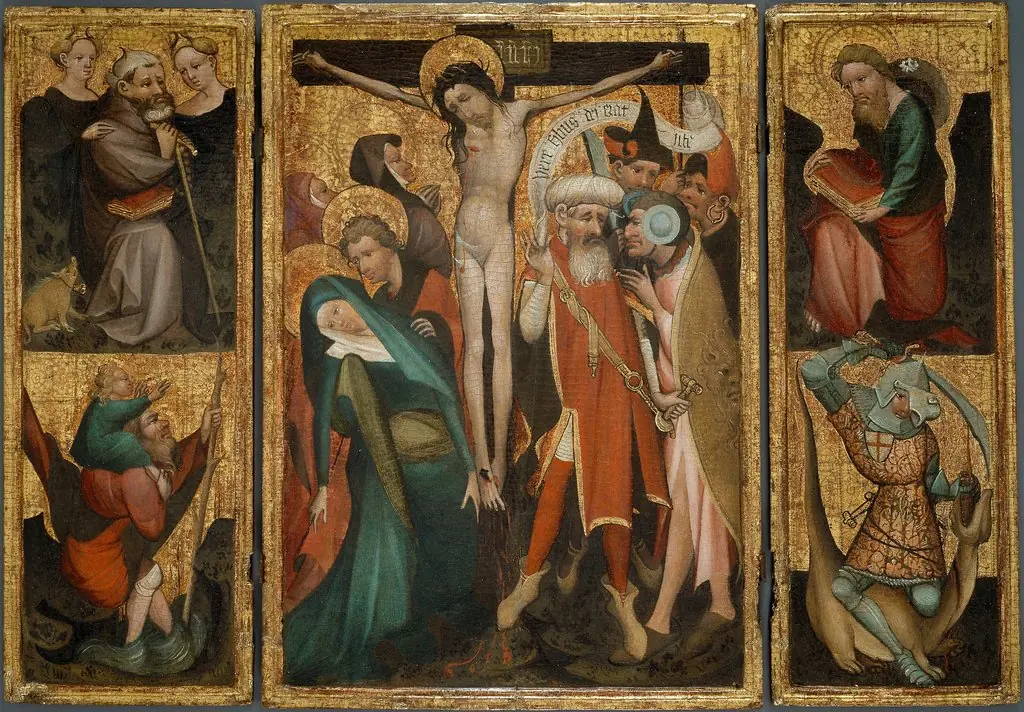 Triptych of the Crucifixion with Saints Anthony, Christopher, James and George
 Tríptico de la Flagelación
 Vienna Diptych