Artwork
Triptych with the Crucifixion
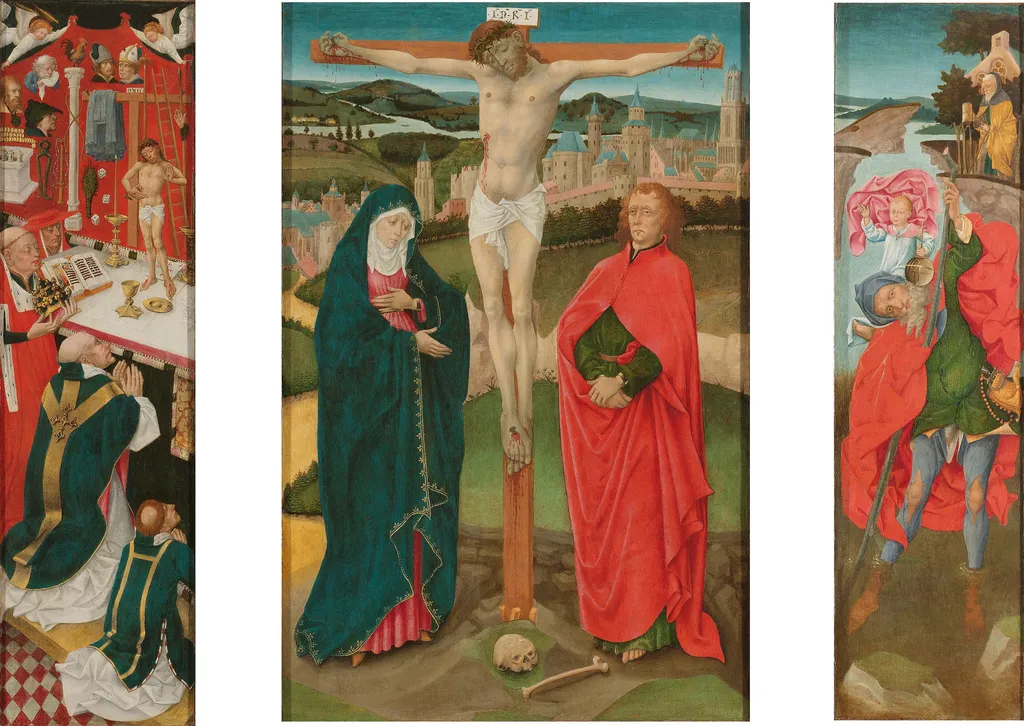
Triptych with the Crucifixion is an oil painting. It dates from 1460 and is held in the collection of the Rijksmuseum. The work is a three‑panel oil painting, arranged as a triptych.
About this work
Subject & Meaning
Created in Utrecht around 1460, the triptych centers on this pivotal biblical event, presenting the scene as a focal point for devotion.
The work is a religious painting that depicts the crucifixion of Jesus. Created in Utrecht around 1460, the triptych centers on this pivotal biblical event, presenting the scene as a focal point for devotion. As an anonymous piece of religious art, its primary meaning lies in its function as a visual representation of the Passion, intended to inspire spiritual reflection on the sacrifice of Christ.
Technique & Style
The Triptych with the Crucifixion is an anonymous oil painting executed on an oak panel, measuring approximately 85.3 cm in height and 28 cm in width. Dated to 1460, the work employs oil paint as its medium, a common technique in mid‑15th‑century Netherlandish workshops. The support consists of a single oak panel prepared for painting, and the piece presents a religious scene of the Crucifixion within a triptych format. No specific details about handling or condition are provided in the sources.
History & Provenance
The Triptych with the Crucifixion was created around 1460 in Utrecht, as indicated by its canonical dating in the collection records. The work is attributed to an anonymous painter and is executed in oil on oak panels.
Its early ownership is documented through Jan Hendrik Cremer, who held the triptych before it entered public collections. By the late 20th century, the painting was accessioned into the holdings of the Centraal Museum in Utrecht, where it remains today under inventory management by the Rijksmuseum and related Dutch cultural institutions.
The Triptych with the Crucifixion is currently held at the Centraal Museum in Utrecht, specifically located in hall 0.1. The work was created in 1460 and is attributed to an anonymous artist. Its inventory records indicate it is part of the collections managed by the Rijksmuseum, the Centraal Museum, the Dienst Verspreide Rijkscollecties, the Rijksdienst Beeldende Kunst, and Instituut Collectie Nederland.
The piece is noted as being owned by Jan Hendrik Cremer and the Rijksmuseum. No specific exhibition history is detailed in the provided records, though its provenance links it to multiple Dutch heritage institutions.
Overview
The work is a three‑panel oil painting, arranged as a triptych. The central panel depicts a crucifixion scene, flanked by two side panels that present related narrative moments. The composition is unified by a somber palette and a shared horizon that links the three registers.
Context
The triptych format and the inclusion of devotional figures align the work with late medieval and early Renaissance religious art, where multi‑panel compositions were used to guide contemplation of Christ’s passion and its surrounding human responses.
Artist & collection

 The Crucifixion
 The Crucifixion
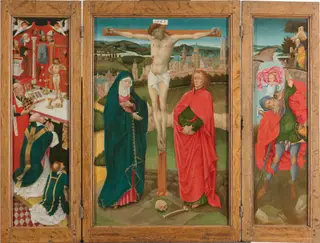 Drieluik met de kruisiging
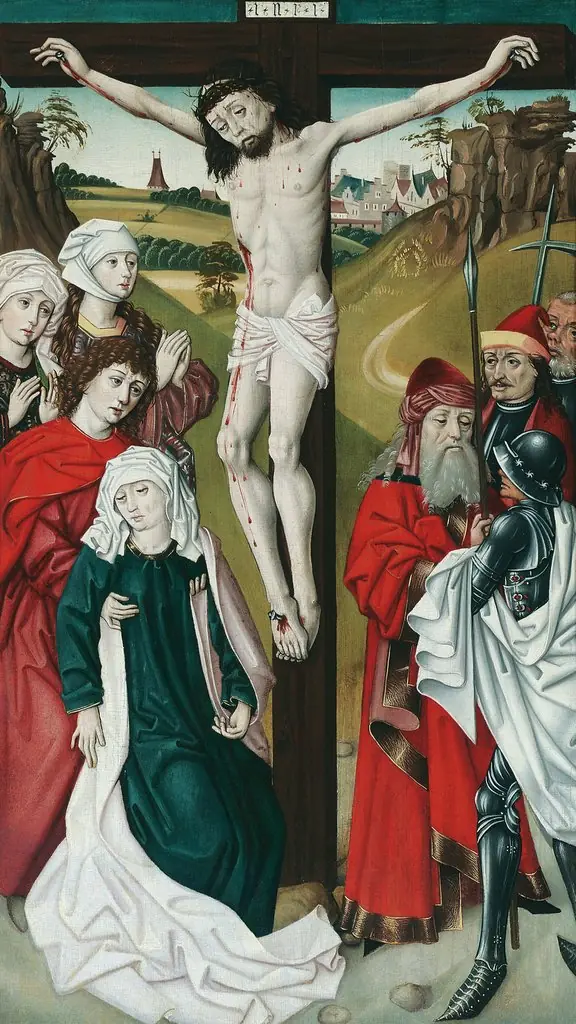 Kreuzigung Christi
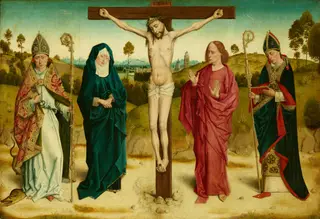 Christ crucified between Mary and John the Evangelist and the saints Adolphus and Ambrosius
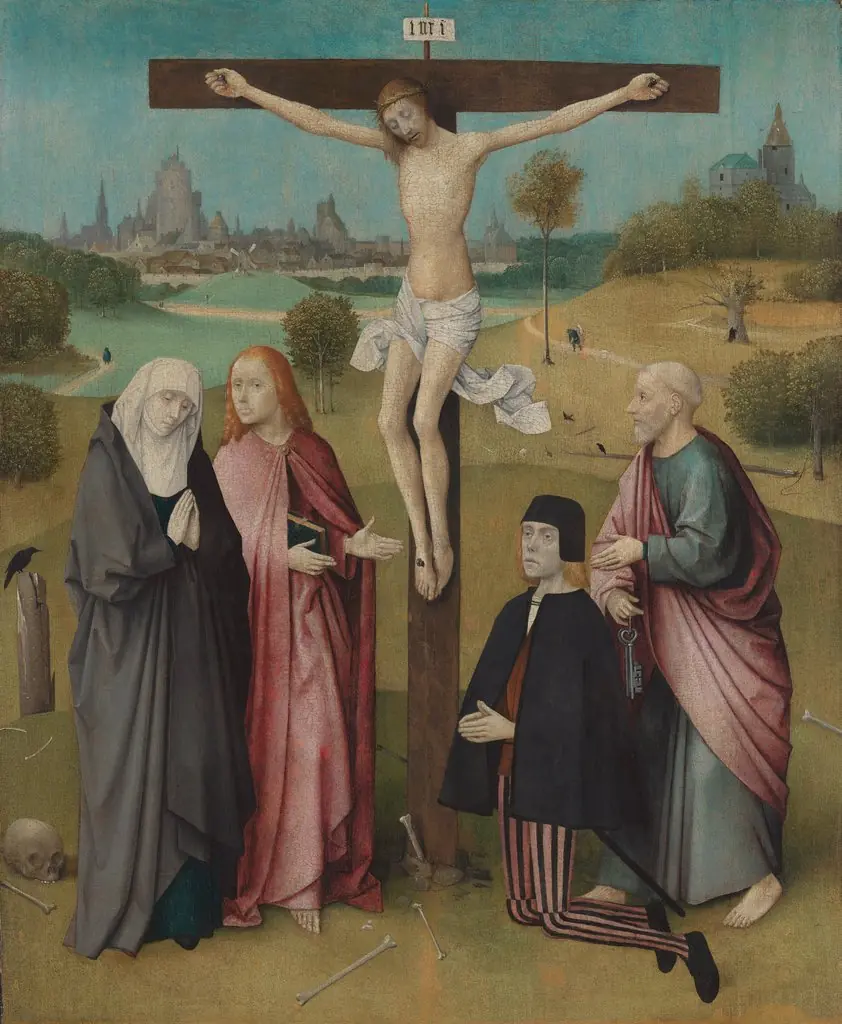 Crucifixion with a Donor
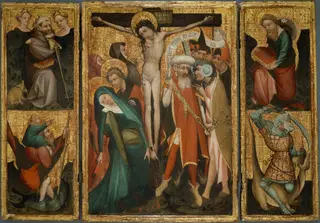 Triptych of the Crucifixion with Saints Anthony, Christopher, James and George
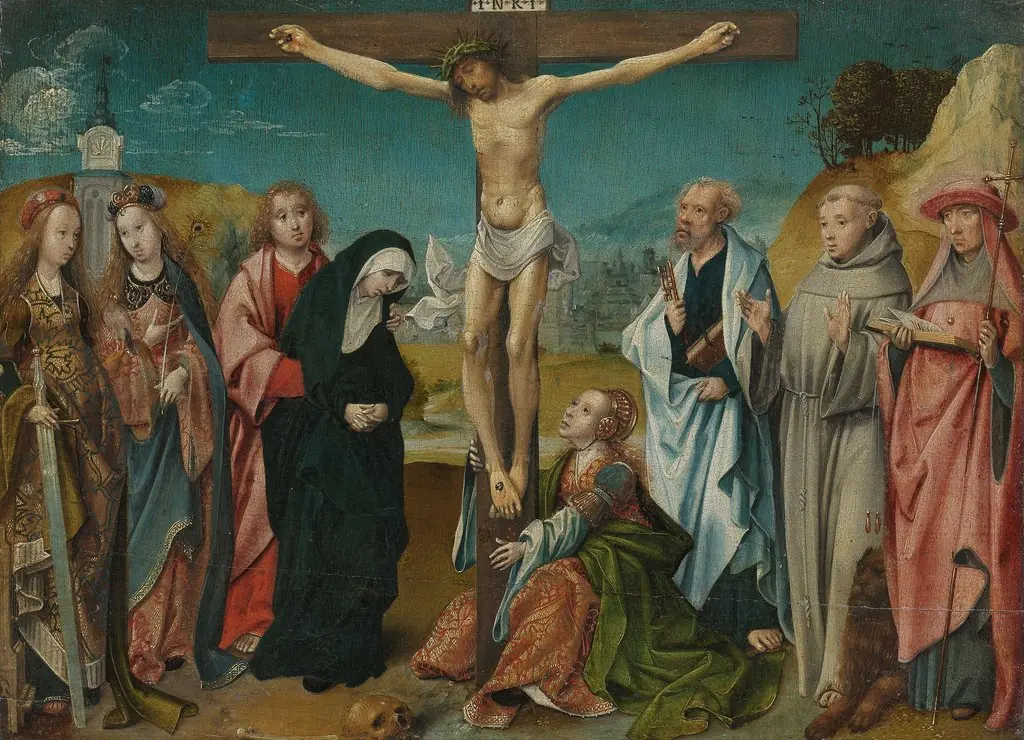 Christ on the cross with the Virgin, St John the Evangelist, Mary Magdalen, and Sts Cecilia and Barbara (left), and Sts Peter, Francis and Jerome (right)
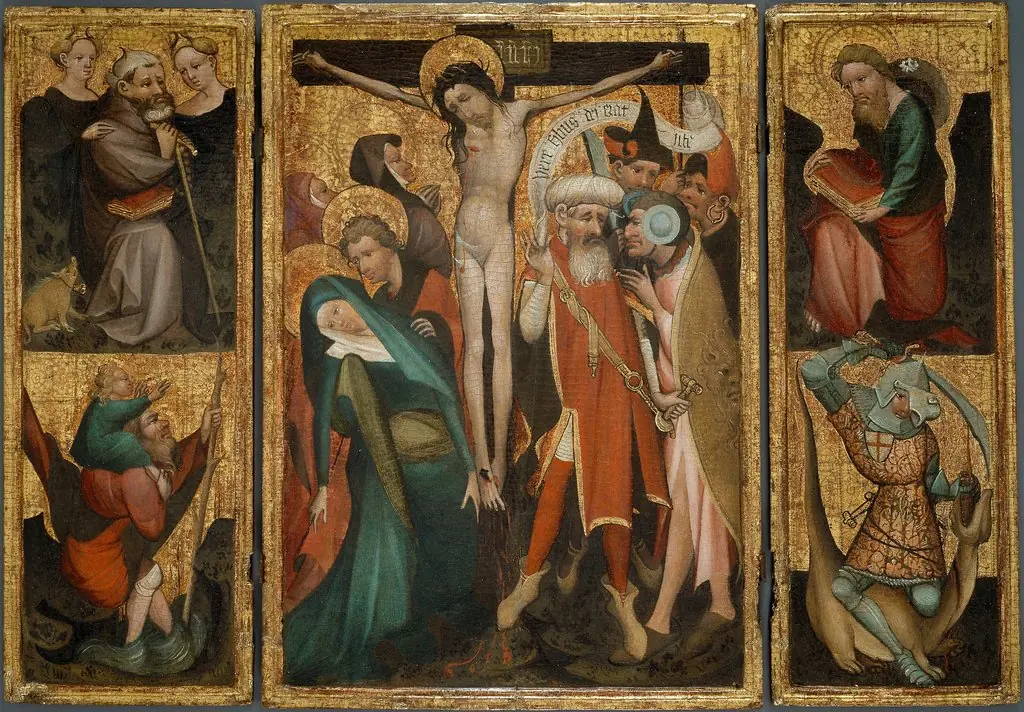 Triptych of the Crucifixion with Saints Anthony, Christopher, James and George
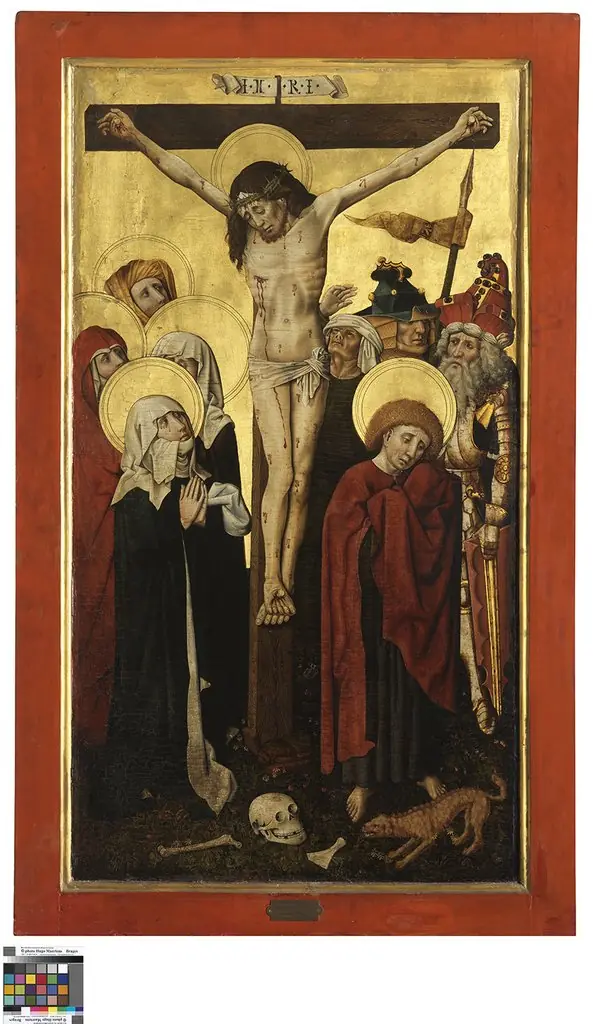 Crucifixion