Artwork
Drieluik met de kruisiging
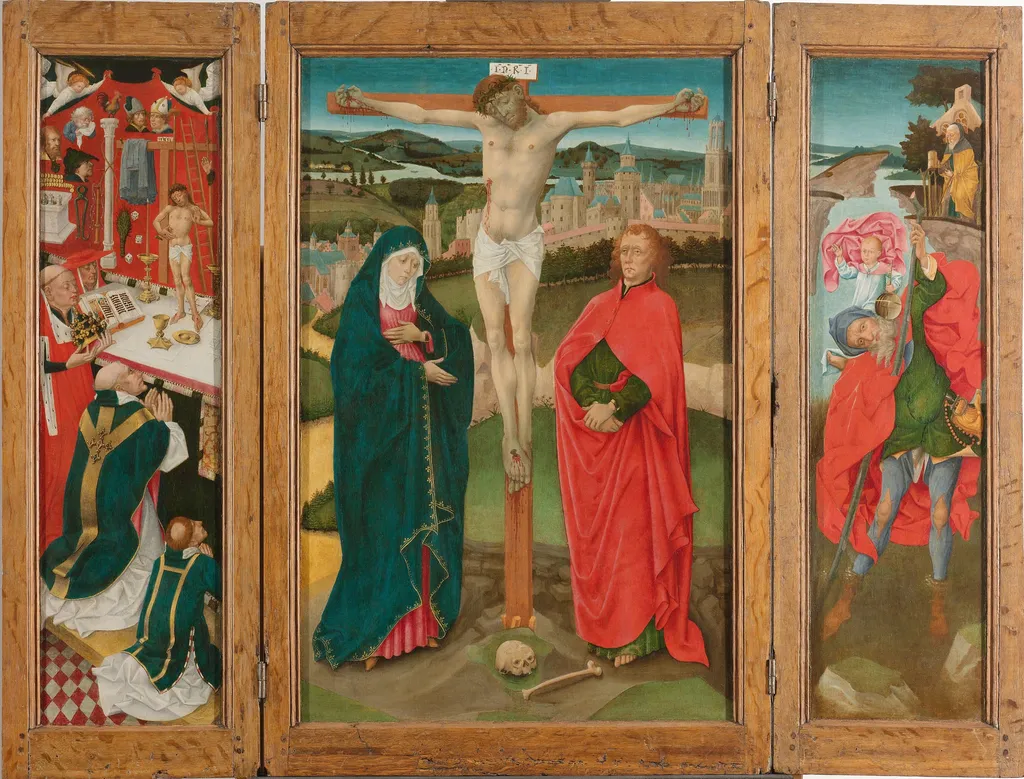
Drieluik met de kruisiging is an unspecified painting by the Gothic painting artist Unknown. It dates from 1460 and is held in the collection of the Rijksmuseum. This triptych depicts the Crucifixion in the central panel, flanked by two devotional scenes on either side.
About this work
Overview
The entire composition is framed by a recognizable skyline of Utrecht, anchoring sacred events in a tangible, contemporary landscape.
This triptych depicts the Crucifixion in the central panel, flanked by two devotional scenes on either side. The entire composition is framed by a recognizable skyline of Utrecht, anchoring sacred events in a tangible, contemporary landscape. This integration of local architecture served to bridge the divine and the everyday for medieval viewers, making biblical narratives feel immediate and personally relevant.
Subject & Meaning
The central Crucifixion is accompanied by Pope Gregory the Great on the left, shown experiencing a vision of Christ during Mass, and Saint Christopher on the right, carrying the Christ Child across a river. These figures represent intercessory prayer and divine presence in daily life. Their inclusion alongside the Crucifixion reinforces themes of faith, sacrifice, and the accessibility of salvation through personal devotion.
Technique & Style
The panels employ detailed, luminous pigments typical of early Netherlandish painting, with careful attention to architectural rendering and atmospheric perspective. The cityscape of Utrecht is rendered with architectural accuracy, suggesting the artist’s familiarity with local landmarks. Figures are rendered with solemn dignity, their gestures and drapery conveying spiritual gravity without theatricality.
History & Provenance
Created in the late 15th century, the triptych likely originated in Utrecht as a private devotional piece, possibly commissioned for a local church or wealthy patron. Its survival through centuries reflects its enduring religious significance. While its early ownership is undocumented, its consistent association with Utrecht’s skyline suggests a local origin and sustained regional veneration.
Context
In late medieval Holland, devotional art increasingly incorporated familiar urban settings to deepen spiritual engagement. This triptych aligns with a broader trend where saints, biblical events, and local geography merged to foster personal connection with the sacred. The inclusion of Utrecht’s skyline reflects a growing emphasis on the immanence of the divine within everyday life.
Legacy
The work exemplifies how Northern Renaissance artists transformed religious narratives through localized realism. Its influence can be seen in later devotional paintings that similarly embedded sacred stories within recognizable landscapes. Though not widely known today, it remains a quiet testament to the medieval desire to make the divine feel present, tangible, and intimately close.
Artist & collection









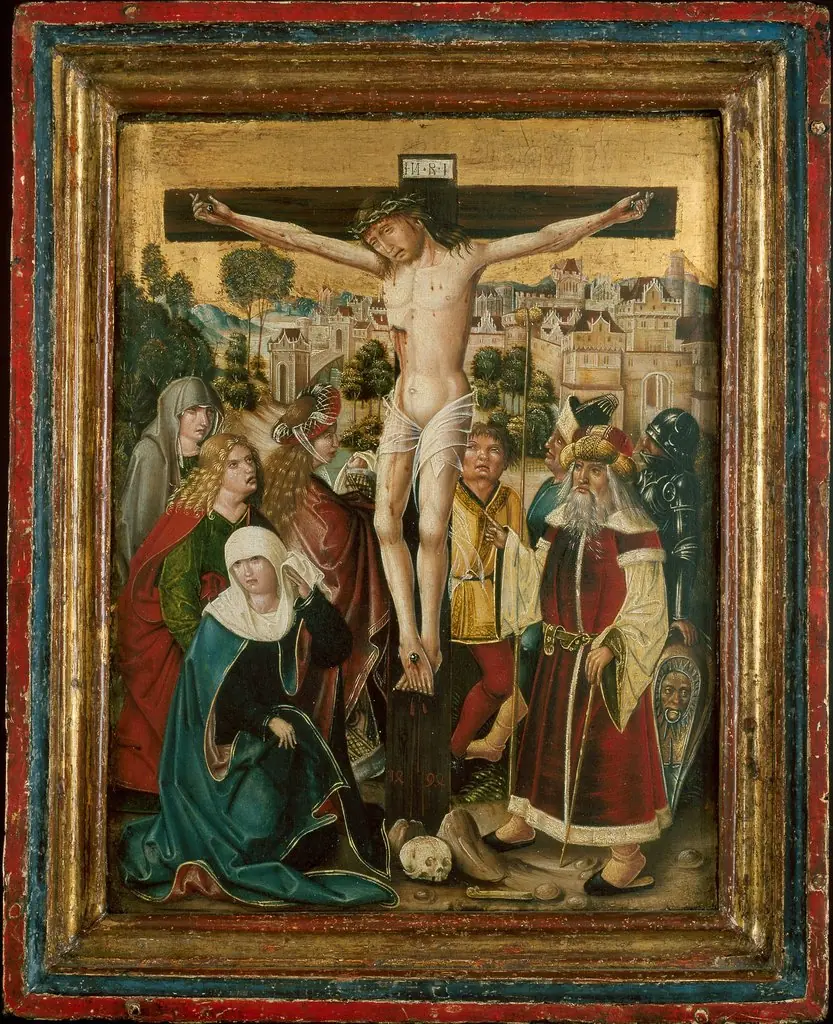 The Crucifixion
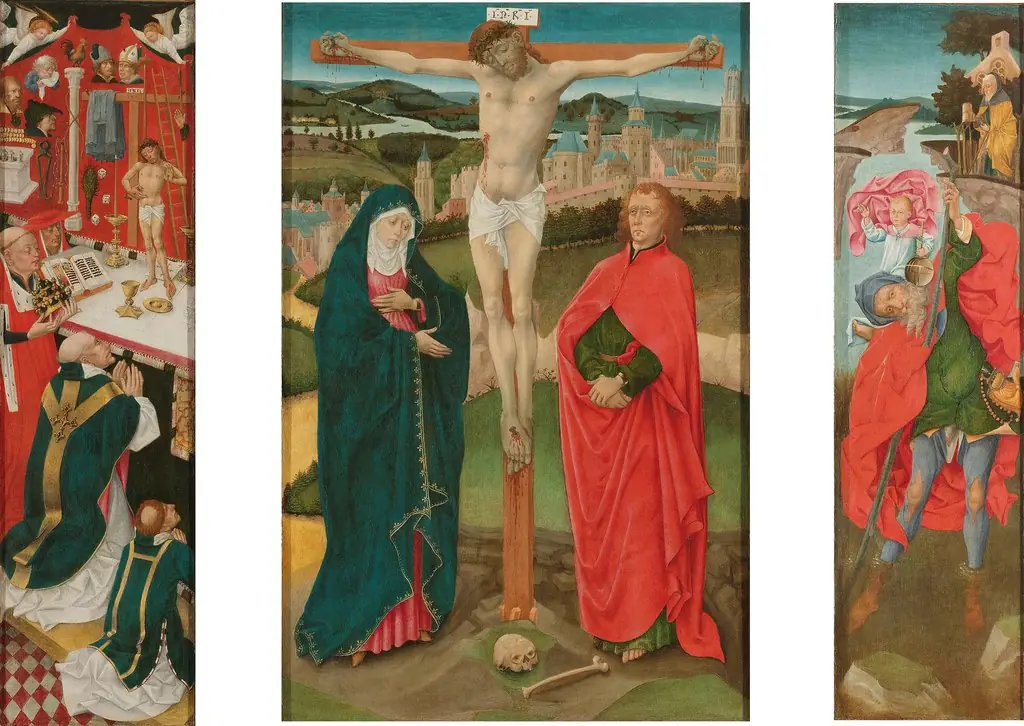 Triptych with the Crucifixion
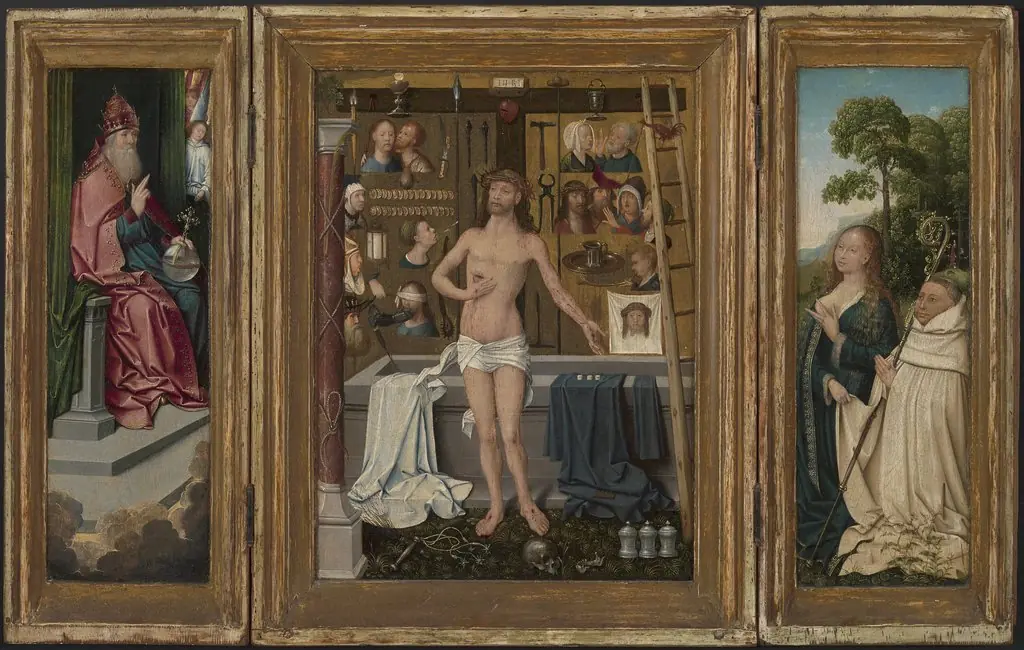 Triptych of Antonius Tsgrooten
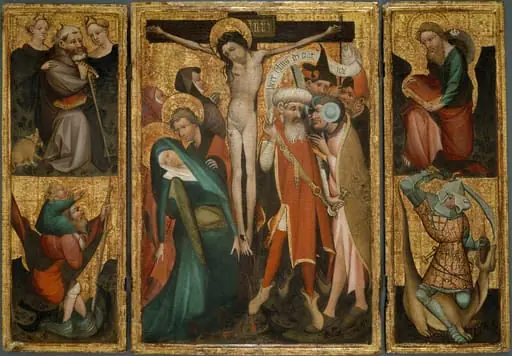 Triptych of the Crucifixion with Saints Anthony, Christopher, James and George
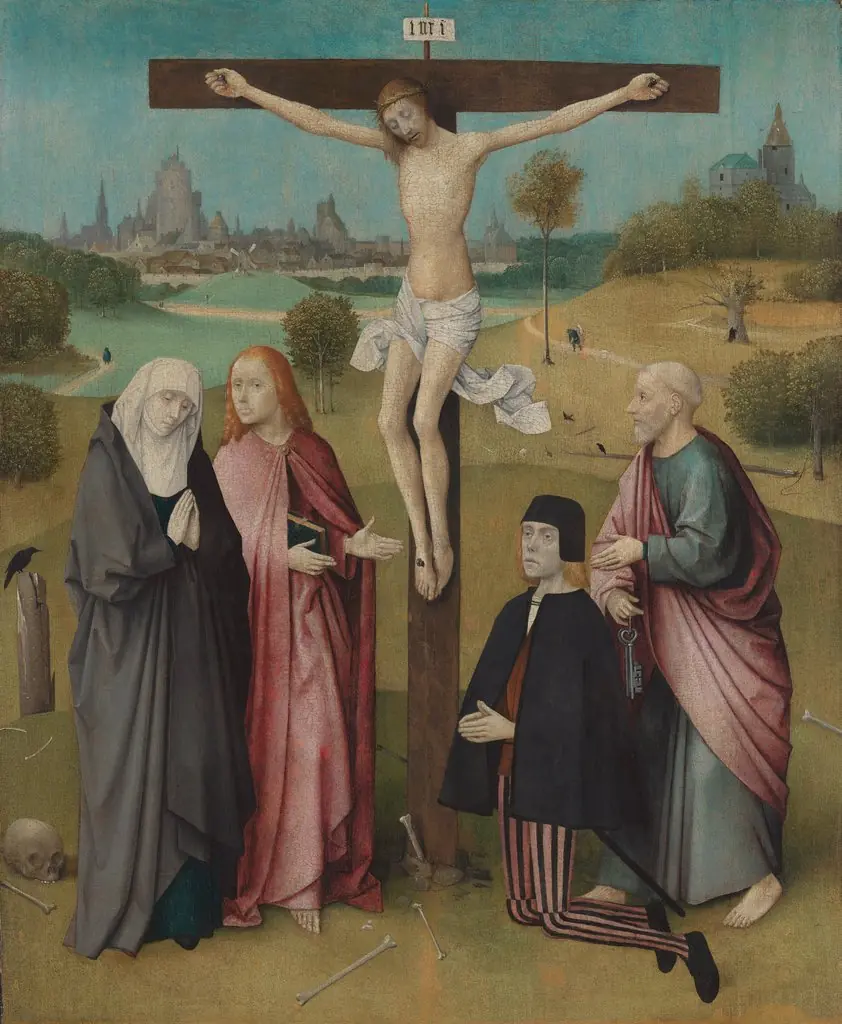 Crucifixion with a Donor
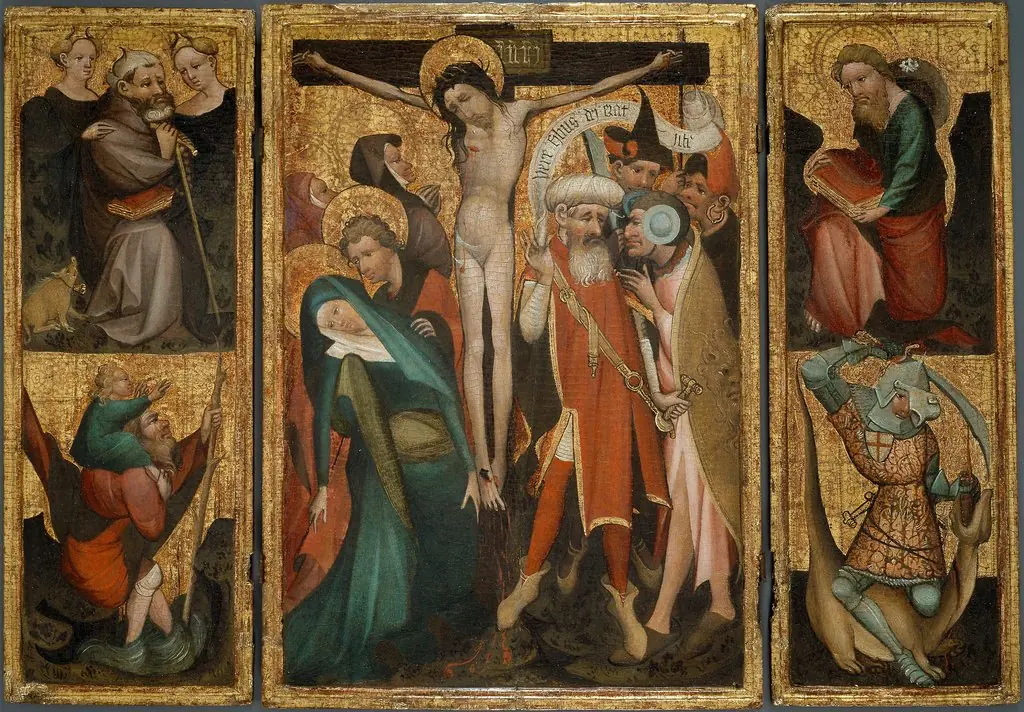 Triptych of the Crucifixion with Saints Anthony, Christopher, James and George
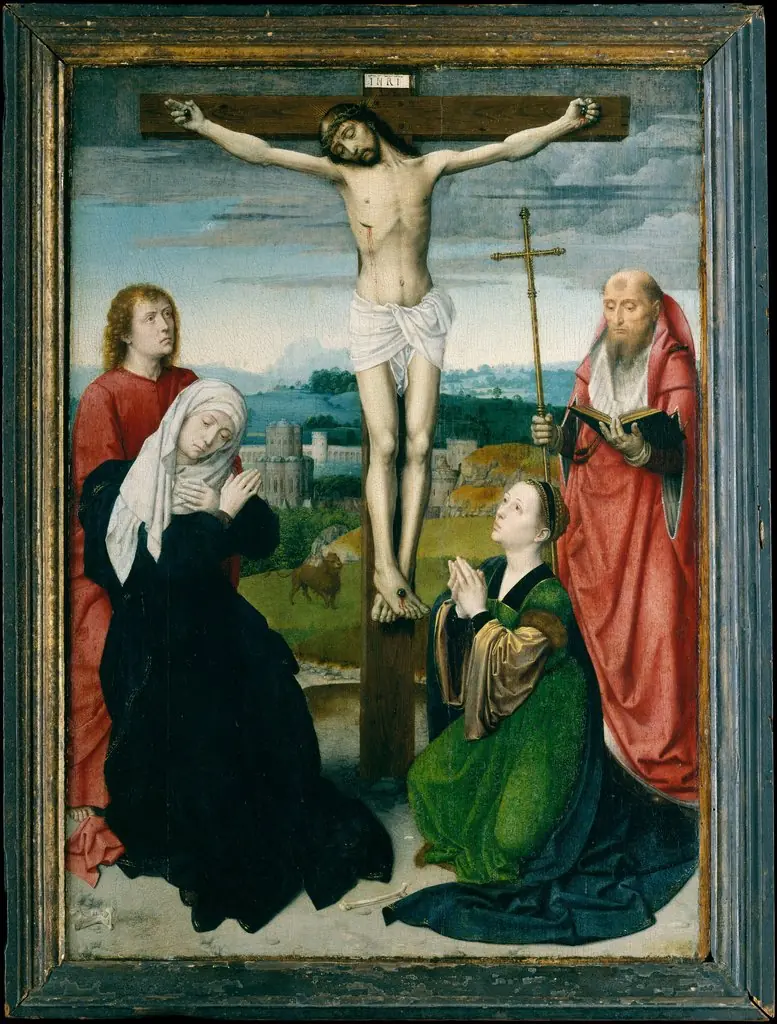 The Crucifixion
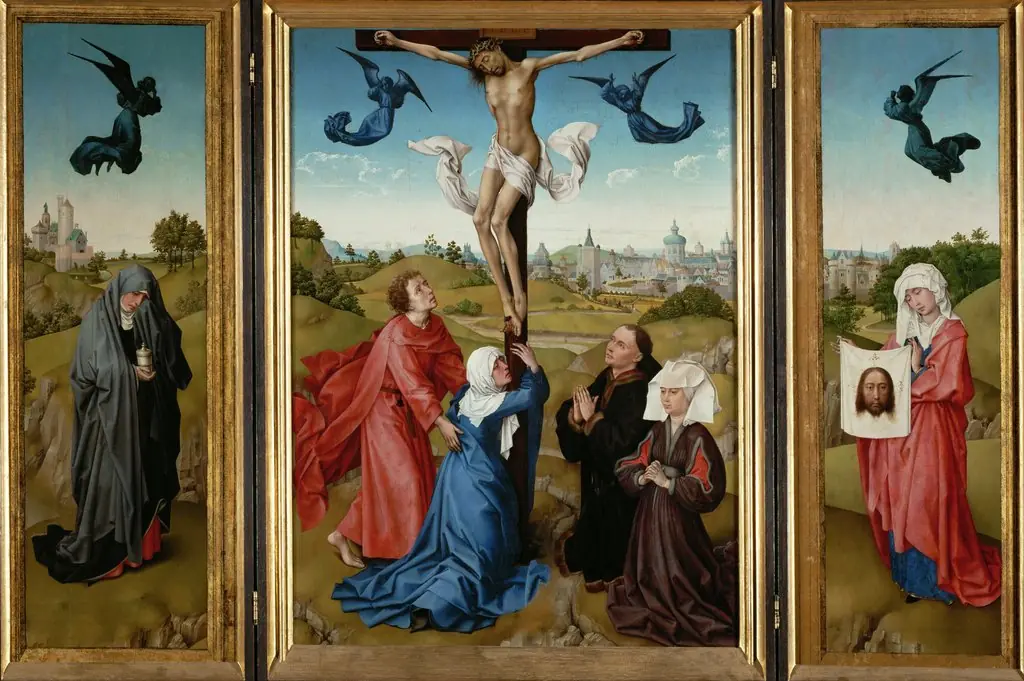 Crucifixion Triptych
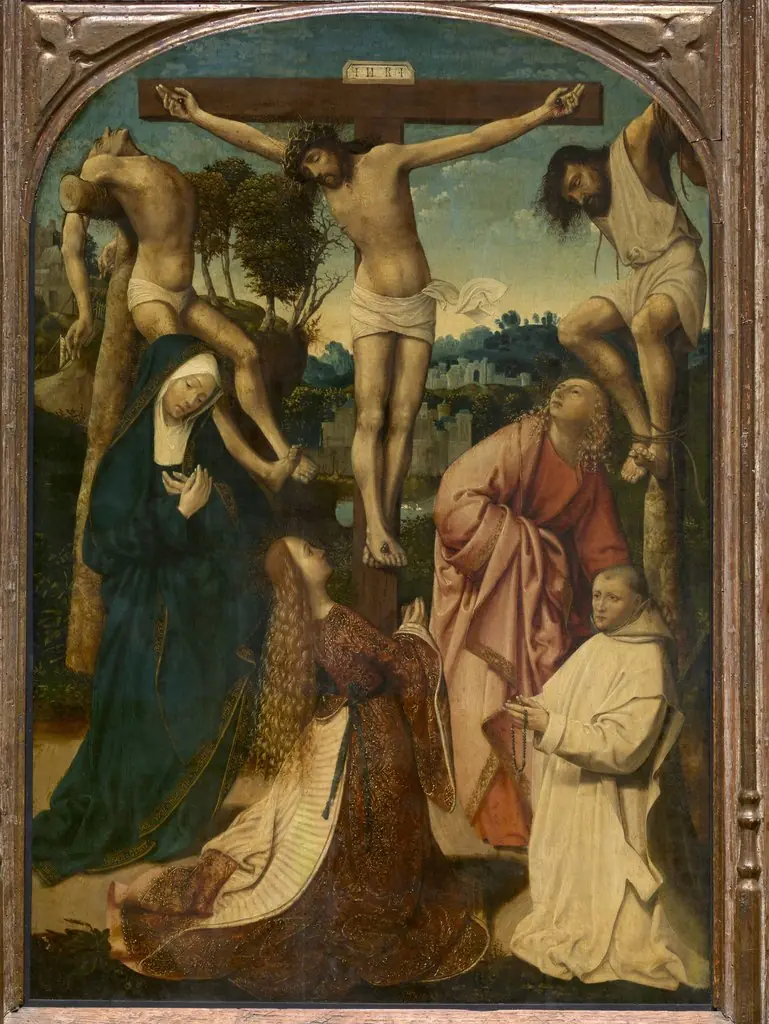 Crucifixion