Artwork
Tríptico de la Flagelación
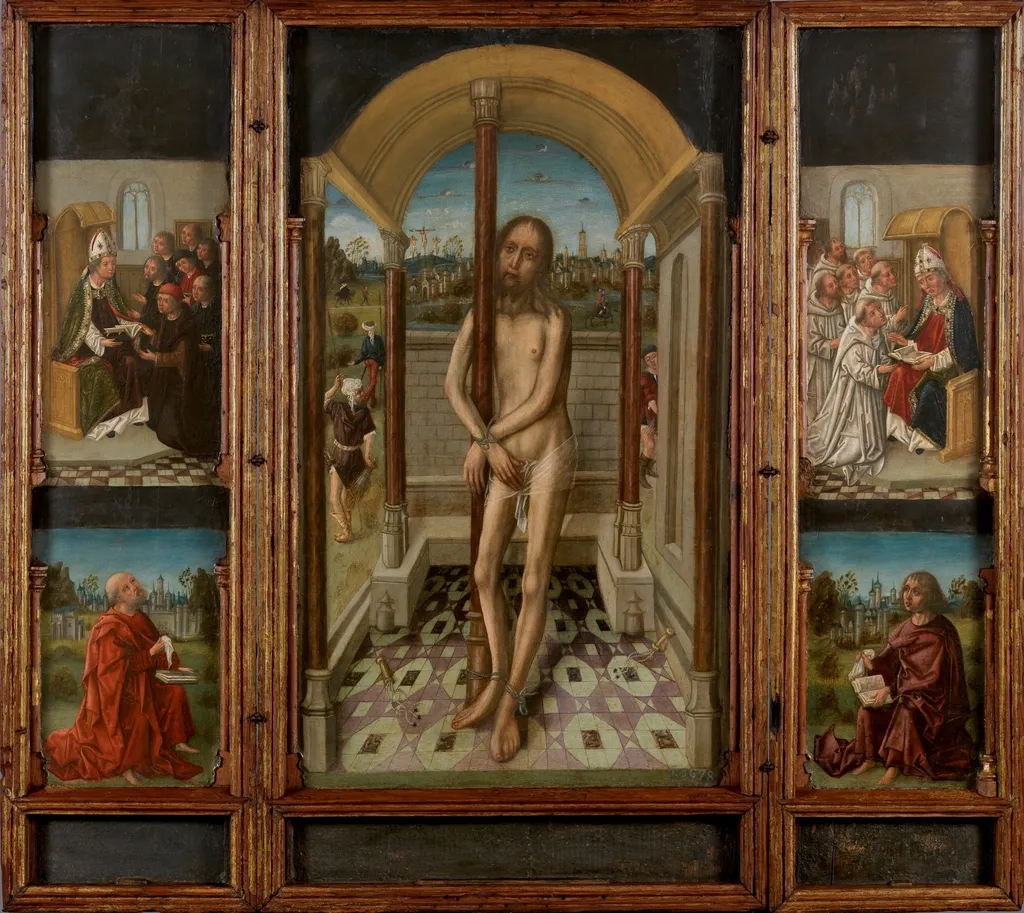
Tríptico de la Flagelación is an oil painting by the Early Renaissance artist Maestro de los Luna. It dates from 1498 and is held in the collection of the Museo del Prado.
About this work
Subject & Meaning
The work functions as a devotional piece intended to evoke the suffering of Christ, consistent with the religious art genre of the late 15th century.
The Tríptico de la Flagelación is a religious work created by the Maestro de los Luna in 1495. As the title indicates, the central subject of the painting is the Flagellation, a key event in Christian iconography depicting the scourging of Jesus Christ before his crucifixion. The work functions as a devotional piece intended to evoke the suffering of Christ, consistent with the religious art genre of the late 15th century.
While the specific visual arrangement of the triptych panels is not detailed in the available records, the inclusion of a book within the depicted scene suggests an element of scriptural authority or theological reflection accompanying the narrative of the Passion.
Technique & Style
The Tríptico de la Flagelación is executed in oil paint on a wooden panel support, a technique characteristic of late fifteenth-century Iberian painting. The work, dated 1495, takes the form of a triptych, a multi-panel devotional format used for religious subjects of this kind. Its dimensions are recorded as 106.5 cm in height by 120 cm in width, indicating a horizontally oriented ensemble.
The painting belongs to the religious genre and is held in the collection of the Museo del Prado. No further details regarding handling, condition, or specific stylistic qualities are documented in the available sources.
History & Provenance
The Tríptico de la Flagelación was created in 1495 by the Maestro de los Luna, an artist named after his patron, Álvaro de Luna. The work is executed in oil paint on panel. It is now held in the collection of the Museo del Prado in Madrid, where it remains on public display.
Overview
Tríptico de la Flagelación is a 1498 oil painting by Maestro de los Luna, housed at the Museo del Prado. The work is structured into five panels, deviating from the traditional triptych format suggested by its title.
Context
Given its religious theme and 15th-century origin, Tríptico de la Flagelación reflects the prevalent Christian artistic themes of its time. However, the unique five-panel structure sets it apart from conventional religious triptychs of the era.
Legacy
The painting's impact or influence on subsequent artistic works is not detailed in the provided information. Its significance appears to lie primarily in its representation of Maestro de los Luna's style and the religious art of its period.
Own this work as a print
Artist & collection
Artist
Maestro de los Luna, also called the Master of don Álvaro de Luna, is the conventional name given to an anonymous Spanish painter active in Toledo and Guadalajara in the late fifteenth century, roughly between 1483 and 1495.

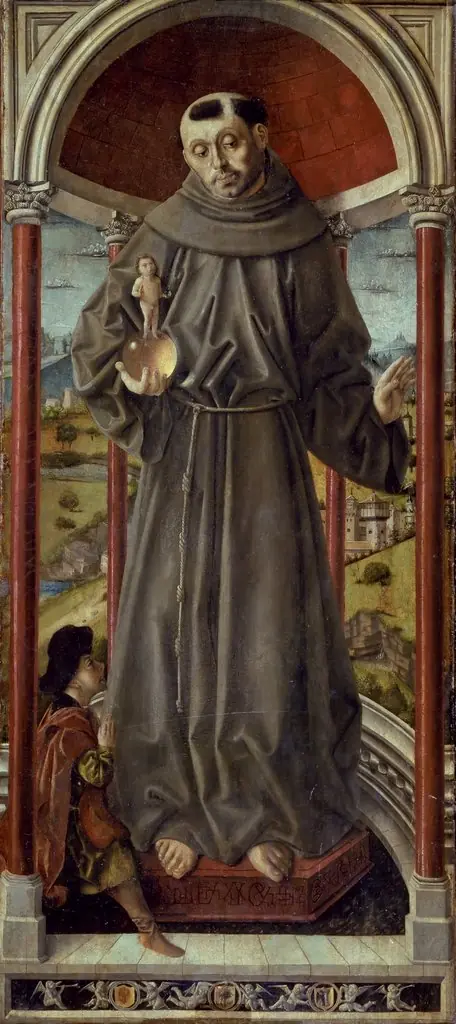
- Redemption Triptych: The Crucifixion
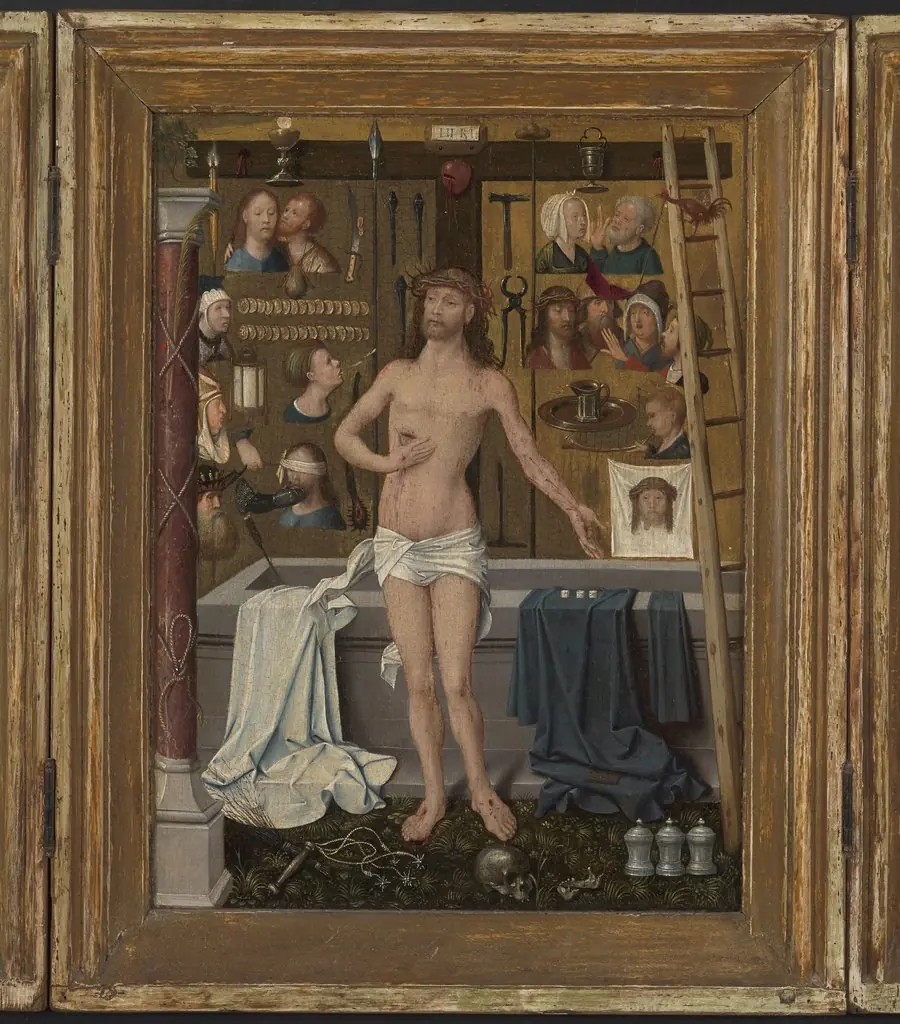 Christ with the Instruments of Passion
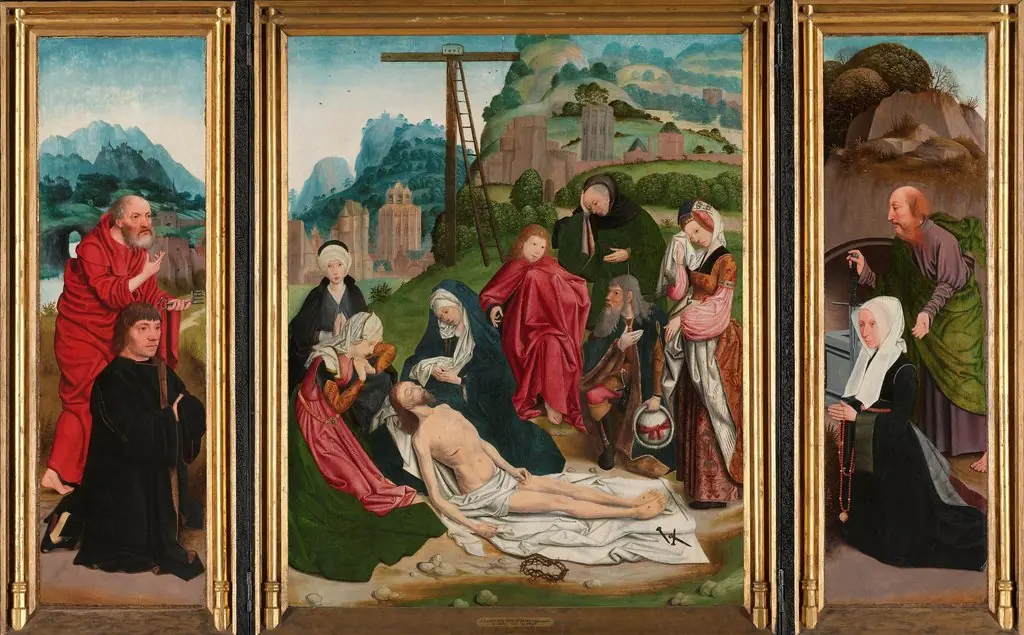 Triptych with the Lamentation (centre panel), the donor with St Peter (inner left wing), the donor’s wife with St Paul (inner right wing) and the donors’ coats of arms (outer wings)
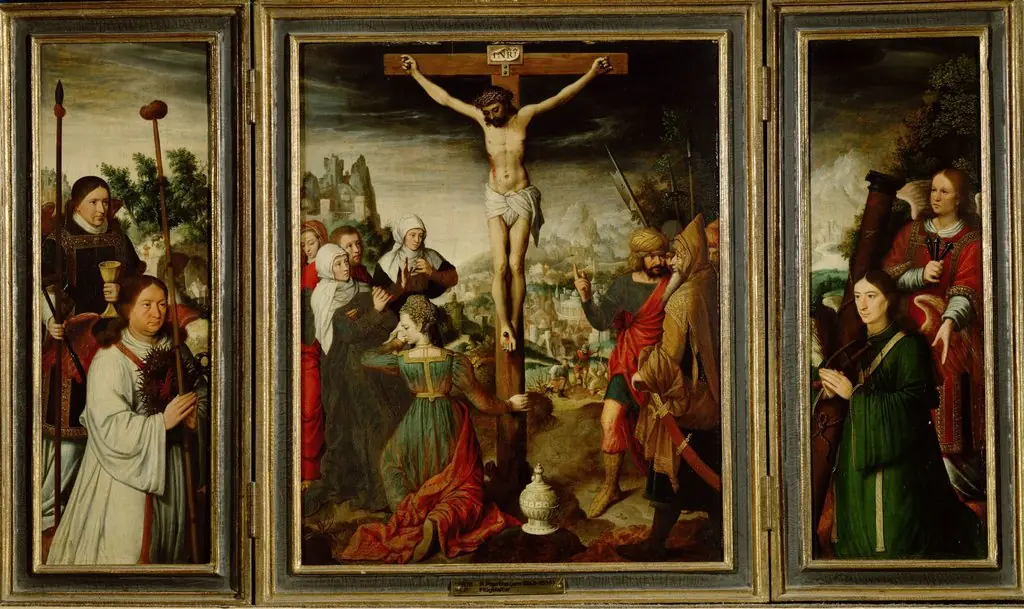 Kreuzigungstriptychon
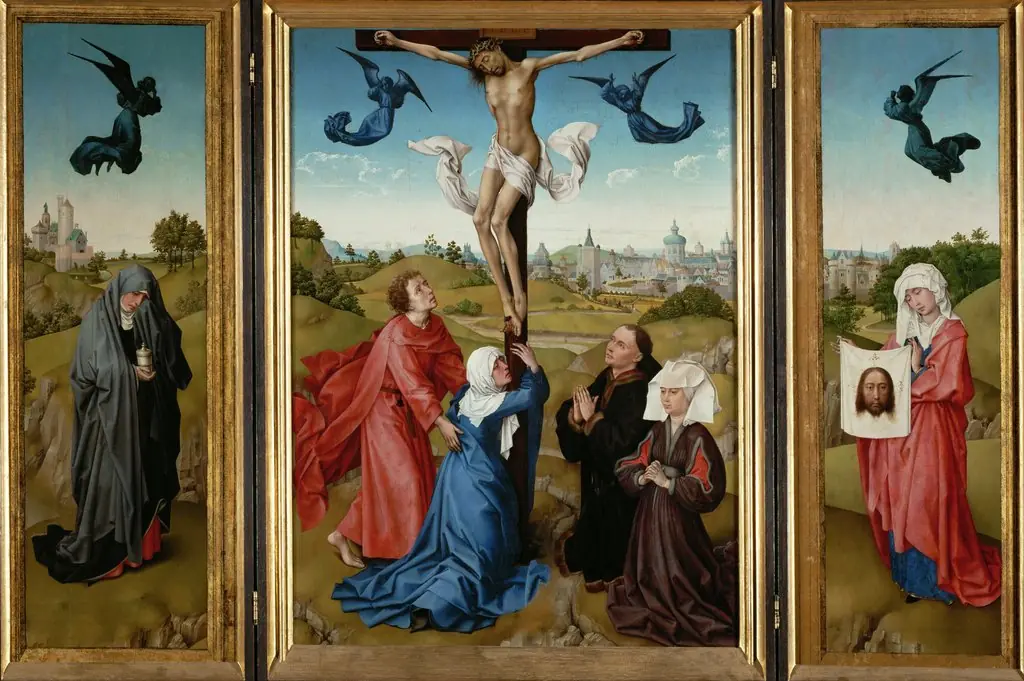 Crucifixion Triptych
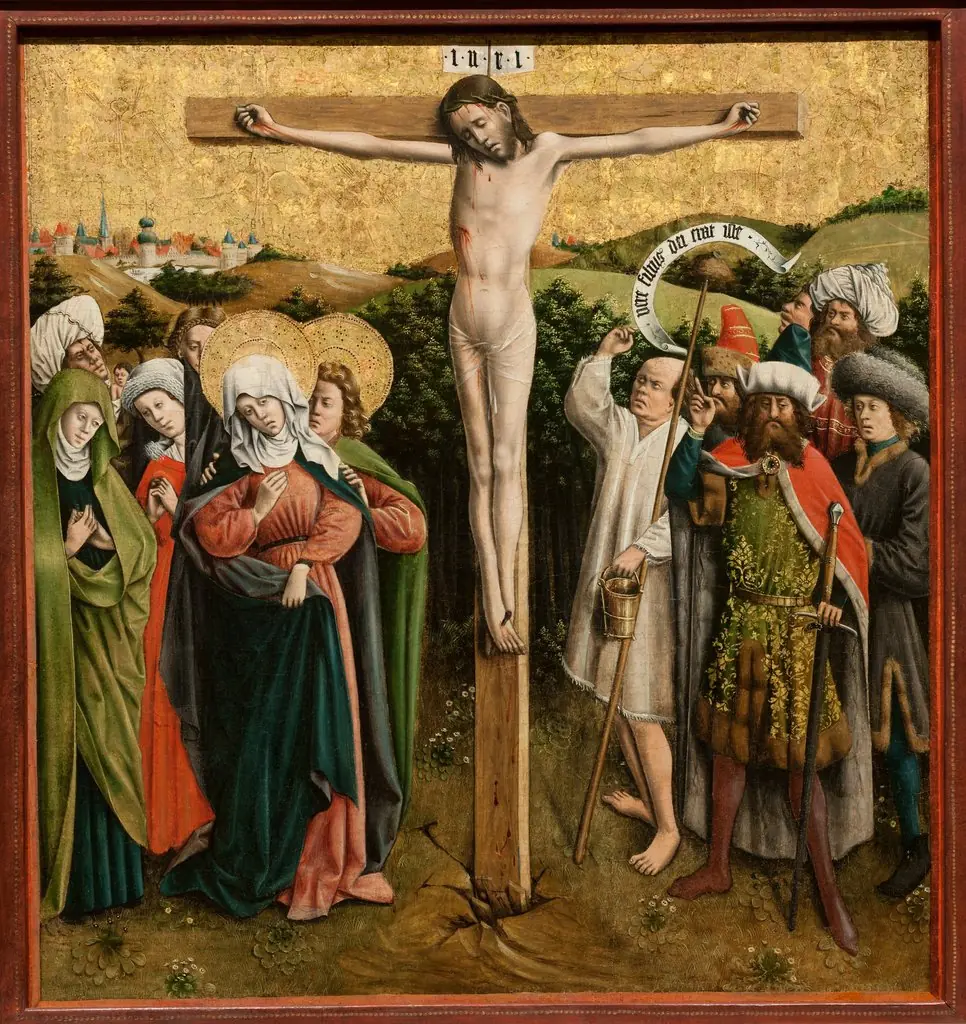 Altarpiece with The Passion of Christ
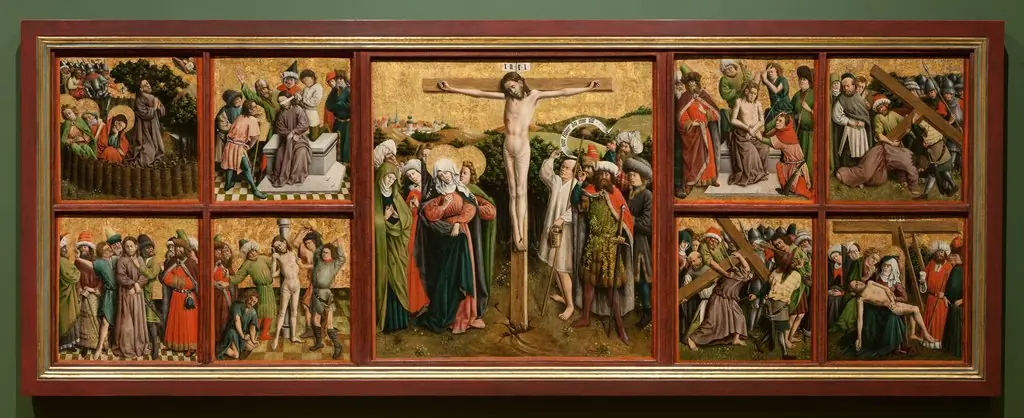 Altarpiece with The Passion of Christ
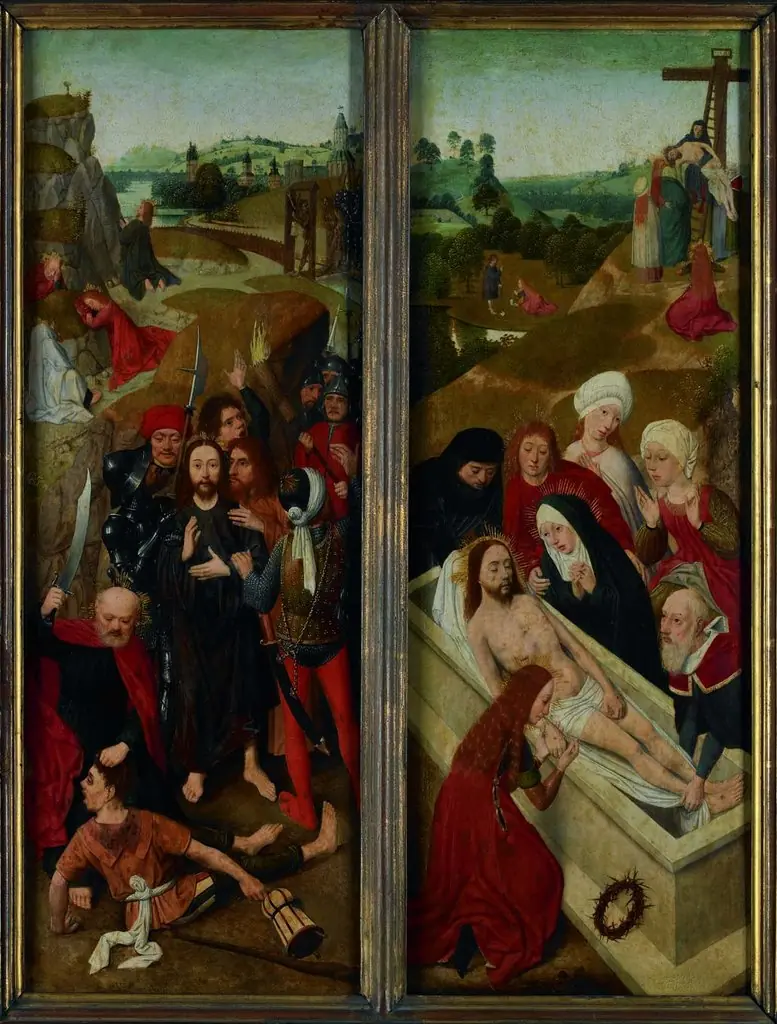 he taking of Christ and The entombment
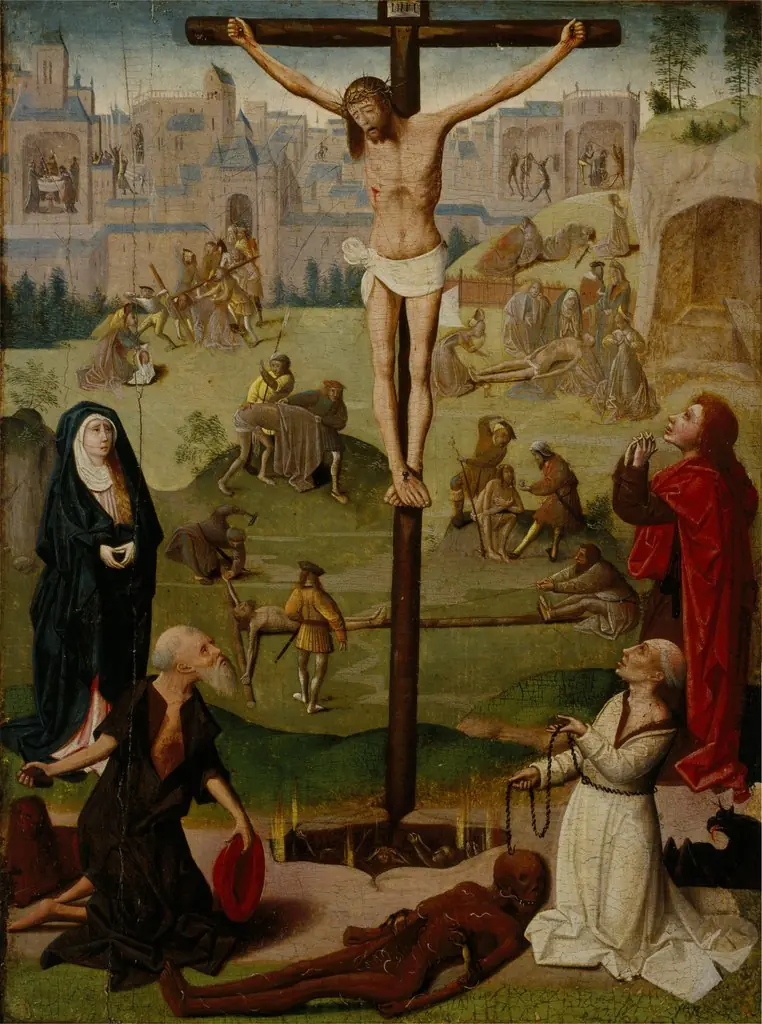 The Crucifixion with St Jerome and St Dominic and Scenes from the Passion
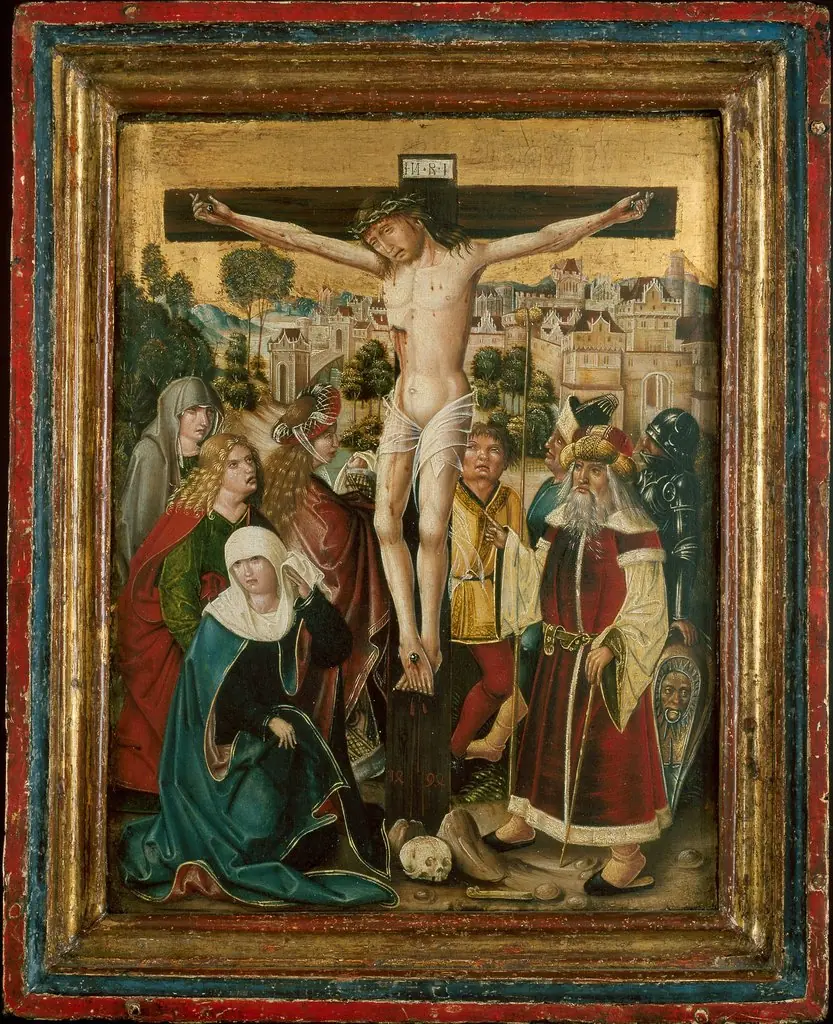 The Crucifixion
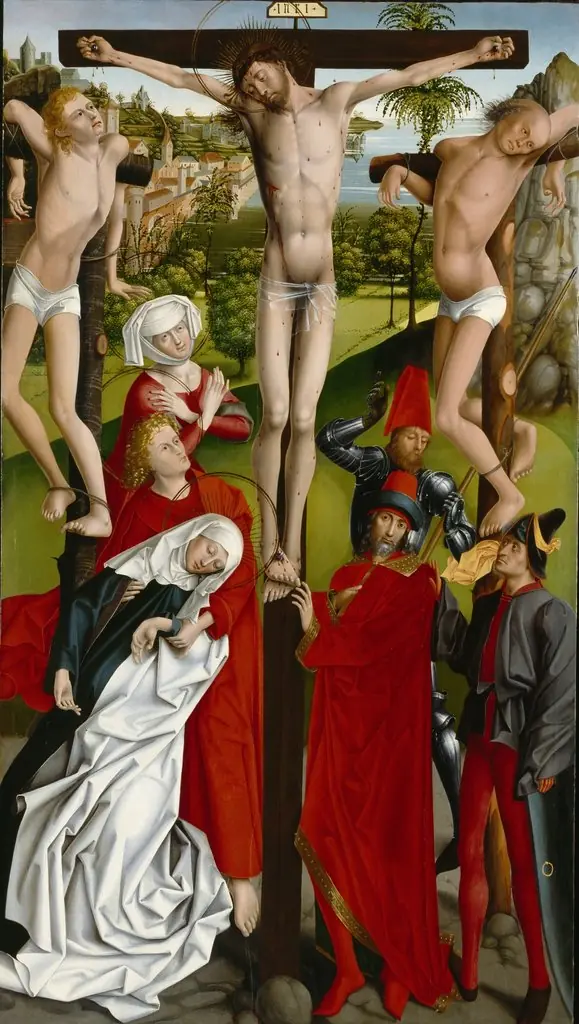 The Crucifixion
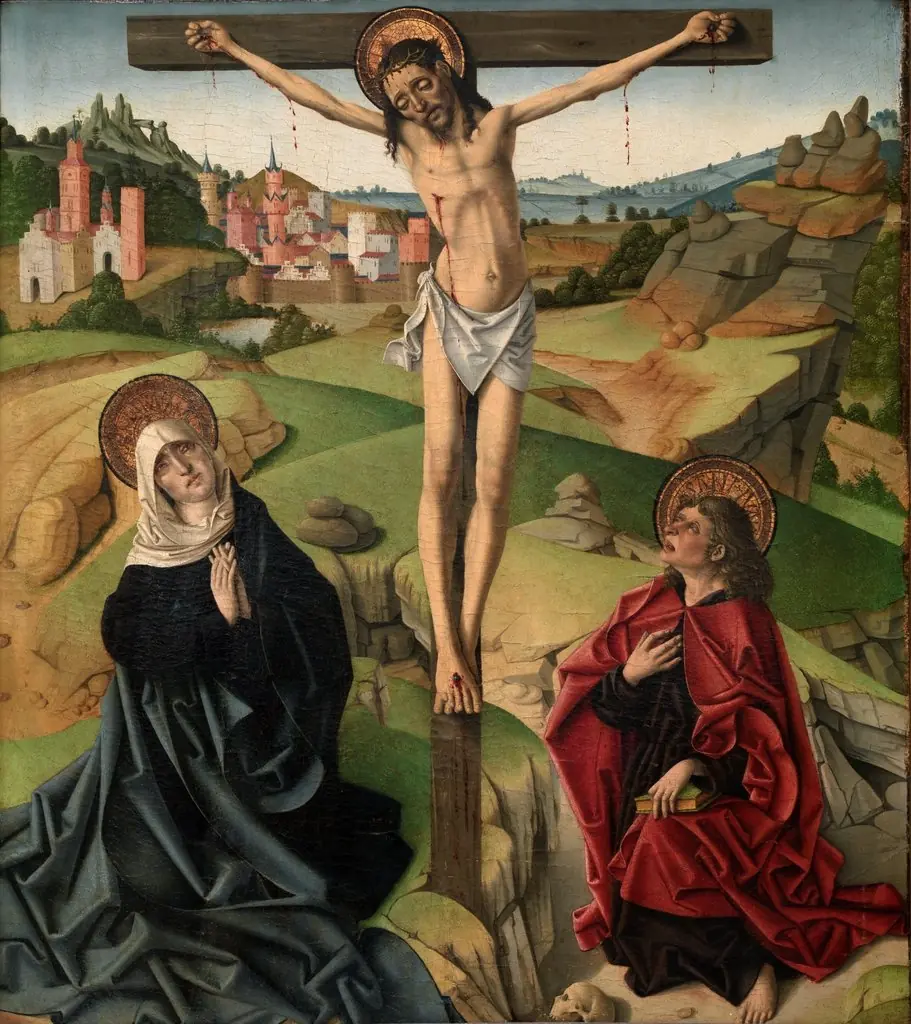 The Crucifixion