Artwork
Saint Agatha
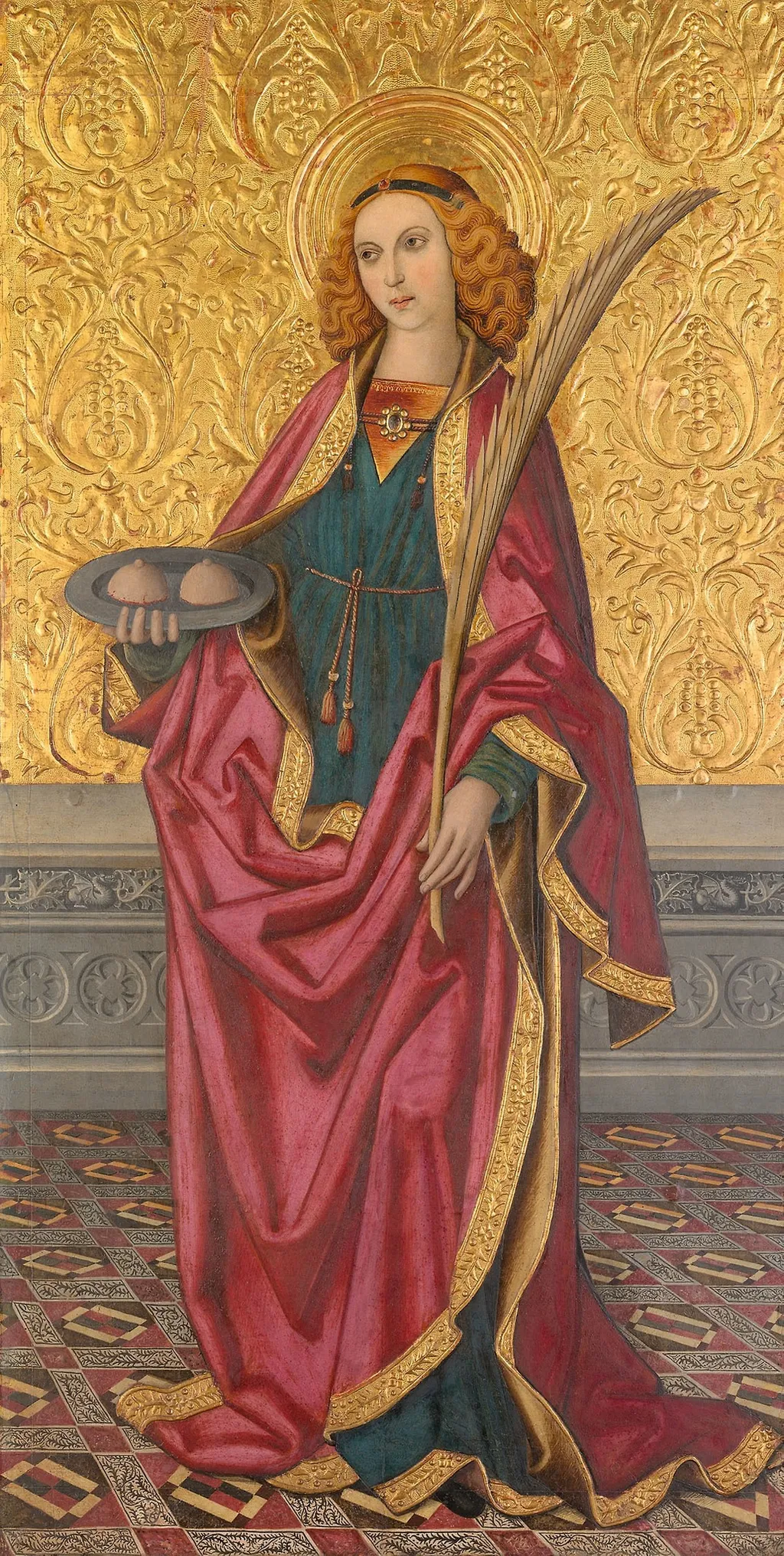
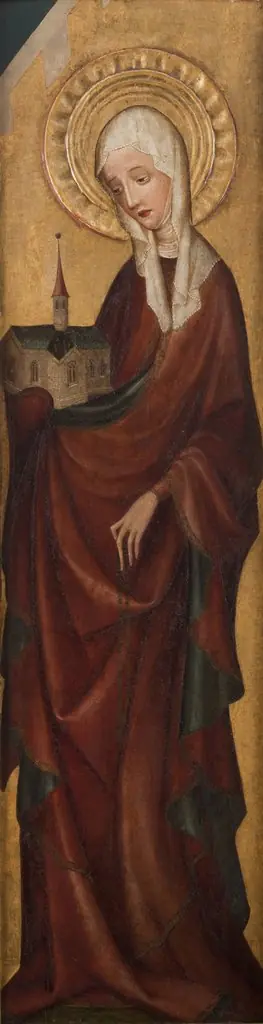
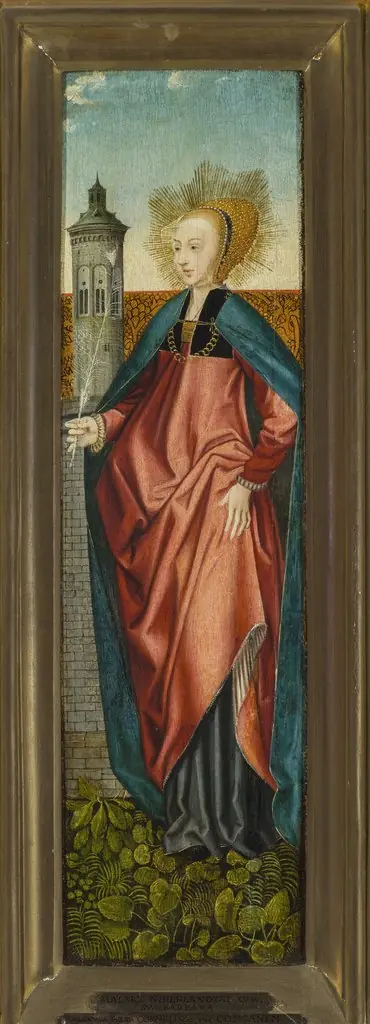
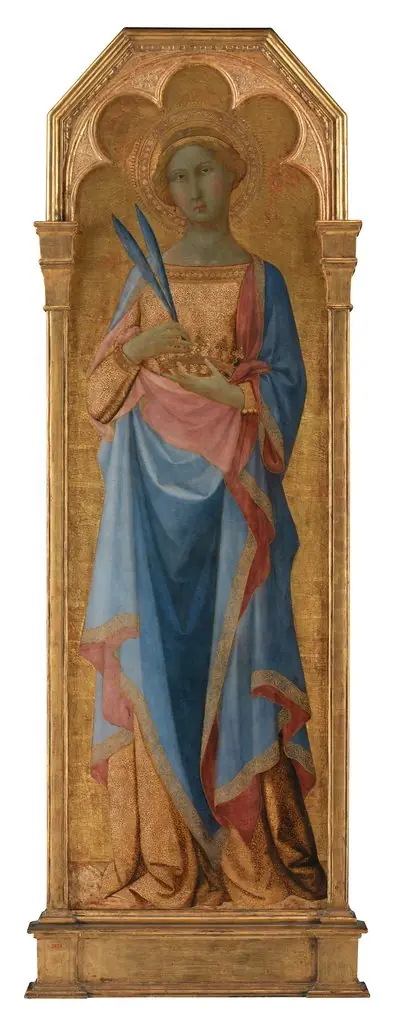
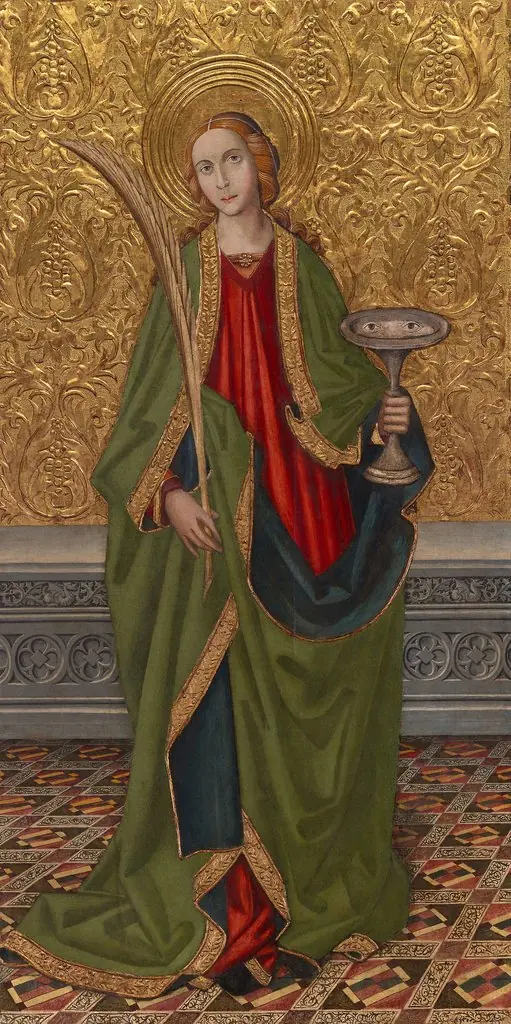
Saint Agatha is an unspecified painting by the Early Renaissance artist Unknown. It dates from 1500 and is held in the collection of the Art Institute of Chicago. The work depicts a standing, robed figure set against a shimmering gold‑leaf backdrop.
About this work
Overview
Saint Agatha is a 1498 religious painting attributed to the Vergós workshop, currently held in the collection of the Art Institute of Chicago.
Saint Agatha is a 1498 religious painting attributed to the Vergós workshop, currently held in the collection of the Art Institute of Chicago. This vertical panel depicts the early Christian martyr Saint Agatha of Sicily in a formal, devotional presentation typical of late fifteenth-century Spanish religious art. The work exemplifies the period's synthesis of Northern European attention to surface detail and Mediterranean preferences for gold-ground devotional imagery, standing as an important document of Catalan painting at the close of the medieval era.
Subject & Meaning
The painting depicts Agatha of Sicily, a third-century virgin martyr venerated throughout Christian Europe. According to tradition, Agatha rejected the advances of the Roman prefect Quintianus and suffered torture, including the severing of her breasts, before dying in prison. The Vergós workshop presents her as a standing, frontal figure, haloed and dignified. She holds a shallow dish containing two rounded, flesh-toned objects representing her severed breasts, the attribute by which she is most readily identified in Western art. In her other hand, she grasps a tall bundle of thin reeds or rods, likely alluding either to the instruments of her torture or to palm fronds symbolizing martyrdom. The composition emphasizes her sanctity through the gold background and her composed bearing, while the specific attributes invite contemplation of her bodily sacrifice and spiritual steadfastness. The image participates in a broader European tradition of depicting female martyrs with their instruments of torture, a visual strategy that served devotional purposes while also confronting viewers with the physical reality of sanctified suffering.
History & Provenance
The painting is dated to 1498 and attributed to the Vergós workshop, a Catalan atelier active in the late fifteenth century. The work entered the collection of the Art Institute of Chicago, where it remains today. Its acquisition by a major American museum reflects the broader pattern of European religious art entering North American collections during the late nineteenth and early twentieth centuries. The specific circumstances of its commission, whether for a church, private chapel, or individual patron, remain unrecorded in the available sources, as does its early provenance prior to modern collection history.
Context
The Vergós workshop operated within the rich artistic environment of late medieval Catalonia, where international trade and political connections fostered a distinctive visual culture blending Flemish and Italian influences. The workshop attribution suggests production within a family-based or collaborative enterprise, a common organizational form in fifteenth-century European art that allowed for efficient execution of devotional commissions. The subject of Saint Agatha held particular resonance in Mediterranean Europe, where her cult was widespread and her protection invoked against volcanic eruption, fire, and breast disease. By 1498, the year of the painting's creation, Spain was consolidating under the Catholic Monarchs and experiencing the cultural energies that would fuel both the vigorous spirituality of the Counter-Reformation and the eventual artistic flowering of the Spanish Golden Age. The Vergós treatment of Agatha, with its gold ground and formal presentation, represents an earlier aesthetic than the naturalistic, emotionally charged interpretations that Spanish Baroque artists like Francisco de Zurbarán would later produce. Where the 1498 panel presents Agatha as an iconic, almost heraldic figure, seventeenth-century painters emphasized her youth, beauty, and the psychological tension between worldly grace and horrific martyrdom. This evolution reflects broader shifts in European religious art from late medieval devotion to Baroque theatricality.
Legacy
The Vergós workshop's Saint Agatha occupies a significant place in the longer history of Agatha's iconography, demonstrating how a single saint's attributes could be rendered with varying emphasis across centuries. The painting's survival and placement in the Art Institute of Chicago ensures its continued role in scholarly discussions of late fifteenth-century Catalan art and the international circulation of devotional imagery. Its existence also provides a valuable point of comparison with the more famous Baroque treatments of the same subject, particularly Zurbarán's 1630-1633 version now in the Musée Fabre, Montpellier. Where the Vergós panel presents Agatha with hieratic formality, Zurbarán's painting exploits the tension between contemporary Spanish fashion and gruesome martyrdom to produce a more psychologically complex effect. The two works together illustrate how a single saint's story could be adapted to radically different aesthetic programs while maintaining core iconographic elements. The Art Institute's painting thus serves both as a significant work in its own right and as a necessary reference point for understanding the development of Spanish religious art across the early modern period.
Artist & collection