Artwork
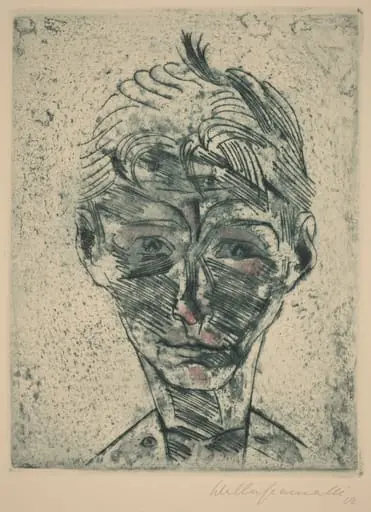
Bust of a Weary Man, Self-portrait (Ermüdender Kopf, Selbstporträt)
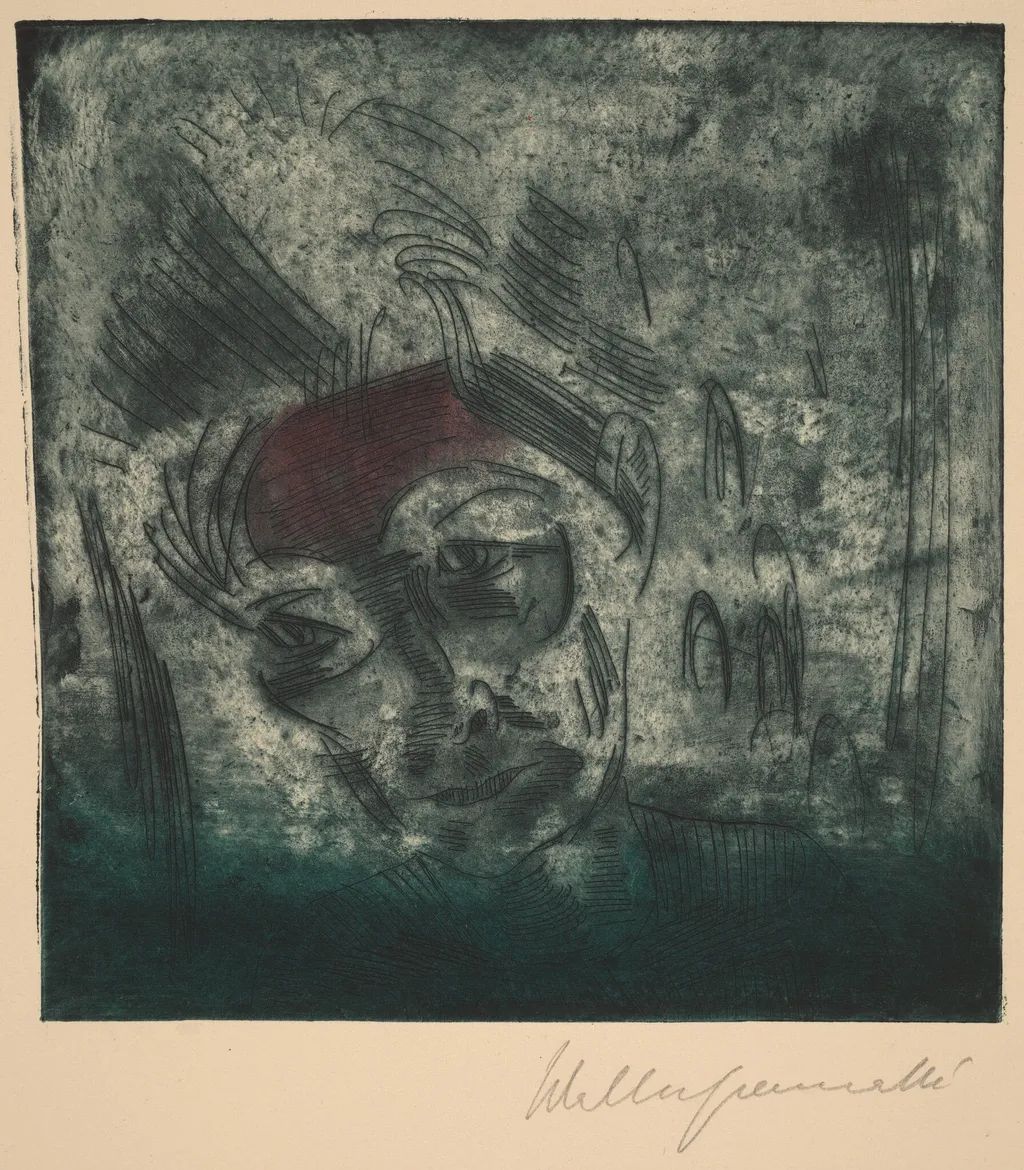
Bust of a Weary Man, Self-portrait (Ermüdender Kopf, Selbstporträt) is an ink print by Walter Gramatté. It dates from 1922 and is held in the collection of the National Gallery of Art.
- Inscription
- Inscribed:signed by artist, lower right under platemark, in graphite: Walter Gramatté; by later hand, upper right, in graphite: g; by later hand, verso lower left, in graphite: 277
- Markings
- Marked:stamp, verso cetner, in black ink: R
About this work
Overview
Bust of a Weary Man, Self-portrait is a 1922 print by Walter Gramatté, created using etching and engraving techniques in green and red ink.
Subject & Meaning
The print depicts a tired face with a deep red cap, set against a dark, indistinct background. The rough lines and worn appearance convey a sense of fatigue and introspection, reflecting Gramatté's experiences with illness and war.
Technique & Style
Gramatté employed a mix of etching and engraving to achieve a textured, layered effect. The use of green and red ink on dark paper creates a striking contrast, with the red cap providing a focal point amidst the somber tones.
Own this work as a print
Artist & collection

Artist
Walter Gramatté (8 January 1897 in Berlin – 9 February 1929 in Hamburg) was a German expressionist painter who specialized in magic realism.

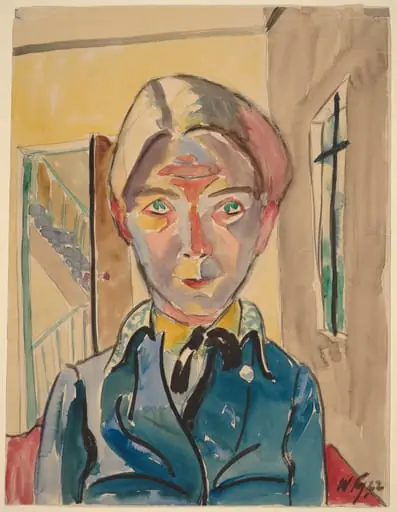 Self-Portrait in Front of Stairs (Selbst vor Treppe)
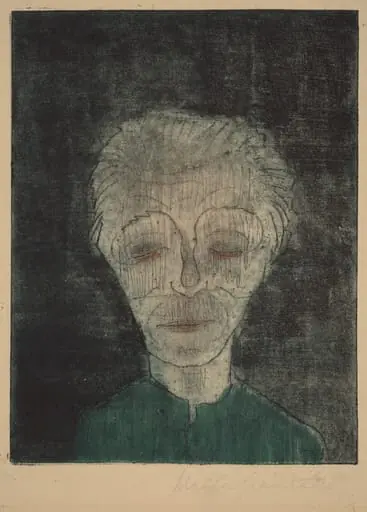 Tired Man (Self-Portrait)
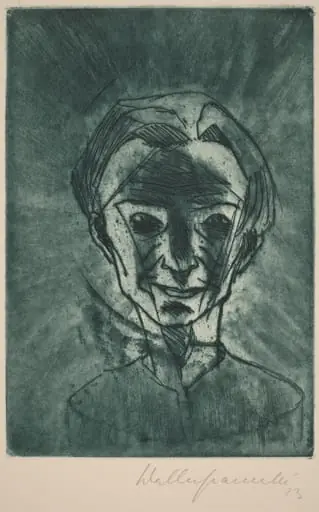 Smiling Head, Self-portrait (Lächelnder Kopf, Selbstporträt)
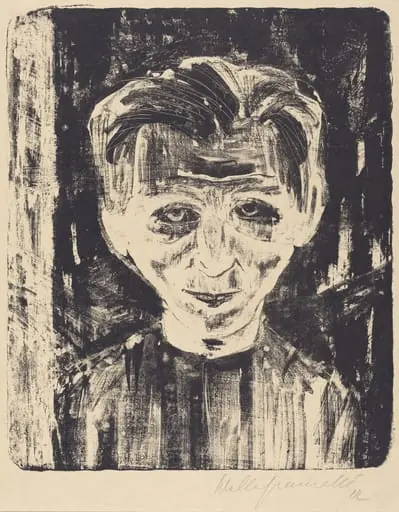 Self-Portrait
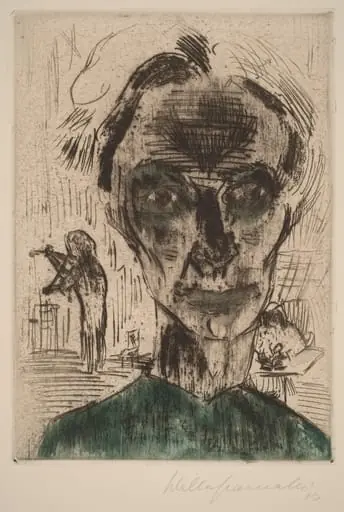 Man in a Room, Self-portrait
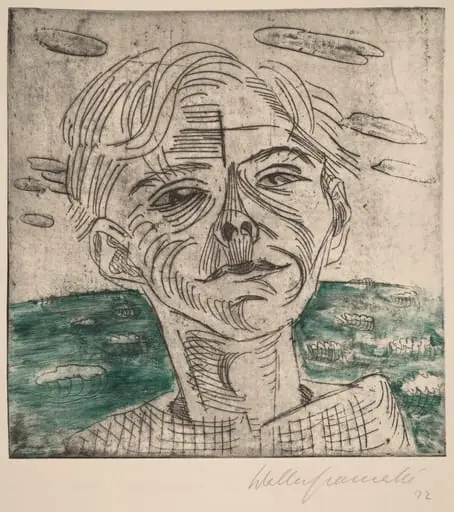 Man at the Sea, Self-portrait (Mann am Meer, Selbstporträt)
- Bust of a Young Man, Self-portrait (Knabenkopf, Selbstporträt)
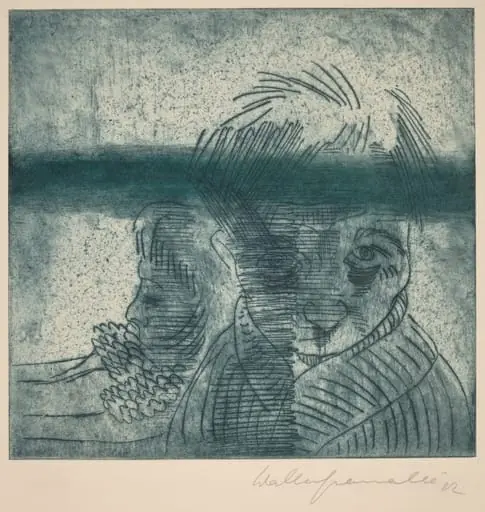 The Couple, Self-Portrait with Wife (Das Paar, Selbstporträt mit Frau)