Artwork
Clemens Brentano
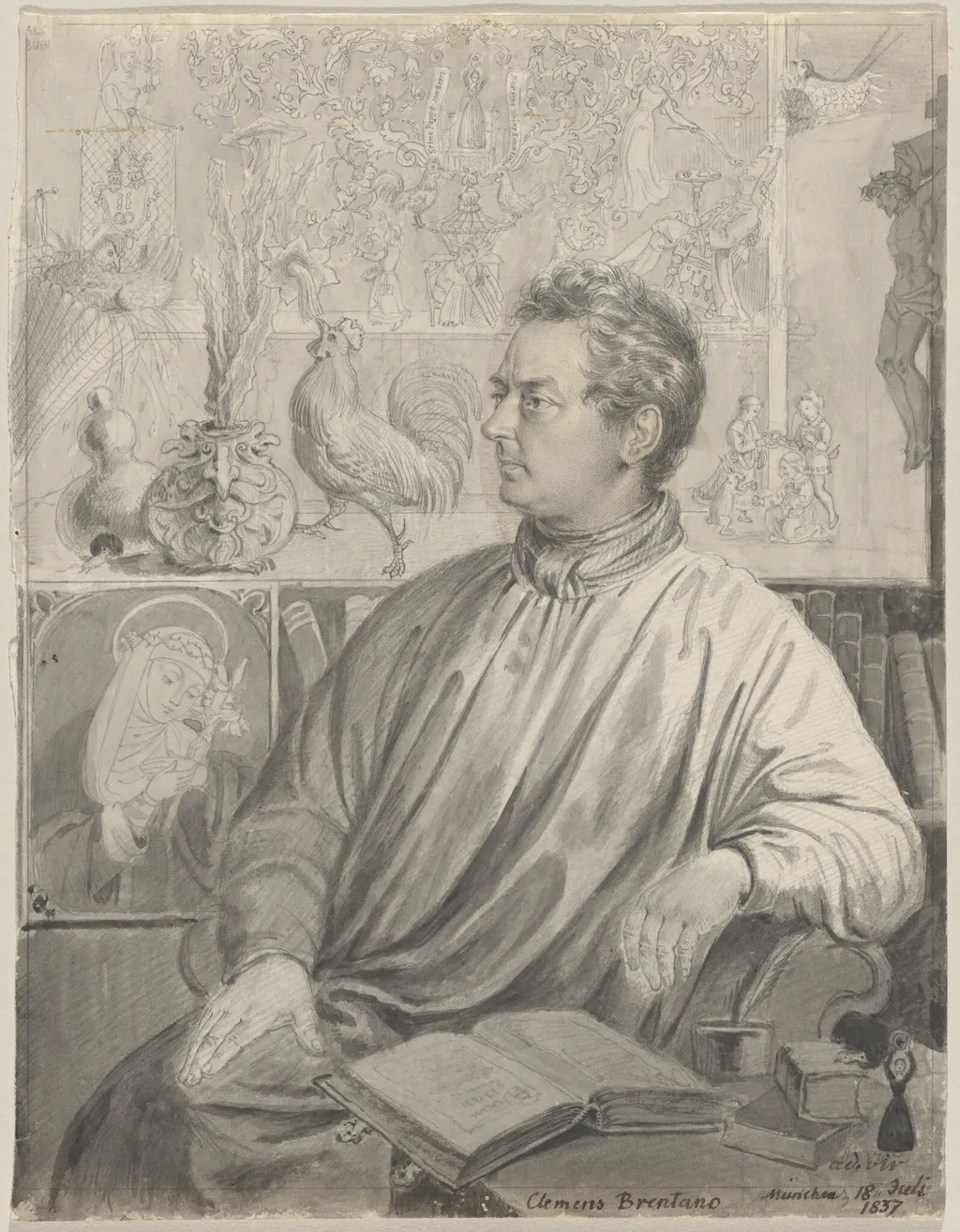
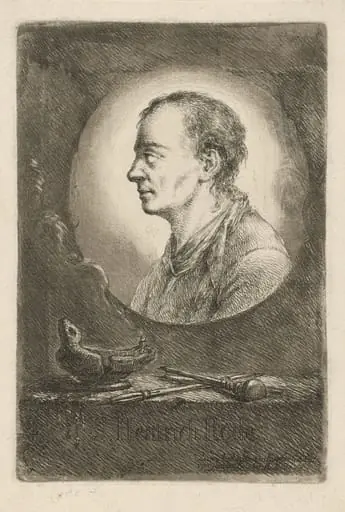
Clemens Brentano is an ink drawing by the Romanticist artist Ludwig Emil Grimm. It dates from 1837 and is held in the collection of the National Gallery of Art.
- Inscription
- Inscribed:lower right in black ink: Clemens Brentano ad viv. München 18 Juli 1837
About this work
Overview
This 1837 drawing by Ludwig Emil Grimm depicts the German writer Clemens Brentano in a quiet, intimate setting. Executed in pen and ink with gray wash over graphite on wove paper, the work captures a moment of contemplation. The composition emphasizes stillness, with the figure seated and engaged with a book, surrounded by subtle environmental details that suggest a creative space.
Subject & Meaning
Clemens Brentano, a key figure in German Romantic literature, is portrayed in a private, unguarded moment. His posture and the open book imply reflection or literary work. The wall behind him, adorned with small, sketch-like figures and forms, may represent his inner thoughts or preliminary ideas, offering a visual metaphor for the creative process that underlies his writing.
Technique & Style
Grimm employs fine pen lines and layered gray washes to model form and texture, particularly in the folds of Brentano’s clothing. The background is rendered with lighter, looser strokes, contrasting with the sharper definition of the figure. The wall doodles, drawn with minimal detail, suggest spontaneity and serve as a compositional counterpoint to the focused stillness of the subject.
History & Provenance
Created in 1837, the drawing originates from Grimm’s personal engagement with literary circles of the time. As the younger brother of Jacob and Wilhelm Grimm, Ludwig Emil maintained close ties with contemporaries like Brentano. The signed corner, though faint, confirms authorship and reflects the informal, autograph nature of such studio sketches, likely made as a record or tribute.
Context
In early 19th-century Germany, artists often documented writers and intellectuals in their studios, blending portraiture with cultural commentary. Grimm’s depiction aligns with this tradition, capturing not just likeness but the atmosphere of intellectual life. The presence of sketches on the wall echoes the Romantic ideal of creativity as an ever-present, unfolding process.
Legacy
The drawing remains a quiet testament to the intersection of literature and visual art in German Romanticism. While not widely exhibited, it offers insight into how artists visually interpreted their literary peers. Its modest scale and intimate tone distinguish it from formal portraits, preserving a sense of immediacy and personal connection between artist and subject.
Own this work as a print
Artist & collection