Artwork
The Death of Cleopatra
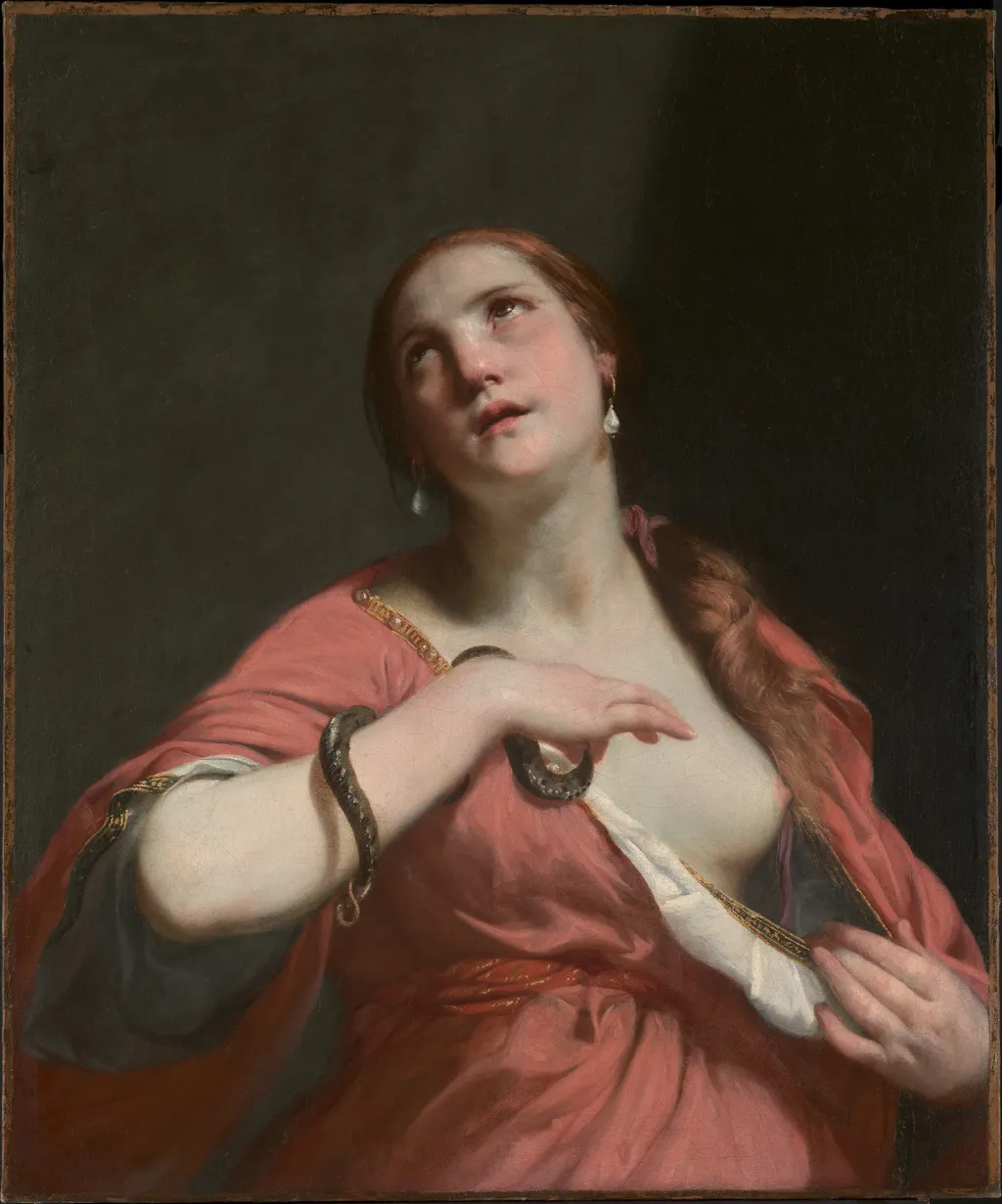
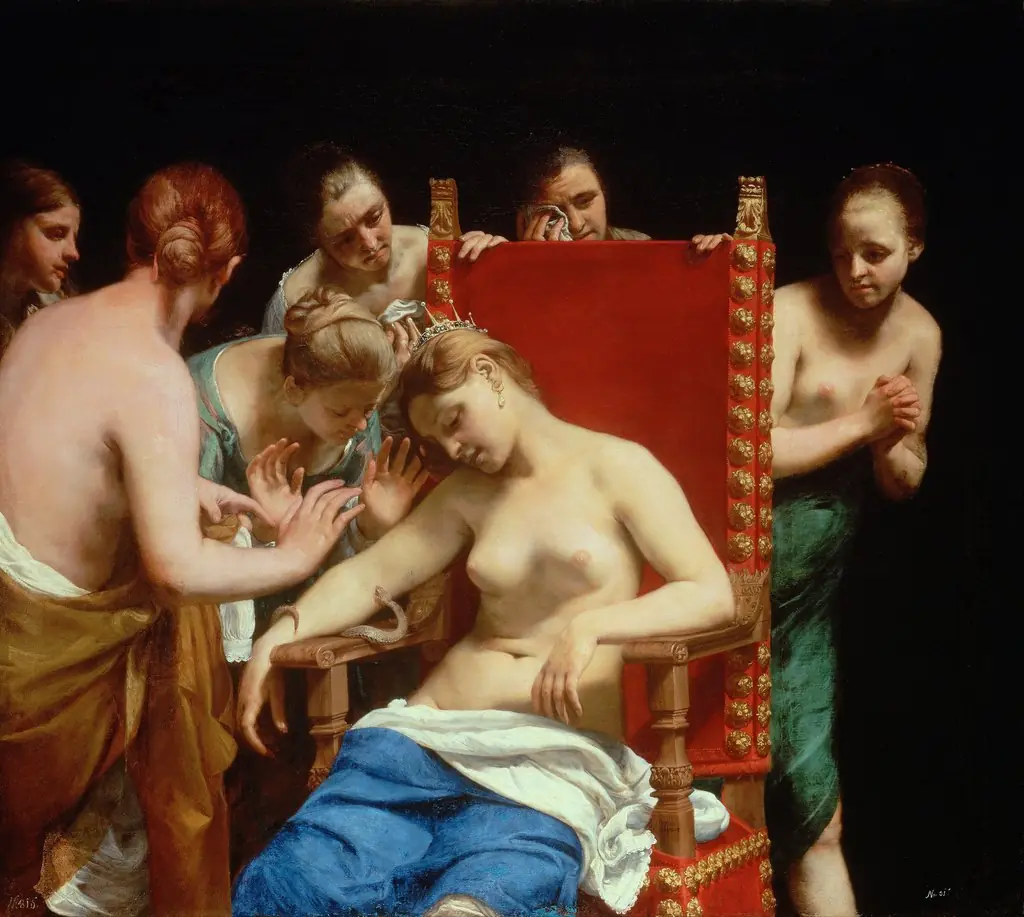
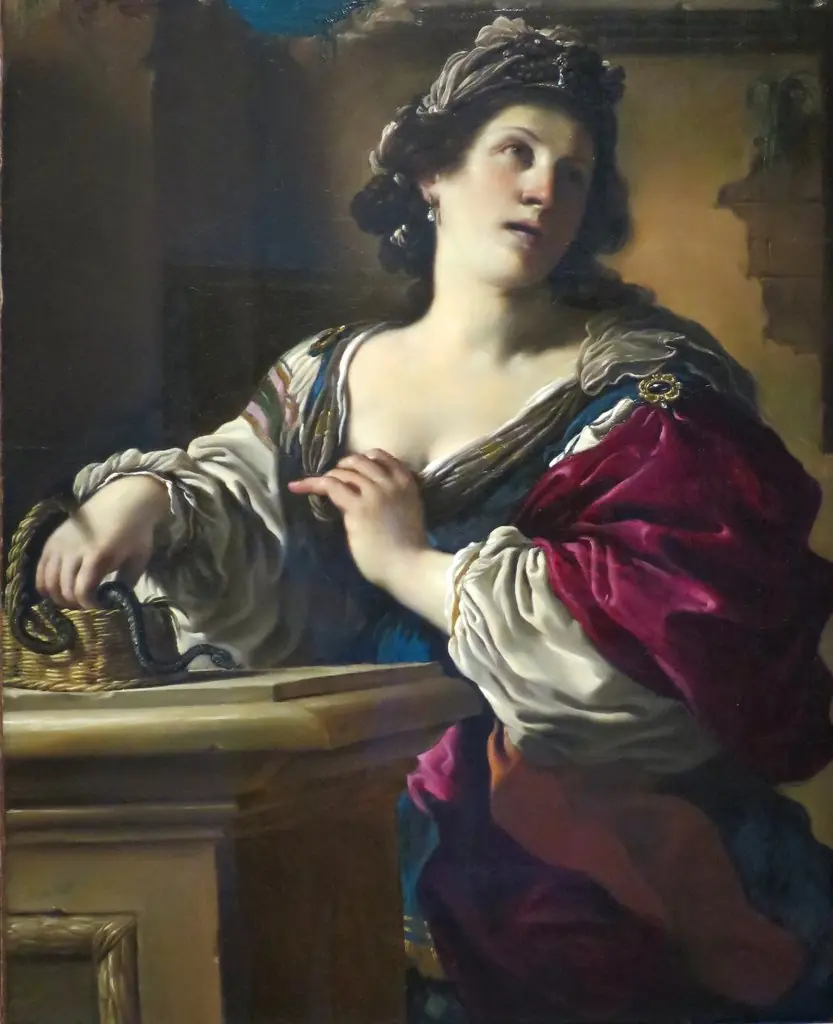
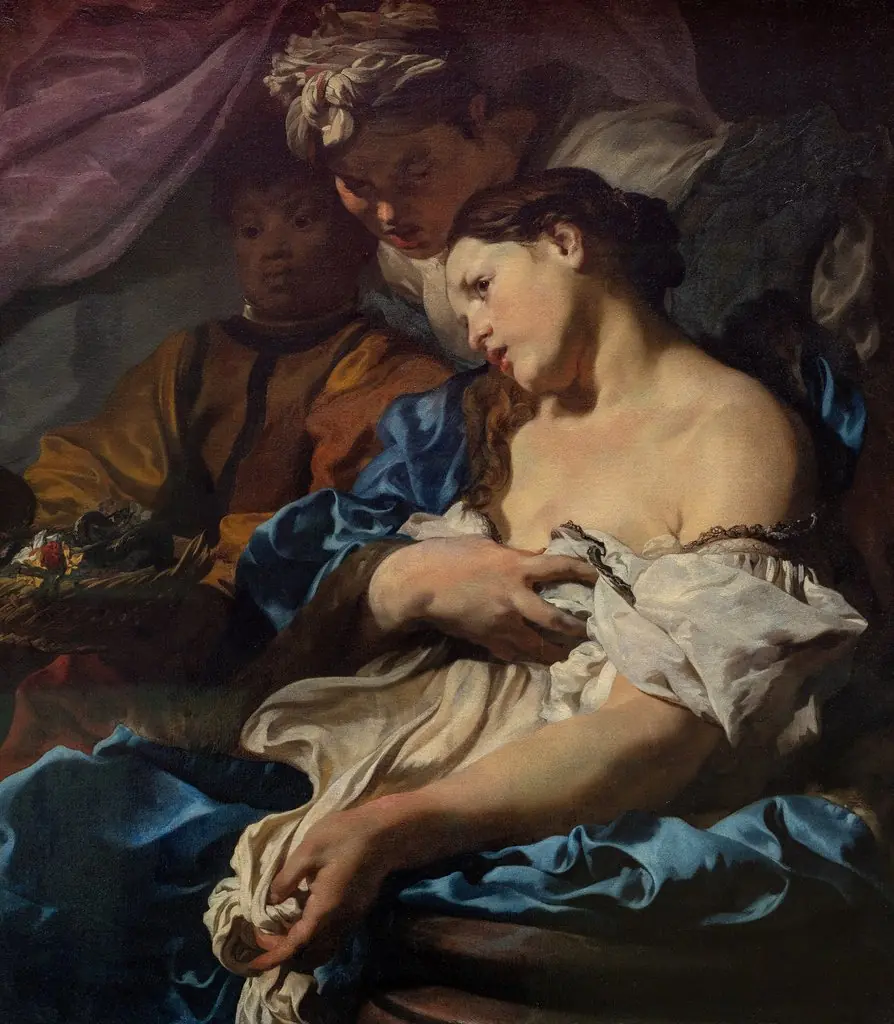
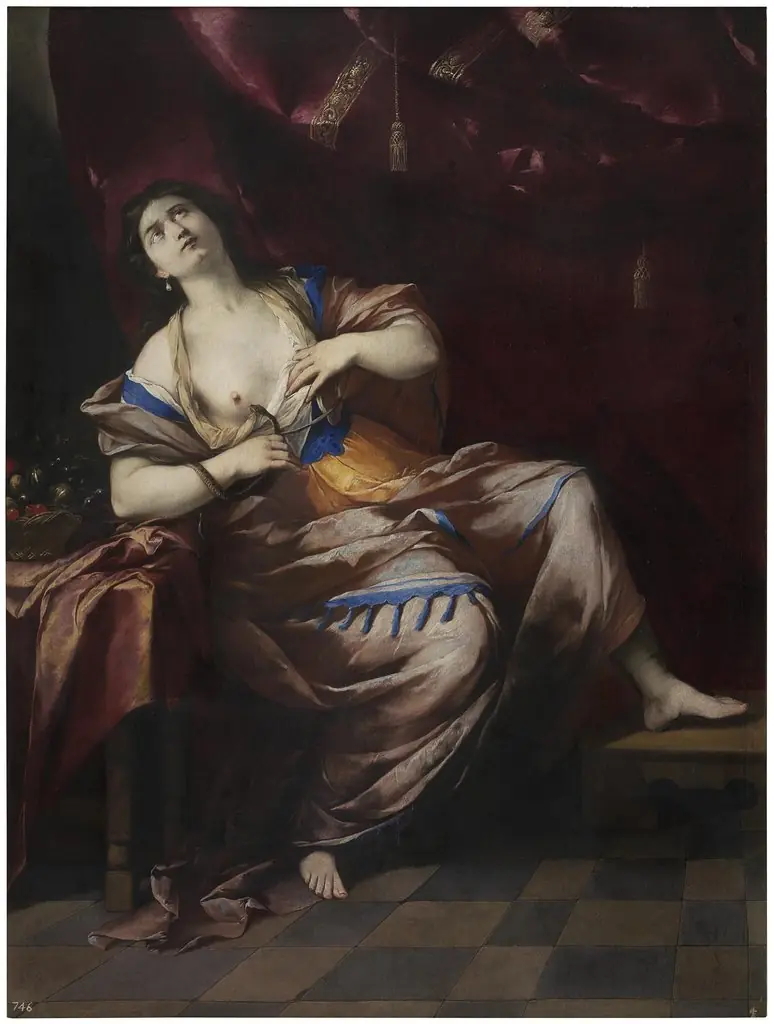
The Death of Cleopatra is an oil painting by the Early Baroque Italian artist Guido Cagnacci. It dates from 1650 and is held in the collection of the Metropolitan Museum of Art.
About this work
Subject & Meaning
This specific iconography emphasizes the moment of transition between life and death, focusing on the queen's deliberate action and spiritual resignation.
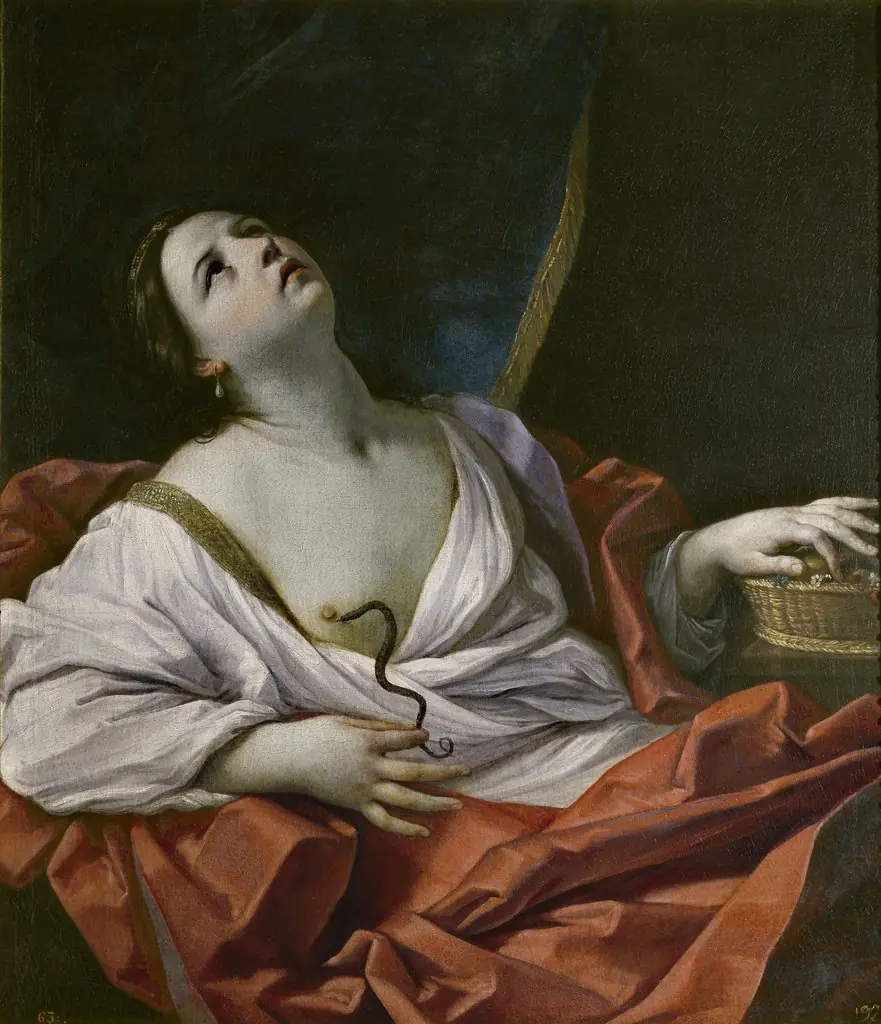
Guido Cagnacci's painting depicts the historical suicide of Cleopatra VII, the final ruler of Ptolemaic Egypt. The composition presents the queen in a half-length format against a dark background, wearing a salmon-colored gown that she pulls aside to expose her left breast. In her right hand, she holds a venomous snake, pinching it as she prepares to apply the fatal bite to her chest.
While awaiting death, Cleopatra lifts her gaze toward the upper left corner of the canvas, directing her eyes heavenward. This specific iconography emphasizes the moment of transition between life and death, focusing on the queen's deliberate action and spiritual resignation. The work is one of several versions Cagnacci produced on this subject, distinguishing itself through this intimate, vertical portrayal of the ancient monarch's final act.
Technique & Style
The Death of Cleopatra is an oil painting on canvas executed by Guido Cagnacci around 1650, with the work classified as a history painting in a vertical format measuring 95 by 75 centimeters. The composition presents Cleopatra at half-length against a dark, undefined background, a device that isolates the figure and heightens the drama of the suicide scene. She is dressed in a salmon-colored gown that she pulls aside to bare her left breast, while her right hand pinches a venomous serpent poised to deliver the fatal bite.
Her gaze is directed upward toward the upper left corner of the canvas, toward the heavens. Cagnacci's handling emphasizes the contrast between the luminous flesh tones and the somber ground, lending the figure a sculptural presence typical of mid-seventeenth-century Italian history painting.
History & Provenance
Guido Cagnacci’s The Death of Cleopatra was created between 1645 and 1655, aligning with the artist’s mature period in Italy. The painting entered a private collection in Bologna before later passing into another private ownership. In 2016, it was acquired by the Metropolitan Museum of Art in New York, where it has been held since.
The work’s dating reflects stylistic and technical analyses of Cagnacci’s oeuvre, situating it within the broader context of 17th-century Italian history painting. No direct commission records survive, but its subject aligns with contemporary demand for dramatic, classical narratives in private patronage.
Guido Cagnacci's painting The Death of Cleopatra is currently held in the collection of the Metropolitan Museum of Art in New York City. The work was acquired by the museum in 2016, having previously resided in a private collection in Bologna. Prior to its acquisition by the Met, the painting was not part of the institution's holdings.
The sources do not provide a specific inventory or accession number for the work, nor do they detail a specific exhibition history beyond its current placement within the museum. The painting remains part of the Met's permanent collection of history paintings, where it is displayed as an oil on canvas depicting the suicide of Cleopatra VII.
Overview
Guido Cagnacci, an Italian Baroque artist from Santarcangelo di Romagna, created The Death of Cleopatra around 1650. This oil painting exemplifies the early Italian Baroque movement, presenting a dramatic interpretation of the legendary queen's final moments. The artwork is housed within the collection of The Metropolitan Museum of Art, where it represents a significant example of Cagnacci's mature period.
Own this work as a print
Artist & collection

Artist
Guido Cagnacci (Italian:; 13 January 1601 – 1663) was an Italian Baroque painter originally from Santarcangelo di Romagna.