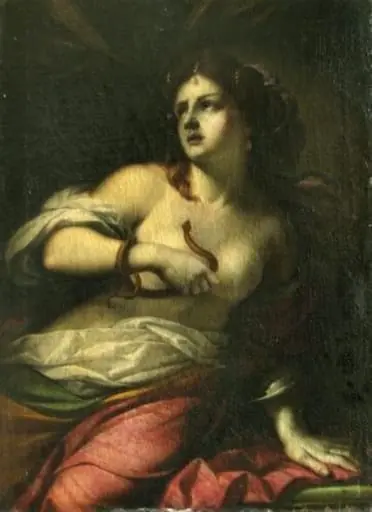
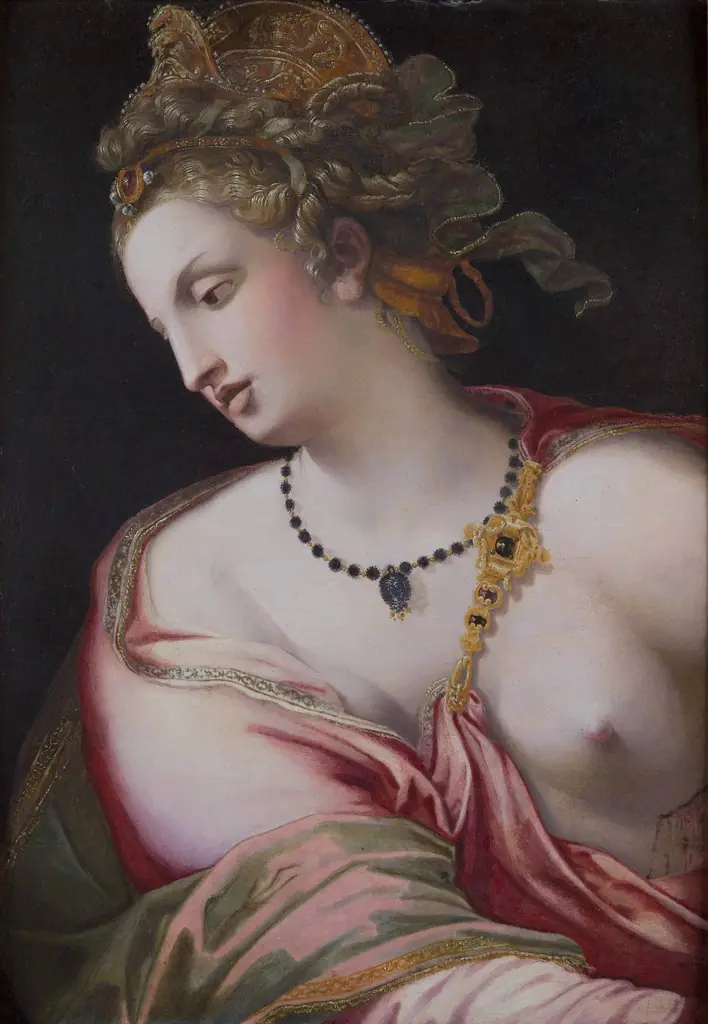
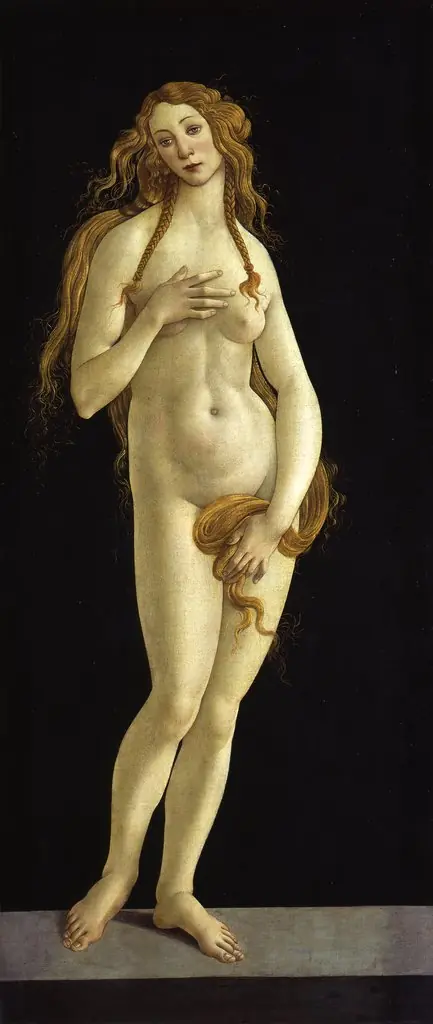
Artwork
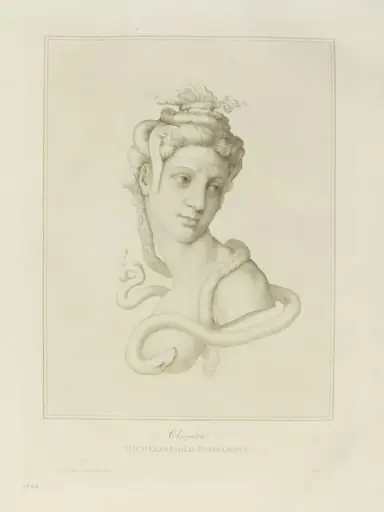
Cleopatra
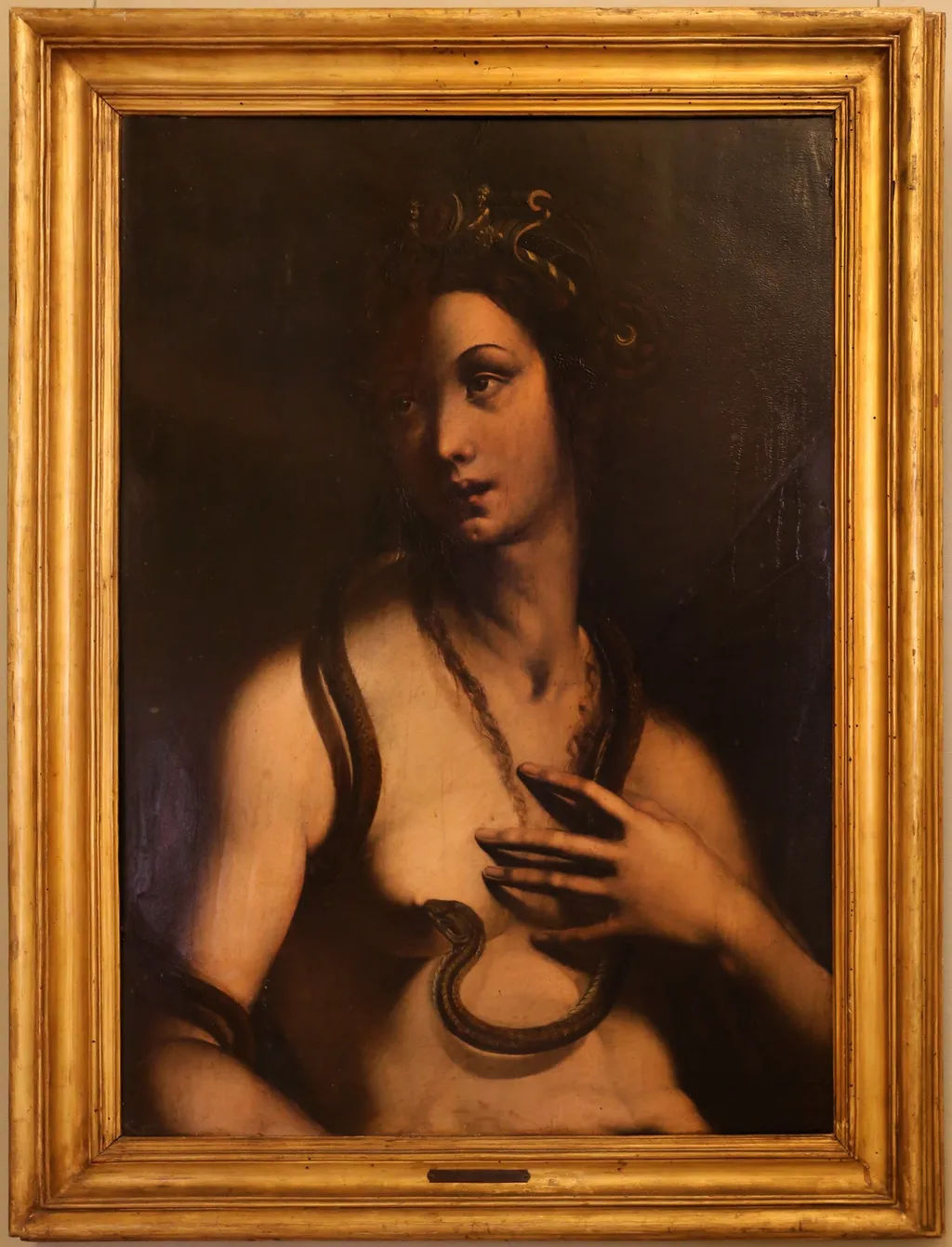
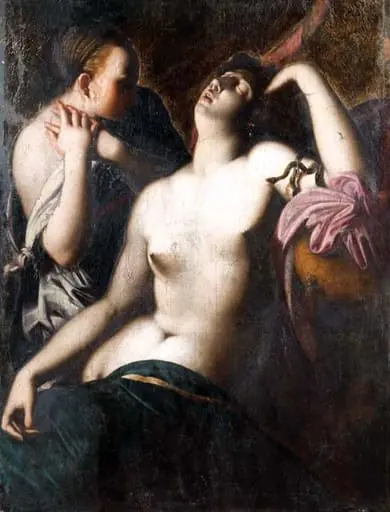
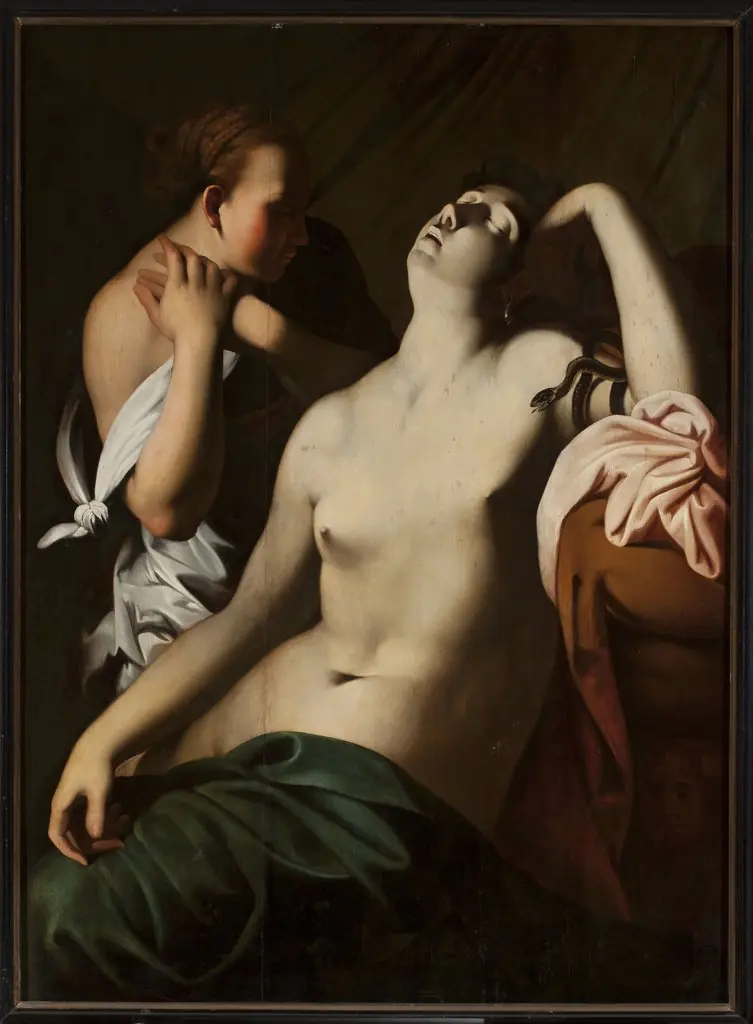
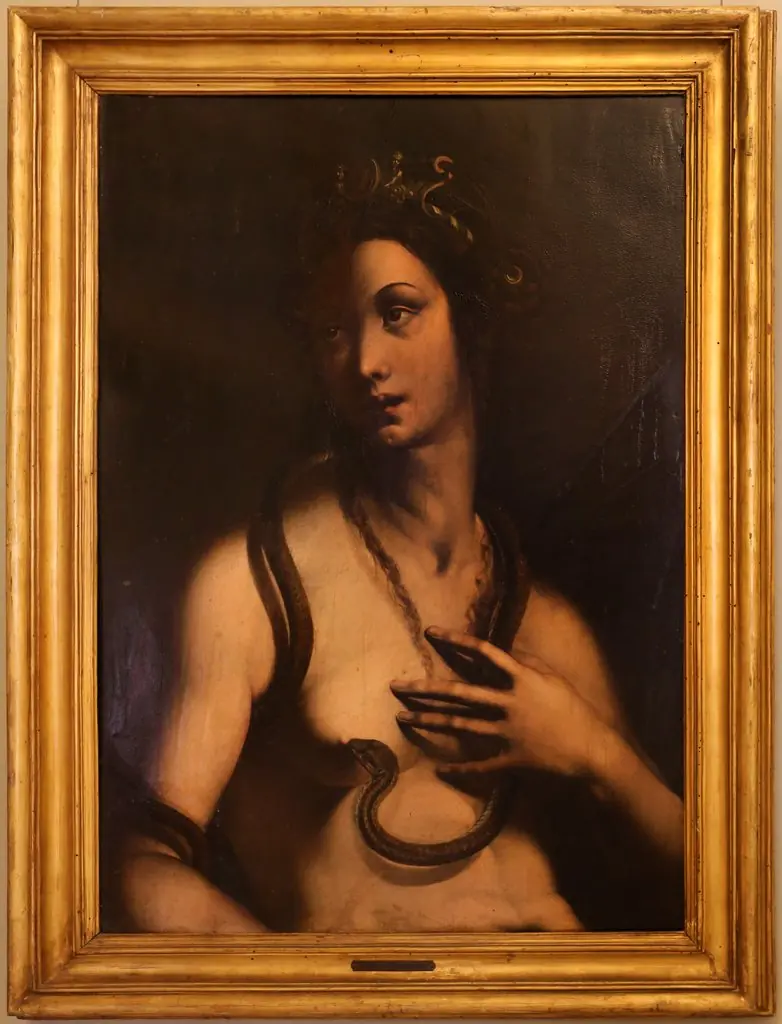
Cleopatra is an oil painting by the Early Baroque Italian artist Leonardo da Pistoia. It is held in the collection of the Galleria Borghese.
About this work
Overview
Painted in 1600 by Leonardo da Pistoia, this slate portrait portrays Cleopatra in a moment of stillness. The work is held in the Galleria Borghese in Rome. Rendered in a muted palette against a deep background, the figure commands attention through her composed demeanor and the subtle presence of a serpent coiled along her arm and torso.
Subject & Meaning
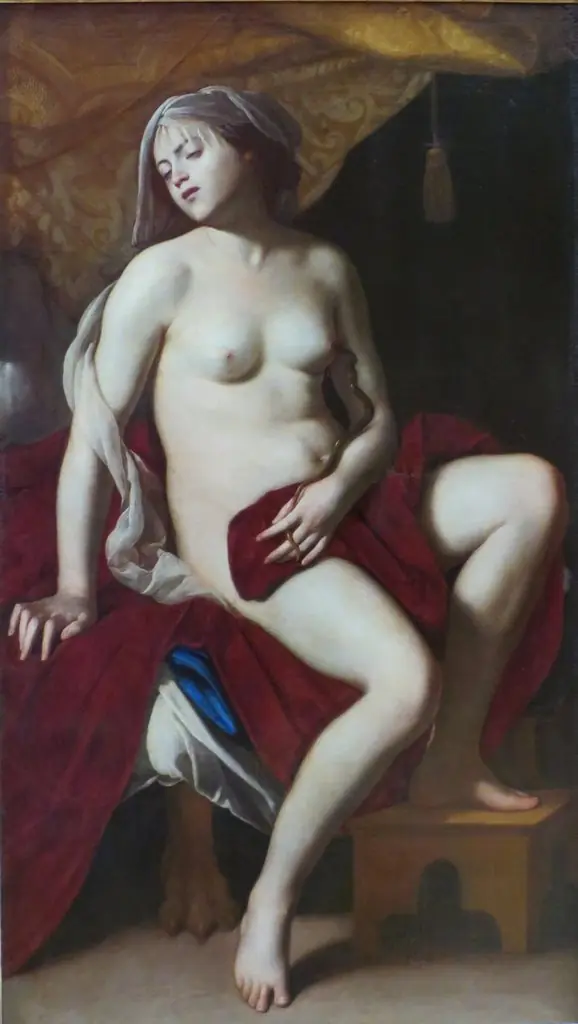
The figure is identified as Cleopatra, the last active ruler of Ptolemaic Egypt. Her bare torso and the serpent suggest the moment of her death, traditionally associated with an asp’s bite. The calm expression and controlled gesture imply acceptance rather than agony, transforming the snake from a symbol of threat into an instrument of agency and quiet resignation.
Technique & Style
Executed on slate, the medium lends a cool, smooth surface that enhances the luminosity of the skin against the dark ground. The artist employs soft modeling to define the figure’s form, with minimal detail in the background to isolate the subject. The snake’s scales are rendered with delicate precision, reinforcing its intimate connection to the body.
History & Provenance
The painting entered the Borghese collection in the early 17th century, likely acquired during the cardinal’s active patronage of art. It was long attributed to Leonardo da Vinci before being reassigned to Leonardo da Pistoia, a lesser-known Mannerist painter active in central Italy. Its attribution and subject were clarified through 20th-century scholarship.
Context
Depictions of Cleopatra’s death were rare in early 17th-century Italian art, which favored dramatic or moralizing narratives. This work’s restraint aligns with Mannerist tendencies toward psychological nuance and ambiguity. The choice of slate, uncommon for portraiture, may reflect a desire for durability or a reference to ancient Roman funerary slabs.
Legacy
The painting remains one of the few known works by Leonardo da Pistoia. Its quiet intensity has influenced later interpretations of Cleopatra in visual culture, particularly those emphasizing introspection over spectacle. It stands as a testament to the period’s interest in mythic figures rendered with psychological depth rather than grandeur.
Own this work as a print
Artist & collection