Artwork
Case din Sighișoara
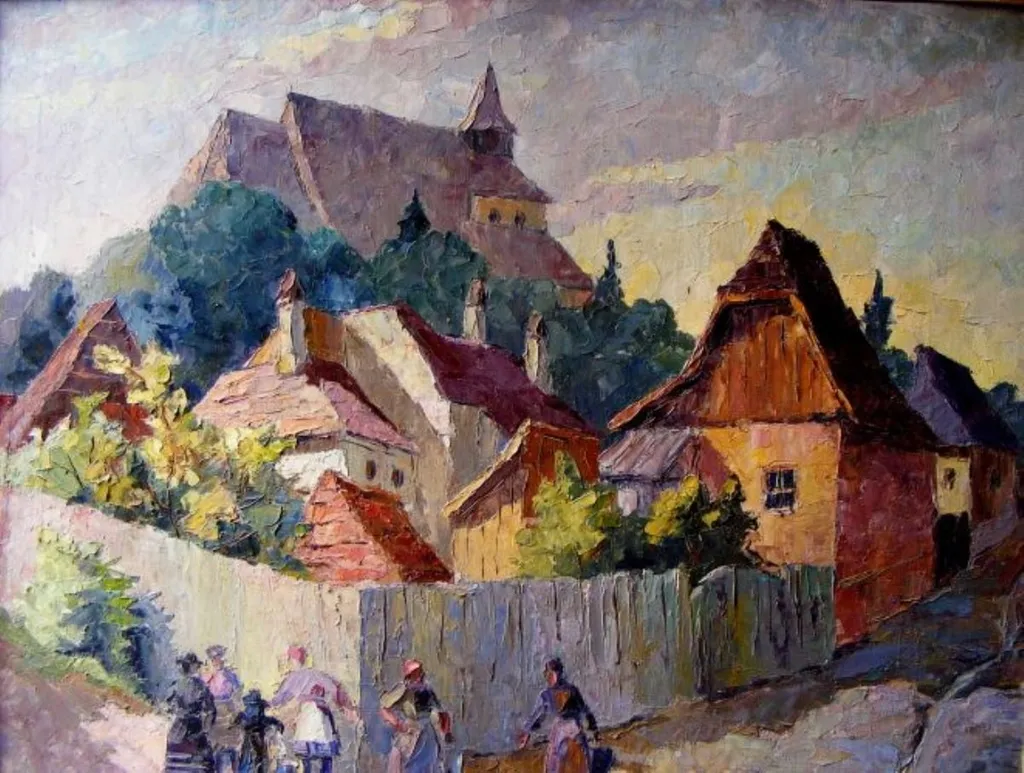
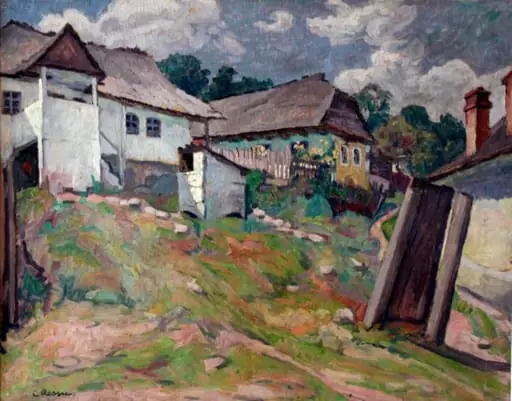
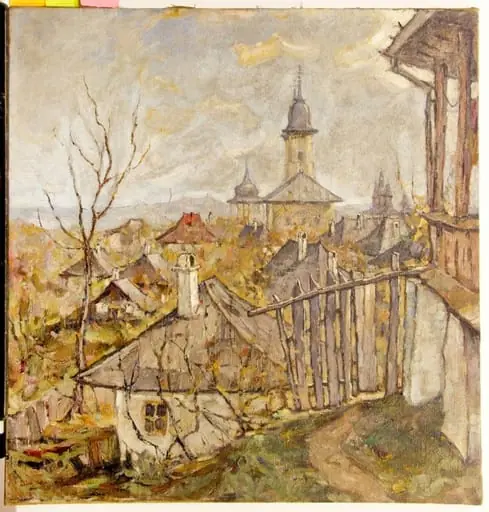
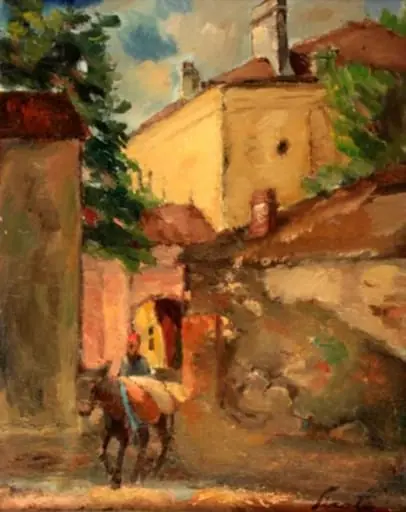
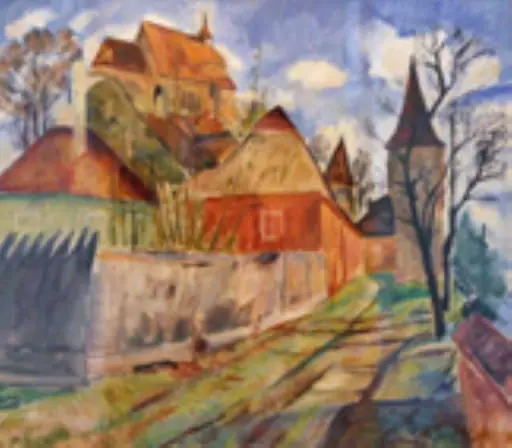
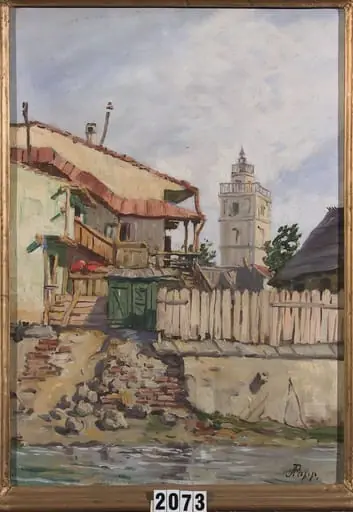
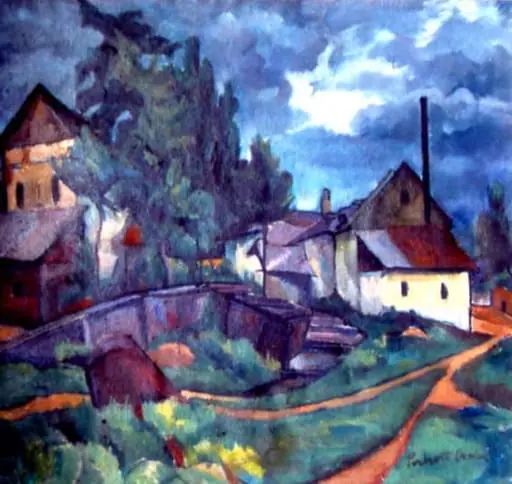
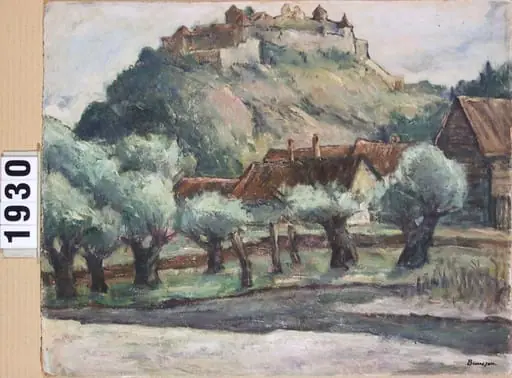
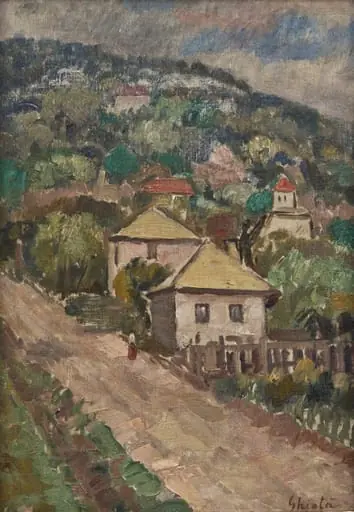
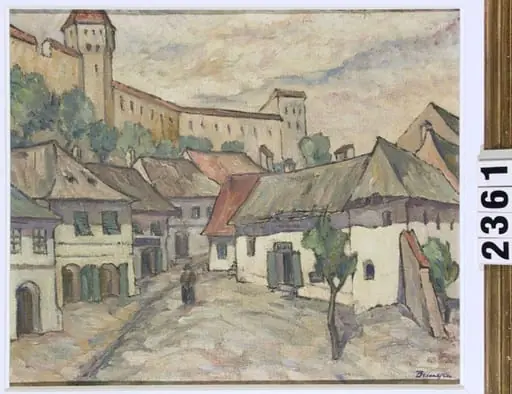
Case din Sighișoara is an unspecified painting by the Social Realist artist Carol Hübner. It dates from 1958 and is held in the collection of the Székely National Museum.
About this work
Overview
Created in 1958 by Romanian artist Carol Hübner, this oil painting depicts a quiet village scene in Sighișoara. It is part of the permanent collection at the Museum of Ethnography, where it contributes to documentation of Transylvanian rural life in the mid-20th century. The work captures everyday activity against a backdrop of architectural and natural elements characteristic of the region.
Subject & Meaning
The absence of dramatic action conveys a sense of continuity and quiet dignity in daily life, reflecting Hübner’s interest in unidealized rural existence.
The painting portrays villagers moving along a path, some carrying baskets, suggesting routine labor or market travel. A prominent church with a tall steeple anchors the composition, symbolizing the spiritual and communal center of the settlement. The absence of dramatic action conveys a sense of continuity and quiet dignity in daily life, reflecting Hübner’s interest in unidealized rural existence.
Technique & Style
Hübner employed visible, deliberate brushwork to render textures of stone, wood, and foliage. Colors are subdued yet rich, earthy ochres, muted greens, and soft grays, creating a harmonious palette that avoids artificial brightness. The light appears natural, diffused, and gently directional, enhancing the sense of stillness and atmospheric depth without theatrical effect.
History & Provenance
The painting entered the Museum of Ethnography’s collection shortly after its completion, likely through institutional acquisition or donation. Hübner, active in Romanian cultural circles during the 1950s, produced several works documenting regional architecture and folk life, many of which were preserved for their ethnographic value rather than commercial appeal.
Context
In postwar Romania, artists like Hübner turned to rural subjects as part of a broader cultural effort to document national heritage amid rapid urbanization. Sighișoara, a historic Saxon town, offered a well-preserved example of medieval settlement patterns. Hübner’s approach avoided romanticism, instead focusing on the material and social realities of village life.
Legacy
Though not widely exhibited beyond institutional settings, the painting remains a reference point for studies of Romanian regional art and ethnographic representation. Hübner’s restrained style and commitment to observational accuracy influenced later generations of artists interested in documenting vernacular landscapes without embellishment.
Artist & collection
Artist
Carol Hübner painted cityscapes of Sighișoara in the mid-20th century. In "Case din Sighișoara" (1958), they captured the medieval citadel’s tight lanes and pastel houses bathed in Transylvanian light. Though details…