Artwork
Tulip
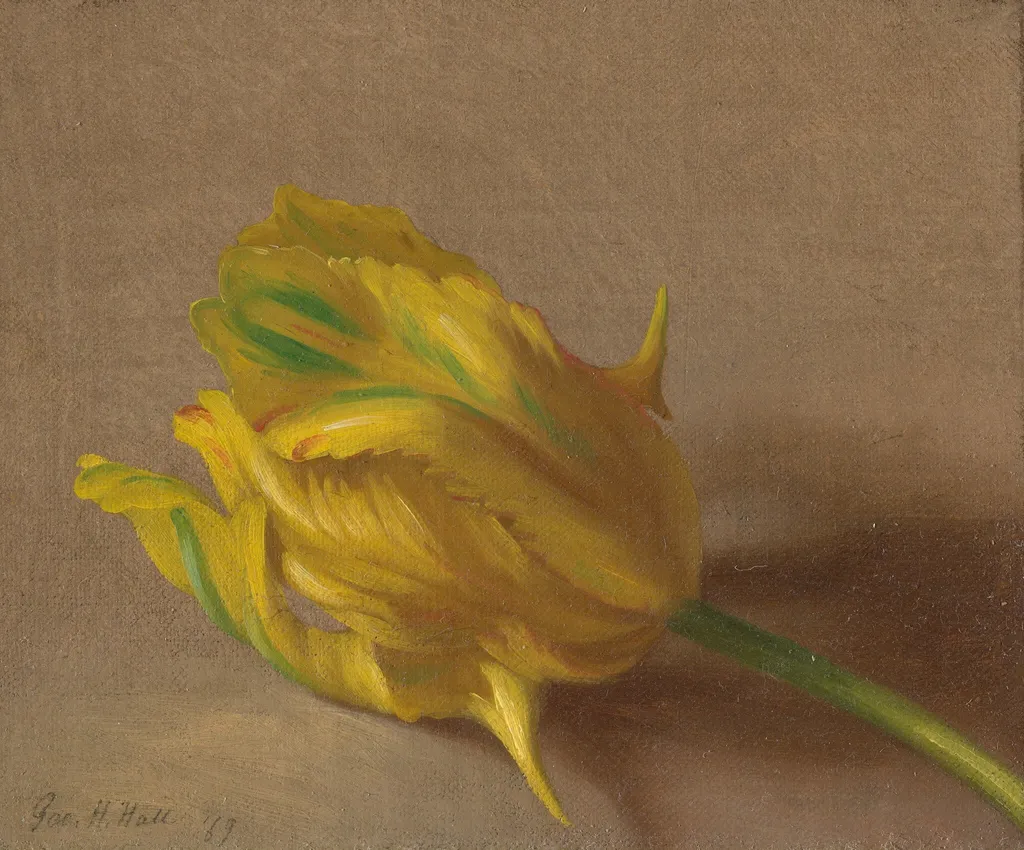
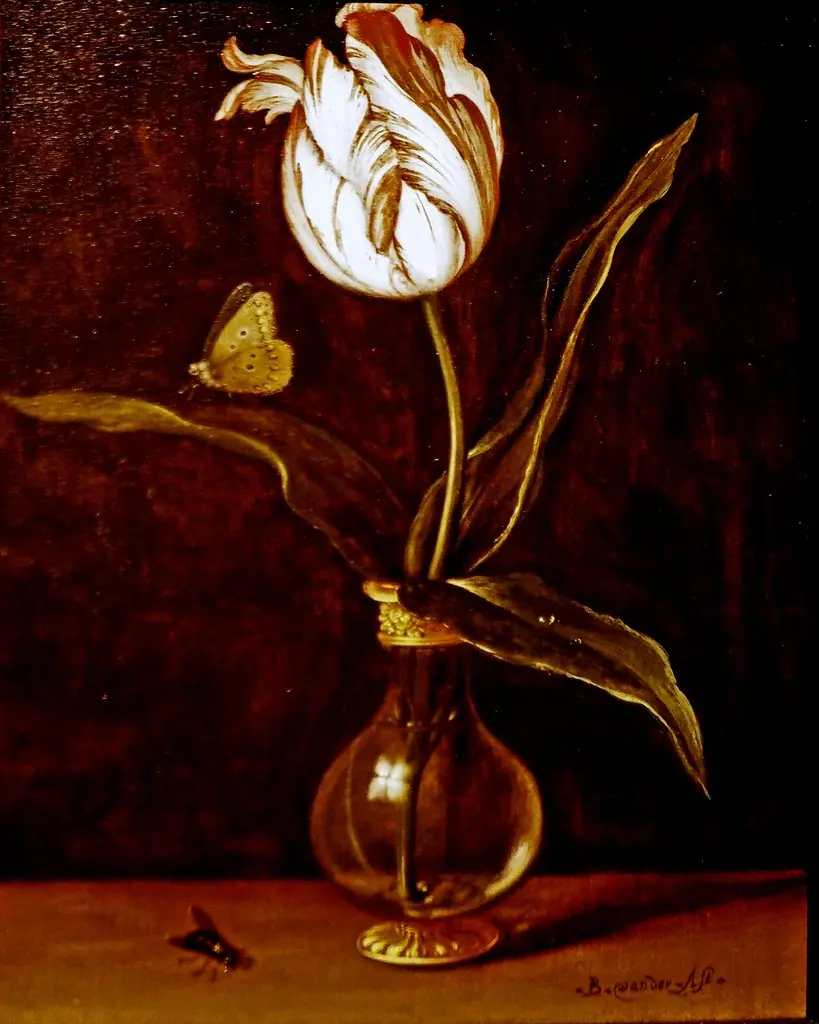
Tulip is an oil painting by the Impressionist artist George Henry Hall. It dates from 1869 and is held in the collection of the National Gallery of Art.
- Inscription
- Inscribed:lower left: Geo. H. Hall '69
About this work
Subject & Meaning
The painting depicts a single tulip blossom, a motif that in 19th-century American art often symbolized refined beauty and the fleeting nature of life.
The painting depicts a single tulip blossom, a motif that in 19th-century American art often symbolized refined beauty and the fleeting nature of life. Hall's precise rendering emphasizes the flower's delicate form and subtle coloration, reflecting the artist's interest in botanical accuracy and the quiet dignity of everyday subjects. The work is part of the National Gallery of Art's collection in Washington, D.C., where it has been held since its 2018 donation.
Technique & Style
Executed in 1869, this work is an oil painting applied to a wood support. The composition measures 13.65 cm in height and 16.51 cm in width. Historical records indicate the piece underwent conservation treatment during 1990 or 1991 while in the possession of William H. and Abigail Booth Gerdts, prior to its eventual gift to the National Gallery of Art.
History & Provenance
George Henry Hall executed the oil painting Tulip on a wood panel in 1869. The work's modern ownership history begins with the Spanierman Gallery in New York, from which it was acquired by collectors William H. and Abigail Booth Gerdts. Documentation indicates the Gerdts family obtained the piece by 1990 or 1991, a period during which the painting also underwent conservation treatment.
The couple retained the artwork for nearly three decades before presenting it as a gift to the National Gallery of Art in Washington, D.C., in 2018.
The painting is held by the National Gallery of Art, Washington, D.C., where it entered the collection in 2018 as a gift from William H. and Abigail Booth Gerdts. Its accession number is 2018.10.1.
It was previously in the Gerdts collection by 1990/1991, having been acquired from the Spanierman Gallery in New York. Conservation treatment was carried out in 1990/1991.
Overview
George Henry Hall’s 1869 work Tulip is an oil painting executed on a wooden panel. The composition presents a solitary yellow tulip with subtly striped petals, set against a muted brown ground. The flower occupies a slightly off‑center position, drawing the viewer’s eye to its delicate form without any surrounding objects or background details.
Context
Tulip belongs to the realist movement that sought accurate, unembellished representation of ordinary subjects. Hall’s focus on a single flower parallels contemporary still‑life trends that valued close observation over idealization, situating the work within a broader 19th‑century shift toward depicting the tangible world with precision.
Own this work as a print
Artist & collection

Artist
George Henry Hall (1825–1913) was an American still-life and landscape artist. He studied art in Düsseldorf and Paris and he worked and lived in New York City, the Catskills of New York and in Europe. His works are in…