Artwork
Pupăză zburând
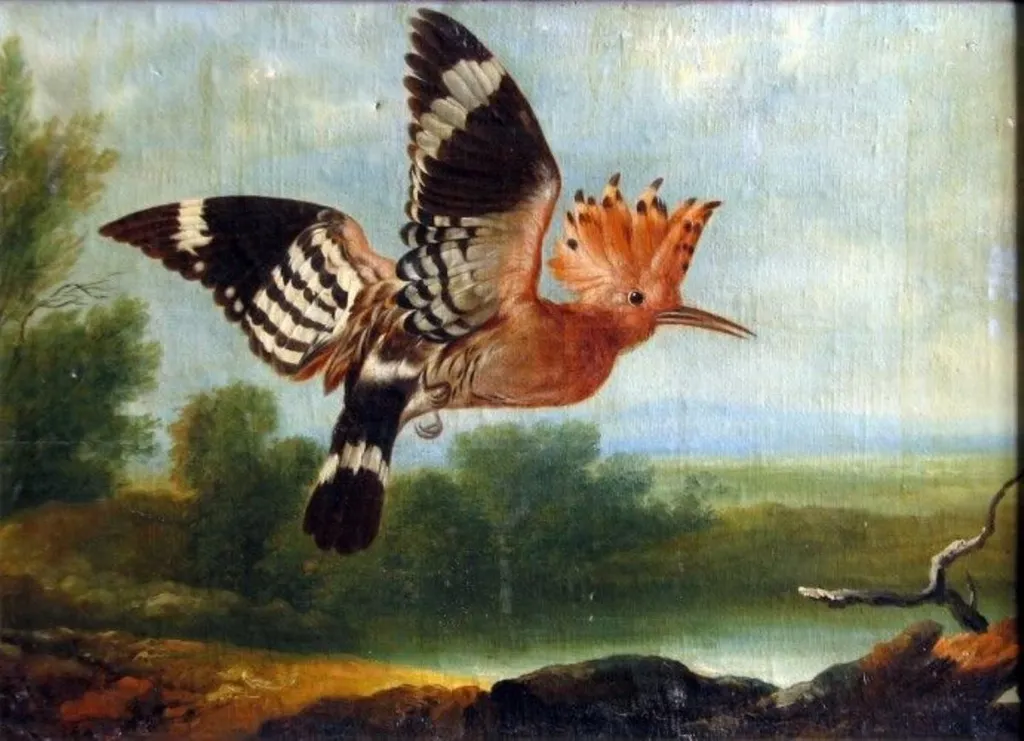
Pupăză zburând is an unspecified painting by the Baroque artist Hamilton. It dates from 1699 and is held in the collection of the Brukenthal National Museum.
About this work
Overview
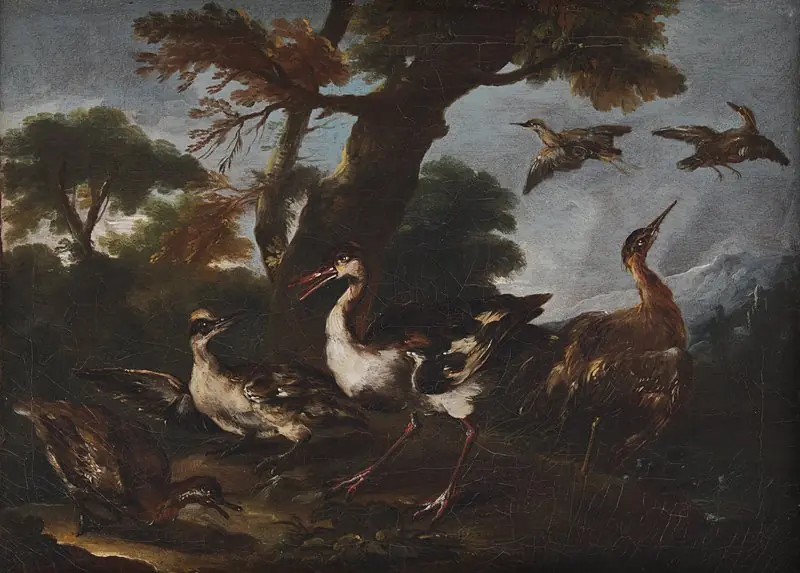
Pupăză zburând, attributed to Hamilton and dated to around 1699, presents a solitary bird captured in the act of flight. The composition places the avian figure against a sky‑filled backdrop punctuated by distant trees, emphasizing the open, natural environment in which the scene unfolds.
Subject & Meaning
The central figure is a bird with outstretched wings, a long downward‑pointing beak, and a crest of distinctive feathers on its head. Its plumage combines brown, black, and white tones, suggesting a species adapted to varied habitats. The dynamic pose conveys a sense of motion and vitality, inviting viewers to contemplate the fleeting nature of flight.
Technique & Style
Hamilton renders the bird with careful attention to feather texture, using contrasts of light and shadow to model form. The background sky is rendered in a clear blue, while the trees are suggested with looser brushwork, creating depth without detracting from the central figure. The overall effect balances detail with a sense of atmospheric space.
History & Provenance
Created circa 1699, Pupăză zburând belongs to the late 17th‑century period of Hamilton’s output. The work’s provenance prior to its current location is not documented in the available sources, and no further exhibition history is recorded.
Artist & collection
Artist
This 18th-century artist left behind playful scenes of birds and colonial encounters.

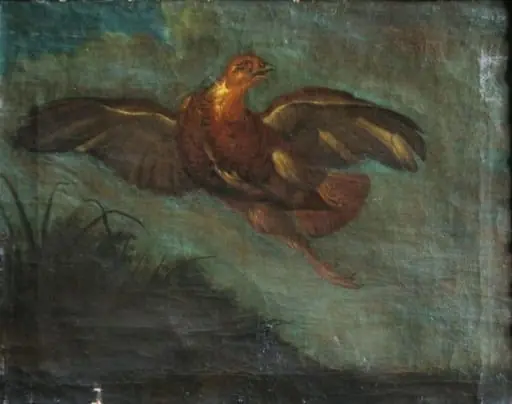
- Potârniche zburând ; pandant: Potârnichi speriate
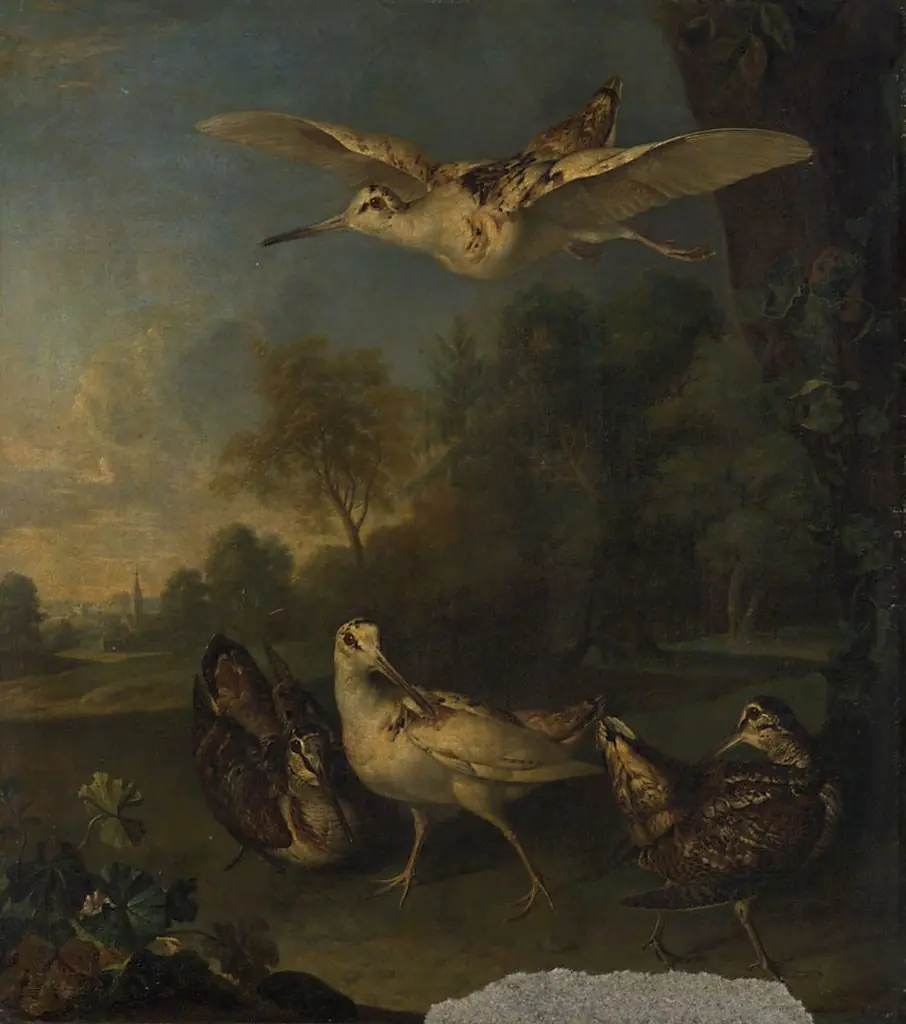 Weisse und braune Schnepfen
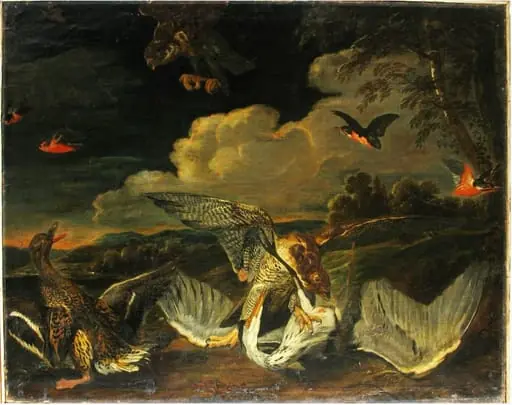 Vânătoare de bâtlani
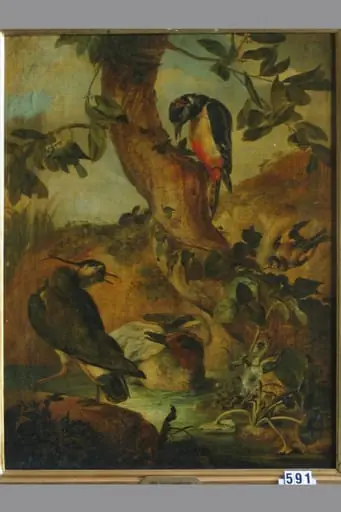 Ghionoaie și rață sălbatică (în Registrul inventar: Gheonoaie și rață sălbatică). Pandant: Șorecar și pițigoi albastru
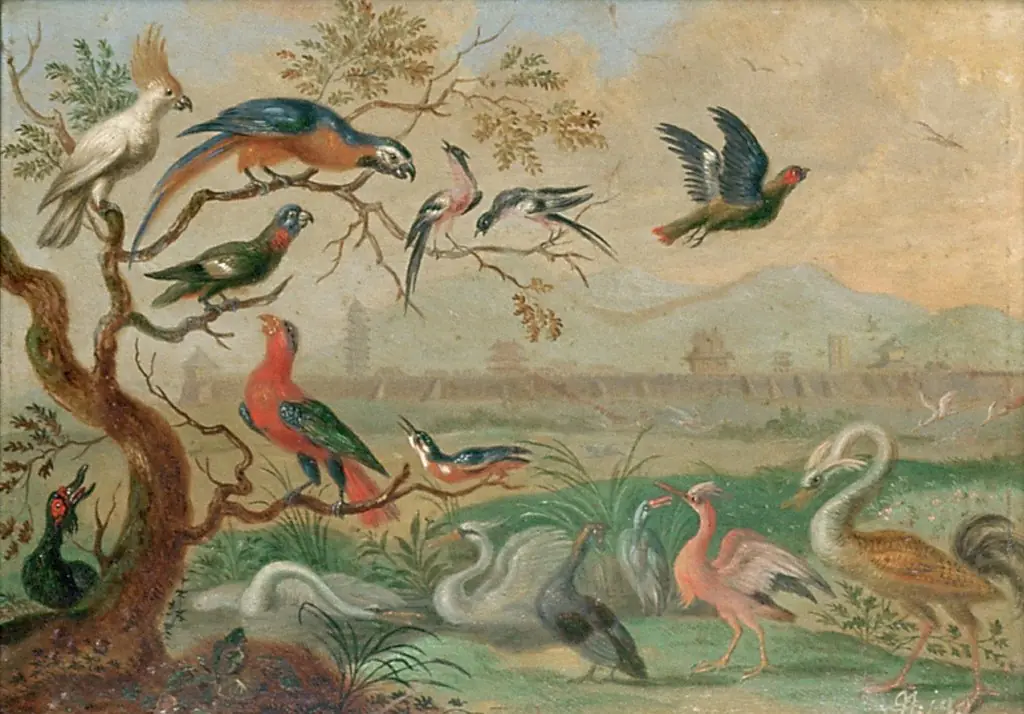 Ansichten aus den vier Weltteilen mit Szenen von Tieren: Peking
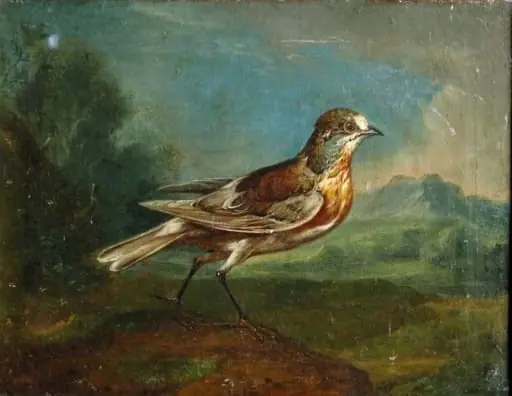 Cintezoi ; pandant: Canar
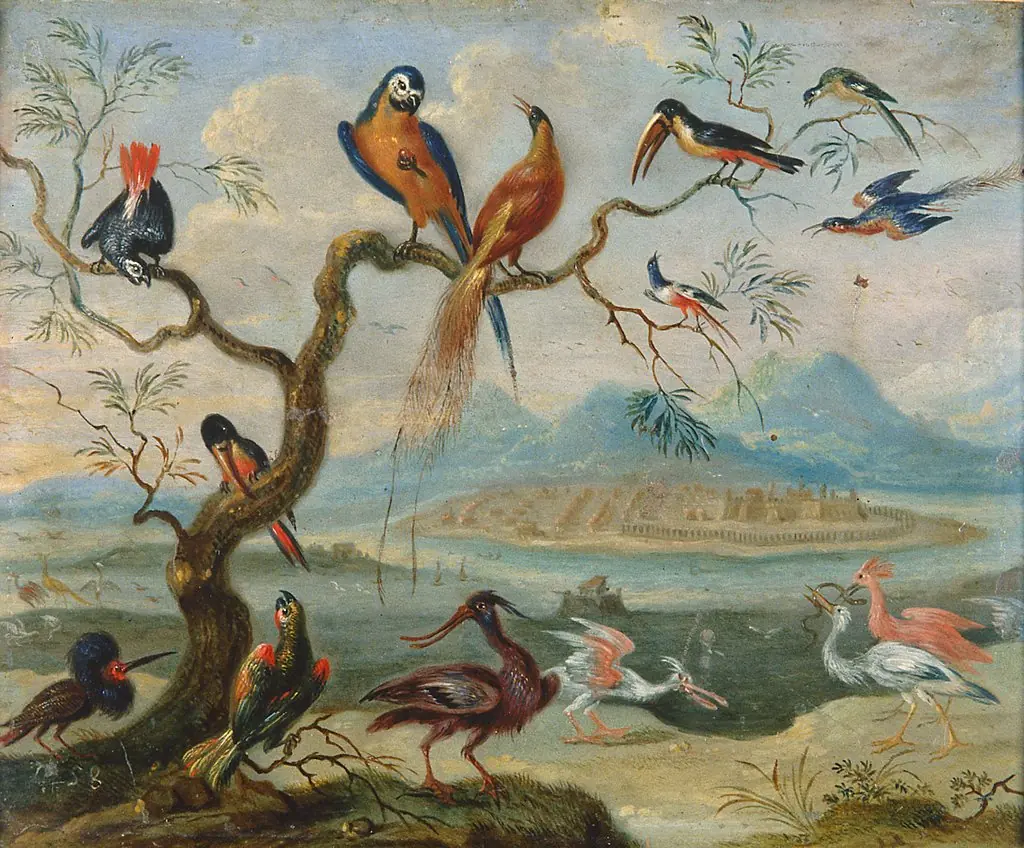 Ansichten aus den vier Weltteilen mit Szenen von Tieren: St. Merryn
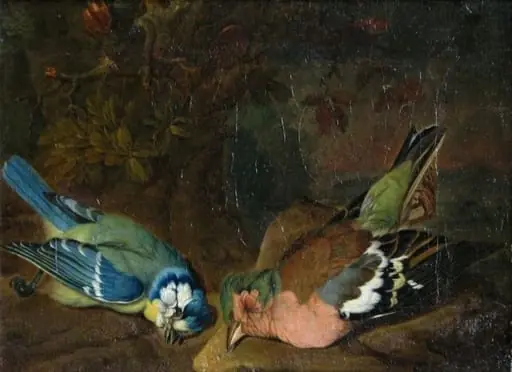 Pițigoi și cintezoi
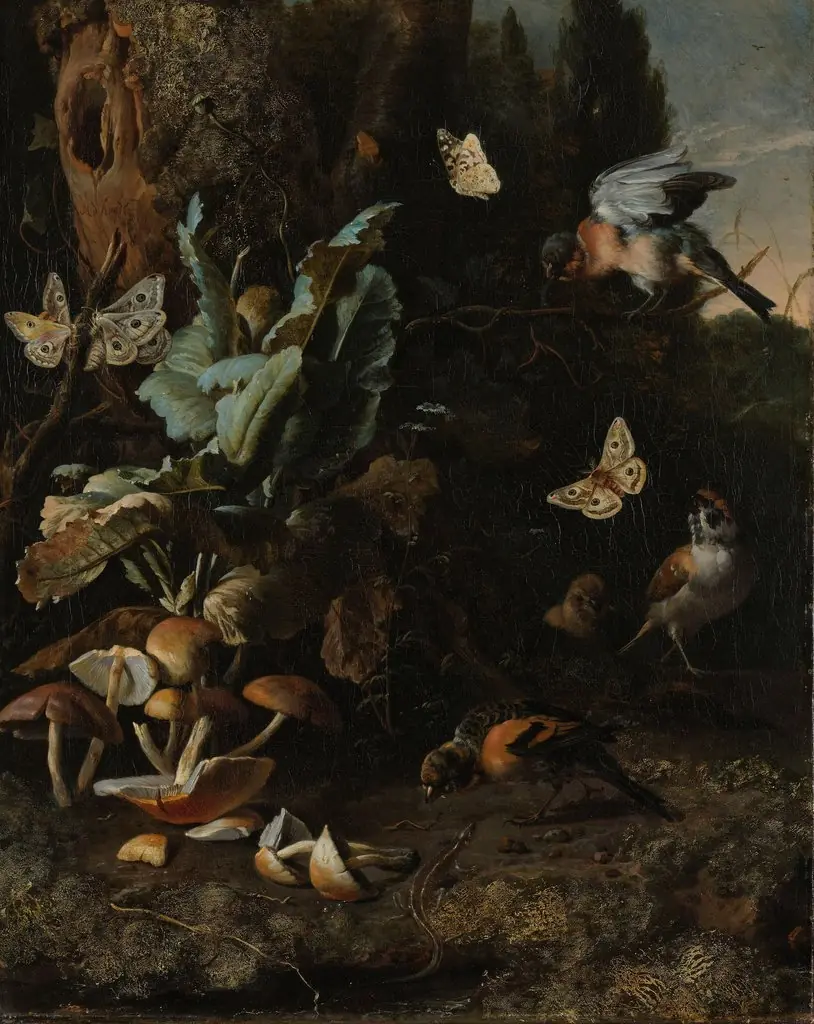 Animals and plants
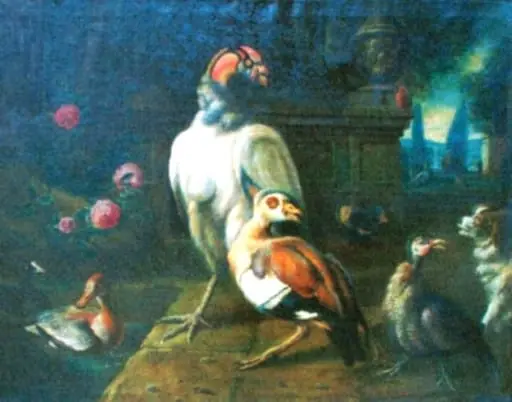 Păsări de curte
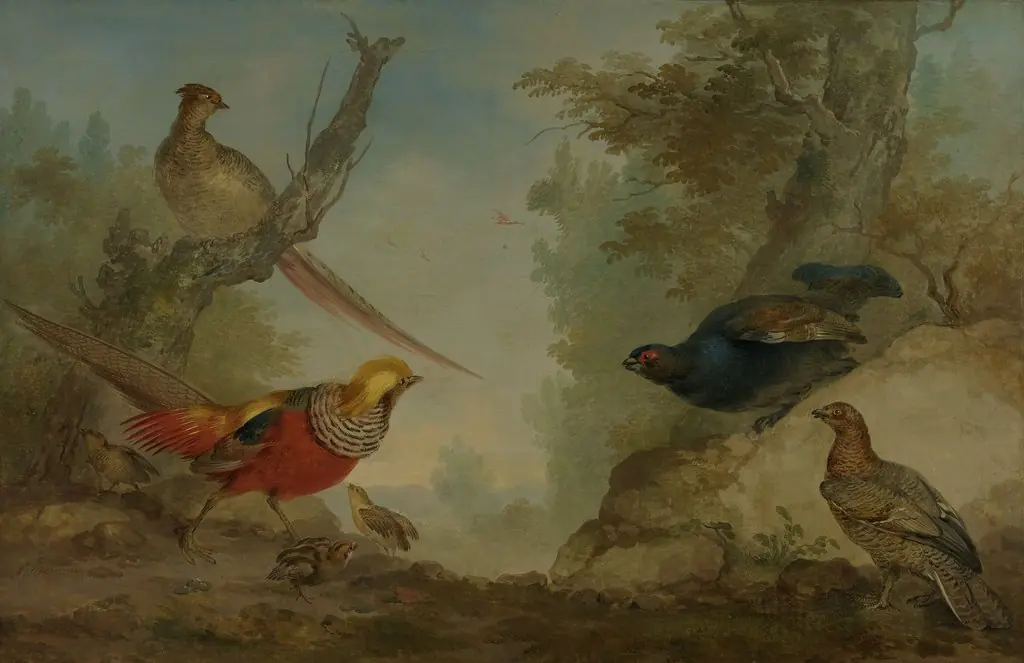 Pheasants
 Landscape with Birds