Artwork
唐 韓幹 照夜白圖 卷|Night-Shining White
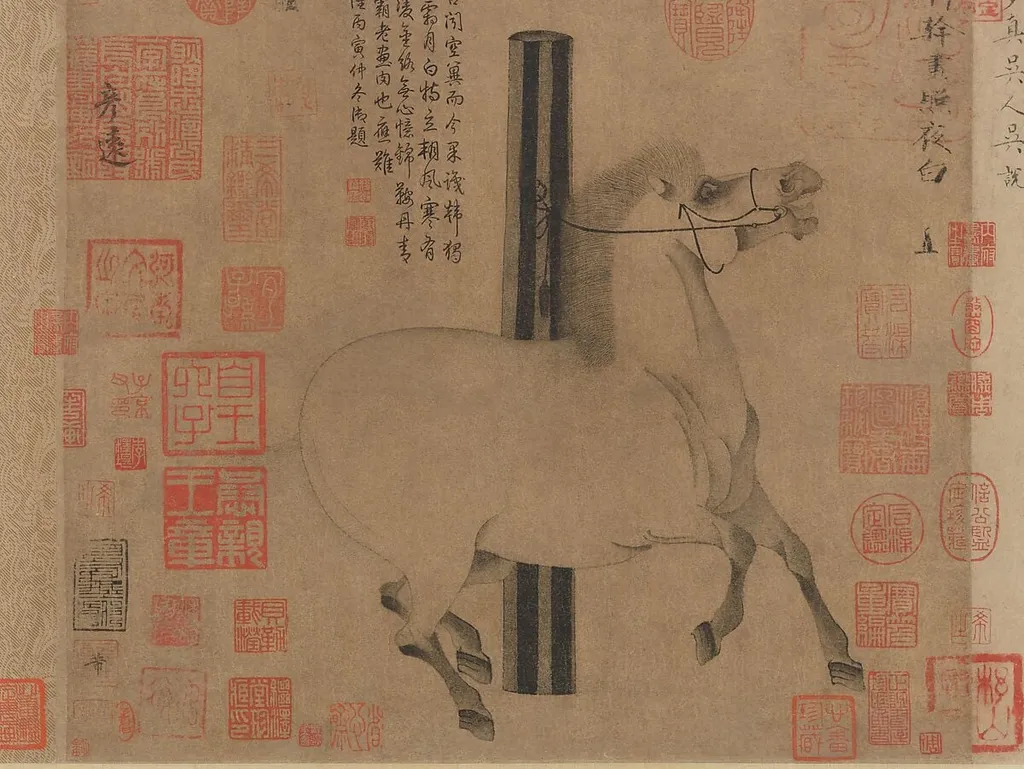
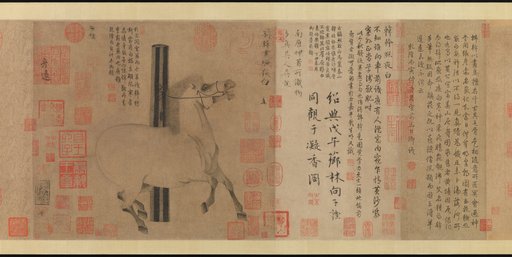
唐 韓幹 照夜白圖 卷|Night-Shining White is an ink painting by the Tang dynasty painting artist Han Gan. It dates from 750 and is held in the collection of the Metropolitan Museum of Art.
About this work
Subject & Meaning
The work depicts Night-Shining White, a celebrated cavalry horse belonging to Emperor Xuanzong of the Tang dynasty, shown tethered to a post.
The work depicts Night-Shining White, a celebrated cavalry horse belonging to Emperor Xuanzong of the Tang dynasty, shown tethered to a post. As a monochrome ink-on-paper portrait, it transcends mere physical representation to embody the fiery temperament of a mythical celestial steed, often interpreted as a dragon in disguise. The horse features exaggerated proportions, including a round body and thin legs, alongside anthropomorphic traits such as burning eyes and flaring nostrils that convey a sense of restless energy and a plea for compassion.
Beyond its status as an imperial animal portrait, the image carries complex symbolism: while it initially represented Chinese military strength and imperial power, the horse's struggle against its bonds also foreshadows the peril facing the emperor, who was later deposed due to neglecting his duties. Thus, the painting captures both the grandeur and the tragic vulnerability of the Tang court.
Technique & Style
The painting is executed in monochrome ink on paper, mounted as a handscroll, exemplifying the bai hua (white painting) tradition of Tang-dynasty figure painting. Han Gan employs a controlled, calligraphic brush to render the horse with minimal line and subtle shading, avoiding color while sustaining expressive force. The composition isolates the animal against an empty ground, tethered to a post and captured in a moment of restless tension, its flaring nostrils, wide eyes, and dancing hoofs conveyed through abbreviated yet descriptive strokes.
Proportions are deliberately exaggerated, short, slender legs supporting a full, rounded body, conforming to the idealized, mythic type of the fiery-tempered celestial steed rather than strict anatomical realism. The horse’s gaze, directed toward the viewer, lends a humanized pathos within the restrained idiom of Tang ink.
History & Provenance
Night-Shining White was created by Han Gan in the mid-8th century, circa 750, by order of Emperor Xuanzong of the Tang dynasty, as part of a series of portraits of famous imperial horses. The work is unsigned by the artist, but its subsequent ownership is documented through numerous seals, inscriptions, and signatures accumulated over roughly 1,200 years. Among the notable collectors whose marks appear on the scroll are the Southern Tang emperor Li Yu, the Song dynasty theorist Mi Fu, and the Qianlong Emperor.
The original painting, approximately 30 cm square, was later remounted onto a handscroll approximately 6.1 meters long to accommodate these added inscriptions and seals. The painting subsequently entered the collection of Sir Percival David before being acquired by the Metropolitan Museum of Art in 1977, funded by the Dillon Fund.
The handscroll 'Night-Shining White' is held in the collection of the Metropolitan Museum of Art in New York. The museum acquired the work in 1977 through a purchase funded by the Dillon Fund, following its previous ownership by Sir Percival David. While specific inventory numbers are not detailed in the provided texts, the acquisition date and funding source are well-documented.
The physical format of the piece evolved over time; the original drawing, measuring approximately 30 cm square, was later mounted onto a handscroll extending roughly 6.1 meters in length to accommodate numerous inscriptions and collector seals added over twelve centuries. These markings include impressions from notable historical figures such as the Southern Tang emperor Li Yu, the Song theorist Mi Fu, and the Qianlong Emperor, evidencing its provenance through various private and imperial collections prior to entering the Metropolitan Museum.
Context
Critical scholarship regards the handscroll as a hallmark of Tang equine portraiture, noted for its monochrome bai‑hua style and its blend of observational detail with mythic symbolism. Art historians observe that Han Gan’s ability to convey a horse’s character, rather than strict anatomical accuracy, distinguishes Chinese animal depiction from European naturalism. The work is understood as part of an imperial series of horse portraits commissioned by Emperor Xuanzong, of which only copies survive;.
Its provenance through multiple imperial and private owners, marked by seals of Li Yu, Mi Fu and Qianlong, illustrates a continuous collecting tradition. Modern studies question the long‑held attribution to Han Gan, labeling it “improbable” and suggesting a later production.
Legacy
Night-Shining White is widely regarded as one of the greatest equine portraits in Chinese painting history. Although Han Gan was celebrated in his lifetime for capturing both the physical form and spirit of horses, few of his original works survive; this piece is known largely through its influence on subsequent copies made over the centuries. The painting's legacy is physically manifested in the extensive handscroll mounting, which expanded from a small square drawing to over six meters to accommodate inscriptions and seals from prominent later owners, including Emperor Li Yu, critic Mi Fu, and the Qianlong Emperor.
These additions document twelve centuries of prestigious provenance. Interpretatively, the work has evolved from a simple animal portrait into a complex emblem of Tang imperial power and military strength, while simultaneously serving as a cautionary symbol of the peril facing Emperor Xuanzong due to his neglect of duty. Its acquisition by the Metropolitan Museum of Art in 1977 further cemented its status in global art history.
Overview
Han Gan's "Night-Shining White" is a mid-8th century Tang dynasty handscroll, rendered in ink on paper. It portrays a tethered cavalry horse belonging to Emperor Xuanzong, captured with dynamic brushwork. This work is recognized as a significant example of equine portraiture within Chinese painting, showcasing the artist's skill in depicting animal vitality. It joined the Metropolitan Museum's collection in 1977.
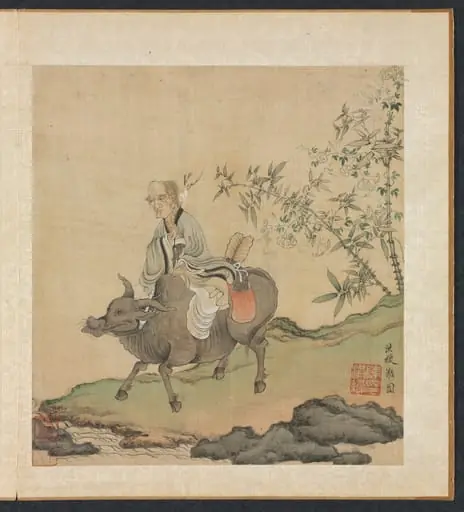
Artist & collection
Artist
Han Gan spent his life in Chang’an, the bustling capital of the Tang dynasty. He was the go-to artist when the emperor needed a horse that looked alive enough to gallop off the wall. Ever wonder why Tang horses feel…

- Paintings after Ancient Masters: Laozi Riding an Ox
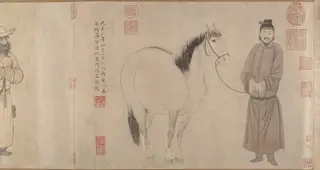 元 趙孟頫 趙雍 趙麟 吳興趙氏三世人馬圖 卷|Grooms and horses
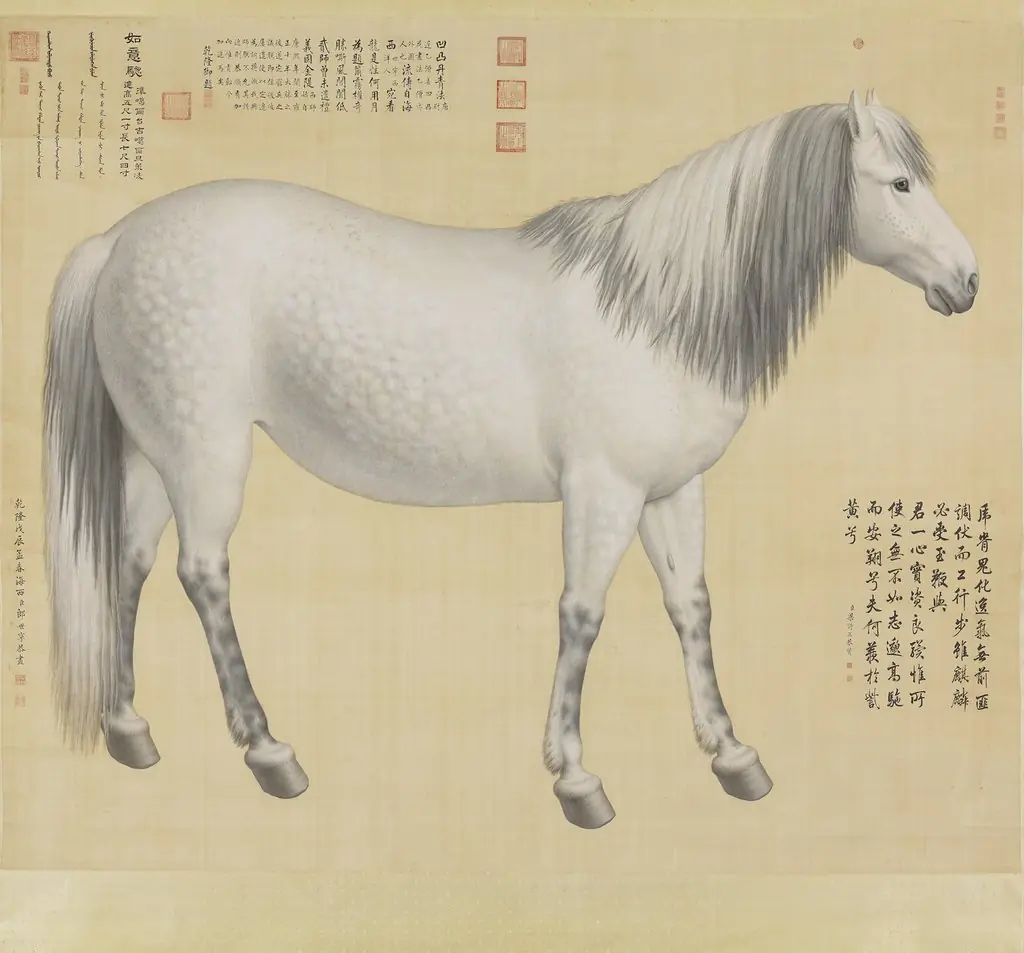 "As-You-Wish" Piebald
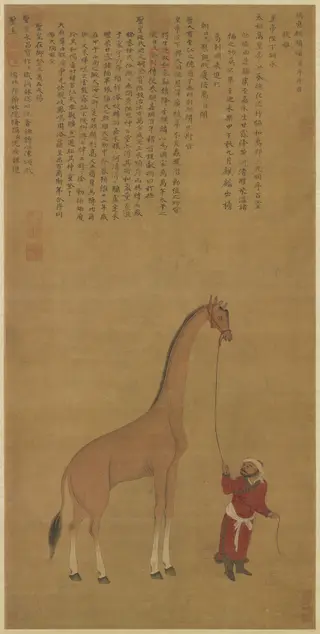 Shen Tu's Ode on a Painting of ch'i-lin/Giraffe
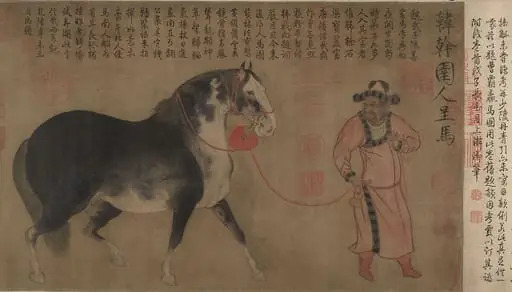 明 佚名 舊傳韓幹 圉人呈馬圖 卷|Horse and groom
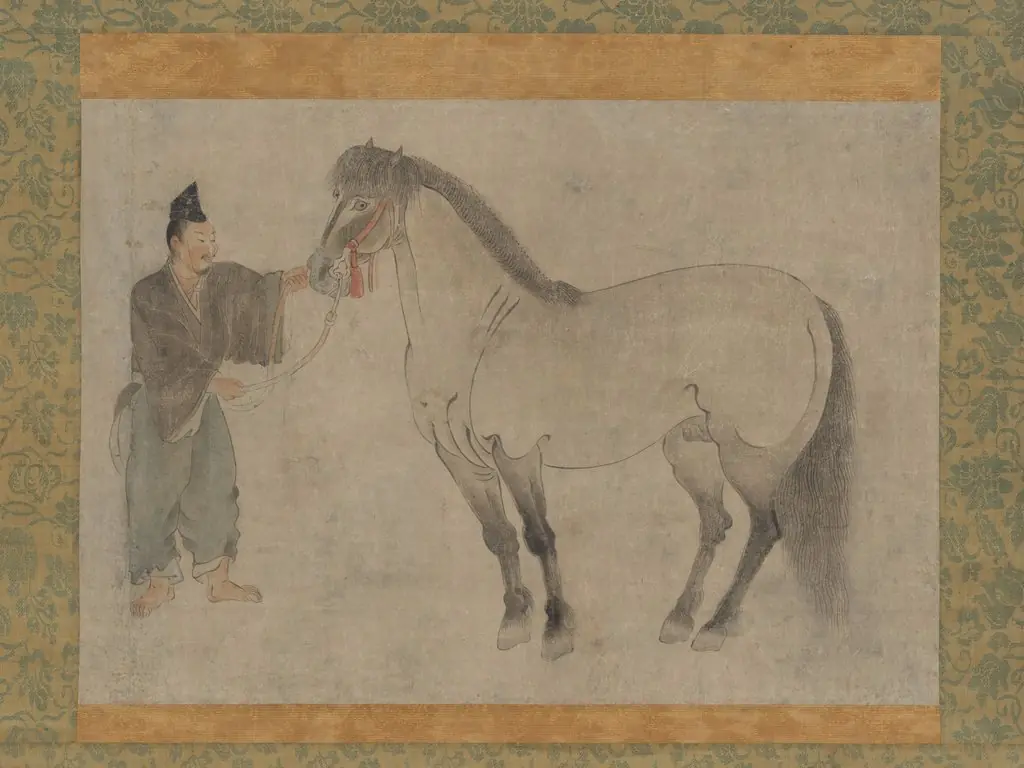 Horse and Groom
 Three Horses and Four Grooms
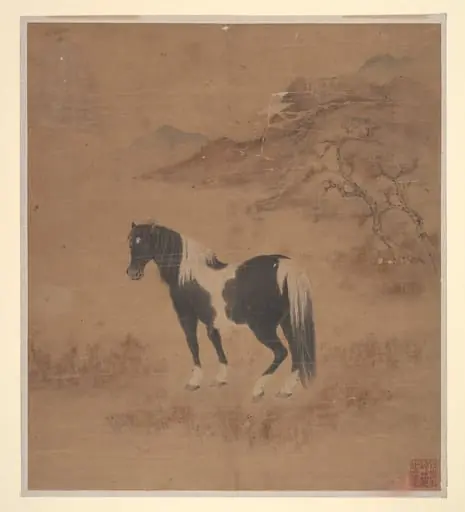 Untitled
 Untitled
 明 佚名 柳馬圖 冊頁|Horse and Willow Tree
 明/清 佚名 舊傳陸青 洗馬圖 冊頁|Washing a Horse
 Untitled