Artwork
明 佚名 舊傳韓幹 圉人呈馬圖 卷|Horse and groom
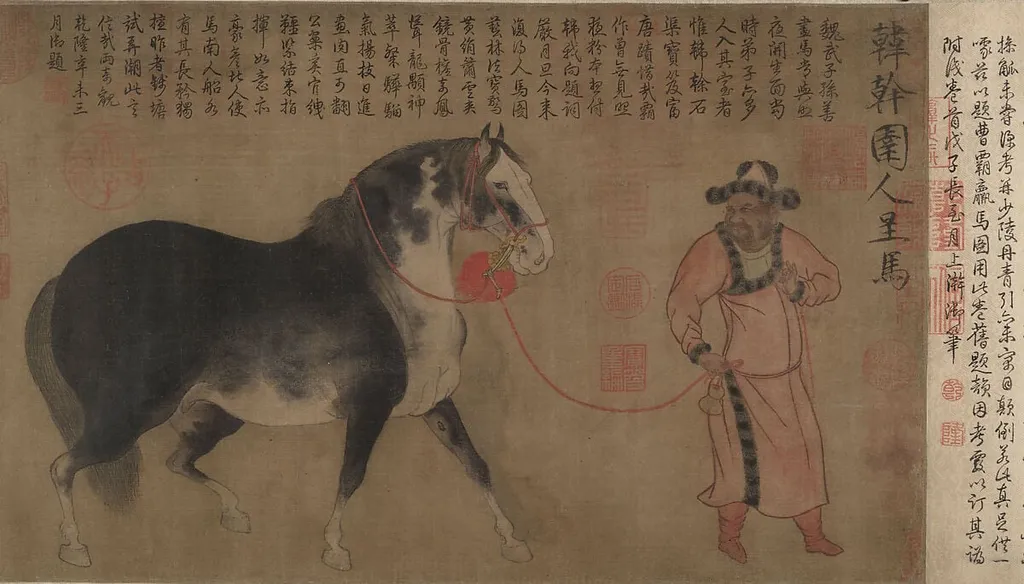
明 佚名 舊傳韓幹 圉人呈馬圖 卷|Horse and groom is an ink painting. It dates from 1550 and is held in the collection of the Metropolitan Museum of Art. The work is a hand‑scroll painted on silk with ink and color, depicting a groom leading a white horse.
About this work
Subject & Meaning
The composition centers on the interaction between the human attendant and the equine subject, a pairing that has long been a favored theme in Chinese painting.
The handscroll presents a genre scene in which a man, identified by the Chinese title as a 圉人 (yǔrén), or groom/stable hand, is shown presenting or tending to a horse. The composition centers on the interaction between the human attendant and the equine subject, a pairing that has long been a favored theme in Chinese painting.
Such depictions of grooms with horses carried layered meanings. Horses were emblems of vitality, strength, and loyal service, while the groom's careful handling of the animal signaled the value placed on proper stewardship of prized steeds. Scenes of this kind often alluded to the ideal relationship between a worthy mount and a devoted caretaker, themes resonant in both courtly and literati traditions.
Rendered in ink and color on silk and dated to 1550, the work belongs to a Ming-dynasty lineage of horse-and-groom imagery traditionally associated with the earlier Tang master Han Gan, to whom the painting is ascribed by old attribution.
Technique & Style
The work is executed as a handscroll in ink and color on silk, a traditional East Asian painting format that allowed the image to be unrolled and viewed in sections. The dating places it in the mid-sixteenth century, and the medium and support are consistent with Chinese painting practice of that period, in which silk provided a smooth ground for fine brushwork and layered color washes.
Stylistically, the composition is a genre scene depicting a horse and a groom, rendered in the handscroll format suited to narrative or sequential viewing. The attribution to an anonymous painter, formerly associated with Han Gan, indicates that the work was produced in the tradition of horse painting rather than by the original master himself.
History & Provenance
The handscroll Horse and groom was created in China in 1550, during the Ming dynasty, and is attributed to an anonymous artist traditionally associated with Han Gan. It is executed in ink and color on silk and belongs to the genre of horse-and-groom paintings, depicting a man and a horse.
The work is held in the collection of the Metropolitan Museum of Art in New York, where it is classified as a genre scene. No accession number is provided in the available records, and no earlier ownership chain, prior collectors, or exhibition history is documented in the sources.
Overview
The work is a hand‑scroll painted on silk with ink and color, depicting a groom leading a white horse. The figure is dressed in plain robes, while the animal stands upright, ears alert and tail poised. The composition is rendered in a tidy brushstroke that reveals signs of age, including fine creases in the silk and evidence of an old repair.
Context
Hand‑scrolls of this type were commonly used for private viewing, allowing the audience to unroll the work sequentially. The depiction of a horse and its handler aligns with a broader Chinese interest in equine subjects, which served both practical and symbolic functions in court and scholarly circles.
Artist & collection

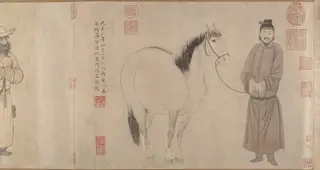
- 元 趙孟頫 趙雍 趙麟 吳興趙氏三世人馬圖 卷|Grooms and horses
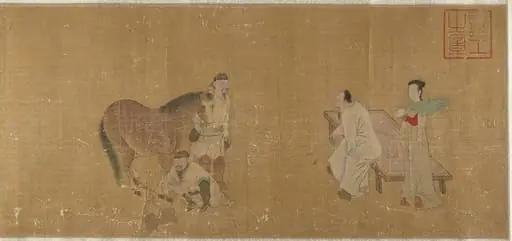 明/清 佚名 舊傳趙孟頫 相馬圖 卷|Judging a Horse
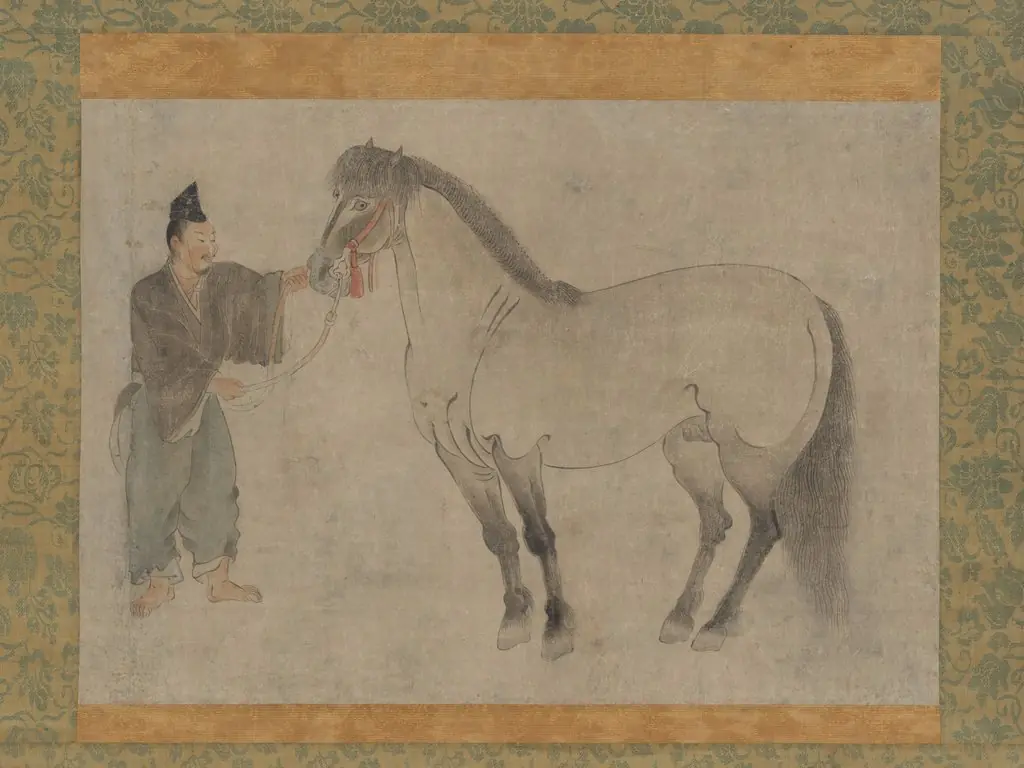 Horse and Groom
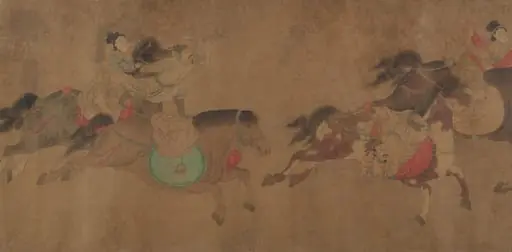 清 佚名 趙雍(僞款) 馬術圖 卷|Horsemanship demonstration
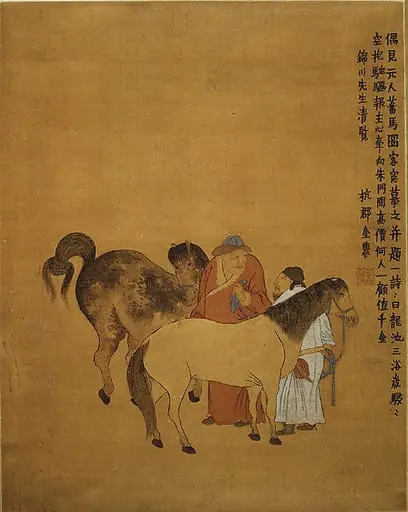 清 傳金農 番馬圖 軸|Grooms and Foreign Horses
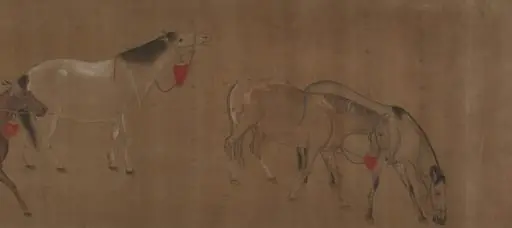 明 佚名 八駿圖 卷|Eight Horses
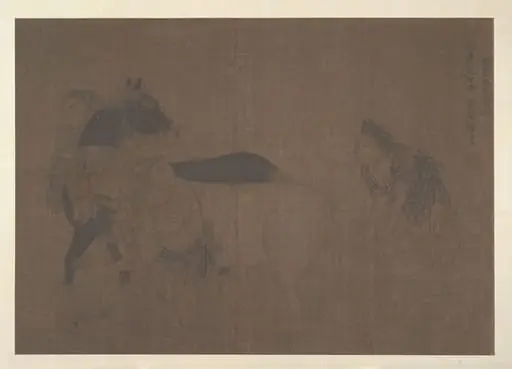 明/清 佚名 舊傳陸青 洗馬圖 冊頁|Washing a Horse
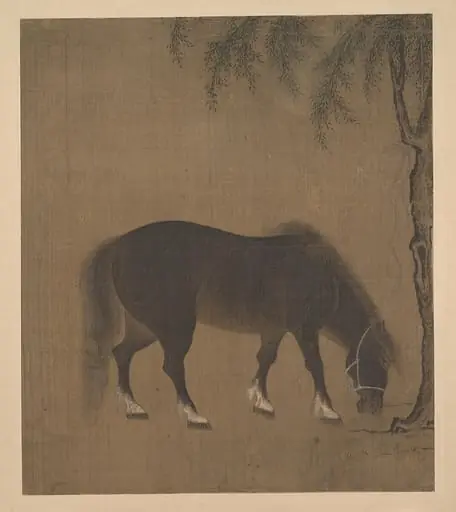 明 佚名 柳馬圖 冊頁|Horse and Willow Tree
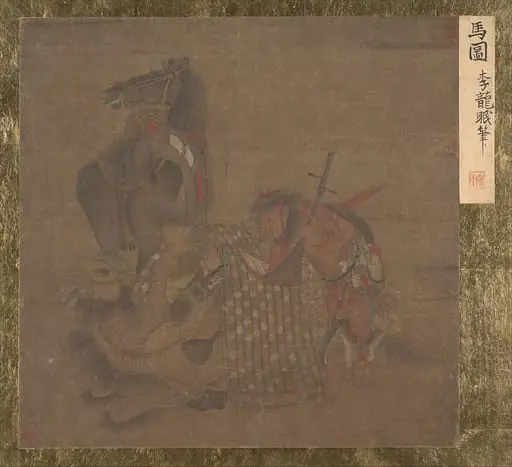 元? 佚名 仿李公麟 人馬駱駝圖 冊頁|Mongol with Horse and Camel