Movement
Tang dynasty painting
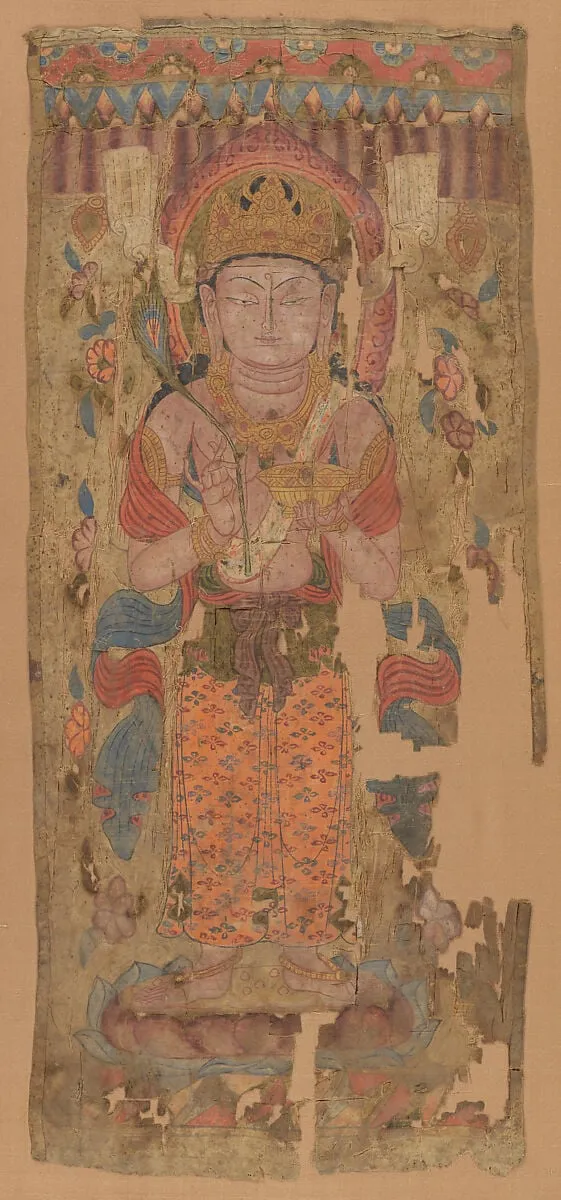
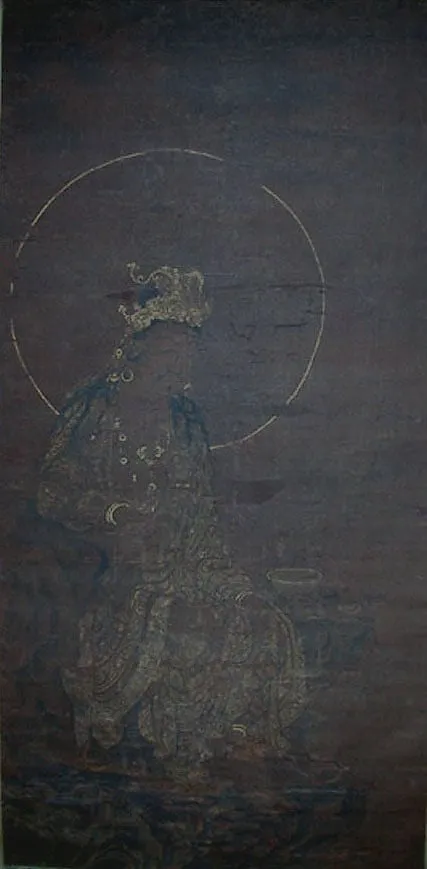
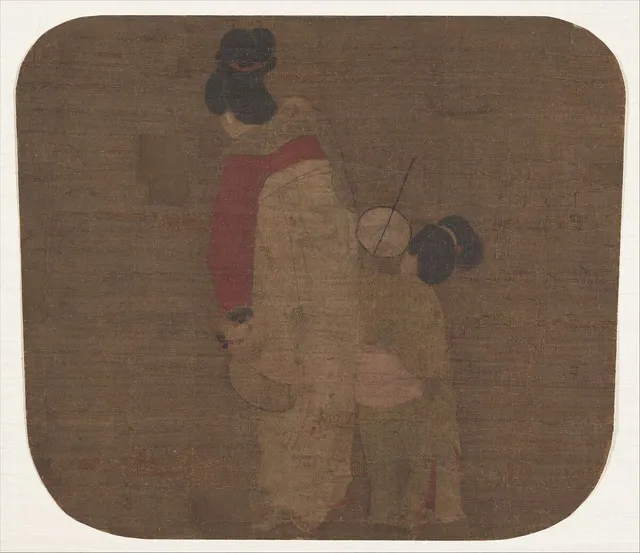

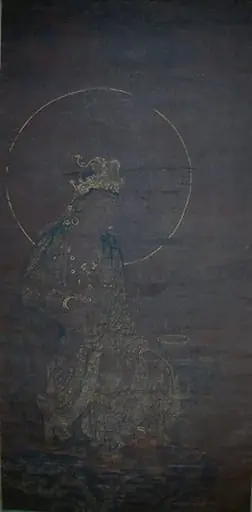
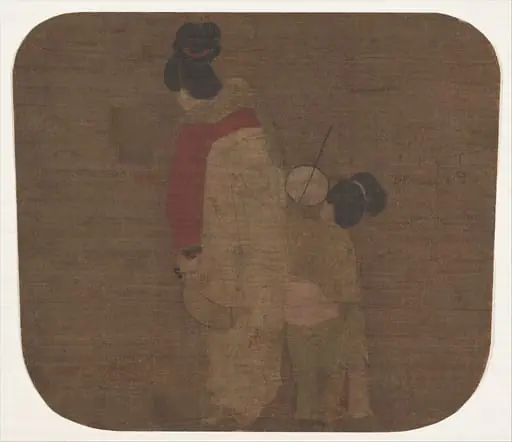
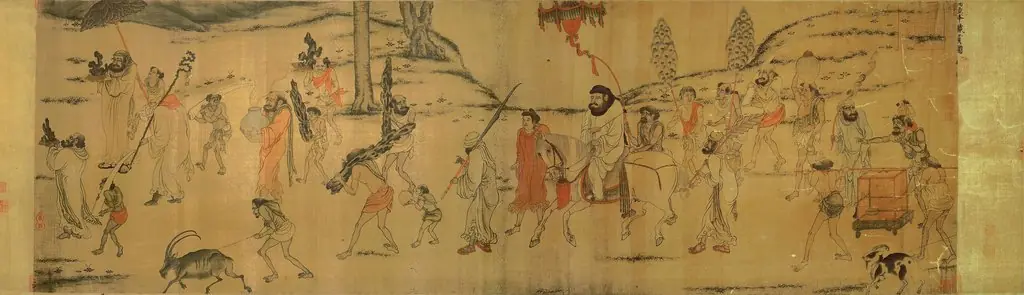
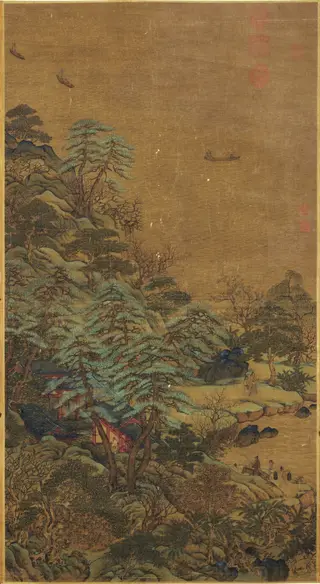
Tang dynasty painting is an art movement of the 610–910 period. The gallery holds 7 works in this movement, including works by Han Gan, After Wu Daozi and After Zhou Fang. Browse Tang dynasty painting paintings, portraits, pictures and artworks from the world's public-domain museum collections.
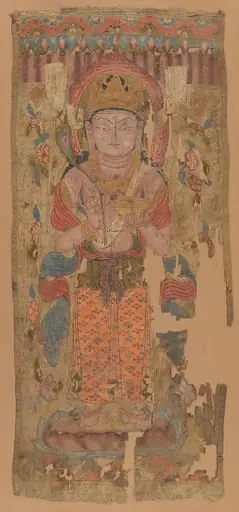
Painting flourished during China's Tang dynasty (618–907), an era whose cosmopolitan wealth and expansive borders made its capital, Chang'an, one of the largest and most diverse cities on earth. The reunification of China under the Sui and Tang, the patronage of an ambitious court, and the spread of Buddhism along the Silk Road created an unprecedented demand for images—imperial portraits, ceremonial records, temple murals, and intimate scenes of palace life. The period is justly remembered as a golden age of figure painting, when artists rendered court ladies, prized horses, and Buddhist deities with a confident, calligraphic line and richly saturated mineral color.
Tang painters refined the meticulous "fine-brush" mode (gongbi), in which forms were first outlined in precise ink contour and then filled with opaque pigment. Within this shared discipline two temperaments emerged: the controlled, scarcely modulated line of court portraiture, and the sweeping, energetic brushwork of mural painting. Subjects ranged from didactic figural narratives to the new "blue-and-green" landscape (qinglü shanshui), in which malachite and azurite were laid over careful drawing to produce a jewelled effect.
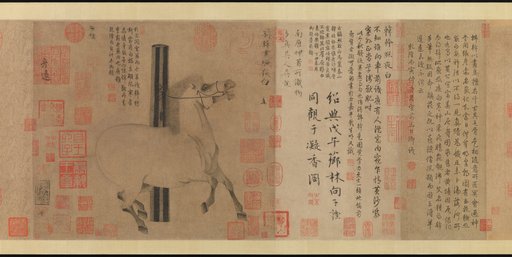
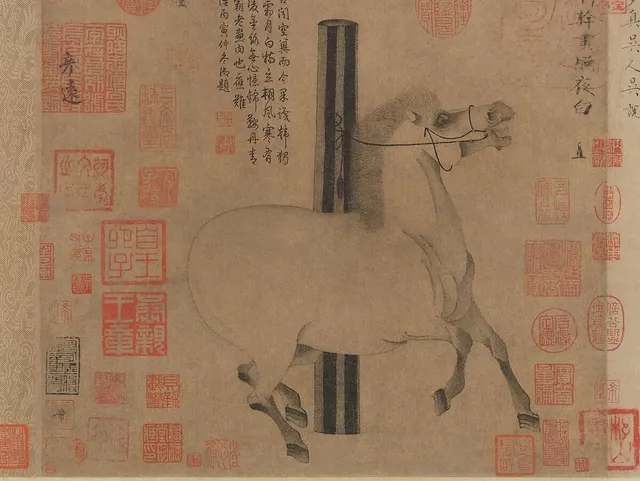
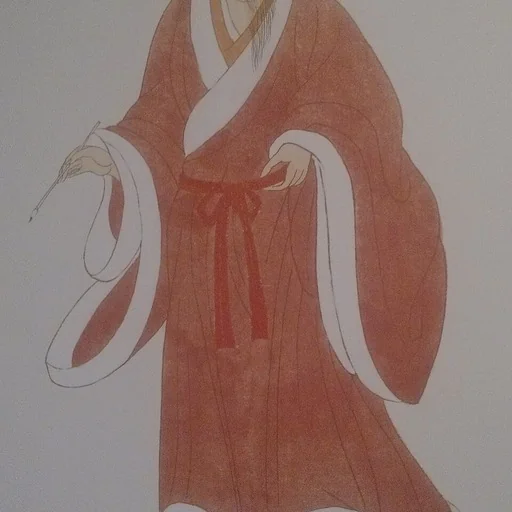
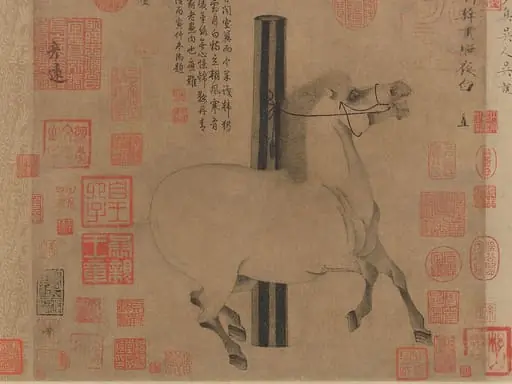
The canon is anchored by several masters. Yan Liben (c. 600–673), portraitist to Emperor Taizong, produced authoritative figural scrolls such as the *Thirteen Emperors* and *Emperor Taizong Receiving the Tibetan Envoy* (Bunian tu), recording the embassy of 640. Wu Daozi (c. 680–759), revered as the "sage of painting," reportedly executed some three hundred wall paintings in the temples of Chang'an and Luoyang, his dynamic line legendary though no authentic work survives. Han Gan (706–783) served Emperor Xuanzong as a horse painter; his *Night-Shining White* (c. 750), depicting the emperor's charger, survives in the Metropolitan Museum. Zhang Xuan (713–755) and Zhou Fang (c. 730–800) perfected images of palace women, while Li Sixun (651–716) and his son Li Zhaodao founded the decorative blue-green landscape tradition.
Tang achievements became the bedrock of later Chinese art. The figural and landscape modes codified here, preserved in Song-dynasty copies and in the Buddhist murals of Dunhuang, fed directly into the "great age of landscape" that followed under the Five Dynasties and Song. Critics such as Dong Qichang later traced the influential "Northern school" back to Li Sixun, ensuring that Tang painting remained a touchstone for a millennium.
Key artists


Works

Frequently asked questions
What is Tang dynasty painting?
Tang dynasty painting is an art movement. Painting of China's cosmopolitan Tang dynasty (618-907), a golden age of figure painting.
Who are the key Tang dynasty painting artists?
Key Tang dynasty painting artists in the collection include Han Gan, After Wu Daozi and After Zhou Fang.
When did Tang dynasty painting take place?
Tang dynasty painting dates from 610–910.
Where can I see Tang dynasty painting works?
Tang dynasty painting works in the collection are held by Metropolitan Museum of Art and National Palace Museum.