Artwork
Portrait of a Young Merchant
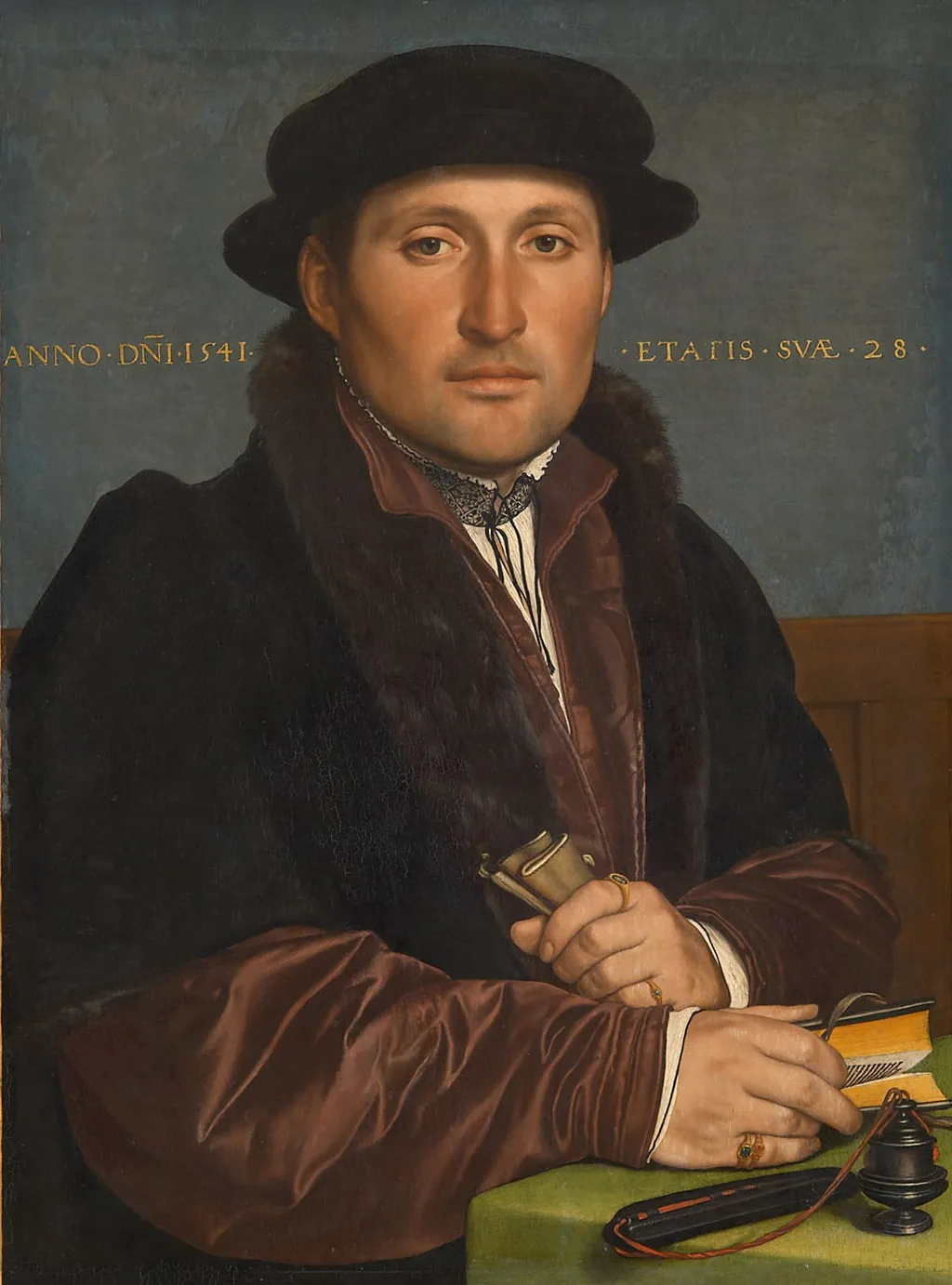
Portrait of a Young Merchant is an oil painting by the Northern Renaissance artist Hans Holbein the Younger. It dates from 1541 and is held in the collection of the Kunsthistorisches Museum. Created in 1541, this oil painting on oak panel portrays a young man seated before a muted blue‑gray backdrop.
About this work
Subject & Meaning
The painting depicts an unidentified young man, half-length and seated at a table, his body turned to the right while his face meets the viewer's gaze.
The painting depicts an unidentified young man, half-length and seated at a table, his body turned to the right while his face meets the viewer's gaze. According to Paul Ganz, he was probably a German merchant associated with the Steelyard in London, though John Rowlands and others have argued he could equally be English; the absence of any coat of arms or merchant's mark leaves his identity unresolved. A gold inscription at head height records the year 1541 and the sitter's age as 28.
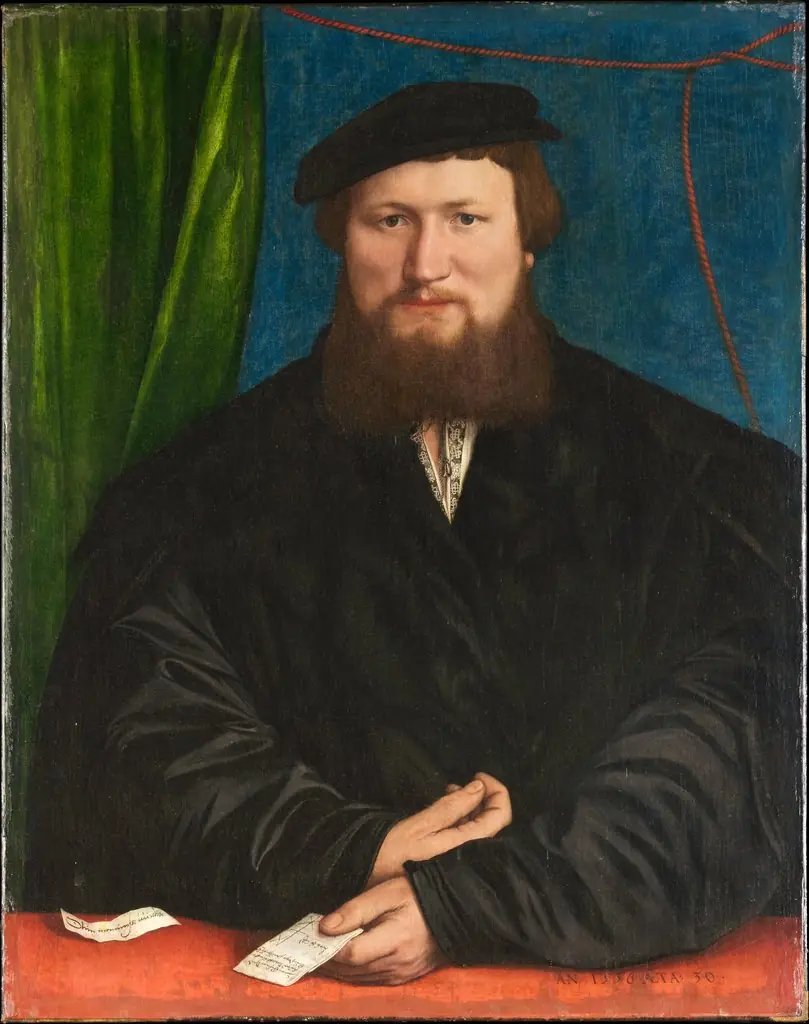
His attire, a brown silk doublet beneath a black cloak with a deep fur-lined collar, a black-brimmed cap, and a white shirt embroidered with blackwork, signals mercantile respectability rather than aristocratic rank. The objects on the green-clothed table reinforce this professional self-presentation: a gilt-edged book with his forefinger placed between its pages, an inkstand with a red cord, grey gloves held in his left hand, and an intaglio ring on his left index finger. Holbein reuses these motifs, the wooden panelling, book, and green-covered table, from his earlier portraits of Thomas Cromwell and Hermann von Wedigh, lending the image continuity with his established visual language of sober, literate commerce.
Technique & Style
The painting is executed in oil on oak panel, measuring 46.5 cm in height and 34.8 cm in width.
The composition presents a half-length figure of the sitter seated at a table, turned slightly to the right with a direct gaze toward the viewer. The background features a blue-grey wall with wooden panelling below. The sitter wears a brown silk doublet beneath a black cloak lined with brown fur, a black cap, and a white shirt with an embroidered blackwork collar.
His left hand holds grey gloves, while the right rests on a green cloth, the forefinger inserted into the pages of a gilt-edged book. An inkstand with a red cord and a ring with an intaglio are also depicted. The face is clean-shaven with a ruddy complexion, and the hair, partially concealed by the cap, does not cover the ears.
Context
Scholars regard this 1541 work as one of Hans Holbein the Younger's finest portraits from his later period, particularly praising the extraordinary vividness and subtlety with which the artist rendered the sitter's far-seeing, visionary expression. While Paul Ganz originally hypothesized that the subject was a German merchant associated with the London Steelyard, later researchers such as John Rowlands argue the figure could equally be English, noting the absence of specific heraldry or merchant marks to confirm his identity.
Art historically, the composition demonstrates Holbein's practice of repeating successful motifs from earlier commissions, including the wood paneling and green-clothed table seen in his portrait of Thomas Cromwell. The specific positioning of the right hand closely parallels that in the 1532 portrait of Hermann von Wedigh. The painting's influence is evident in subsequent works, including a pastiche in the John G. Johnson Collection and compositions by Christoph Amberger that borrowed its bodily arrangement.
Legacy
The Portrait of a Young Merchant has been noted for its enduring influence on later portraiture, particularly through the replication of its compositional motifs. An early copy resides in the Galleria Regionale della Sicilia in Palermo, while pastiche works such as the Portrait of an Unknown Man in the John G. Johnson Collection combine its head with other sitters. Artists like Christoph Amberger borrowed elements for works such as his Portrait of an Unknown Man at Wawel Castle, adapting the pose, attire and accessories.
These derivations underscore the painting’s reputation as a exemplar of Holbein’s mature style and its role in disseminating his characteristic half‑length format and symbolic details to subsequent generations.
Overview
Created in 1541, this oil painting on oak panel portrays a young man seated before a muted blue‑gray backdrop. The work is attributed to the German artist Hans Holbein the Younger and is presently housed in Vienna’s Kunsthistorisches Museum. The composition centers on the sitter, whose attire and accessories hint at a commercial occupation.
History & Provenance
The portrait entered the collection of the Kunsthistorisches Museum in Vienna, where it remains on display. Its provenance prior to museum acquisition is not fully documented, but the work’s date and stylistic traits firmly place it within Holbein’s productive period in the early 1540s.
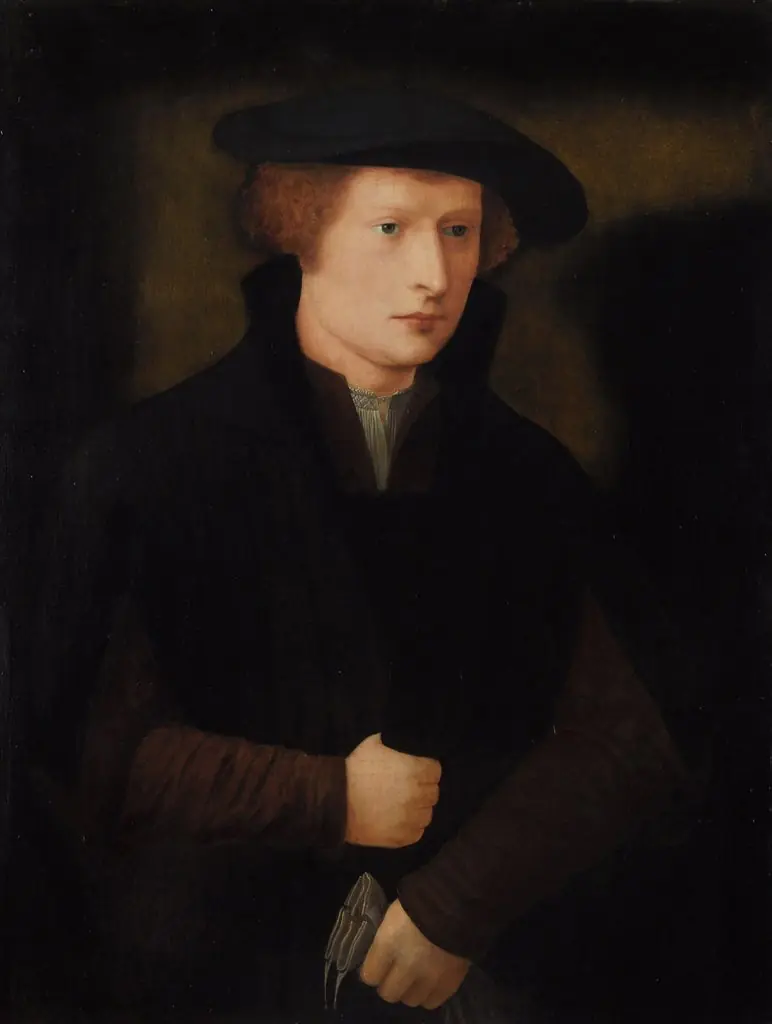
Artist & collection
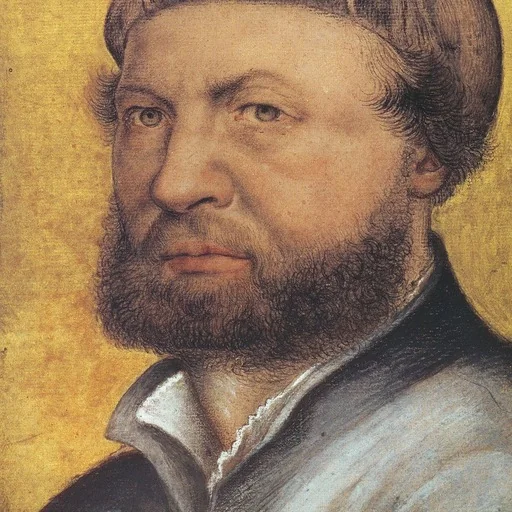
Artist
Hans Holbein the Younger (UK: HOL-byne, US: HOHL-byne, HAWL-; German: Hans Holbein der Jüngere; c.

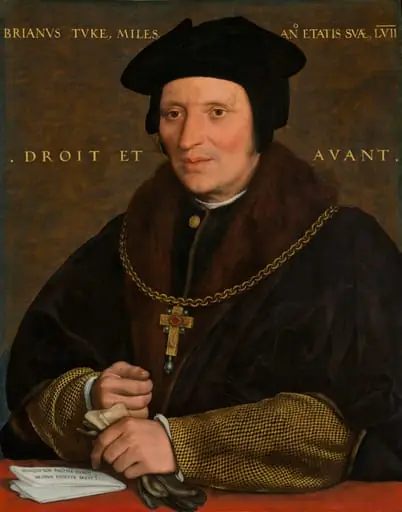
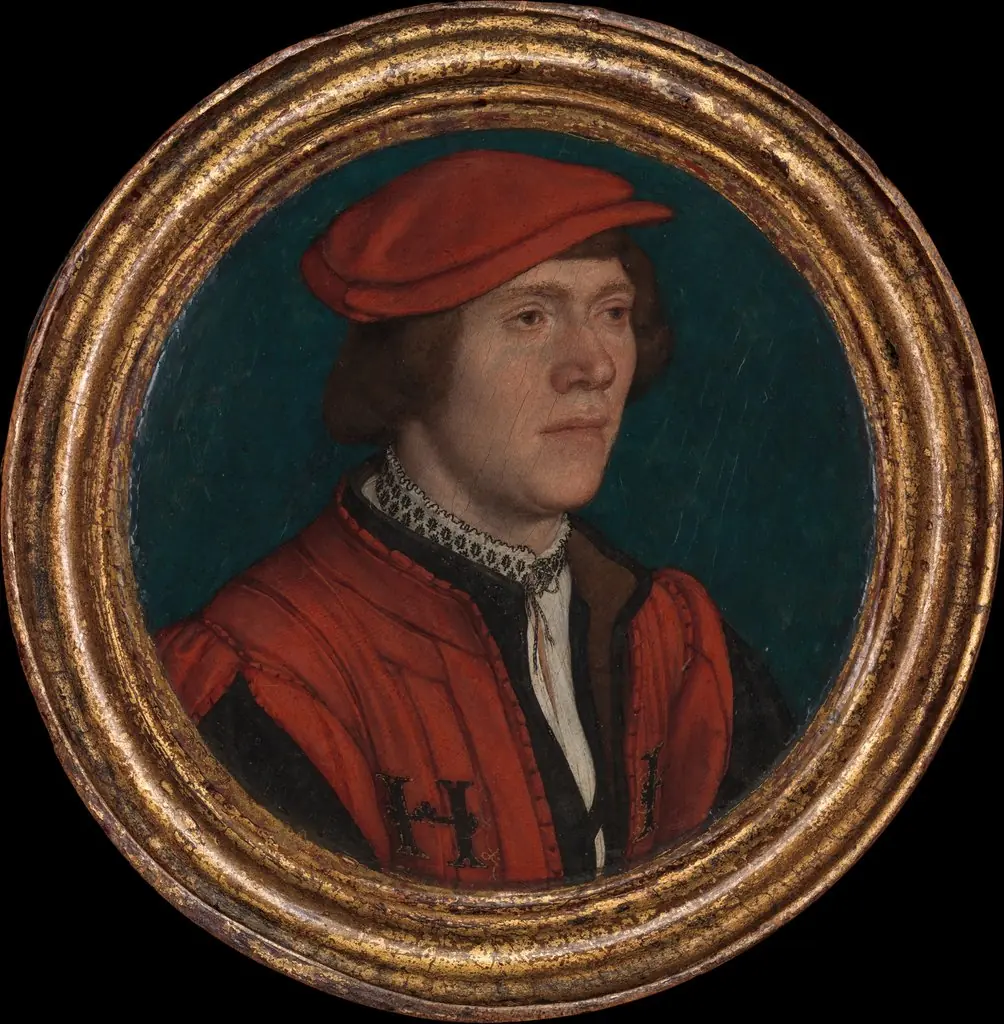
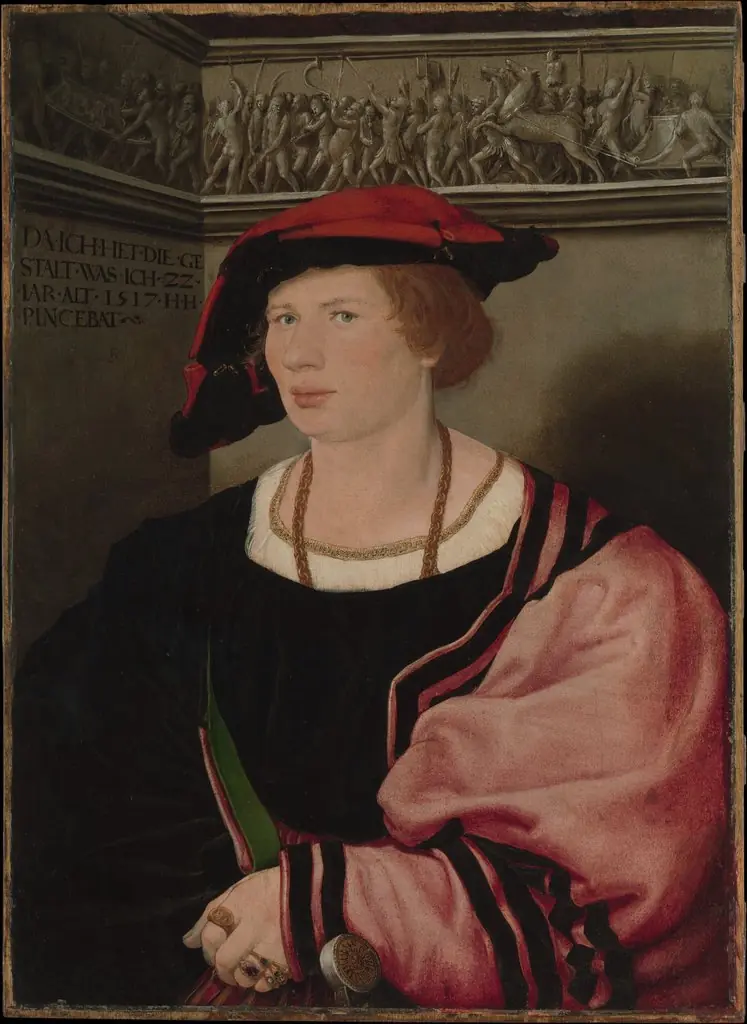
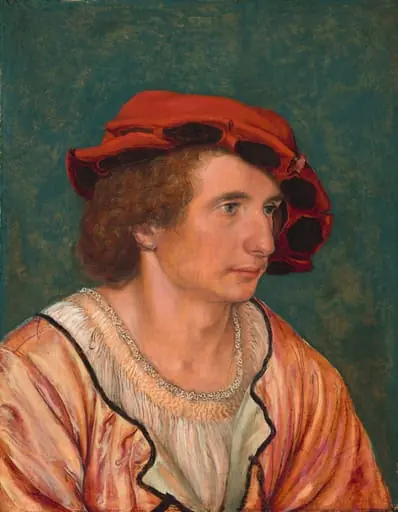
- Portrait of a Young Man
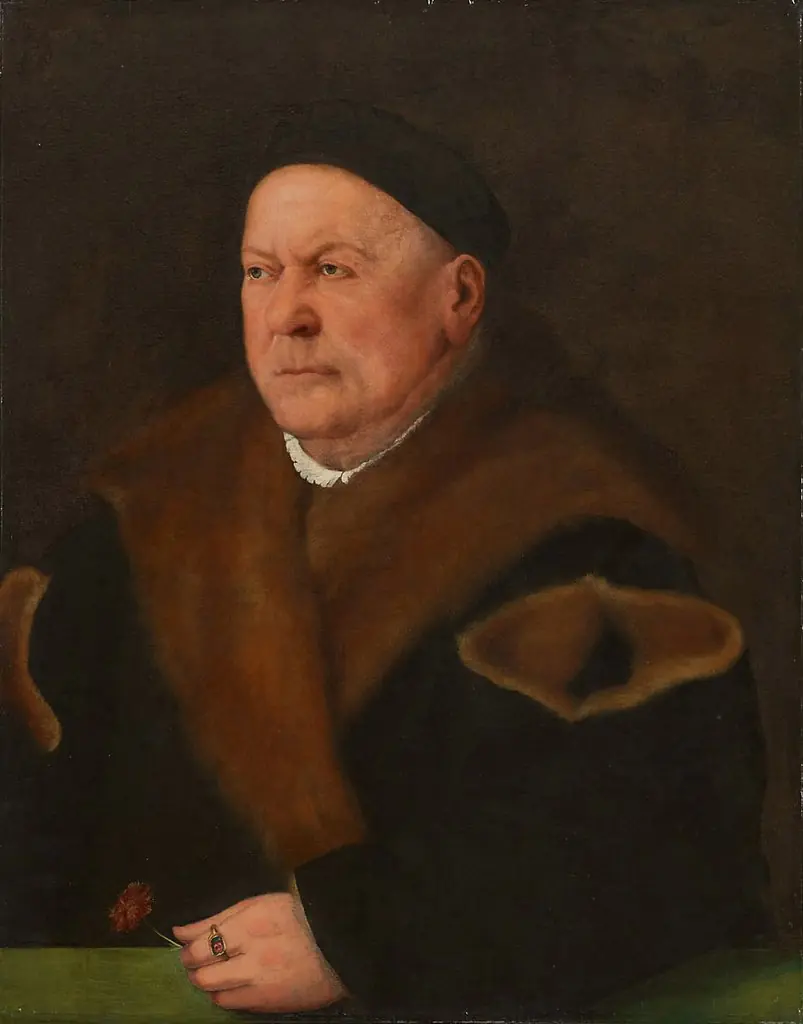 Der Augsburger Patrizier Ulrich Sulzer (1463-1545)
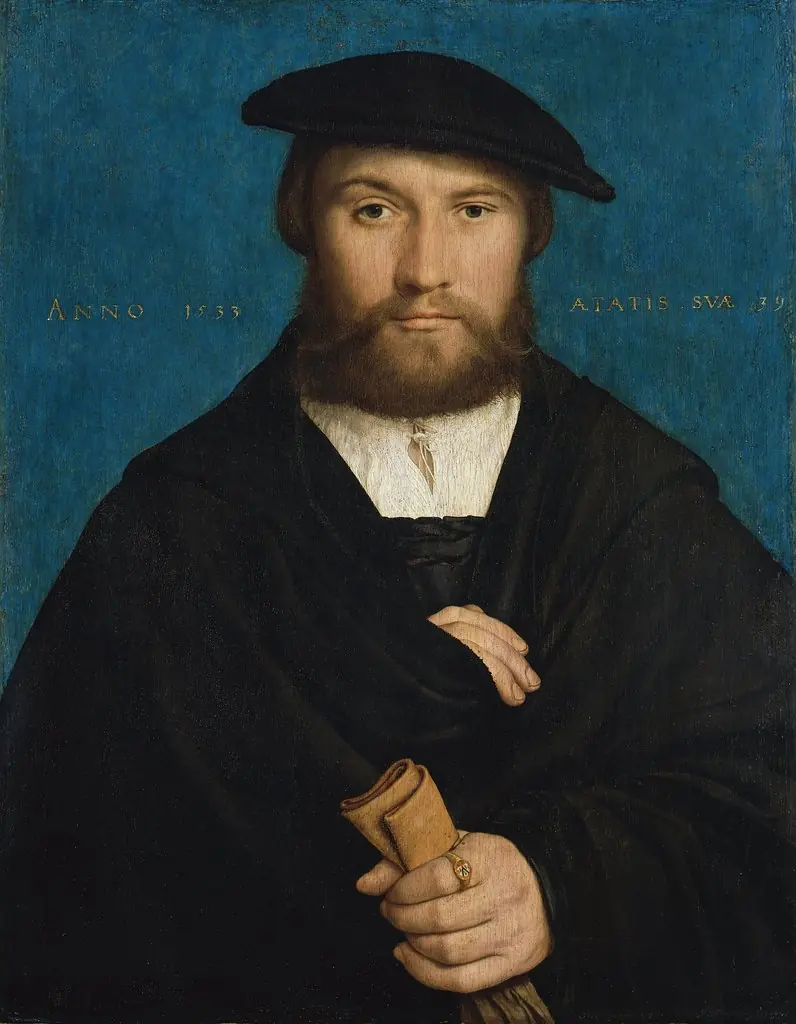 Hermann Hillebrandt de Wedigh
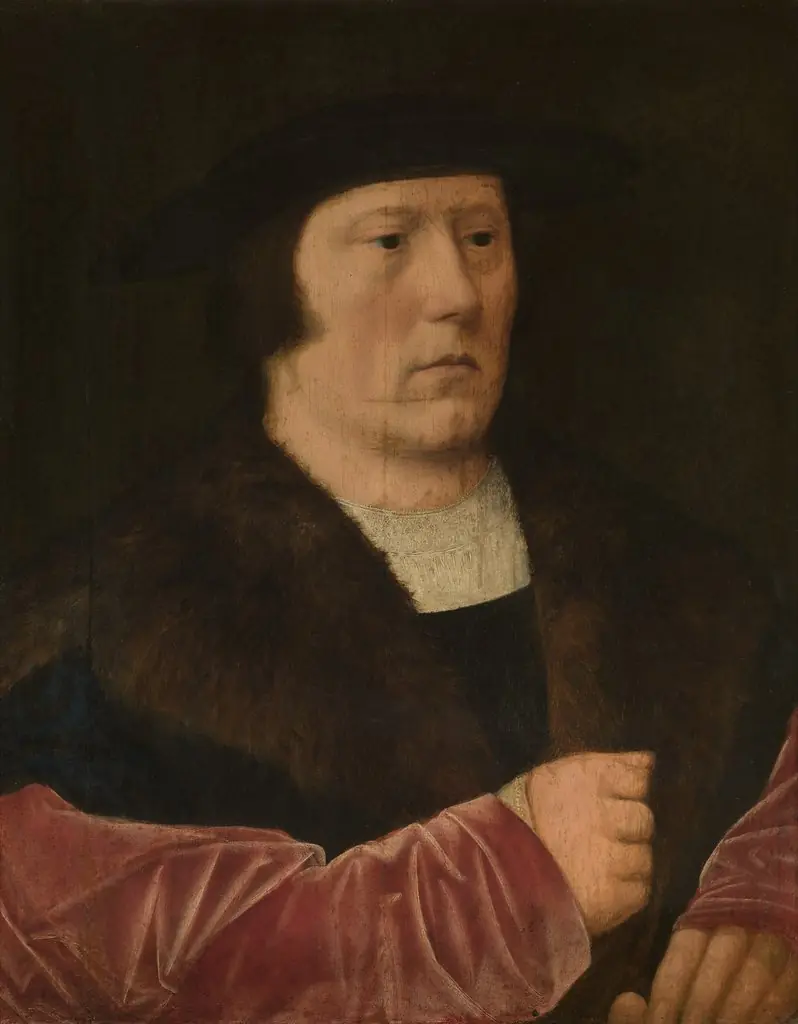 Portrait of a Man
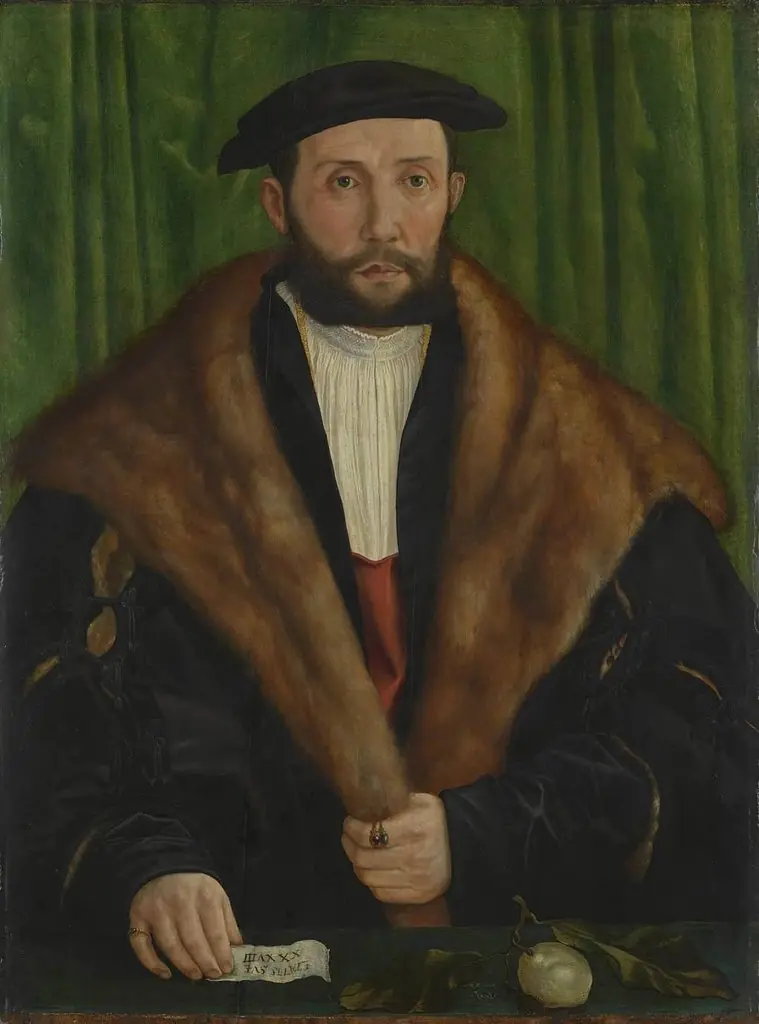 Ligsalz-Bildnisdiptychon: Andreas Ligsalz
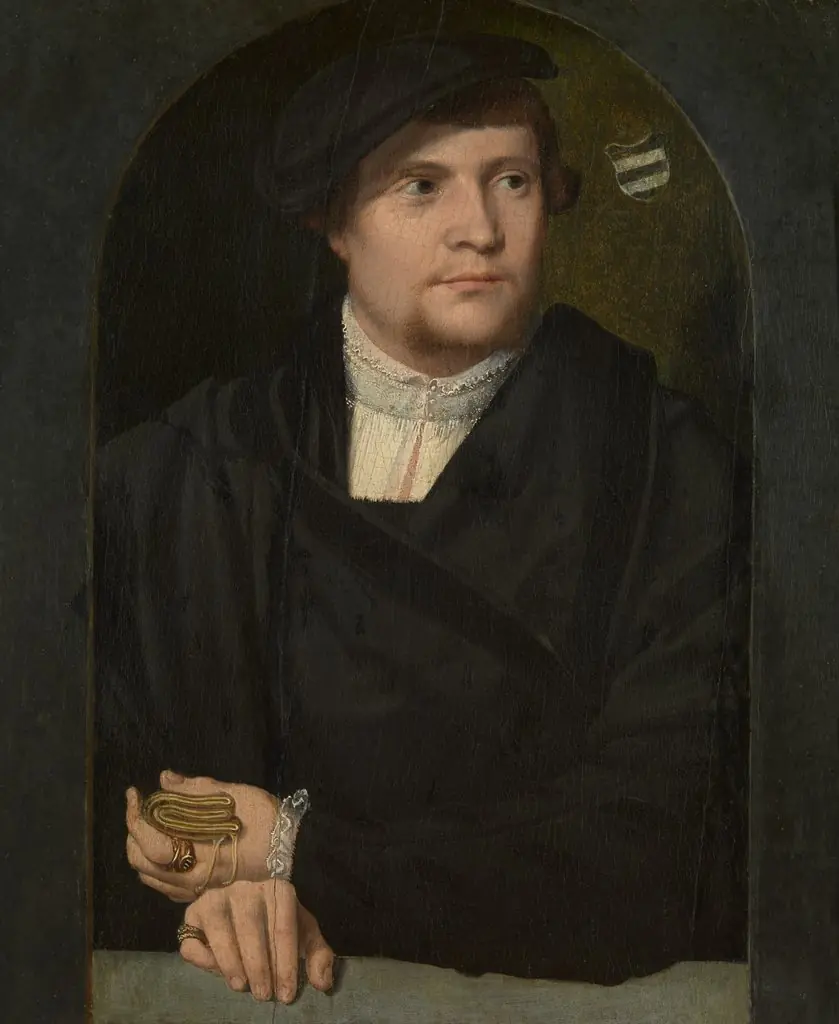 Portrait of a Man
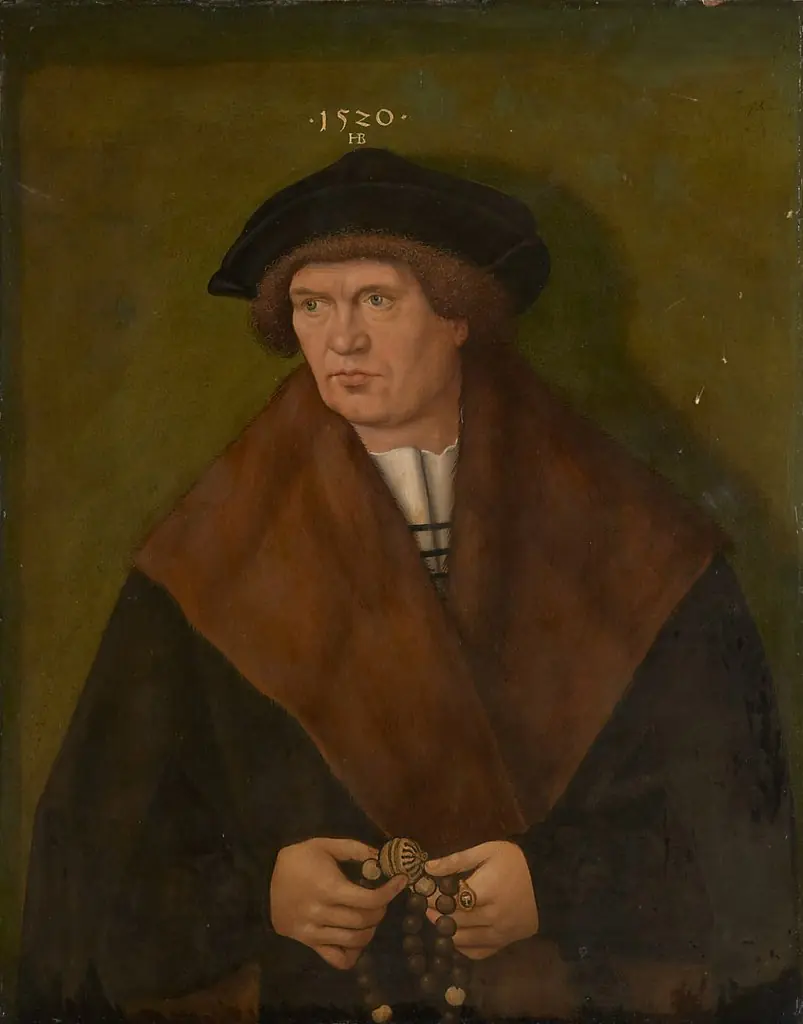 The Nuremberg dressmaker Hans Pirkel the Younger
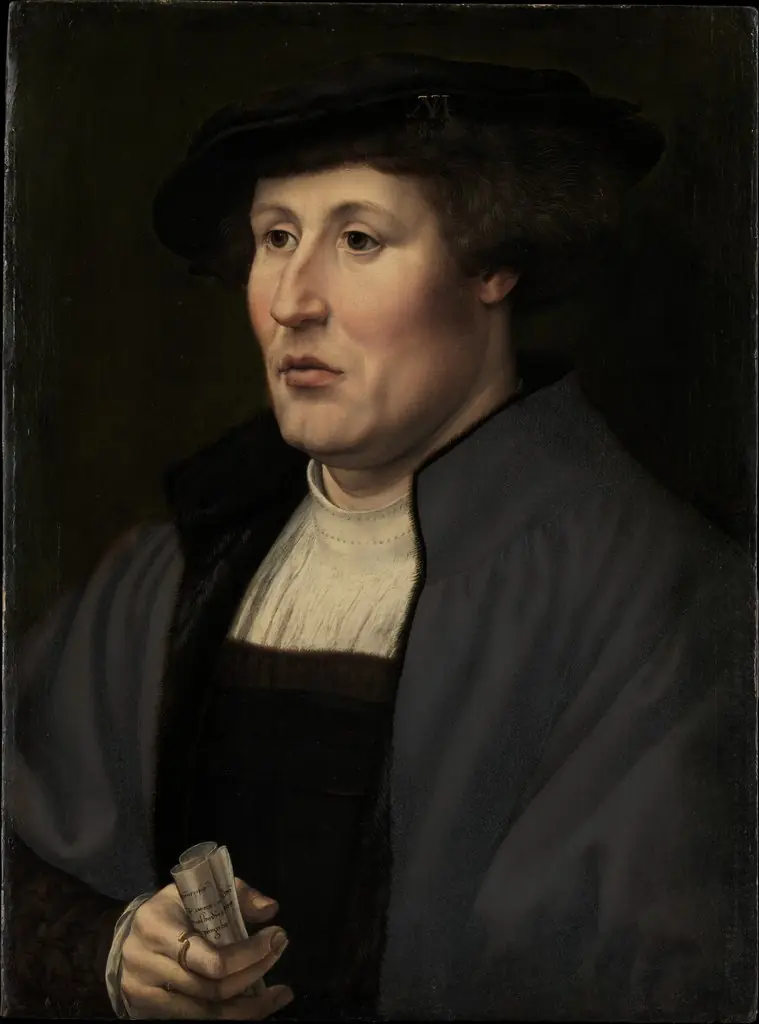 Portrait of a Man
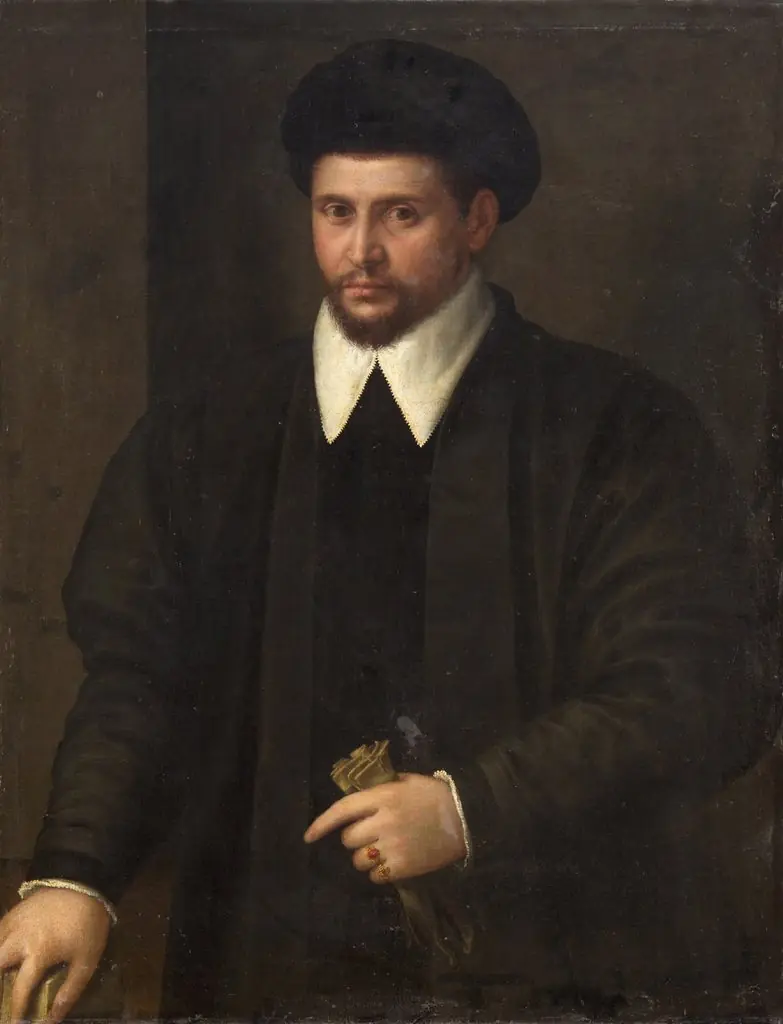 Bildnis eines Mannes mit Barett und Handschuhen
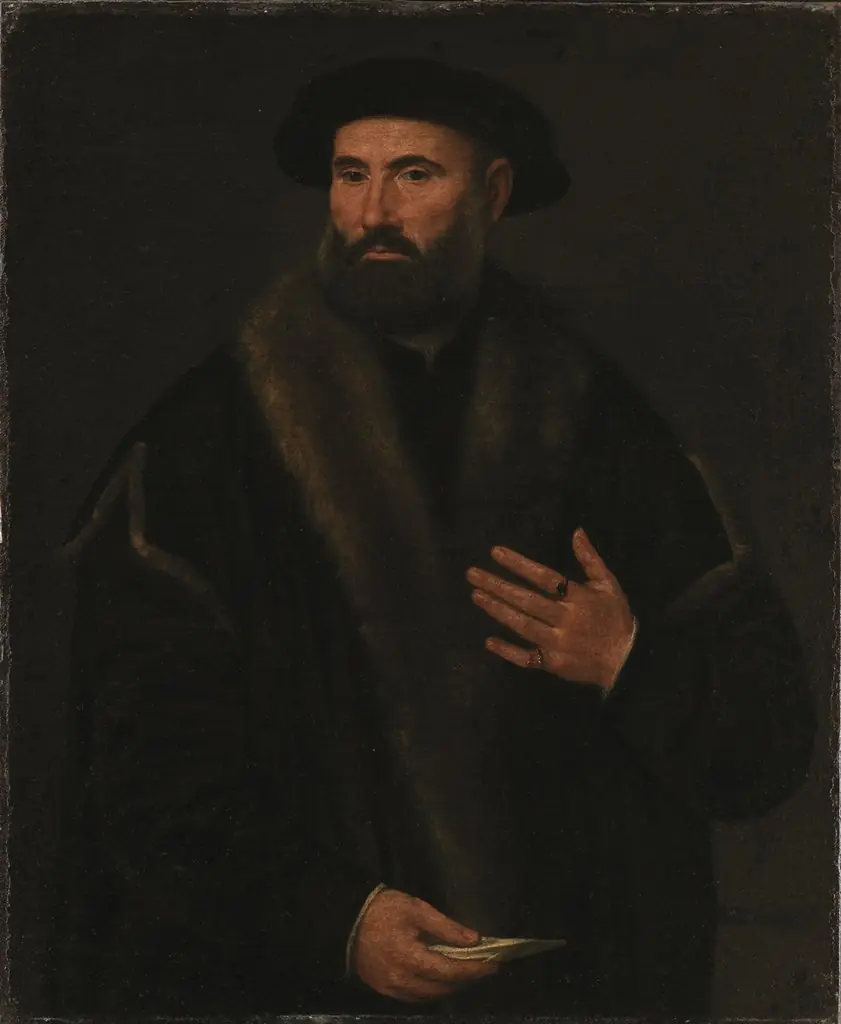 Portrait of a Man
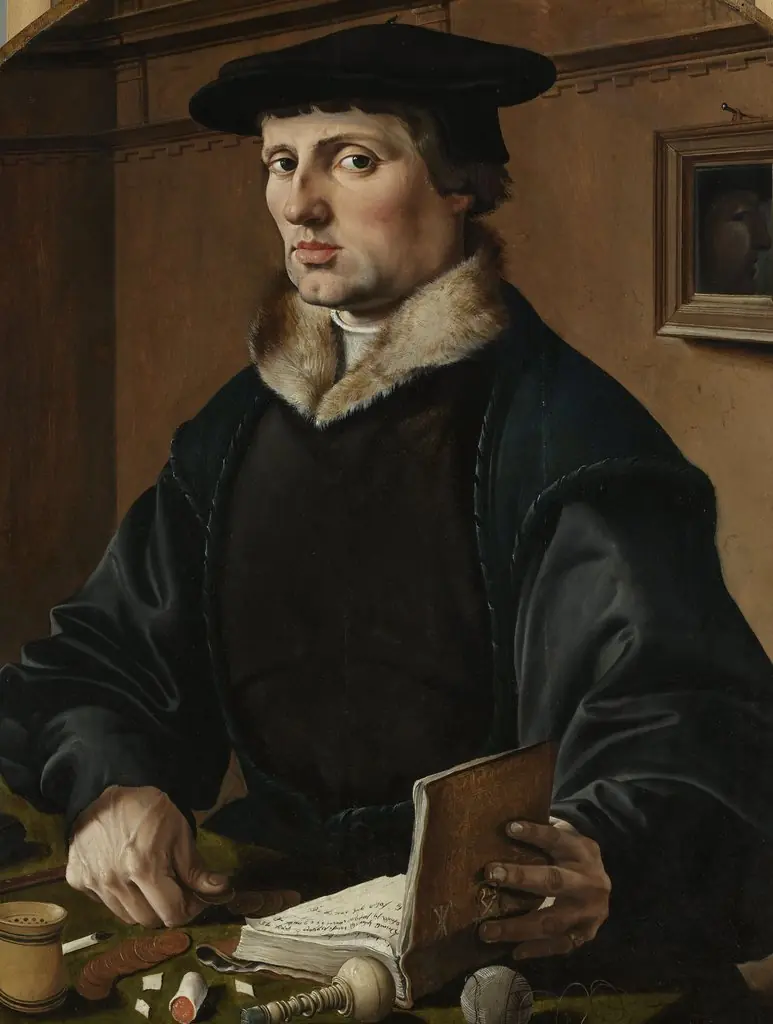 Portrait of (possibly) Pieter Gerritsz Bicker, pendant of (possibly) his wife Anna Codde
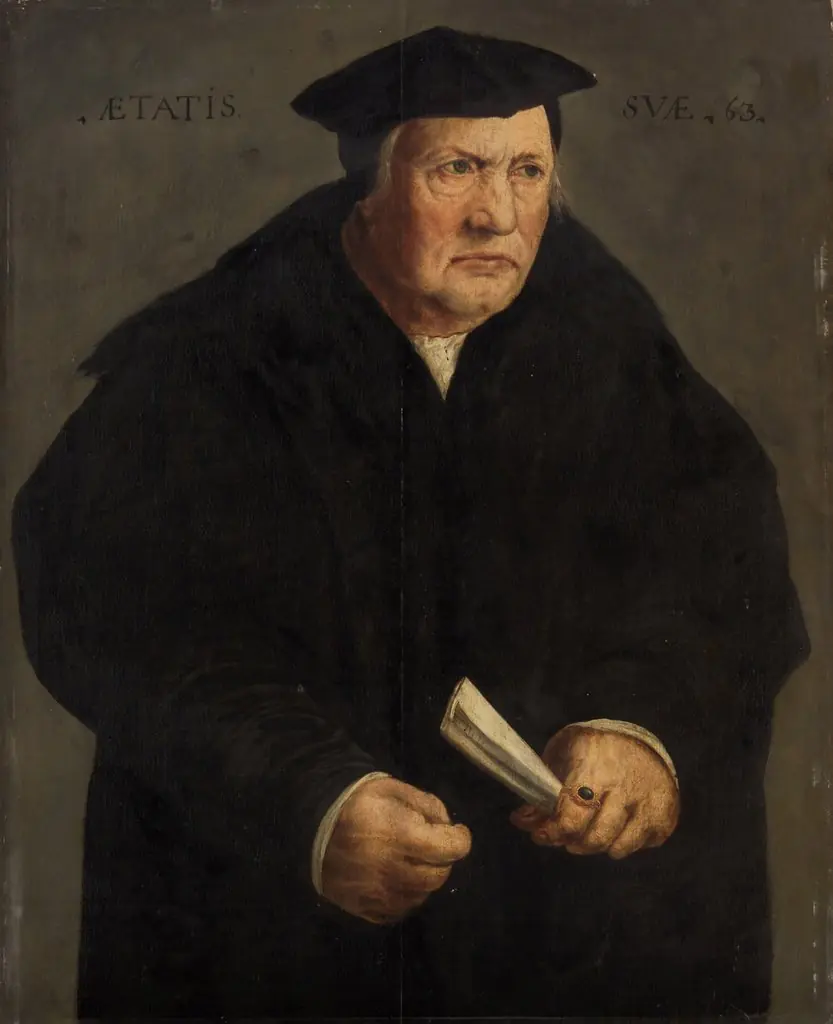 Männliches Bildnis