Artwork
Virgin and Child with Saints Catherine of Alexandria and Barbara
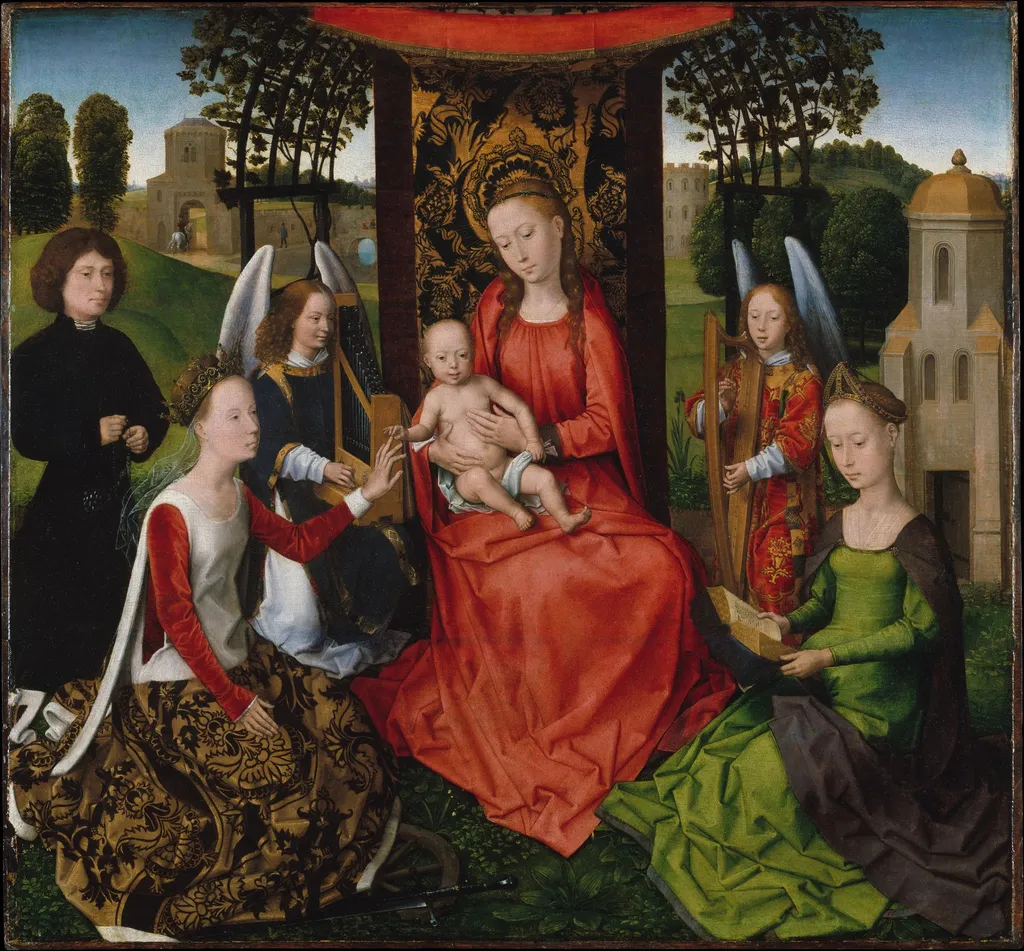
Virgin and Child with Saints Catherine of Alexandria and Barbara is an oil painting by the Northern Renaissance artist Hans Memling. It dates from 1490 and is held in the collection of the Metropolitan Museum of Art.
About this work
Hans Memling adapted the composition from his 1479 altarpiece for the Sint-Janshospitaal in Bruges, working this oil on wood in the early 1480s.
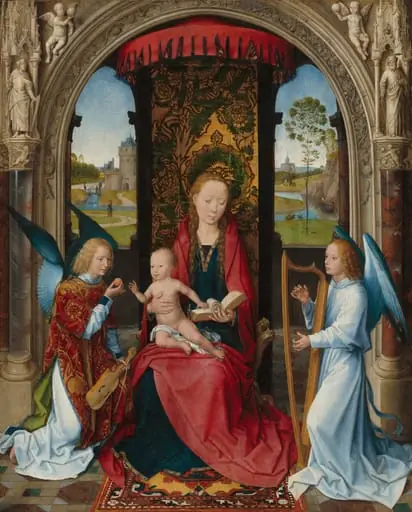
An unidentified donor kneels at left with a rosary, contemplating Saint Catherine of Alexandria's mystic marriage to the Christ Child. The enthroned Virgin sits beneath a brocade canopy, flanked by angels playing organ and harp, while Saint Barbara reads at right. Hans Memling adapted the composition from his 1479 altarpiece for the Sint-Janshospitaal in Bruges, working this oil on wood in the early 1480s.
Subject & Meaning
The painting depicts the Virgin Mary enthroned with the Christ Child in a garden, flanked by Saints Catherine of Alexandria and Barbara, angels playing musical instruments, and a kneeling donor. The central subject is the Mystic Marriage of Saint Catherine: the Christ Child places a ring on Catherine’s finger, symbolizing her spiritual betrothal to Christ. The iconography combines a hortus conclusus (enclosed garden representing Mary’s purity), a sacra conversazione, and the Virgo inter Virgines motif, which pairs the Virgin with virgin martyr saints.
Saint Catherine’s emblems, a broken wheel and sword, and Saint Barbara’s tower (with three windows for the Trinity) reinforce their martyrdom and virtues. The donor’s inclusion suggests a devotional function, while the serene expressions and harmonious composition reflect Memling’s characteristic style. The meaning centers on devotional contemplation of Mary’s purity and Catherine’s mystical union with Christ.
Technique & Style
Executed in oil on an oak panel, the work displays the serene harmony and balanced composition characteristic of Hans Memling's mature style, synthesizing elements from Jan van Eyck and Rogier van der Weyden. The painting's underdrawing reveals no arbor, which technical examination shows to be a later addition, the green pigments differ from those used in the background landscape, and the brushwork is broader and more descriptive. Tree-ring analysis dates the panel to around 1480.
Memling's female figures exhibit a consistent type: graceful oval faces, wide eyes, narrow chins, with expressions of gentle beatific acceptance. The color palette, structured spatial arrangement, and detailed rendering of textiles and symbolic objects reflect the artist's meticulous technique.
History & Provenance
Painted by Hans Memling (active 1470–1494), this oil-on-oak panel is dated to about 1479–1480 based on dendrochronological analysis. The work was likely commissioned as a devotional donor portrait; the kneeling male figure to the left of the Virgin is thought to be the donor. Its composition closely replicates the central panel of Memling's St John Altarpiece.
The arbor arching over the Virgin's throne was added later, possibly in the early 16th century. The painting entered the collection of Léopold Goldschmidt and then passed to Benjamin Altman, who bequeathed it to the Metropolitan Museum of Art in New York, where it remains.
The painting is held at the Metropolitan Museum of Art in New York, part of the Benjamin Altman collection (inv. no. not specified in sources). It was included in the exhibition "Exposition des primitifs flamands à Bruges" lists this exhibition history).
Context
Hans Memling’s Virgin and Child with Saints Catherine of Alexandria and Barbara is a paradigmatic example of the Netherlandish Virgo inter Virgines subgenre, a devotional variant of the sacra conversazione that gained popularity in the late fifteenth-century Low Countries. Art historians such as Paula Pumplin have debated whether Memling or Hugo van der Goes originated the type. The painting synthesizes techniques Memling absorbed from Jan van Eyck and Rogier van der Weyden, achieving a serene harmony of structure and color that characterizes his mature style.
Its composition closely replicates the central panel of Memling’s St John Altarpiece. Scholarship by Maryan Ainsworth highlights Memling’s standardized female facial type, graceful oval face, wide eyes, narrow chin, expressing “a state of gentle, beatific acceptance”. James Snyder notes that despite the dramatic subject of Catherine’s mystical marriage, the participants’ expressions remain placid, a hallmark of Memling’s approach.
In 1910 James Weale proposed that the saints were portraits of Mary of Burgundy and Margaret of York, a hypothesis Thomas Kren considers plausible, linking the work to contemporary courtly and devotional networks.
Legacy
The painting's composition is a nearly exact replica of the central panel of Memling's St John Altarpiece, indicating its role in disseminating the artist's design. An early 16th-century copy in the Galleria dell'Accademia in Florence attests to its immediate influence. The work has been proposed to contain early portraits of Mary of Burgundy (as Saint Catherine) and Margaret of York (as Saint Barbara), a hypothesis that, if correct, would further link the painting to Burgundian court culture.
The painting exemplifies the Virgo inter Virgines subgenre, which art historian Paula Pumplin suggests may have originated with Memling. Its legacy is also marked by its history of distinguished ownership, including Léopold Goldschmidt and Benjamin Altman, and its exhibition at the Exposition des primitifs flamands à Bruges. Now at the Metropolitan Museum of Art, it remains a key work for studying Memling's serene style and late 15th-century Netherlandish devotional imagery.
Overview
Hans Memling's "Virgin and Child with Saints Catherine of Alexandria and Barbara," painted in oil on wood around 1480, presents an intimate devotional scene. The work depicts the Virgin Mary enthroned with the Christ Child, flanked by two prominent female saints and musical angels. An unidentified patron is also included, kneeling in contemplation.
This panel exemplifies the detailed and serene style characteristic of Early Netherlandish painting, serving as a private object for spiritual reflection.
Own this work as a print
Artist & collection

Artist
Hans Memling was a German-Flemish painter who worked in the tradition of Early Netherlandish painting.

![Saint Veronica [obverse], by Hans Memling](https://artifactworldgallery.com/img/hans-memling--saint-veronica-obverse--5a649fd8b09c96b9-w320.webp)
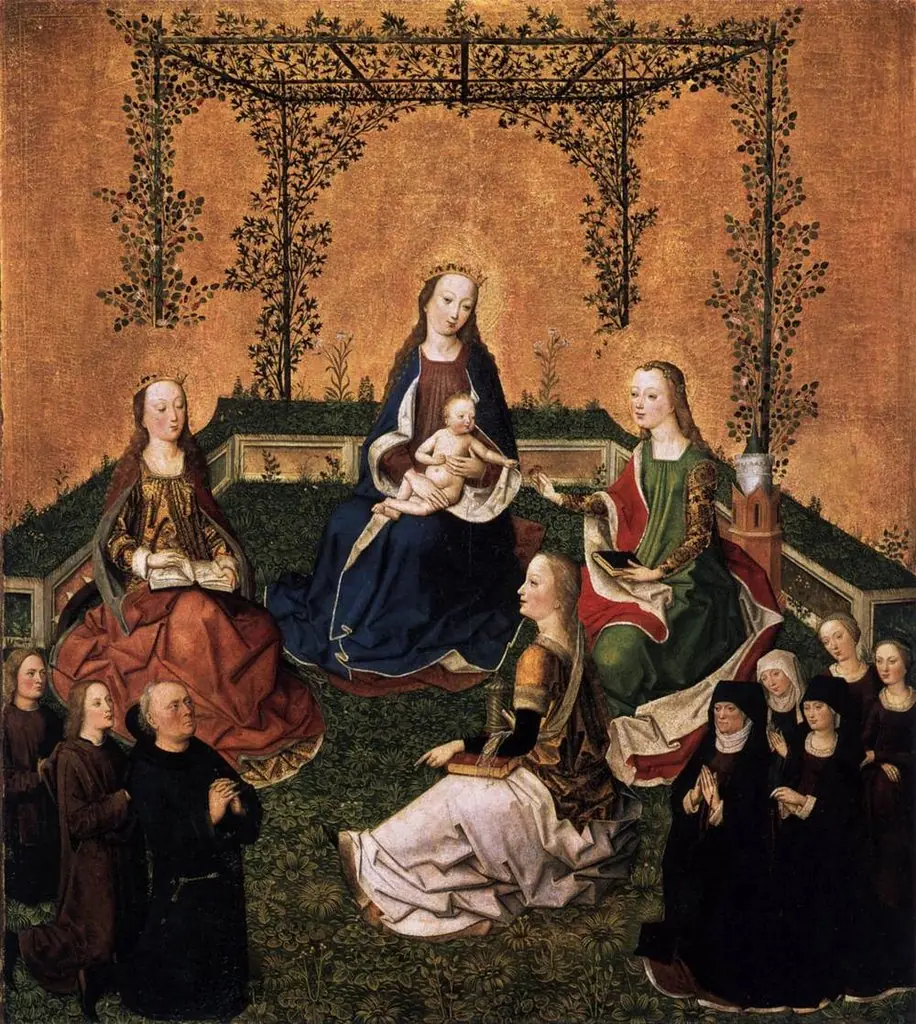 Virgin and Child with Three Saints
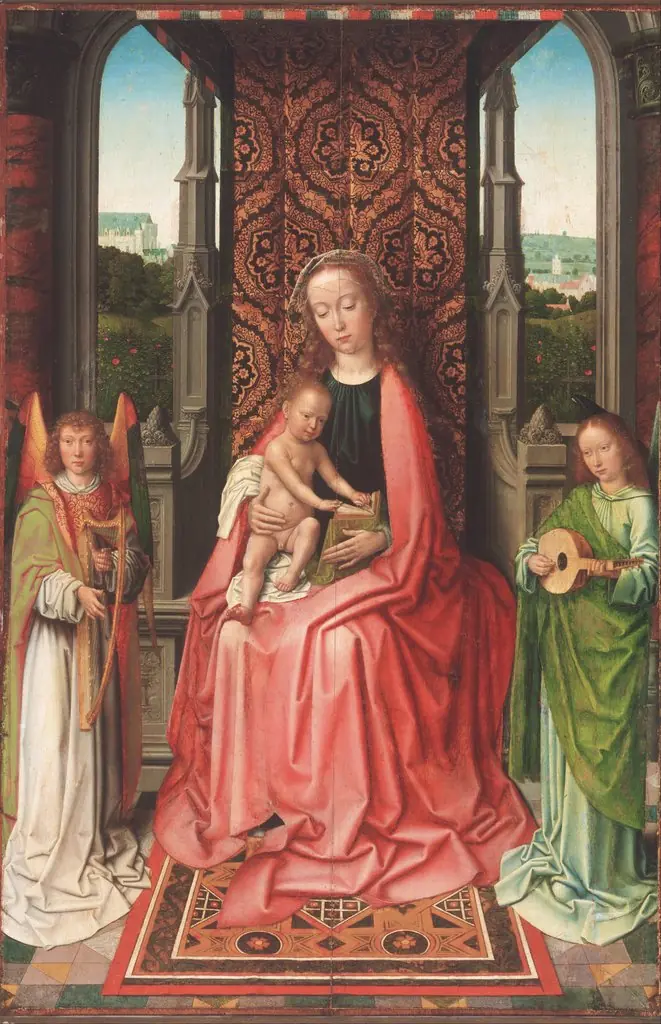 Enthroned Virgin and Child, with Angels
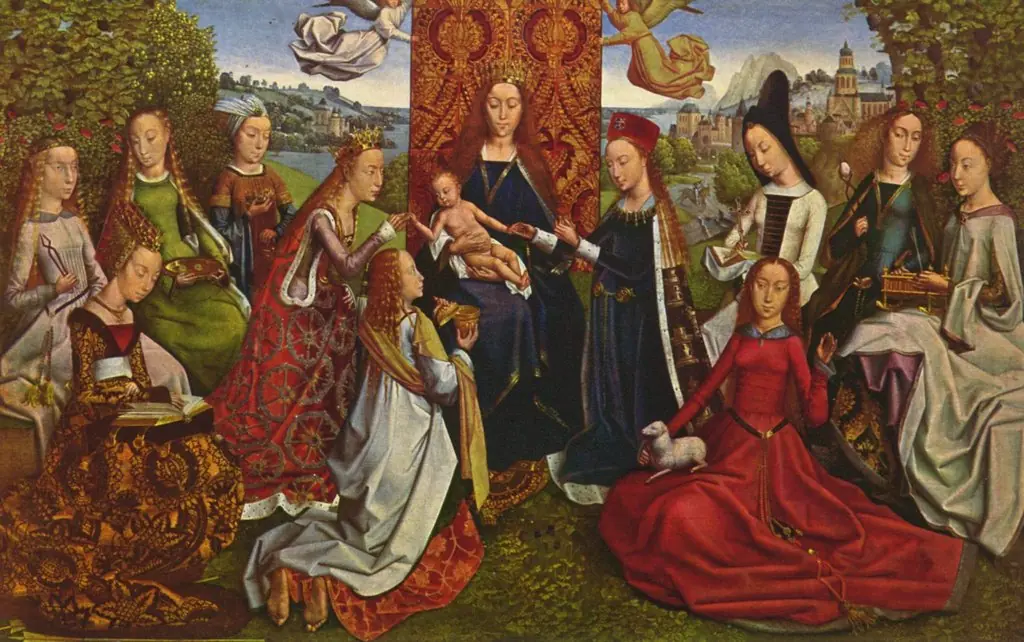 Virgo inter Virgines
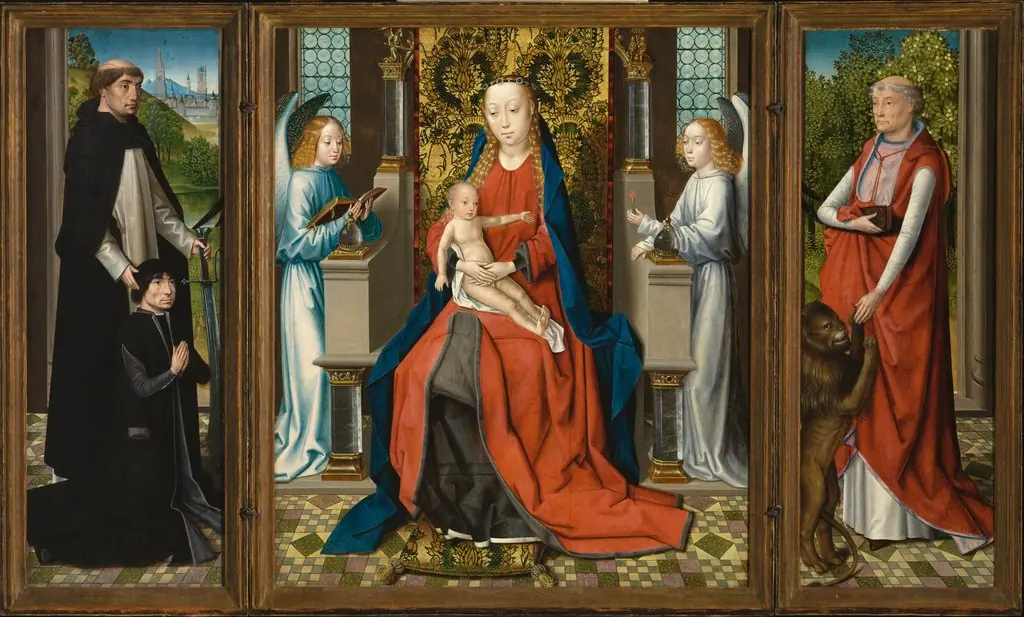 Triptych of Madonna and Child with Angels; Donor and His Patron Saint Peter Martyr; and Saint Jerome and His Lion
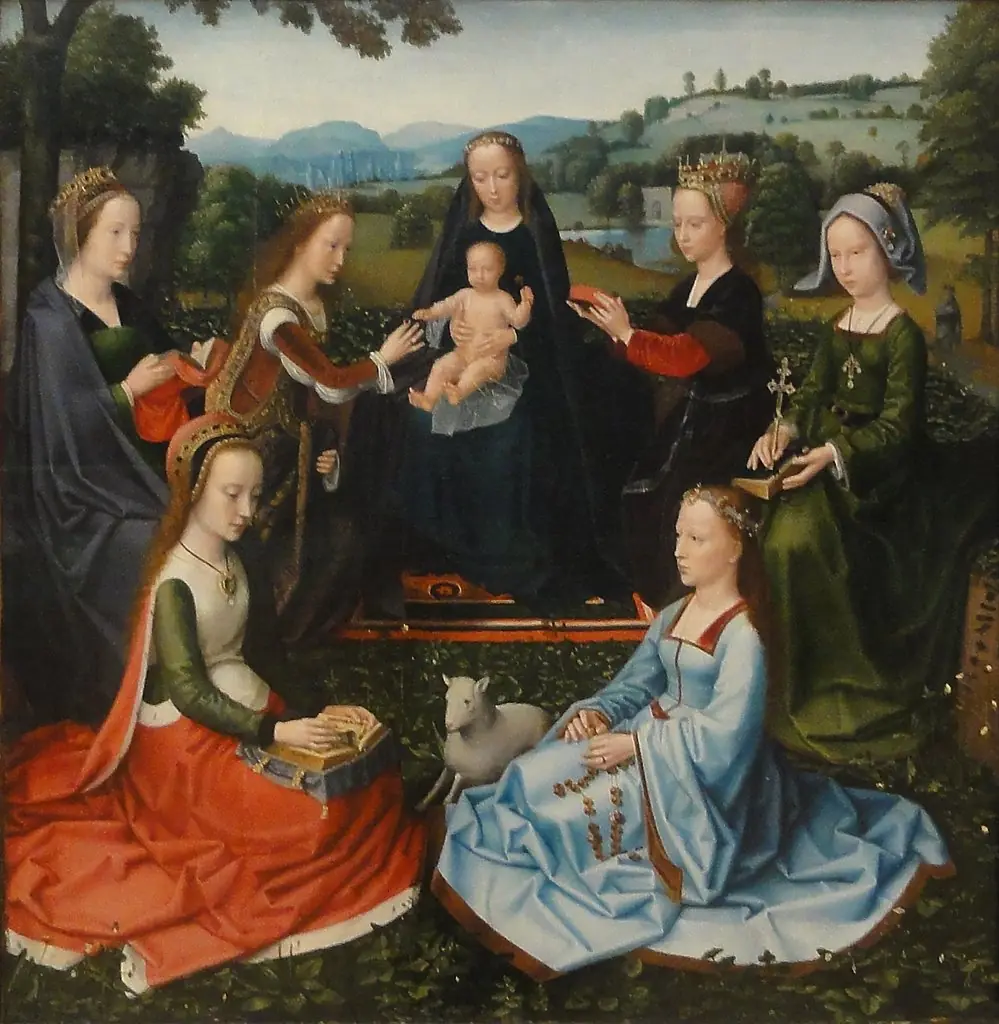 Madonna with Female Saint
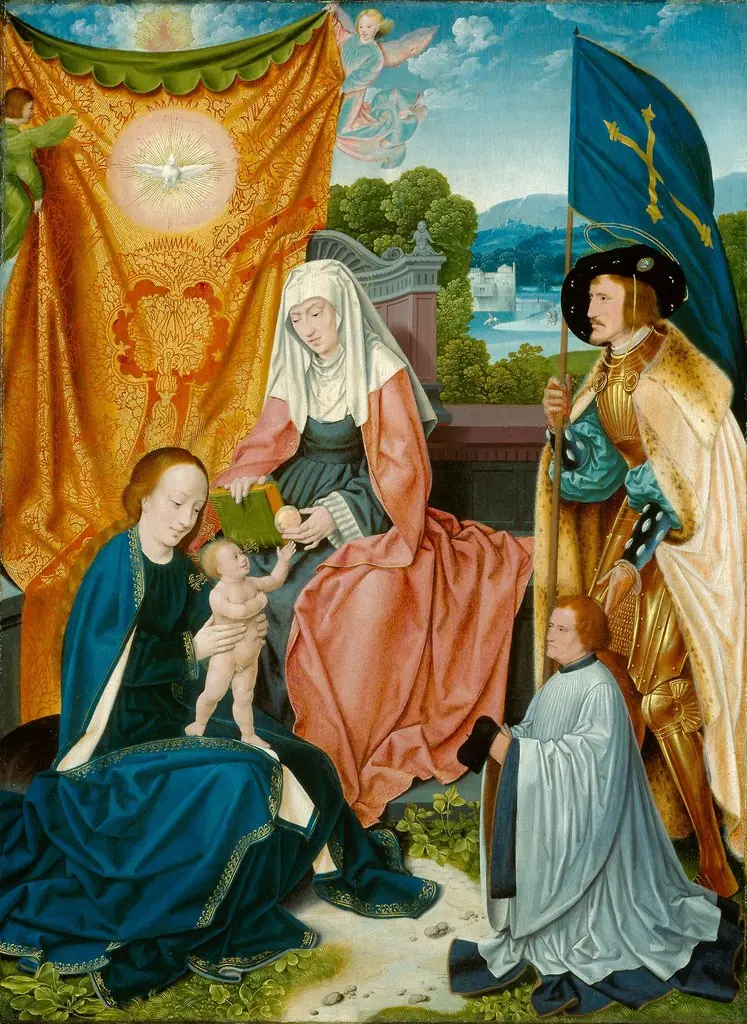 Virgin and Child with Saint Anne, Saint Gereon, and a Donor
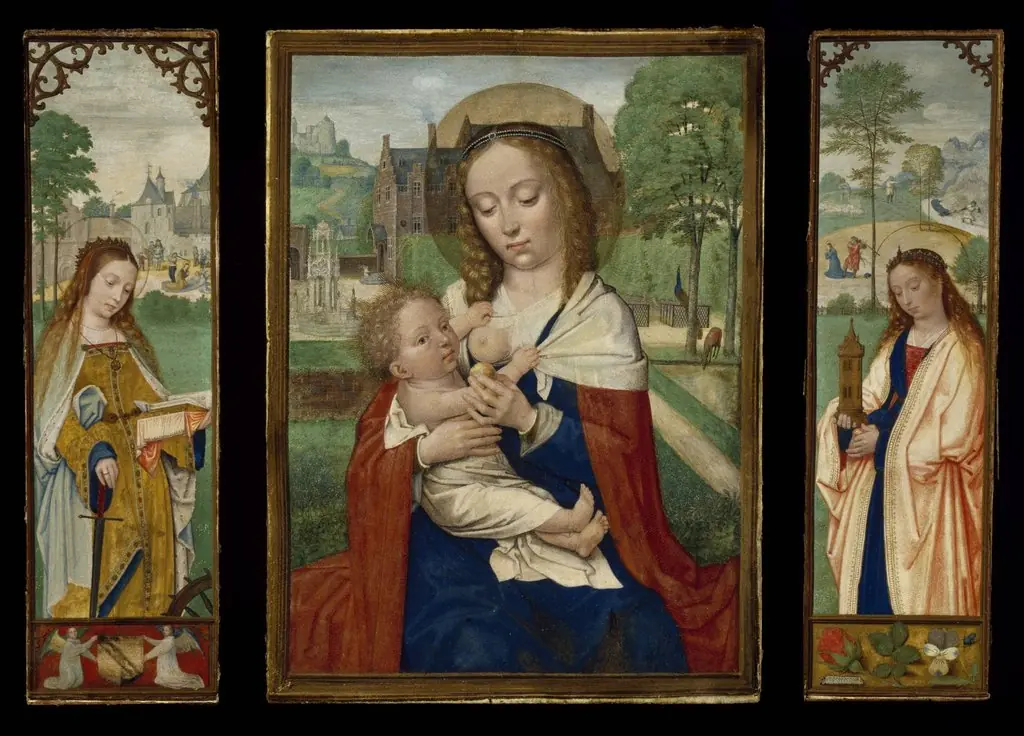 Triptych of Virgin and Child; Saints Catherine and Barbara