Artwork
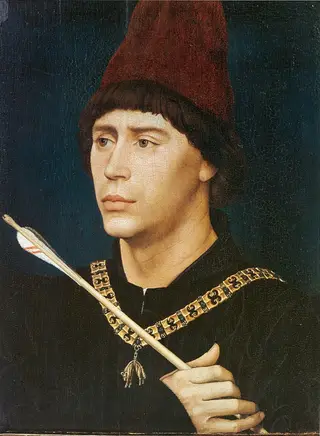
Portrait of a Man with an Arrow
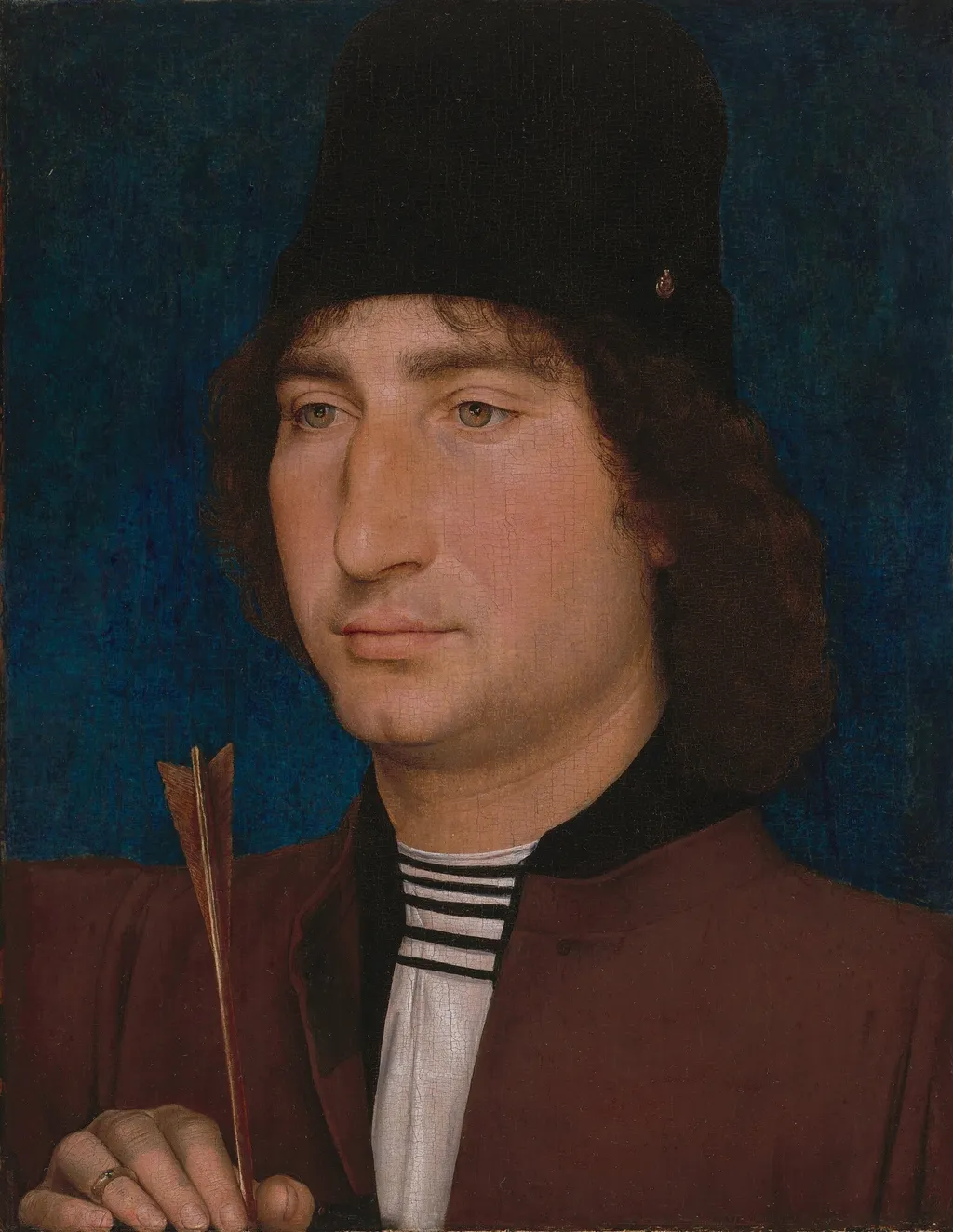
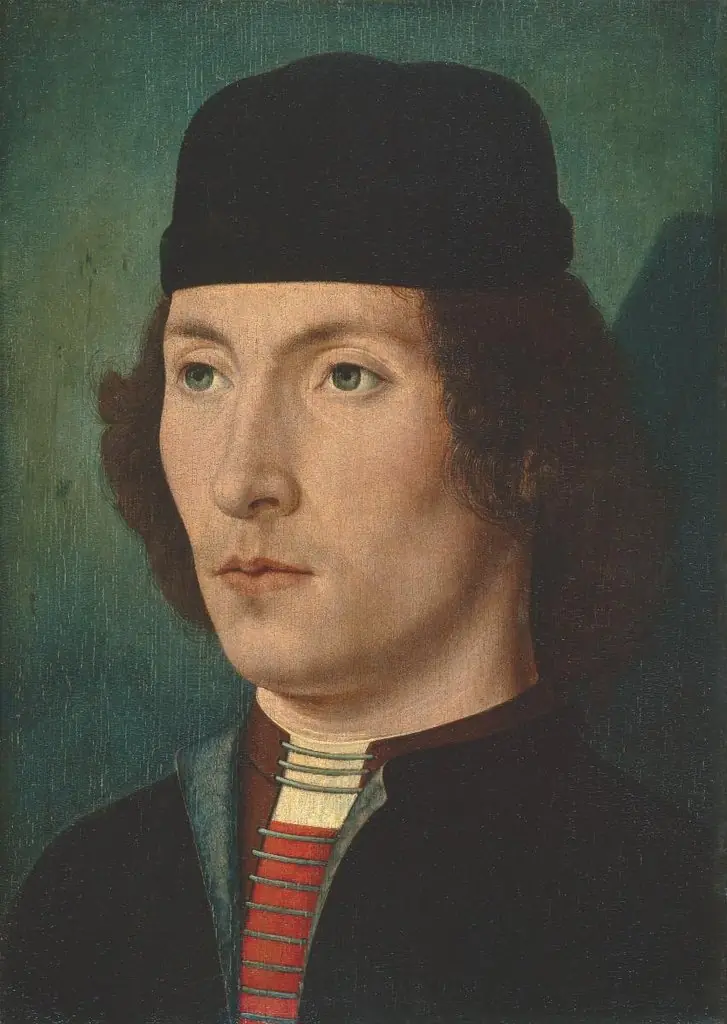
Portrait of a Man with an Arrow is an oil painting by the Northern Renaissance artist Hans Memling. It dates from 1472 and is held in the collection of the National Gallery of Art.
About this work
Technique & Style
Executed in 1478, this Early Netherlandish portrait by Hans Memling utilizes oil paint applied to a wooden panel support.
Executed in 1478, this Early Netherlandish portrait by Hans Memling utilizes oil paint applied to a wooden panel support. The work measures 31.3 cm in height and 25.1 cm in width. Stylistically, the composition focuses on a male figure distinguished by the inclusion of an arrow, a specific attribute that defines the subject's identity within the genre.
The handling of the medium reflects the technical precision characteristic of Memling's oeuvre during this period, employing the luminous potential of oil to render details on the rigid panel surface. While specific condition reports or microscopic details of the brushwork are not explicitly detailed in the available records, the material construction remains consistent with late fifteenth-century Flemish workshop practices.
History & Provenance
Hans Memling painted Portrait of a Man with an Arrow in 1478, an oil work on panel that belongs to the Early Netherlandish portrait genre. The painting first appears in a British private collection and was exhibited by Bourgeois Frères in Cologne before entering the collection of Baron Albert Oppenheim in 1895. It was acquired in 1912 by Franz Kleinberger and Co., sold in 1916 to Michael Dreicer, and bequeathed to the Metropolitan Museum of Art in 1921; it returned to Dreicer’s widow in 1933, passed through M. Knoedler & Co., and was purchased in 1936 by the A.W. Mellon Educational and Charitable Trust, which gifted it to the National Gallery of Art in 1937.
The painting is currently held by the National Gallery of Art in Washington, D.C., where it resides in the Andrew W. Mellon collection. Its accession history traces back to a bequest from Michael Dreicer to The Metropolitan Museum of Art in New York in 1921, cataloged under accession number 22.60.45. Following its return to Dreicer's widow in 1933, the work was acquired by the A.W. Mellon Educational and Charitable Trust in February 1936 and subsequently gifted to the National Gallery of Art in 1937.
Prior to these American holdings, the portrait was part of a British private collection and was owned by Baron Albert Oppenheim in Cologne from 1895. The work has been exhibited at the Exposition des primitifs flamands à Bruges.
Legacy
The Portrait of a Man with an Arrow, painted by Hans Memling in 1478, exemplifies Early Netherlandish portraiture through its precise oil technique and symbolic arrow motif. Its documented provenance moves from Albert von Oppenheim and Franz Kleinberger to Michael Dreicer, culminating in acquisition by the National Gallery of Art in 1937 through the A.W. Mellon Trust. The work was included in the 1930 Bruges exhibition of Flemish primitives, underscoring its contemporary scholarly recognition.
Today the painting remains a reference point for studies of 15th‑century portraiture and continues to be exhibited in major museum contexts.
Overview
Hans Memling, a prominent German-Flemish painter of the Northern Renaissance, created Portrait of a Man with an Arrow around 1472. This oil on panel work exemplifies the detailed realism characteristic of Early Netherlandish art. The painting presents a man in a direct gaze, distinguished by the unusual inclusion of an arrow, a detail that invites contemplation about its symbolic meaning or narrative context within the portrait.
Subject & Meaning
The painting features a man in plain attire, looking directly at the viewer. His expression remains composed, a notable contrast to the arrow he holds, which pierces the frame's edge. This peculiar detail, an arrow seemingly suspended or presented, deviates from typical portrait conventions of the era, suggesting a specific narrative, an allegorical reference, or perhaps an attribute identifying the sitter's profession, patron saint, or personal story.
Context
After his apprenticeship, Hans Memling established a significant workshop in Bruges, a thriving commercial and artistic center. His success led him to become one of the city's most affluent residents, indicating the high demand for his portraits and religious commissions. This painting is a testament to his status as a leading artist, reflecting the sophisticated patronage and artistic environment of Bruges in the late 15th century.
Own this work as a print
Artist & collection
Artist
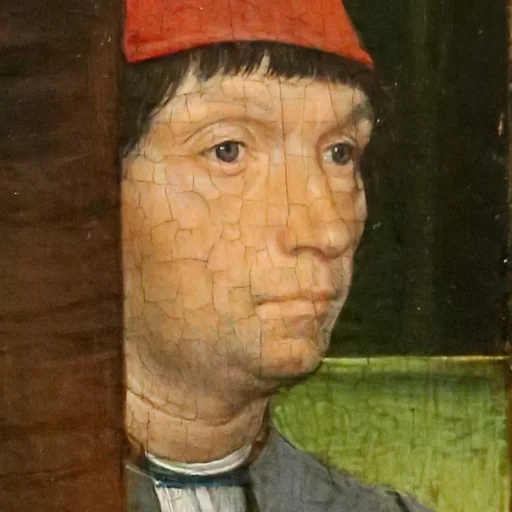
Hans Memling was a German-Flemish painter who worked in the tradition of Early Netherlandish painting.

![Saint Veronica [obverse], by Hans Memling](https://artifactworldgallery.com/img/hans-memling--saint-veronica-obverse--5a649fd8b09c96b9-w320.webp)