Artwork
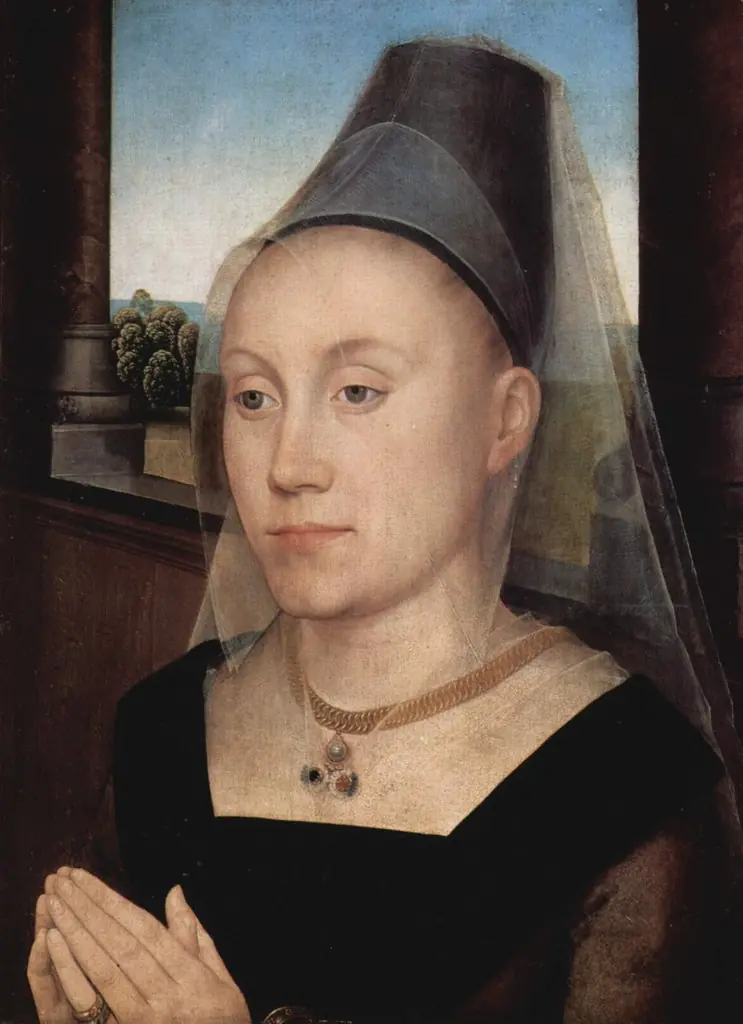
Portrait of Maria Portinari
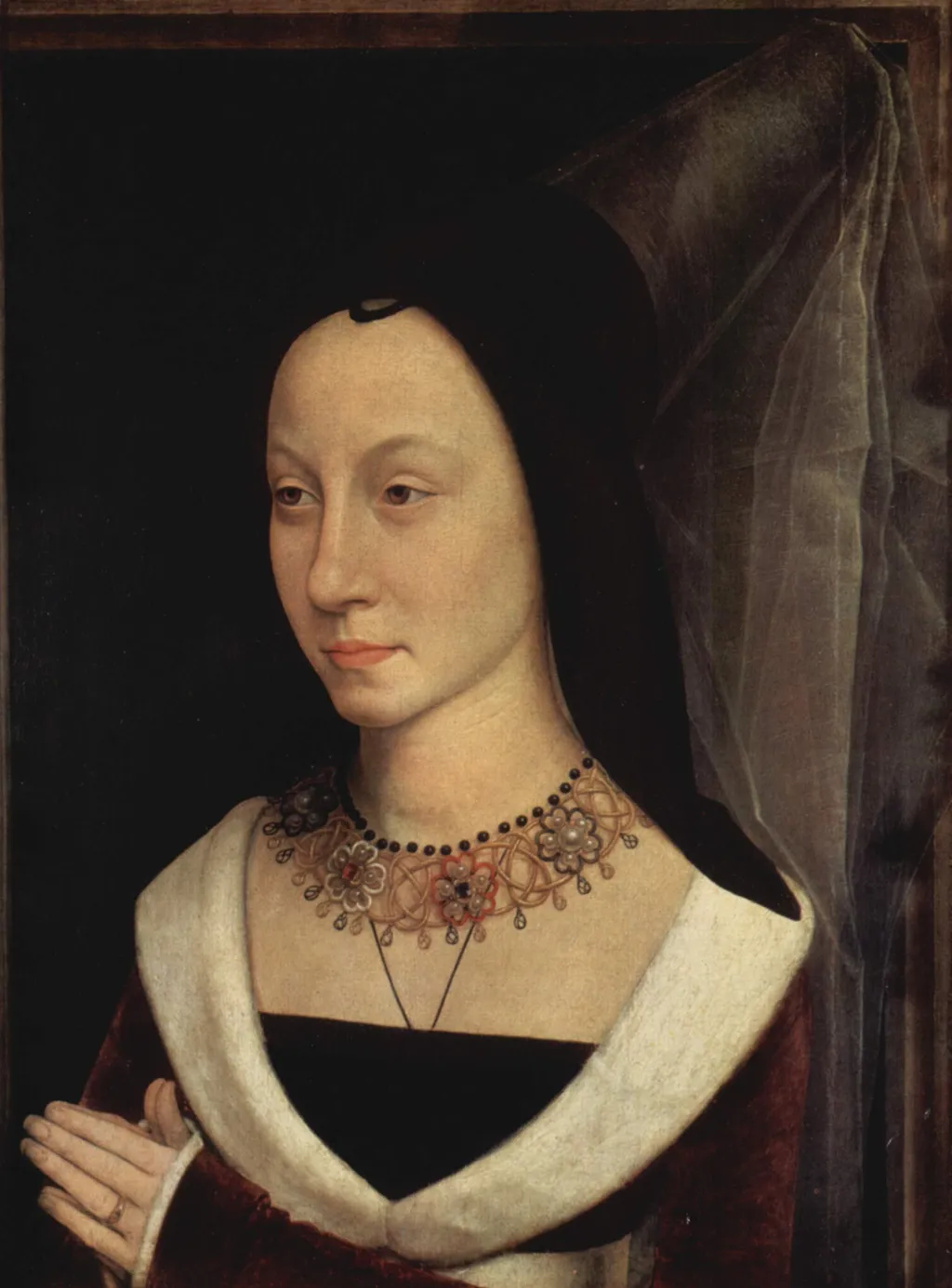
Portrait of Maria Portinari is an oil painting by the Northern Renaissance artist Hans Memling. It dates from 1470 and is held in the collection of the Metropolitan Museum of Art.
About this work
Subject & Meaning
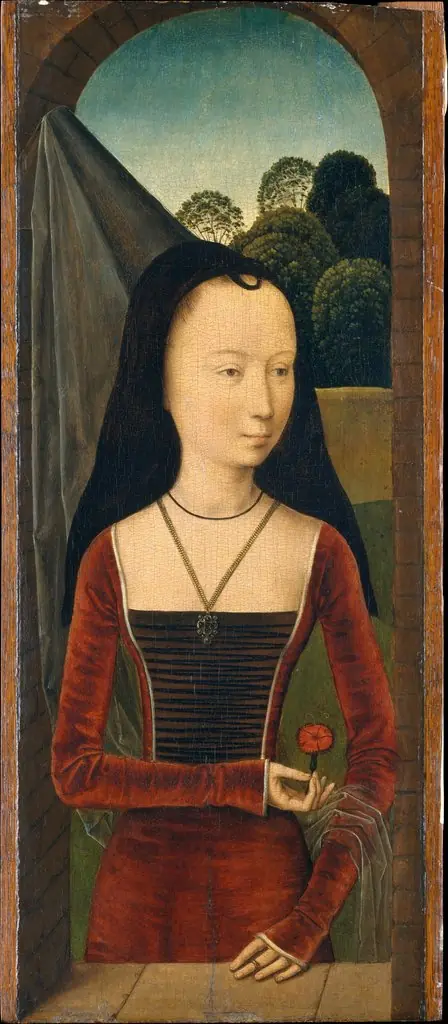
Her attire merges Italian identity with Flemish fashion, featuring a truncated black hennin and a transparent veil.
The work depicts Maria Maddalena Baroncelli, approximately fourteen years old, portrayed shortly before her 1470 marriage to the Florentine banker Tommaso Portinari. Commissioned by Tommaso as the right wing of a devotional triptych originally centered on a Virgin and Child, the portrait functions as an object for private prayer while simultaneously broadcasting the family's social standing. Maria is depicted with hands clasped in prayer against a dark background, her figure idealized to conform to contemporary Northern European beauty standards, such as a high forehead achieved by shaving the hairline and elongated facial features.
Her attire merges Italian identity with Flemish fashion, featuring a truncated black hennin and a transparent veil. The elaborate necklace, studded with pearls, rubies, and sapphires in floral motifs, serves as a potent symbol of wealth and status, mirroring jewelry worn by Margaret of York and appearing identically in Hugo van der Goes's later Portinari Altarpiece.
Technique & Style
Hans Memling executed this small portrait around 1470 using tempera and oil on an oak panel. The composition presents a half-length, three-quarter view of Maria against a flat, opaque, dark background, a stylistic hallmark of Memling's early portraiture influenced by Jan van Eyck and Rogier van der Weyden. Her frame is slightly undersized relative to her head, a convention common in contemporary northern portraiture.
Her elbows rest on an unseen parapet coinciding with the lower edge of a painted stone frame, creating a trompe-l'œil effect that brings her closer to the viewer. Maria's face is idealized with contemporary features such as raised eyebrows and an elongated nose. She wears a truncated black hennin with a transparent veil, and a dark dress with red velvet sleeves and white fur-lined hems. Her elaborate gilded necklace features pearls, rubies, sapphires, onyx beads, and enameled gold wire.
History & Provenance
The Portrait of Maria Portinari was commissioned by her husband, Tommaso Portinari, as the right wing of a devotional triptych, with a lost central panel depicting the Virgin and Child and a left wing showing Tommaso. Created circa 1470–1472, the work likely coincided with Maria’s marriage to Tommaso, then a prominent Florentine banker in Bruges. The small, intimate scale of the panels suggests a private devotional function, though some scholars propose the triptych may have been displayed in the Portinari Chapel behind Sant’Eustorgio Basilica in Milan.
By 1501, the portraits were recorded in Tommaso’s posthumous inventory as lateral wings flanking a central Madonna. The triptych remained in the family until the early 16th century, when it passed to Florence’s Ospedale di Santa Maria Nuova. After centuries in Italian collections, it entered the Metropolitan Museum of Art in 1913 via Benjamin Altman’s bequest.
The Portrait of Maria Portinari is held by the Metropolitan Museum of Art in New York, where it has been part of the permanent collection since 1913. Benjamin Altman purchased the work in New York and bequeathed it to the museum that year. Prior to this, the painting passed through several private collections, including those of the Prince of San Donato and Elia Volpi, after being sold in London and Paris around 1901.
The work was previously attributed to Dieric Bouts at an 1870 sale. According to available records, the painting was exhibited as part of the Exposition des primitifs flamands à Bruges. The portrait hangs alongside its companion piece, the Portrait of Tommaso Portinari, at the Metropolitan Museum.
Context
Memling's Portrait of Maria Portinari is firmly situated within the Early Netherlandish painting tradition, and its plain dark background reflects the convention established by Jan van Eyck and Rogier van der Weyden and favoured at the Burgundian court, a stylistic feature that aids in dating the work to Memling's early career before he adopted landscape or interior settings, as seen in his later Benedetto Portinari Triptych []. The painting's necklace closely resembles that worn by Margaret of York at her 1468 wedding to Charles the Bold, an event the Portinaris attended, and art historian Dirk de Vos has suggested that Hugo van der Goes may have observed Memling's panel during his stay with Tommaso Portinari around 1479, partly basing his later Portinari Altarpiece (c. 1475–1478) upon it []. The work's provenance, recorded in a 1501 Florentine inventory, traces through the Portinari family, the Hospital of Santa Maria Nuova, Anatolio Demidoff, and Benjamin Altman, who donated it to the Metropolitan Museum of Art in 1913 [].
Legacy
The Portrait of Maria Portinari has exerted a quiet but enduring influence on the reception of Northern Renaissance portraiture and on later depictions of elite women. Its refined rendering of costume and jewelry became a touchstone for studies of late-fifteenth-century Burgundian fashion, and the sitter’s hennin and necklace recur in scholarly discussions of contemporary female portraiture. Art historians such as Lorne Campbell have repeatedly invoked the panel to anchor attributions and chronologies within Memling’s early oeuvre, while Sophie McConnell’s analysis of its jewels has been cited in broader treatments of Netherlandish luxury goods and dynastic display.
The work’s subsequent exhibition history, from private Florentine collections to the Metropolitan Museum of Art, furthered its canonical status, and its pairing with Tommaso’s portrait has been treated as a paradigm of Italian–Flemish artistic exchange. Although the central Virgin and Child panel is lost, the surviving wings have remained on continuous view since their acquisition by Benjamin Altman in 1913, reinforcing the work’s stable presence in museum culture.
Overview
Hans Memling's Portrait of Maria Portinari, painted around 1470, is a small oil and tempera work on an oak panel. It depicts Maria Maddalena Baroncelli, a young woman of about fourteen. Originally, this panel served as the right wing of a devotional triptych, with a central Virgin and Child panel now lost, and a companion portrait of her husband, Tommaso Portinari. Today, Maria's portrait is displayed alongside Tommaso's at the Metropolitan Museum of Art in New York.
Own this work as a print
Artist & collection
Artist
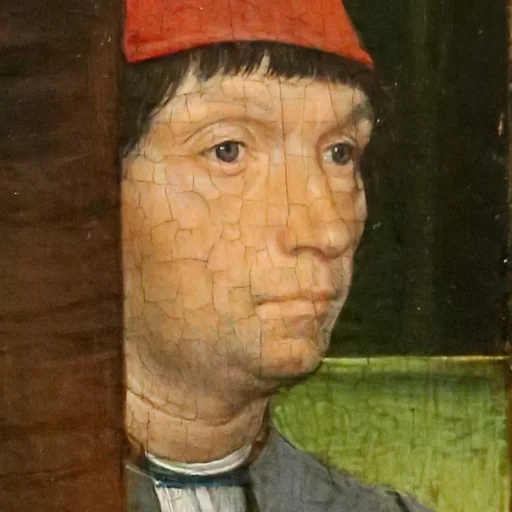
Hans Memling was a German-Flemish painter who worked in the tradition of Early Netherlandish painting.

![Saint Veronica [obverse], by Hans Memling](https://artifactworldgallery.com/img/hans-memling--saint-veronica-obverse--5a649fd8b09c96b9-w320.webp)
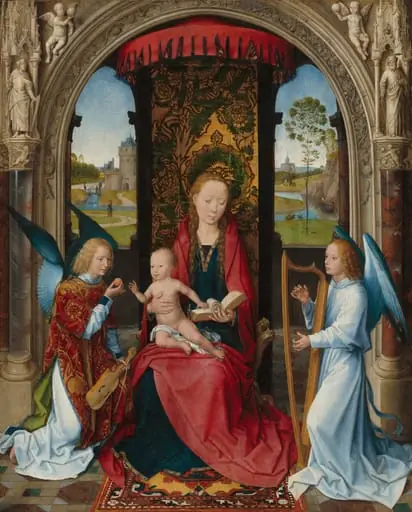
- Portrait of a Woman
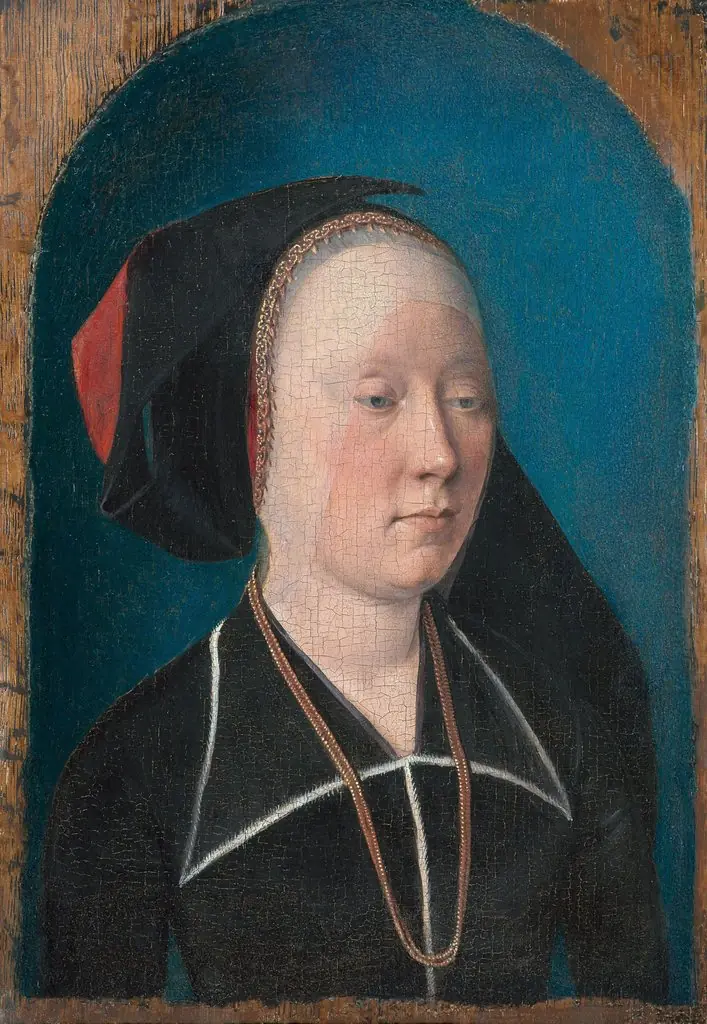 Portrait of a Lady
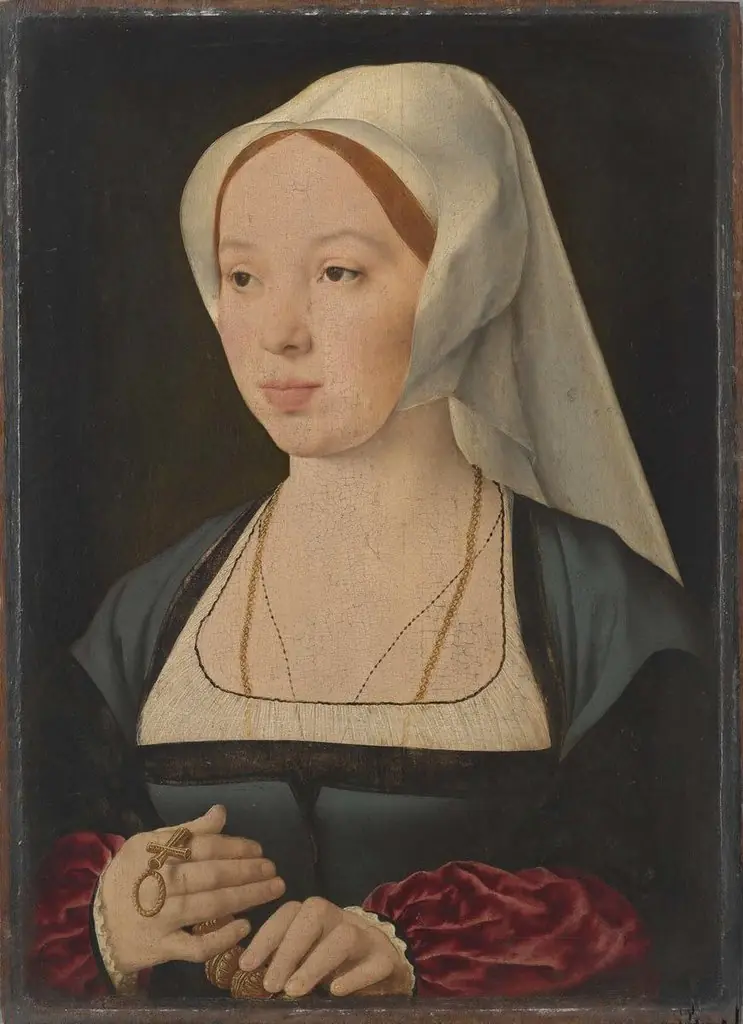 Portrait of a Lady
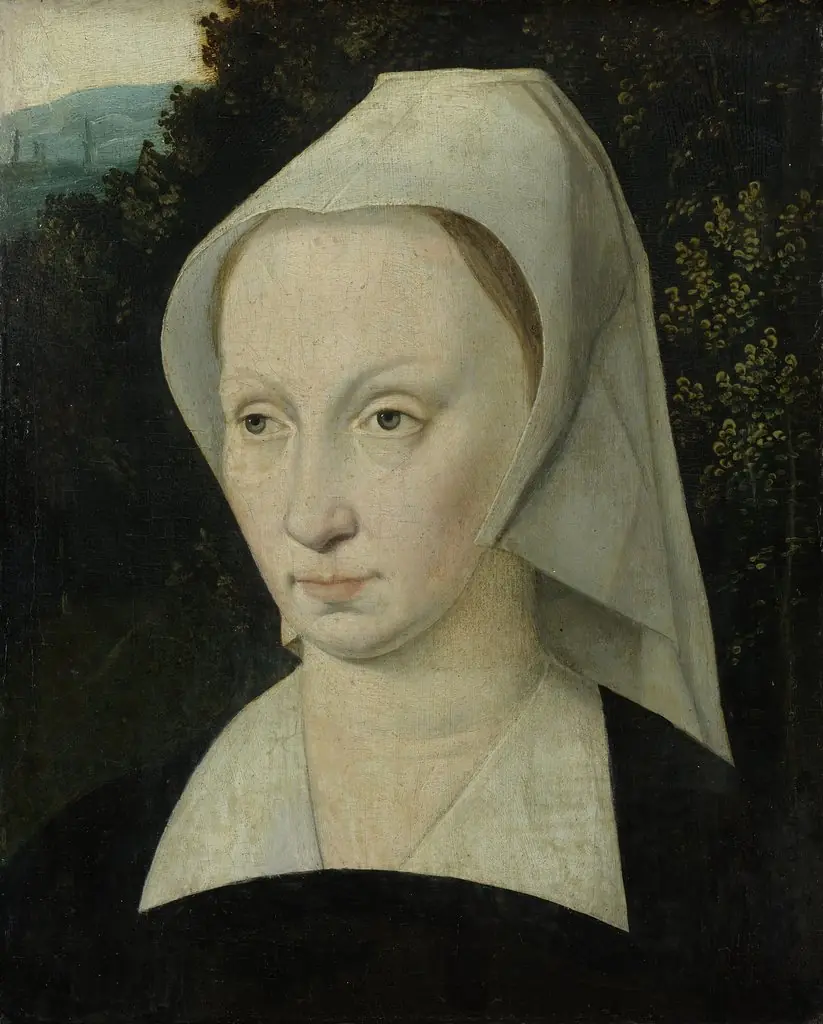 Portrait of a woman
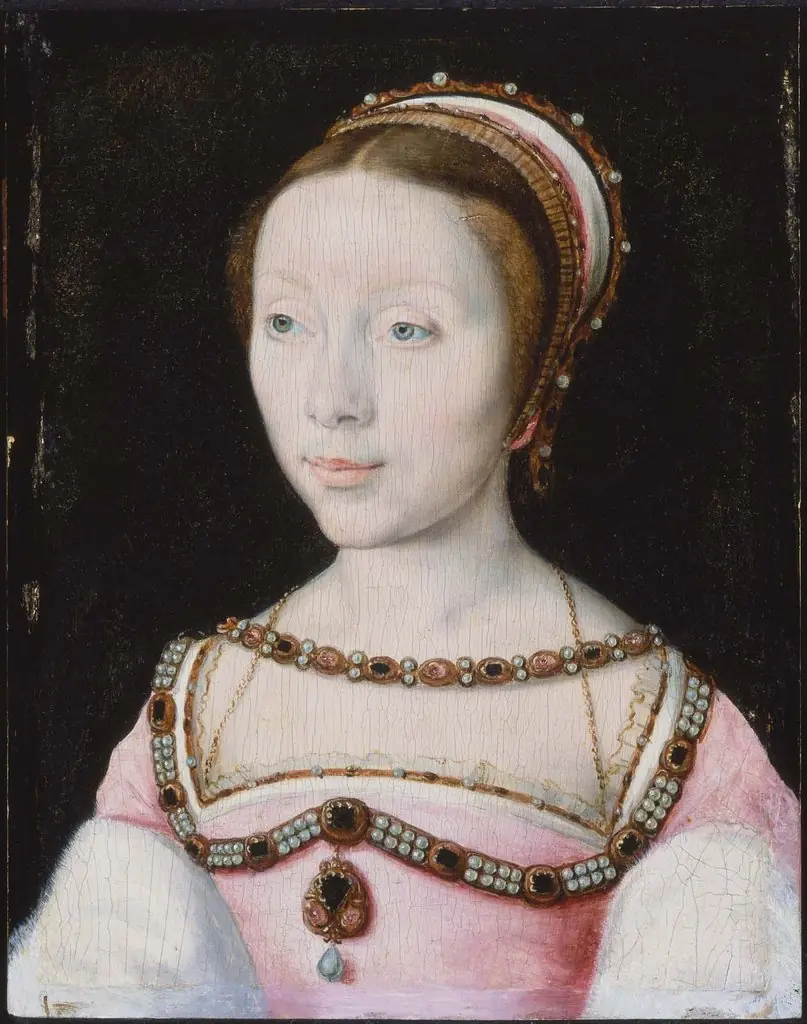 Françoise de Longwy
 Portrait of Isabella of Austria (1501–1526)
 Portrait of a woman
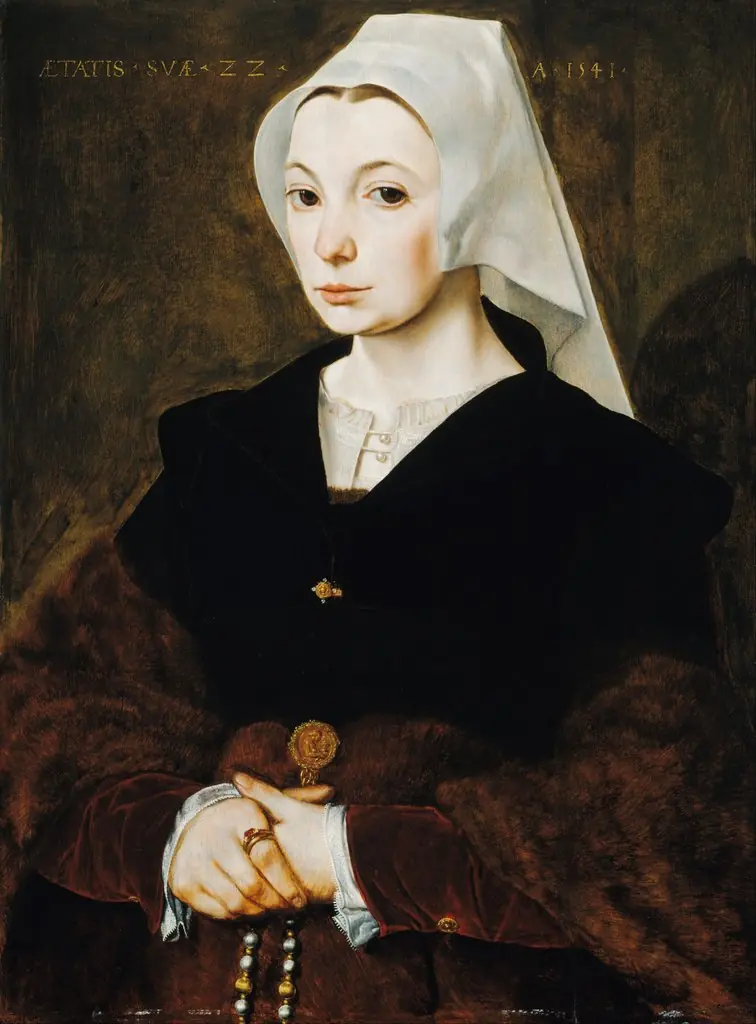 Portrait of a young woman
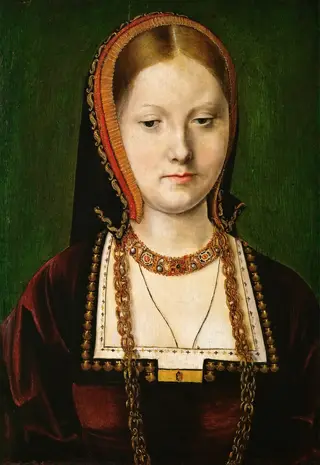 Mary Rose Tudor (1496-1533), Schwester Heinrichs VIII. von England (?)
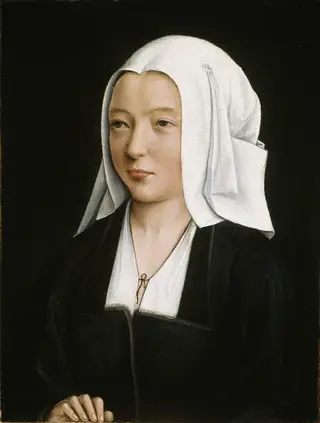 Portrait of a Young Woman
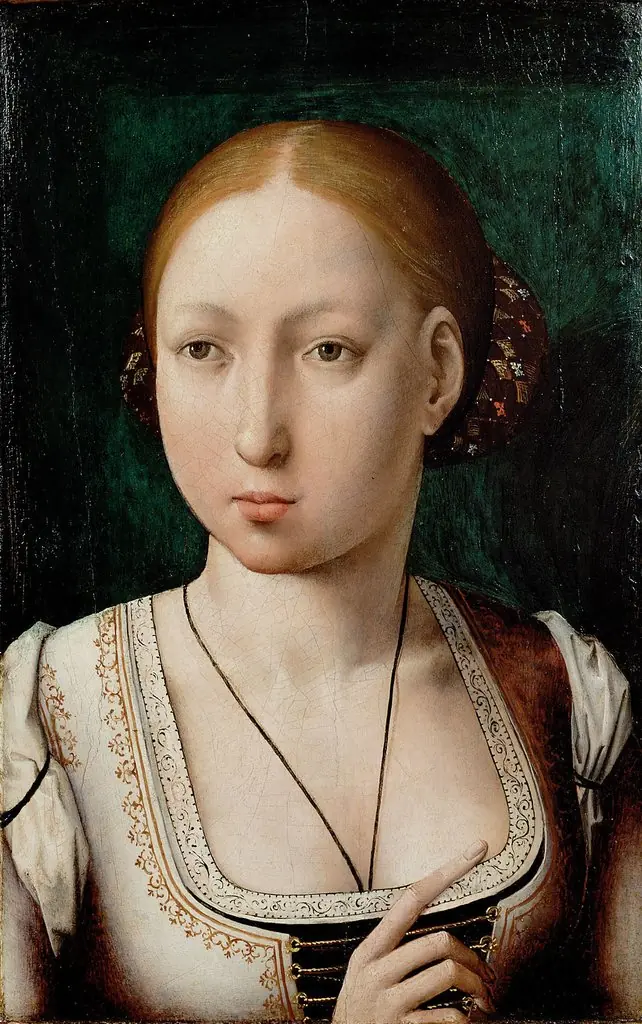 Portrait of Joan the Mad
 Portrait of Barbara van Vlaendenbergh