Artwork
Jesus Christ carrying the Cross, inner wing
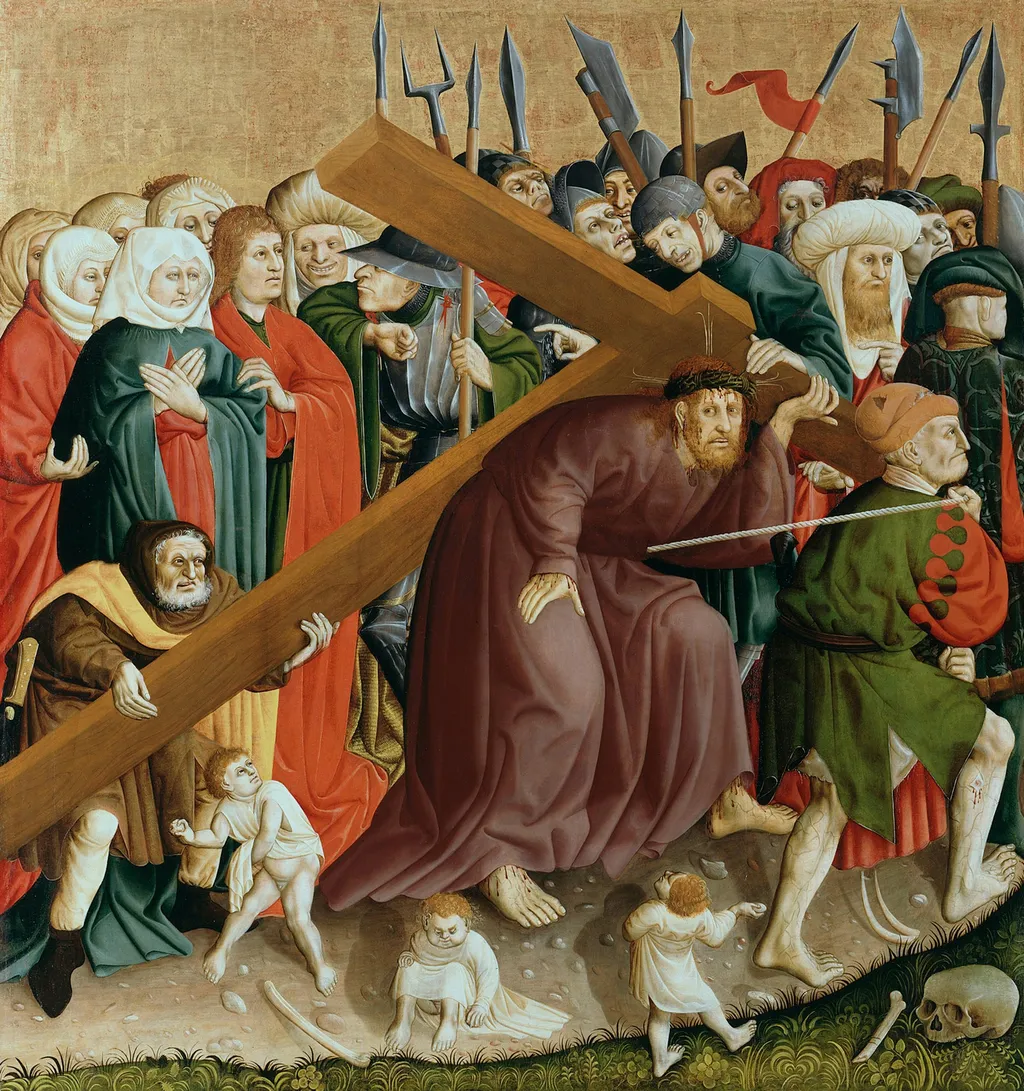
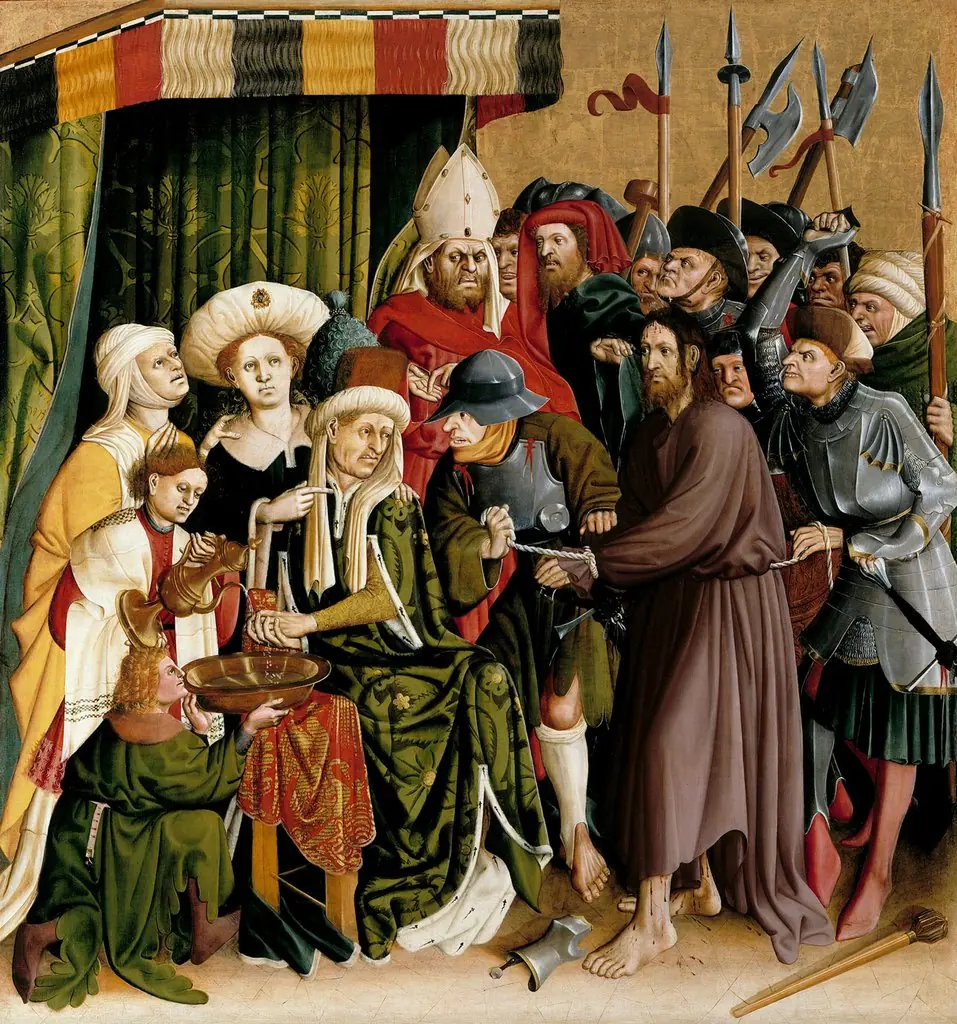
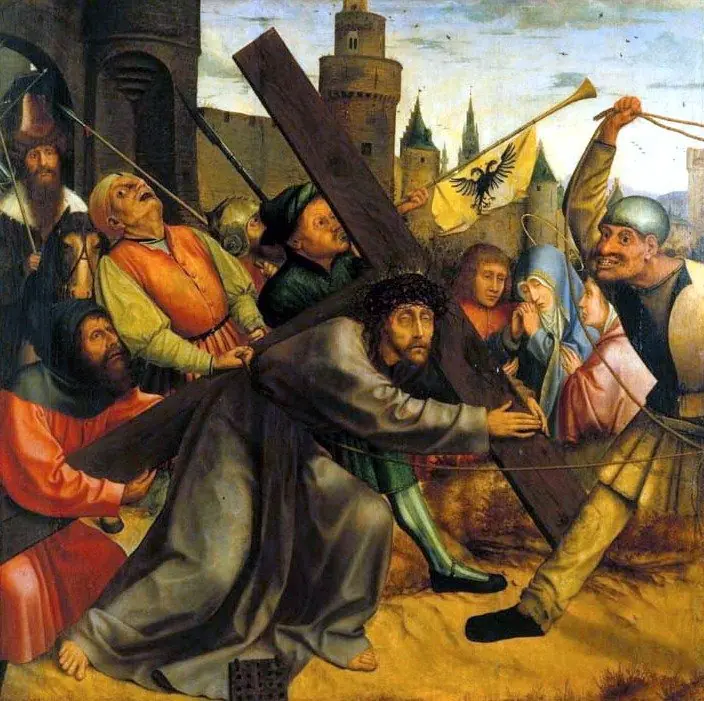
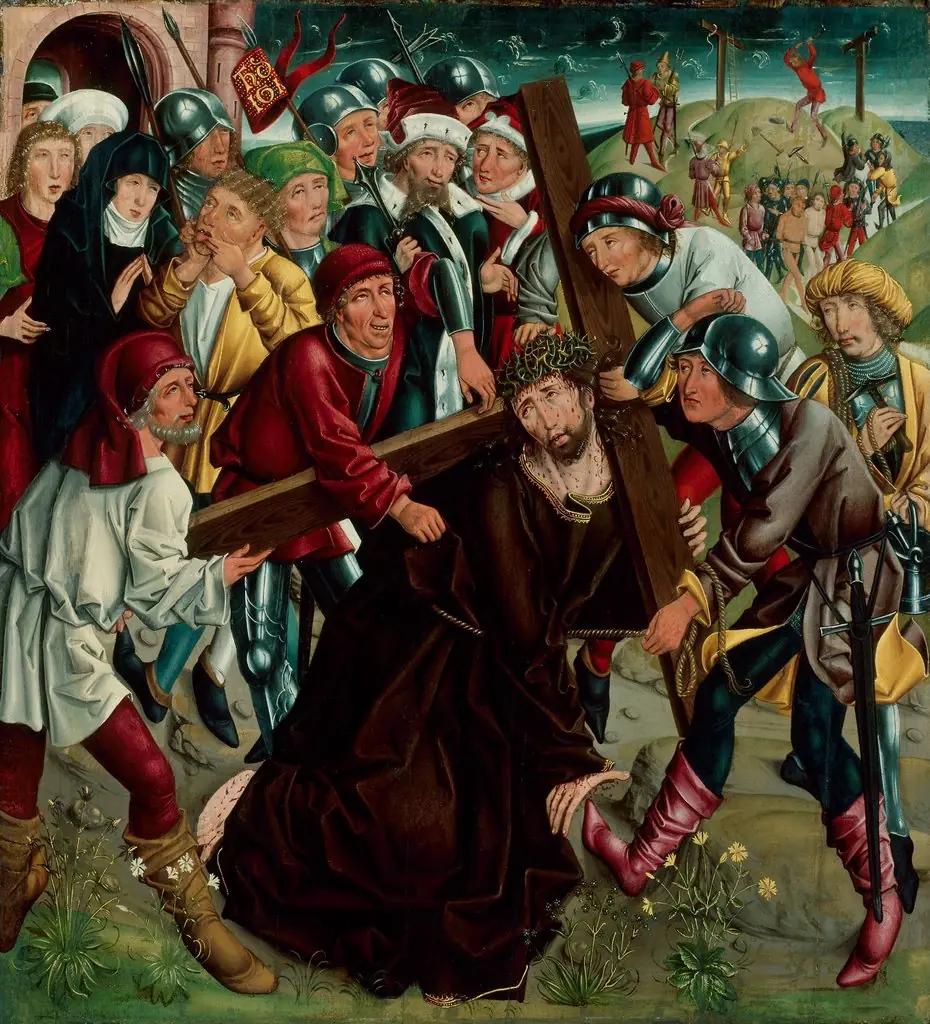
Jesus Christ carrying the Cross, inner wing is an oil painting by the Northern Renaissance artist Hans Multscher. It dates from 1437 and is held in the collection of the Gemäldegalerie Berlin.
About this work
Overview
Jesus Christ carrying the Cross, inner wing is a 1437 oil on fir panel painting by the Swabian artist Hans Multscher.
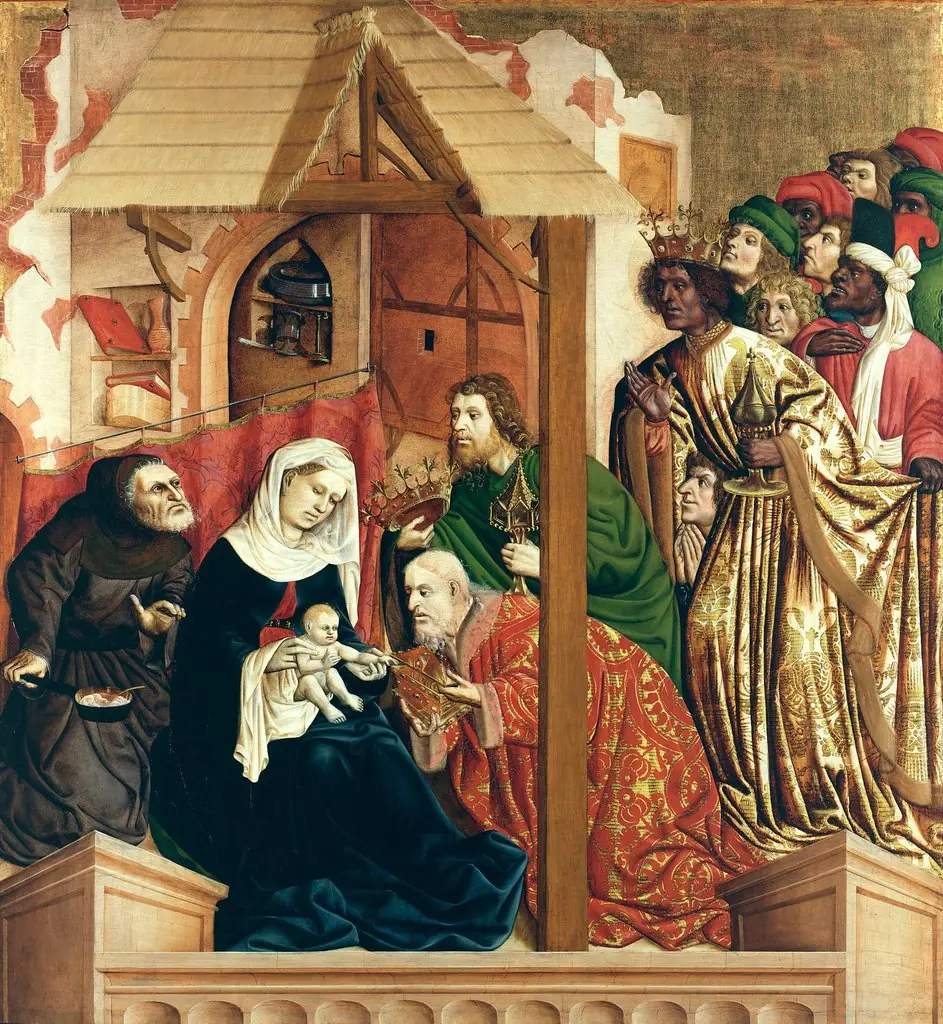
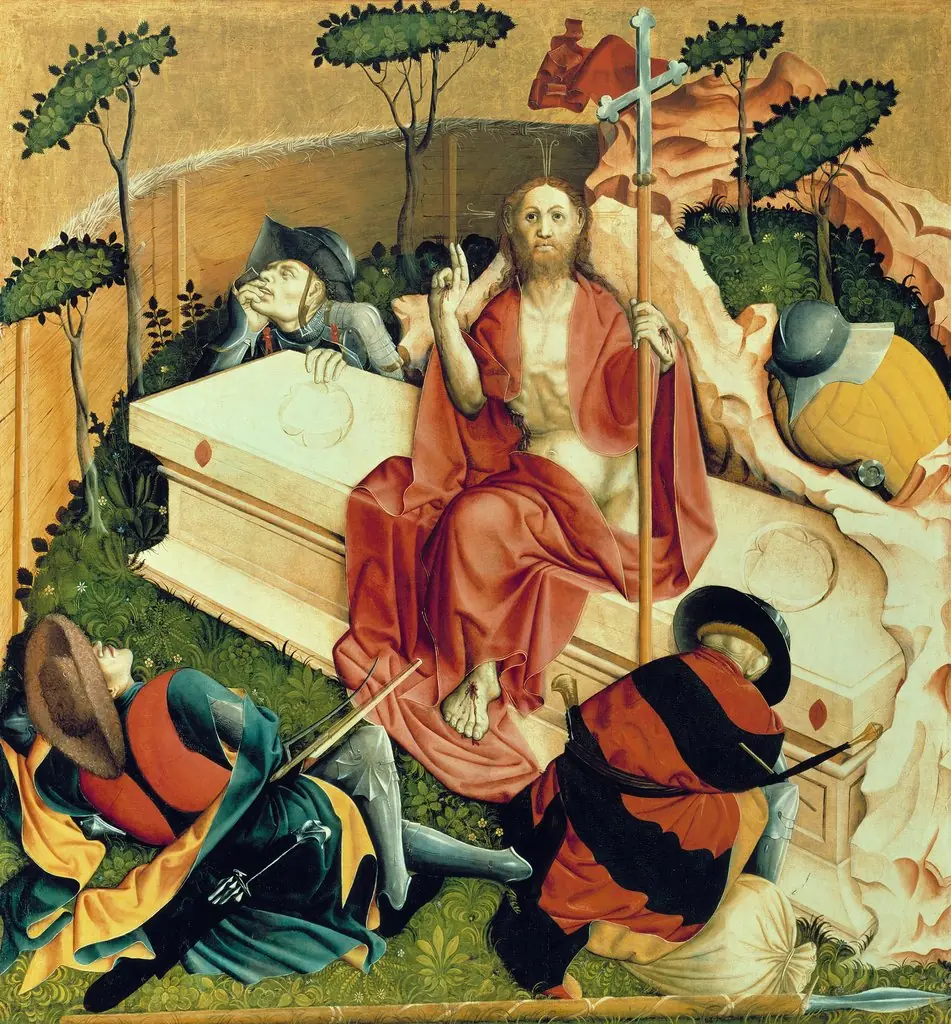
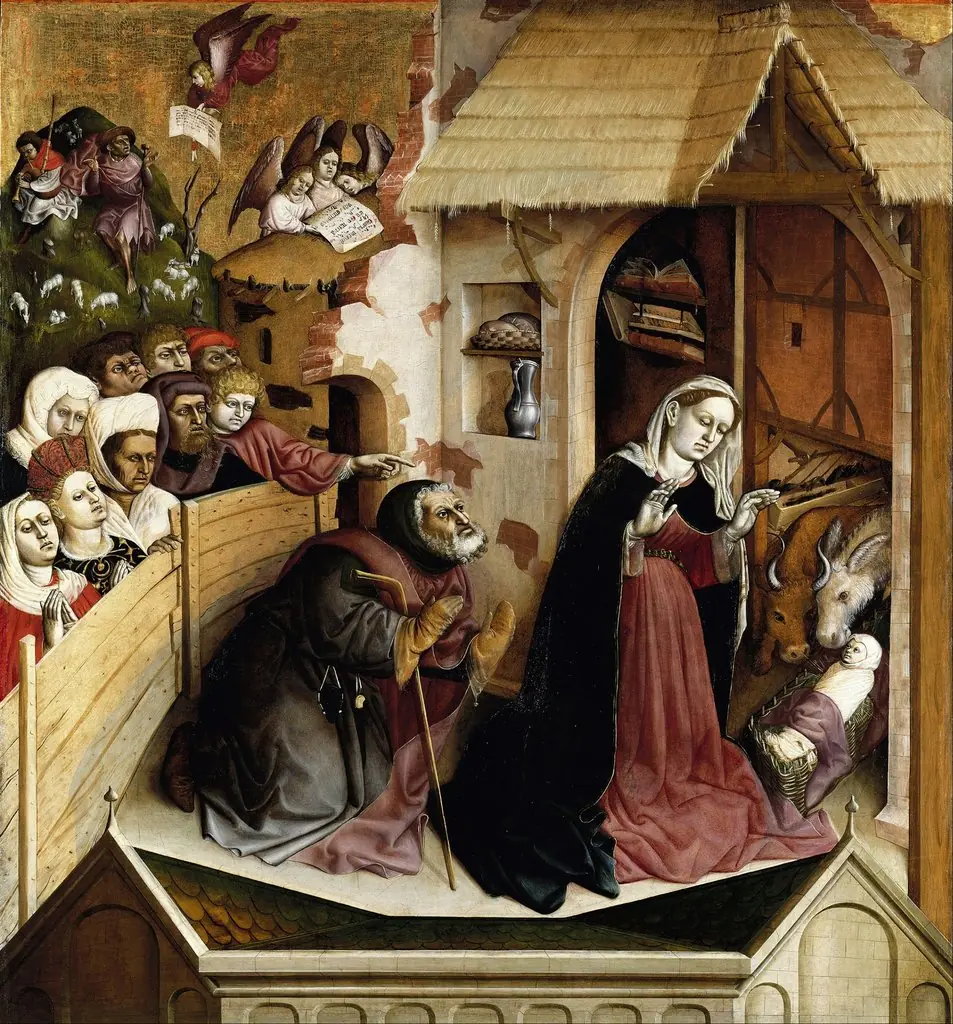
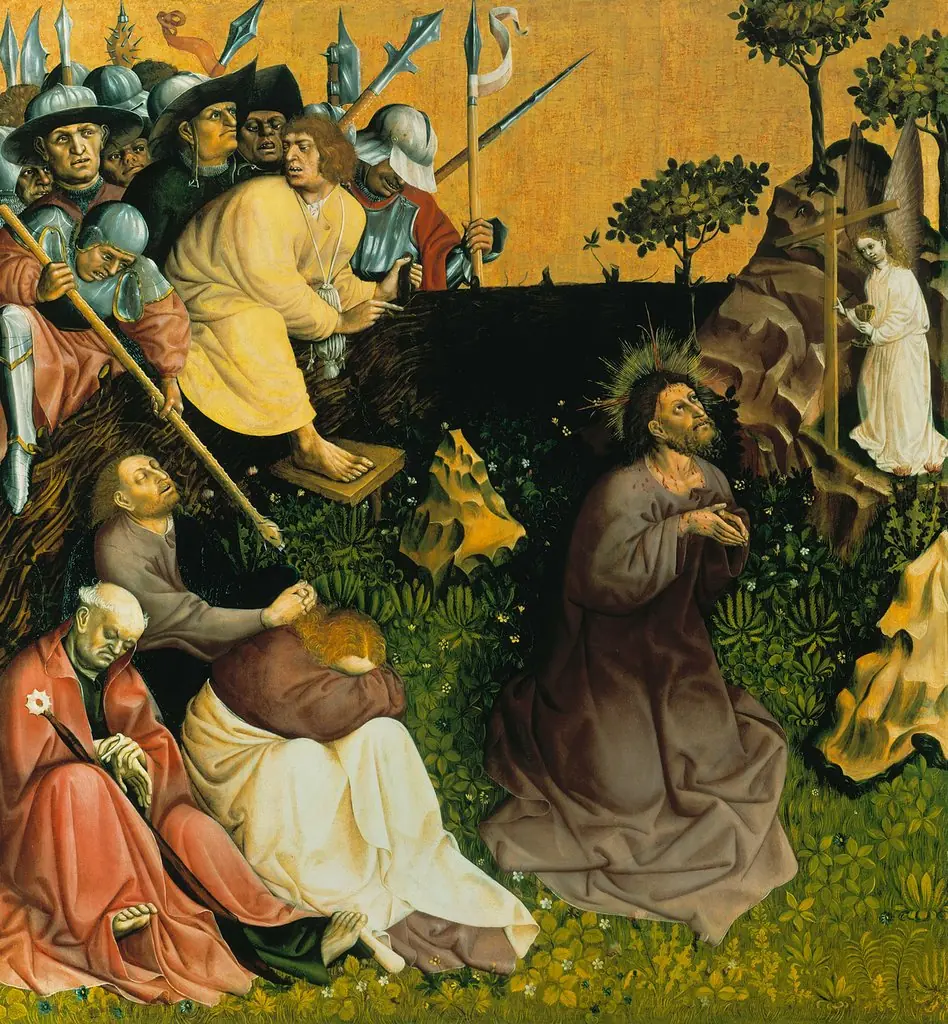
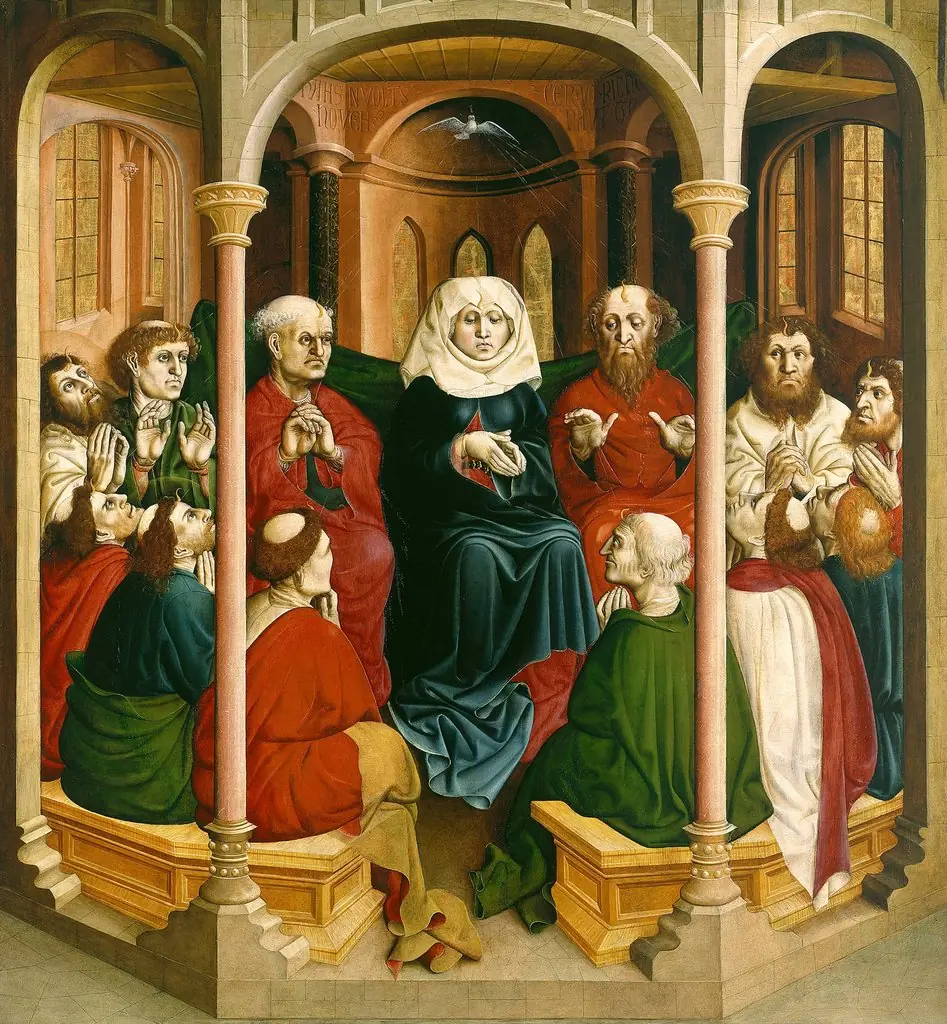
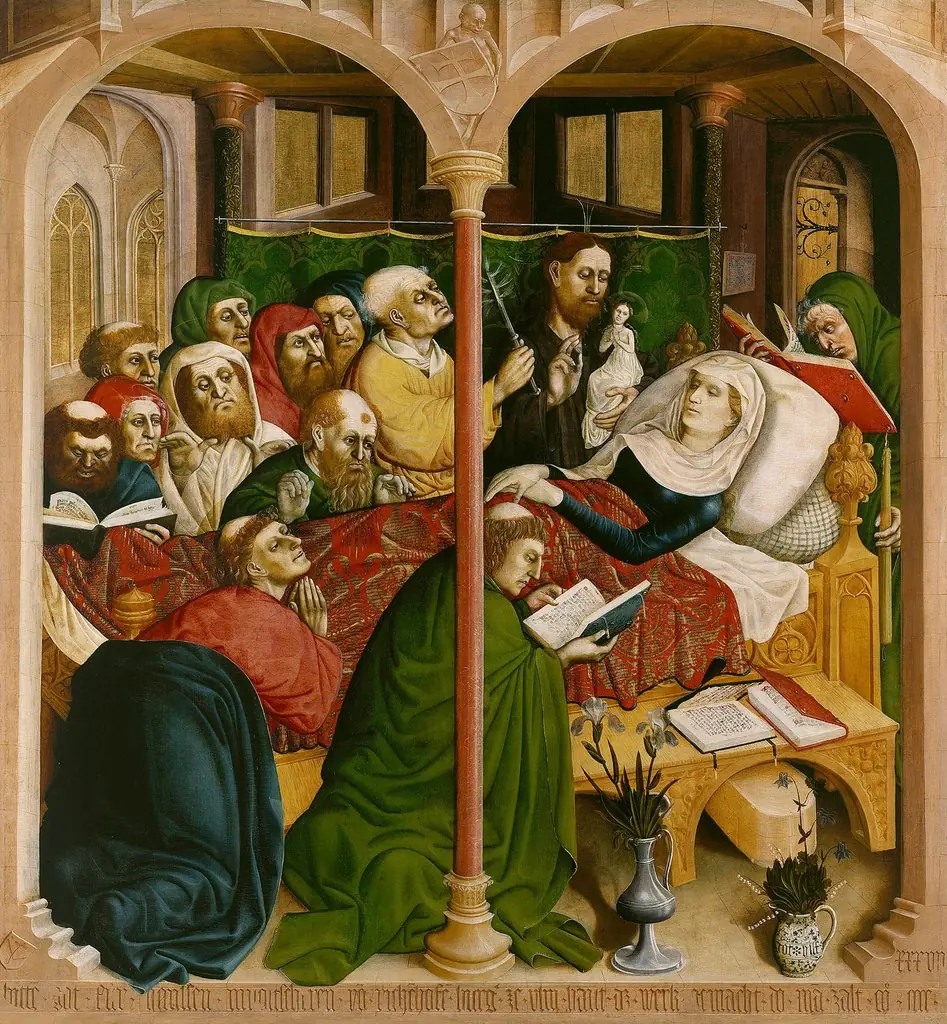
Jesus Christ carrying the Cross, inner wing is a 1437 oil on fir panel painting by the Swabian artist Hans Multscher. Measuring 150 by 140 centimeters, the work forms the bottom left panel of the inner wing of the Wurzach Altar, a dismantled winged altarpiece of considerable dimensions whose central carved shrine is now lost. The painting is currently held in the Gemäldegalerie Berlin, owned by the Prussian Cultural Heritage Foundation. Recognized as one of the most important works of German painting from the first half of the fifteenth century, the panel demonstrates Multscher's dual capacity as both a sculptor and a painter, merging late Gothic traditions with an emerging Netherlandish realism.
Subject & Meaning
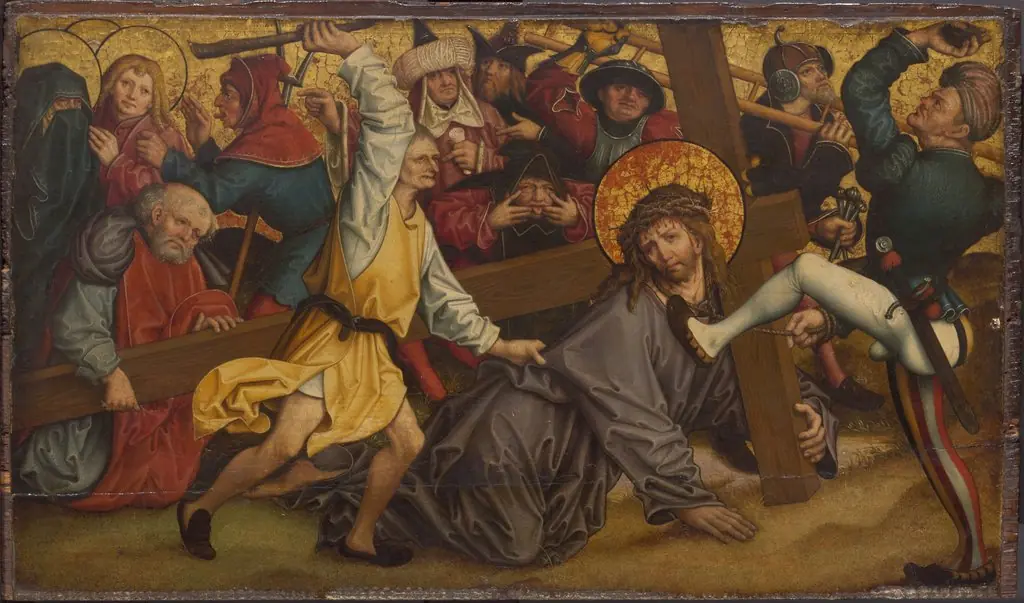
The panel depicts the Passion episode of Christ bearing the cross. A bearded Christ, wearing a crown of thorns and a long mauve robe, angles his body forward under the heavy burden of the wooden cross. Blood trickles from his brow and bare feet. A rope tied around his torso is pulled by an executioner in green and red, while soldiers behind him grip the cross and brandish weapons including spears, axes, and halberds. To the left, a group of mourning women in richly colored veils gesture in grief, one with hands clasped. Simon of Cyrene, forced to assist, struggles to lift the cross beam. Children throwing stones accompany Christ to the execution site, and a small child in white clings to the cross near a kneeling bearded man in brown and yellow. The ground, scattered with stones and bones and featuring a skull in the lower right corner, underscores the mortality and violence of the scene, contrasting with the serene gold background.
Technique & Style
Executed in oil paint on a fir panel, the painting exhibits saturated, jewel-like colors, including crimson, emerald, ultramarine, and mauve, set against a flat burnished gold background. The handling of the medium yields an enamel-like finish with precise brushwork throughout. Modeling is smooth, featuring crisp contours and fine detail in the rendering of fabrics and faces, with minimal cast shadows. The strength and solidity of the painted figures reveal a remarkable realism and a sculptural approach to form, reflecting Multscher's primary identity as a sculptor. While the elongated Gothic grace of the upper Rhine persists, the patient observation and dramatic intensity of the figures show the early absorption of the new Flemish realism into German painting.
Context
Hans Multscher, born around 1400 in Reichenhofen near Leutkirch, became a burgher of Ulm in 1427 and worked there until 1467. He is documented in contemporary records exclusively as a sculptor, running a large workshop in the leading center of late medieval German wood carving. This documented identity caused long-standing scholarly doubt regarding his authorship of the painted panels, with some scholars arguing he only executed the now-lost sculptures while workshop assistants handled the painting. However, the double signature on the Wurzach Altar, which echoes the proud inscription on his 1433 Karg Altar at Ulm Minster, is interpreted as the master's deliberate assertion of his own hand and creative responsibility for the painting, likely to preempt doubts about his capability in an unfamiliar medium. The altarpiece's original purpose remains debated, with the lost central shrine possibly containing a Crucifixion group or a Marian shrine, and a coat of arms held by an ape on the Death of the Virgin panel has been speculatively linked to hospitals in Memmingen or Landsberg.
Legacy
The Wurzach Altar panels stand among the most important fifteenth-century German paintings, marking a pivotal moment when Southern Germany began absorbing the new Netherlandish realism of Jan van Eyck and Rogier van der Weyden. Multscher carried this influence into the painted wings of Swabian altarpieces, training the next generation of Ulm carvers and painters. His painted panels, with their relief-like density and psychological intensity, influenced subsequent German narrative cycles, including the continuous Passion traditions later developed by Hans Memling in Bruges. The Wurzach Altar's survival, despite the loss of its central shrine, continues to anchor the understanding of late Gothic Swabian art and the dual-discipline practice of master craftsmen.
Own this work as a print
Artist & collection
Artist
Hans Multscher (ca. 1400–1467) was a German sculptor and painter. Multscher was born in Reichenhofen (today Leutkirch im Allgäu). He made himself acquainted with new artistic styles from northern France and the…