Artwork
The Resurrection (Wurzach altarpiece)
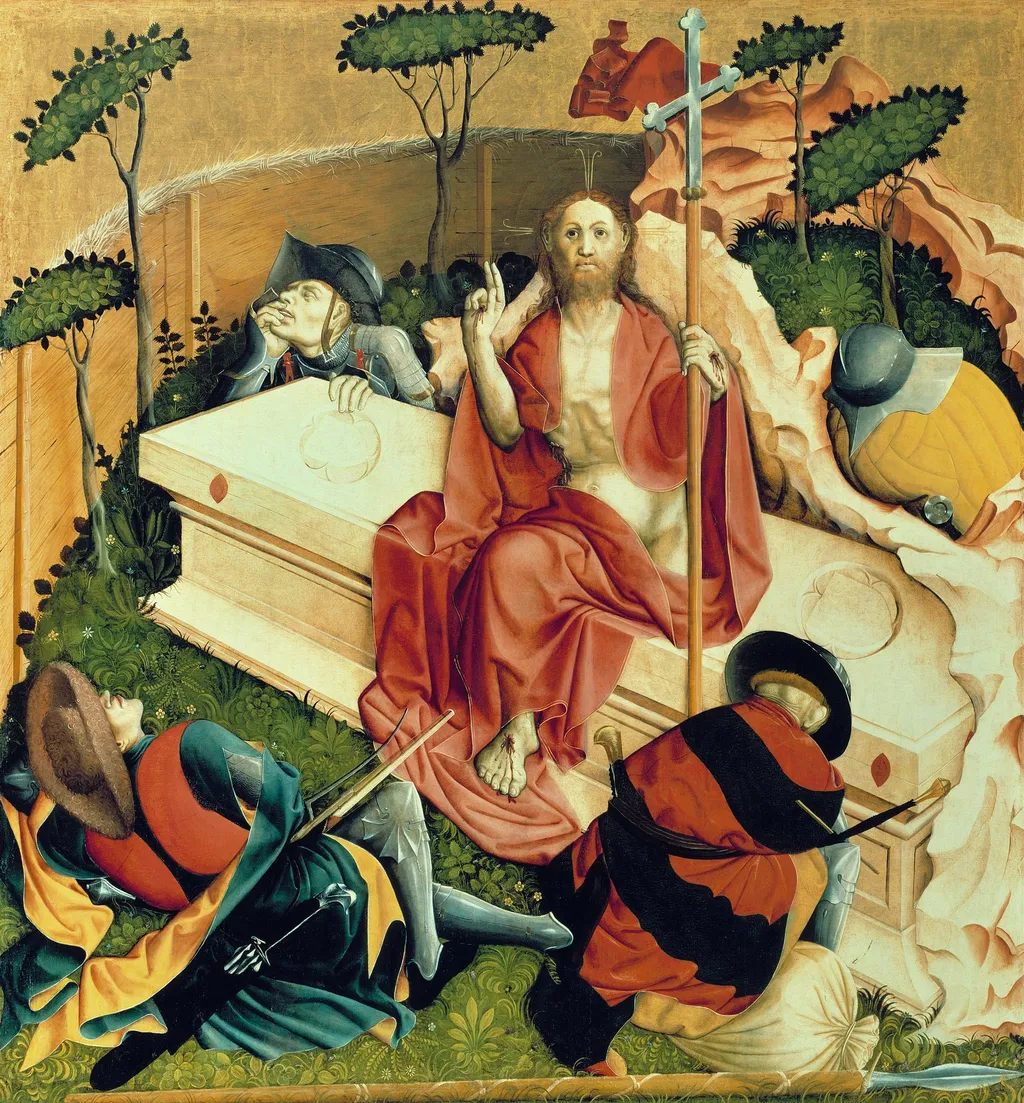
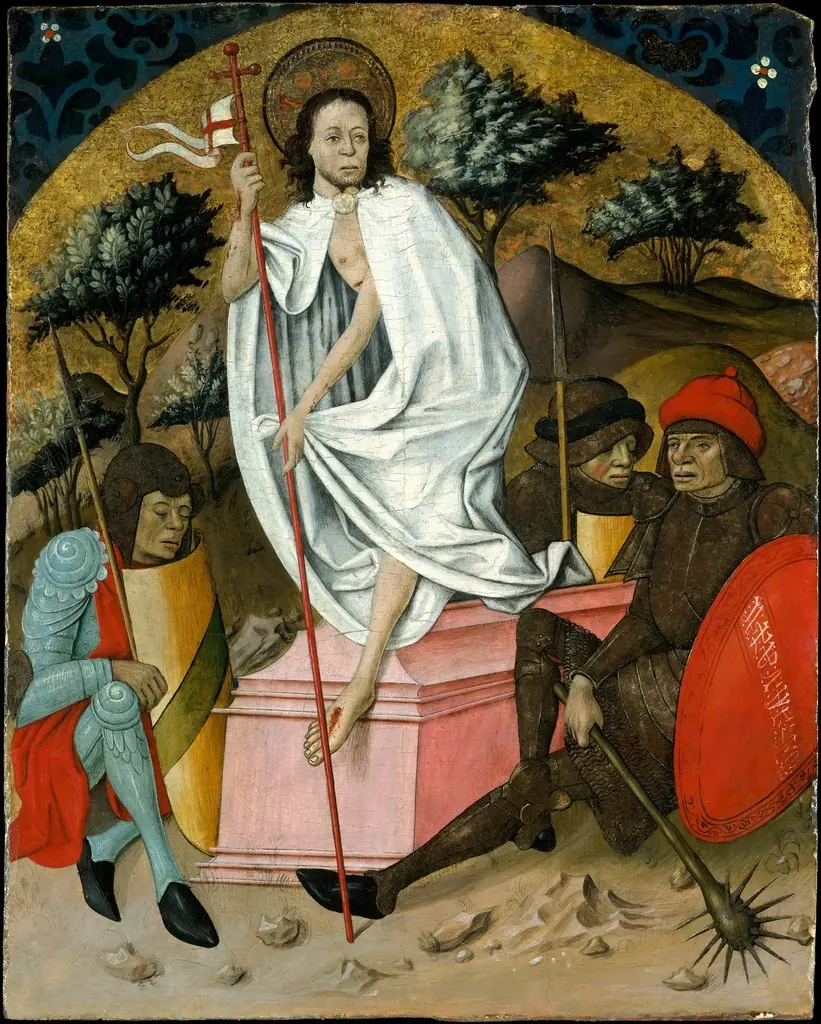
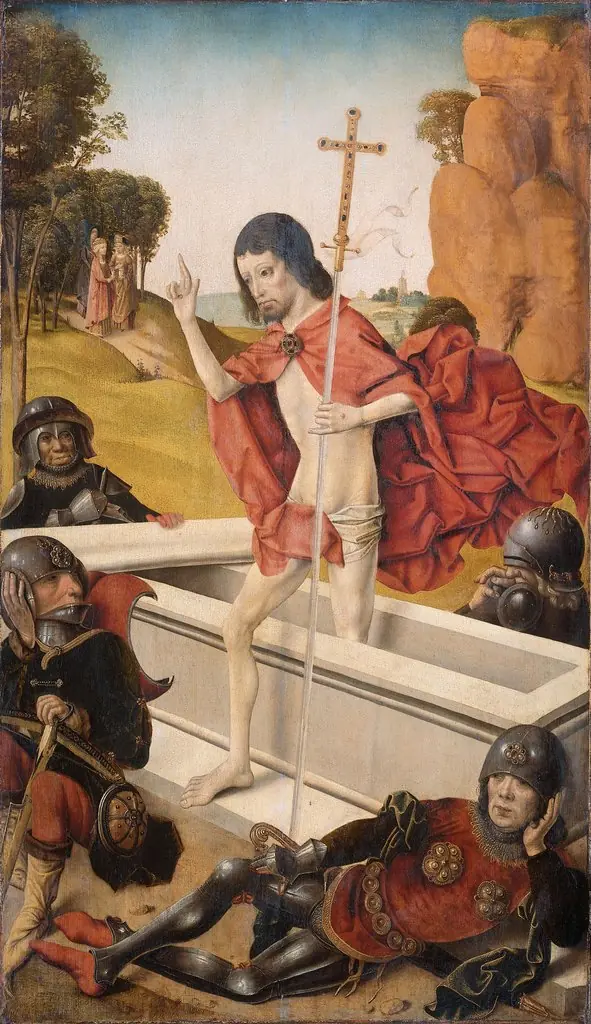
The Resurrection (Wurzach altarpiece) is an oil painting by the Northern Renaissance artist Hans Multscher. It dates from 1437 and is held in the collection of the Gemäldegalerie Berlin.
About this work
Technique & Style
Light falls evenly across the scene with minimal deep shadow, creating a clarity that emphasizes the symbolic reading of the narrative.
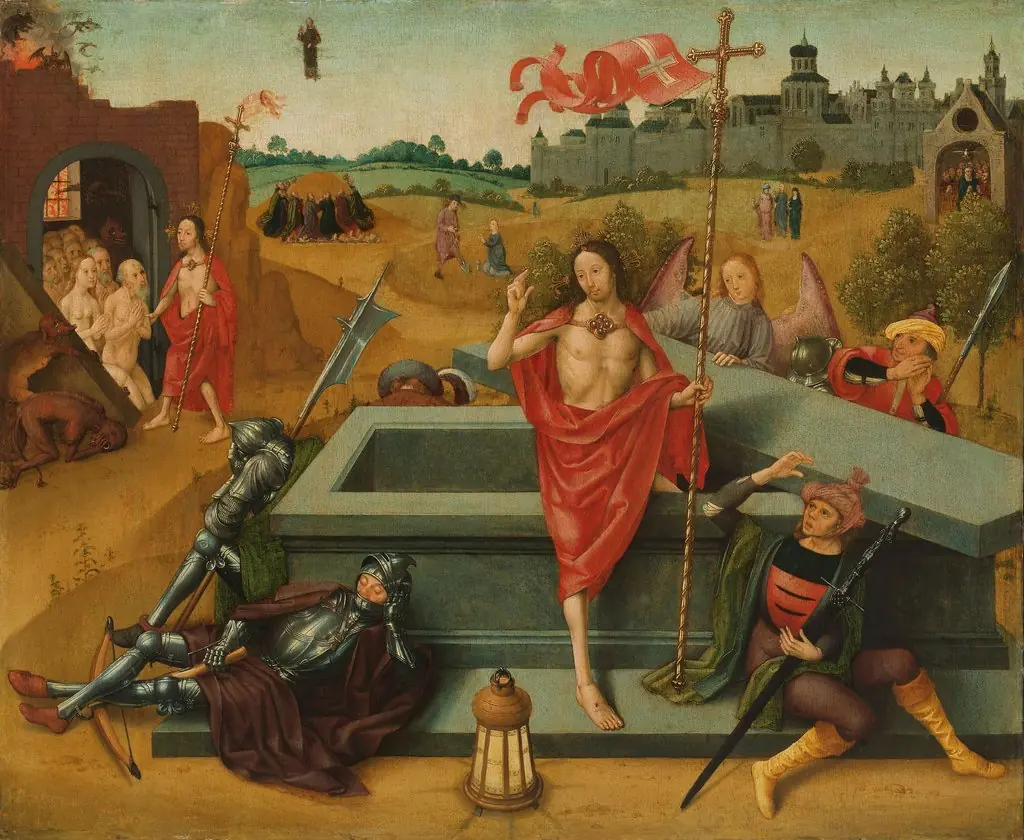
The panel is executed in oil paint on fir panel, a support and medium that allowed for the detailed, layered effects characteristic of the new Netherlandish influence then entering Germany. The surface shows smooth, detailed brushwork with precise contours and flat decorative patterns in the foliage and fabric folds. Light falls evenly across the scene with minimal deep shadow, creating a clarity that emphasizes the symbolic reading of the narrative. The palette features saturated reds, greens, and golds, with metallic grays for the armor, the crimson of Christ's robes contrasting sharply with the cooler tones of the landscape and soldiers' garments. The stylized green trees with rounded crowns and rocky outcrops against a gold-toned sky display a deliberate artificiality typical of late medieval conventions, prioritizing symbolic meaning over naturalistic representation. Yet alongside this stylization, Multscher introduces observed details, the slight elongation of his Gothic training tempered by a new attention to anatomy absorbed from Flemish painting. The strength and solidity of the figures, their remarkable three-dimensionality, reflect the artist's primary training as a sculptor, a quality that distinguishes his painted work from that of pure painters of the period.
History & Provenance
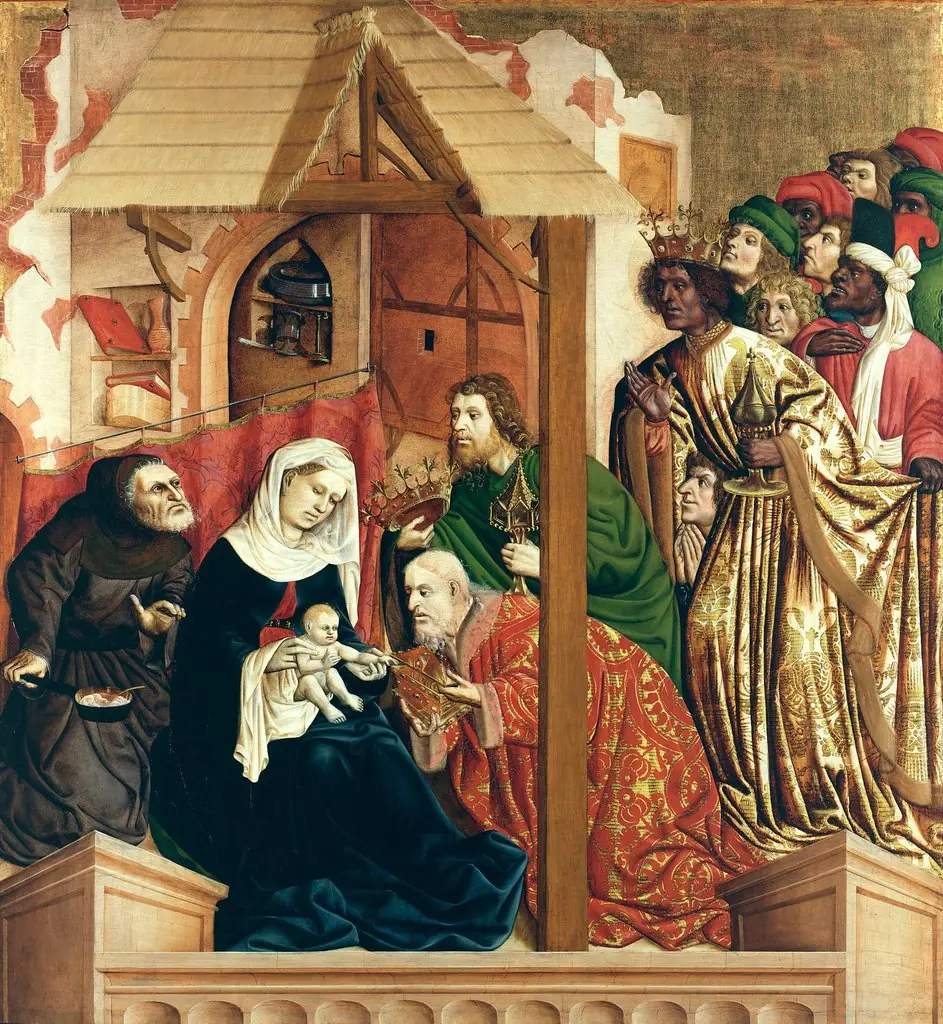
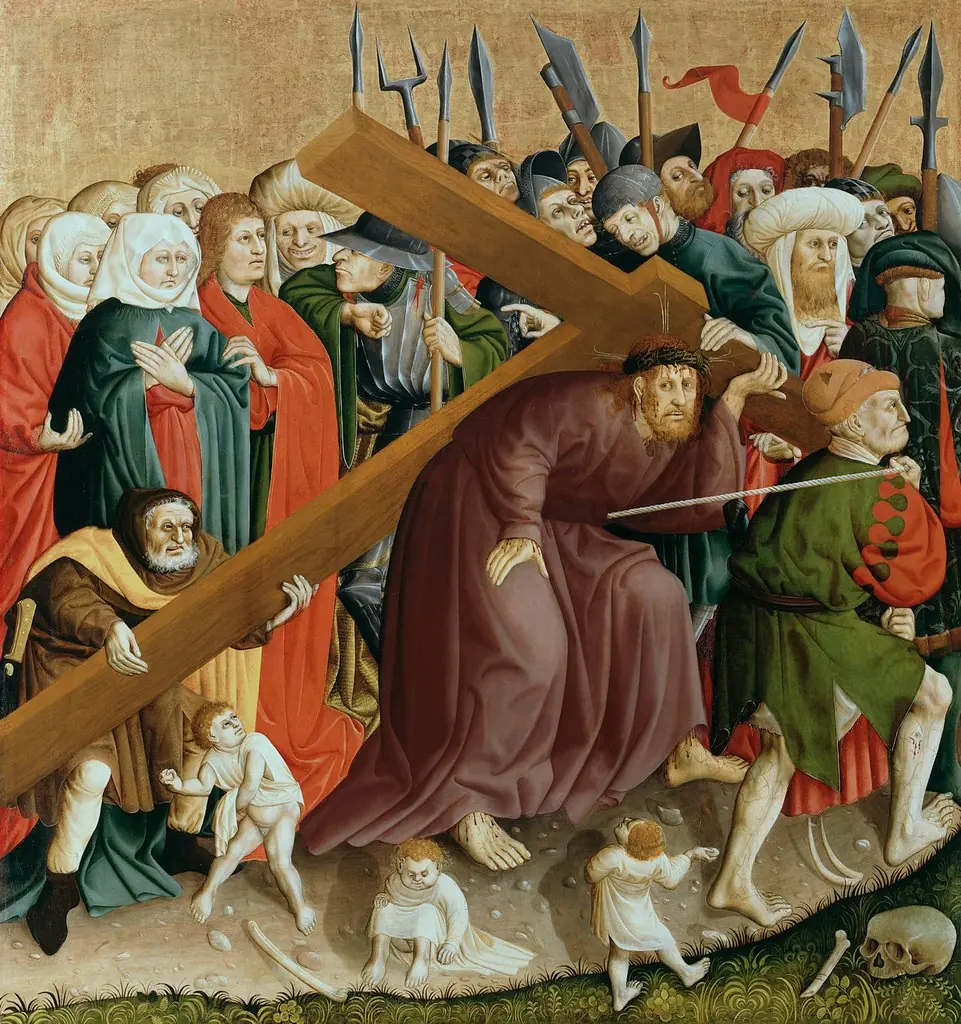
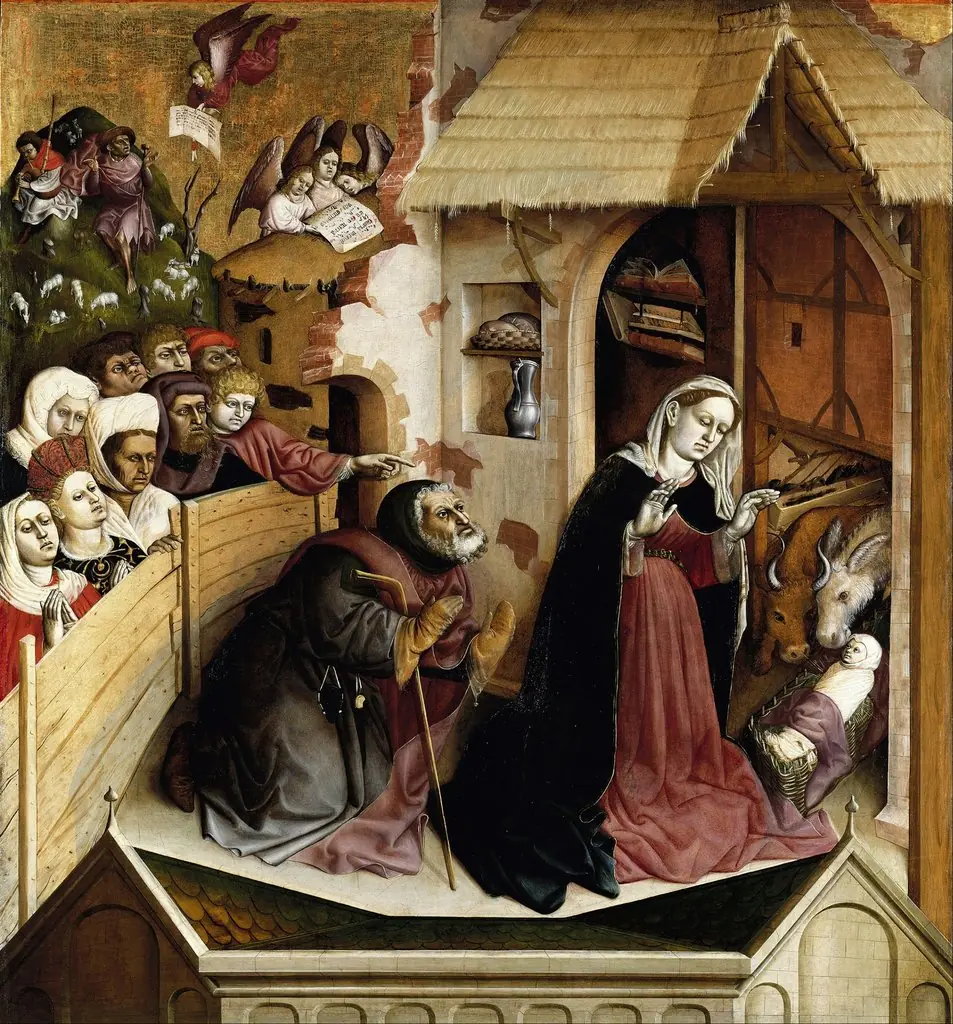
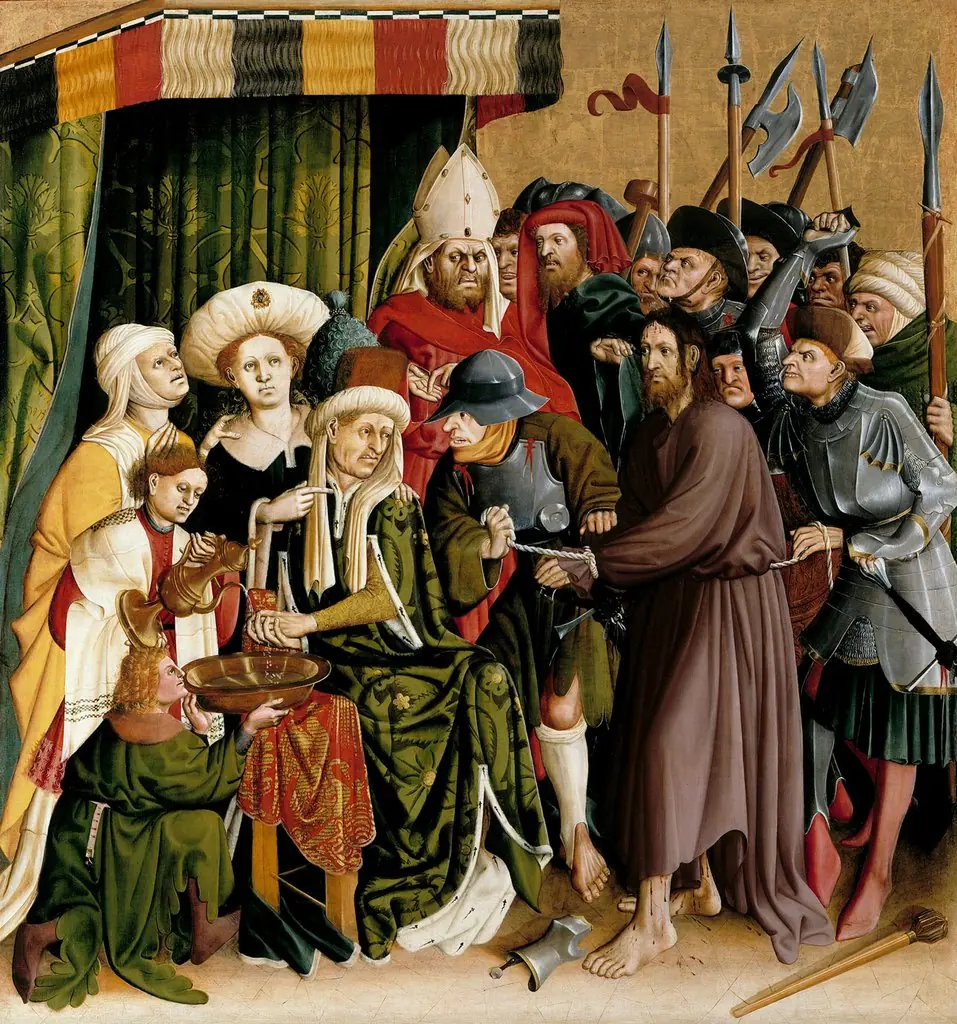
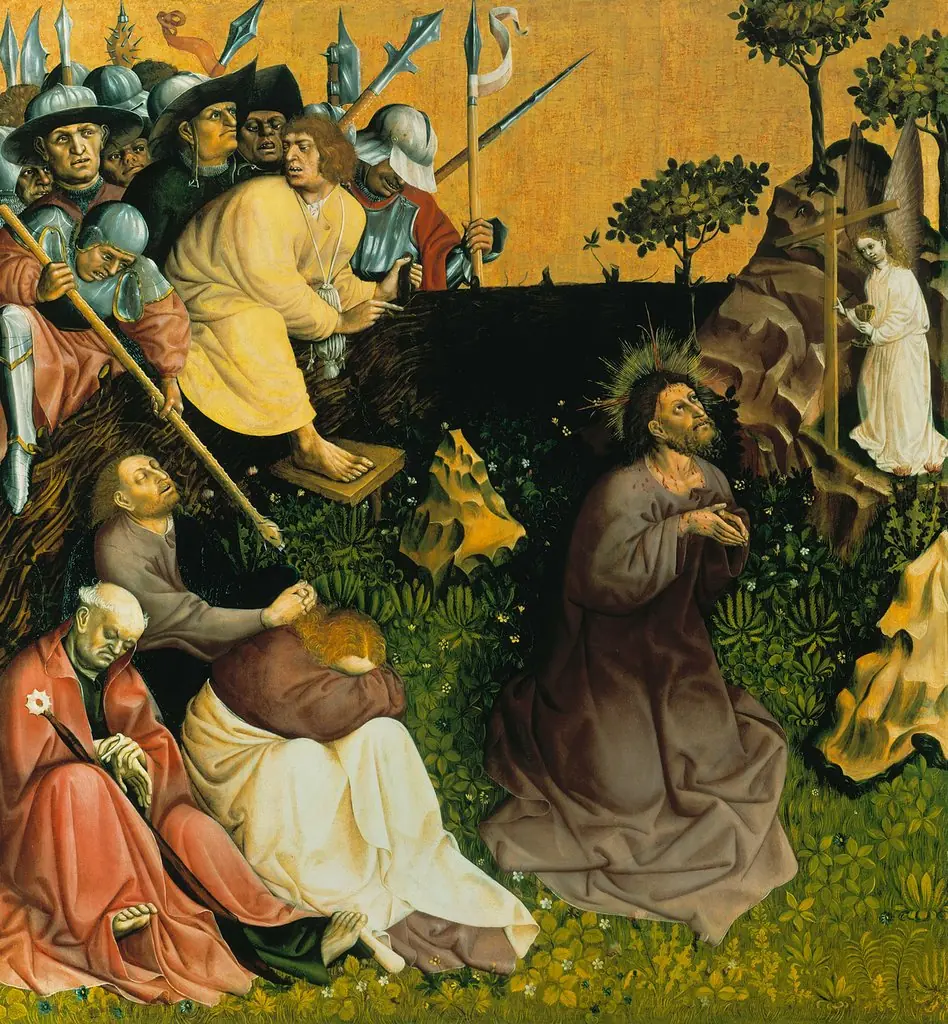
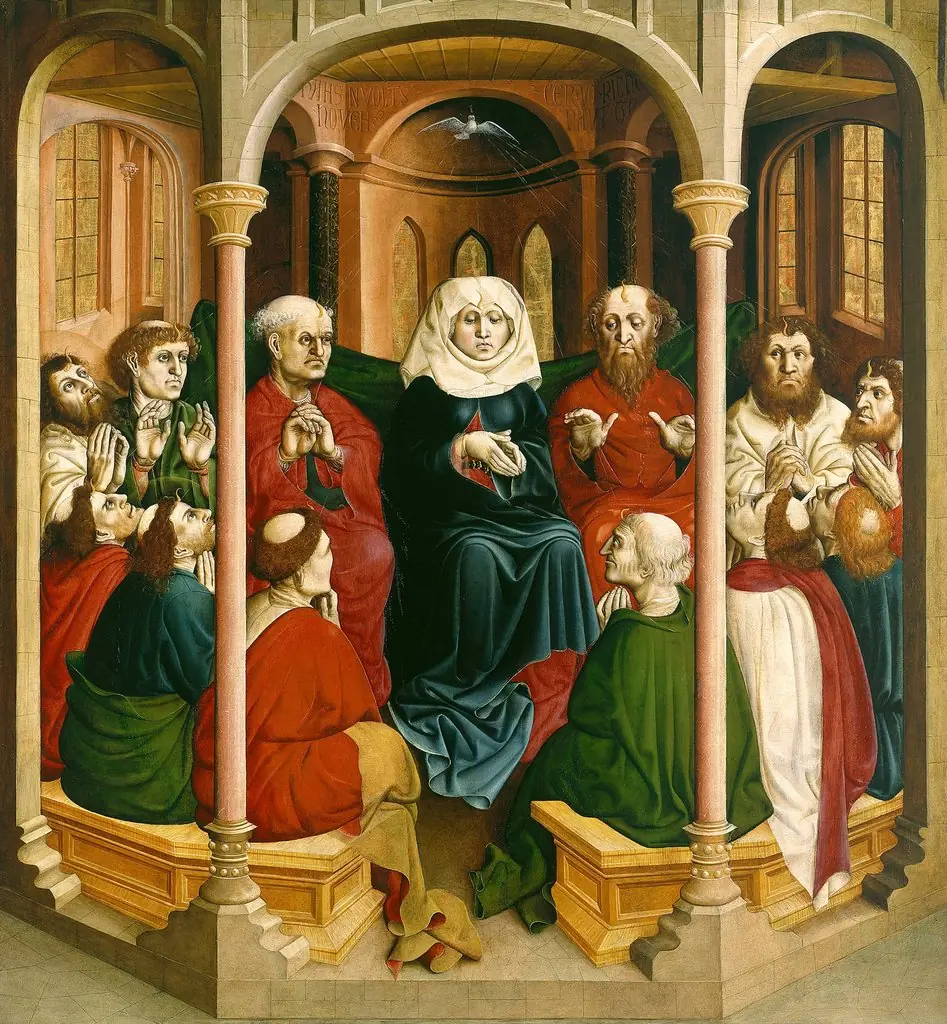
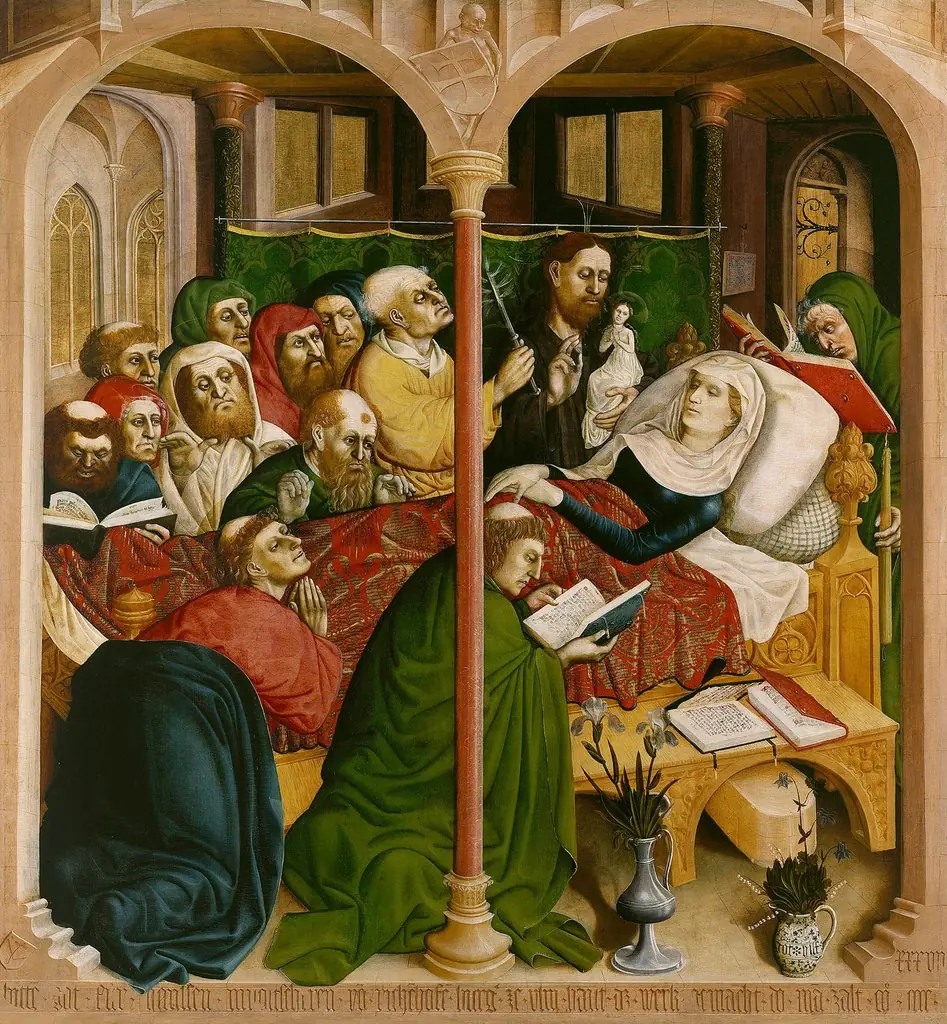
The Wurzach Altarpiece was painted in 1437 for an unknown patron, and its original location has never been established. The altarpiece took its modern name from Schloss Wurzach in Upper Swabia, the castle of the Counts of Waldburg-Zeil, where the panels were rediscovered in the nineteenth century after having formed part of the family's art collection since the eighteenth century. The original winged altarpiece was of considerable dimensions and included a carved central shrine, now lost without trace, which probably contained a Crucifixion group. When the wings were closed, four scenes relating to the Madonna were visible, The Nativity, The Adoration of the Magi, The Descent of the Holy Ghost, and The Death of the Virgin. When opened, the inner sides showed four Passion scenes flanking the central shrine: Christ on the Mount of Olives, Christ before Pilate, Christ Bearing the Cross, and The Resurrection. When the altarpiece was dismantled, the front and rear sides of the wings became separated. Multscher appended his signature to the two lower panels of the closed altar, The Descent of the Holy Ghost and The Death of the Virgin, reading 'bitte got fur hanssen muoltscheren vo richehove burg ze ulm haut dz werk gemacht do ma zalt MCCCCXXXVII'. The Resurrection panel, along with the other surviving Wurzach panels, is now in the Gemäldegalerie, Berlin. The panel has also been reproduced in commercial fine art print editions through Museum Europaischer Kulturen, Berlin.
Legacy
The Wurzach Altarpiece panels, including The Resurrection, are today counted among the most important fifteenth-century German paintings and represent the core of Multscher's surviving painted oeuvre. Their rediscovery at Schloss Wurzach in the nineteenth century rescued from obscurity a key monument of late Gothic art and established Multscher's reputation as a painter of the first rank, complementing his already recognized stature as a sculptor. The seven surviving panels from the Wurzach and related Passion cycles, all now in the Gemäldegalerie, Berlin, constitute an essential corpus for understanding the transmission of Netherlandish naturalism into southern Germany. The Resurrection in particular demonstrates how Multscher carried Flemish influence into the painted wings of Swabian altarpieces while maintaining a dramatic intensity and sculptural physicality that remained distinctively his own. The panel's continued reproduction in commercial fine art editions testifies to its enduring visual power. For scholars of late medieval art, the Wurzach Altarpiece remains a foundational work for studying the intersection of sculpture and painting, the reception of Netherlandish realism in Germany, and the cultural production of the free imperial city of Ulm during its period of greatest artistic prominence.
Own this work as a print
Artist & collection
Artist
Hans Multscher (ca. 1400–1467) was a German sculptor and painter. Multscher was born in Reichenhofen (today Leutkirch im Allgäu). He made himself acquainted with new artistic styles from northern France and the…