Artwork
Christ Carrying the Cross
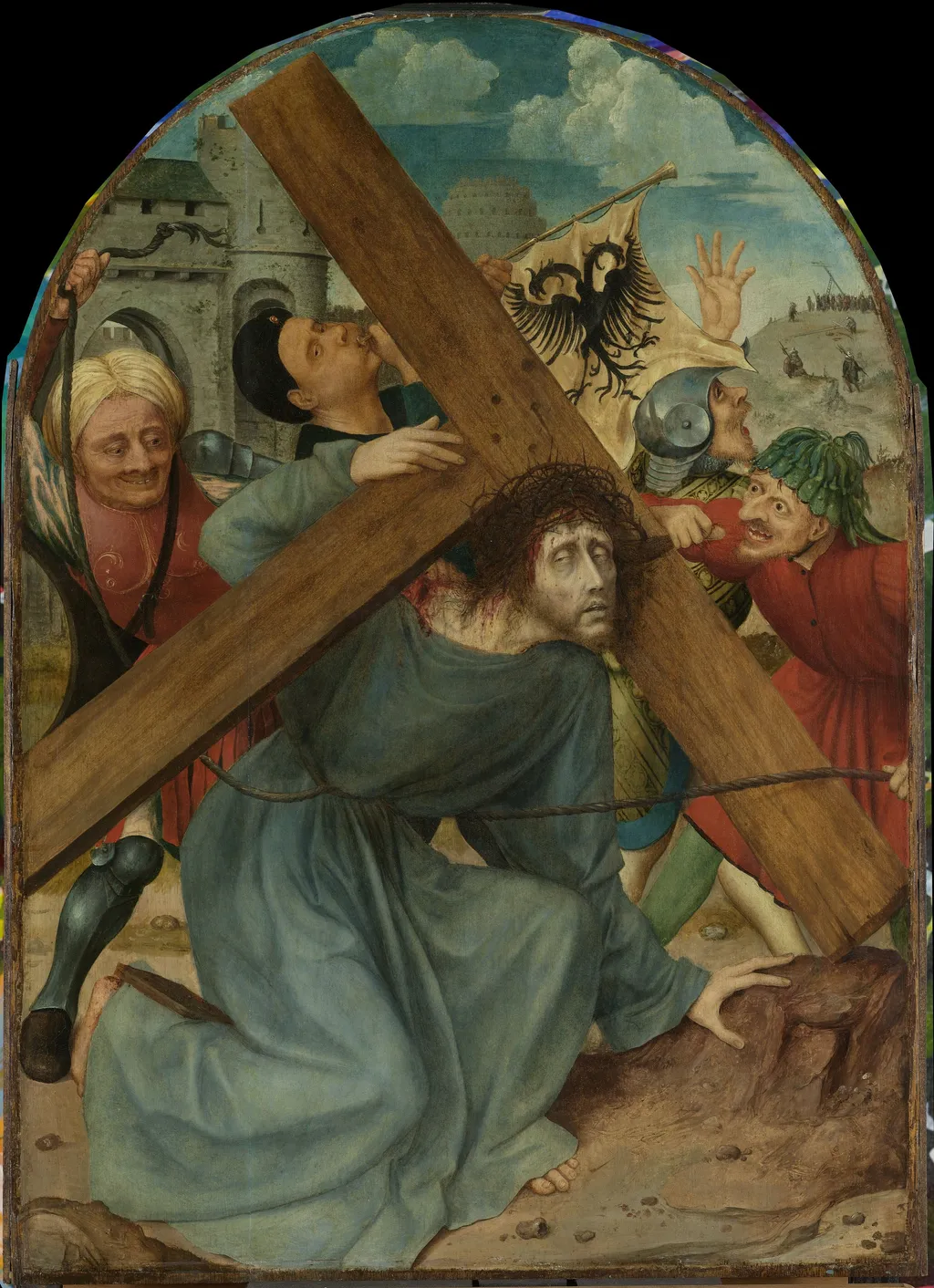
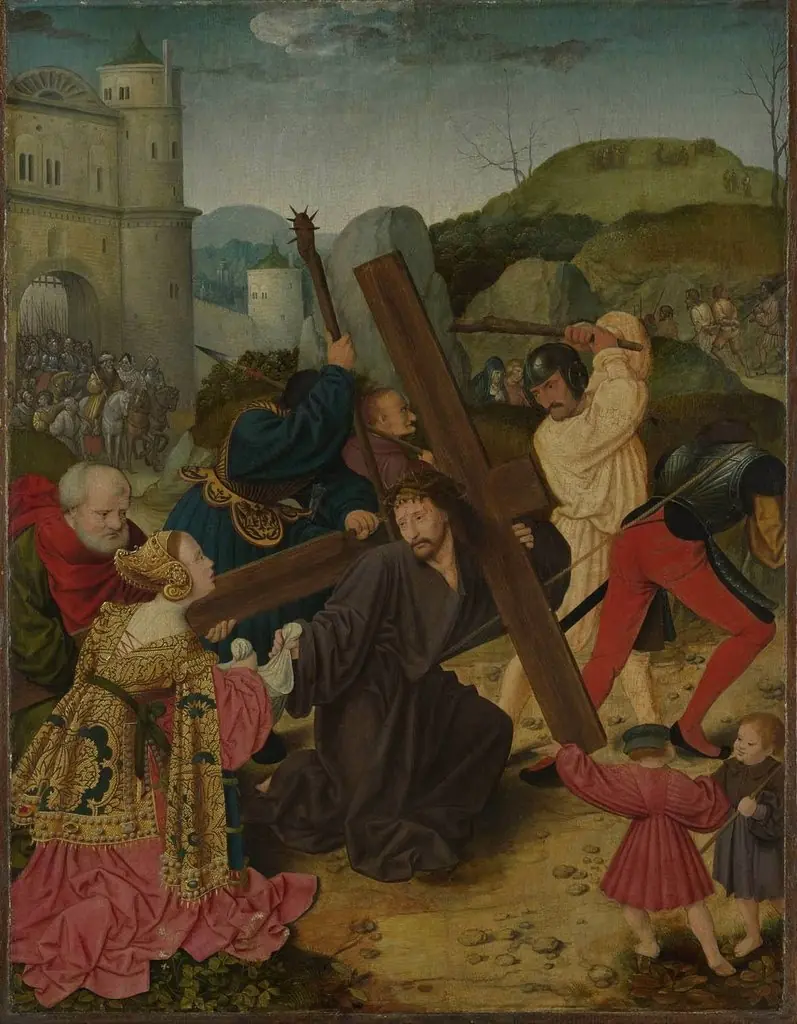
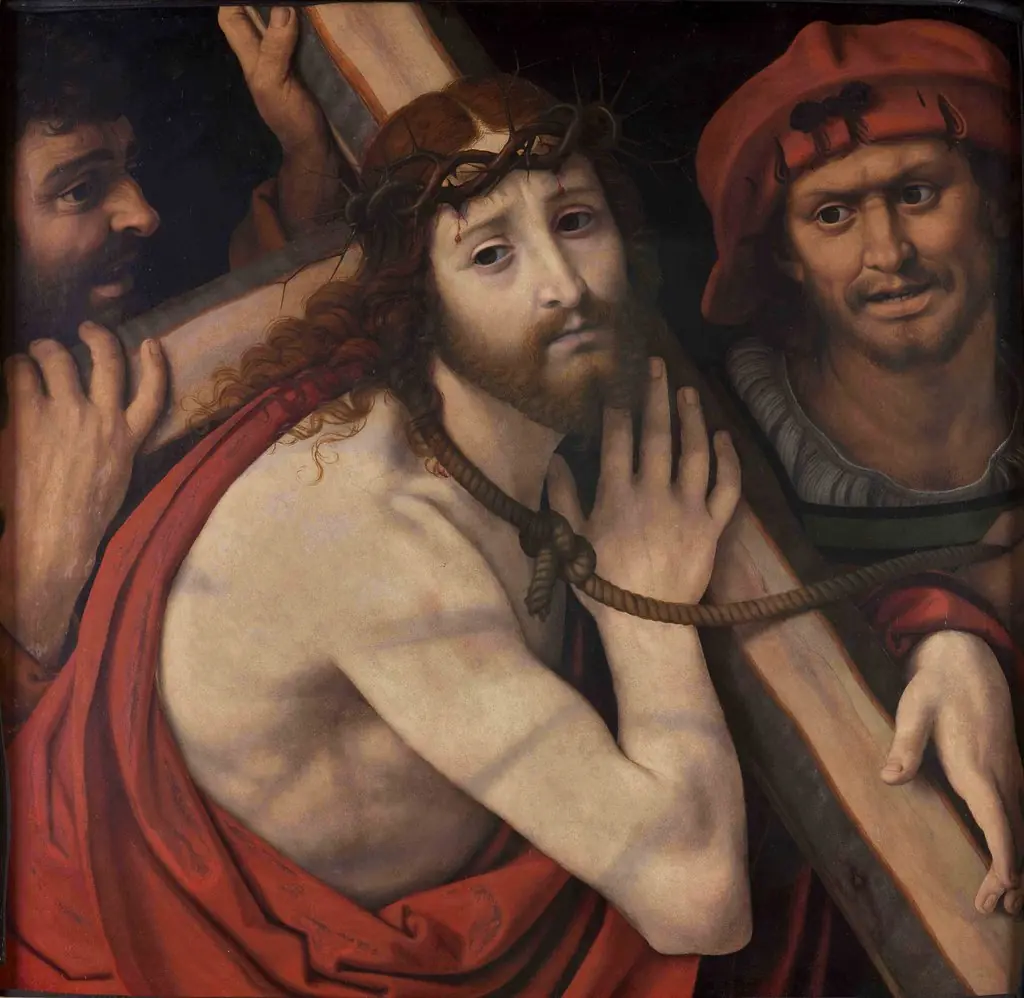
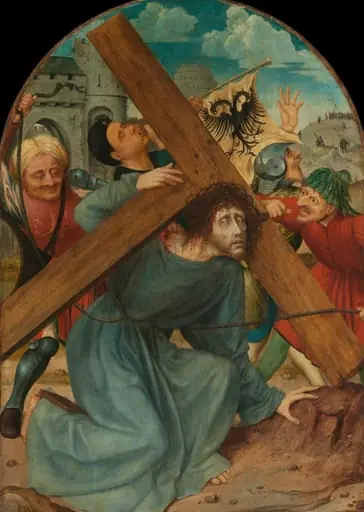
Christ Carrying the Cross is an oil painting by the Northern Renaissance artist Quinten Metsys. It dates from 1510 and is held in the collection of the Rijksmuseum.
About this work
Subject & Meaning
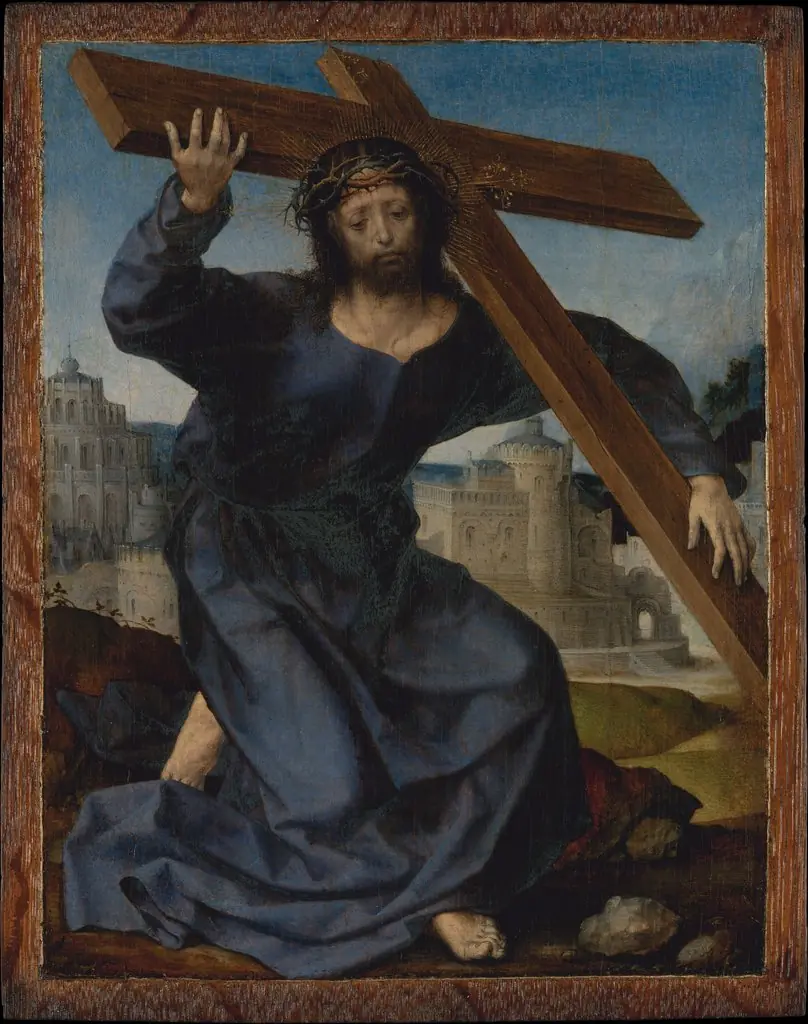
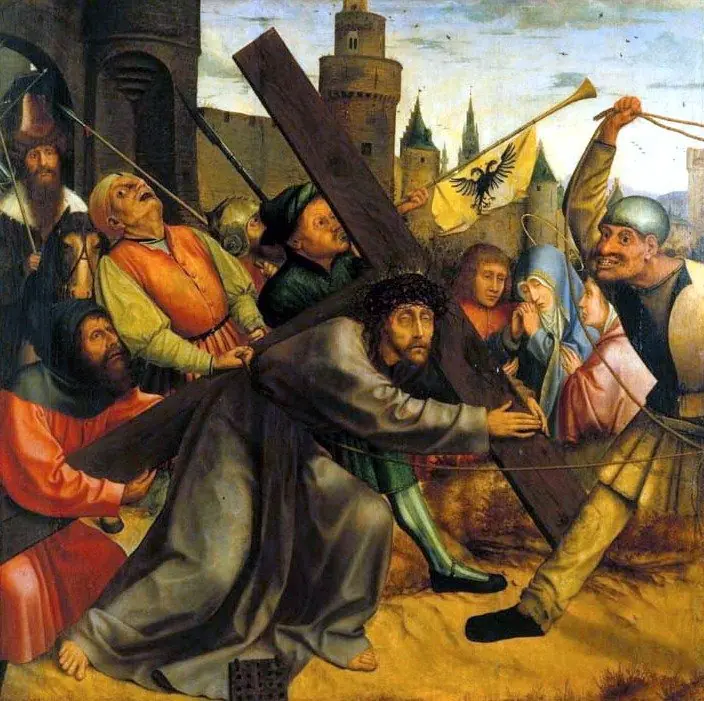
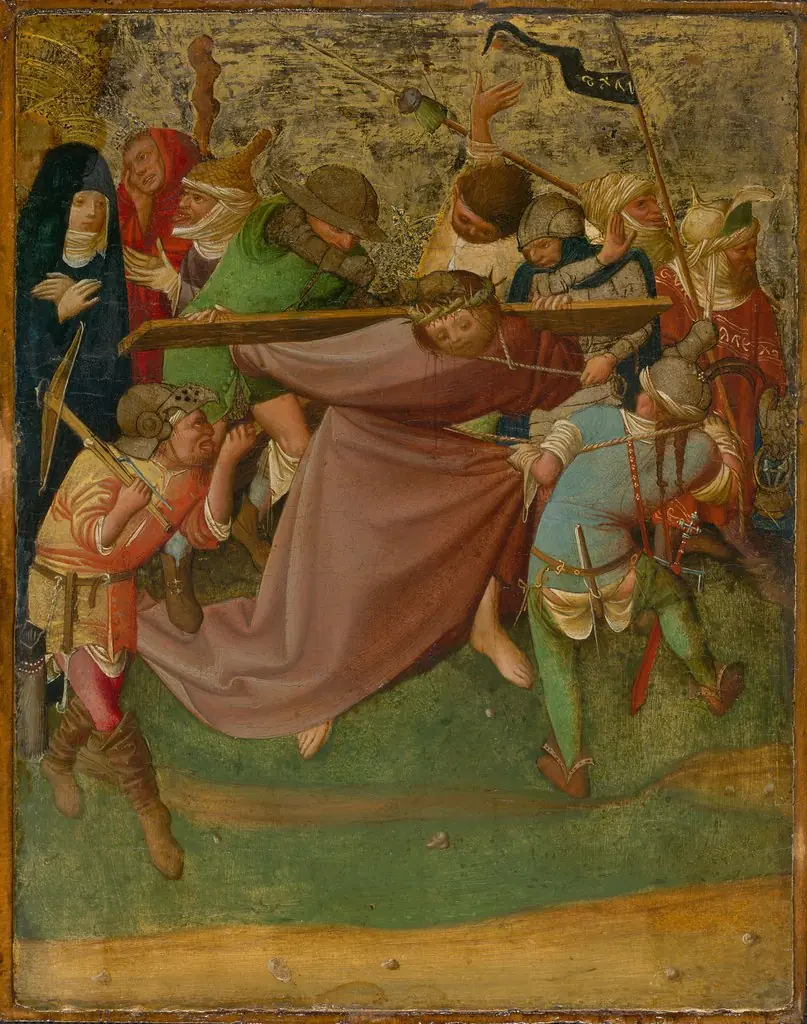
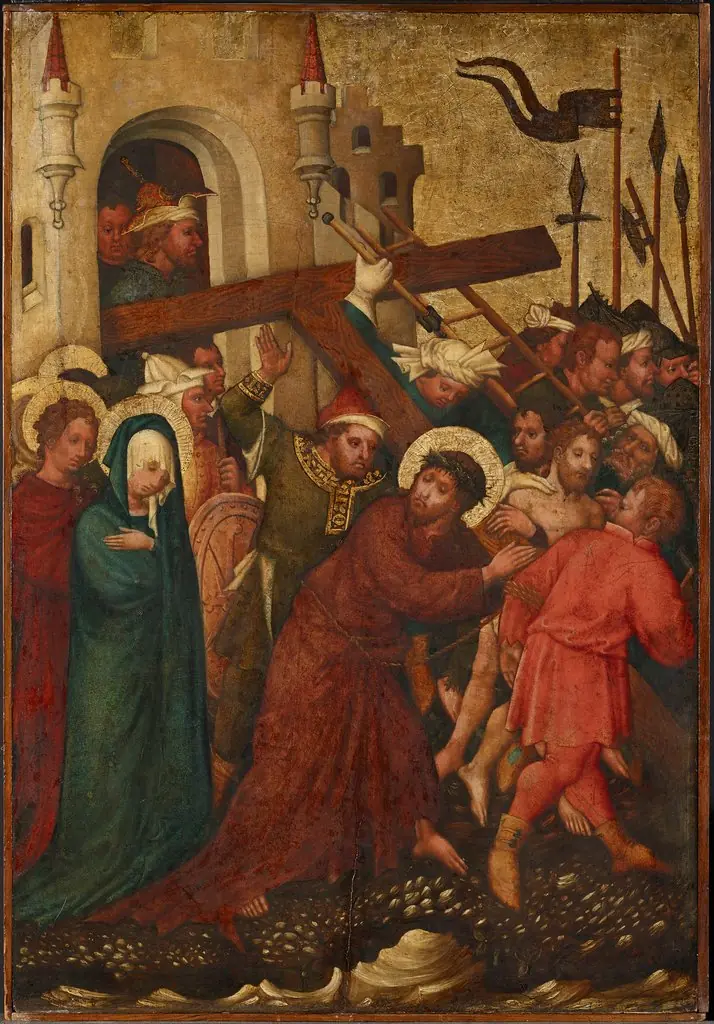
The painting portrays Jesus Christ bearing the cross on the path to crucifixion, a traditional scene of the Passion of Christ. As a religious work by Quinten Metsys, it emphasizes the suffering and sacrifice of Christ in the moments leading to his execution, reflecting contemporary devotional themes in early 16th-century European art.
Technique & Style
Executed in 1510 by Quinten Metsys, the panel employs oil paint on oak, reflecting Antwerp practice of the period.
Executed in 1510 by Quinten Metsys, the panel employs oil paint on oak, reflecting Antwerp practice of the period. The handling combines fine, linear drapery folds with broader, modulated modeling of flesh and landscape, characteristic of early sixteenth-century Netherlandish style. Christ’s burdened posture and the compressed, hilly path heighten the devotional mood, while sharply observed details, such as the twisted rope and foliage, anchor the scene in tactile realism.
History & Provenance
Christ Carrying the Cross is an oil painting on panel by Quinten Metsys, dated 1510 and produced in Antwerp. The work is associated with multiple institutional collections, including the Rijksmuseum, the Mauritshuis, and the Bonnefanten Museum, with the Rijksmuseum listed as its current location. The panel measures 83 cm in height by 59 cm in width.
No information regarding a specific commission, patron, or successive private ownership chain is recorded in the available sources. The documented creation history is limited to the attribution to Metsys, the 1510 inception date, and the Antwerp origin.
The painting is held in the collection of the Rijksmuseum, Amsterdam, where it is inventoried as SK-C-133.
It was included in the exhibition “Quinten Massijs: Antwerp’s Renaissance Master,” held at the Museum of Fine Arts, Houston, and the Royal Museums of Fine Arts of Belgium, Brussels, in 2018–2019.
Context
Quinten Metsys created Christ Carrying the Cross in 1510 within the artistic milieu of Antwerp, a major center of Early Netherlandish painting. The work is executed in oil on panel, measuring 83 cm in height and 59 cm in width, adhering to the technical standards of the period. As a religious painting depicting Jesus Christ bearing the cross, it reflects the devotional focus prevalent in the artist's wider oeuvre.
The painting's current location is the Rijksmuseum, with additional holdings noted in the Mauritshuis and the Bonnefanten Museum, indicating its significance within major institutional collections. While the specific critical reception and detailed scholarly debates are not elaborated in the provided records, the work's attribution to Metsys and its preservation in prominent Dutch museums underscore its established place in art history as a key example of early 16th-century religious art.
Overview
Quinten Metsys painted Christ Carrying the Cross in 1510 with oil on canvas. The work presents the moment of Jesus bearing the cross toward Calvary, surrounded by a small group of figures whose gestures convey tension and urgency. The composition is anchored in a landscape that recedes to a distant town under a cloud‑filled sky, focusing attention on the central struggle.
Own this work as a print
Artist & collection
Artist
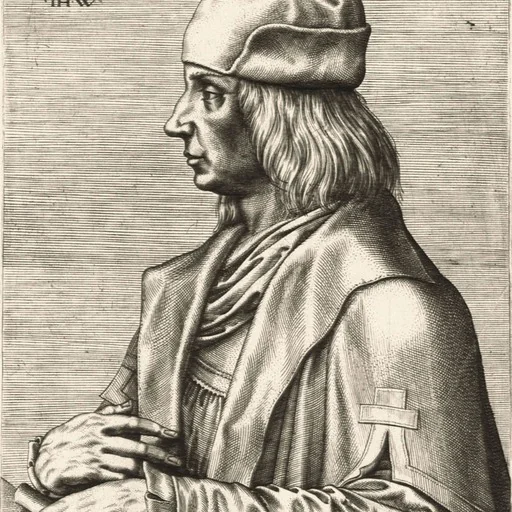
Quentin Matsys (UK: MAT-sysse, US: MAHT-sysse; also Massys or Metsys; Flemish: Quinten Matsijs; 1466–1530) was a Flemish painter in the Early Netherlandish tradition.