Artwork
Christ Carrying the Cross
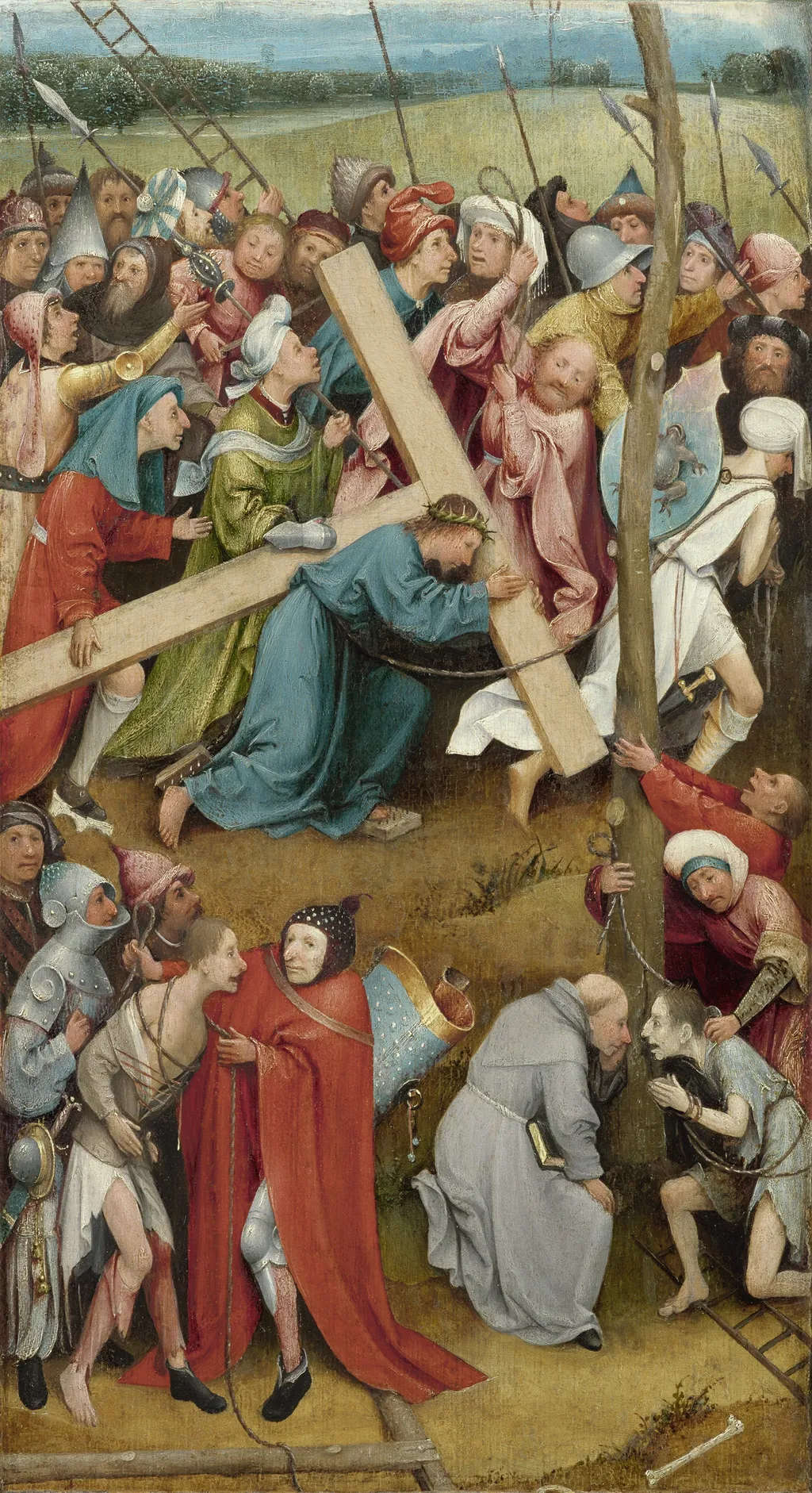
Christ Carrying the Cross is an oil painting by the Northern Renaissance artist Hieronymus Bosch. It dates from 1500 and is held in the collection of the Kunsthistorisches Museum.
About this work
Subject & Meaning
A figure in red appears to whip Christ, while an old man behind the cross, sometimes identified as Simon of Cyrene, touches it without truly sharing the burden.
The painting depicts Christ carrying the cross to Golgotha, divided into two registers. In the upper scene, Christ kneels under the weight of a T-shaped cross on his left shoulder, his forehead bleeding from the crown of thorns, his feet bruised by nail-studded planks attached to his legs. He is surrounded by a grotesque crowd of onlookers and soldiers; one soldier drags him with a rope while bearing a shield emblazoned with a monstrous toad, symbolizing the devil's army. A figure in red appears to whip Christ, while an old man behind the cross, sometimes identified as Simon of Cyrene, touches it without truly sharing the burden. The lower register shows the two thieves at Golgotha. The good thief kneels in confession to a monk beside a slender tree-trunk cross, with bones at his feet evoking Adam's burial place. The bad thief awaits execution near a roughly hewn cross, his group including a figure who may be a self-portrait of Bosch or a donor portrait. The panel's reverse bears a grisaille tondo of the Christ Child with a windmill toy and walking frame, his first laborious steps prefiguring the crucified Christ's faltering final steps. The windmill's lightness contrasts with the cross's crushing weight, while radiography revealed the cross painted precisely at the level of the child's left shoulder.
Technique & Style
Christ Carrying the Cross is an oil-on-panel painting executed on an oak support, painted on both sides. The work originally formed the left wing of a triptych with a rounded upper edge, but it has been trimmed to a rectangular format, losing roughly 20 cm at the top and a small strip at the bottom; it now measures 59.7 cm in height by 32 cm in width. The panel was reduced because of paint losses, and a small triangular insert in the upper right conceals the remains of the former rounded border.
The composition is organized in two horizontal registers: the upper one depicts Christ shouldering a tau cross, surrounded by a crowd of soldiers and onlookers, while the lower register shows the two thieves at Golgotha. The palette combines warm reds of the soldiers' garments with the cool blue of Christ's tunic and the green of the landscape, reflecting a chromatic intensity tied to the International Gothic tradition. Stylistically, the dual-register scheme and the brutality of the surrounding figures have been linked to early fifteenth-century and German models rather than typical Flemish-Dutch convention.
The reverse bears a grisaille tondo on a reddish-orange glaze, depicting a nude child with a pinwheel toy and a walking frame. The face is painted alla prima, almost without underdrawing, exploiting the cream ground in reserve and heightened with white touches.
History & Provenance
The painting is dated to approximately 1490-1500, with dendrochronological analysis supporting a creation date around 1500. It was originally the left wing of a now-disassembled triptych, featuring a rounded top that was later cut to create a rectangular shape. The central panel likely depicted a Crucifixion, while the right wing may have shown a Deposition or Pietà. The reverse side of the oak panel displays a grisaille tondo of the Christ Child with a walking frame and a pinwheel. The work was acquired by the Kunsthistorisches Museum in Vienna in 1923 from the Amsterdam art dealer Jacques Goudstikker. Prior to this acquisition, a fragment of the presumed right wing was potentially identified in the 1607 inventory of the Granvelle Palace in Besançon, suggesting the triptych was dismantled before the early 17th century, possibly during the iconoclastic riots of 1566 in 's-Hertogenbosch. The painting is held by the Kunsthistorisches Museum in Vienna. It was acquired by the museum in 1923 from the Amsterdam art dealer Jacques Goudstikker. The work has been exhibited publicly on notable occasions. It was shown at Museum Boymans in Rotterdam from 10 July to 15 October 1936 as part of the exhibition "Jeroen Bosch, Noord-Nederlandsche primitieven" (catalogue no. 48). It was later exhibited at the Noordbrabants Museum in 's-Hertogenbosch from 17 September to 15 November 1967 for the exhibition "Jheronimus Bosch" (catalogue no. 28). The painting was also included in the exhibition "Jheronimus Bosch - Visions of genius".
Context
The Vienna Christ Carrying the Cross is unanimously attributed to Hieronymus Bosch, though its precise dating remained uncertain until modern dendrochronological analysis placed it around 1500, refining an earlier c. 1490-1500 estimate. The panel was originally the left wing of a Passion triptych, probably dismantled before the early seventeenth century and possibly as early as the 1566 iconoclasm in 's-Hertogenbosch; Frédéric Elsig has suggested the commission may have come from a local notable or institution in Bosch's home city. The painting entered the Kunsthistorisches Museum in 1923, purchased from the Amsterdam dealer Jacques Goudstikker, and has been exhibited in major Bosch retrospectives at Rotterdam's Museum Boymans (1936) and the Noordbrabants Museum (1967). Bosch scholars including Charles de Tolnay, Paul Vandenbroeck, and Dirk Bax have debated the verso's Christ Child imagery as a prefiguration of the Passion or as an allegory of innocence and folly, while Tolnay identified the figure restraining the bad thief as a possible self-portrait. The work is part of a wider group of Bosch Carrying the Cross compositions, alongside the Ghent and Escorial versions, and its distinctive two-register composition has been linked to early fifteenth-century and German models.
Legacy
Christ Carrying the Cross exerted a lasting influence on religious art through its innovative composition and symbolic depth. The painting, housed in the Kunsthistorisches Museum in Vienna, became a reference point for later depictions of the Passion, particularly in its dual-panel structure and integration of narrative elements across registers. Its representation of the crowd, soldiers, and the two thieves informed subsequent interpretations of the Via Crucis, as seen in comparisons with Bosch's Escurial triptych and other works. The reverse side, featuring a child playing with a spinning top, contributed to symbolic readings of innocence and prefiguration of Christ's suffering, influencing scholarly discussions on Bosch's iconography. The work's legacy is also evident in its role as a key example in major exhibitions, including the 1936 Museum Boymans retrospective and the 1967 's-Hertogenbosch showcase, and in its use as a source for copies and interpretations by followers such as Jan Mandijn. Its provenance, acquired by the Kunsthistorisches Museum in 1923 from Jacques Goudstikker, underscores its significance in 20th-century art historical discourse.
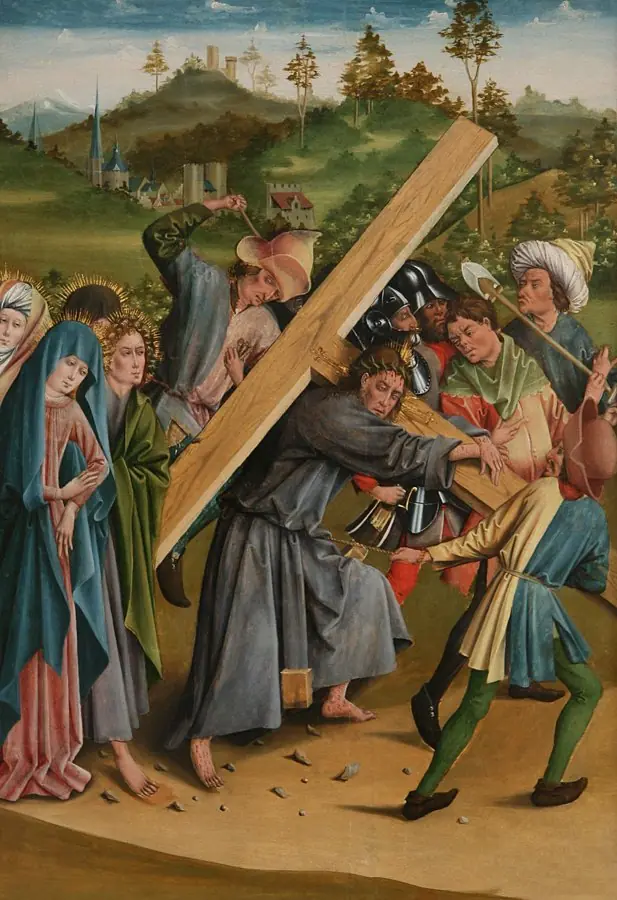
Artist & collection
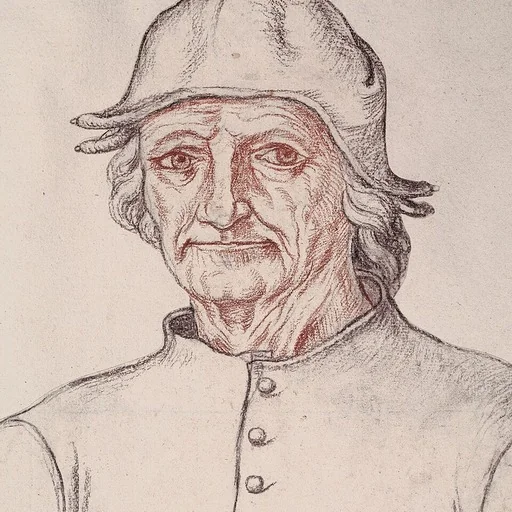
Artist
Hieronymus Bosch (; Dutch:; born Jheronimus van Aken; c. 1450 – 9 August 1516) was a Dutch painter from Brabant. He is one of the most notable representatives of the Early Netherlandish painting school. His work,…

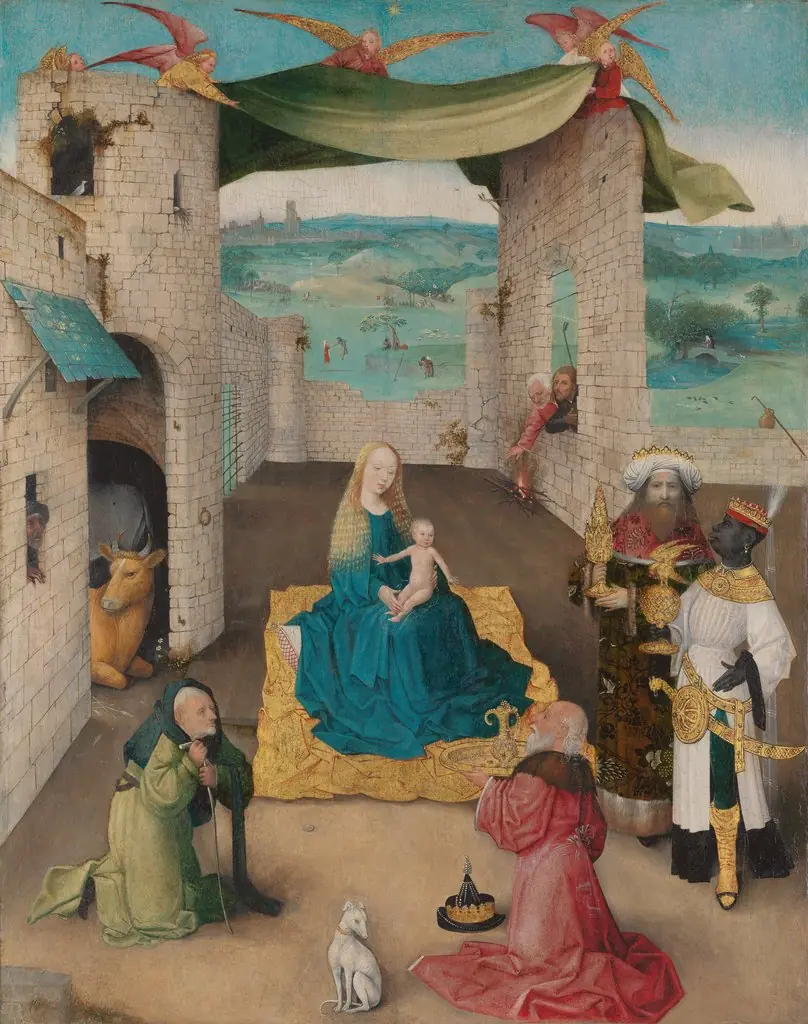
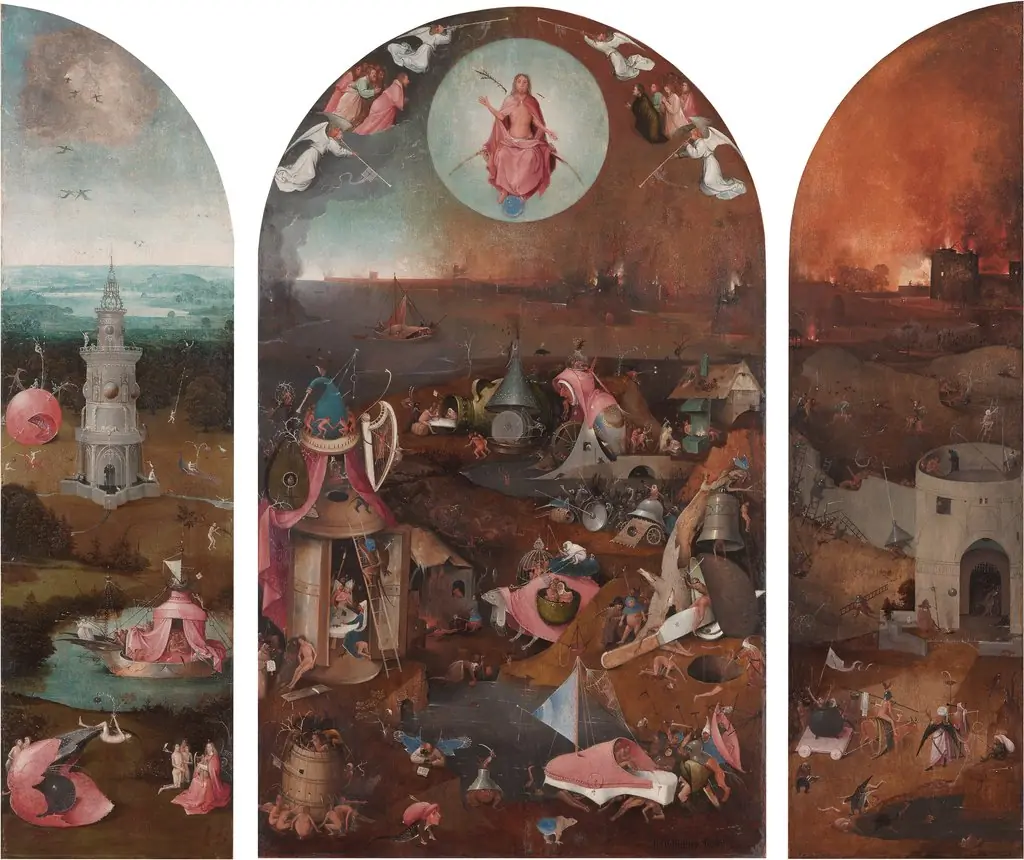
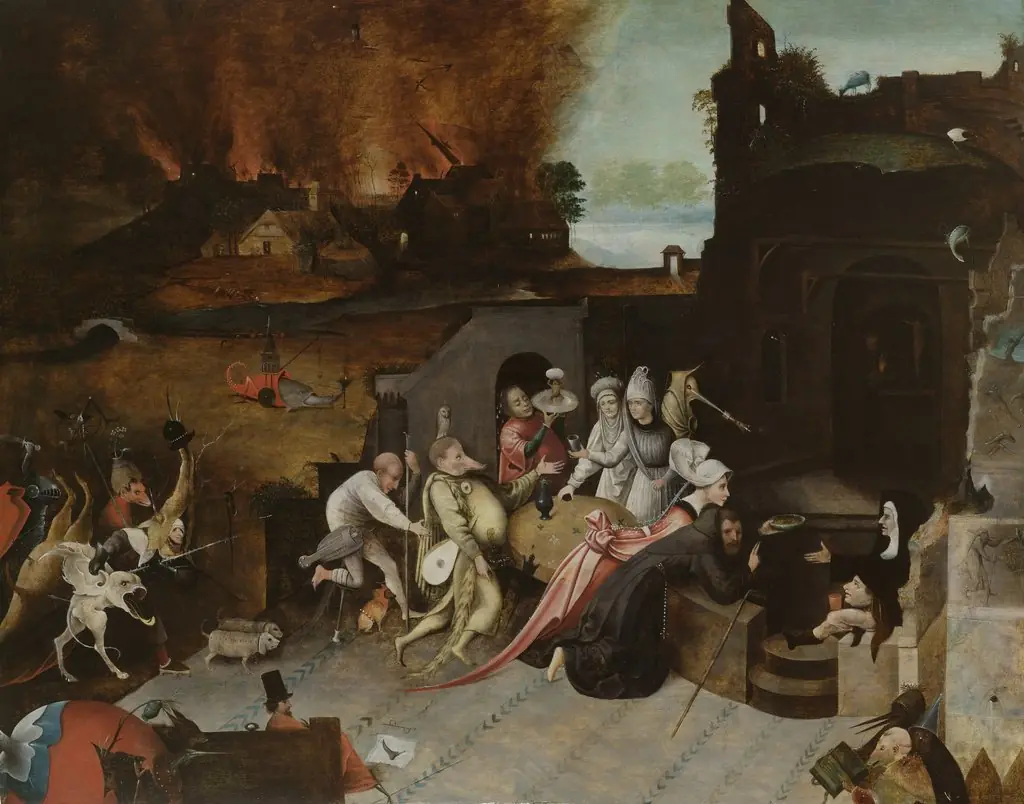
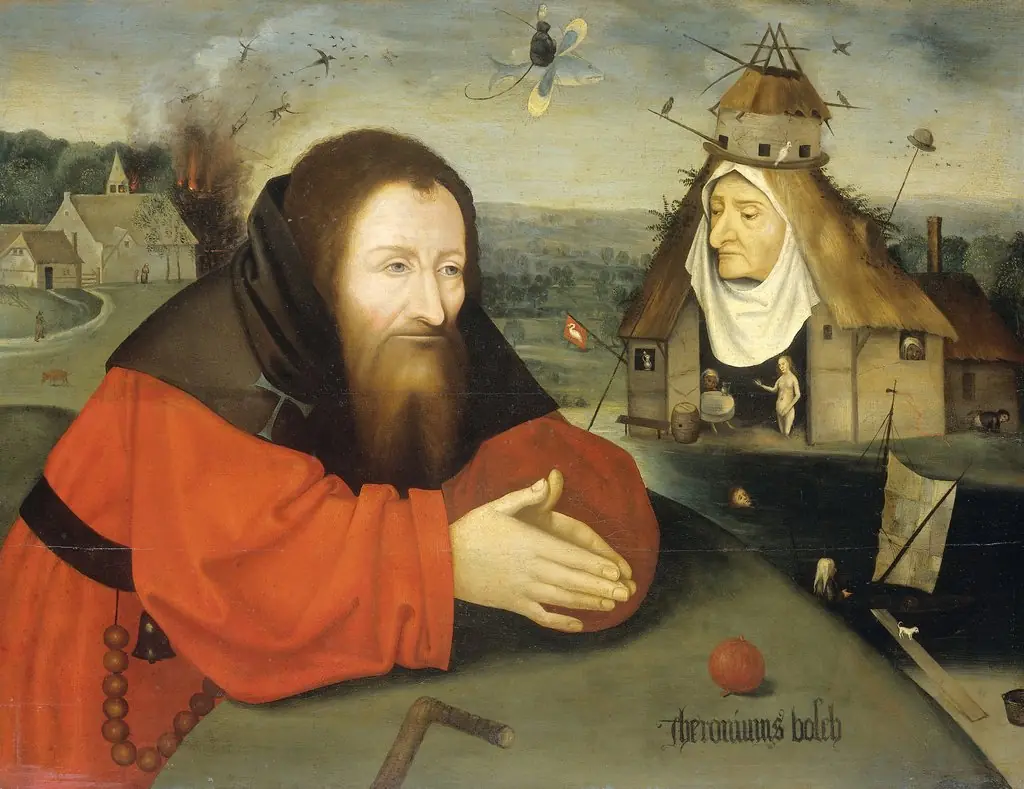
- Christ carrying the cross
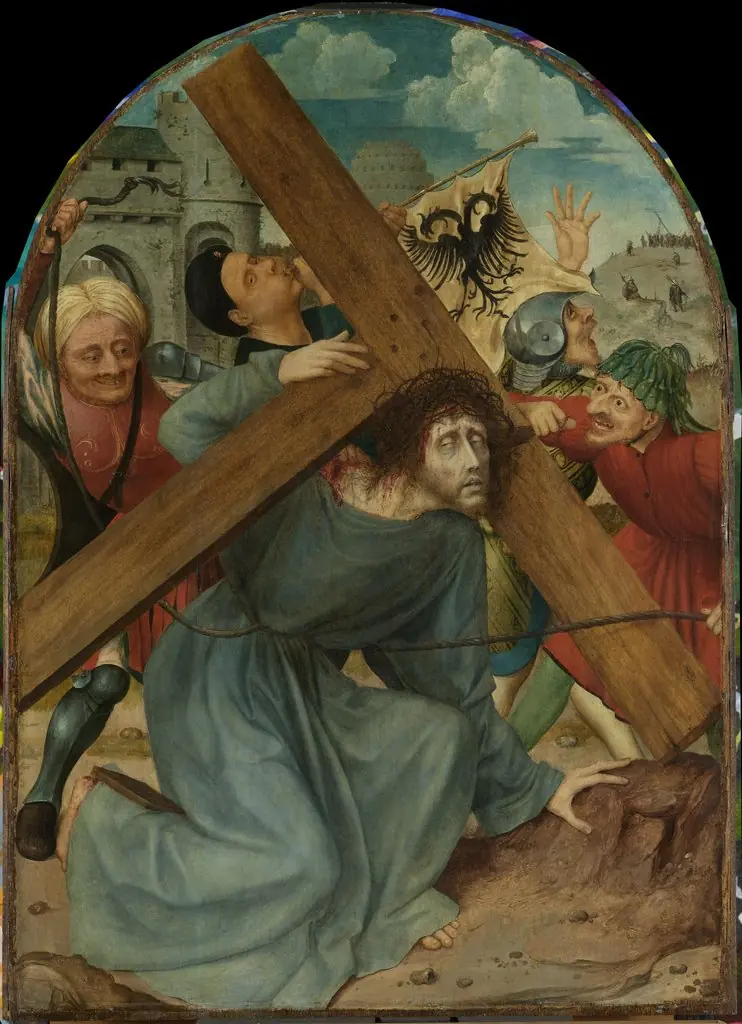 Christ Carrying the Cross
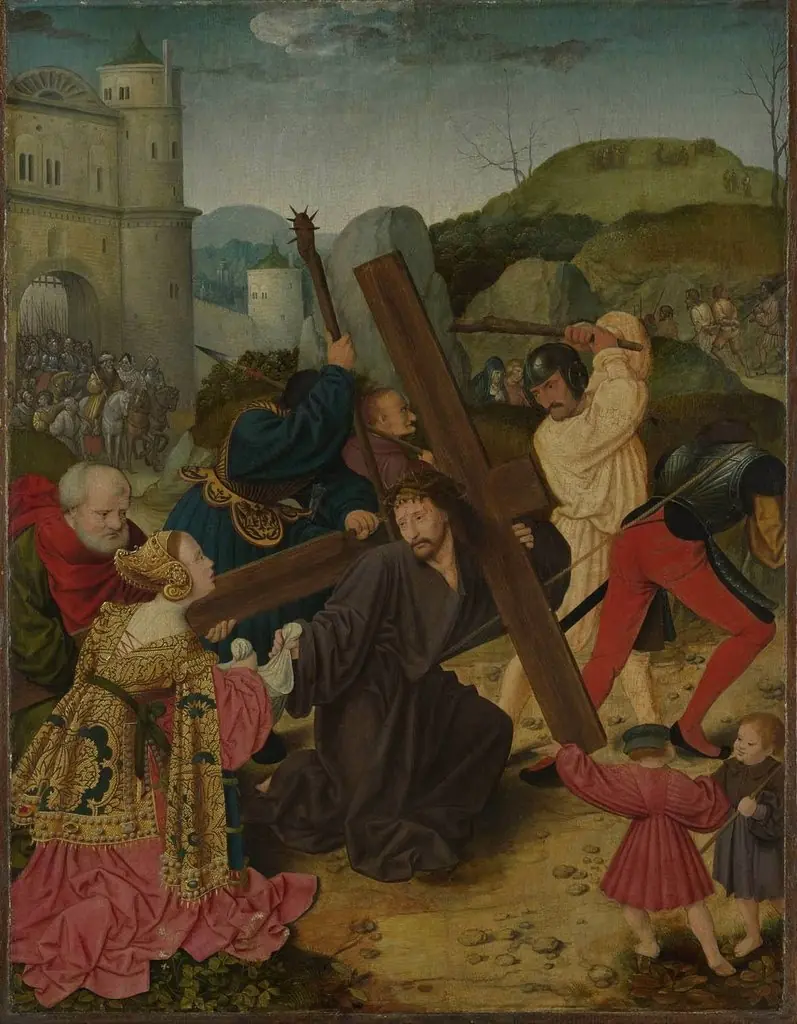 Christ carrying the cross
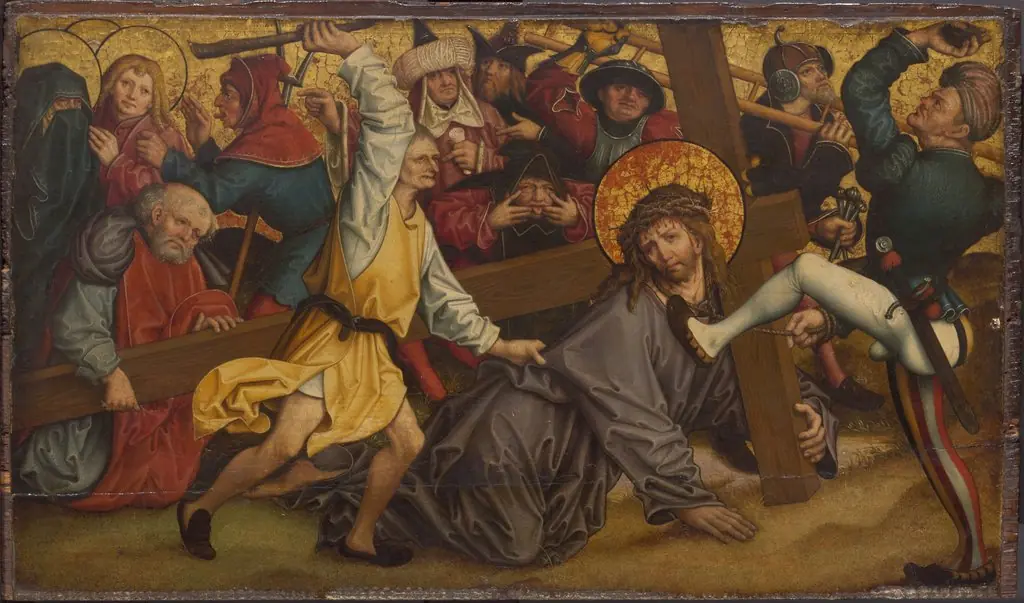 Christ Carrying the Cross
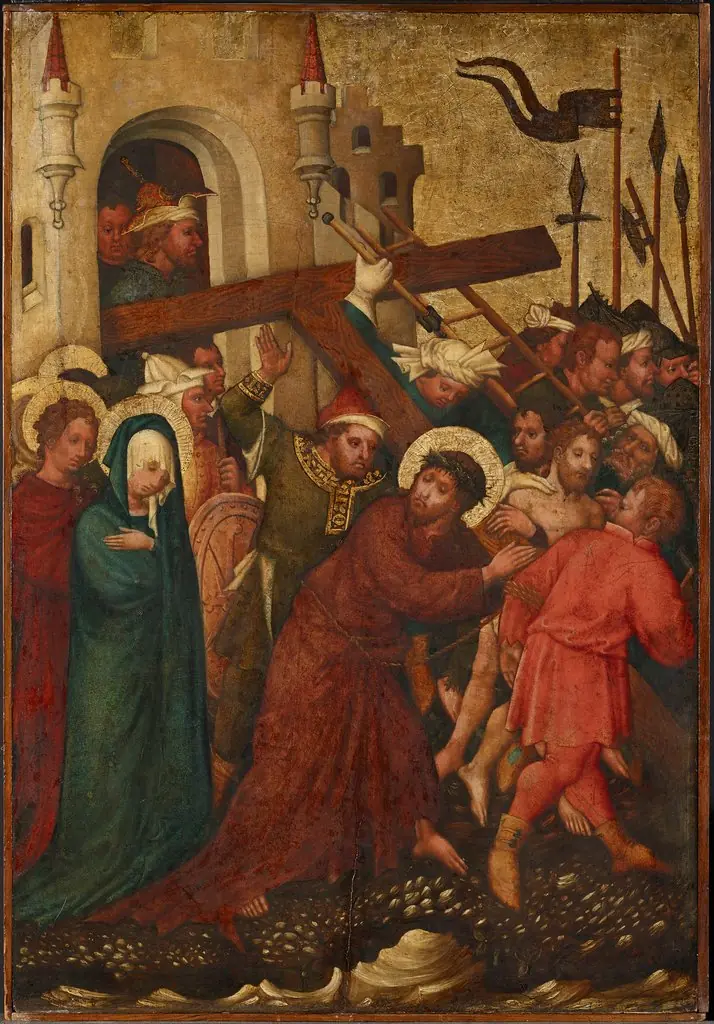 Carrying the cross of Christ
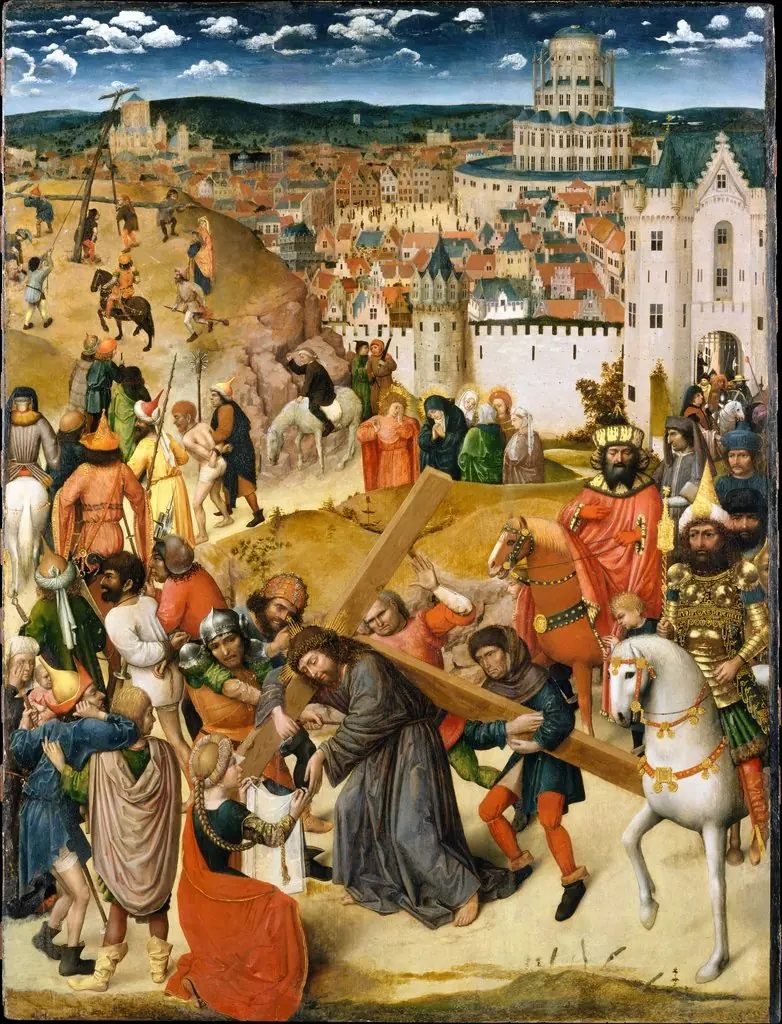 Christ Bearing the Cross
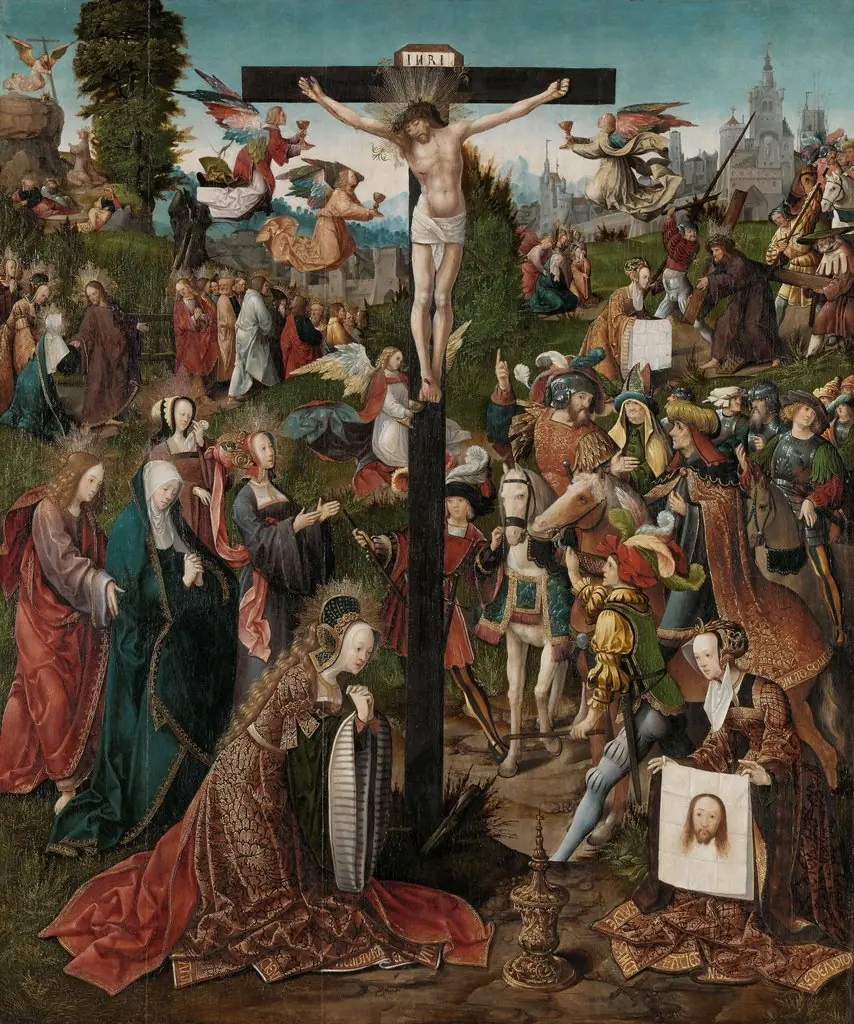 The Crucifixion
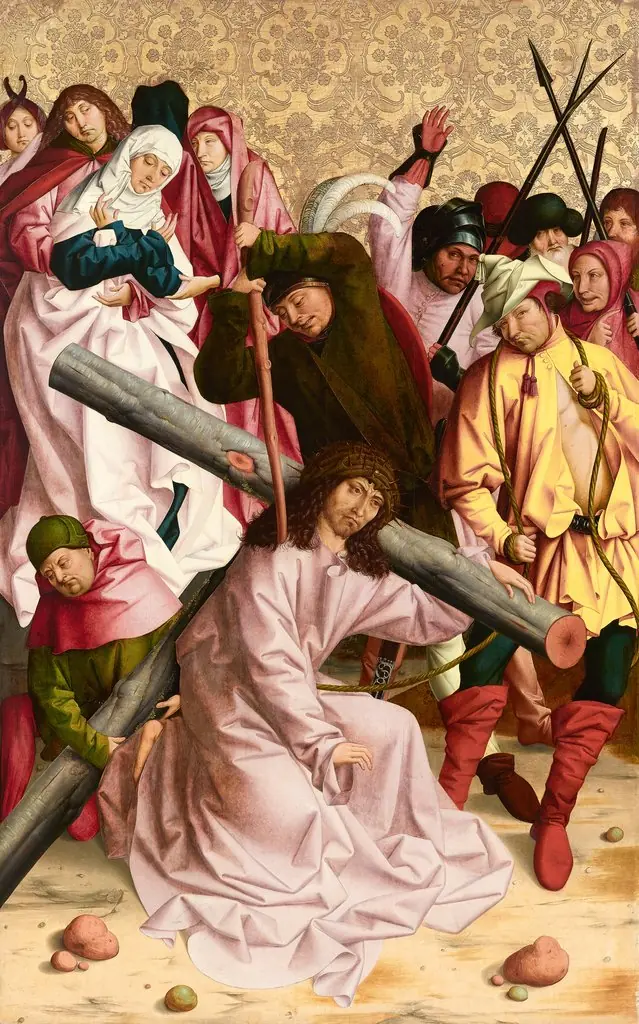 Kreuztragung Christi
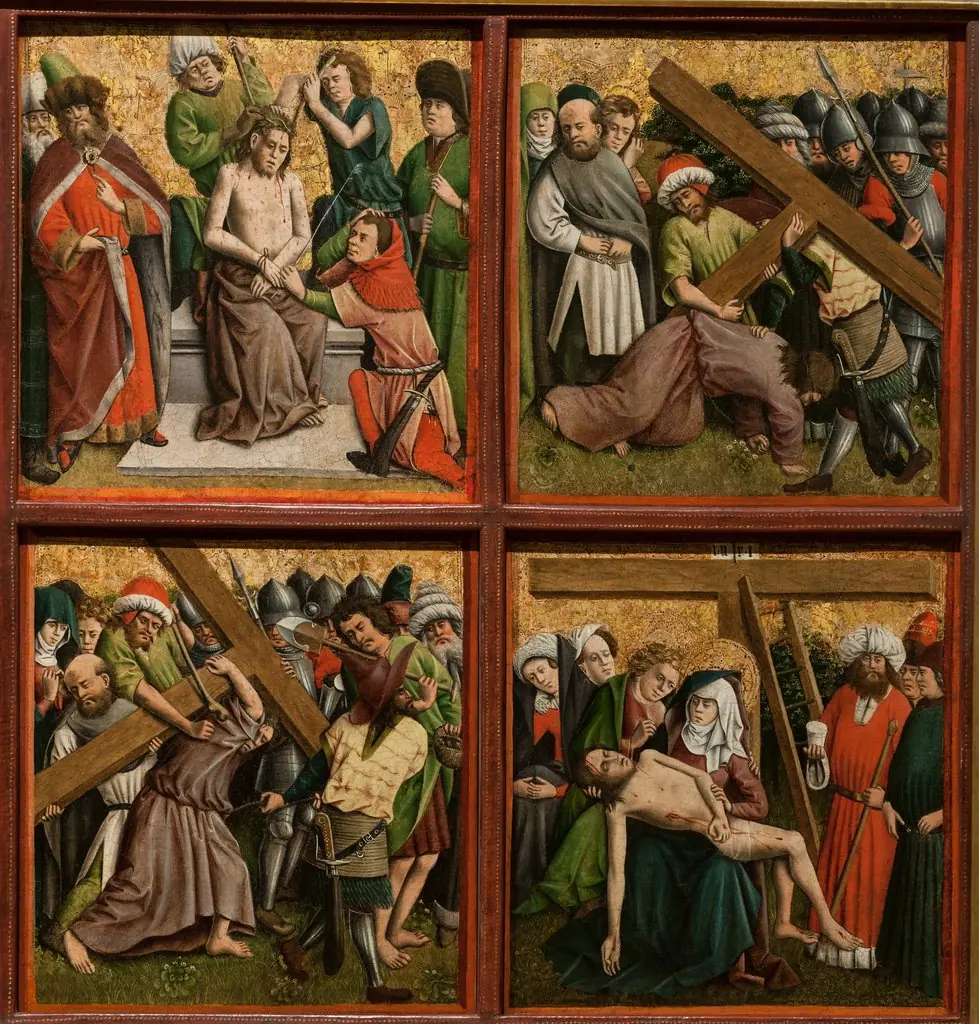 Altarpiece with The Passion of Christ
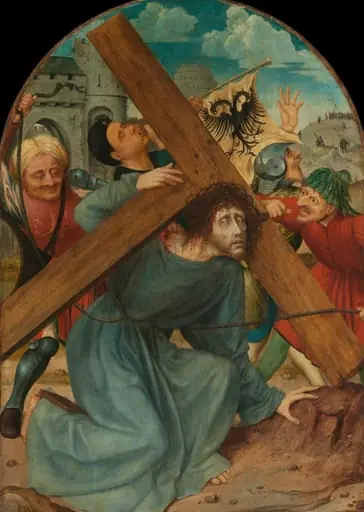 Christ Carrying the Cross
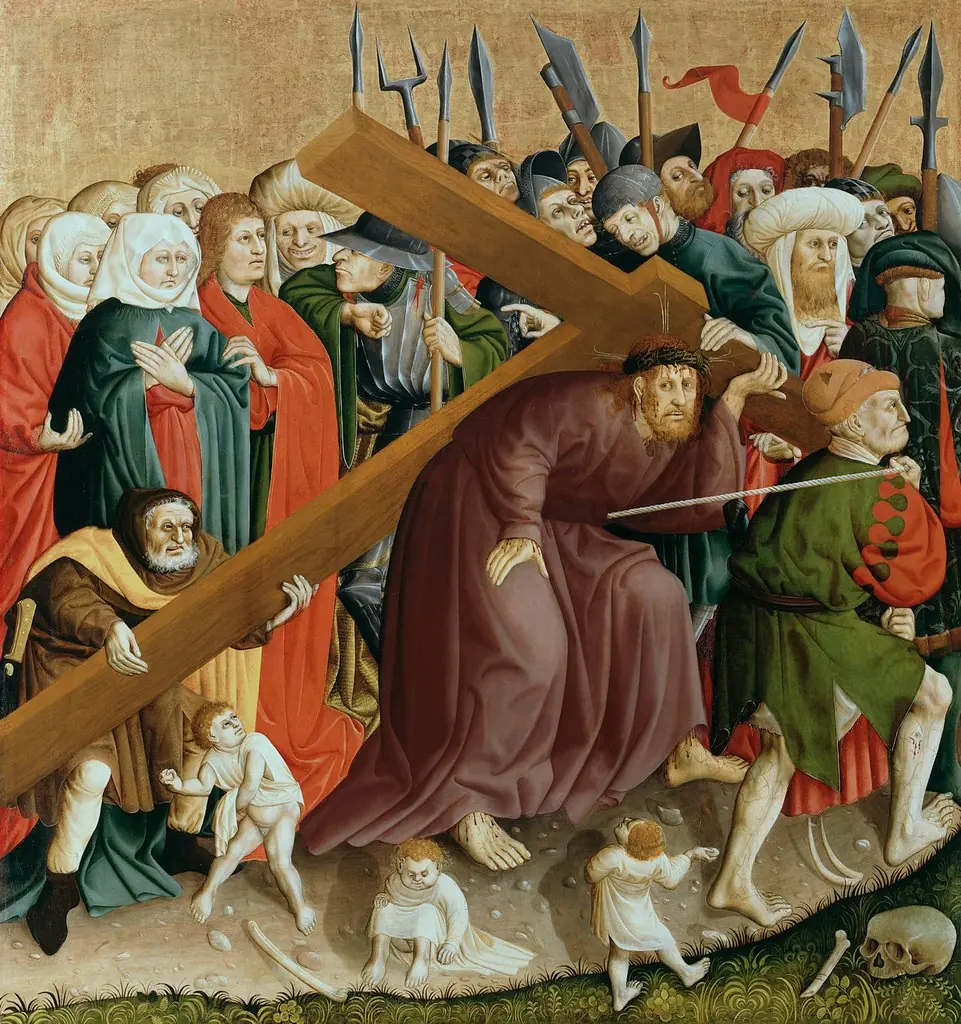 Jesus Christ carrying the Cross, inner wing
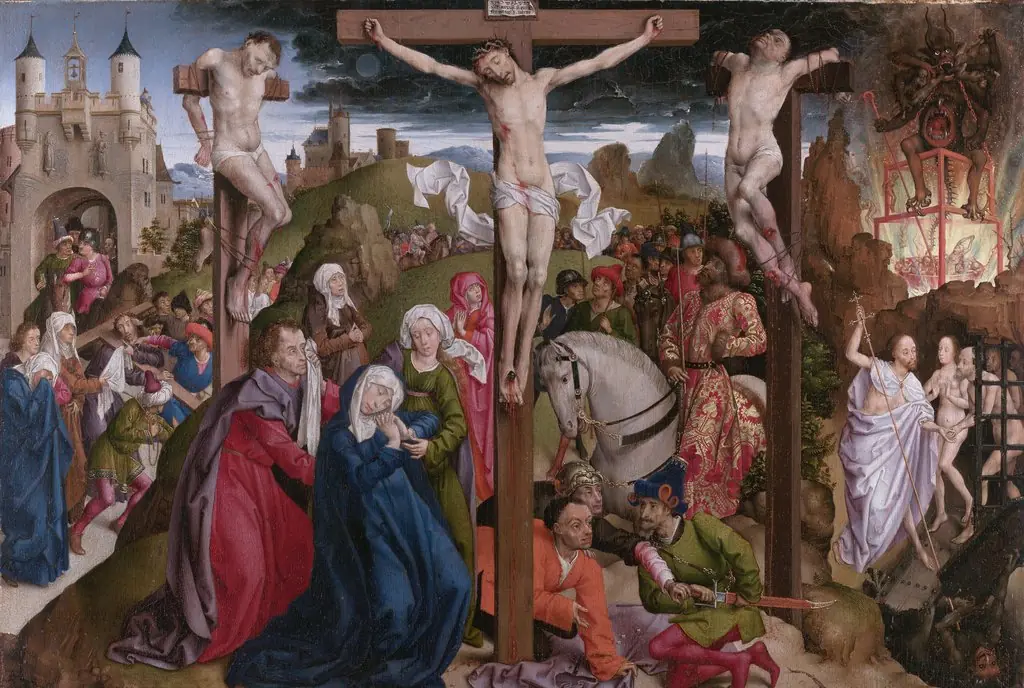 The Crucifixion