Artwork
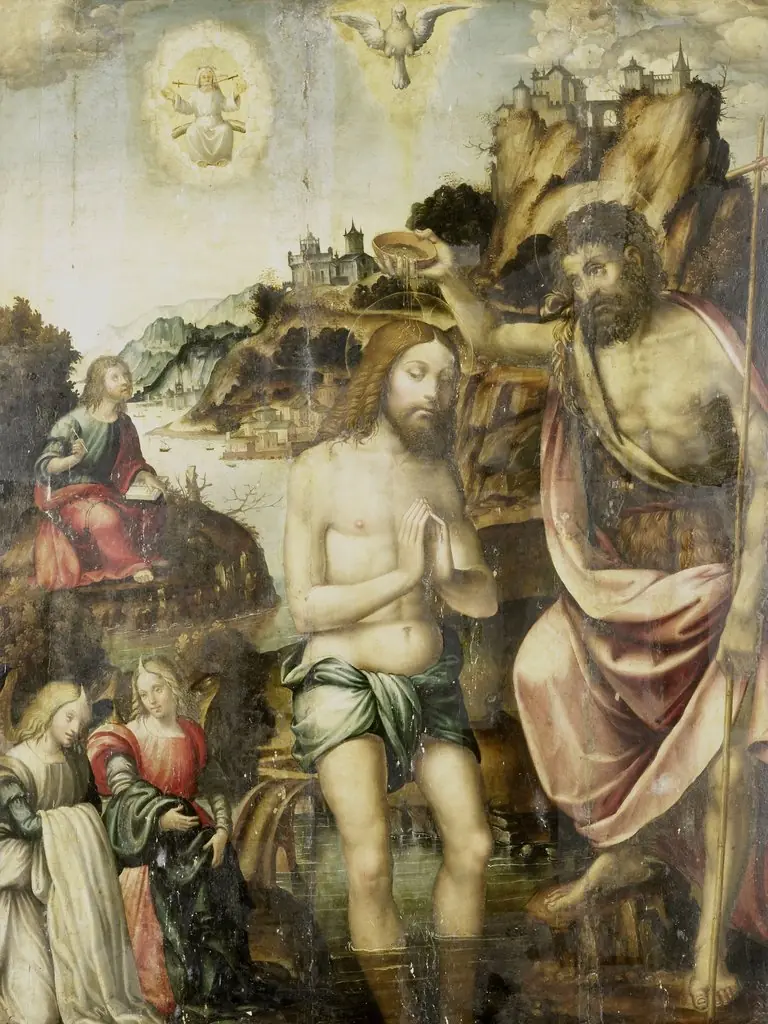
De doop van Christus in de Jordaan, rechter paneel van een drieluik (open)
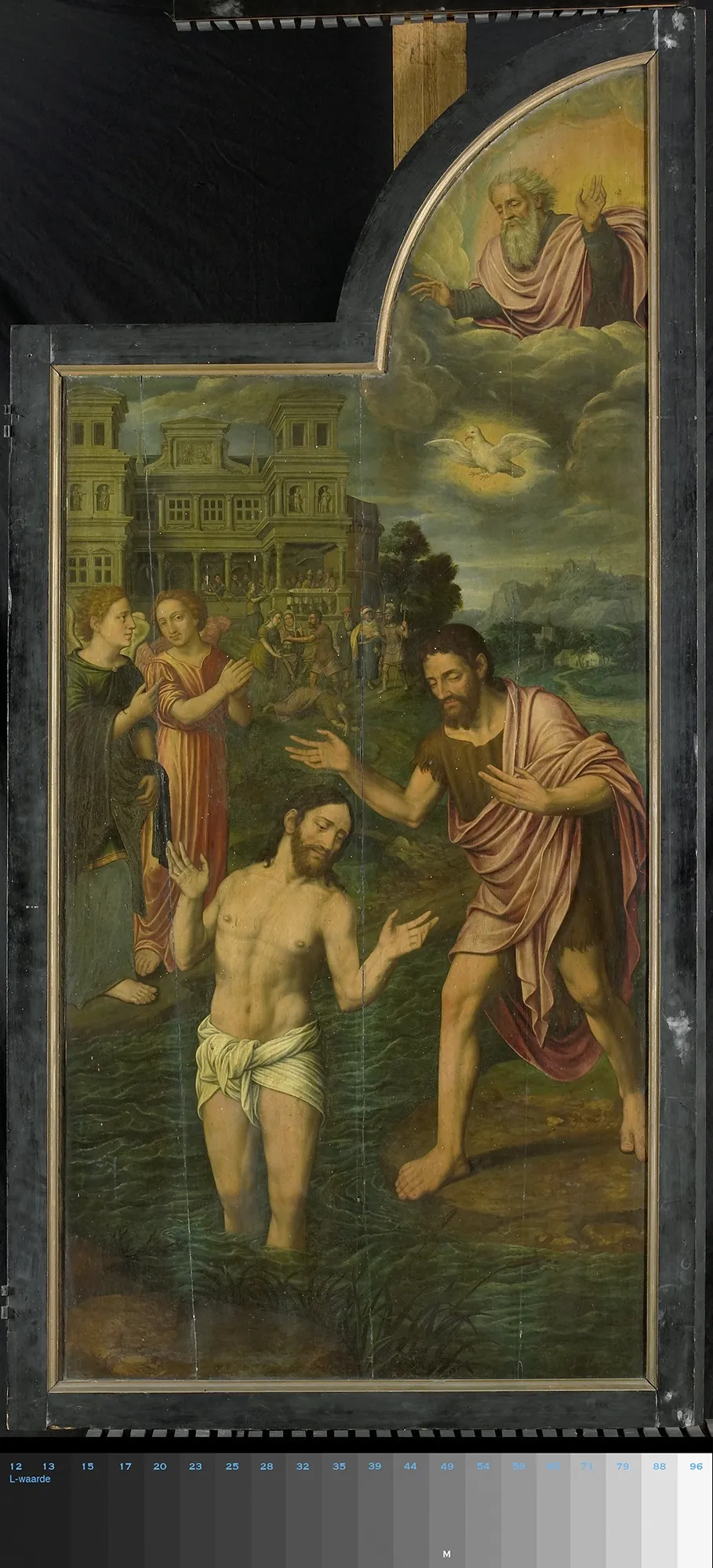
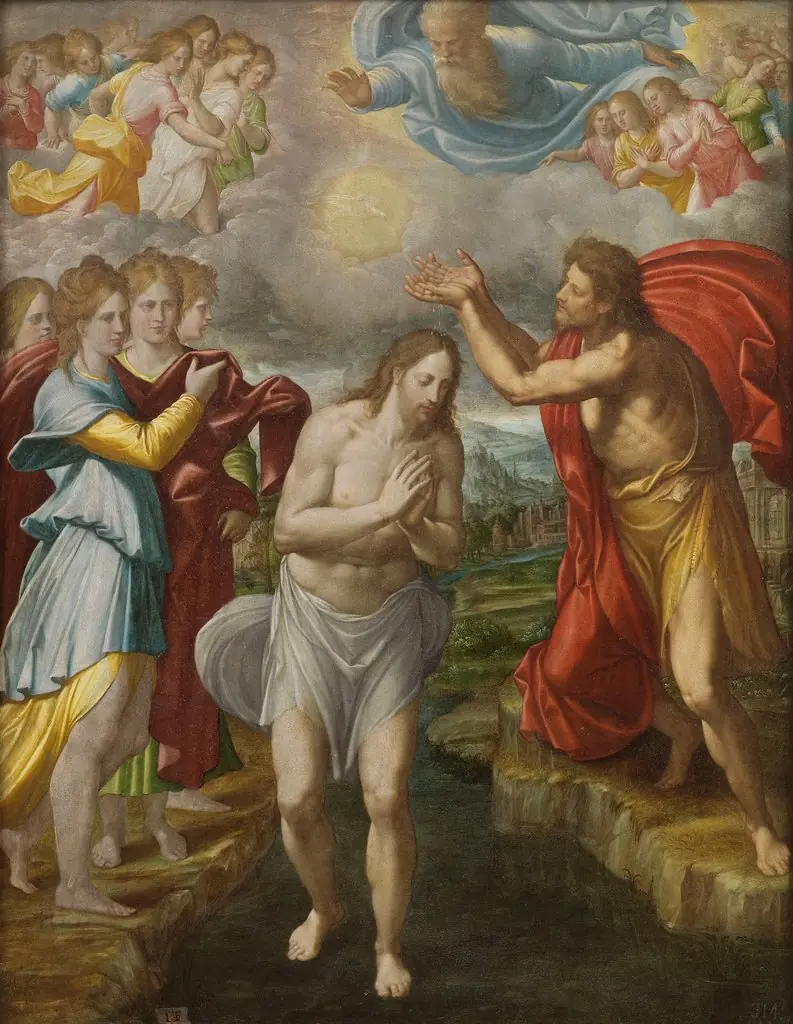
De doop van Christus in de Jordaan, rechter paneel van een drieluik (open) is an oil painting by the Northern Renaissance artist Hans van Coninxloo. It dates from 1557 and is held in the collection of the Rijksmuseum.
About this work
Subject & Meaning
As a religious painting created in the Southern Netherlands, the piece illustrates the moment of divine revelation where the Holy Spirit descends upon Jesus.
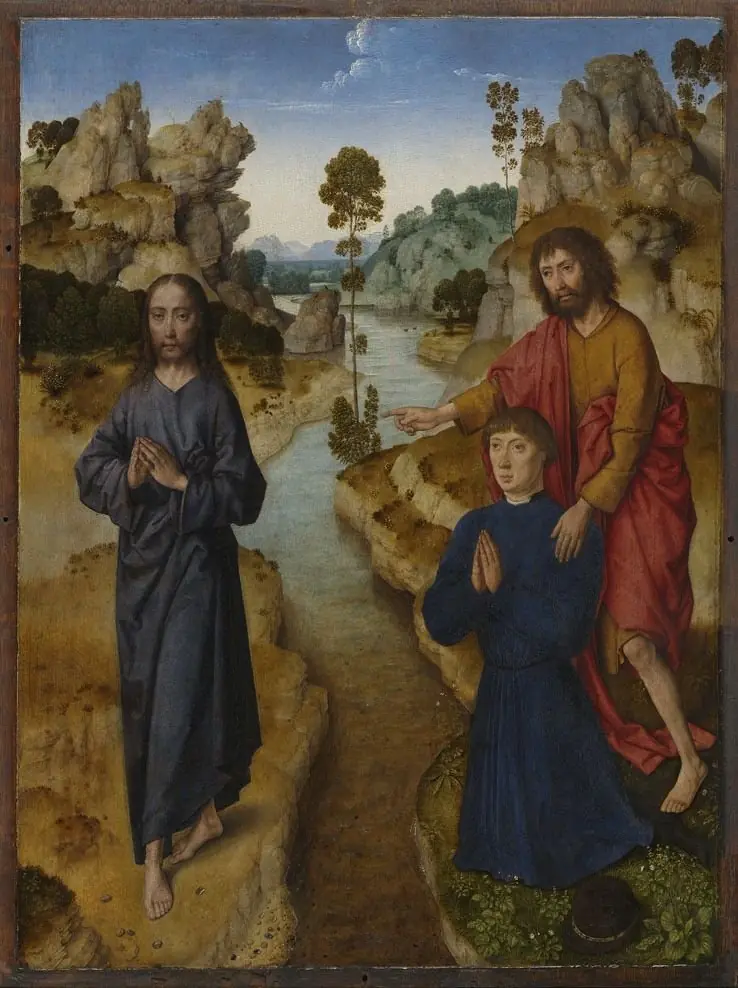
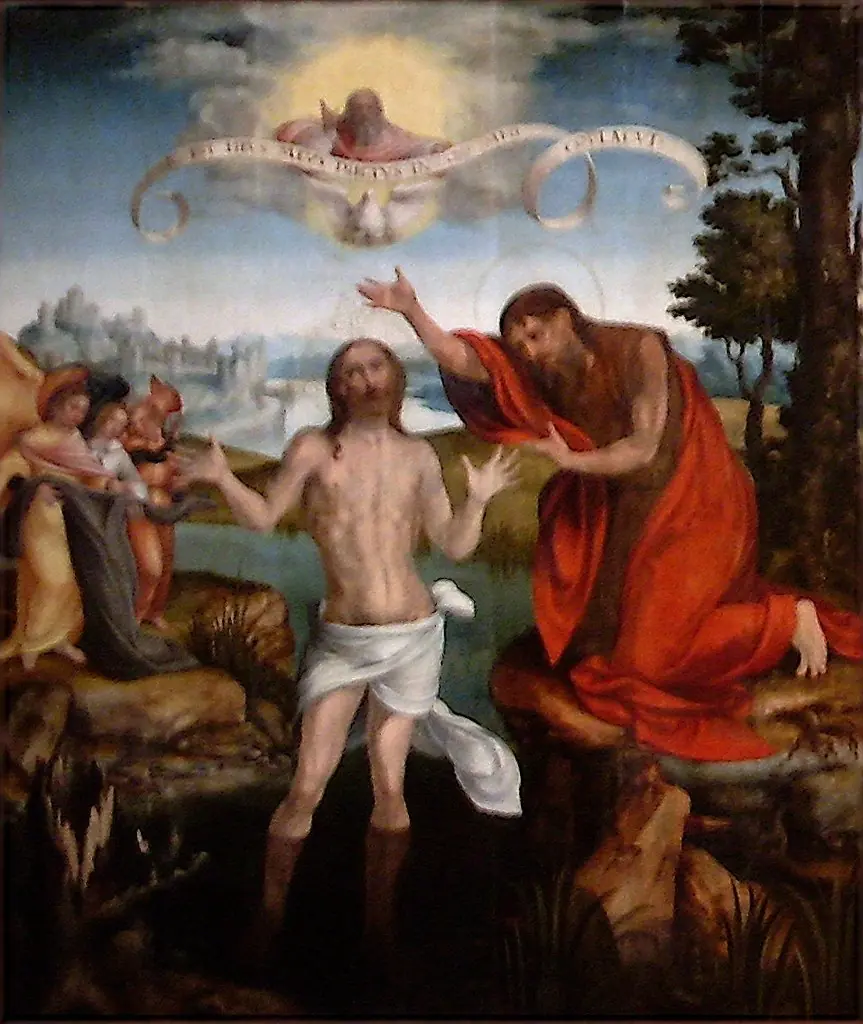
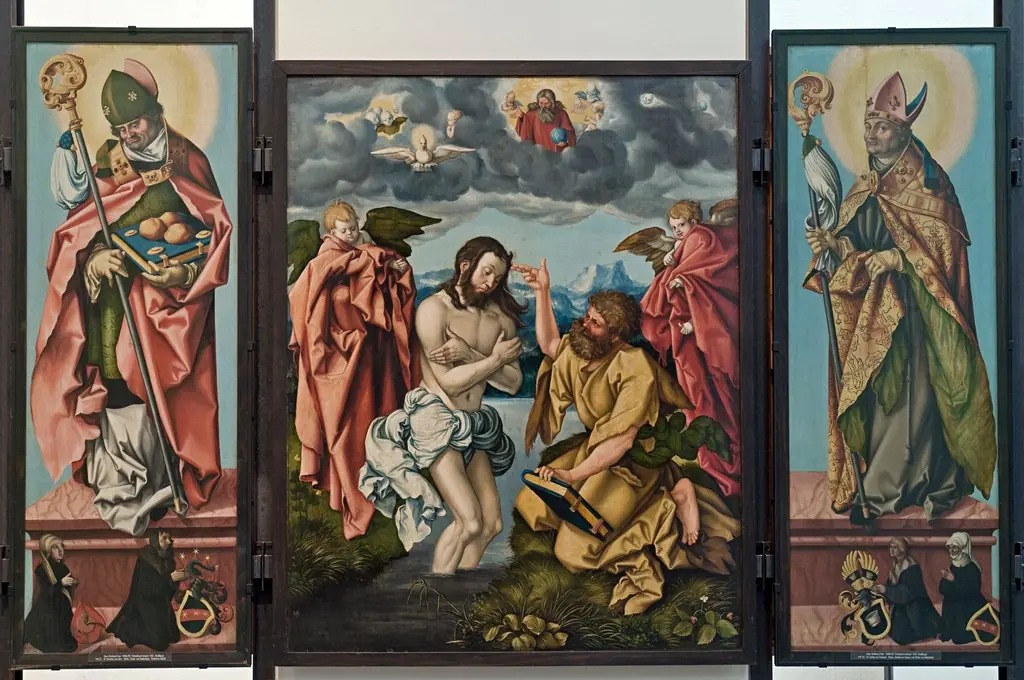
The work depicts the Baptism of Jesus in the Jordan River, a central event in Christian theology. The composition features John the Baptist as the main subject, shown performing the sacrament on Christ. As a religious painting created in the Southern Netherlands, the piece illustrates the moment of divine revelation where the Holy Spirit descends upon Jesus.
This narrative scene serves as a visual representation of the initiation of Christ's public ministry and the affirmation of his identity as the Son of God.
Technique & Style
The work is executed in oil paint on panel, measuring 194 by 87 cm. Its large vertical format suits the devotional function of a triptych wing, designed to be viewed when the altarpiece was open. The medium of oil paint on wood panel was standard practice in the Southern Netherlands during the mid-sixteenth century, allowing for the detailed rendering of religious narrative expected of a painter such as Hans van Coninxloo (I). The surviving physical record indicates the panel support remains intact in the collection of the Rijksmuseum.
History & Provenance
The triptych panel De doop van Christus in de Jordaan is dated 1557 and attributed to Hans van Coninxloo (I), a painter active in the Southern Netherlands during the mid-sixteenth century.
The work entered the collection of the Rijksmuseum, Amsterdam, through the bequest of Cornelis Hoogendijk in 1872, where it remains held to the present day.
The painting is held in the collection of the Rijksmuseum in Amsterdam. The work forms part of the museum's holdings of religious art from the Southern Netherlands. It was previously owned by Cornelis Hoogendijk before entering the public collection.
The provided sources do not contain specific inventory or accession numbers for the piece. Additionally, no exhibition history or records of past displays are documented in the available information.
Overview
Hans van Coninxloo’s 1557 oil on panel forms the right wing of an open triptych now displayed in the Rijksmuseum. The work portrays the biblical moment of Christ’s baptism in the Jordan River, rendered with a careful attention to narrative detail and spatial arrangement.
Context
The painting reflects the mid‑sixteenth‑century Northern Renaissance interest in biblical narrative combined with a realistic treatment of space and light. Van Coninxloo, known for his landscape and religious works, integrates architectural elements typical of contemporary Netherlandish art, situating the sacred scene within a recognizable, everyday setting.
Artist & collection

![Baptism of Christ. T wing of the altar retable [?] from Chełmiec](https://artifactworldgallery.com/img/baptism-of-christ-t-wing-of-the-altar-retable-from-che-miec--b8d17b6ceeee682b-w320.webp)