Artwork
Johannes de Doper met het Lam Gods, linkerpaneel van een drieluik (dicht)
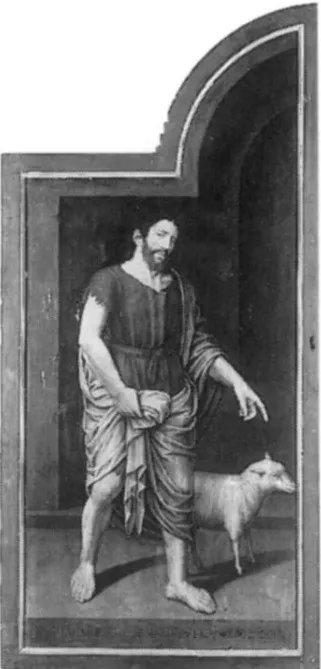
Johannes de Doper met het Lam Gods, linkerpaneel van een drieluik (dicht) is an oil painting by the Northern Renaissance artist Hans van Coninxloo. It dates from 1557 and is held in the collection of the Rijksmuseum.
About this work
Subject & Meaning
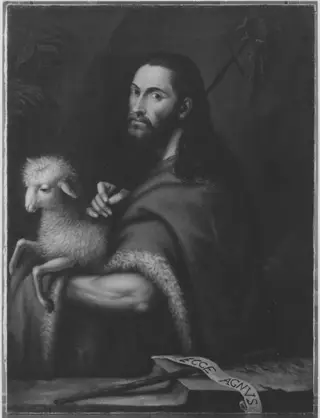
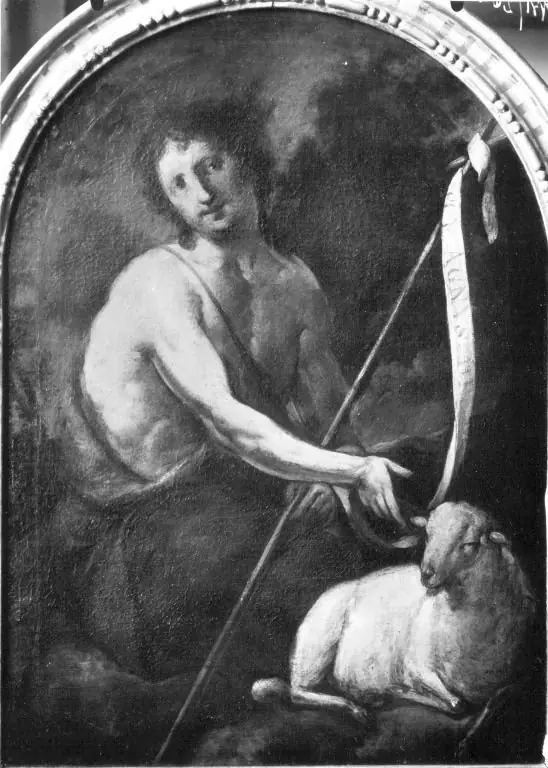
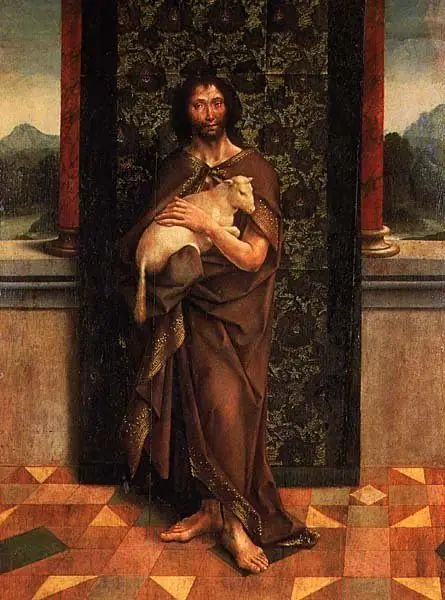
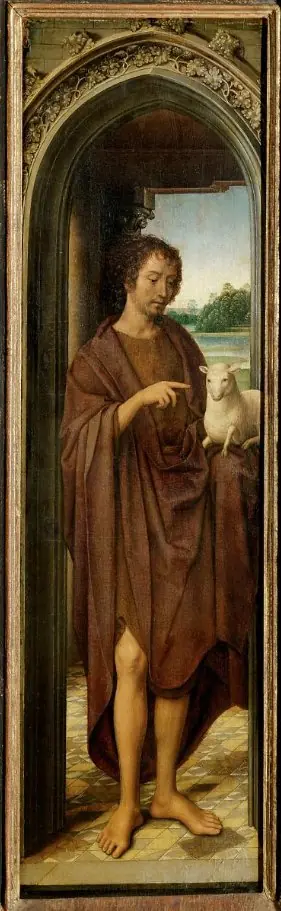
The left panel of the closed Ghent Altarpiece depicts John the Baptist holding a lamb, a standard iconographic attribute that signifies his role as the precursor of Christ. The lamb functions as a visual symbol of sacrificial innocence, reinforcing the work's religious narrative of redemption.
Technique & Style
The work is executed in oil paint on a wooden panel, reflecting typical 16th-century Northern European devotional practices.
The work is executed in oil paint on a wooden panel, reflecting typical 16th-century Northern European devotional practices. The painting depicts John the Baptist holding a lamb, rendered with meticulous brushwork that emphasizes crisp outlines and a restrained palette characteristic of the Antwerp school. Its composition balances narrative clarity with symbolic detail, aligning with contemporary religious iconography.
History & Provenance
The panel was created in 1557 by Hans van Coninxloo (I) as the closed left wing of a triptych, executed in oil on panel in the Southern Netherlands and depicting John the Baptist with the Lamb of God.
At a later point the work entered the collection of Cornelis Hoogendijk, a noted Dutch collector. It subsequently became part of the holdings of the Rijksmuseum, where it is currently preserved.
No information on the original commissioner or on intermediate owners between the 16th-century creation and Hoogendijk's ownership is documented in the available sources.
The painting Johannes de Doper met het Lam Gods, created in 1557 by Hans van Coninxloo (I), is held in the collection of the Rijksmuseum in Amsterdam. The work, executed in oil on panel, depicts John the Baptist with the Lamb of God. Historical records indicate that the piece was previously owned by Cornelis Hoogendijk before entering the museum's holdings.
The Rijksmuseum houses this religious artwork as part of its permanent collection, though specific inventory numbers are not provided in the available documentation.
No specific exhibition history is detailed in the provided sources, which focus primarily on the work's creation date, artist attribution, and ownership lineage. The piece remains associated with the Southern Netherlands region of origin.
Context
Hans van Coninxloo (I) painted the left panel of a triptych depicting the Adoration of the Mystic Lamb in 1557, a work now housed in the Rijksmuseum and attributed to the artist's early religious phase. The piece shows John the Baptist holding a lamb, reflecting Counter-Reformation emphasis on scriptural narrative. Scholarship situates it within van Coninxloo's development as a key figure in Dutch Mannerist religious painting, distinct from later depictions of the full Ghent Altarpiece.
Overview
Created in 1557 by the Flemish painter Hans van Coninxloo, this oil on canvas forms the left wing of a closed triptych. The work presents a solitary figure of John the Baptist standing in a dark interior, his gaze directed toward a small white lamb he holds by a leash. The composition is modest in scale and currently belongs to the collection of the Rijksmuseum in Amsterdam.
Artist & collection