Artwork
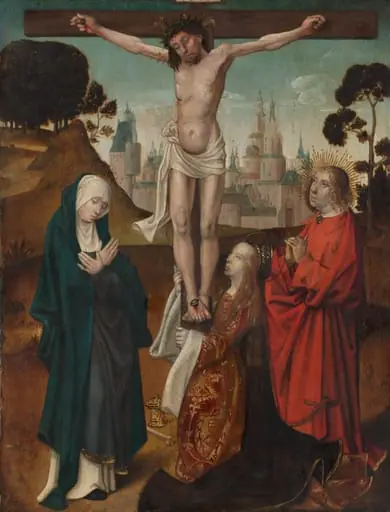
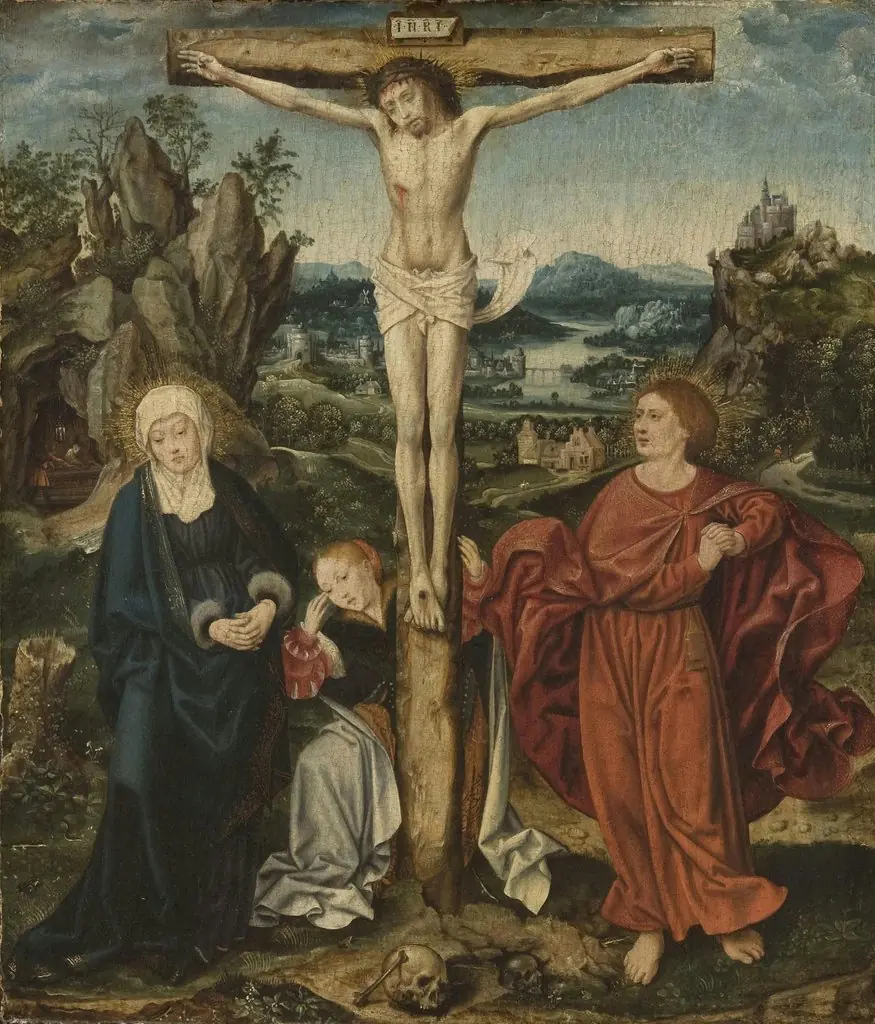
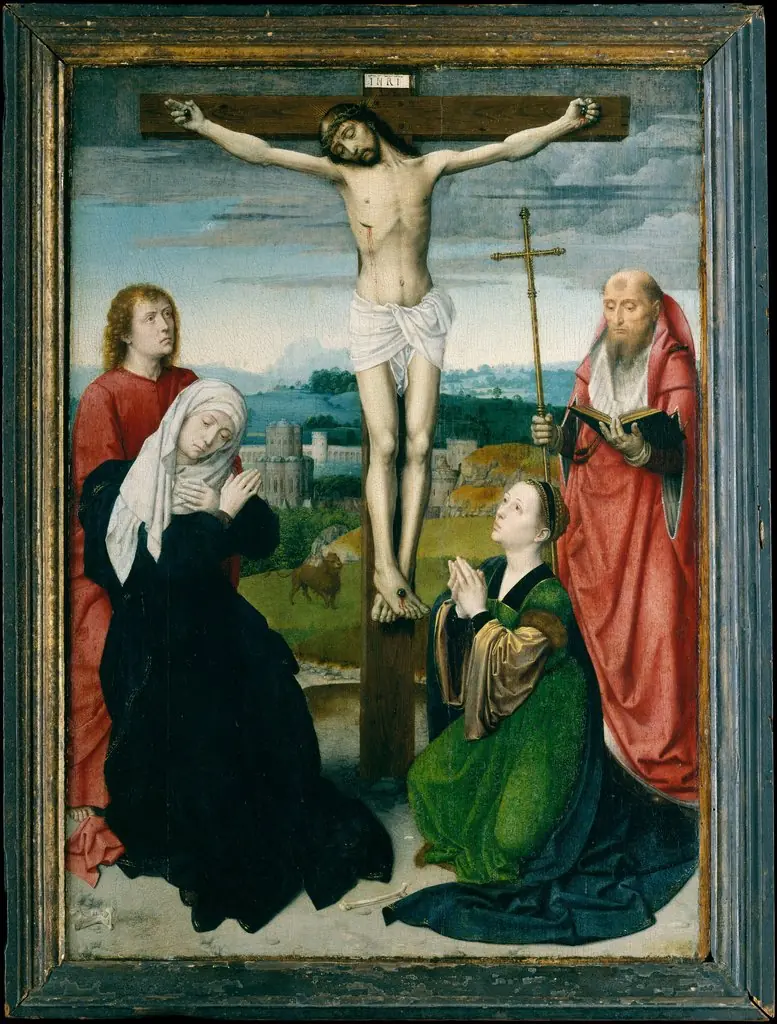
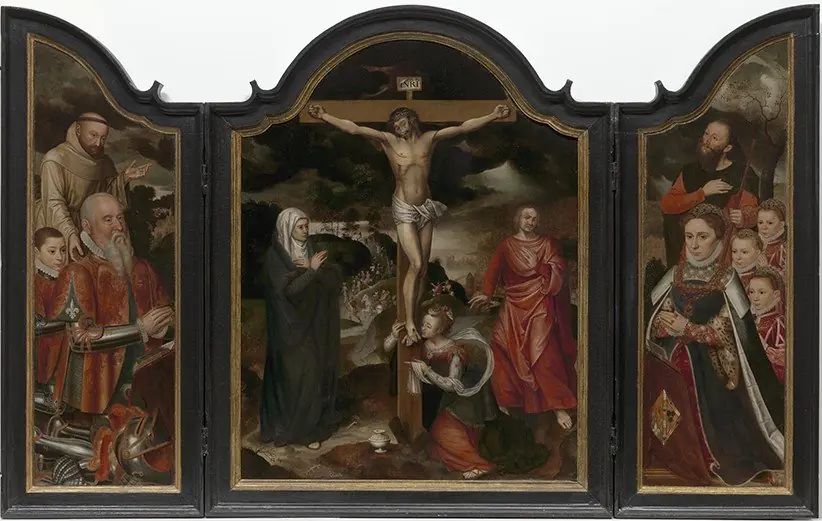
Crucified Christ with Mary and John
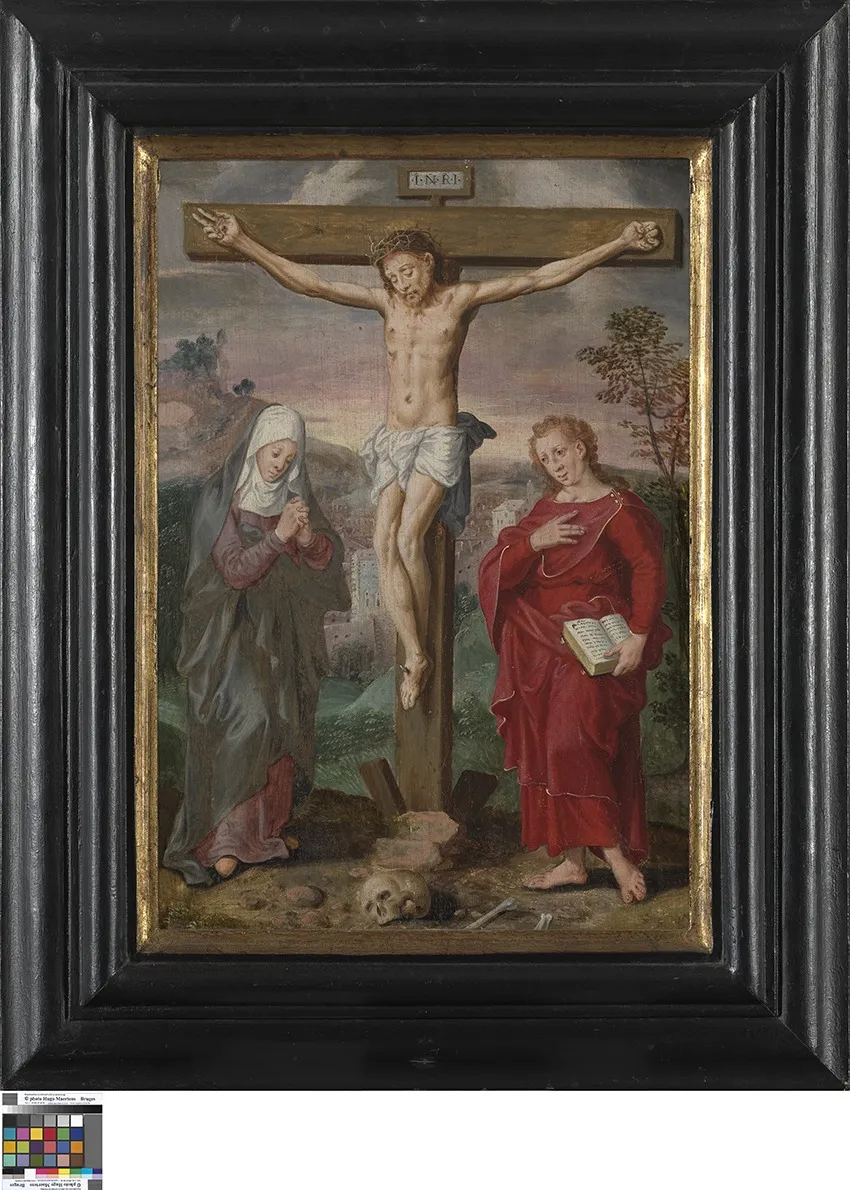
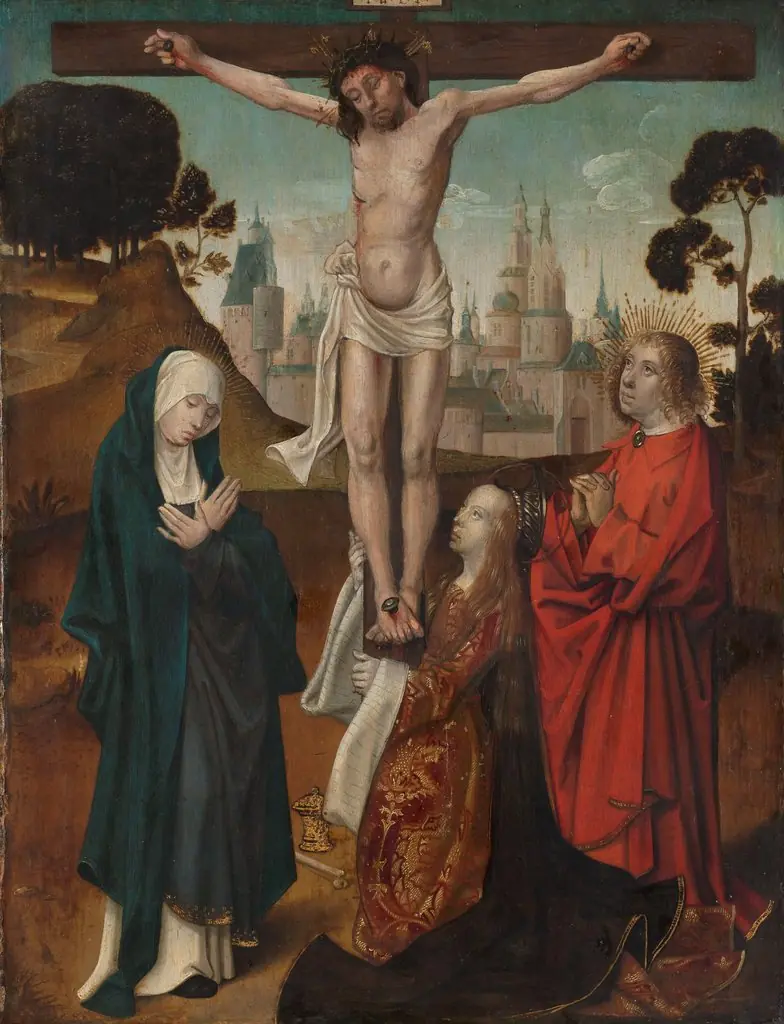
Crucified Christ with Mary and John is an oil painting by the Mannerist artist Unknown. It dates from 1591 and is held in the collection of the Groeningemuseum.
About this work
Subject & Meaning
The tree supporting the cross alludes to the Tree of Knowledge and, through typological contrast, to the cross as the new Tree of Life.
The painting depicts the Crucifixion of Jesus, the central event of the Christian Passion narrative. Christ is shown on the cross flanked by Mary and John, the two figures traditionally associated with the Gospel account of the Crucifixion and frequently paired in devotional imagery of this scene.
Beyond the principal figures, the work incorporates several symbolic elements. A skull at the base of the cross refers to Golgotha, "the place of the skull," and to Adam, whose burial was traditionally believed to lie beneath the Crucifixion, linking Christ's redemptive sacrifice to the origin of sin. The tree supporting the cross alludes to the Tree of Knowledge and, through typological contrast, to the cross as the new Tree of Life.
A book, likely held by one of the figures, signifies scripture and the fulfillment of prophecy in the Crucifixion.
The hill and house in the background situate the sacred event within a recognizable landscape, while the inclusion of John the Baptist, rather than the more common John the Evangelist, introduces a prophetic witness who points to Christ as the Lamb of God, reinforcing the painting's theological message of salvation.
Technique & Style
The work is an oil painting on a small-scale support measuring 41.8 cm in height by 29.3 cm in width, a modest format suited to intimate devotional viewing. Executed in 1581, it is rendered in oil paint, the standard medium of late sixteenth-century Netherlandish panel and canvas production, allowing for the layered glazes and fine detail characteristic of the period's religious imagery. The composition depicts the Crucifixion of Jesus flanked by Mary and John, with secondary motifs including a book, tree, skull, house, and hill, elements that together signal a conventional late-medieval iconographic vocabulary carried into the Southern Netherlandish tradition.
Stylistically, the painting belongs to the anonymous late-sixteenth-century Southern Netherlandish school and is held in the Groeningemuseum as part of the Vlaamse Kunstcollectie. The handling reflects the devotional, narrative-driven approach typical of anonymous workshop production of the era, prioritizing legible sacred symbolism over individual painterly bravura.
History & Provenance
The oil painting titled Crucified Christ with Mary and John was created in 1581. It is attributed to an anonymous master from the Southern Netherlands active at the end of the sixteenth century. The work is currently held within the Flemish Art Collection at the Groeningemuseum.
Specific details regarding the original commission, the identity of the patron, or the precise chain of ownership prior to its museum acquisition are not provided in the available records.
The Crucified Christ with Mary and John is part of the Groeningemuseum's collection under the inventory designation Groeningemuseum, Vlaamse Kunstcollectie, and has been exhibited at this institution. The work dates to 1581 and measures 41.8 cm in height by 29.3 cm in width.
Context
This work belongs to the religious genre of Counter-Reformation painting in the Southern Netherlands circa 1581. It is housed in the Groeningemuseum and reflects the devotional intensity characteristic of the period. Scholarship identifies its composition as drawing from devotional imagery prevalent in late 16th-century Flemish art, situating it within the broader context of Counter-Reformation visual culture. The piece demonstrates the era's emphasis on narrative clarity and emotional resonance in sacred subjects.
The attribution to an anonymous master highlights the workshop practices of the time, while its formal qualities align with other religious works from the region. Its dimensions of 41.8 cm by 29.3 cm underscore the scale typical of devotional panels intended for private contemplation. The work's enduring presence in museum collections illustrates its significance within the narrative of Northern European religious art.
Overview
This oil painting depicts the Crucifixion of Christ, with the central figure of Christ nailed to a cross, flanked by the Virgin Mary on the left and Saint John on the right, set against a pale sky with a tree in the background and a skull and bones at the base of the cross.
Legacy
Without specific attribution or historical context, the painting's direct influence or legacy within the broader art historical canon cannot be precisely determined.
Artist & collection