Artwork
Johannes der Täufer
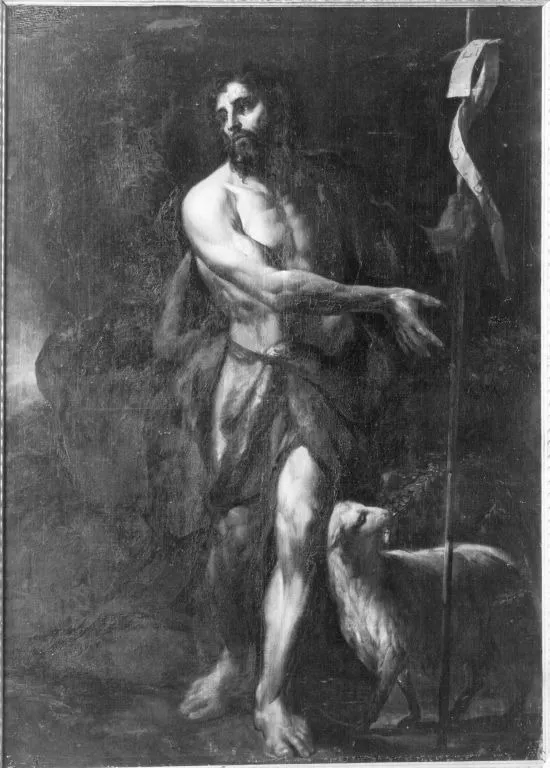
Johannes der Täufer is an unspecified painting by the Early Baroque Italian artist Unknown. It dates from 1600 and is held in the collection of the Bavarian State Painting Collections.
About this work
Subject & Meaning
Created in 1600 as a religious work, it belongs to the genre of religious art and renders the biblical prophet as the central focus of the composition.
The painting depicts John the Baptist, identified as its main subject and the figure portrayed. Created in 1600 as a religious work, it belongs to the genre of religious art and renders the biblical prophet as the central focus of the composition.
As a devotional image of John the Baptist, the work fits within the long tradition of representing the forerunner of Christ, a subject frequently treated in Counter-Reformation religious painting. The Bavarian State Painting Collections hold the canvas at the Alte Pinakothek in Munich, where it is catalogued under the title Johannes der Täufer.
History & Provenance
The painting Johannes der Täufer was created in 1600 by an artist associated with the Venetian school. The work depicts the religious figure John the Baptist and is classified as a religious painting. It currently resides in the Alte Pinakothek as part of the Bavarian State Painting Collections.
The physical dimensions of the canvas are recorded as 193.3 cm in height and 136.5 cm in width. No specific details regarding the original commission, earlier ownership history, or the chain of custody prior to its current museum holding are provided in the available records.
The painting Johannes der Täufer is held in the collection of the Bavarian State Painting Collections and is located at the Alte Pinakothek. Created around 1600, the work depicts the religious figure John the Baptist. The provided sources do not contain specific inventory numbers, accession codes, or a record of past exhibitions for this artwork.
Overview
The work titled Johannes der Täufer depicts a solitary male figure, bearded and long‑haired, positioned in a dimly lit interior. He is partially unclothed, wrapped only in a draped cloth around his waist, and holds an unidentified object in his right hand. A small animal, possibly a fox or dog, rests at his feet and looks upward toward the figure.
Technique & Style
The painting employs a pronounced chiaroscuro effect, with stark contrasts between illuminated flesh and deep shadows that model the form and create a three‑dimensional presence. The handling of light emphasizes the texture of skin and cloth, while the surrounding darkness isolates the subject, enhancing the dramatic focus.
Context
Executed in a period when artists explored dramatic lighting to convey spiritual intensity, the work reflects the broader Baroque interest in emotional realism and theatrical composition. The inclusion of a small animal and the minimal setting align with contemporary iconographic conventions for depicting holy hermits.
Artist & collection









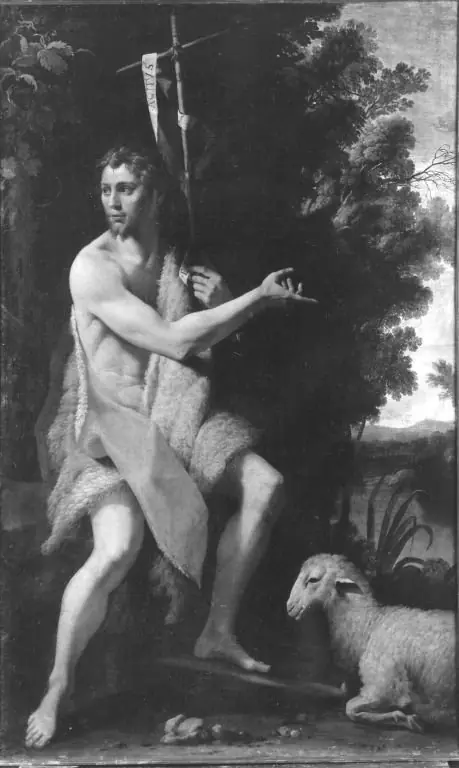 Johannes der Täufer mit Lamm
 Johannes der Täufer
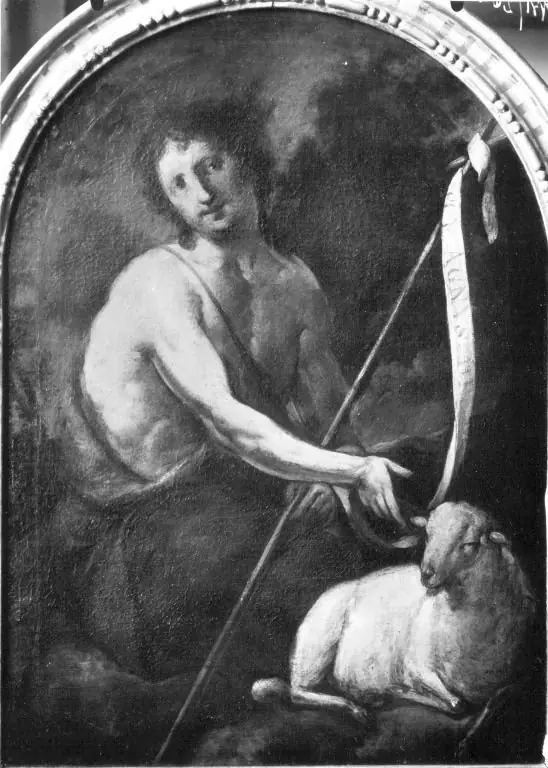 Johannes der Täufer
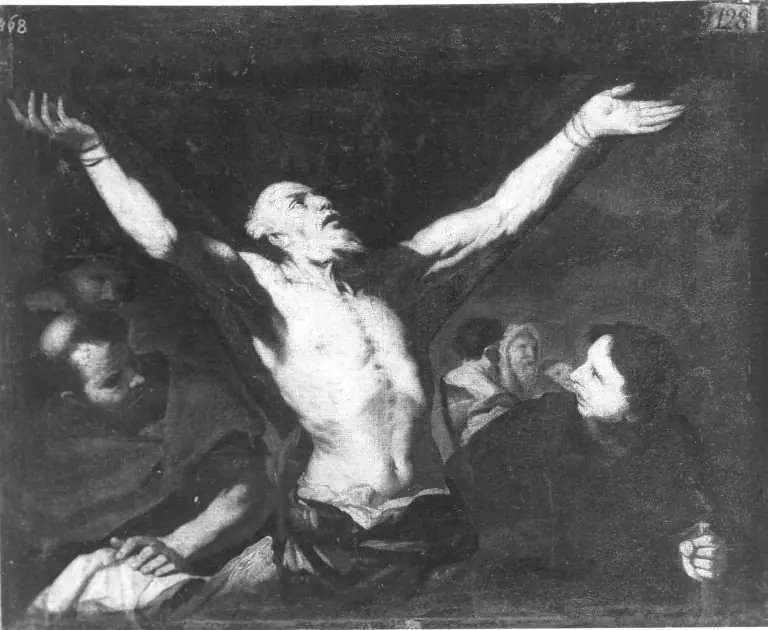
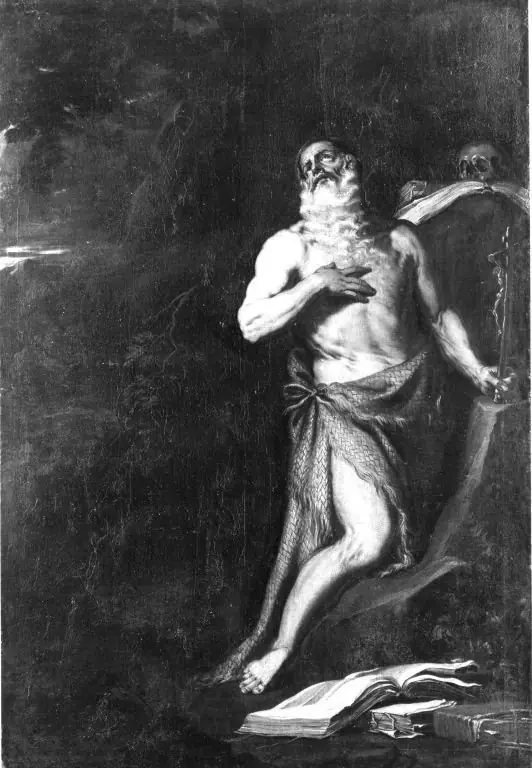 Der hl. Hieronymus
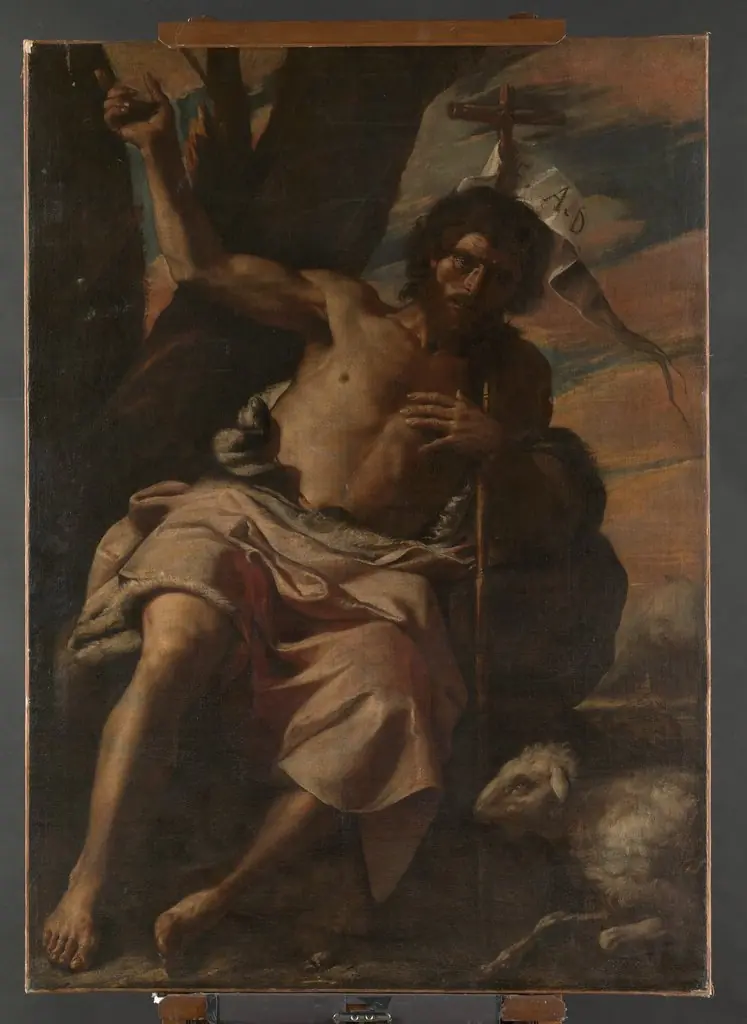 Saint John the Baptist Preaching
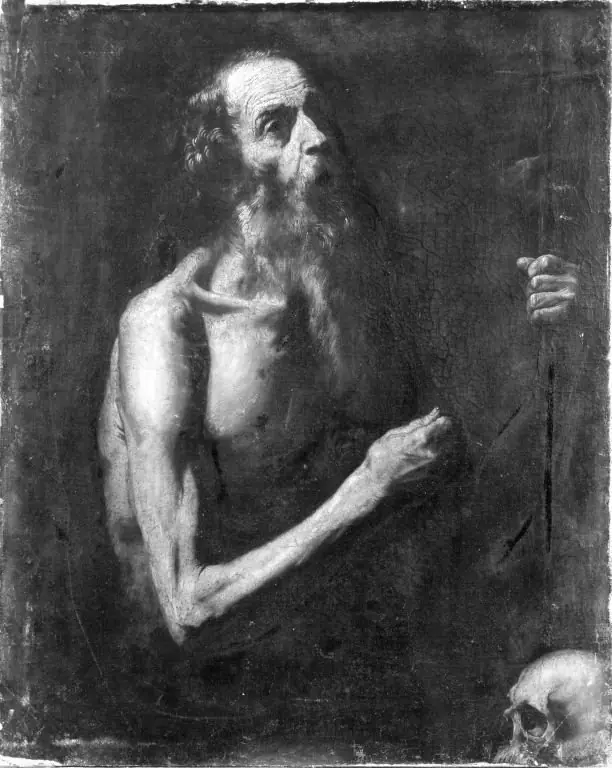 Saint Jerome
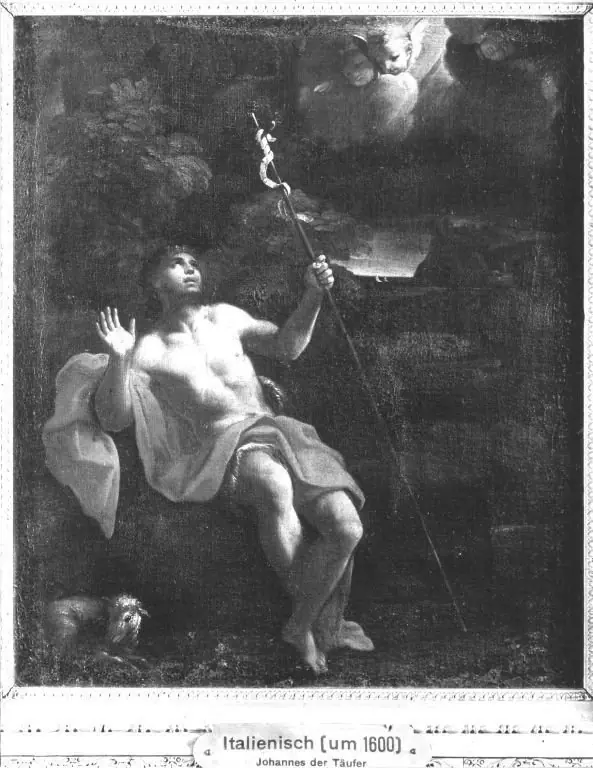 Johannes der Täufer
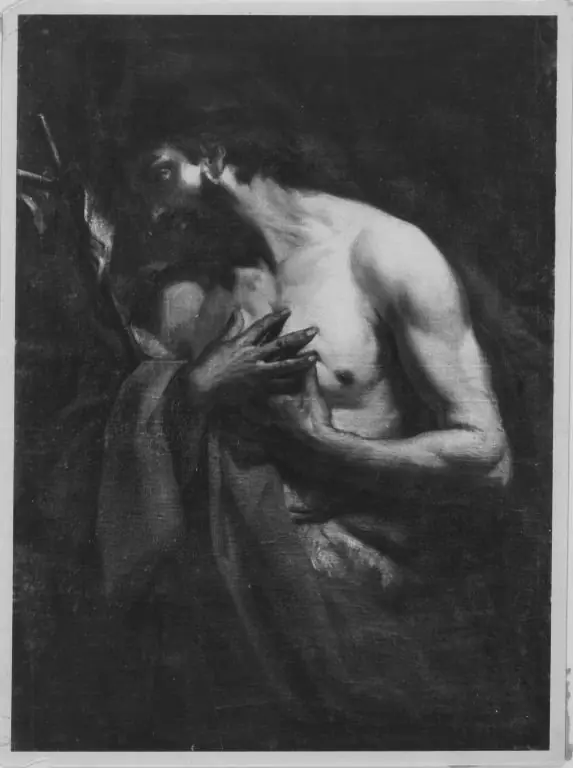
 Kristus med tornekronen og sammenbundne hænder, holder i den højre hånd et rør
 Kristus med tornekronen og sammenbundne hænder, holder i den højre hånd et rør