Artwork
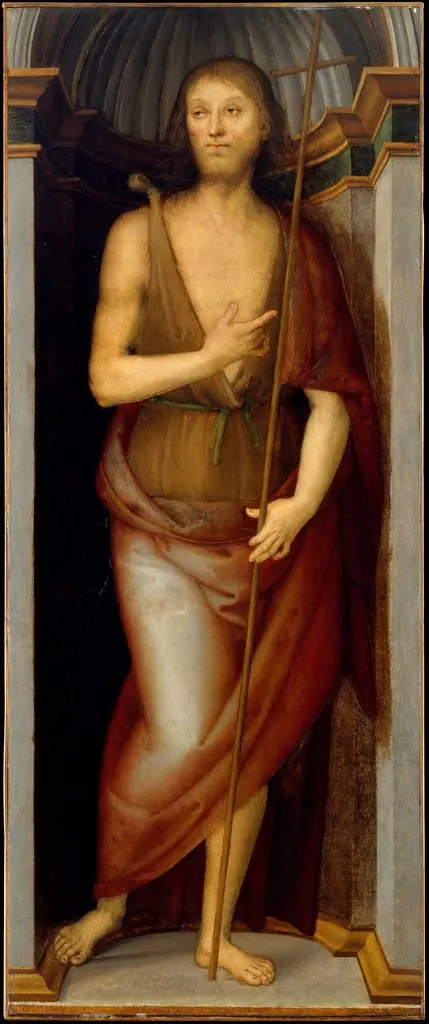
San Giovanni Battista
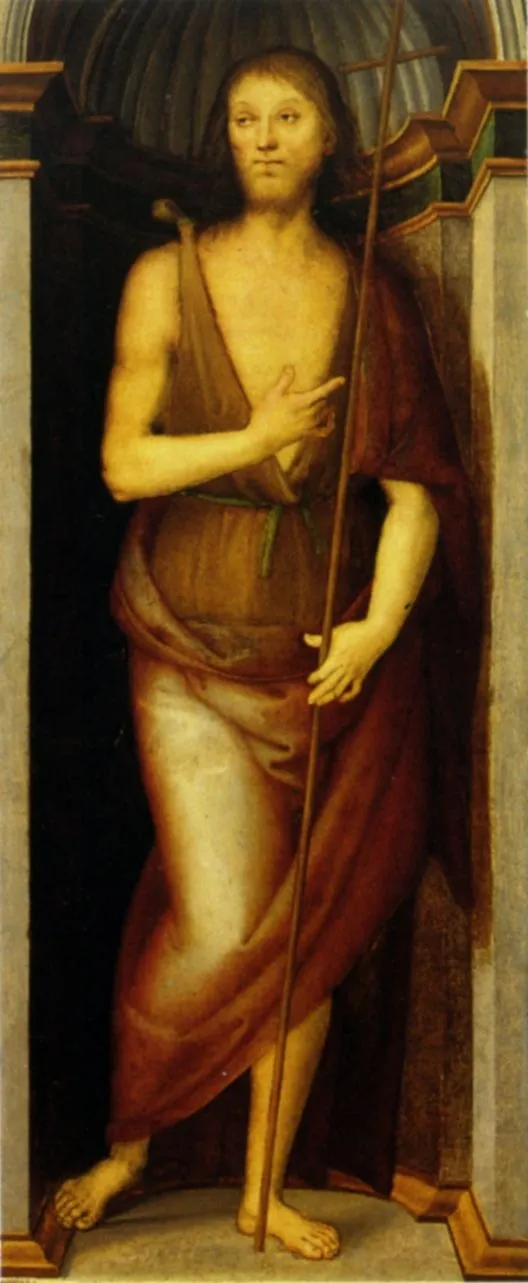
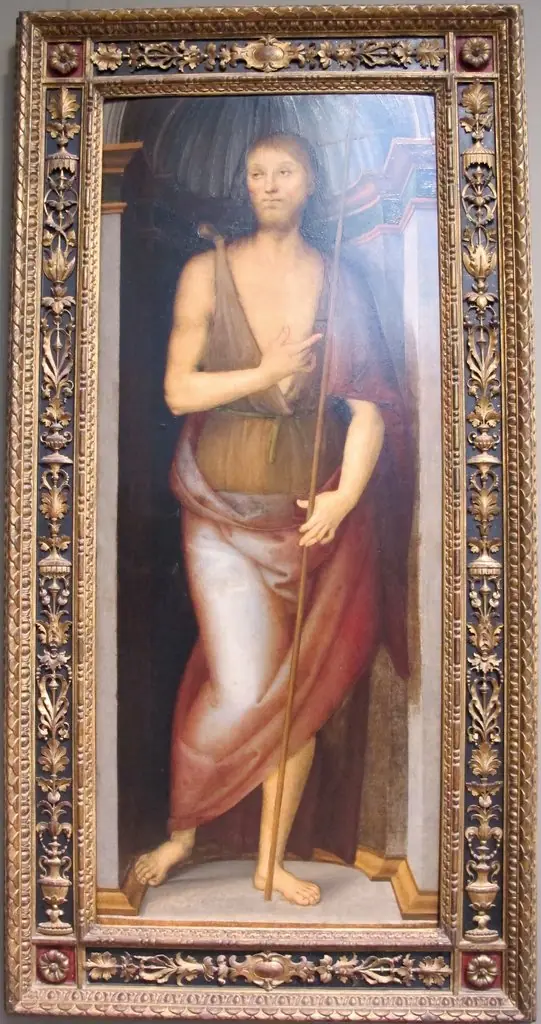
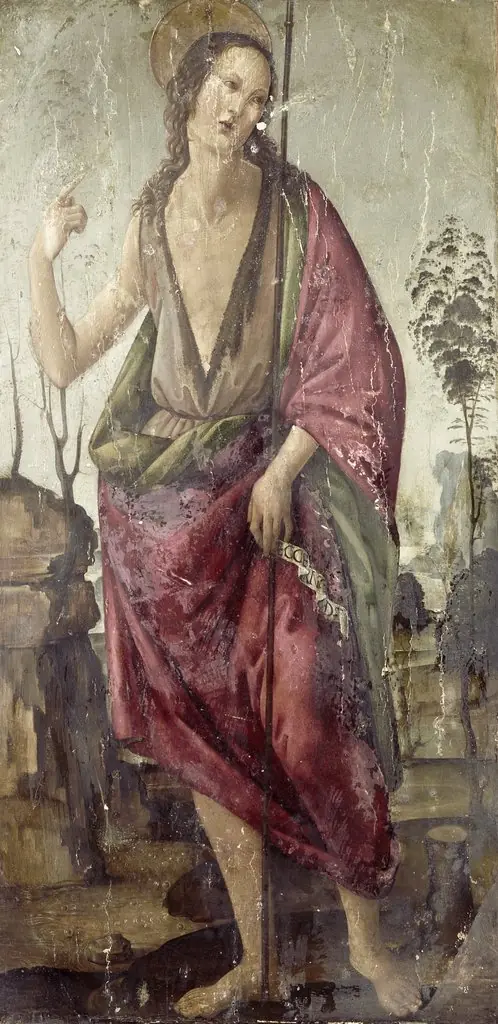
San Giovanni Battista is an unspecified painting by the Early Renaissance artist Pietro Perugino. It dates from 1495 and is held in the collection of the Metropolitan Museum of Art.
About this work
Subject & Meaning
Classified as a work of religious art, the image focuses entirely on this specific saint, aligning with the devotional themes common in Perugino's oeuvre.
The painting depicts John the Baptist as its central figure and primary subject. Classified as a work of religious art, the image focuses entirely on this specific saint, aligning with the devotional themes common in Perugino's oeuvre. The iconography serves to represent the biblical figure directly, without additional narrative scenes or complex symbolic attributes described in the available records.
As a religious genre piece, the work functions as a visual representation of the saint for contemplation or veneration.
History & Provenance
The painting San Giovanni Battista is attributed to Pietro Perugino and is held in the collection of the Metropolitan Museum of Art, where it is part of the institution's holdings of religious art. No accession number, date of acquisition, or exhibition history is documented in available sources.
Overview
Pietro Perugino's San Giovanni Battista, created around 1495, presents John the Baptist in a characteristic early Renaissance manner. This religious painting, executed by a prominent figure of the Umbrian school, is part of The Metropolitan Museum of Art's collection. It exemplifies the devotional art prevalent during the late 15th century, showcasing the artist's refined approach to figural representation and composition.
Technique & Style
Perugino's painting embodies the refined aesthetic of the early Renaissance, particularly the Umbrian school's emphasis on clarity and harmonious composition. The artist skillfully employs color and arrangement to create a sense of three-dimensionality, drawing the eye into the scene. While not explicitly stated for this work, Perugino was known for techniques like chiaroscuro and sfumato, which contribute to the subtle modeling and atmospheric quality often seen in his figures, enhancing their lifelike presence.
Legacy
As a leading Italian painter of his era, Pietro Perugino played a significant role in shaping the trajectory of Renaissance art. His artistic innovations and stylistic developments laid foundational elements for what would become defining characteristics of the High Renaissance. Notably, his studio trained influential artists such as Raphael, whose subsequent work further propagated and evolved the principles Perugino helped establish, cementing his impact on the broader artistic movement.
Artist & collection
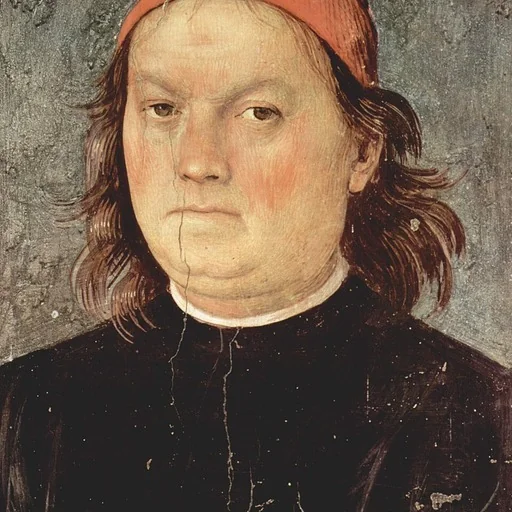
Artist
Pietro Perugino (US: PERR-ə-JEE-noh, -oo-; Italian:; born Pietro Vannucci or Pietro Vanucci; c.

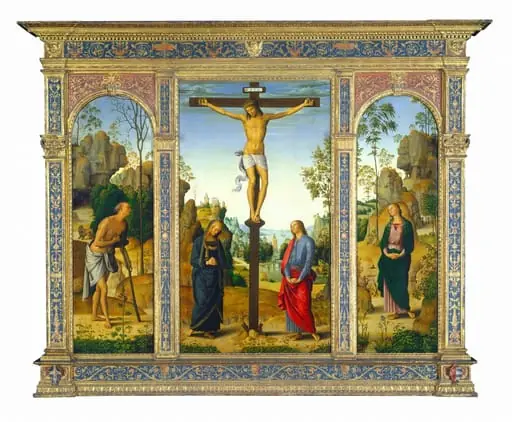 The Crucifixion with the Virgin, Saint John, Saint Jerome, and Saint Mary Magdalene
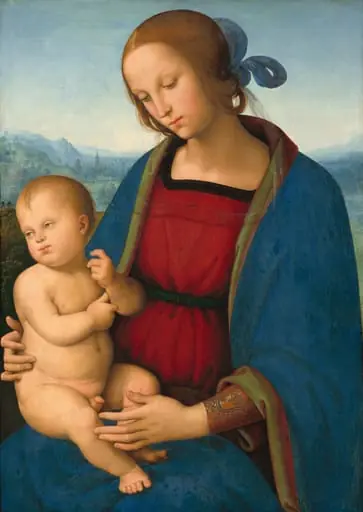 Madonna and Child
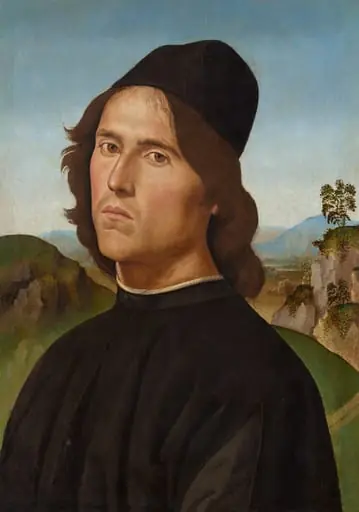 Portrait of Lorenzo di Credi
![The Crucifixion with the Virgin, Saint John, Saint Jerome, and Saint Mary Magdalene [right panel], by Pietro Perugino](https://artifactworldgallery.com/img/pietro-perugino--the-crucifixion-with-the-virgin-saint-john-saint-jerome-and--7d9a2b1f47b9fc9b-w320.webp) The Crucifixion with the Virgin, Saint John, Saint Jerome, and Saint Mary Magdalene [right panel]
The Crucifixion with the Virgin, Saint John, Saint Jerome, and Saint Mary Magdalene [right panel]- Saint John the Baptist; Saint Lucy
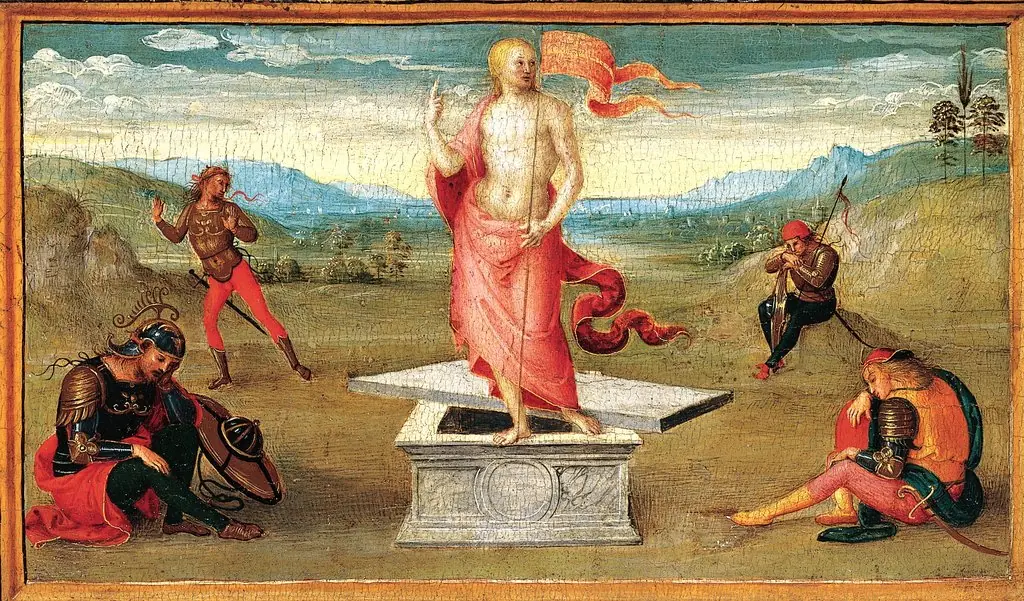 The Resurrection
![The Crucifixion with the Virgin, Saint John, Saint Jerome, and Saint Mary Magdalene [left panel], by Pietro Perugino](https://artifactworldgallery.com/img/pietro-perugino--the-crucifixion-with-the-virgin-saint-john-saint-jerome-and--1017dec17318baa5-w320.webp) The Crucifixion with the Virgin, Saint John, Saint Jerome, and Saint Mary Magdalene [left panel]
The Crucifixion with the Virgin, Saint John, Saint Jerome, and Saint Mary Magdalene [left panel]![The Crucifixion with the Virgin, Saint John, Saint Jerome, and Saint Mary Magdalene [middle panel], by Pietro Perugino](https://artifactworldgallery.com/img/pietro-perugino--the-crucifixion-with-the-virgin-saint-john-saint-jerome-and--a9b4c312771e3f71-w320.webp) The Crucifixion with the Virgin, Saint John, Saint Jerome, and Saint Mary Magdalene [middle panel]
The Crucifixion with the Virgin, Saint John, Saint Jerome, and Saint Mary Magdalene [middle panel]