Artwork
Juliet and the Friar
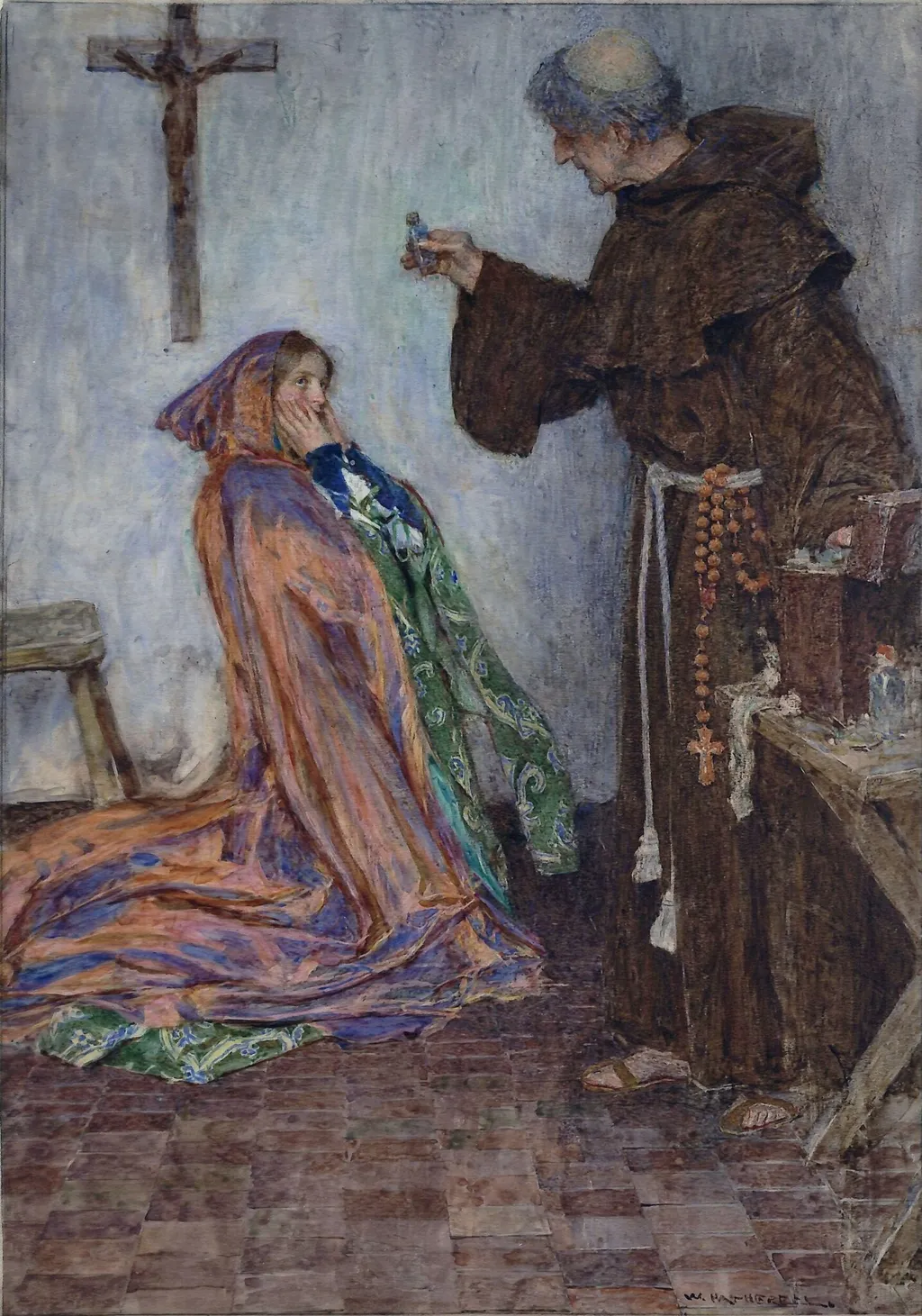
Juliet and the Friar is a watercolor work on paper by the Impressionist artist Hatherell. It dates from 1875 and is held in the collection of the Victoria and Albert Museum.
About this work
Overview
Juliet and the Friar is a watercolour painted in 1875 by Hatherell. The work depicts a moment from Act IV, Scene 1 of Shakespeare’s Romeo and Juliet, showing the heroine in dialogue with Friar Laurence. The artist’s signature is present on the piece.
Subject & Meaning
The composition presents Juliet kneeling on a bed, draped in a multicoloured cloak with a hood, while the friar stands nearby in a dark habit, his belt formed by a rope and a wooden cross visible at his side. A crucifix can be seen through a window behind them, underscoring the religious context of the scene.
Technique & Style
Executed in water-based pigments, the painting employs soft, blended tones and loose, rapid brushwork that convey a sense of immediacy. The limited palette and subtle shading create a dimly lit interior, emphasizing the emotional tension between the two figures.
History & Provenance
Created in the late nineteenth century, the work reflects the Victorian era’s interest in literary illustration. The piece bears Hatherell’s signature, confirming authorship, and has been documented as part of collections that focus on Shakespearean visual interpretations.
Context
The scene captures the pivotal moment when Juliet, distraught, seeks counsel from Friar Laurence before her planned union with Paris. The setting, a modest brick-walled chamber, aligns with stage directions that locate the encounter in a private, somber space within the play.
Own this work as a print
Artist & collection
Artist
Hatherell painted scenes from literature in watercolor between 1875 and 1925. The sheet Juliet and the Friar shows Shakespeare’s doomed heroine in a candlelit room, consulting the friar about her plan to fake her death.…

- Visión de San Francisco de Asís
 A Painter and His Model
 Poor Relief
 In Front of a Church
 El actor José Riquelme en 'El famoso Colirón'
 Memling schildert het Ursulaschrijn
 After Mass
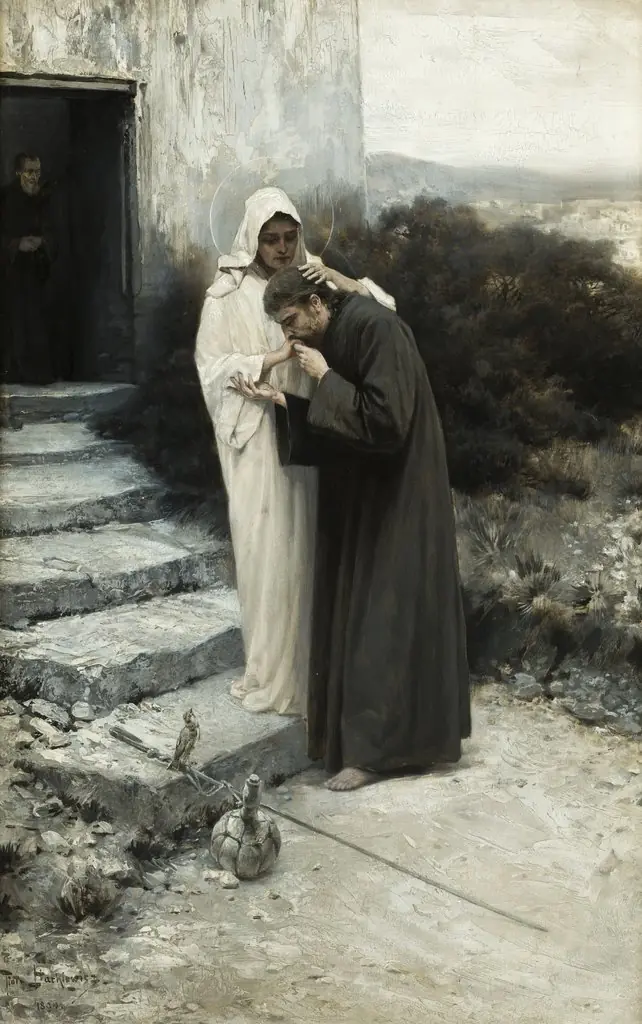 Our Lady Says Farewell to Christ. The Cycle "Legend of Our Lady"
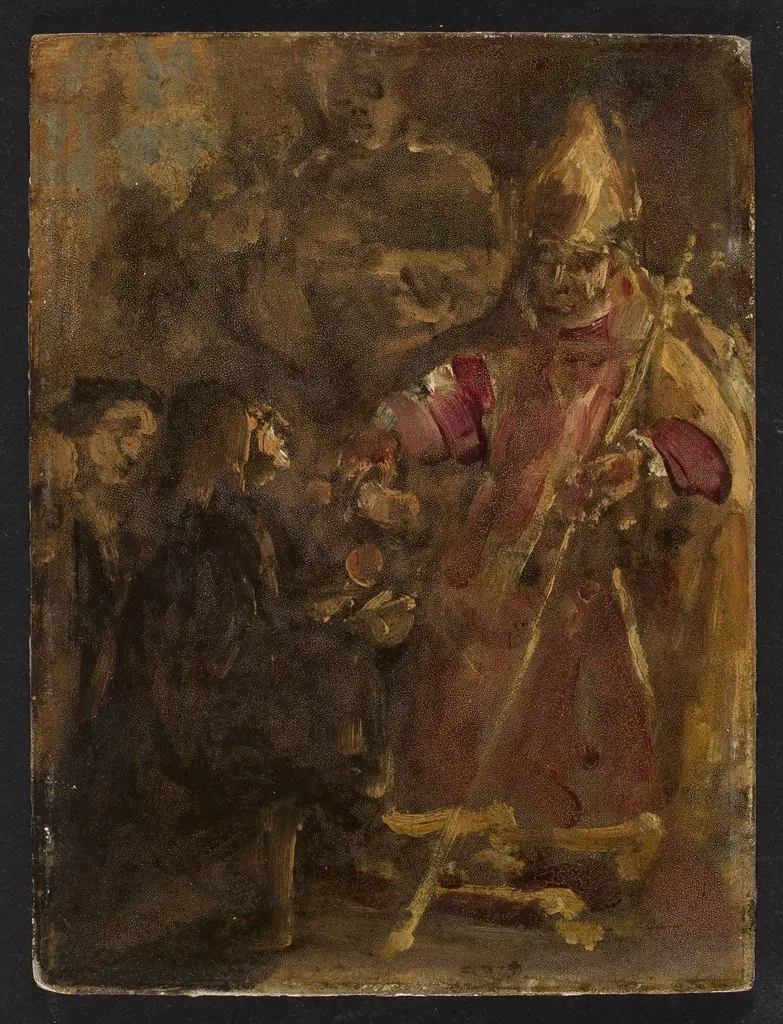 Bishop Lubrański establishes the Ecclesiastical Academy in Poznań, sketch
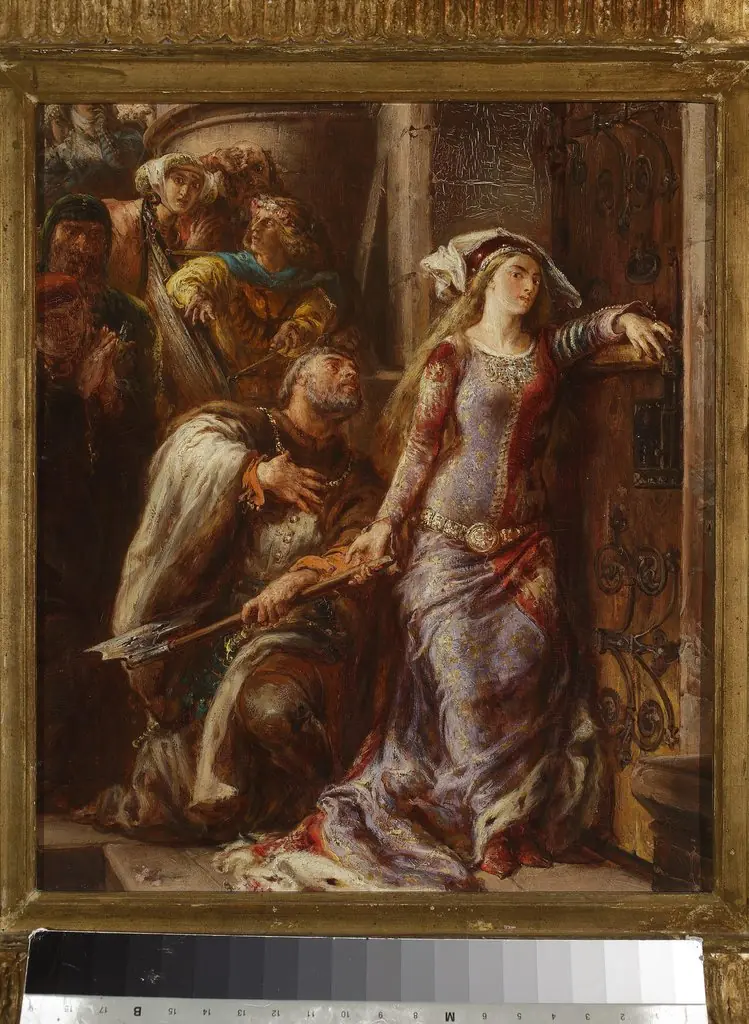 Queen Jadwiga and Dymitr of Goraj
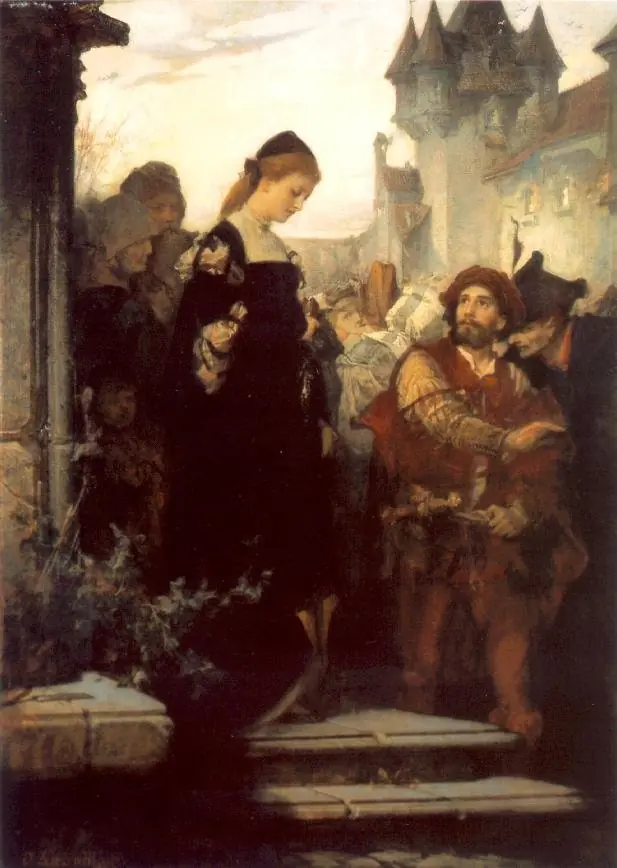 Faust and Margaret
 The Death of Queen Sophie Amalie