Artwork
Greenshank
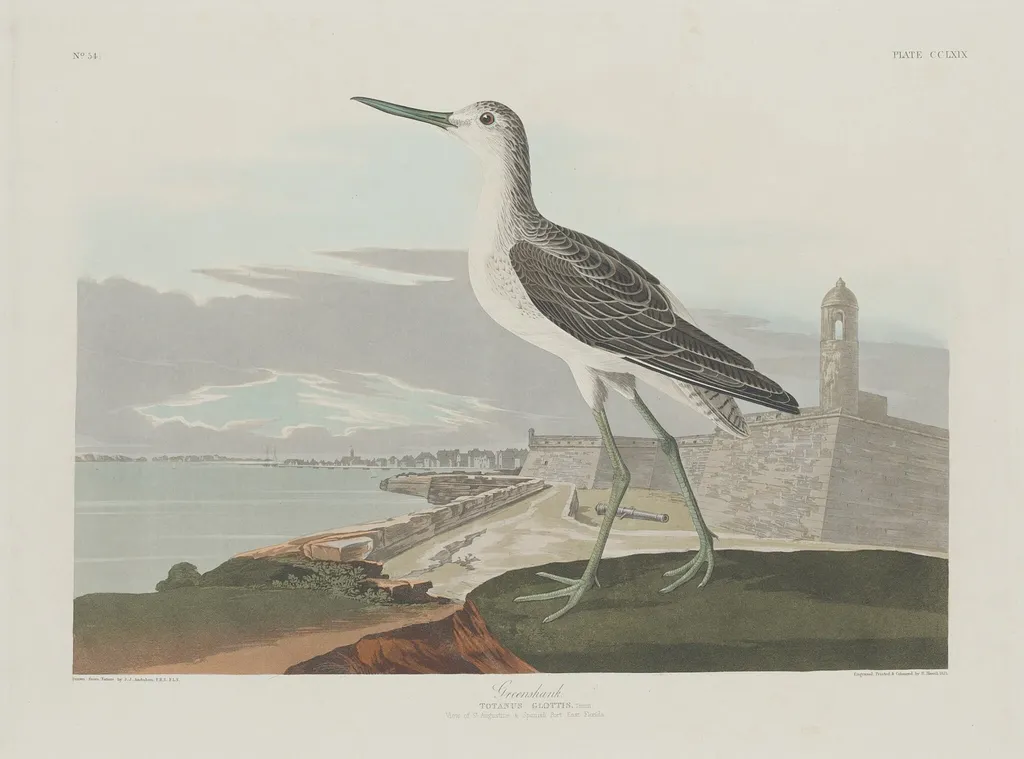
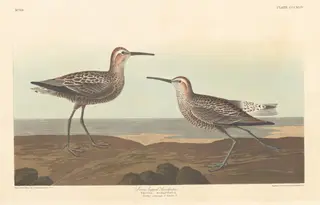
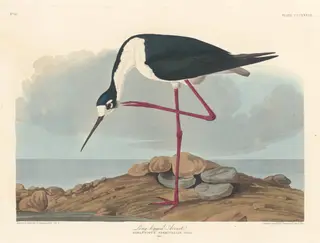
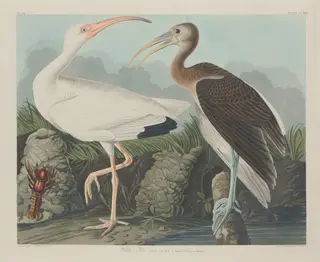
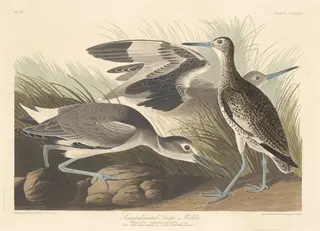
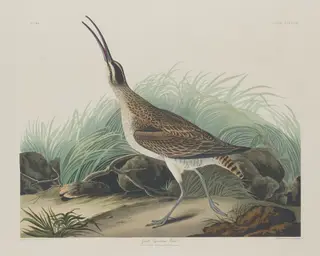
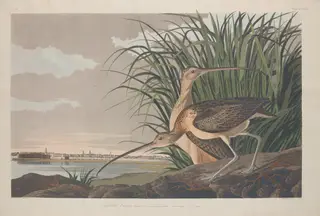
Greenshank is an ink print by the Romanticist artist Havell, Jr., Robert. It dates from 1835 and is held in the collection of the National Gallery of Art.
About this work
Overview
Created in 1835, Greenshank is a hand‑colored engraving combined with aquatint, printed on fine Whatman wove paper. The image depicts a long‑necked bird perched on a grassy ledge, with a stone fort and tower framing a tranquil water scene and a distant town beneath a light, cloud‑dotted sky.
Subject & Meaning
The central figure is a greenshank, a wading bird identified by its slender neck and beak. The surrounding architecture suggests a view of St. Augustine, linking the natural subject to a specific geographic locale and hinting at the interplay between wildlife and human settlement.
Technique & Style
The work employs aquatint, a tonal printing method that the Havell family refined, alongside precise line engraving. Hand‑coloring adds subtle hues to the bird’s plumage and landscape, while fine linear strokes render feather detail and surface texture.
History & Provenance
Robert Havell Jr., a member of the prominent Havell family of engravers, etchers, and painters from Reading, Berkshire, produced the print. The Havells were noted for their expertise in aquatint and maintained a long‑standing interest in Indian artistic traditions, situating this piece within their broader early‑19th‑century printmaking output.
Context
Greenshank reflects the early nineteenth‑century fascination with natural history illustration and travel imagery. By pairing a detailed bird study with a recognizable architectural vista, the print aligns with contemporary interests in documenting both flora and fauna and exotic locales for a European audience.
Own this work as a print
Artist & collection
Artist
The Havell family of Reading, Berkshire, England, included a number of notable engravers, etchers and painters, as well as writers, publishers, educators, and musicians.