Artwork
Sutes Farm, near High Cross
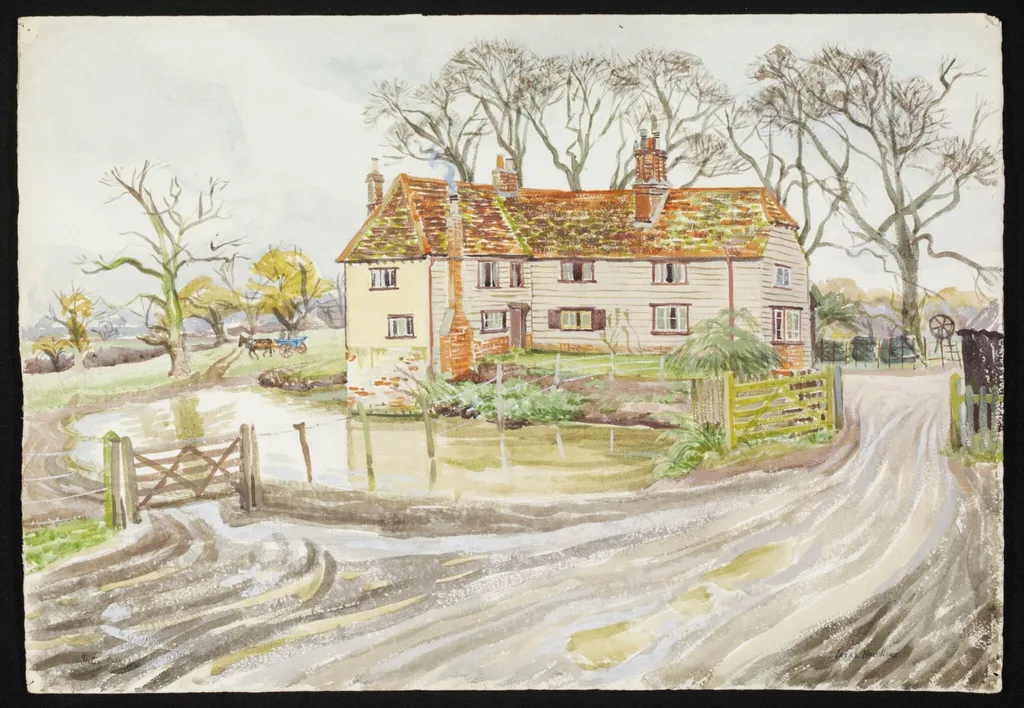
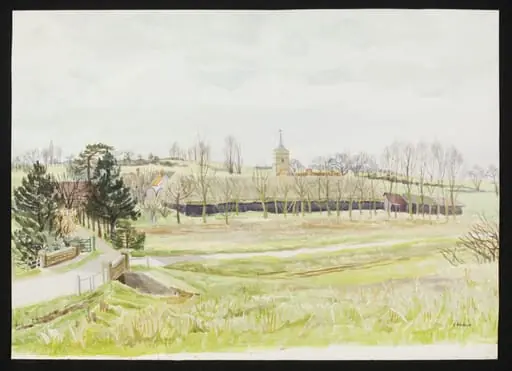
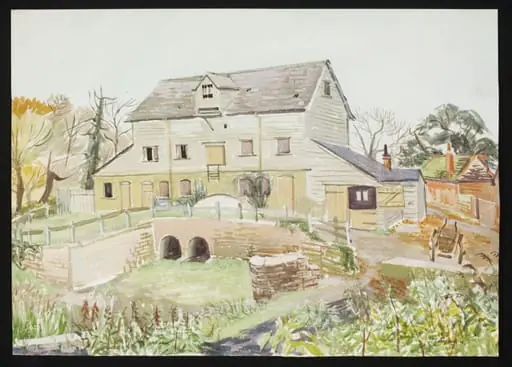
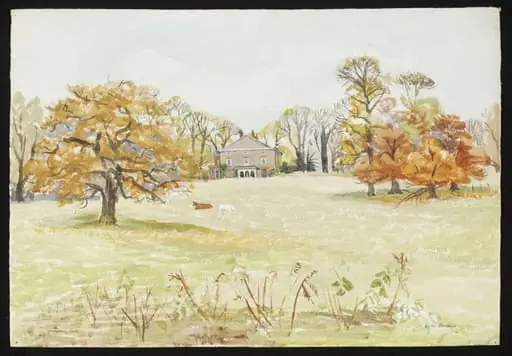
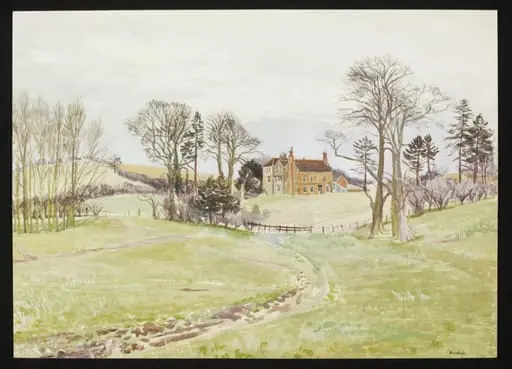
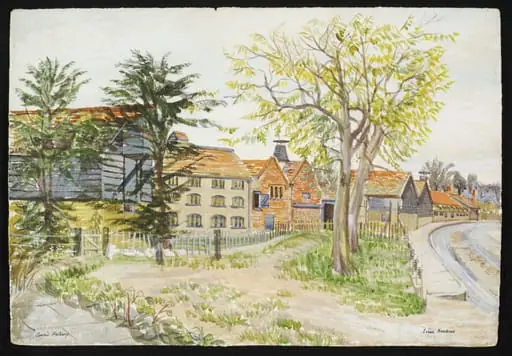
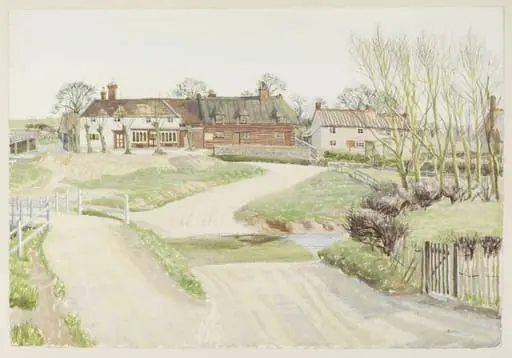
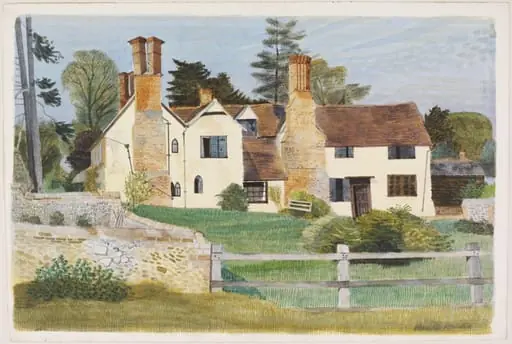
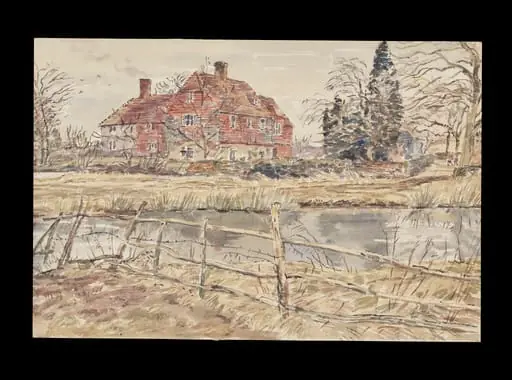
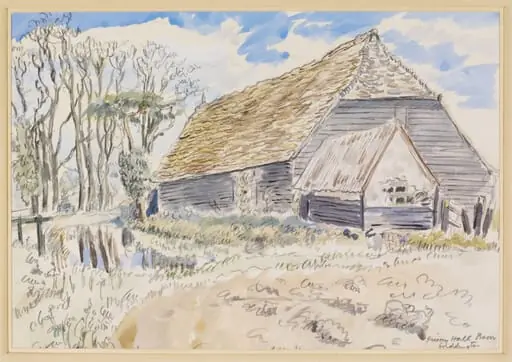
Sutes Farm, near High Cross is a watercolor work on paper by the Regionalist artist Hawkins. It is held in the collection of the Victoria and Albert Museum. The watercolour, signed by the artist in 1940, portrays Sutes Farm near High Cross under a muted, wintry sky.
About this work
The artist focused on everyday details, like the rough fence posts and the overgrown garden, to make the scene feel real.
This painting shows a cozy farmhouse with a red-tiled roof and pale yellow walls. The house sits in a quiet countryside, surrounded by bare trees and a simple wooden fence. A muddy path leads up to the front door, and a horse-drawn cart is parked nearby. The colors are soft, with patches of green in the garden and a pale, overcast sky.
The artist focused on everyday details, like the rough fence posts and the overgrown garden, to make the scene feel real. This watercolor was painted around 1940, capturing a moment of rural life.
If you like this style, check out the Victoria and Albert Museum for more works like it.
Overview
The watercolour, signed by the artist in 1940, portrays Sutes Farm near High Cross under a muted, wintry sky. A weather‑boarded house with a red tiled roof sits beside a muddy lane, while a pond occupies the foreground. In the distance a horse and cart traverse a field, giving the composition a sense of quiet rural activity.
Subject & Meaning
The scene captures everyday farm life, emphasizing modest architecture and the surrounding landscape. The inclusion of the cart and horse suggests the continued reliance on traditional transport, while the overcast atmosphere conveys the harsh seasonal conditions typical of English countryside winters, underscoring a resilient, unadorned way of life.
Technique & Style
Executed in transparent watercolour, the work balances soft washes with fine, linear detail. Delicate brushwork defines the farmhouse’s timber cladding and the rough fence posts, while broader strokes render the sky and pond. A restrained palette of muted greens, browns, and greys creates a harmonious, atmospheric effect characteristic of mid‑20th‑century British topographical painting.
History & Provenance
Created as part of the Recording Britain project, the painting was commissioned by the Committee for the Employment of Artists in Wartime and funded by the Pilgrim Trust. The initiative, overseen by Sir Kenneth Clark, sought to document the nation’s rural environments during World War II. The work now resides within the Recording Britain collection.
Context
The piece reflects wartime concerns about the loss of historic landscapes to bomb damage, urban growth, and agricultural change. By recording a specific farmstead, the artist contributed to a broader effort to preserve visual evidence of England’s countryside at a moment when traditional rural life faced significant disruption and transformation.
Own this work as a print
Artist & collection
Artist
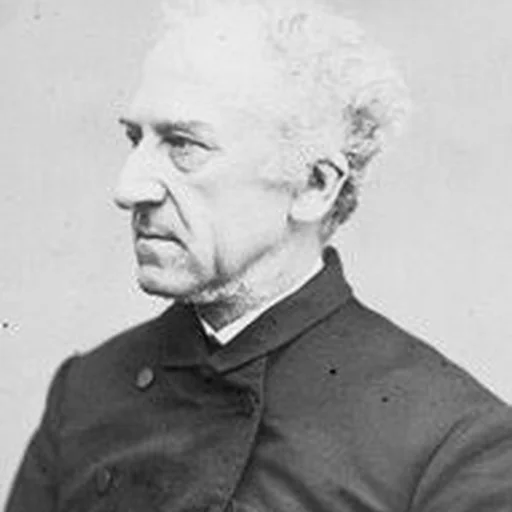
Benjamin Waterhouse Hawkins (8 February 1807 – 27 January 1894) was an English sculptor and natural history artist renowned for his work on the life-size models of dinosaurs in the Crystal Palace Park in south London.