Artwork
Sunlight and Shadow: The Newbury Marshes
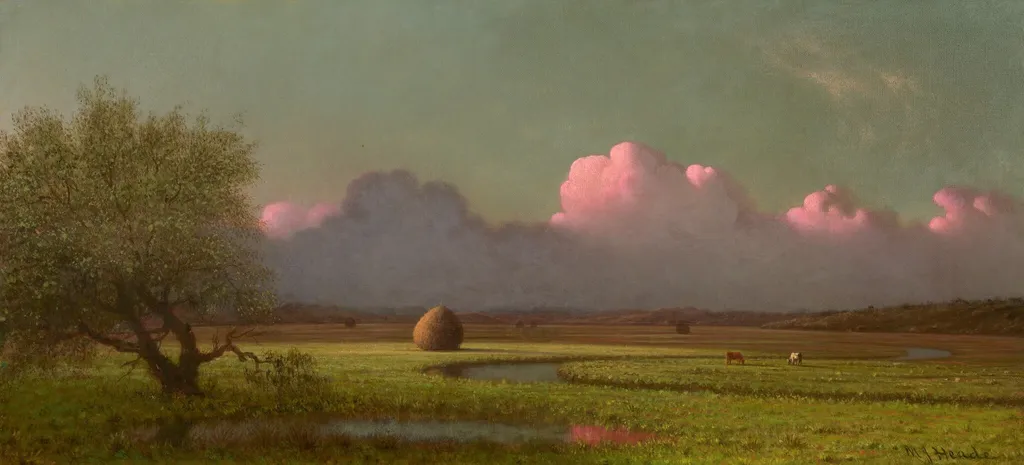
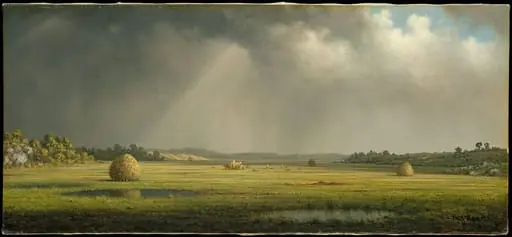
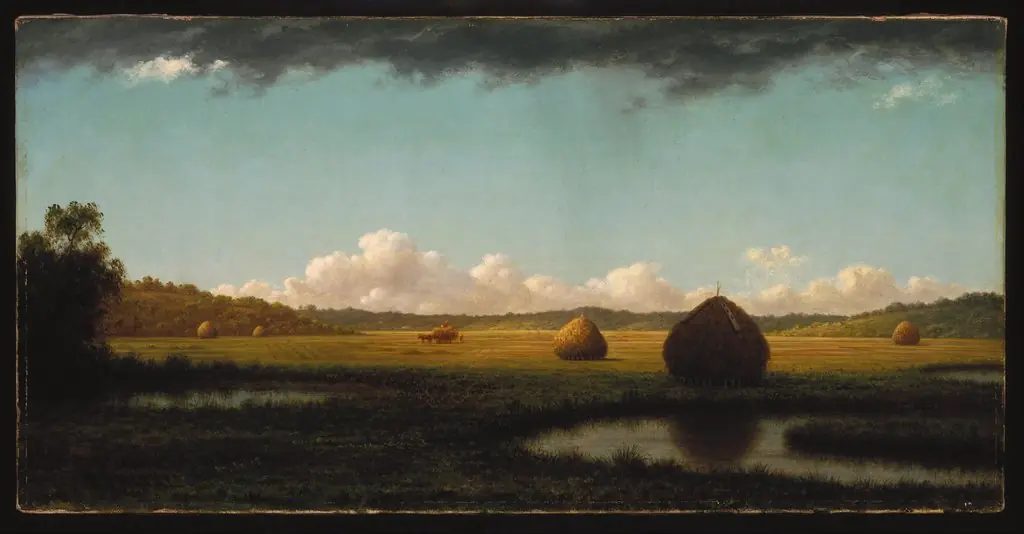
Sunlight and Shadow: The Newbury Marshes is an oil painting by the Hudson River School artist Martin Johnson Heade. It dates from 1873 and is held in the collection of the National Gallery of Art.
- Inscription
- Inscribed:lower right: M J Heade
About this work
Subject & Meaning
, foregrounds the artist’s preoccupation with tidal rhythms, meteorological effects, and the ways the land supported hunting, fishing, and salt‑hay harvesting.
Sunlight and Shadow: The Newbury Marshes portrays a salt‑marsh scene near the Merrimack River, featuring a prominent haystack, a leaning tree, and a meandering waterway, elements Heade first observed in 1859 through Bishop Thomas March Clark and later rendered in over a hundred wetland paintings. The canvas, executed in oil on canvas around 1871–1875 and now housed in the National Gallery of Art, Washington, D.C., foregrounds the artist’s preoccupation with tidal rhythms, meteorological effects, and the ways the land supported hunting, fishing, and salt‑hay harvesting. Central to the composition is the recurring motif of sunlight versus shadow, which unifies clouds, water, and the haystack through contrasting gradients, symbolizing the fragile balance of natural forces and human activity within the marsh.
Technique & Style
Executed in oil on canvas in 1871, Sunlight and Shadow: The Newbury Marshes measures 30.5 × 67.3 cm. Heade’s handling emphasizes atmospheric effects: delicate cloud shadows and a graded light-to-dark transition across a central haystack articulate the marsh’s tidal and meteorological dynamics. The composition balances horizontal expanse with vertical accents, an apple tree and haystack on the left counter the meandering river on the right, while pink-hued clouds and their reflections in the water reinforce the titular interplay of sunlight and shadow. The work’s luminous palette and subtle tonal gradations typify Heade’s mature marsh landscapes, where natural forces and human use (hay harvesting) are fused into a cohesive visual rhythm.
History & Provenance
Created by Martin Johnson Heade between 1871 and approximately 1875, Sunlight and Shadow: The Newbury Marshes is an oil-on-canvas landscape depicting the salt marshes near Newbury and Newburyport, Massachusetts. Heade likely first encountered this specific environment in 1859 through Bishop Thomas March Clark. This work represents one of the earliest examples among Heade's extensive series of wetland paintings.
The provenance chain begins with Stuart P. Feld of New York, from whom the painting was purchased in 1967 by collector John Wilmerding. It remained part of the John Wilmerding Collection until 2010, when it was gifted to the National Gallery of Art in Washington, D.C., where it is currently held and exhibited.
The painting is held in the collection of the National Gallery of Art, Washington, D.C. It entered the Gallery’s holdings in 2010 as a gift from the John Wilmerding Collection; prior to that it was owned by Stuart P. Feld, New York, and purchased by Wilmerding in 1967. The work has not traveled in major exhibitions since its acquisition by the Gallery, and its exhibition history is otherwise undocumented in the cited sources.
Overview
Martin Johnson Heade's Sunlight and Shadow: The Newbury Marshes, painted in 1873, is a quintessential example of his mature marsh landscape series. The composition centers on a solitary haystack situated in the middle distance of the Newburyport marshes in Massachusetts, surrounded by a vast, flat expanse of tidal grassland. Heade renders the foreground as a complex mosaic of brown, green, and gold hues, meticulously capturing the texture of the marsh grass at low tide.
The work is defined by its atmospheric focus on the interplay of light and shadow, a theme that preoccupied the artist throughout the 1870s. Unlike the dramatic, mountainous vistas typical of the Hudson River School, Heade's approach here is intimate and observational, emphasizing the subtle shifts in illumination across a seemingly static landscape. This painting reflects Heade's unique position within American art history, bridging the grandeur of the Hudson River School with the emerging interest in light and atmosphere that would influence later movements.
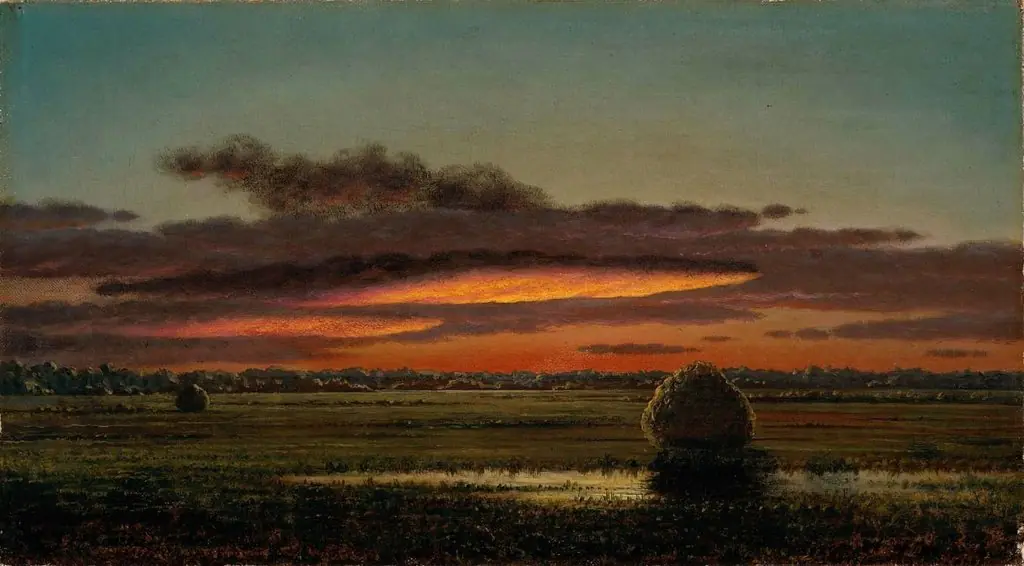
The artist frequently returned to this specific location and subject matter, producing numerous variations to study the effects of different times of day and seasonal changes on the marsh environment.
Artist & collection

Artist
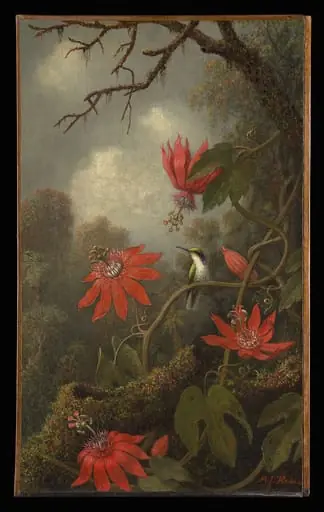
Martin Johnson Heade (August 11, 1819 – September 4, 1904) was an American painter known for his salt marsh landscapes, seascapes, and depictions of hummingbirds, often depicted with orchids, as well as lotus blossoms and other still lifes.