Artwork
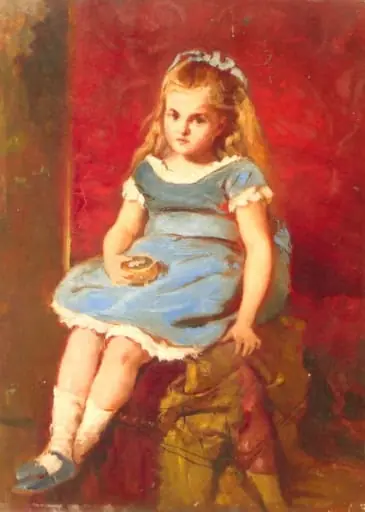
Fetiță în albastru
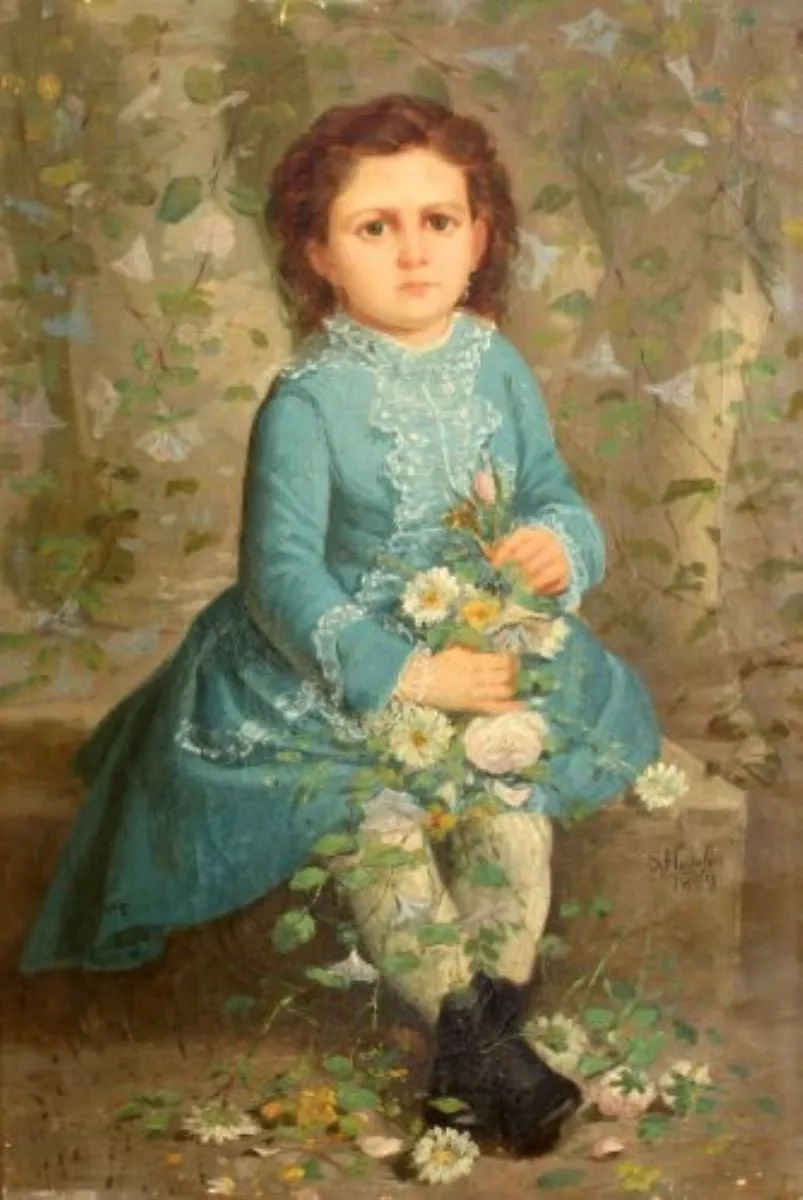
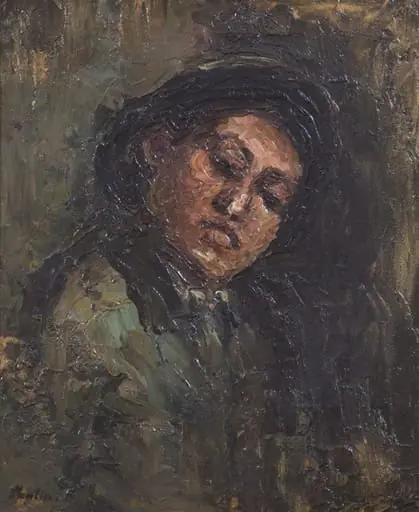
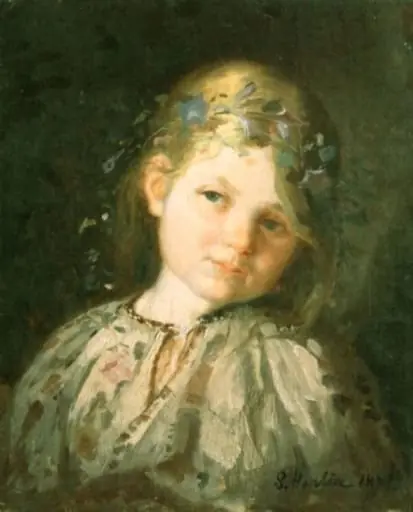
Fetiță în albastru is an unspecified painting by the Impressionist artist Sava Henția. It dates from 1879 and is held in the collection of the Art Museum of Constanta.
About this work
Overview
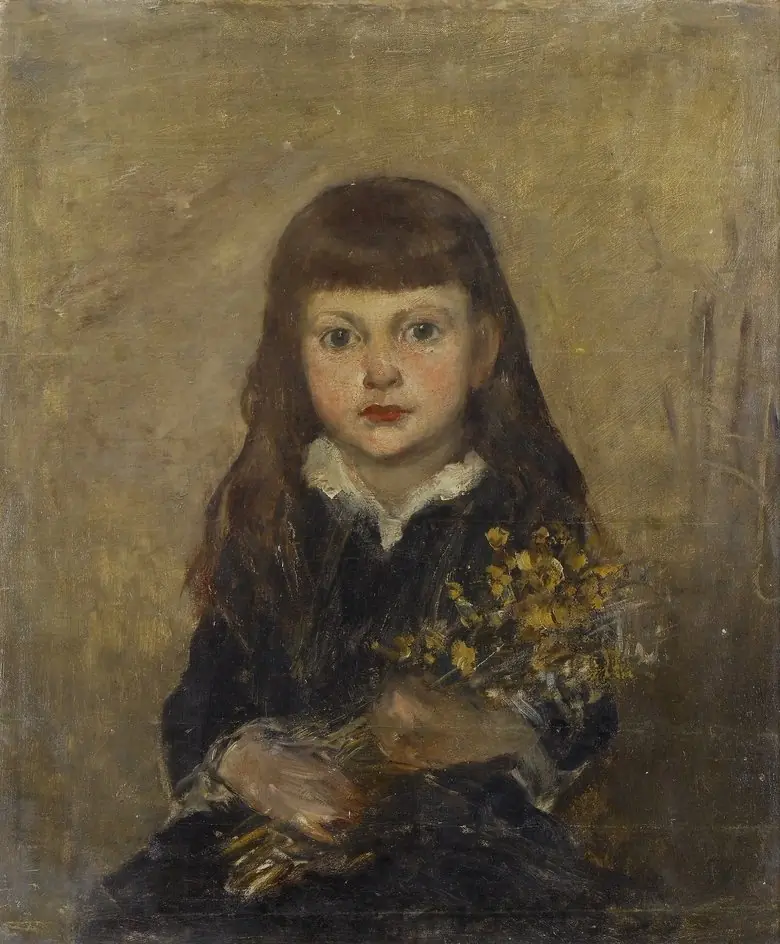
Created in 1879 by the Romanian artist Sava Henția, Fetiță în albastru portrays a young girl seated on the ground, clutching a modest bouquet of white and yellow blossoms. The painting is part of the Museum of Ethnography’s collection and is associated with the romanesque current that Henția pursued during his career.
Subject & Meaning
The central figure is a girl dressed in a light‑blue garment, her dark hair falling freely. She gazes directly ahead with a composed expression, while the simple flowers she holds provide a gentle contrast to her attire, suggesting an intimate, everyday moment rather than a staged tableau.
Technique & Style
Henția employs soft, fluid brushwork that renders the girl’s form with a natural, unembellished quality. The background is rendered in a loose, blurred manner, dominated by green foliage that recedes, thereby emphasizing the figure and her modest bouquet without overt detail.
History & Provenance
Born in the Austrian Empire, Henția later identified with Romanian artistic circles, working as a painter, decorator, and illustrator. After its creation, the work entered the holdings of the Museum of Ethnography, where it remains accessible to the public as part of the institution’s representation of 19th‑century Romanian art.
Context
The painting aligns with the romanesque movement’s interest in regional subjects and folk‑type imagery, reflecting a broader 19th‑century trend toward depicting ordinary life. Its focus on a solitary child and natural surroundings echoes contemporary realist tendencies while retaining a distinct, localized sensibility.
Artist & collection
Artist
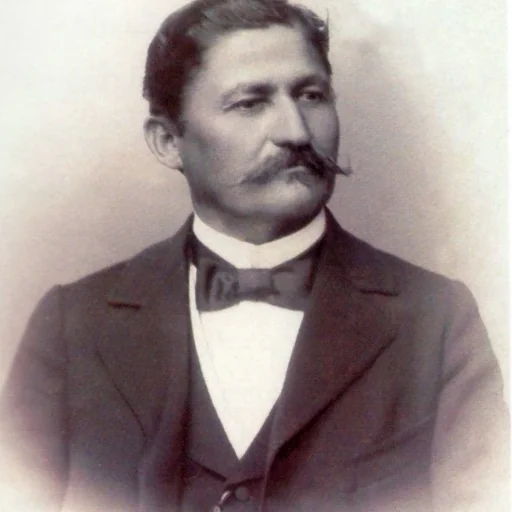
Sava Henția (1 February 1848, Sebeșel - 21 February 1904, Sebeșel) was an Imperial Austrian-born Romanian painter, decorator and illustrator.