Artwork
Aeneas Rescuing Anchises from Burning Troy
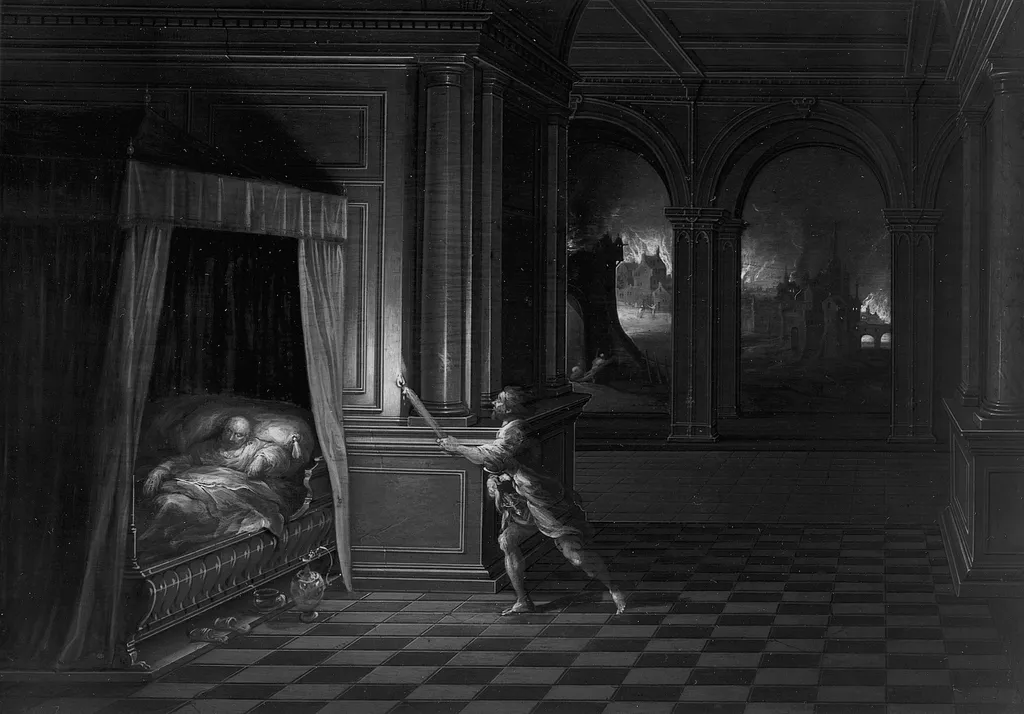
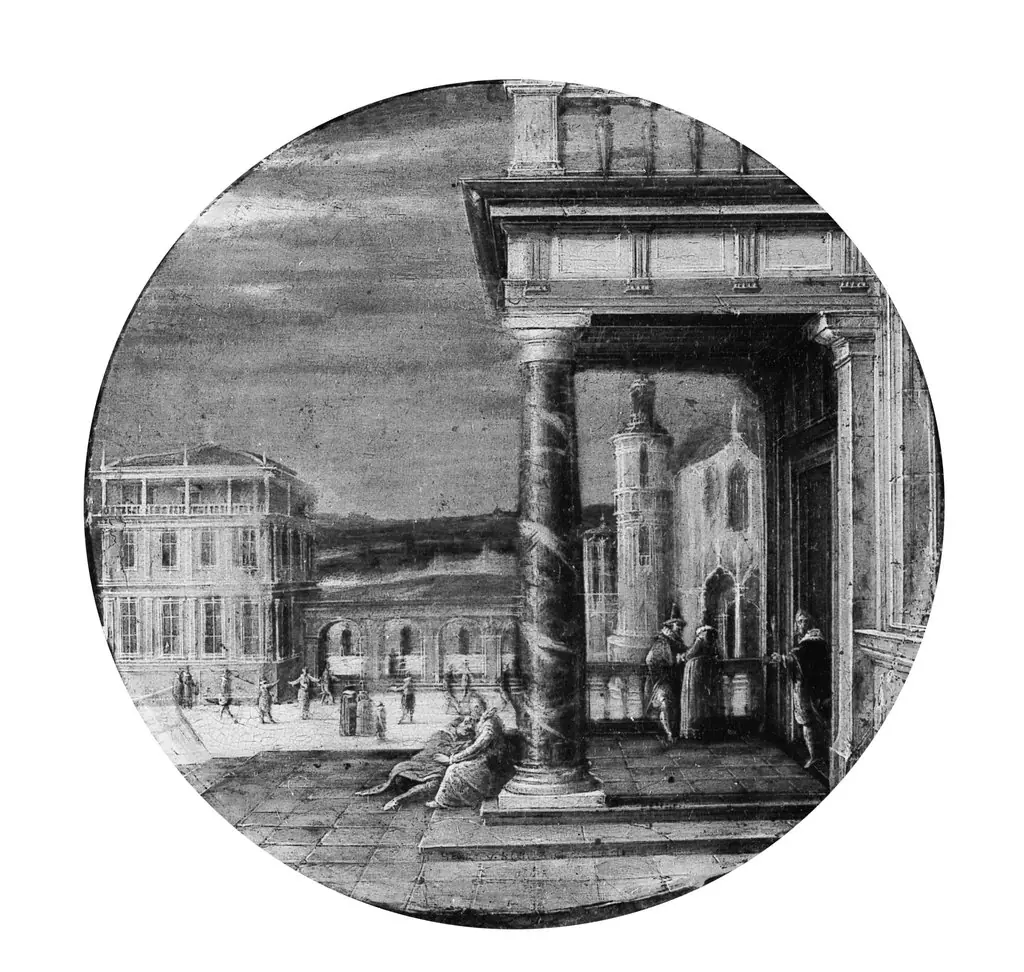
Aeneas Rescuing Anchises from Burning Troy is an unspecified painting by the Flemish Baroque painting artist Hendrik van Steenwijk II. It dates from 1612 and is held in the collection of the Art Institute of Chicago.
About this work
Subject & Meaning
As a representation of this specific legend, the artwork visualizes the duty of a son to save his parent amidst the chaos of war and destruction.
The painting depicts the mythological narrative of Aeneas rescuing his father, Anchises, from the burning city of Troy. Created by Hendrik van Steenwijk II in 1612, the work is classified as a mythological painting that centers on these two specific figures. The subject matter draws from classical antiquity, illustrating the moment of escape as the city succumbs to fire.
As a representation of this specific legend, the artwork visualizes the duty of a son to save his parent amidst the chaos of war and destruction.
History & Provenance
The painting Aeneas Rescuing Anchises from Burning Troy was created by Hendrik van Steenwijk II in 1612. Classified as a mythological work, the piece depicts the figures of Aeneas and Anchises amidst the destruction of Troy. The artwork is currently held in the collection of the Art Institute of Chicago.
The painting is held in the collection of the Art Institute of Chicago. According to Wikidata, the work is part of the museum's holdings, with its location listed as the Art Institute of Chicago.
No specific accession number, acquisition date, or exhibition history is documented in the available sources.
Context
Hendrik van Steenwijk II painted Aeneas Rescuing Anchises from Burning Troy in 1612, a mythological scene depicting the hero Aeneas saving his elderly father from flames. The work is housed in the collection of the Art Institute of Chicago, where it is recognized as part of the artist's oeuvre within the mythological painting genre. Scholarly attention to this painting reflects broader interest in Baroque interpretations of classical narratives, though specific critical commentary on its reception remains limited in the provided sources.
Its placement in a major museum collection underscores its significance within the trajectory of Northern European Baroque art.
Overview
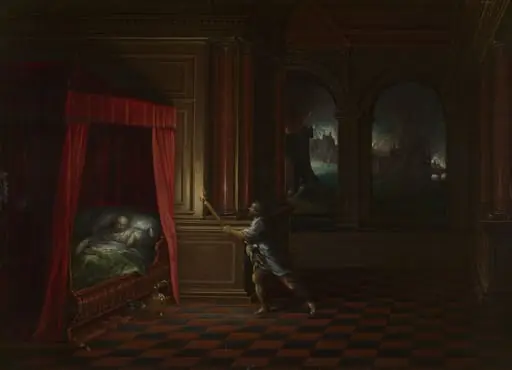
Hendrik van Steenwijck II’s 1612 oil painting portrays the legendary escape of Aeneas as he carries his aged father Anchises from the flames engulfing Troy. Executed in the Flemish Baroque idiom, the work combines a dramatic narrative moment with a meticulously rendered interior, emphasizing both human urgency and architectural detail. The canvas belongs to the Art Institute of Chicago’s permanent collection.
Technique & Style
Van Steenwijck employs a pronounced chiaroscuro, casting the interior in deep shadows while a narrow shaft of light from the open window illuminates the rescuers. The contrast heightens the tension and draws attention to the strained bodies. Architectural elements, stone flooring, heavy drapery, and a vaulted ceiling, are rendered with precise linear perspective, a hallmark of the artist’s training in architectural interiors.
Own this work as a print
Artist & collection
Artist
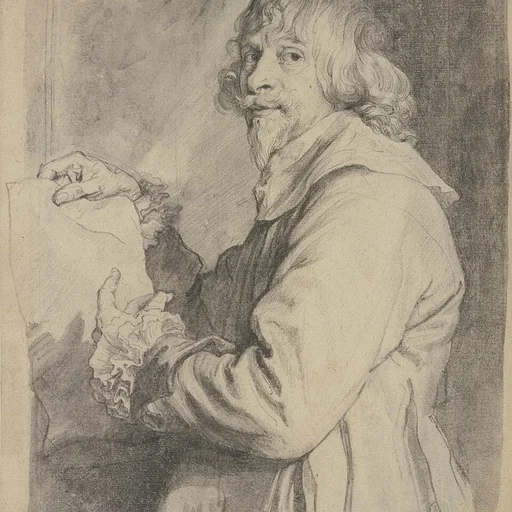
Hendrik van Steenwijck II (also Steenwyck, Steinwick) (c.1580–1640) was a Baroque painter mostly of architectural interiors, but also of biblical scenes and still lifes.

 Semele and Juno
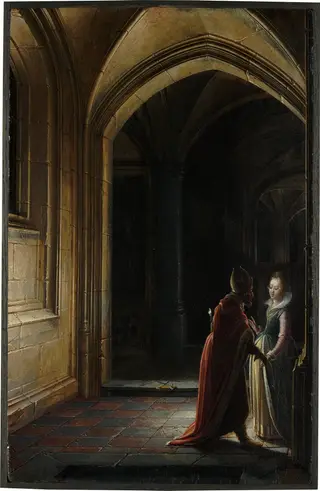
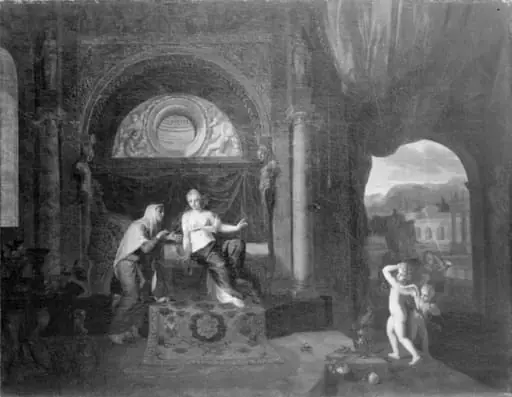 Semele and Juno
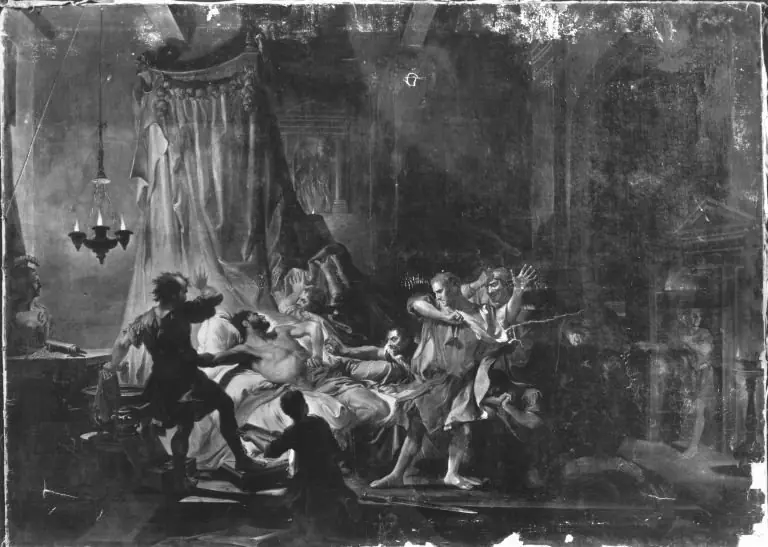 Der Tod des Cato von Utica
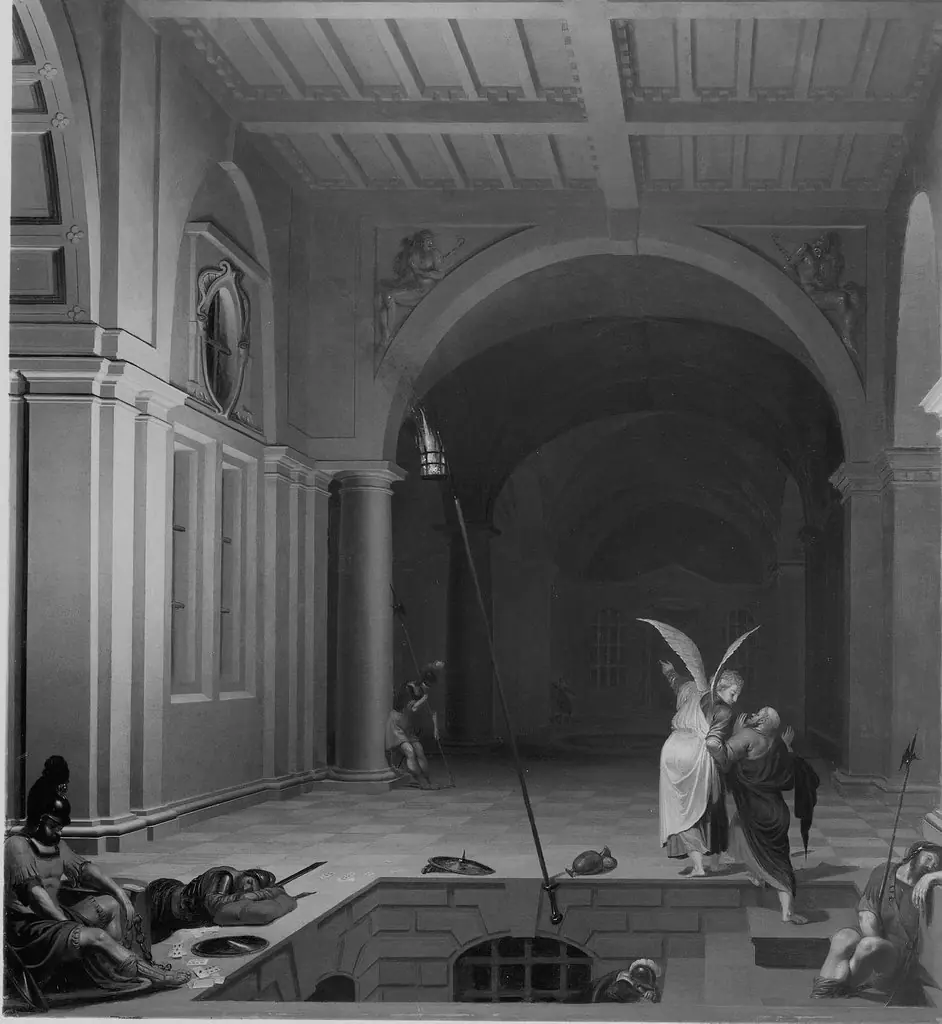 Liberation of Saint Peter from Prison
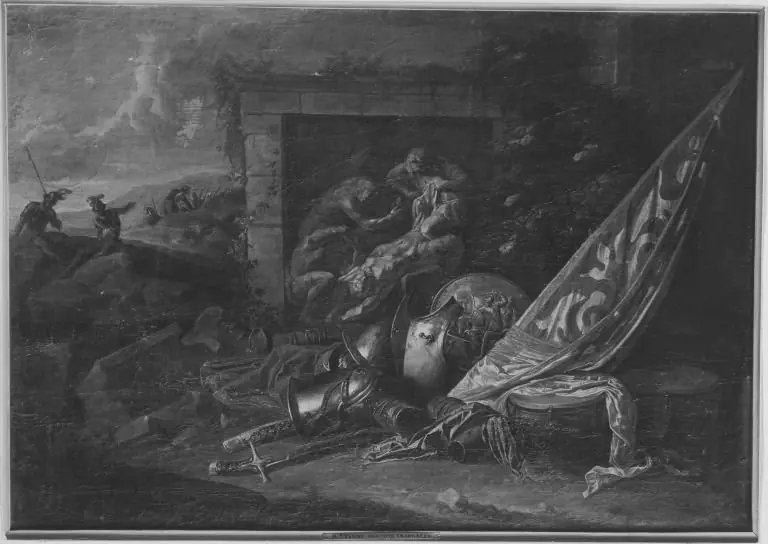 Still Life with weaponry and banner in a landscape
 Le matin
 An Allegory
 Nymphe and Satyr
 Das Gastmahl des Belsazar (zugeschrieben)
 Heliodor biruit de înger
 Christ Healing at the Pool of Bethesda
- Aeneas Rescuing Anchises from Burning Troy