Artwork
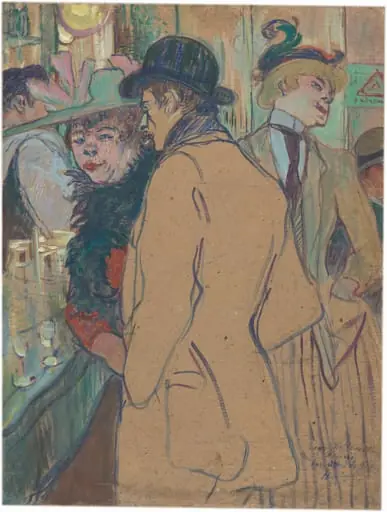
The Englishman (William Tom Warrener, 1861–1934) at the Moulin Rouge
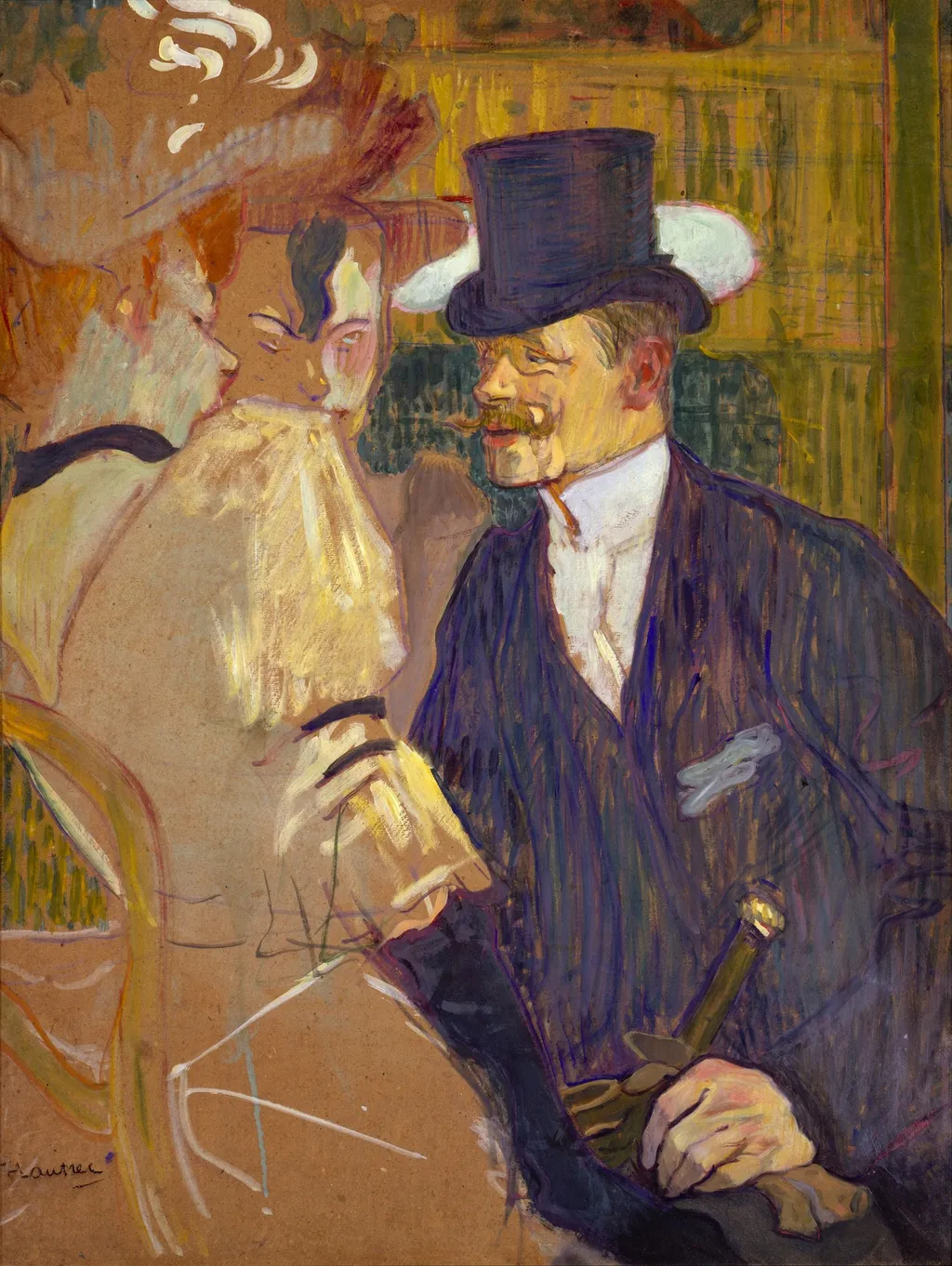
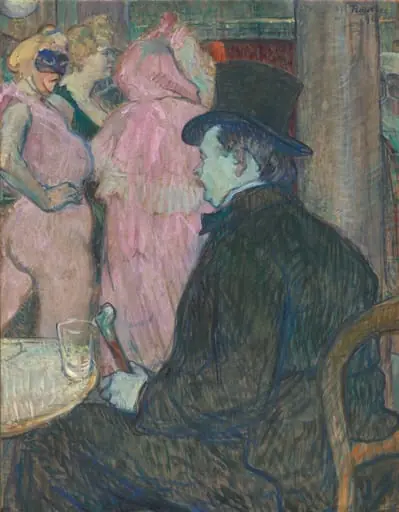
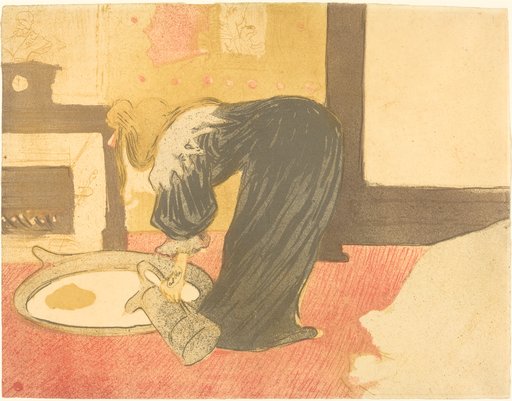
The Englishman (William Tom Warrener, 1861–1934) at the Moulin Rouge is an oil painting by the Post-Impressionist artist Henri de Toulouse-Lautrec. It dates from 1896 and is held in the collection of the Metropolitan Museum of Art.
About this work
Henri de Toulouse‑Lautrec painted The Englishman (William Tom Warrener, 1861–1934) at the Moulin Rouge in 1892.
Henri de Toulouse‑Lautrec painted The Englishman (William Tom Warrener, 1861–1934) at the Moulin Rouge in 1892. It’s an oil work on cardboard that shows his British friend William T. Warrener with two women inside the famous Paris cabaret.
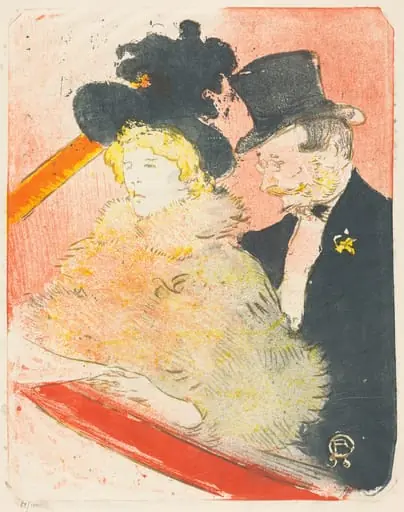
The picture was actually a study for a color lithograph he made the same year. The museum bought it in 1967, adding it to its collection of late‑19th‑century French art.
museum: The Metropolitan Museum of Art
Subject & Meaning
The painting depicts the British artist William Tom Warrener seated beside two women at the Moulin Rouge cabaret in Paris. Lautrec’s depiction of Warrener, his friend and fellow artist, positions him as the titular Englishman, distinguished by his dress and demeanor among the cabaret’s patrons. The two women flanking Warrener are typically identified as performers or habituées of the venue, their presence underscoring the work’s setting within the lively, modern nightlife of fin-de-siècle Paris.
The composition emphasizes social interaction and the mixing of identities within the cabaret’s cosmopolitan atmosphere, reflecting Lautrec’s interest in capturing fleeting moments of urban modernity.
Technique & Style
The painting is executed in oil paint on cardboard, a support choice consistent with Toulouse-Lautrec's frequent use of unprimed board for cabaret subjects. The work measures 85.7 cm in height by 66 cm in width.
Functioning as a preparatory study for a color lithograph of the same year, the composition retains the loose, sketch-like handling typical of such studies, with the figures of William T. Warrener and two women rendered with economy of means rather than tight finish. The cardboard ground lends a matte, absorbent surface that suits the rapid, drawing-inflected brushwork characteristic of Toulouse-Lautrec's depictions of Parisian nightlife.
The sources do not provide specific information on the painting's current condition.
History & Provenance
The Englishman (William Tom Warrener, 1861–1934) at the Moulin Rouge was painted by Henri de Toulouse-Lautrec in 1896, executed in oil paint on cardboard. The work depicts the British artist William T. Warrener, a close friend of Toulouse-Lautrec, alongside two women at the Moulin Rouge cabaret in Paris. It functioned as a preparatory study for a color lithograph of the same subject.
The painting is held in the collection of the Metropolitan Museum of Art in New York, which acquired it in 1967 under accession number 67.187.108. The provided sources do not list specific exhibitions where the painting was displayed.
Overview
Henri de Toulouse-Lautrec's 1892 painting, The Englishman (William Tom Warrener, 1861–1934) at the Moulin Rouge, captures a scene within the renowned Parisian cabaret. Executed in oil on cardboard, the work features the British artist William T. Warrener, a personal acquaintance of Lautrec, accompanied by two women. This piece served as a preliminary study for a subsequent color lithograph and is now part of The Metropolitan Museum of Art's collection.
Own this work as a print
Artist & collection
Artist
Comte Henri Marie Raymond de Toulouse-Lautrec-Montfa (24 November 1864 – 9 September 1901), known as Toulouse-Lautrec (French: ), was a French painter, printmaker, draughtsman, caricaturist, and illustrator.